

Ink And Grey Wash Drawing Commemorating An Episode Of The French Revolution
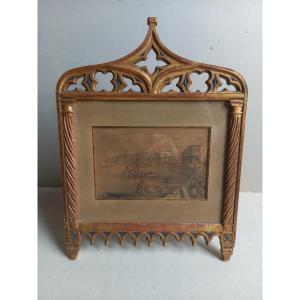
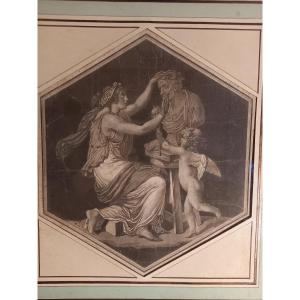
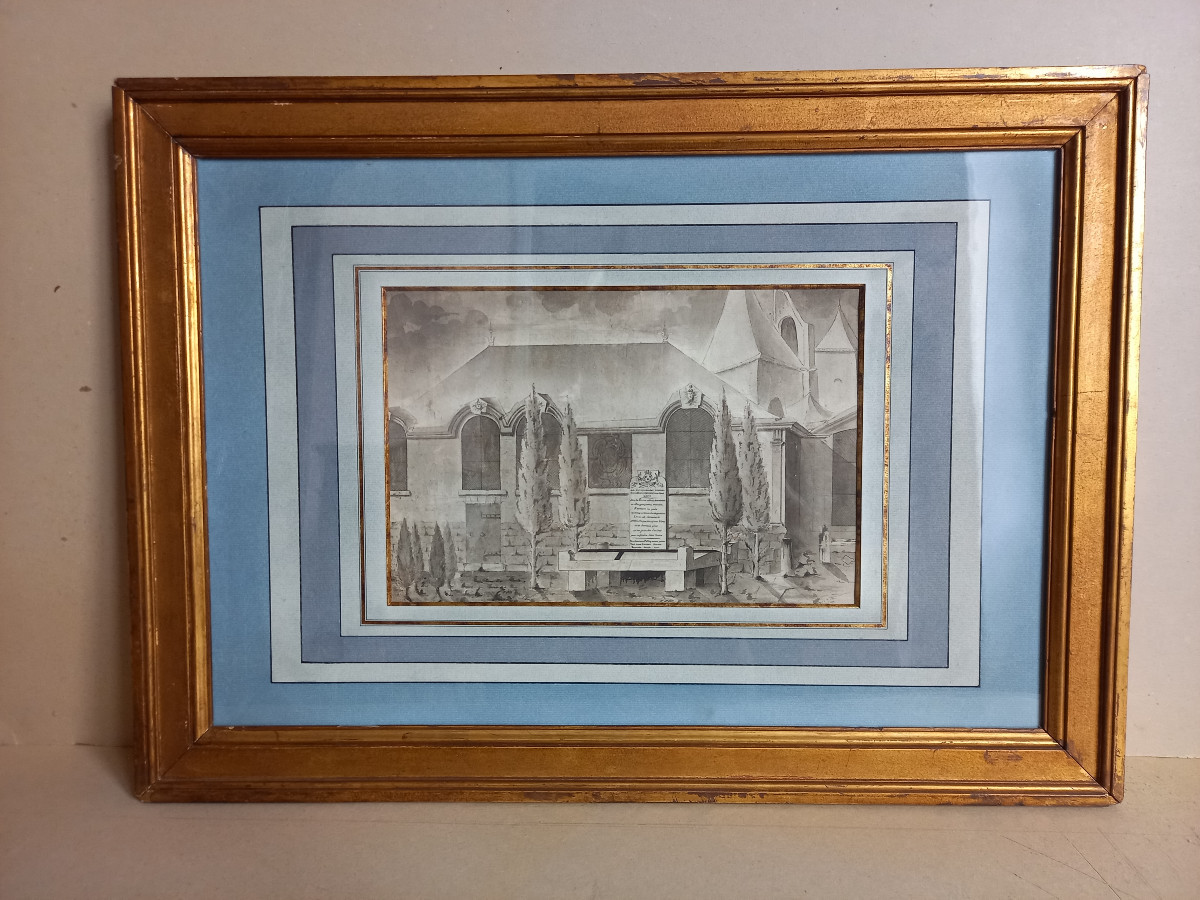
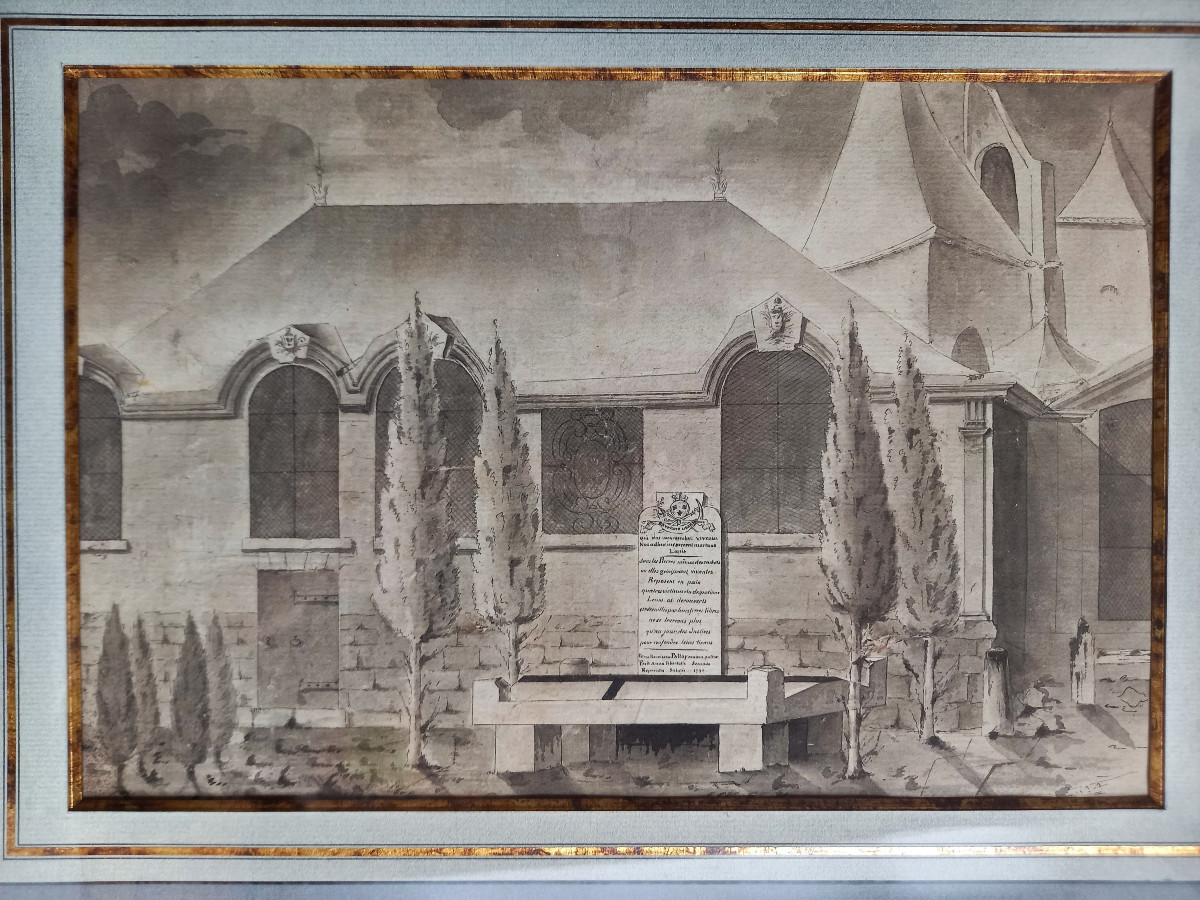
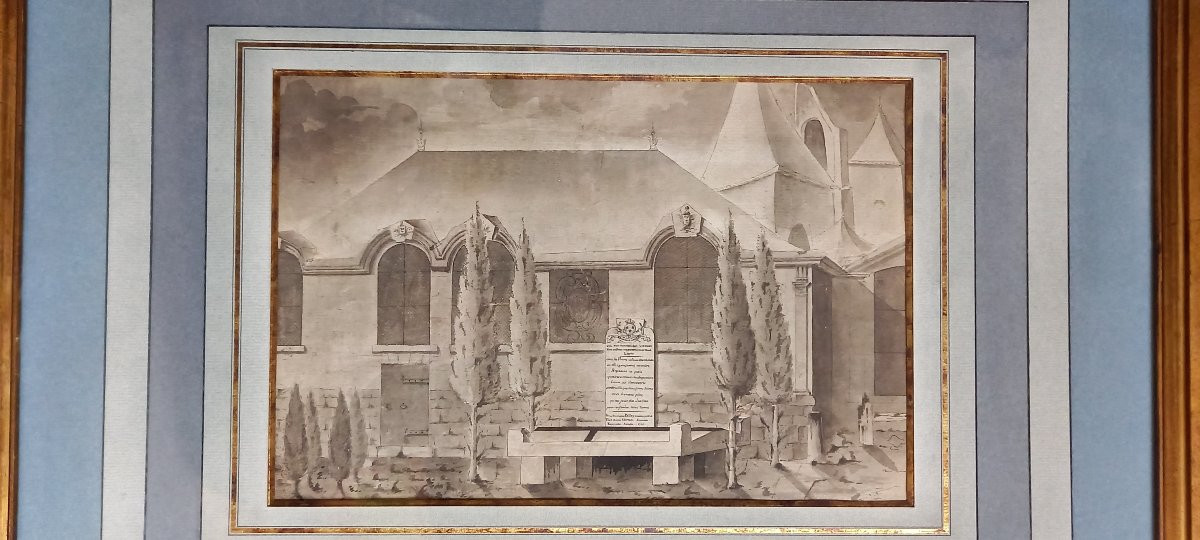
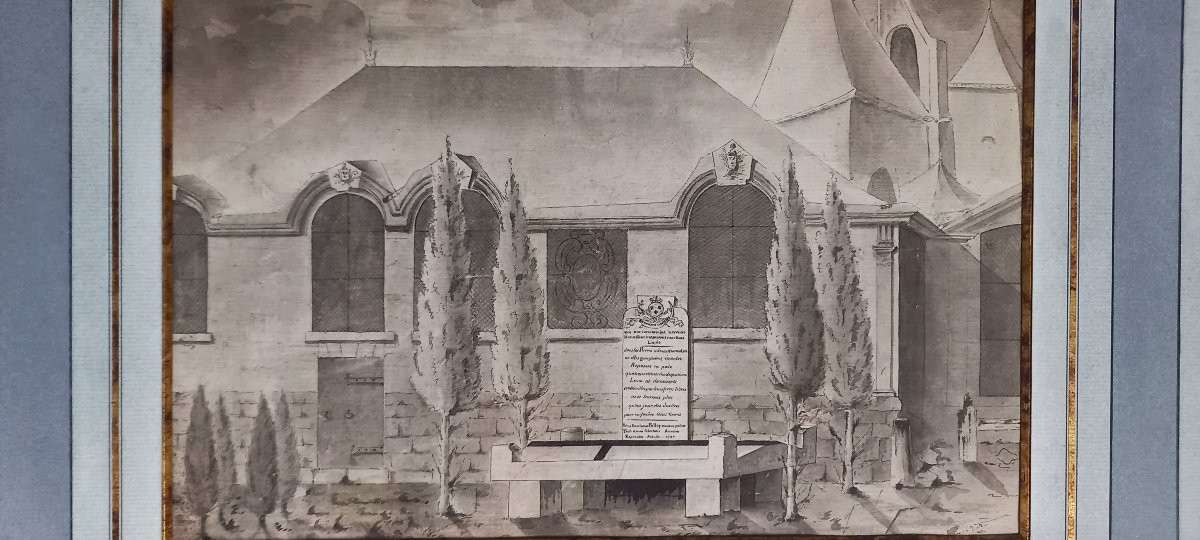
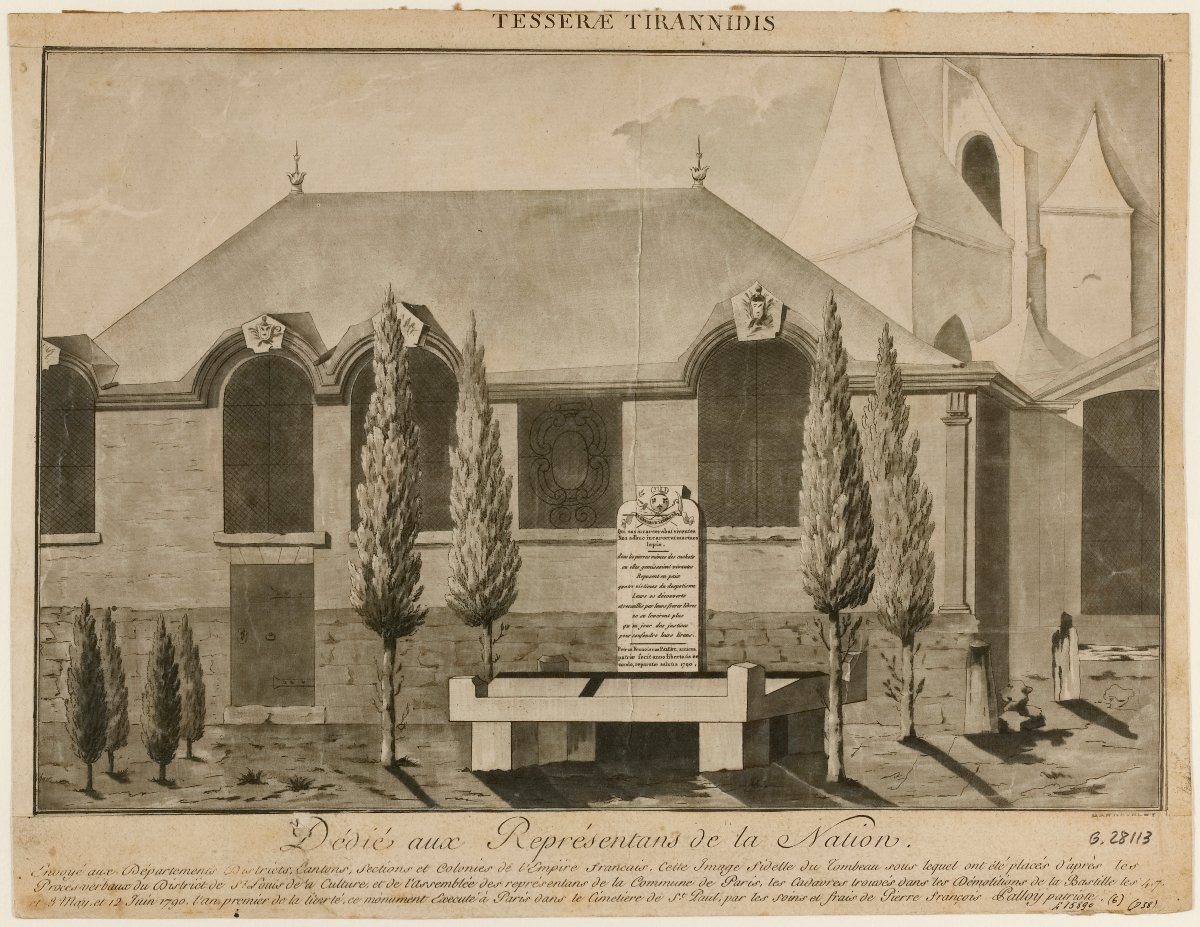
Ink and grey wash drawing commemorating an episode of the French Revolution, also known from an engraving (see the second to last image from the Musée Carnavalet-Histoire de Paris), representing the tomb erected in May-June 1790 by the one then called the patriot Palloy, who was none other than the contractor in charge of the demolition of the Bastille, in order to house the bones found in the dungeons of said prison.
Pierre-François Palloy (1755-1835) had the idea, using the stones from the destruction of the fortress itself, of having reduced-scale models made in stone from the Bastille, and later, in plaster mixed with mortar from the Bastille.
These pieces were sent to the representative bodies of the time: the deputies, the political clubs, the city of Paris, and to the chief towns of the new French departments from February 1790.
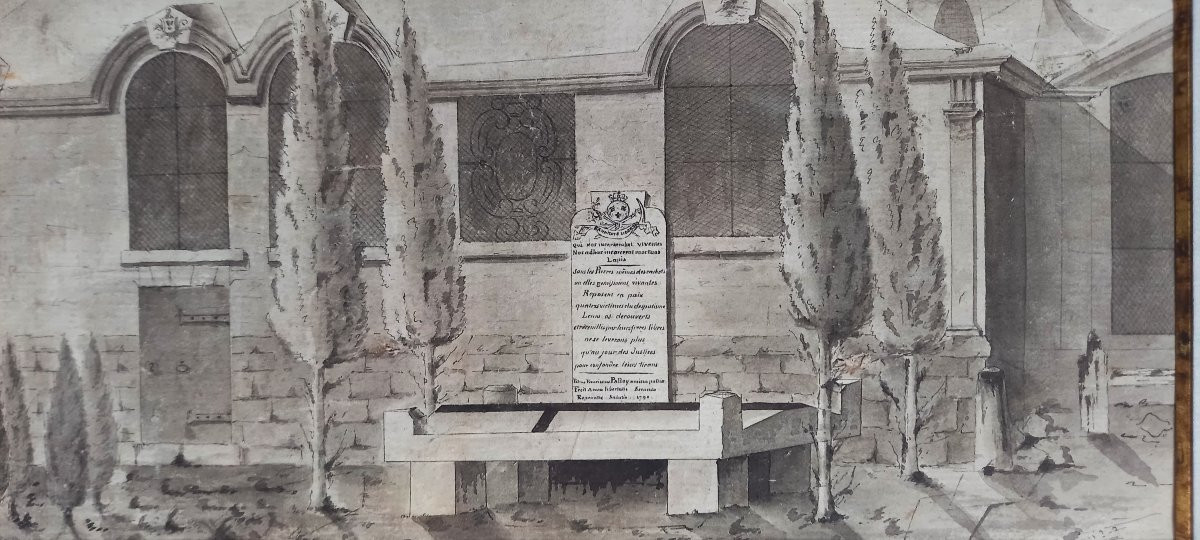
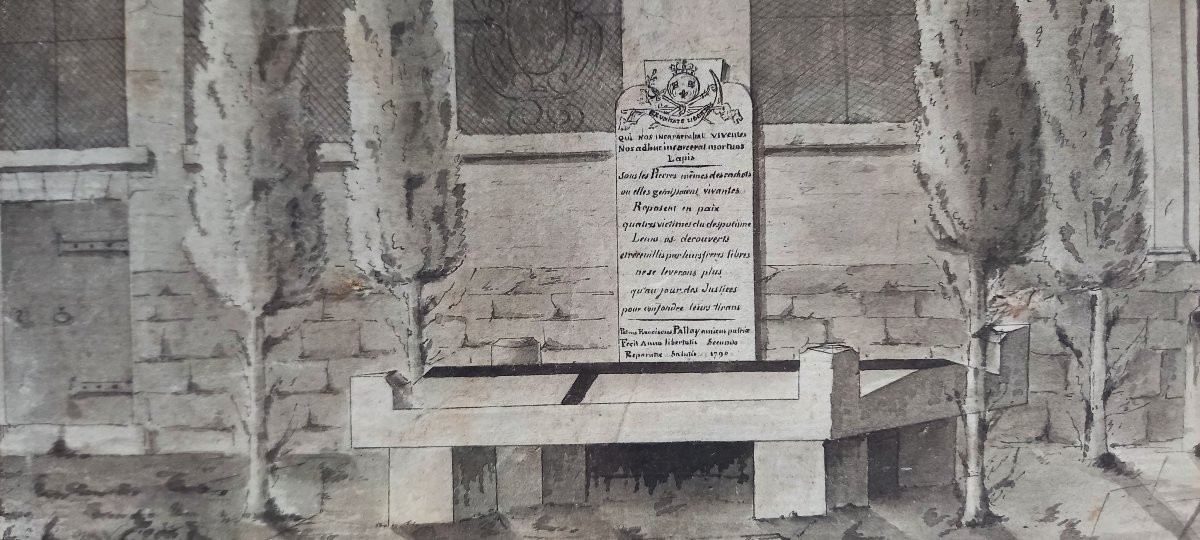
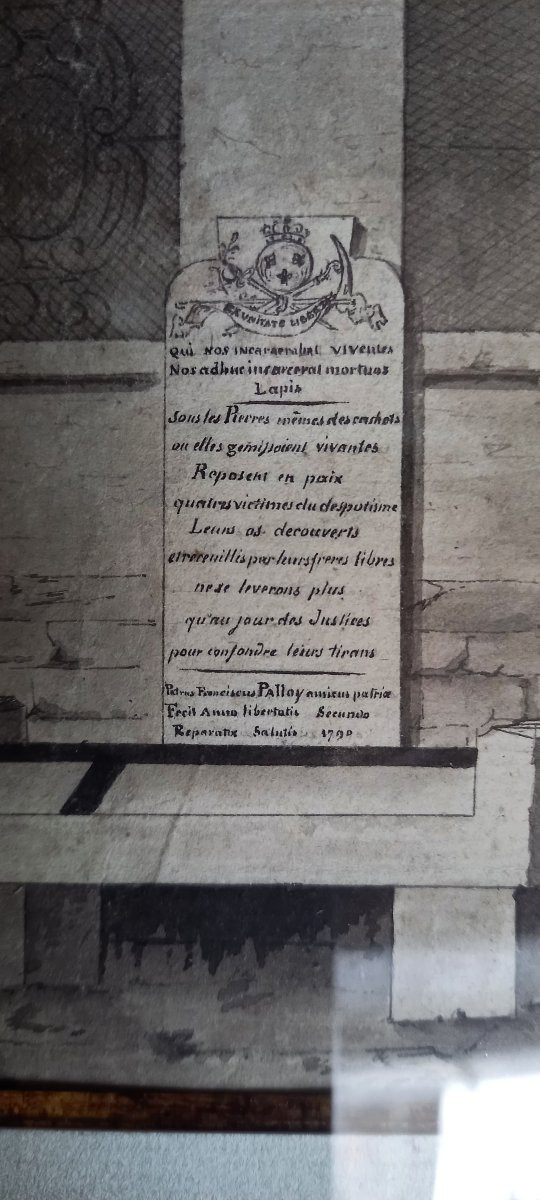
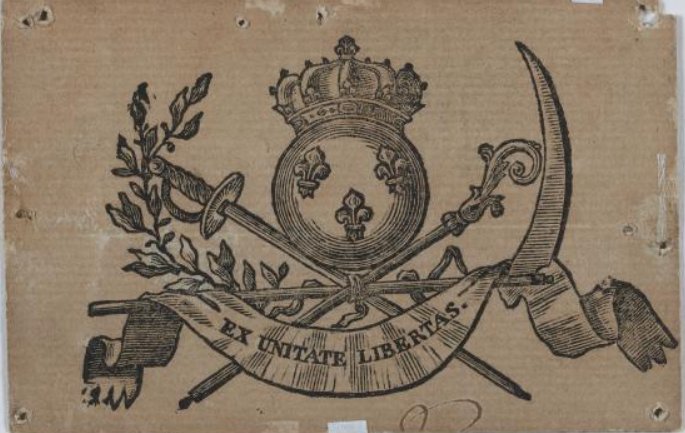
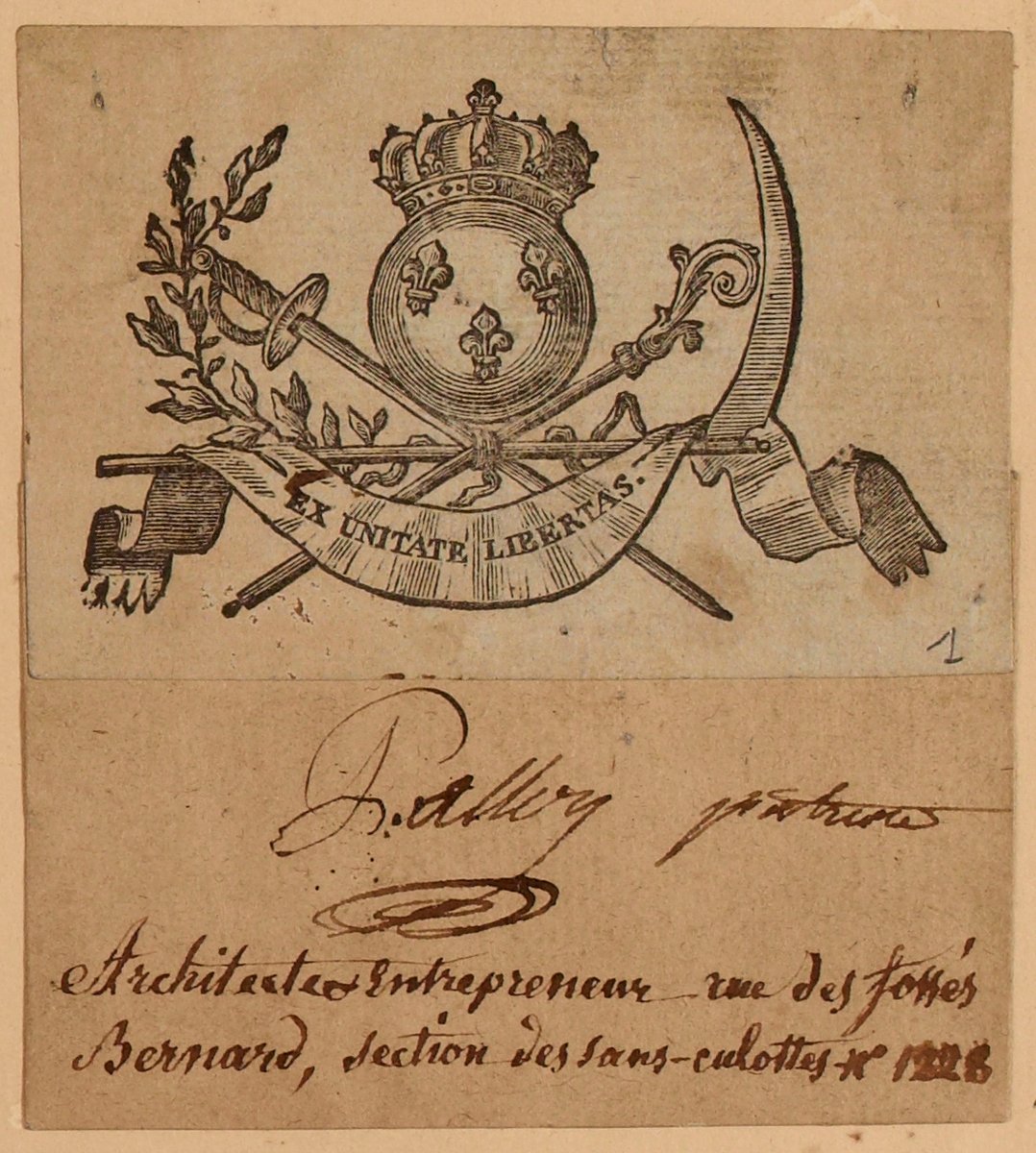
In our drawing, it is the tomb placed in the cemetery of Saint-Paul-des-Champs, now destroyed just like the church of the same name, a section of whose wall still remains in the Marais, that is shown to us. Surrounded by four poplar trees and standing out in front of the church walls and its bell towers, it is surmounted by a stele topped with the royal crown and the three lilies of France, to which are joined the representation of the three orders: the crosier of the church, the sword of the nobility and the scythe of the third estate with, inscribed on a scroll, the motto: "Ex unitate Libertas", that is to say: "From Unity comes Liberty", a symbolic representation very often taken up by Palloy, notably on the entrance cards, signed by the demolition architect, of the Bastille model workshop (see the last three images from the Carnavalet Museum-History of Paris). Below appears the following epitaph: "Who imprisoned us alive / and imprisoned us dead / with lapis / beneath the very stones of the dungeons / where they groaned alive / May they rest in peace / four Victims of despotism / Their bones uncovered / and gathered by their free brothers / will rise again / only on the day of justice / to confound their tyrants, // Petrus Franciscus PALLOY, friend / made his country in the year of liberty / with salvation restored 1790."
This drawing, besides its historical significance, is of great aesthetic and technical quality with its refined interplay of grays, of great softness, typical of architectural wash drawings of the period.
It is presented in a gilt frame, under an old-fashioned mat also treated with gray and blue washes with black and gold lines.
Period: late 18th century.
Dimensions:
- 30 cm x 19.5 cm visible
- 61.5 cm x 41.5 cm with frame.
Pierre-François Palloy (1755-1835) had the idea, using the stones from the destruction of the fortress itself, of having reduced-scale models made in stone from the Bastille, and later, in plaster mixed with mortar from the Bastille.
These pieces were sent to the representative bodies of the time: the deputies, the political clubs, the city of Paris, and to the chief towns of the new French departments from February 1790.
In our drawing, it is the tomb placed in the cemetery of Saint-Paul-des-Champs, now destroyed just like the church of the same name, a section of whose wall still remains in the Marais, that is shown to us. Surrounded by four poplar trees and standing out in front of the church walls and its bell towers, it is surmounted by a stele topped with the royal crown and the three lilies of France, to which are joined the representation of the three orders: the crosier of the church, the sword of the nobility and the scythe of the third estate with, inscribed on a scroll, the motto: "Ex unitate Libertas", that is to say: "From Unity comes Liberty", a symbolic representation very often taken up by Palloy, notably on the entrance cards, signed by the demolition architect, of the Bastille model workshop (see the last three images from the Carnavalet Museum-History of Paris). Below appears the following epitaph: "Who imprisoned us alive / and imprisoned us dead / with lapis / beneath the very stones of the dungeons / where they groaned alive / May they rest in peace / four Victims of despotism / Their bones uncovered / and gathered by their free brothers / will rise again / only on the day of justice / to confound their tyrants, // Petrus Franciscus PALLOY, friend / made his country in the year of liberty / with salvation restored 1790."
This drawing, besides its historical significance, is of great aesthetic and technical quality with its refined interplay of grays, of great softness, typical of architectural wash drawings of the period.
It is presented in a gilt frame, under an old-fashioned mat also treated with gray and blue washes with black and gold lines.
Period: late 18th century.
Dimensions:
- 30 cm x 19.5 cm visible
- 61.5 cm x 41.5 cm with frame.
900 €
Period: 18th century
Style: Louis 16th, Directory
Condition: Excellent condition
Material: Paper
Length: 30 cm
Width: 19,5 cm
Reference (ID): 1722166
Availability: In stock
Print