

Entourage Of Johann Heinrich Füssli (1741 – 1825) - Nude Study
Entourage of Johann Heinrich Füssli (1741–1825)
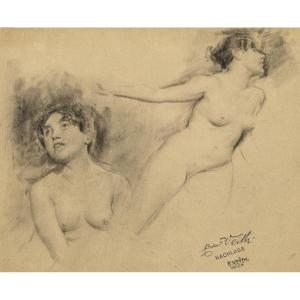
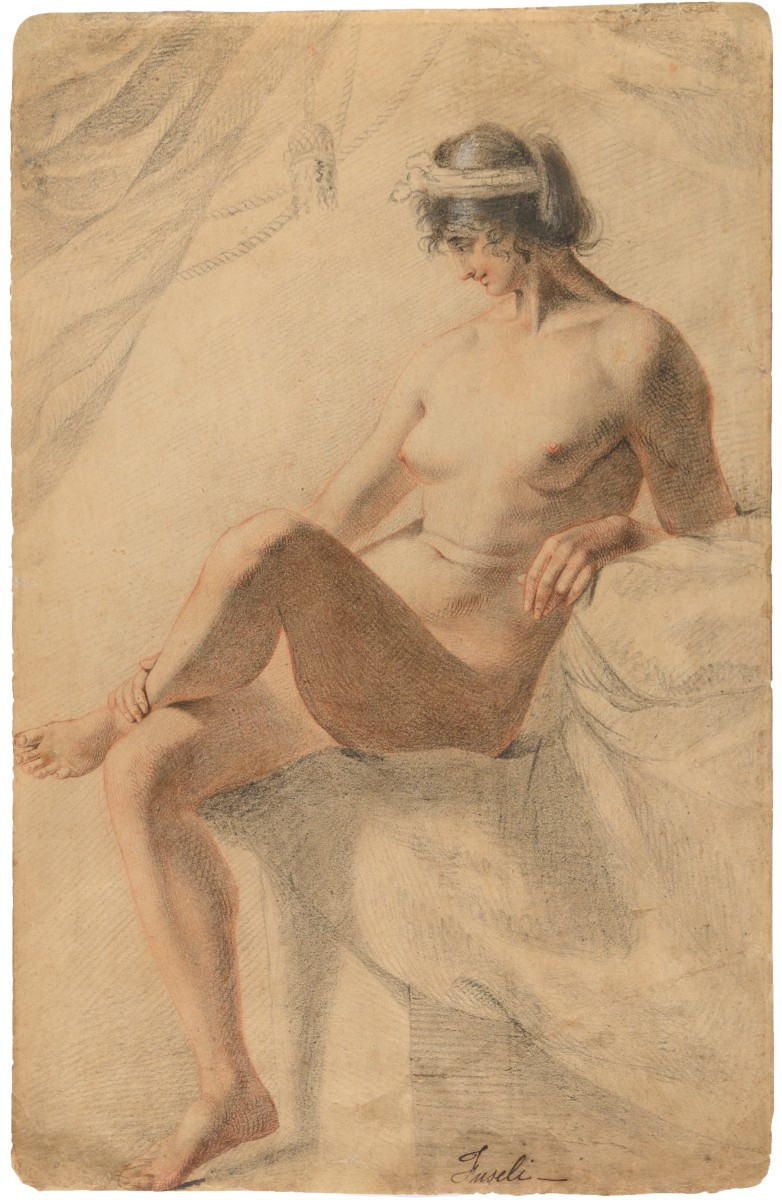
Study of a Female Nude
Black chalk with red chalk highlights on laid paper,
36.9 x 23.8 cm
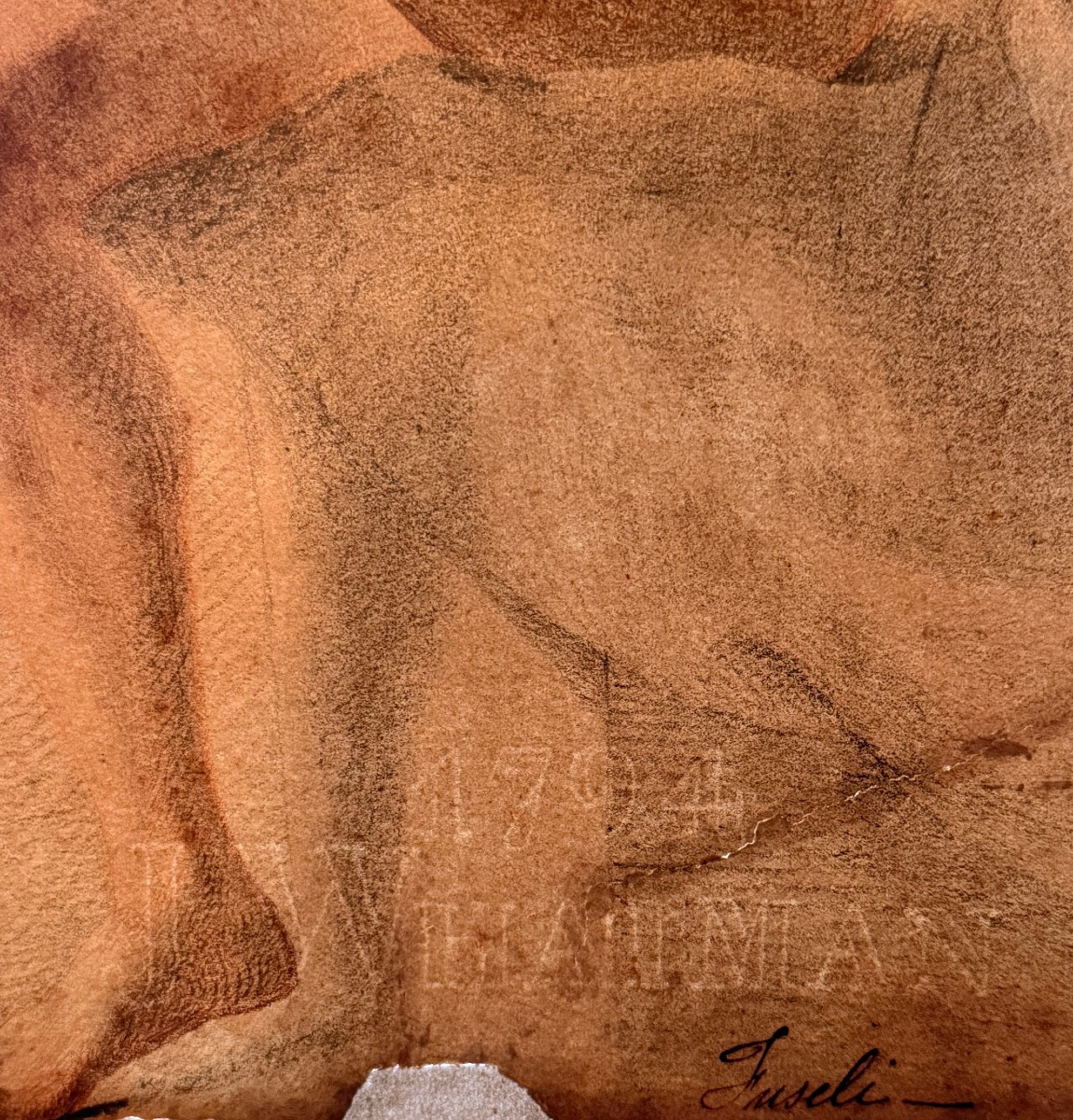
Watermark: James Whatman, 1794
Provenance:
Private collection, Paris
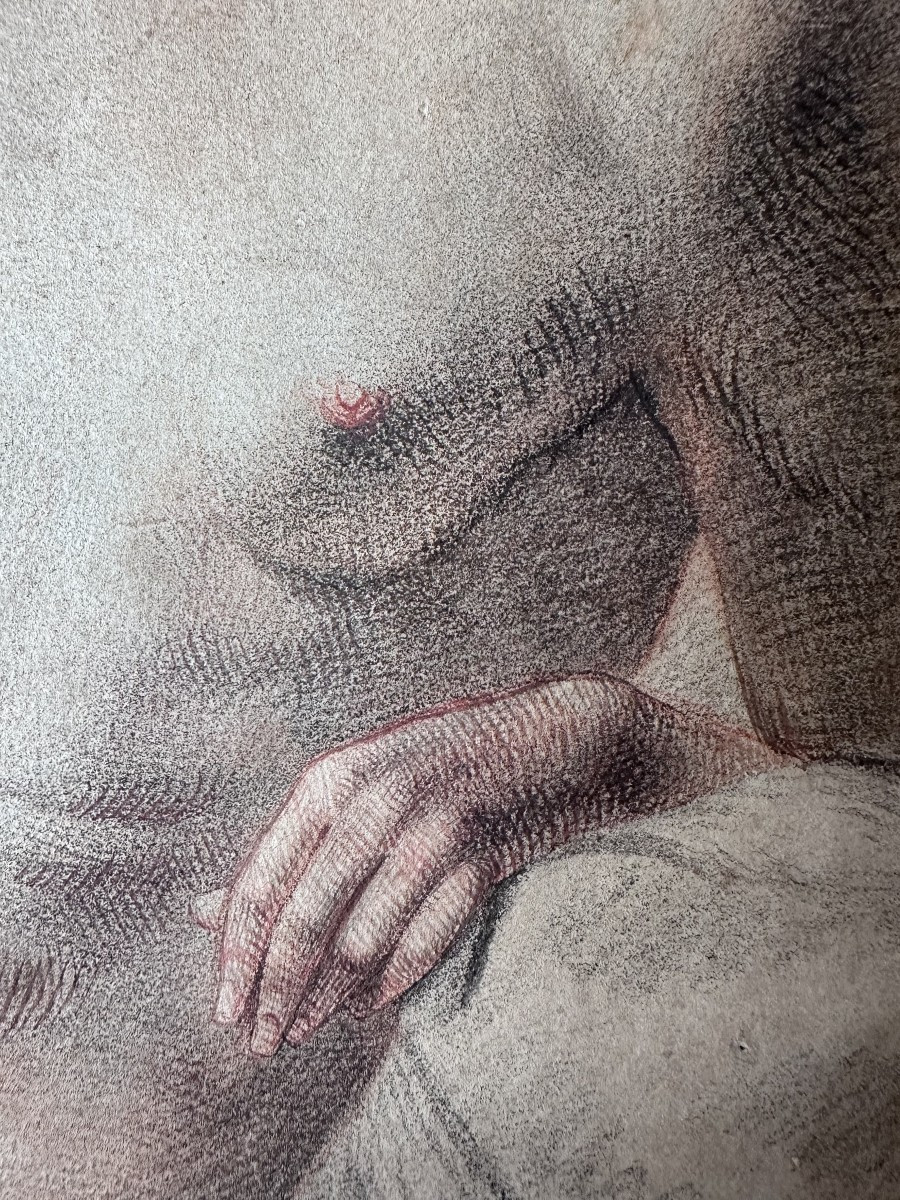
This delicate study of a female nude belongs to the graphic tradition of the late eighteenth century, a period in which drawing formed the very foundation of academic training and artistic research. Attributed to the circle of Johann Heinrich Füssli, it reveals a sensibility that is both classical and already imbued with the expressive tension characteristic of the emerging pre-Romantic spirit.
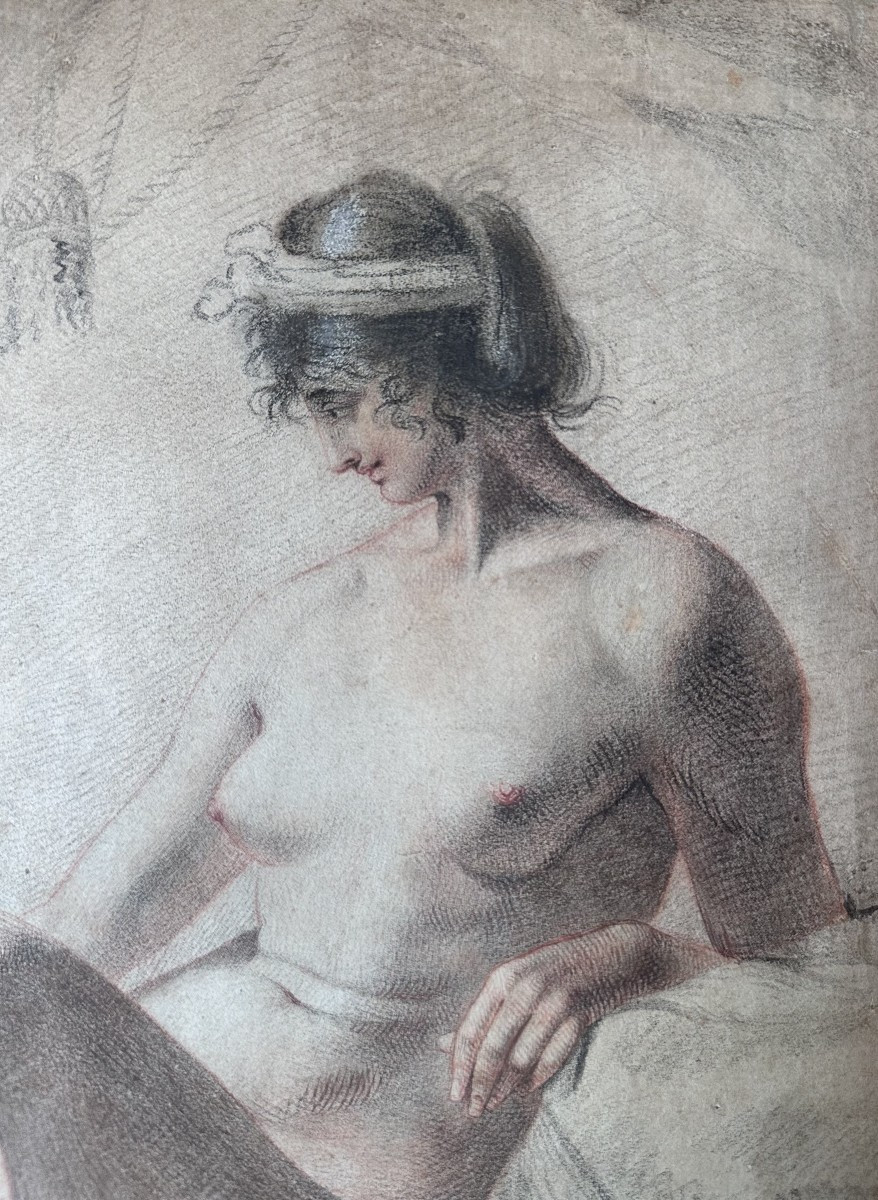
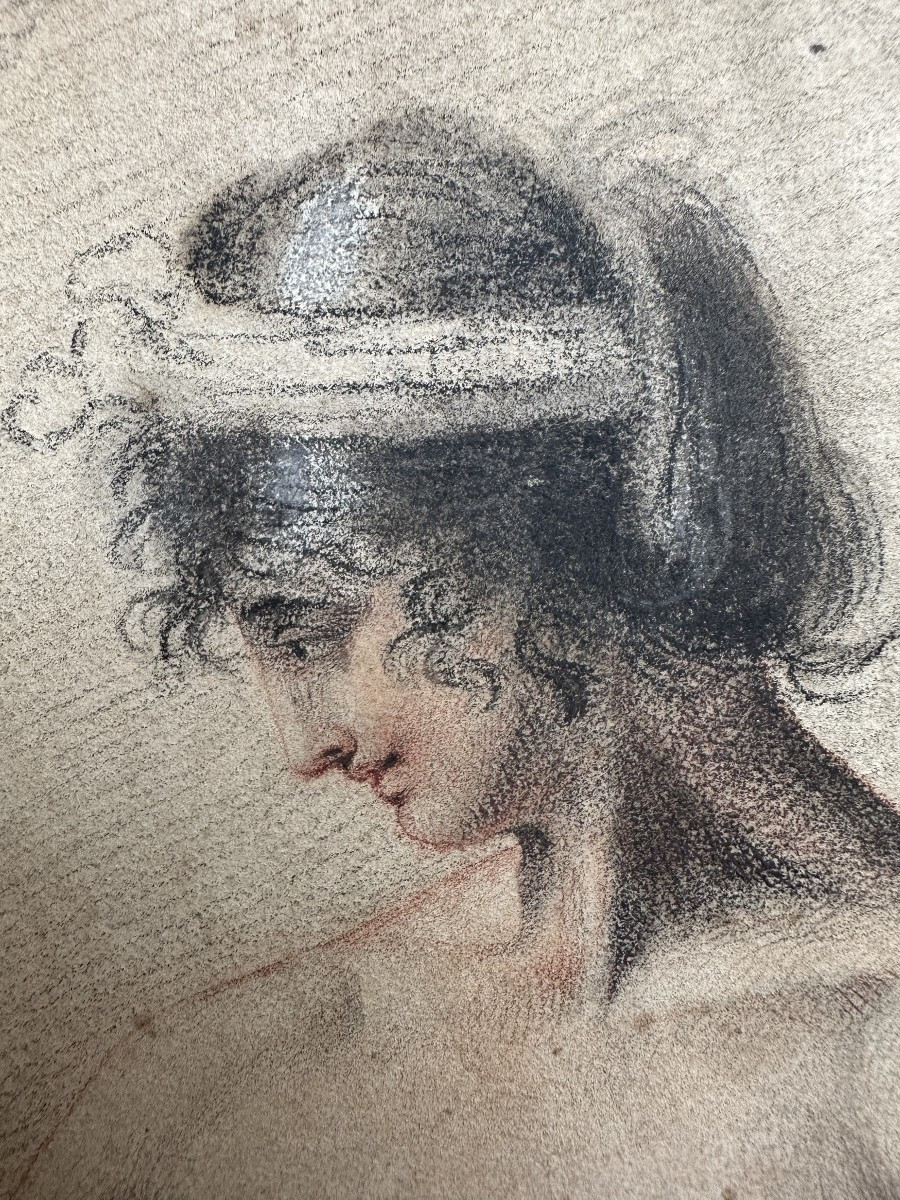
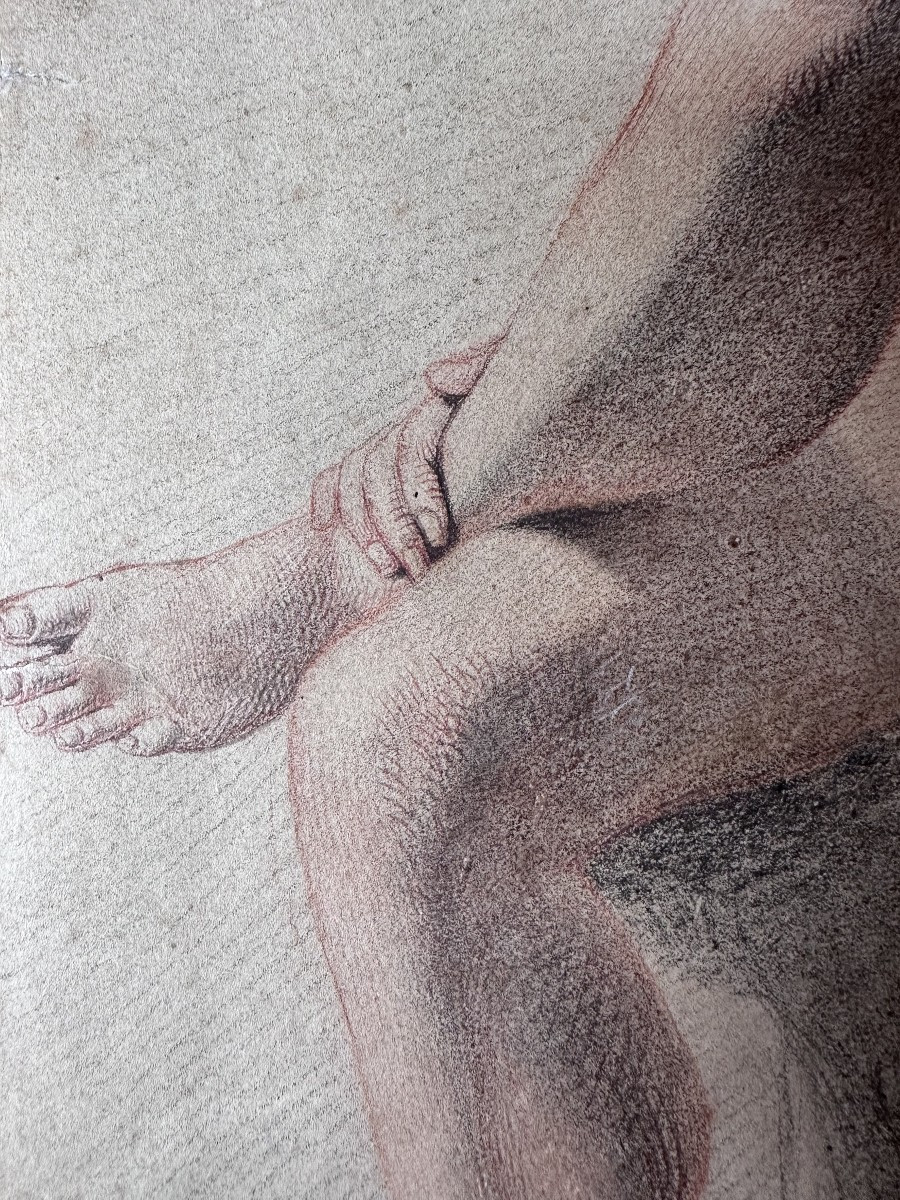
The seated figure, resting upon softly rendered drapery, adopts a pose that is at once natural and contemplative. With her head inclined and her gaze lowered, she appears absorbed in silent reflection. The modeling, achieved through a refined network of black chalk hatching, is subtly enlivened by delicate touches of red chalk that warm the flesh tones and enhance the softness of the skin. This technical combination lends the body a presence that is both sculptural and vibrant.
The careful attention to anatomy demonstrates a solid understanding of the human form, acquired through study from the live model. The treatment of the shoulders, torso, and legs reveals a keen sense of volume and compositional balance. The drapery, freely sketched, frames the figure and reinforces the spatial depth of the composition.
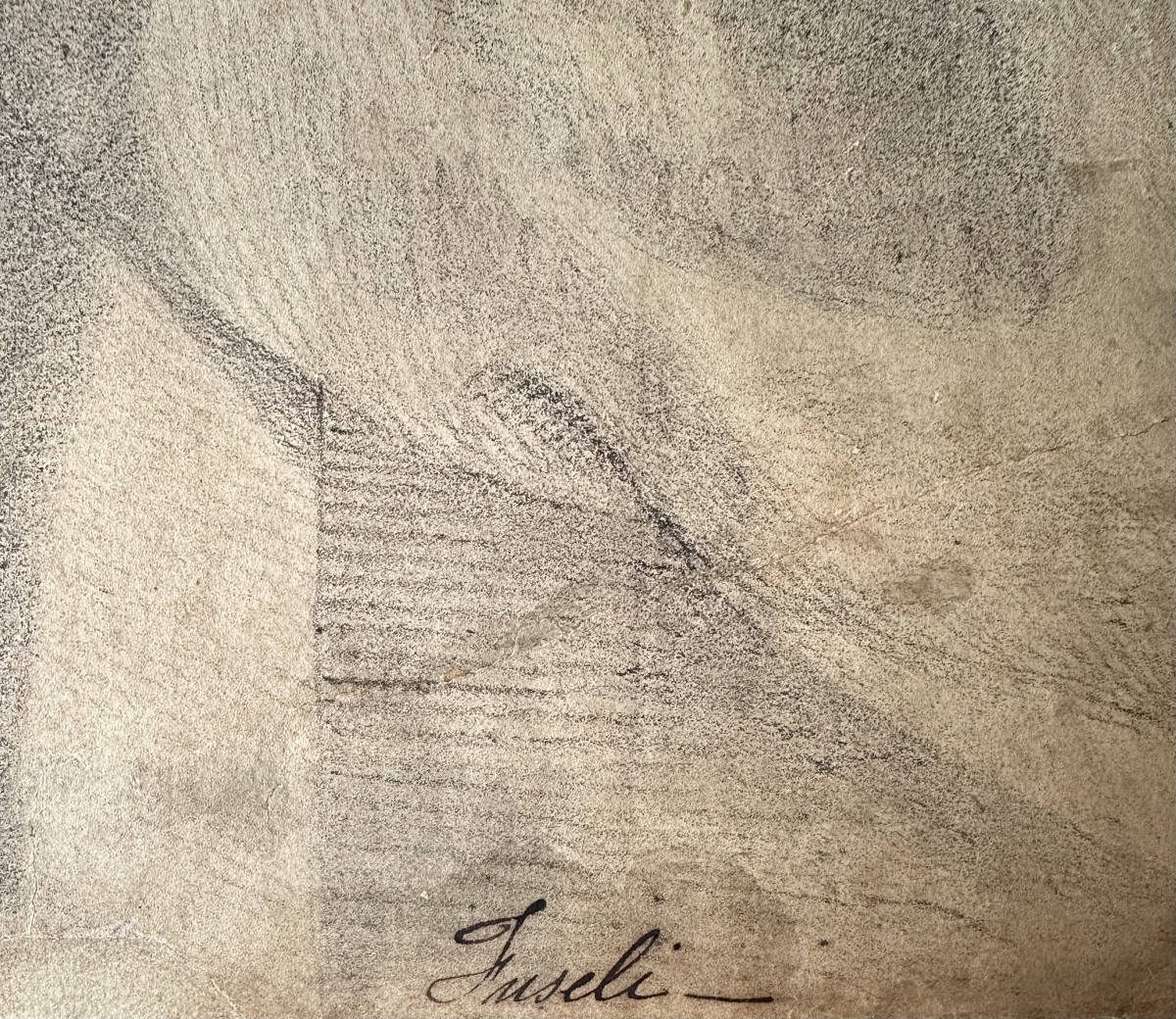
Johann Heinrich Füssli, a Swiss-born artist active primarily in London, was a major figure of his time. Known for his visionary and often dramatic compositions, he profoundly influenced his circle through his taste for expressive poses and elongated silhouettes. This sheet, more intimate in nature, nevertheless reflects an academic and meditative approach, in which line takes precedence over narrative.
The paper bearing the “James Whatman 1794” watermark places the work within a British context of high material quality. Whatman papers were especially prized by artists for their fineness and durability, ensuring both precision of execution and longevity.
Through its restrained grace, the accuracy of its modeling, and the delicacy of its execution, this study stands as a valuable testament to the practice of drawing at the crossroads between Neoclassicism and the dawn of Romanticism. It reflects the central importance accorded to the study of the human body as both a primary source of inspiration and a fundamental exercise in artistic creation.
Period: 18th century
Style: Louis 16th, Directory
Condition: Condition of use
Material: Paper
Length: 23.8
Height: 36.9
Reference (ID): 1711342
Availability: In stock