

French School, Late 18th Century (circa 1775–1795) - Allegory Of Mourning (or Fallen Fortune)
French School, late 18th century (circa 1775–1795)
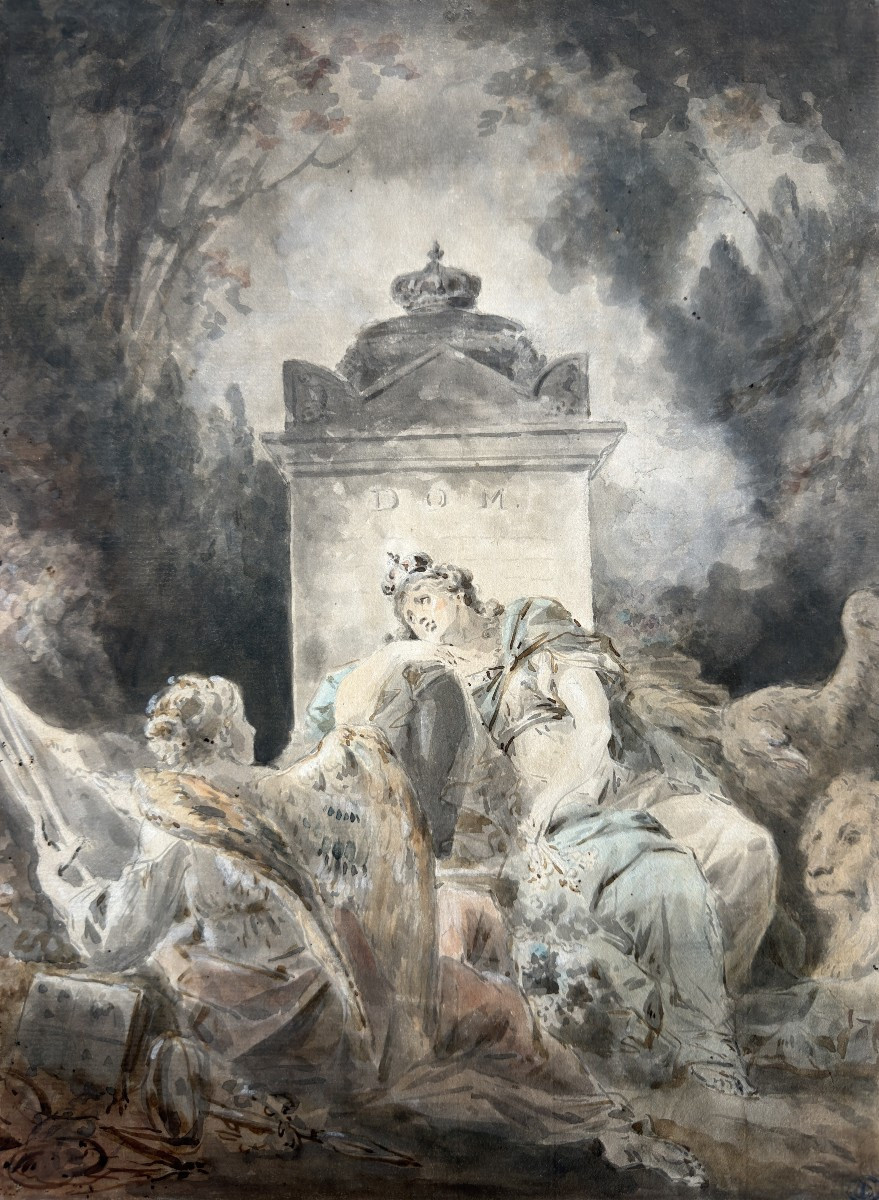
Allegory of Mourning (or Fallen Fortune)
Pen and brown ink, grey ink, wash, watercolor, and white gouache highlights on laid paper,
33.2 × 24.5 cm
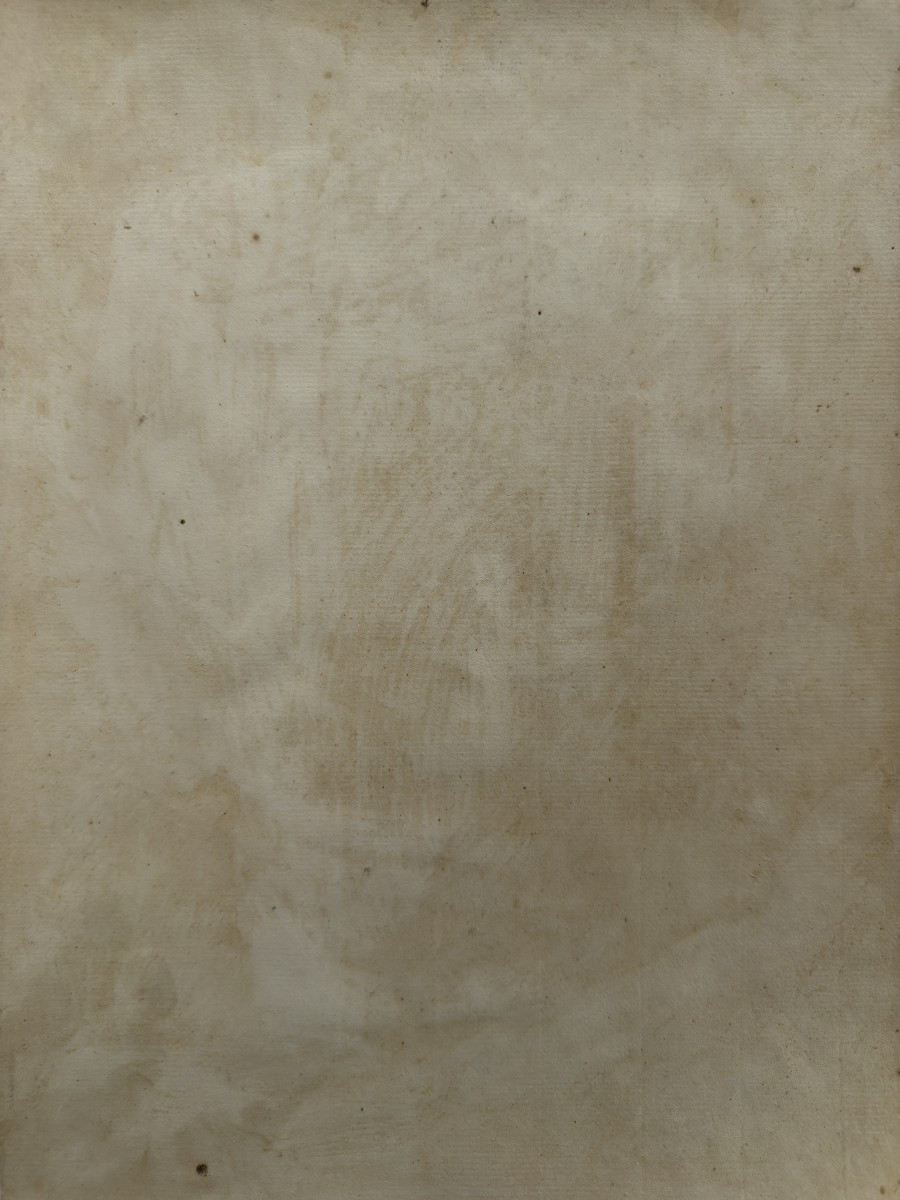
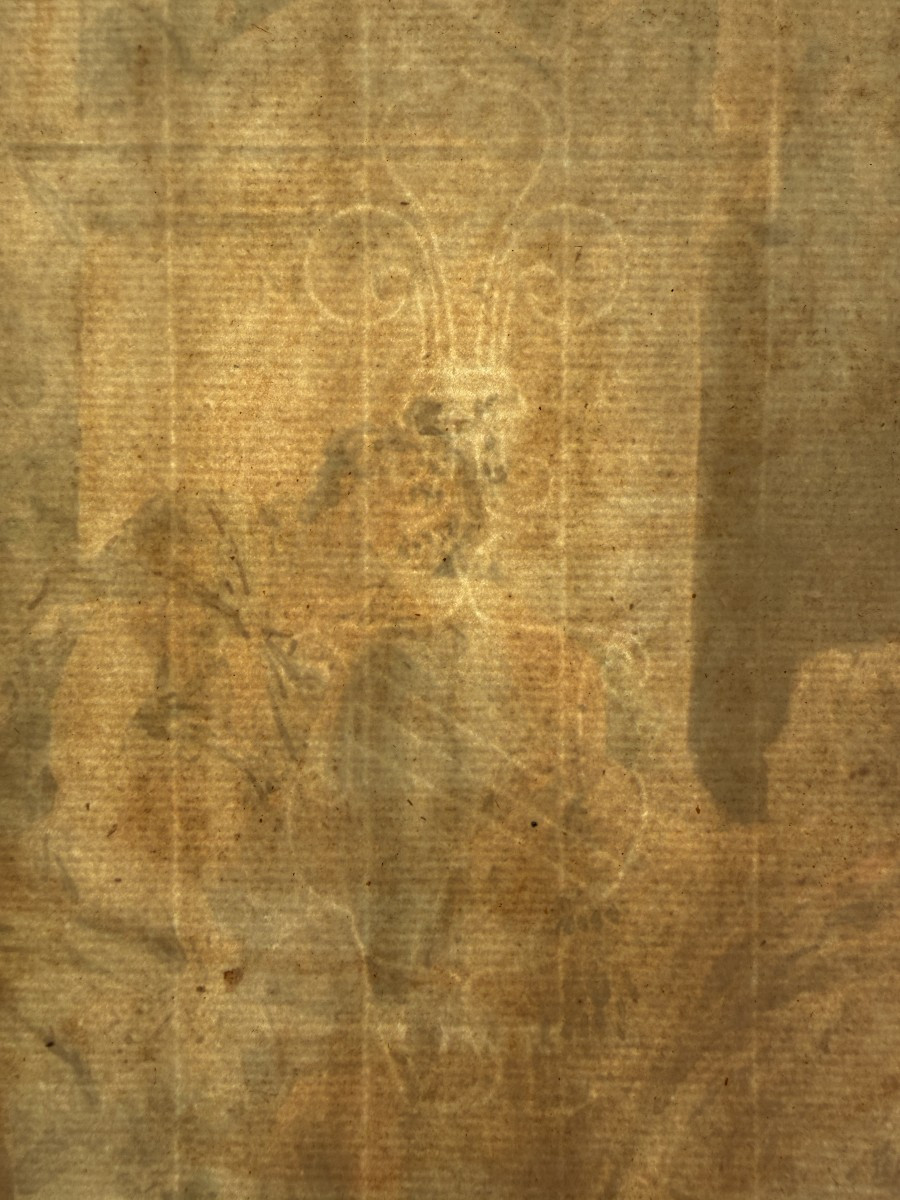
Verso: fleur-de-lys watermark
Provenance:
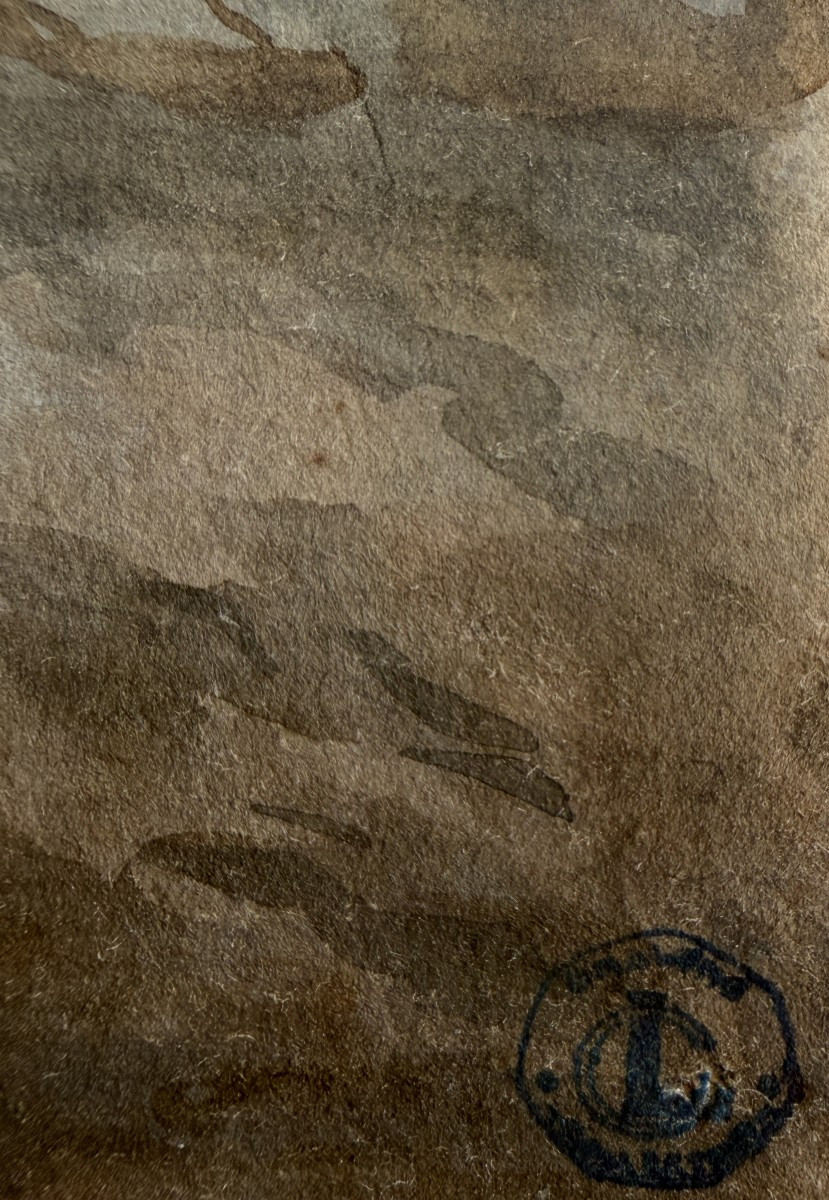
Carlo Lucida (collector’s mark, Lugt 3269)
Private collection, France
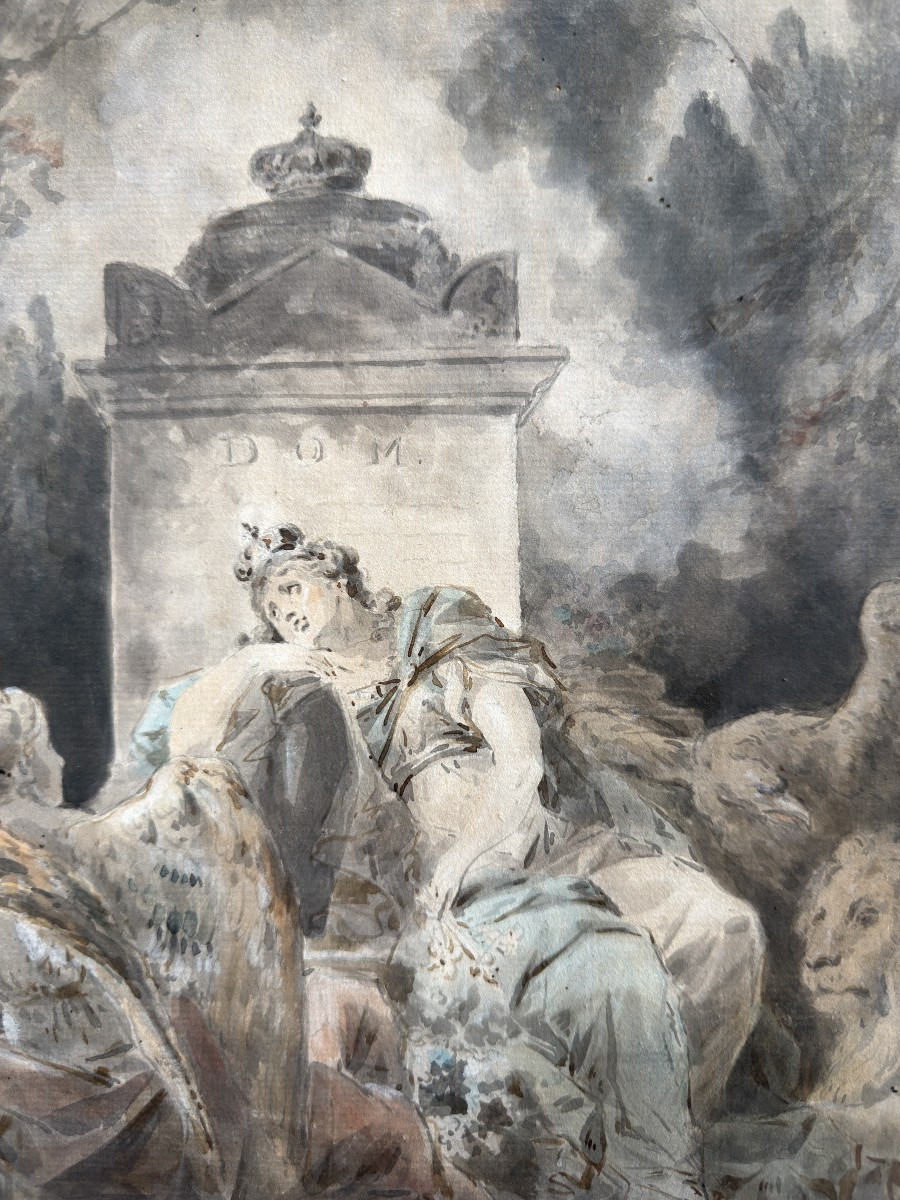
This finely executed work eloquently reflects the aesthetic and symbolic concerns of late 18th-century French art. It reveals the influence of the circle of Jean-Honoré Fragonard (1732–1806), although it cannot be securely attributed to him. The inventiveness of the composition, combined with a masterful handling of wash and highlights, nonetheless attests to an accomplished artist, sensitive to effects of light and shade and to emotionally charged allegorical subjects.
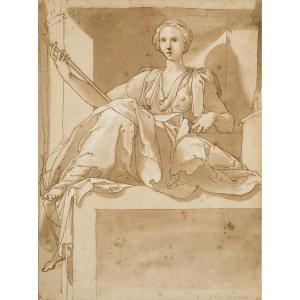
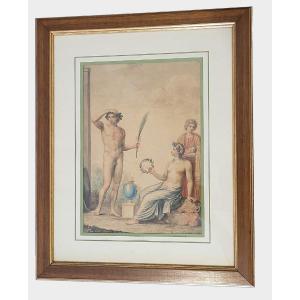
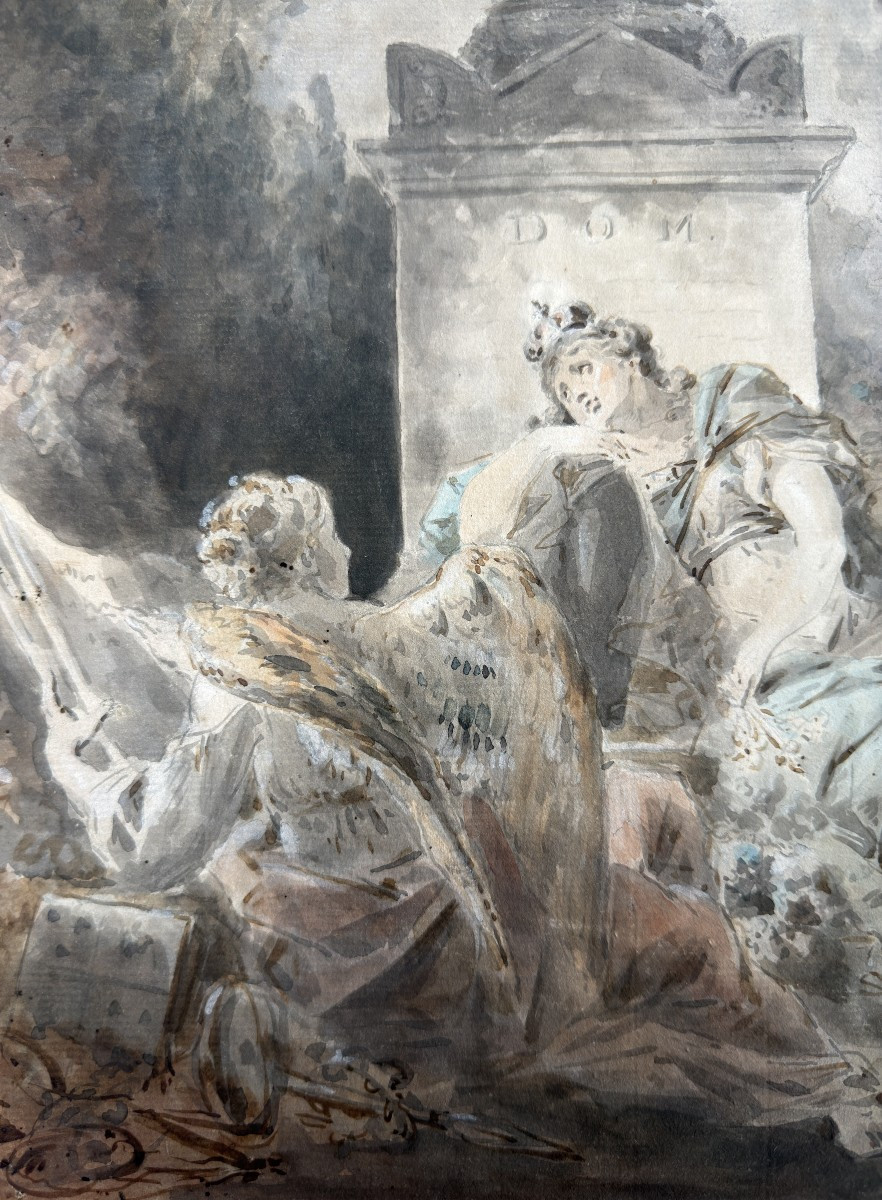
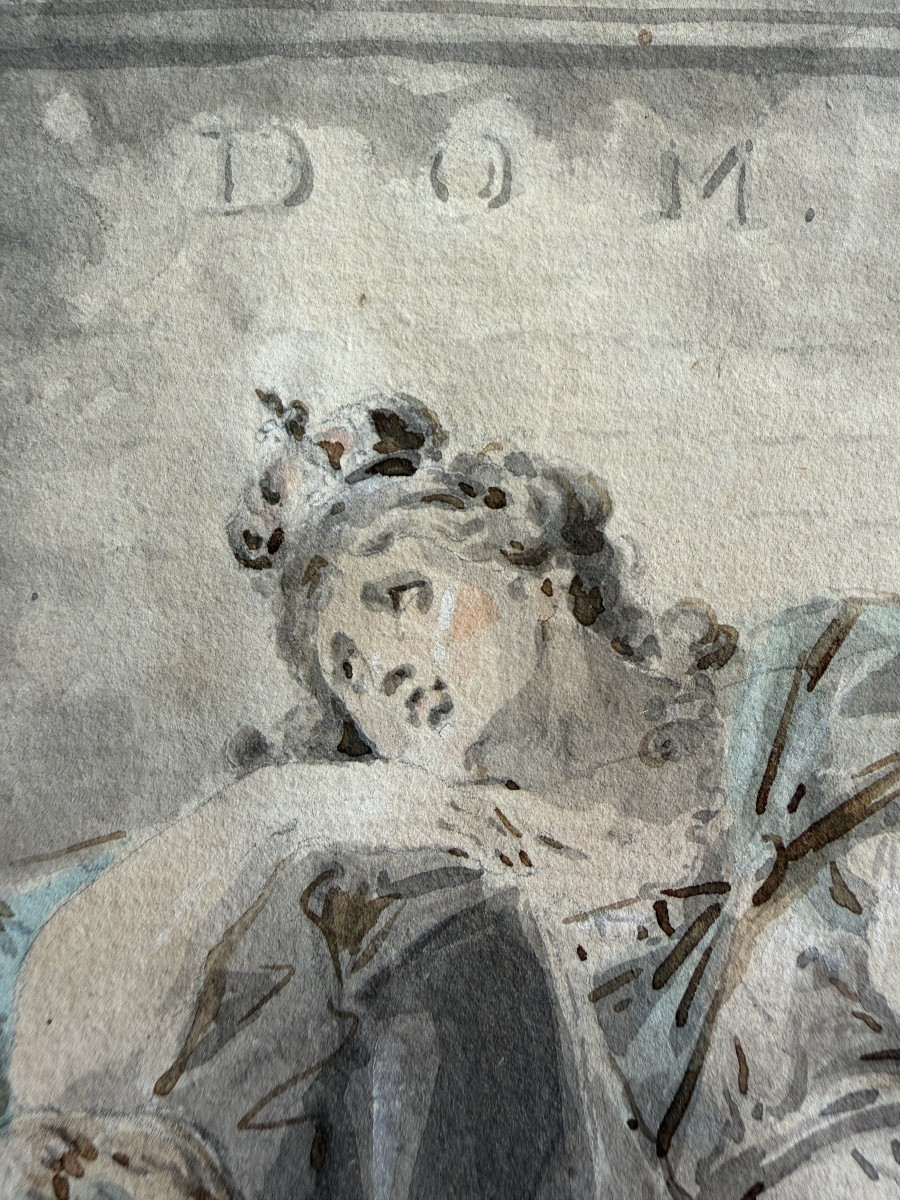
The scene depicts a young woman draped in antique-style garments, languidly seated at the foot of a crowned mausoleum, under the visible signs of mourning. The inscription “D.O.M.” (Deo Optimo Maximo) lends the monument a solemn, sacred character, frequently encountered in the religious and funerary imagery of the period. Beside her stands a winged genius, often interpreted as a figure of spirit or memory, which further reinforces the melancholic tone of the composition. The open book, abandoned objects on the ground, and neglected instruments all evoke the vanity of knowledge and possessions, underscoring the fleeting nature of fortune.
The wooded setting, rendered through dark washes and atmospheric touches, envelops the figures in an almost theatrical aura, like a stage set for loss and contemplation. The white gouache highlights on the draperies and faces enhance the expressiveness and elegance of the figures, particularly through the subtle interplay of gazes and gestures.
This work belongs to the sentimental and allegorical current of the final years of the Ancien Régime, a time when artists—often marked by political and social upheaval—turned toward more serious and introspective themes.
Whether conceived as an autonomous work or as a presentation drawing, this composition captivates through the richness of its execution and the poetic strength of its subject. It stands as a refined testament to the art of drawing at its height, poised between the legacy of the Rococo and the emerging sensibility of Neoclassicism.
Period: 18th century
Style: Louis 16th, Directory
Condition: Good condition
Material: Paper
Width: 24.5
Height: 33.2
Reference (ID): 1701863
Availability: In stock