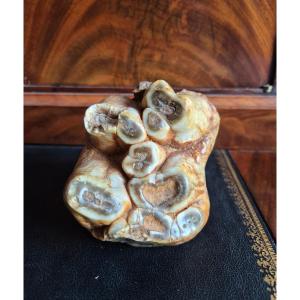
Rare fossil molar of a mastodon of the genus Anancus (proboscidean mammal). From the Plio-Pleistocene of France - 1.5 million to 600,000 years ago. References to Burgundy-Franche-Comté. Formerly in a [...]
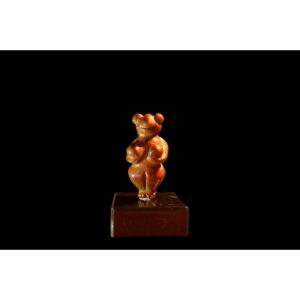
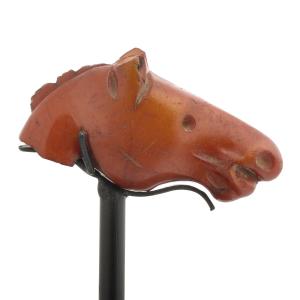
Fragmentary Amber Carving of a Horse’s Head Possibly Denmark; Mesolithic period (proposed) Amber (fossilised resin), carved and drilled; mounted on a modern metal display standMeasurements: 6 × 3.2 × [...]
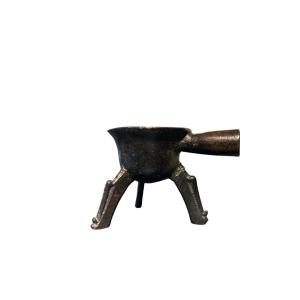
A pretty little crucible, cast in brass (a food-grade bronze alloy), with a handle for easy gripping and a wooden grip. It rests on three feet shaped like goat hooves, allowing it to be placed directl[...]
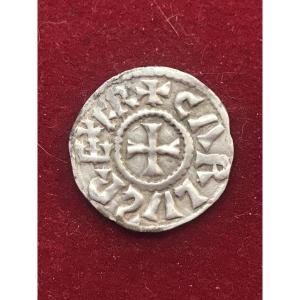
Denier of Charlemagne for the city of Toulouse; dating: 780/800. Weight 1.67 g. Diameter: 21 mm. Class R2, condition VF. Obverse legend: CARLUS REX FR; reverse legend: TOLUSA, Carolingian monogram.
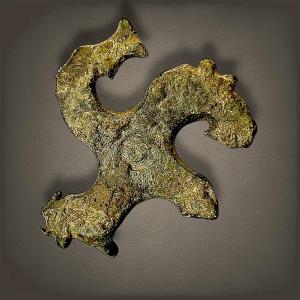
Roman Brooch Fibula.1st - 3rd century AD.A fine example of a tertraskelion / Gammadion fibula with four terminals, partial damaged and showing its age.These type linked to Romans , the four terminals[...]
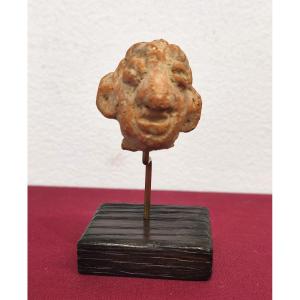
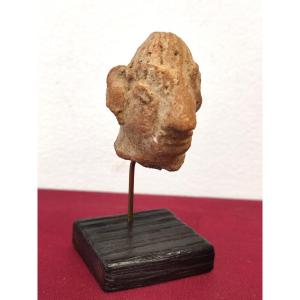
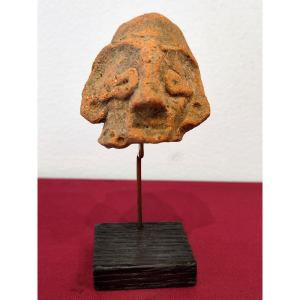
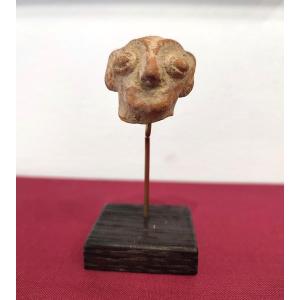
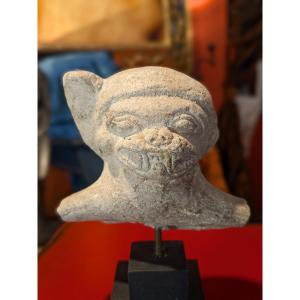
Small ceramic votive statuette head. Once again, the very pronounced brow ridges are noticeable. The features are accentuated: large ears, large nose, and eyes.
This male head from the Syro-Hittite civilization is particularly expressive and reminiscent of press caricatures. It dates from the 15th-11th centuries BC. With its timeless gaze, it nevertheless rem[...]
Idol head from the Syro-Hittite civilization, from a collection assembled in the 1970s-80s by a French physician. It dates from between 1500 and 1100 BC.
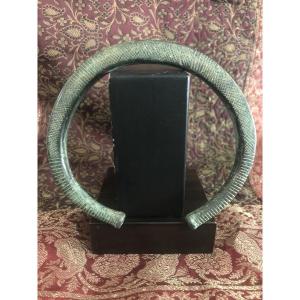
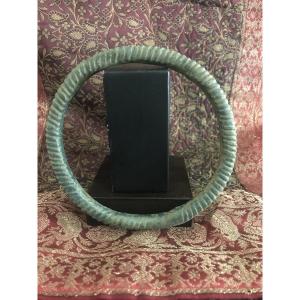
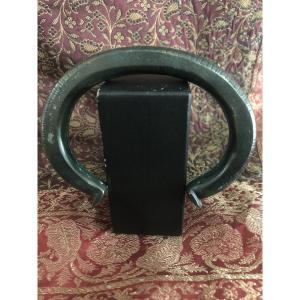
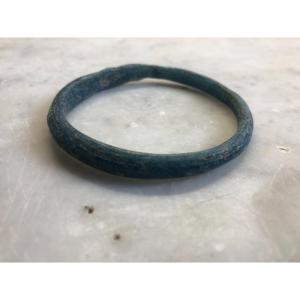
Bronze Age bracelet with a geometric design of straight and crossed lines. Late Bronze Age (900-600 BC), weighing 197 grams and measuring 11 cm in diameter. Provenance: Jesus Vico auction, Madrid.
Bronze Age bracelet, also known as an arm bracelet. Dating from the Urnfield culture period (1300-1200 BC), the bracelet is decorated with a spiral relief design around the shank. It measures 12 cm in[...]
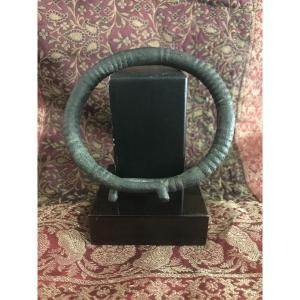
Bronze Age bracelet with crossed stems, decorated with five segments composed of raised rings and six smooth segments. Halstadt period (8th to 6th century BC). Very dark green patina, weight 150 grams[...]
Bronze Age bracelet (3000-1000 BC), a bronze bracelet with a finely chased design of parallel lines and a uniform dark green patina. The bracelet consists of a fairly thick (1 mm) hollow rod containin[...]
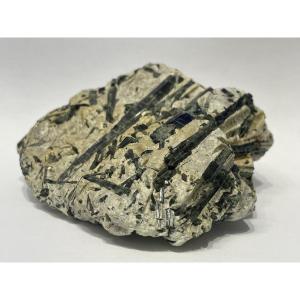
Actinolite is a ferromagnesian silicate mineral species belonging to the calcium amphibole group. It was first described by the mineralogist Kirwan in 1794 under the name actynolite. Its name comes fr[...]
Beautiful slice of polished Septaria and calcite. Septaria is a nodule formed around a nucleus in an anoxic environment which is found in the so-called "black earth" formations of the Oxfordian geolog[...]
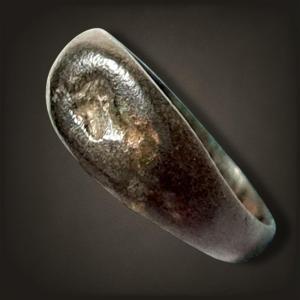
Roman Era Ring A very interesting ring with the relief of an important figure. Many similar rings exist depicting, emperors, warrior, senators or important individuals.
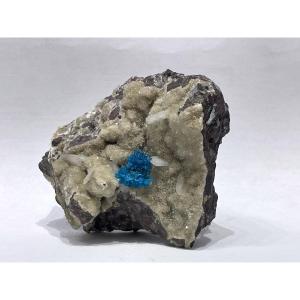
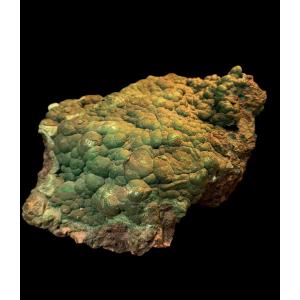
Beautiful specimen of Cavaniste on Heulandite. Cavaniste is a rare mineral with a sublime electric blue color. Its name comes from the mixture of three chemical compounds it contains: calcium, vanadiu[...]
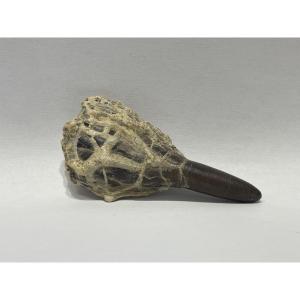
Fine specimen of Dactyloteuthys irregularis - a genus of the belemnite family (dibranchial cephalopod molluscs, related to modern cuttlefish). Jurassic period, Middle Toarcian. Weight: 41 g. Length: 9[...]
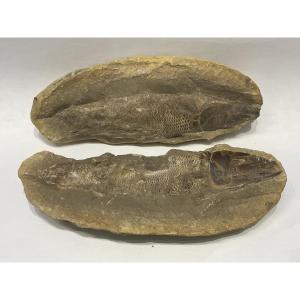
Rhacolepis buccalis. Beautiful specimen of a fossilized fish in two parts, the positive and negative. Cretaceous period (approximately 100 million years old). Origin: Brazil. Length: 17 cm, Width: 7 c[...]
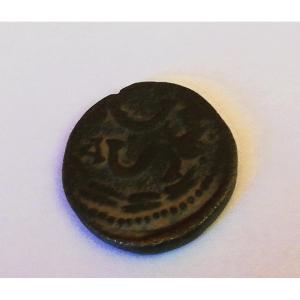
We present this Roman copper coin, dated 145-161 AD, with a dark patina. Marked by Antoninus Pius. In fair condition. Weight: 4.60 g. Shipping extra (€26).
Period: c. 600–575 BC (first quarter of the 6th century BC) Culture: Archaic Greek Workshop/Origin: Corinth Provenance: former European private collection, acquired before 1970. This small, ancient te[...]
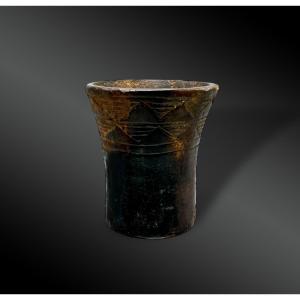
Small CEREMONIAL CUP called Kero La Playa-Inca culture, Peru and Salta province, ArgentinaCirca 1400–1550 Wood H: 5 cm; Diam: 4.7 cm(old minor wear marks stabilised in the wood, signs of use, some inl[...]
This terracotta head comes from a Chinese funerary figurine intended to accompany and protect the deceased in the afterlife. The face, with its calm yet determined expression, embodies the serene auth[...]
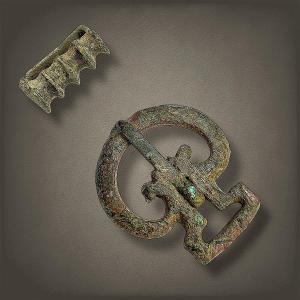
"Roman bronze key ring (1st–4th century AD). Circular ring with an angled key and a rectangular bit with notches. Dark brown-green patina, slight traces of wear and corrosion."
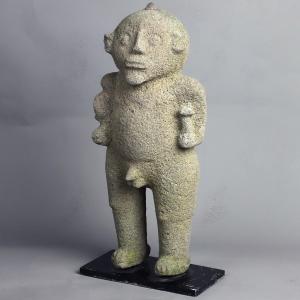
Sacrificer depicted standing, holding a mace in his left hand and a trophy head under his right arm. Gray vesicular basalt. Costa Rica. Huertar civilization. 1000–1500 AD. Height: 40 cm. Provenance: J[...]
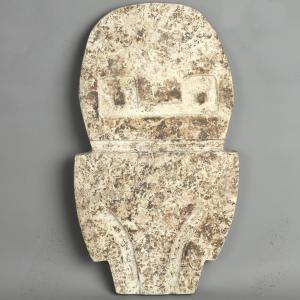
Nephrite Statuette, attributed to the Hongshan Culture
Northeastern China – Neolithic period (c. 4700–2900 BC)
This intriguing nephrite statuette is attributed to the Hongshan culture, one of the mo[...]
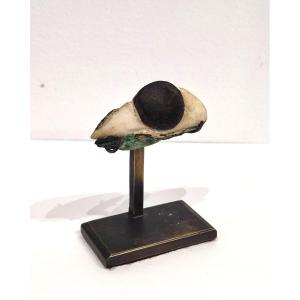
Stone eye made of alabaster and onyx in a bronze mount. Similar objects are held in the collections of the Louvre Museum. Formerly in the Van Der Burgh collection before 1980. Height with base: 8.5 cm
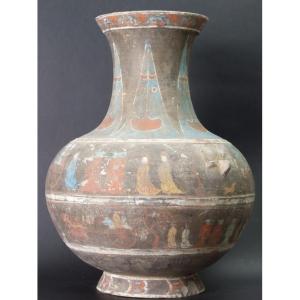
The vase features a multicolored decoration painted in horizontal bands. It depicts geometric shapes as well as simplified genre scenes. It has two handles on the sides. China, 400-200 BC. Warring Sta[...]
Tetradrachm for the Kingdom of Macedonia: Antigonus Gonatas. 273/271 BC. Mint: Amphipolis. Obverse: Macedonian shield decorated with seven stars between two circles; in the center, the head of Pan. Re[...]
Large pin from the Late Bronze Age, first millennium BC. 26 cm long overall, it is surmounted by a button-shaped head, 25 mm in diameter and 14 mm high. A 1 cm gap separates the head from a collar mar[...]
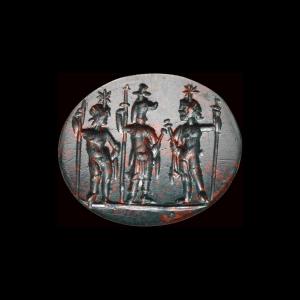
11 × 13 × 2 mm (0.43 × 0.51 × 0.08 in)Mounting on requestRoman period, 2nd-3rd century A.D.Rare Roman intaglio in heliotrope (bloodstone) depicting a tripartite composition of magico-religious charact[...]
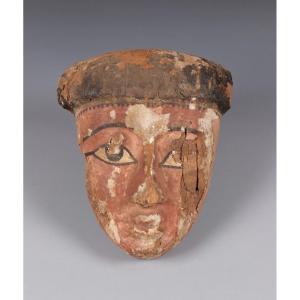
Egyptian Polychrome Wooden Funerary Mask
Late Period, 26th–30th Dynasties, ca. 664–300 BC
Mummy mask carved in wood and coated with stucco, depicting an idealised face with regular features, intende[...]
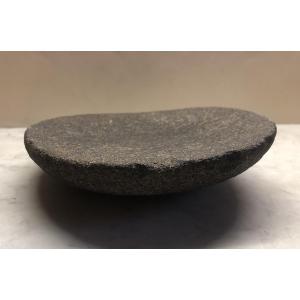
A pre-Columbian Mixtec basalt metate, or millstone. A metate is a stone millstone, used for domestic purposes, for grinding grains. It has been used for thousands of years (since at least 3000 BC) in [...]
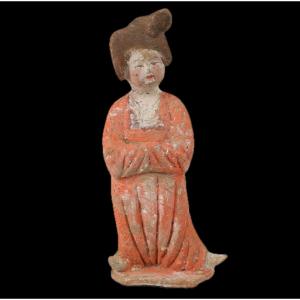
This terracotta statuette of a Tang dynasty court lady is an excellent example of the renowned funerary “Fat Ladies.” Her full and rounded silhouette, serene posture, broad calm face and ample robe re[...]
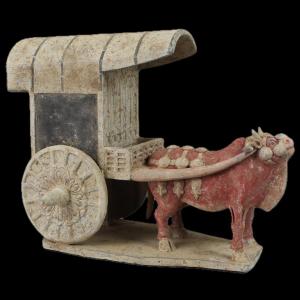
Exceptional funerary terracotta diorama depicting an ox pulling a covered cart, perfectly aligned with the repertoire of mingqi models from the Northern Qi dynasty. The piece stands out for its cohere[...]
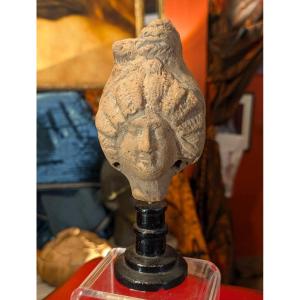
Archaeological terracotta - broken and glued - Depicts a lady of high society, wearing a beehive-shaped headdress. 1st century BC to 3rd century AD. Height with base: 13.2 cm
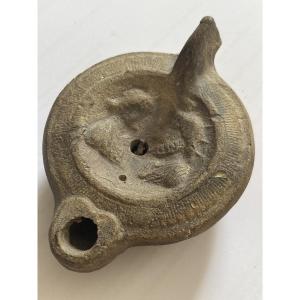
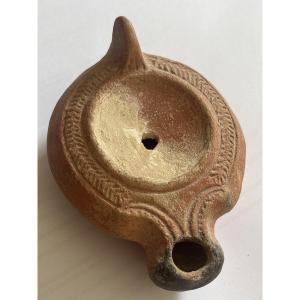
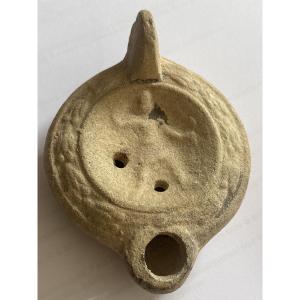
Christian oil lamp, late Roman period, Mediterranean basin. Oil lamp with a circular bowl, decorated on the shoulder with a continuous frieze of stylized petals forming a radiating rosette. The centra[...]
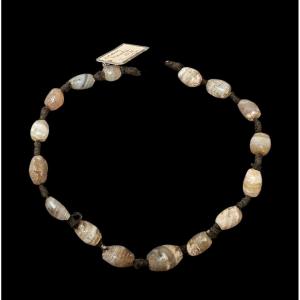
Rare Late Neolithic/Early Bronze Age bead necklace – England, Somerset (3000–2000 BC). The necklace comprises sixteen irregularly ovoid beads with natural banding in shades of gray, brown, and beige, [...]
Roman intaglio: Head of a man facing left, surrounded by two ears of wheat; in the lower register, a galley. Calcined agate. 11.5 x 10 x 3.5 mm. 0.57 g.
The portrait is reminiscent of that of Octav[...]
Gallo-Roman fibula in the shape of a hare. Copper alloy nielloed with a silver-based mixture and tinned. Typical work from the Alesia region. 1st - 3rd century AD. 2.81 g 21.80 x 16.8 mm. Missing the [...]
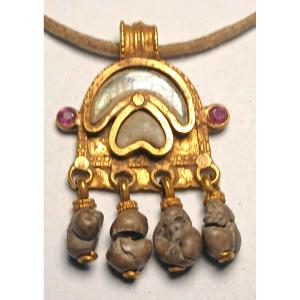
Byzantine gold pendant with four small bezoars, believed to be magical antidotes to poisons. The pure gold structure features glass paste elements in the shape of a half-moon and an inverted heart bet[...]
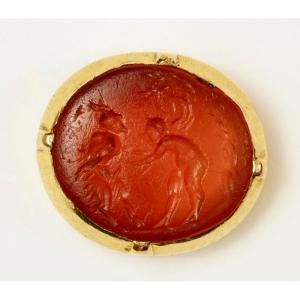
A very fine intaglio depicting Eros facing an ithyphallic satyr (or Pan). Roman art, 1st century AD for the intaglio.Orange-red carnelian, 11.4 x 10.2 mm (intaglio). 19th-century 18-karat gold mount. [...]
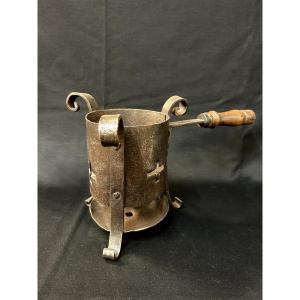
Portable brazier in wrought iron, perforated and assembled. A very simple and basic piece of craftsmanship. The three perforated crosses on the sides suggest ecclesiastical use.Tuscany, 15th century.H[...]
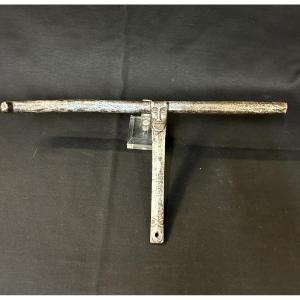
Wrought iron door bolt with carved decoration. The demon mask in the centre is a very unusual feature, perhaps added by the craftsman to make the door secure and inviolable.Italy, 15th century.Dimensi[...]
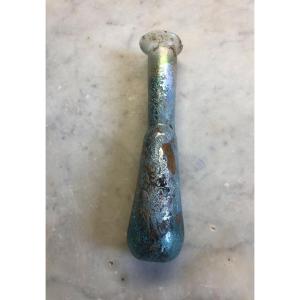
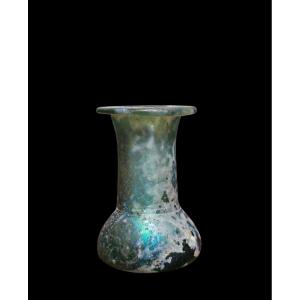
Antique Roman unguentarium, a small, thick-walled blown glass flask resting on a slightly domed circular base. The harmonious and well-balanced pear-shaped body rises to a regular cylindrical neck, en[...]
Proantic uses a cookie to analyze traffic and improve its service by using Google Analytics. Data sent to Google Analytics (frequency of visits to the site and pages visited) are anonymous. No other cookie tracks your activity, your personal data is not collected. Thank you for helping us to have better understanding how Proantic is used.
















 Le Magazine de PROANTIC
 TRÉSORS Magazine
 Rivista Artiquariato