THIS OBJECT WAS SOLD
Glass, Mediterranean Basin, Roman Empire, Circa 100 Bc To 100 Ad.


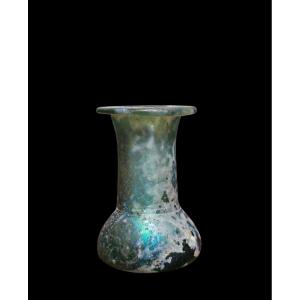


Antique Roman unguentarium, a small, thick-walled blown glass flask resting on a slightly domed circular base. The harmonious and well-balanced pear-shaped body rises to a regular cylindrical neck, ending in a carefully hemmed, flat, flat lip. The glass, slightly tinted turquoise blue, is enlivened by beautiful iridescence with lapis lazuli, green, and pearly reflections, which emphasize the purity of the lines and highlight the technical mastery of the glassblowing. The piece is distinguished by the understated elegance of its proportions and the quality of its execution, characteristic of early Roman glass production. Mediterranean Basin, Roman Empire, late Republic – early Empire, circa 100 BC – 100 AD. Height: 7 cm Diameter: 4.9 cm Provenance: former Parisian collection following an estate sale, Drouot auction, Thierry de Maigret auction house, Paris. Sold with a certificate of authenticity from expert S. Reynes and an invoice from Galerie Ocarina.* Shipping costs upon request. "At the end of the Roman Republic, the rise of blown glass accompanied the evolution of practices related to personal hygiene, cosmetics, and the preparation of perfumed or medicinal substances. Thick-walled unguentaria are among the earliest forms of this production, designed to hold perfumed oils, balms, essences, or potions. Their robust construction, combined with a search for balanced proportions, testifies to a mastery of technical skill and a marked taste for objects that were both functional and aesthetically refined, intended for everyday use in the Roman world."
Explore similar pieces and discover your ideal find:
archeology