


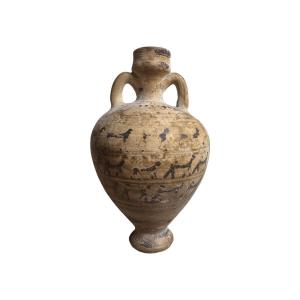


"Artifact – Antiquity – Terracotta Amphora – Corinth – Archaic Greek Art – Archaeology"
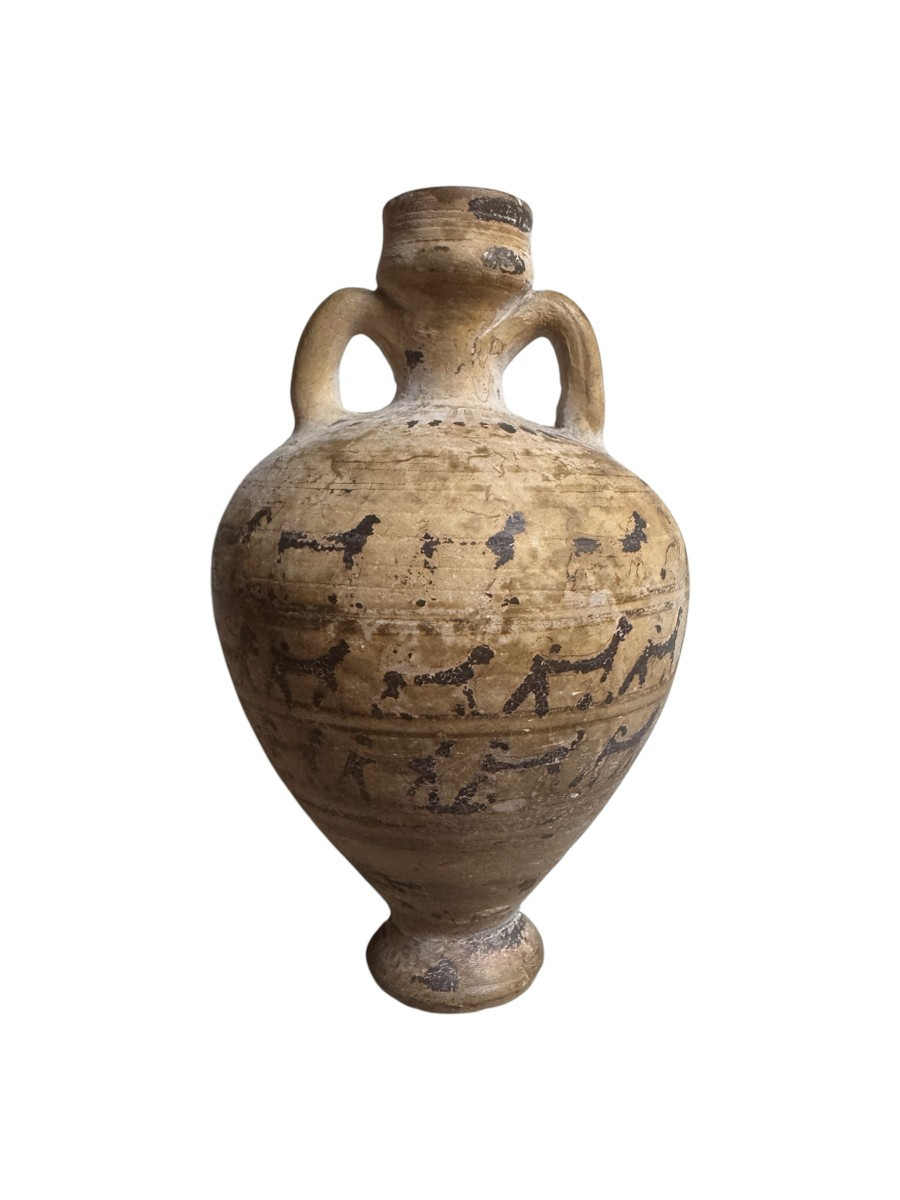
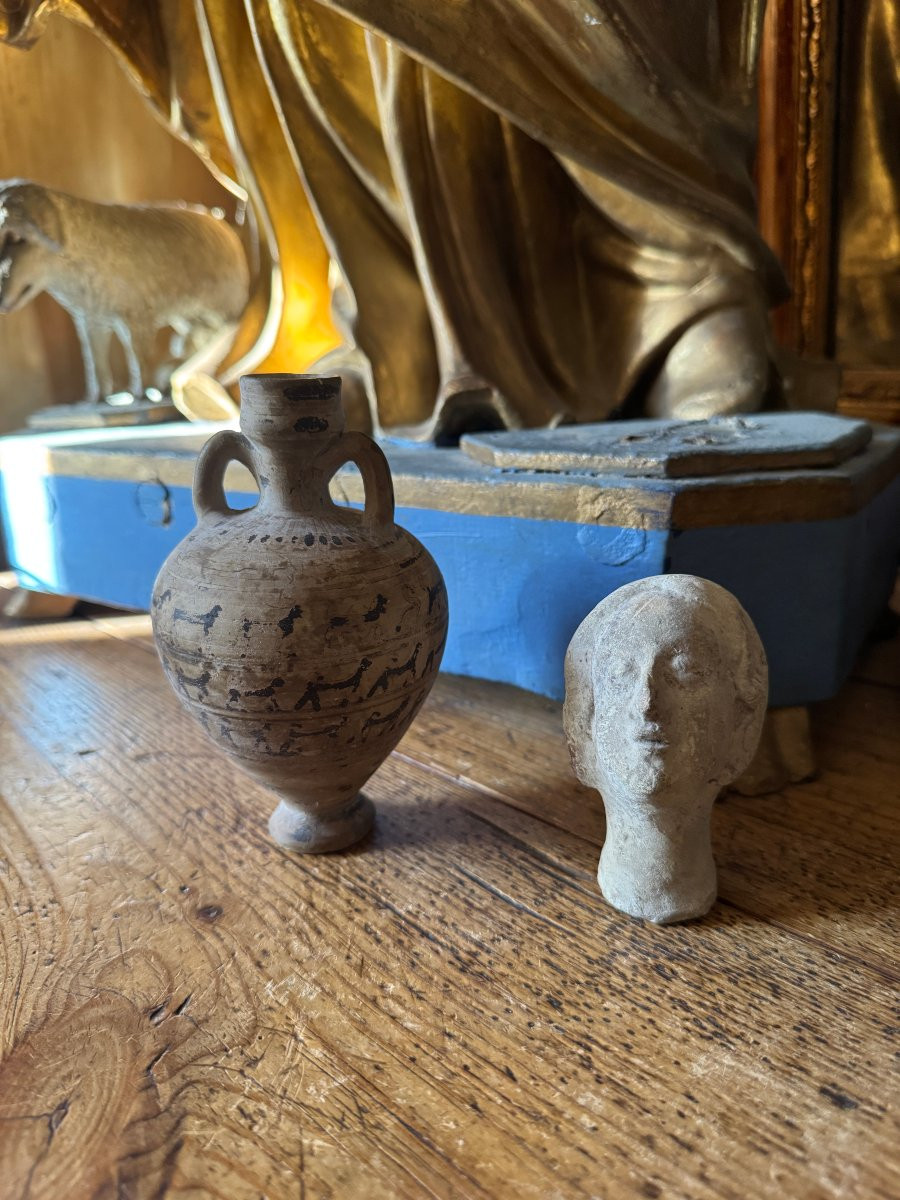
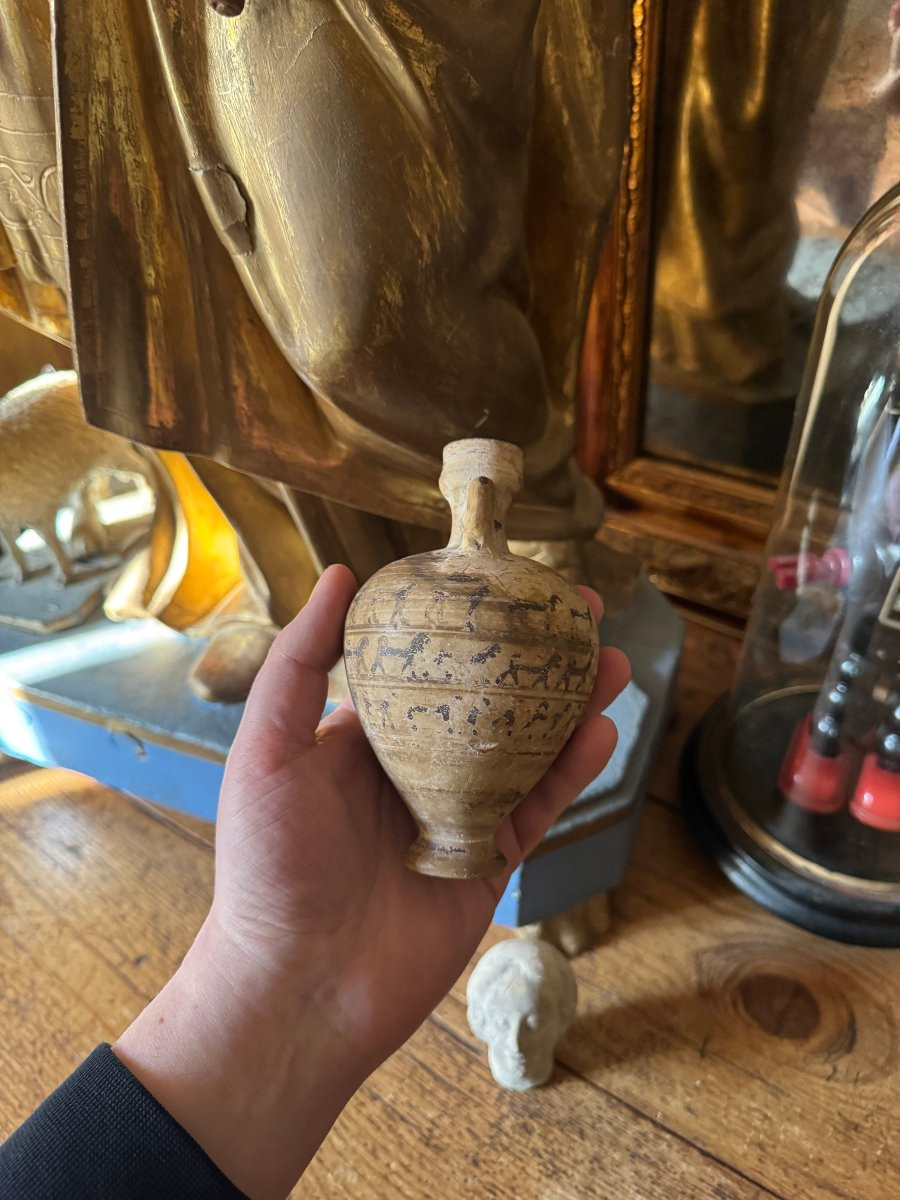
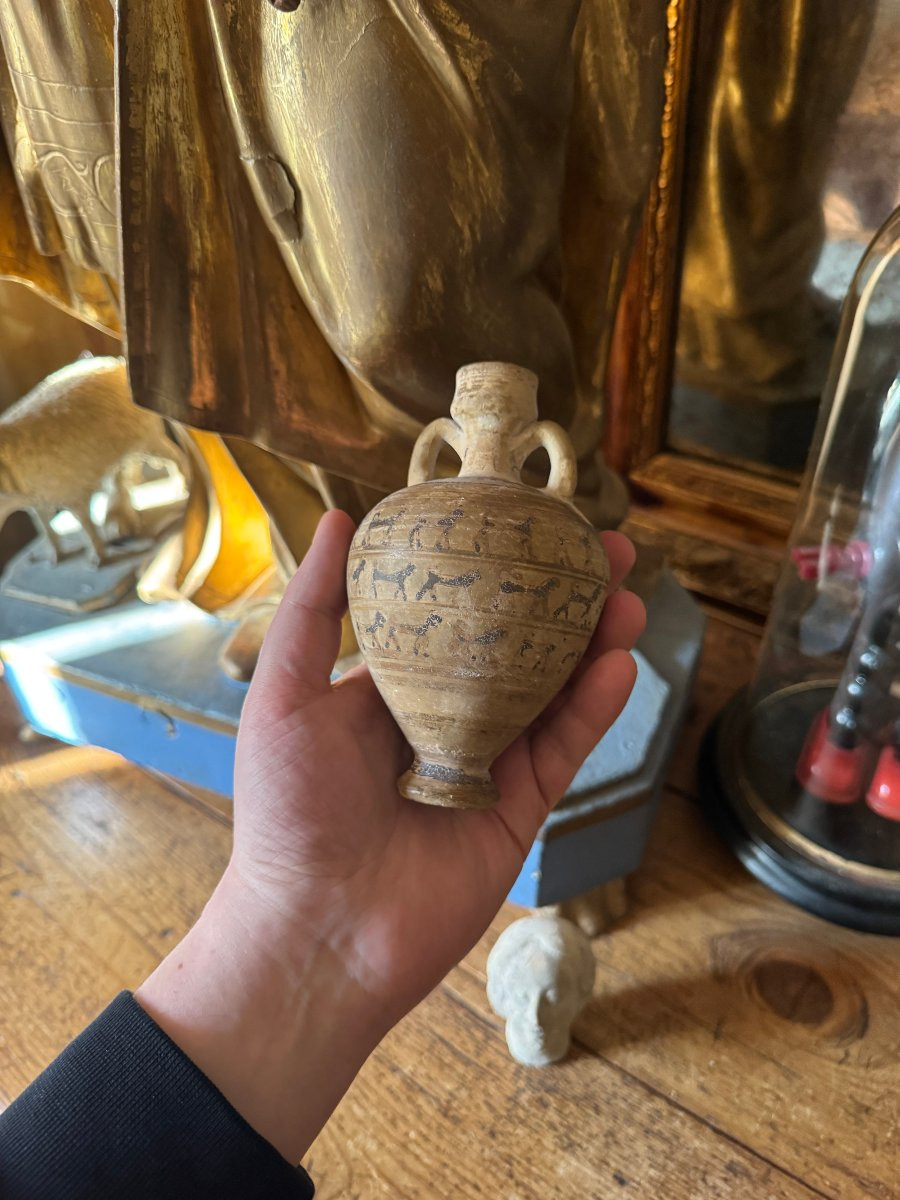
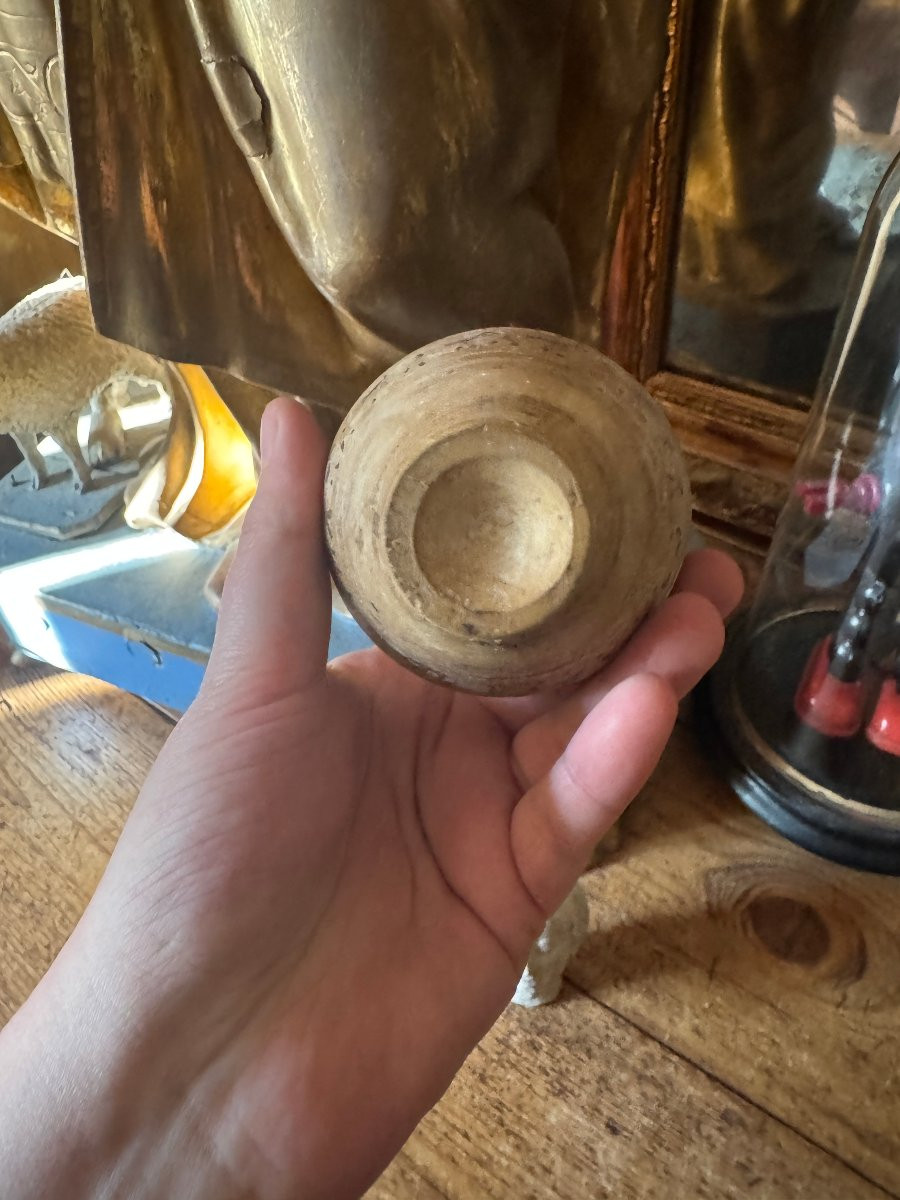
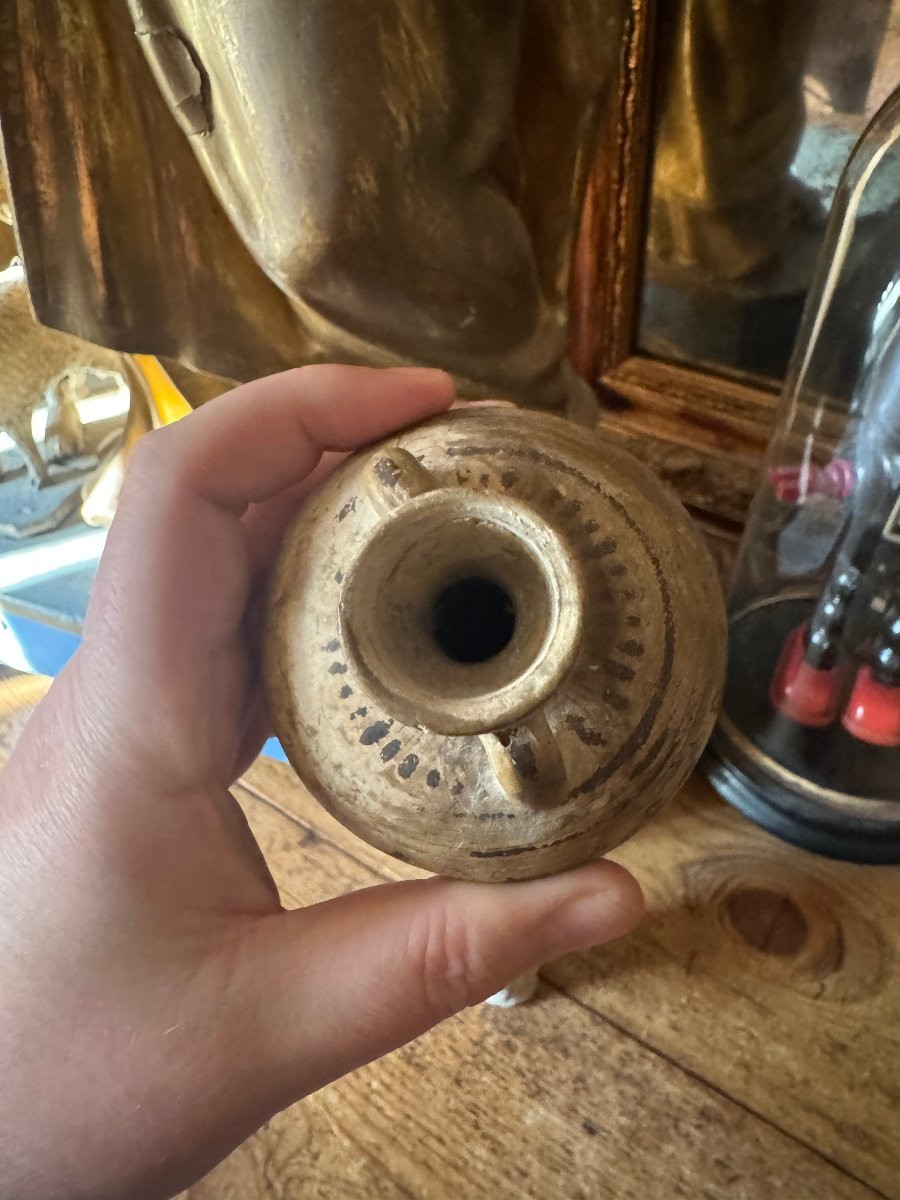
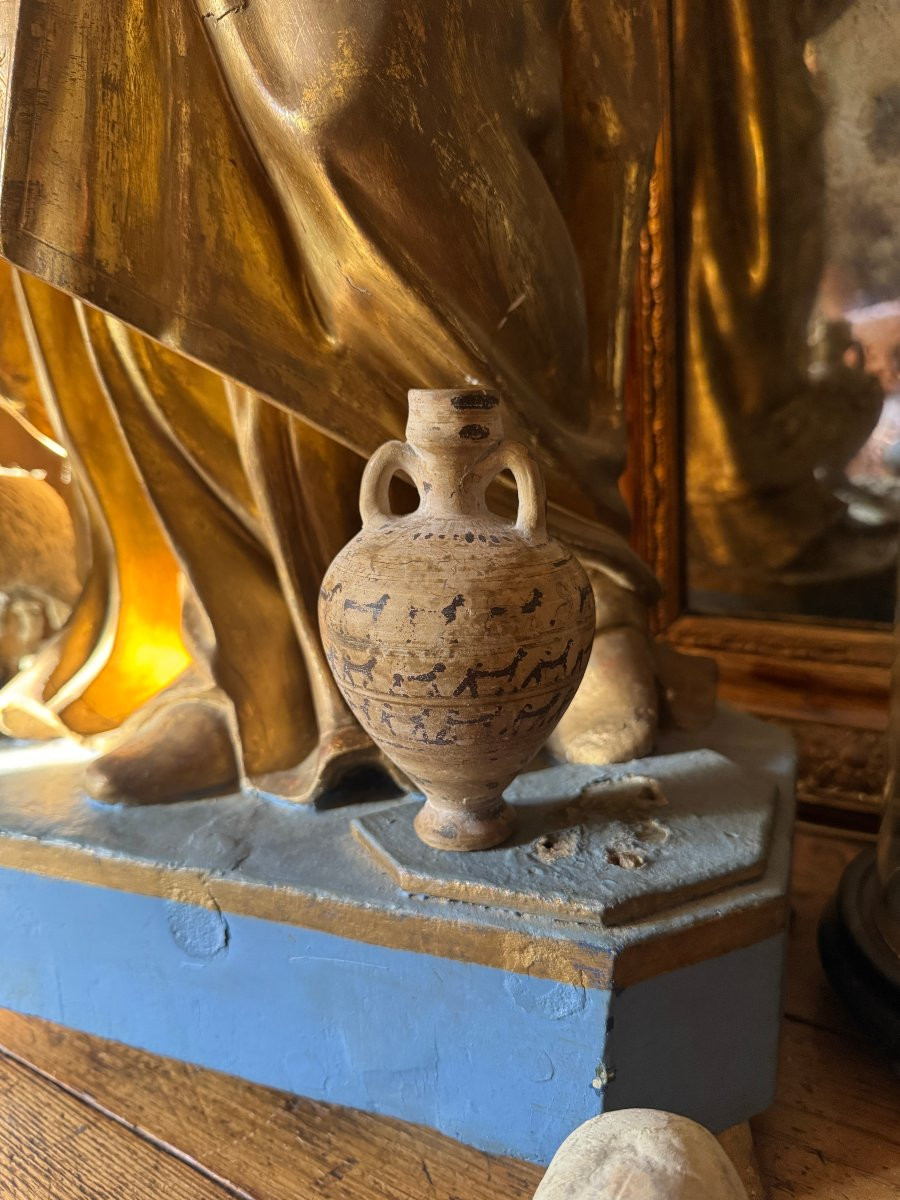
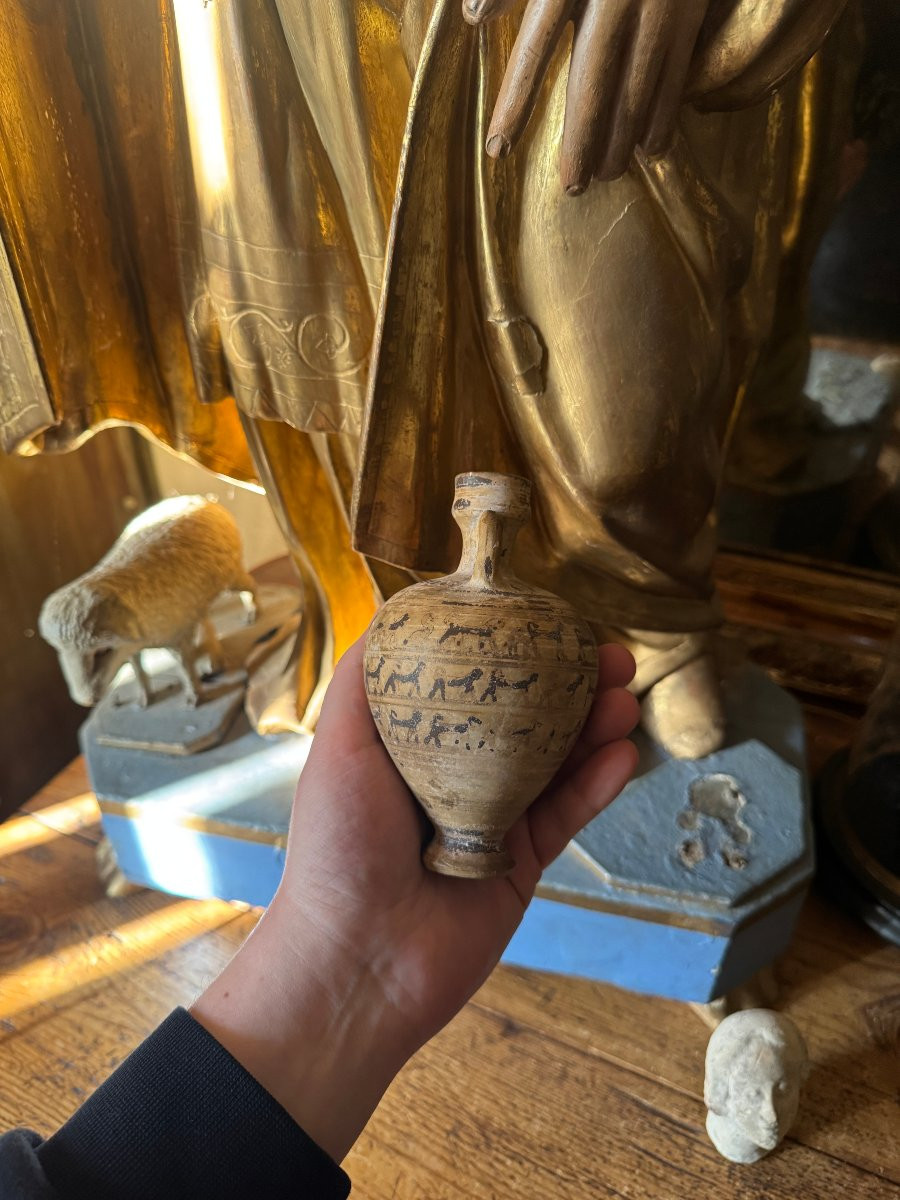
Period: c. 600–575 BC (first quarter of the 6th century BC) Culture: Archaic Greek Workshop/Origin: Corinth Provenance: former European private collection, acquired before 1970. This small, ancient terracotta amphora is attributable to the Archaic Corinthian workshops. The vessel has an ovoid body, a short cylindrical neck, two small vertical handles connecting the shoulder to the neck, and a low ring foot. This morphology is characteristic of Corinthian amphorae produced at the turn of the 7th and 6th centuries BC. The body is decorated with a painted design arranged in horizontal registers, depicting a frieze of stylized panthers walking in profile. This animal motif is emblematic of the Archaic Corinthian repertoire, widely disseminated throughout the Greek and Mediterranean world during this period. The graphic treatment is synthetic and rhythmic: elongated silhouettes, stretched legs, raised tails, a rapid and legible drawing. This decorative vocabulary corresponds to Corinthian productions of the first quarter of the 6th century BC, a transitional phase preceding the strict codification of black-figure pottery. The surface displays a homogeneous archaeological patina, with wear, abrasions, and old losses in the decoration, attesting to a long period of burial. The base is wheel-thrown, slightly concave, with visible traces of shaping. Use: Corinthian amphorae of this type were intended to contain precious liquids, particularly perfumed oils and ointments, in domestic, funerary, or ritual contexts. Condition: Wear and old losses consistent with the age of the piece. Stable archaeological patina. No modern restoration. Dimensions: Height: 13.5 cm. All deliveries are made via DHL Express only. 












 Le Magazine de PROANTIC
 TRÉSORS Magazine
 Rivista Artiquariato