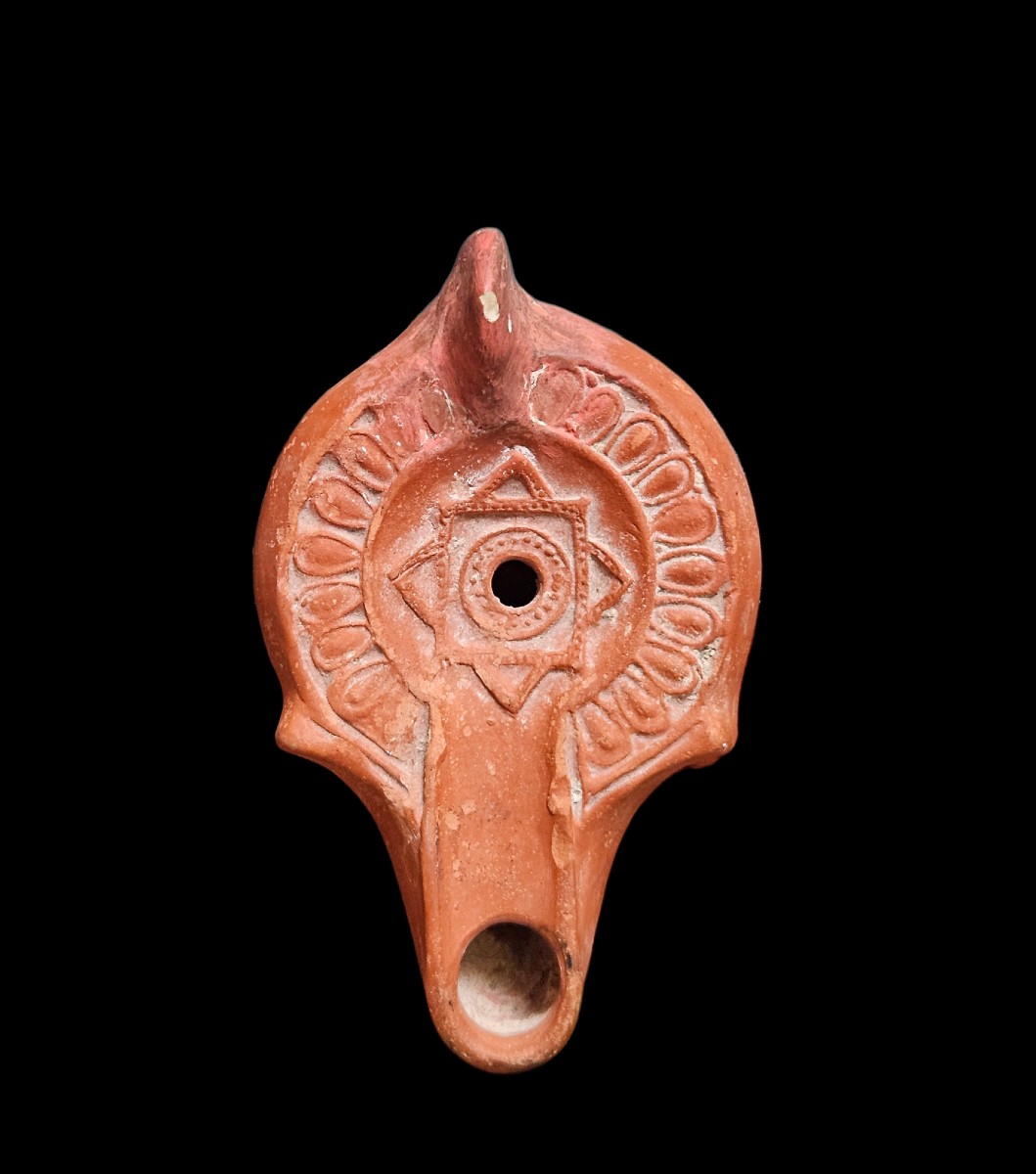

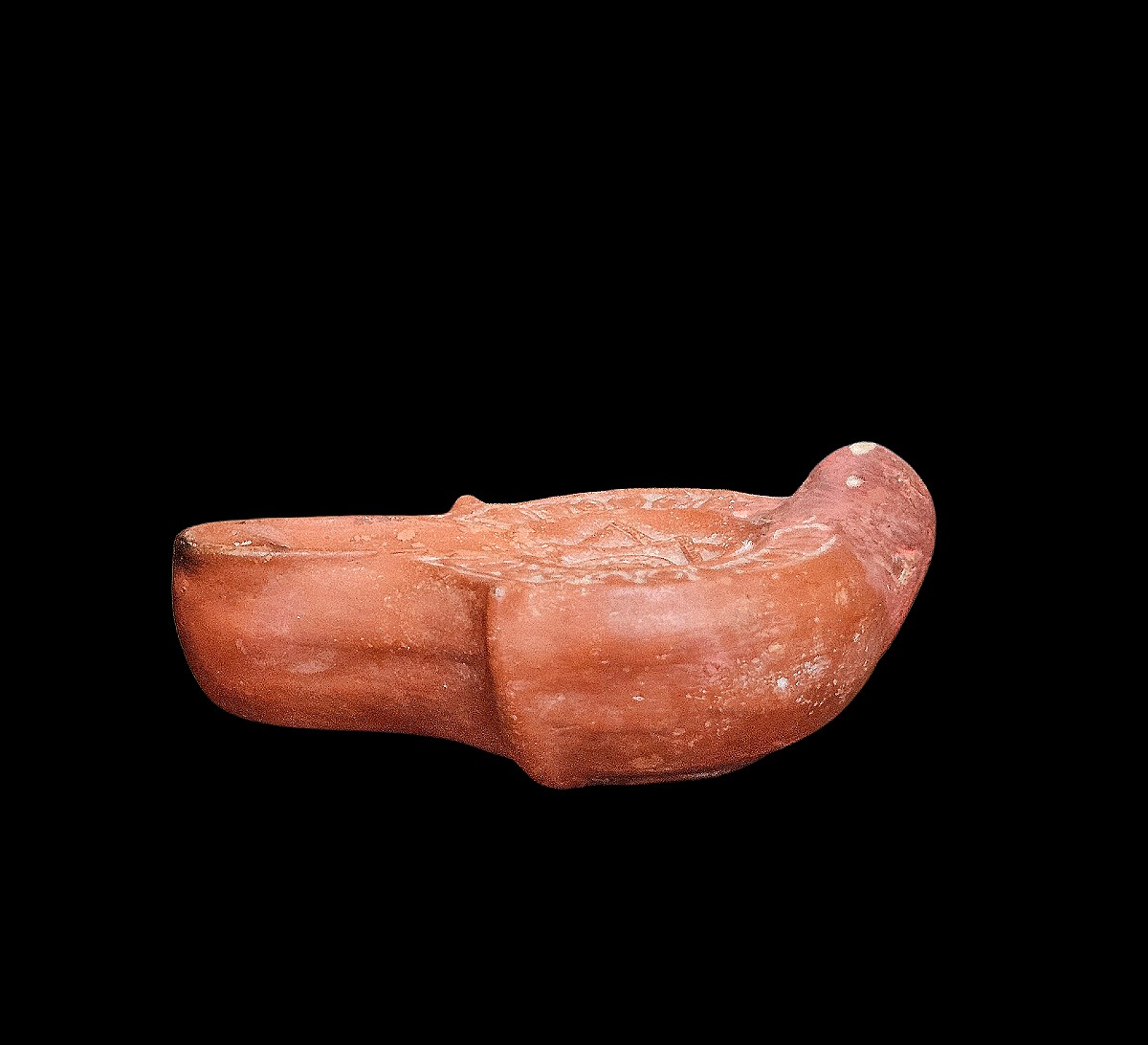

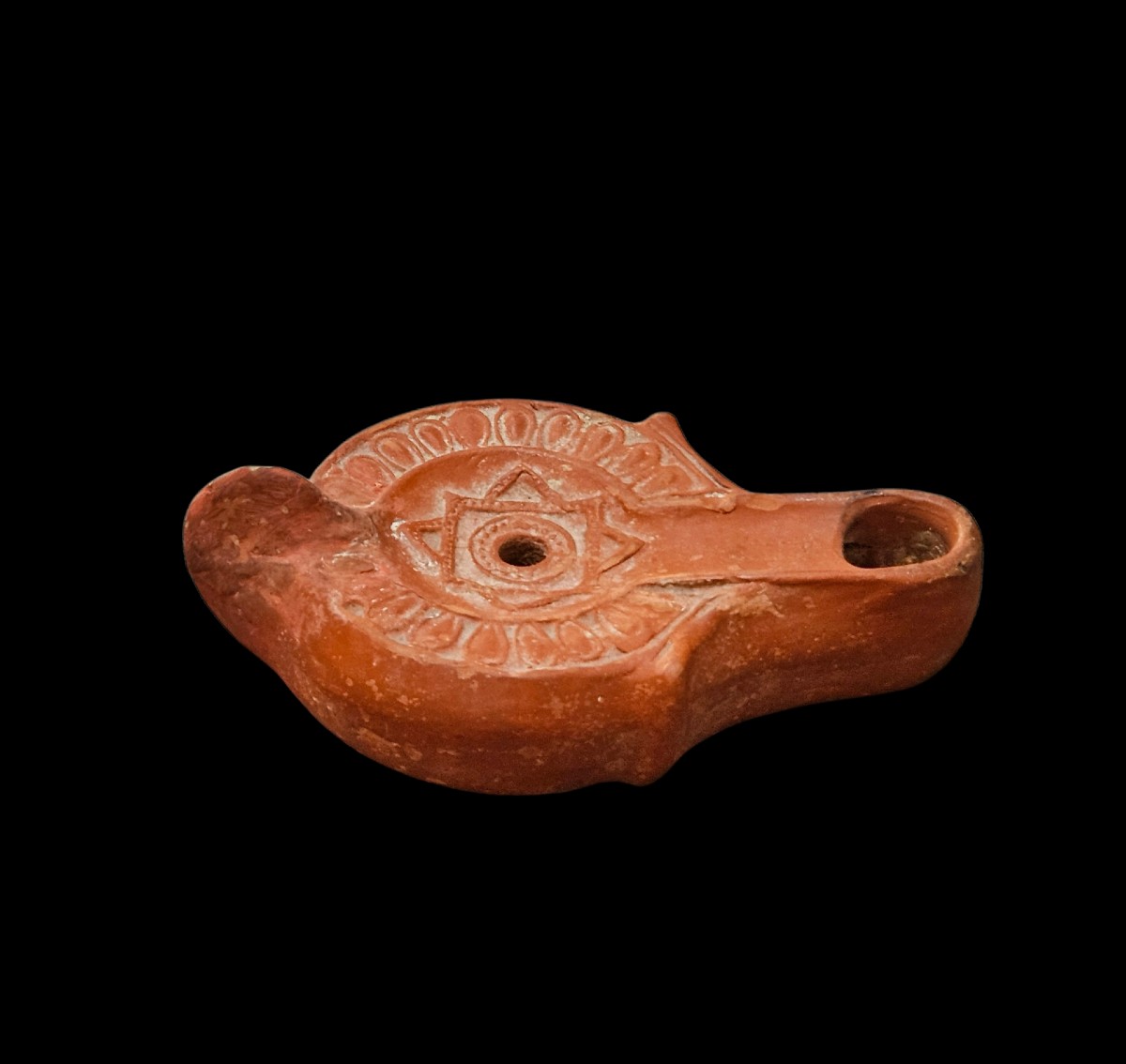

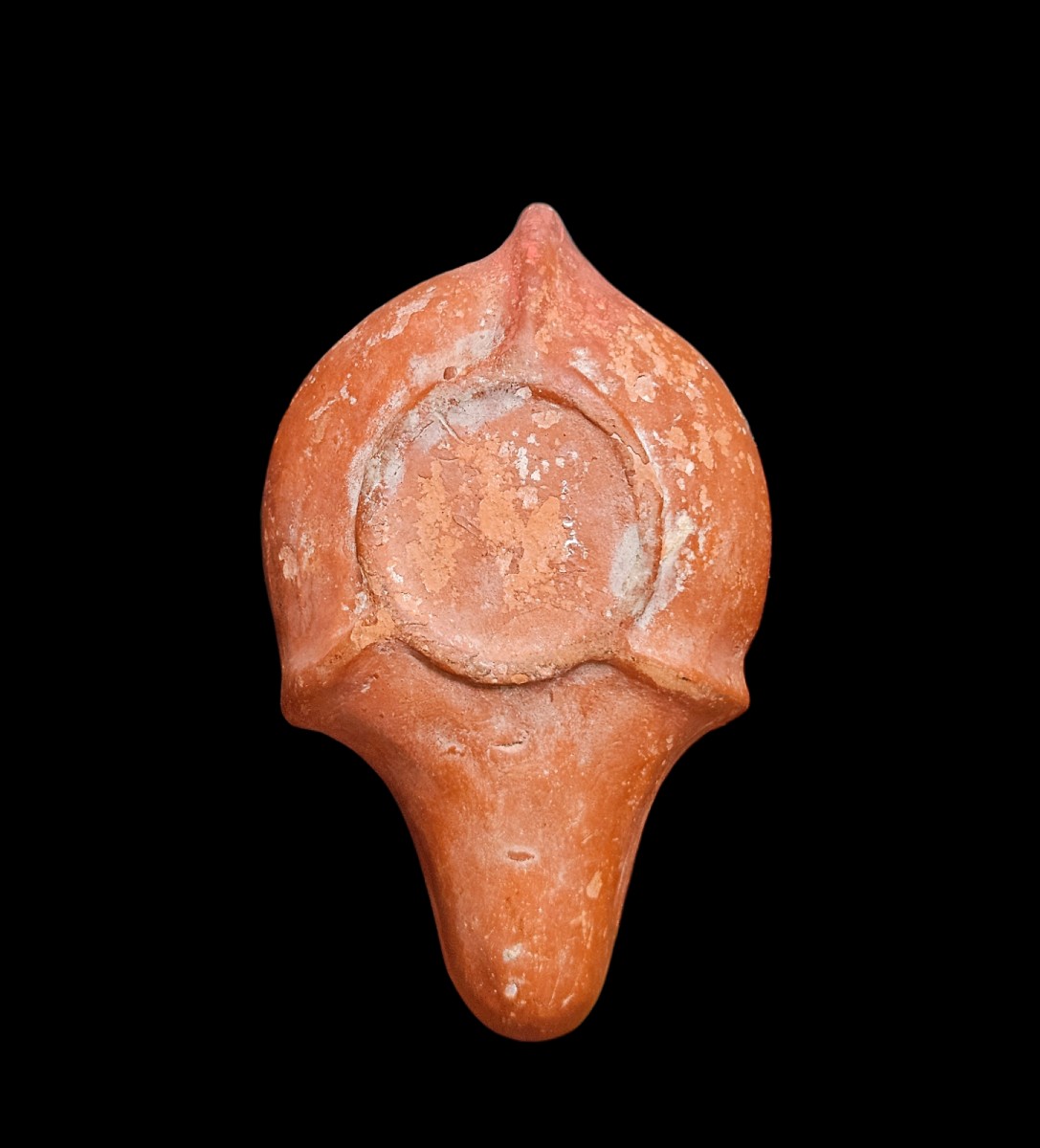


Christian Oil Lamp, Late Roman Period, Mediterranean Basin, 4th–6th Century Ad.
Christian oil lamp, late Roman period, Mediterranean basin. Oil lamp with a circular bowl, decorated on the shoulder with a continuous frieze of stylized petals forming a radiating rosette. The central medallion is decorated with an eight-pointed polygonal star (octogram) framing a ring around the filling opening. Elongated spout with a concave channel, flanked by two lateral protrusions. Rear handle (upper part restored). Orange terracotta; upper part of the handle restored; some minor chips; good overall condition, see photos. Mediterranean basin, late Roman period (Christian lamps), 4th–6th century AD. Dimensions: 13.5 × 8.5 × 5.1 cm. Provenance: Former sale Thierry de Maigret, Paris Drouot, from a Parisian estate. Sold with a certificate of authenticity from the expert Serge Reynes. Guaranteed original and period. * Shipping costs upon request. "The decoration combines two major themes of early Christian lamps: the star and the floral wreath. The central octogram, common in later iconography, refers to a symbolism of fullness and regeneration: the number eight is traditionally linked to the "new" time, that of resurrection and salvation, and the star thus becomes a sign of hope and the victory of light. The peripheral frieze of petals, treated as a rosette or a blooming crown, extends this idea of renewal: it evokes a cyclical flowering, a regenerated world, and frames the star like a protective and radiant image. Through its centered composition and repetitive decoration, this lamp perfectly illustrates the spread of a Christian symbolic repertoire within the productions of the late Mediterranean, at the crossroads of the Roman world and the early Byzantine centuries."
360 €
Period: Before 16th century
Style: Rome and Antic Greece
Condition: Condition of use
Material: Terracotta
Length: 13,5 cm
Width: 8,5 cm
Reference (ID): 1694123
Availability: In stock
Print