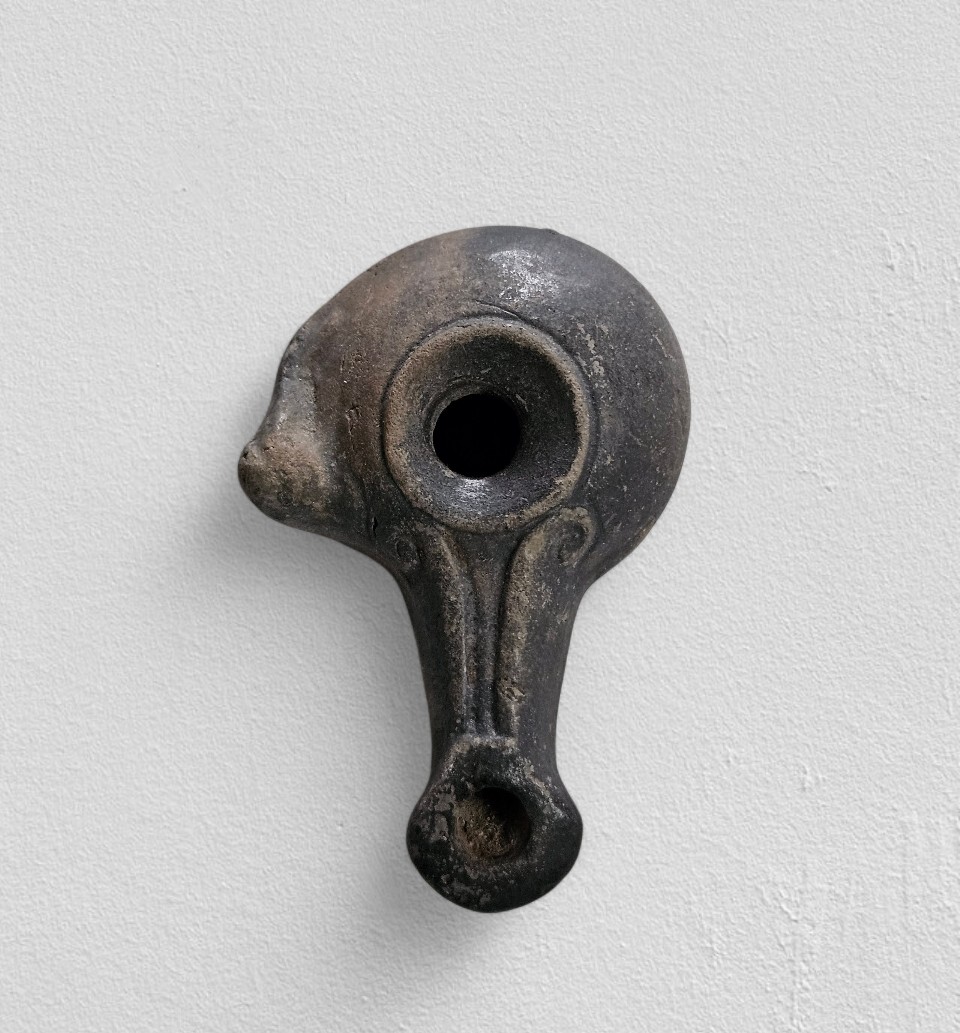
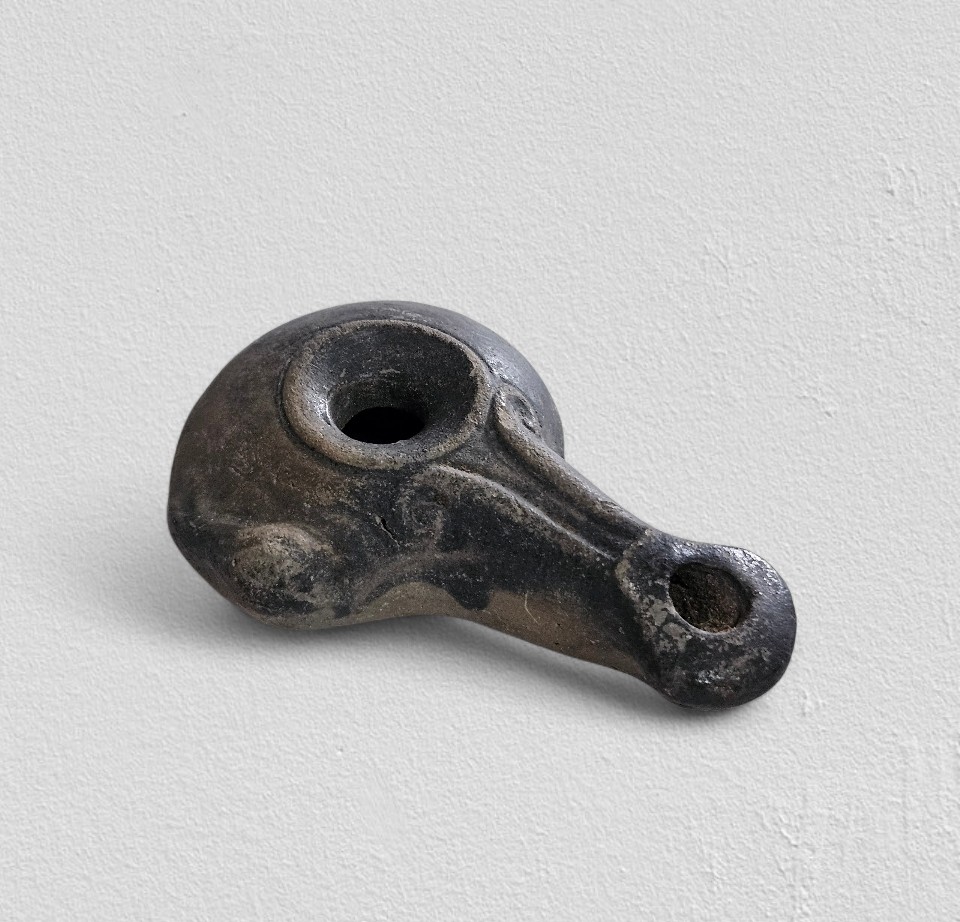
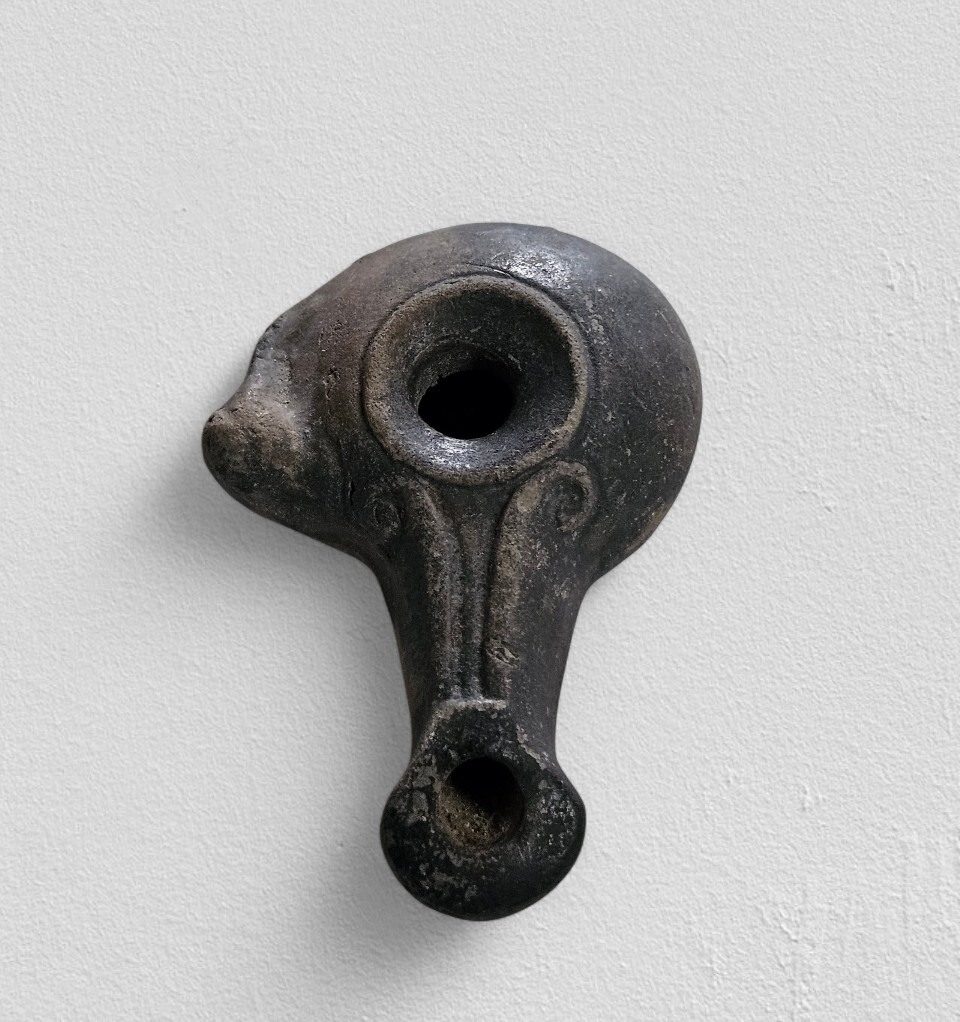
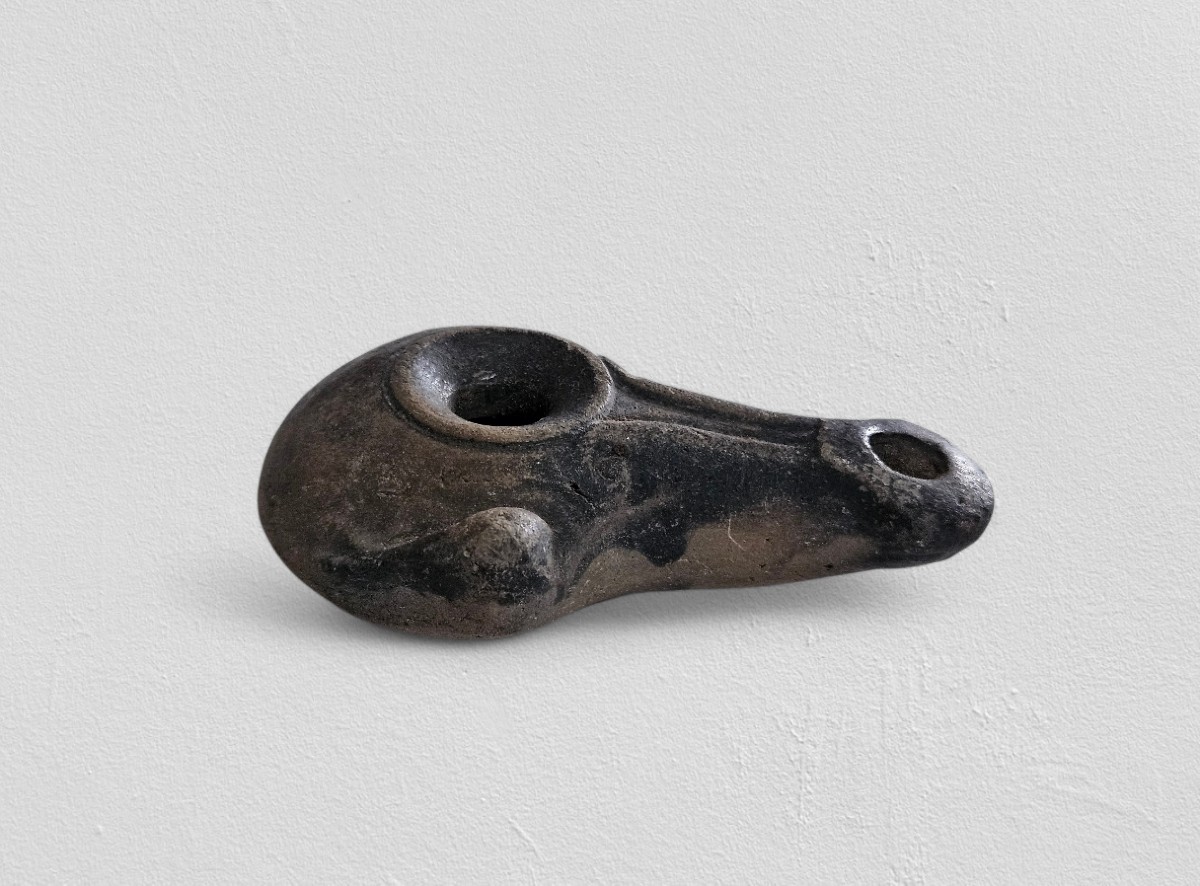
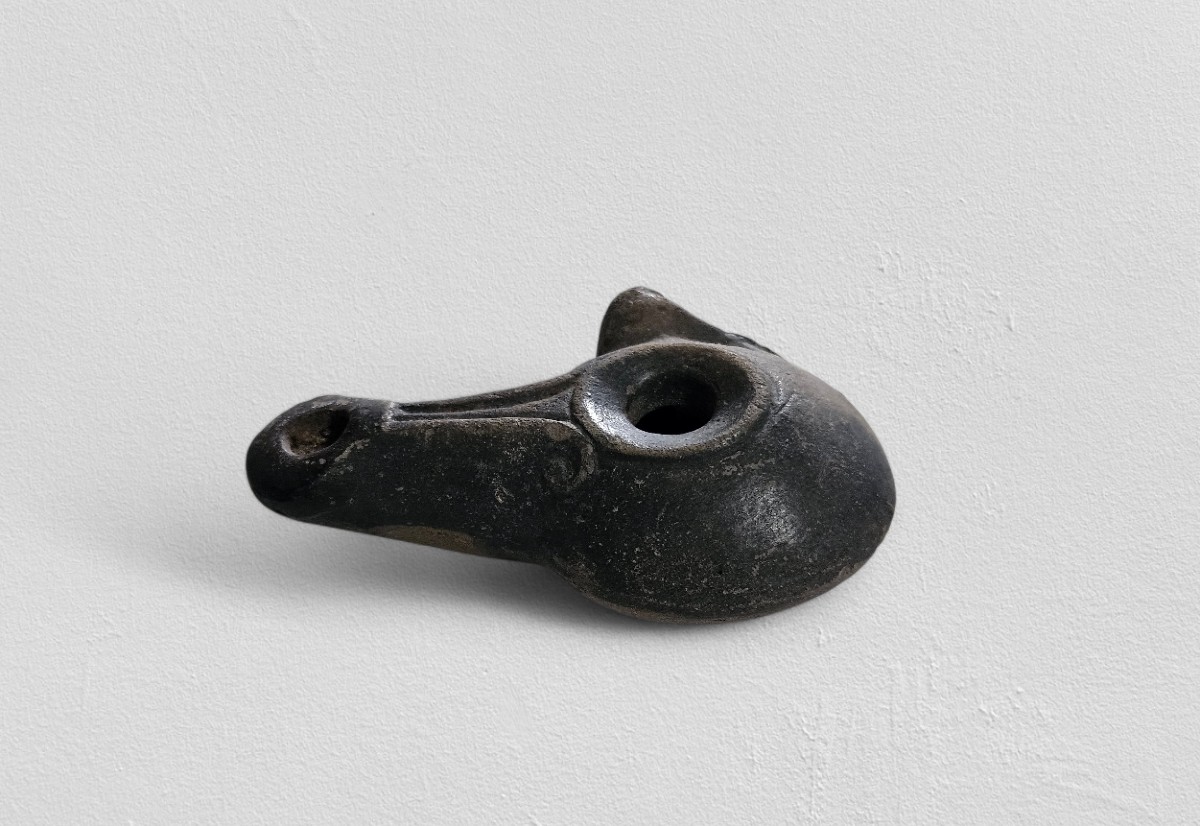
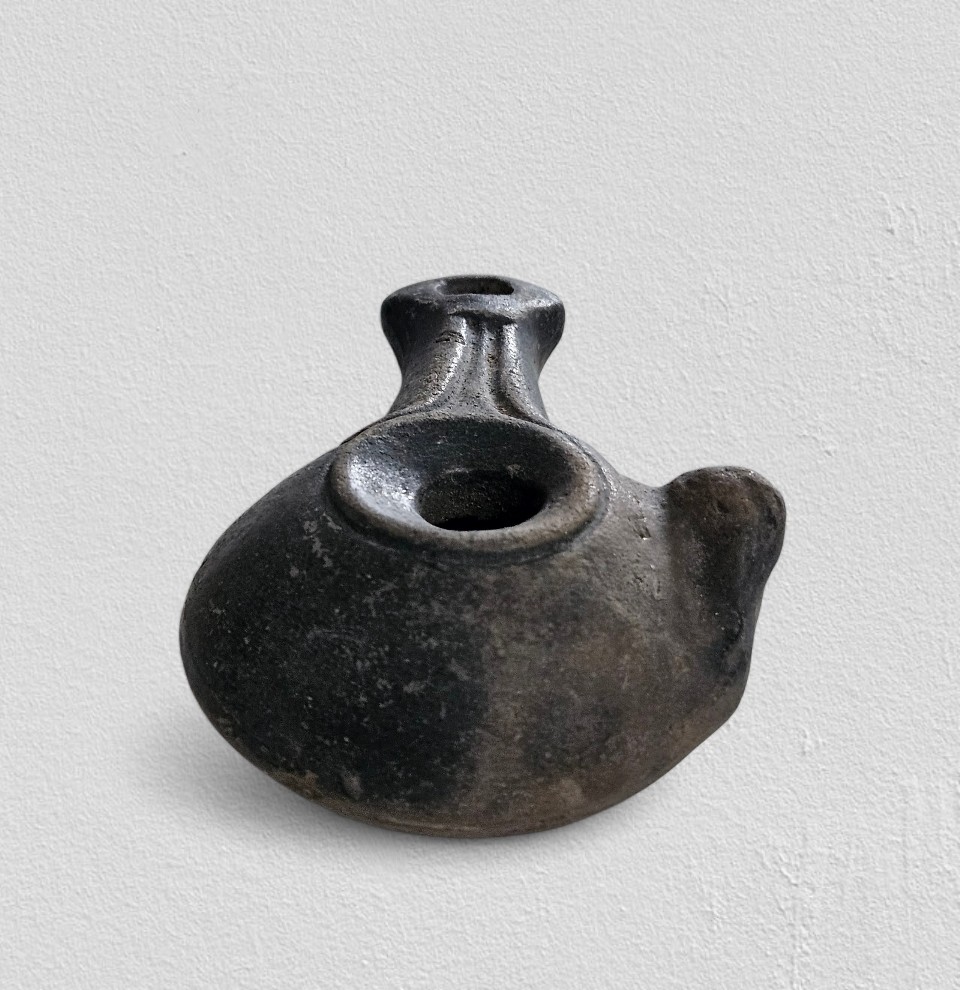
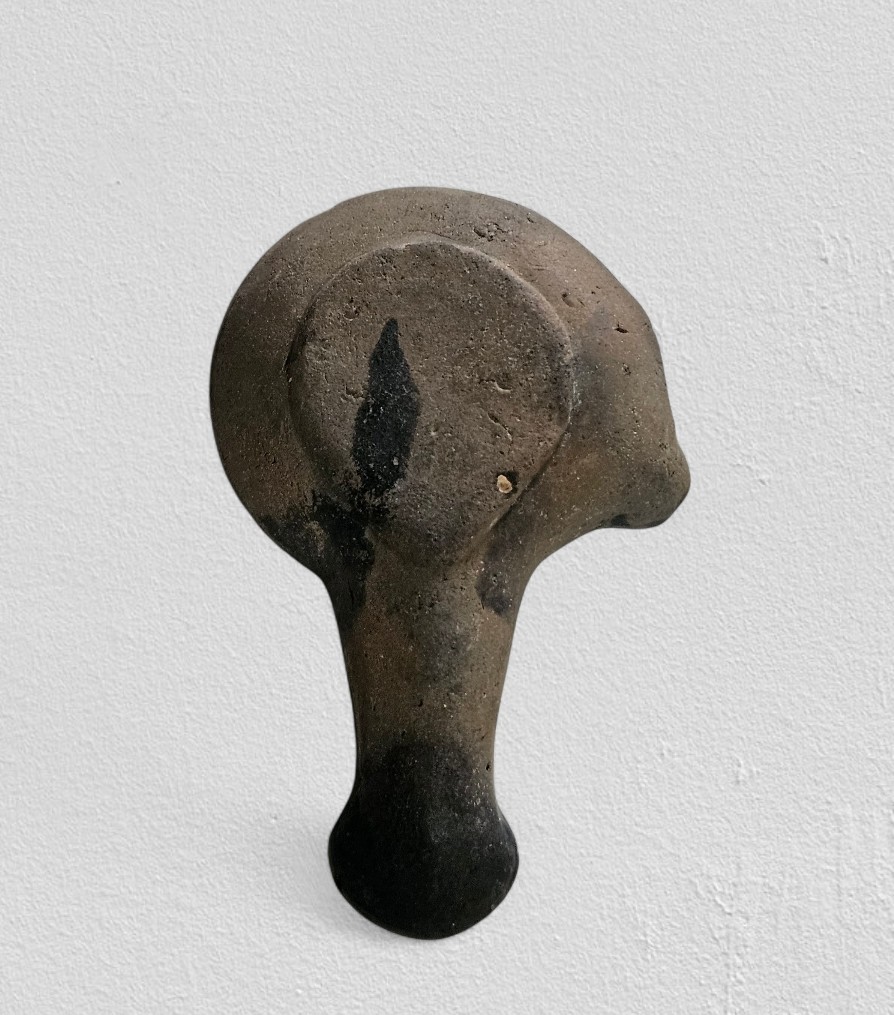
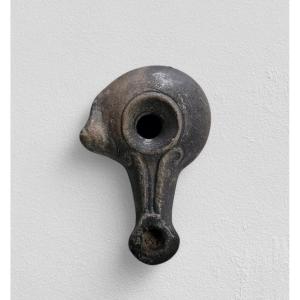


Hellenistic Oil Lamp, Similar To The Howland 28a Magna Graecia Group, 4th-3rd Century Bc
A lamp with a rounded bowl and a central filling hole highlighted by a concentric rim forming a slight circular protrusion. The spout, particularly long and narrow, extends into a slender tab designed to hold the wick. Two simple, finely modeled volutes run along this spout and connect to the edge of the filling hole, visually accentuating the central area and giving the object an unusual appearance for this type. A lateral protrusion forming a handle extends from the bowl. The whole is distinguished by a balanced and archaic silhouette, where the presence of these volutes is a rare element compared to examples generally lacking this motif. Beige terracotta, brown burnished slip, good overall condition, with signs of age. Greek sphere from Magna Graecia, western Mediterranean. 4th–3rd century BC. Typology close to the Howland 28A group, variant with an elongated spout and volute decoration. Dimensions: 9.3 × 5.7 × 2.6 cm. Provenance: former French private collection; Acquired at auction at Drouot, 2025. Sold with a certificate from expert S. Reynes and an invoice from Galerie Ocarina.* Shipping costs upon request. Carefully packaged. "Oil lamps appeared very early in the Greek world as everyday objects intended for domestic and ritual lighting. Produced in numerous Mediterranean workshops, they gradually evolved towards more standardized, closed forms. This example retains an early appearance, marked by a long spout reminiscent of earlier prototypes, while the brown slip refers to productions disseminated in Magna Graecia during the Hellenistic period. The unusual presence of two volutes framing the spout suggests a regional variant or a particular workshop, giving the lamp both a utilitarian and aesthetic dimension. Through its simplicity and balance, it testifies to a transitional phase between classical models and the later molded lamps that would become widespread throughout the Mediterranean world."
380 €
Period: Before 16th century
Style: Rome and Antic Greece
Condition: Good condition
Material: Terracotta
Length: 9,3 cm
Width: 5,7 cm
Reference (ID): 1712132
Availability: In stock
Print