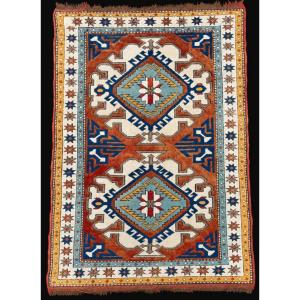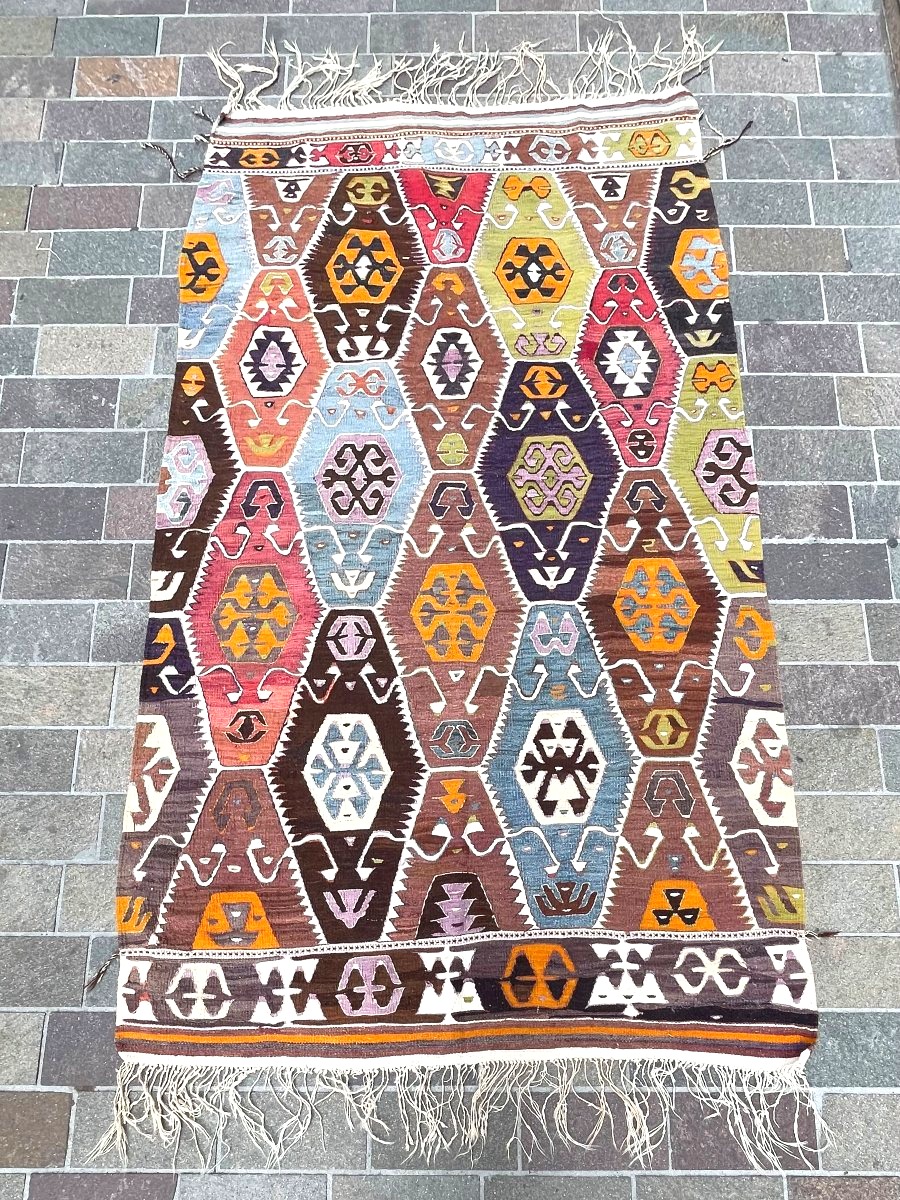
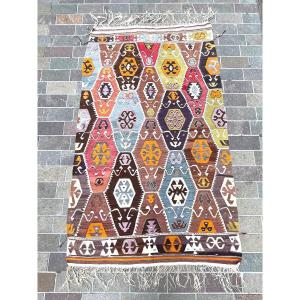


Kilim Barak - Anatolia. Circa 1960. 260 X 150 Cm. Rug
Barak kilims defy classification.
To my knowledge, very few antique pieces are known from this region of Antalya, in southwestern Anatolia. The oldest date back to the early 20th century.
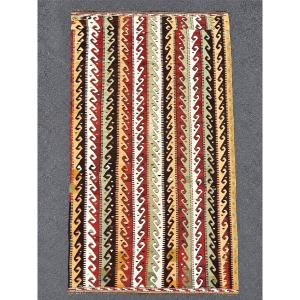
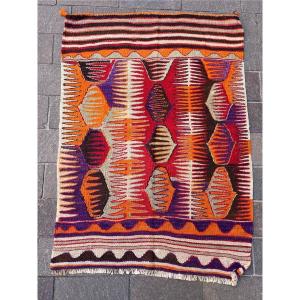
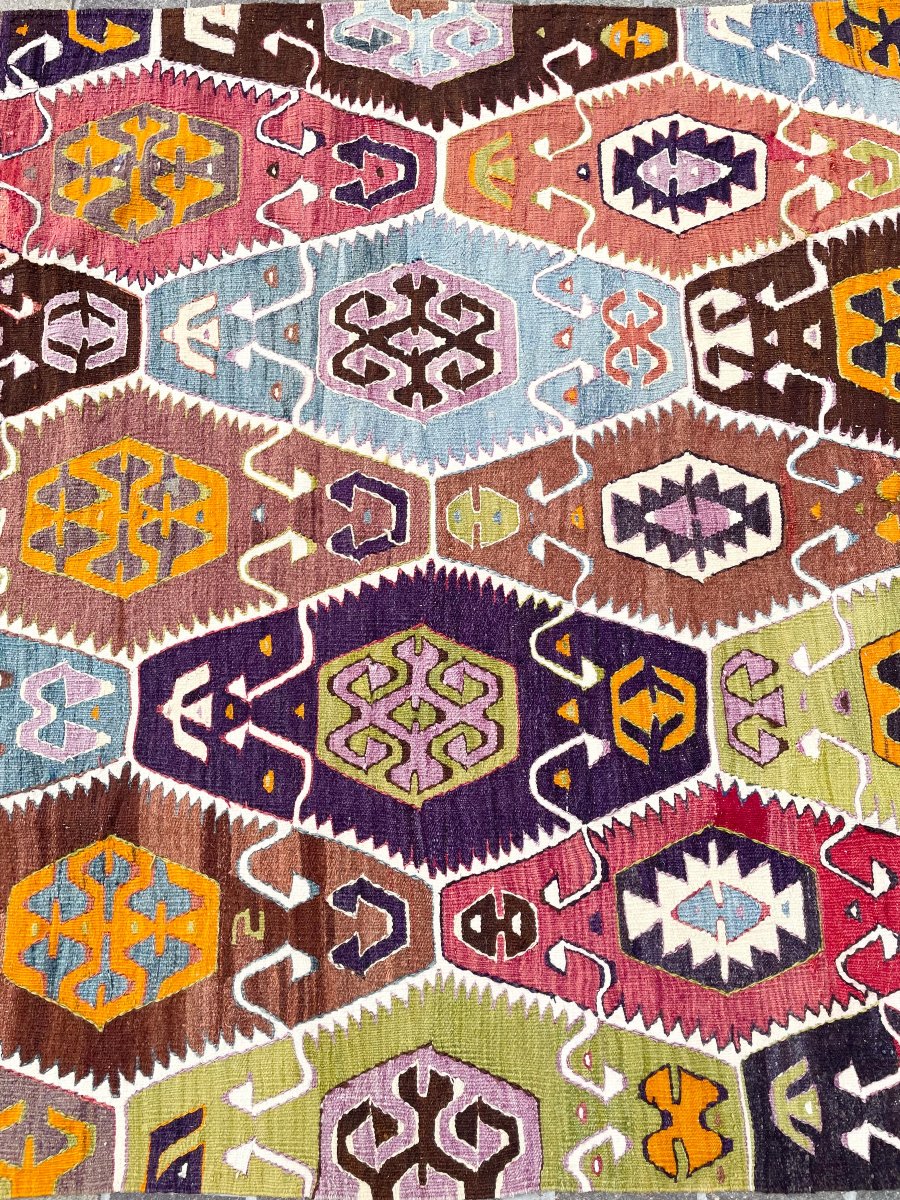
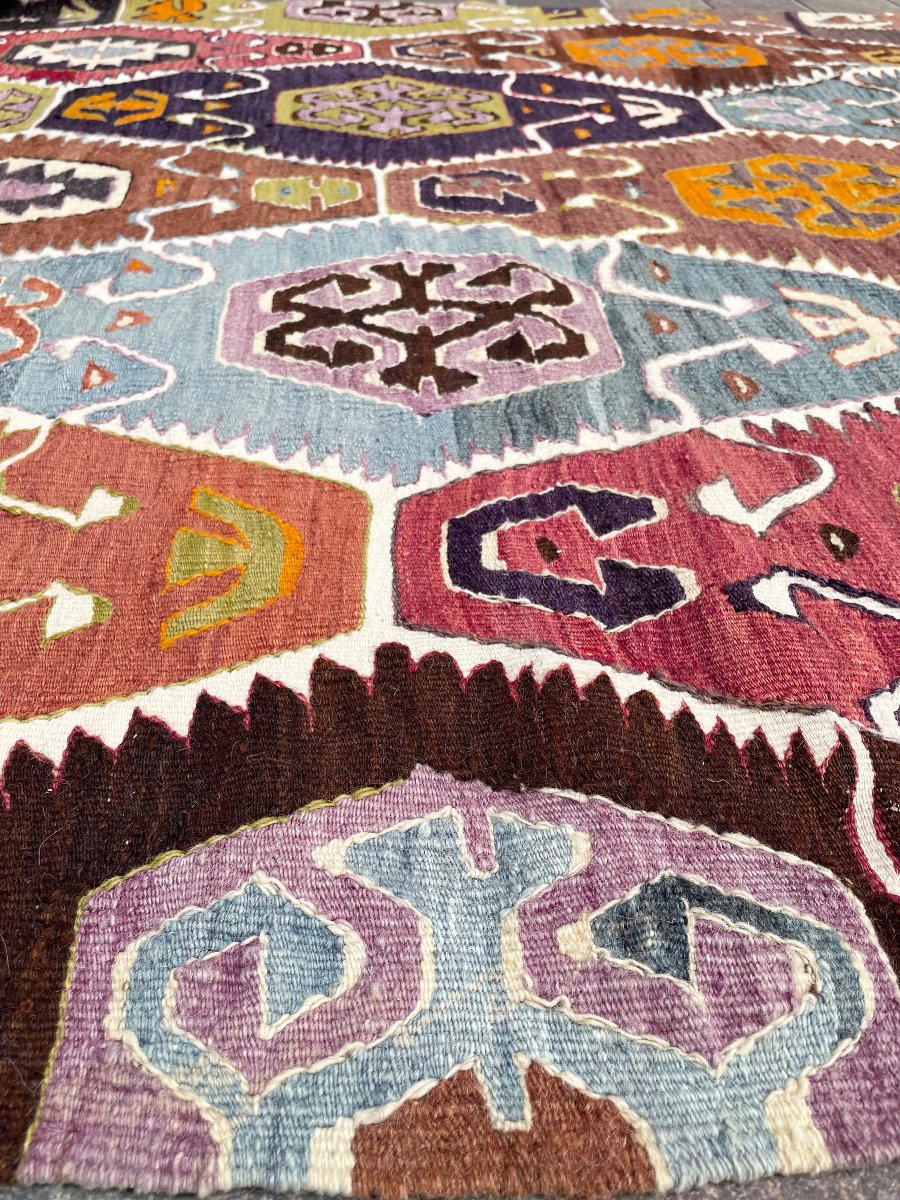
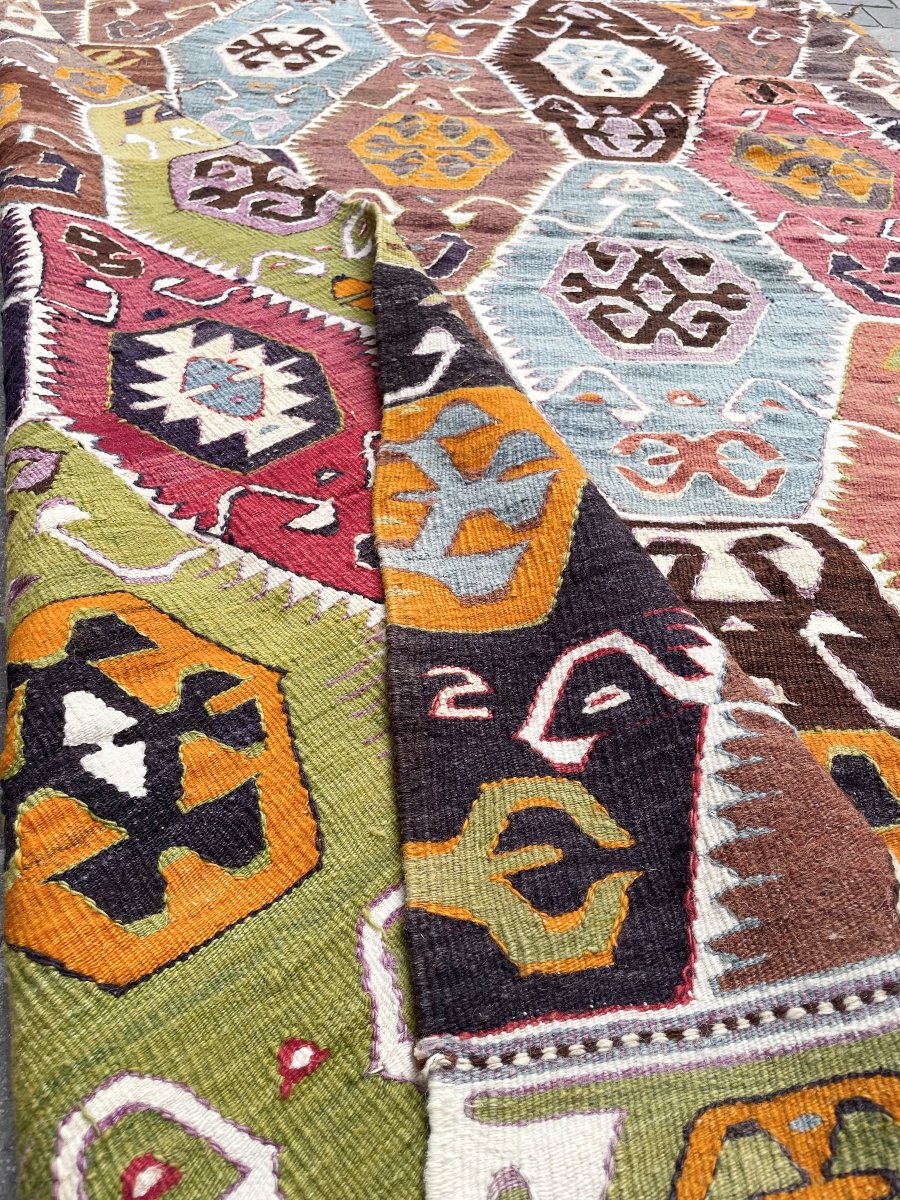
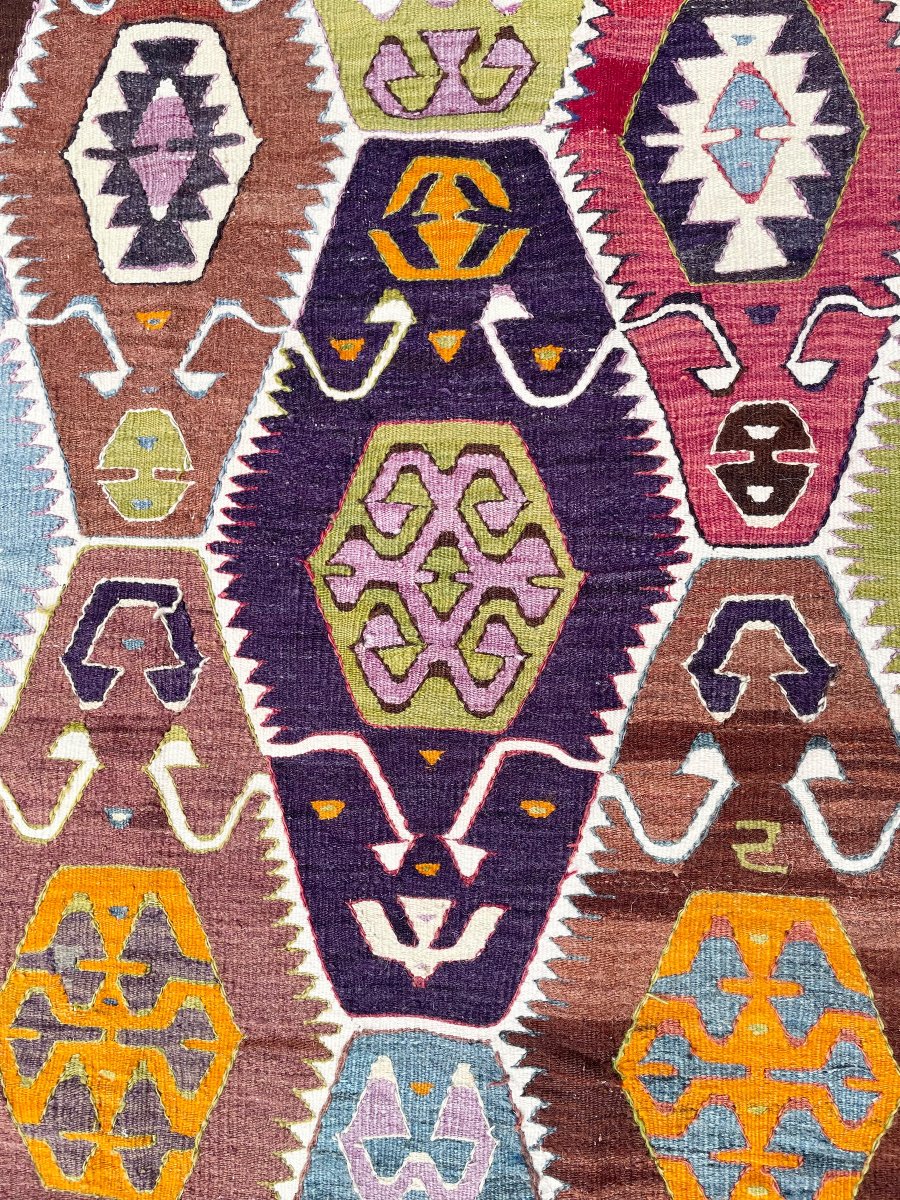
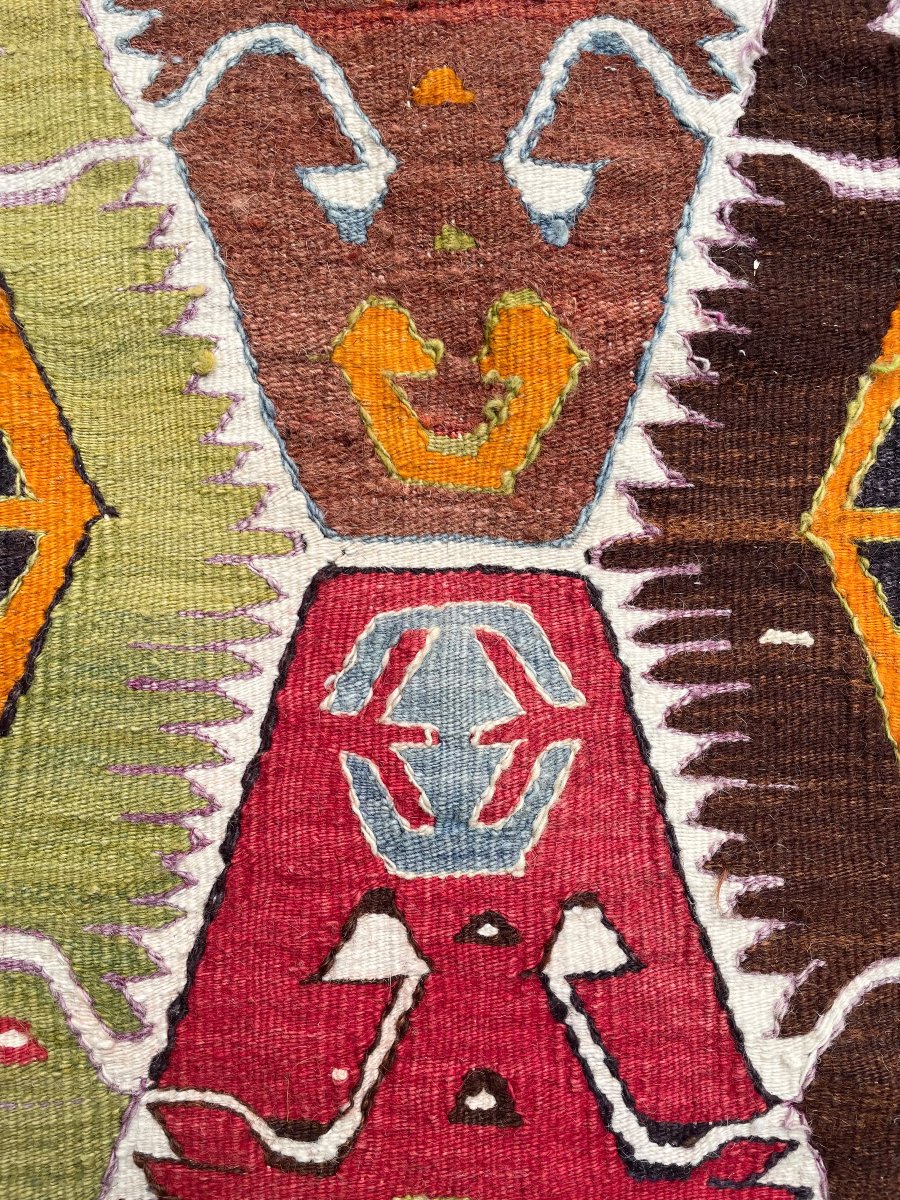
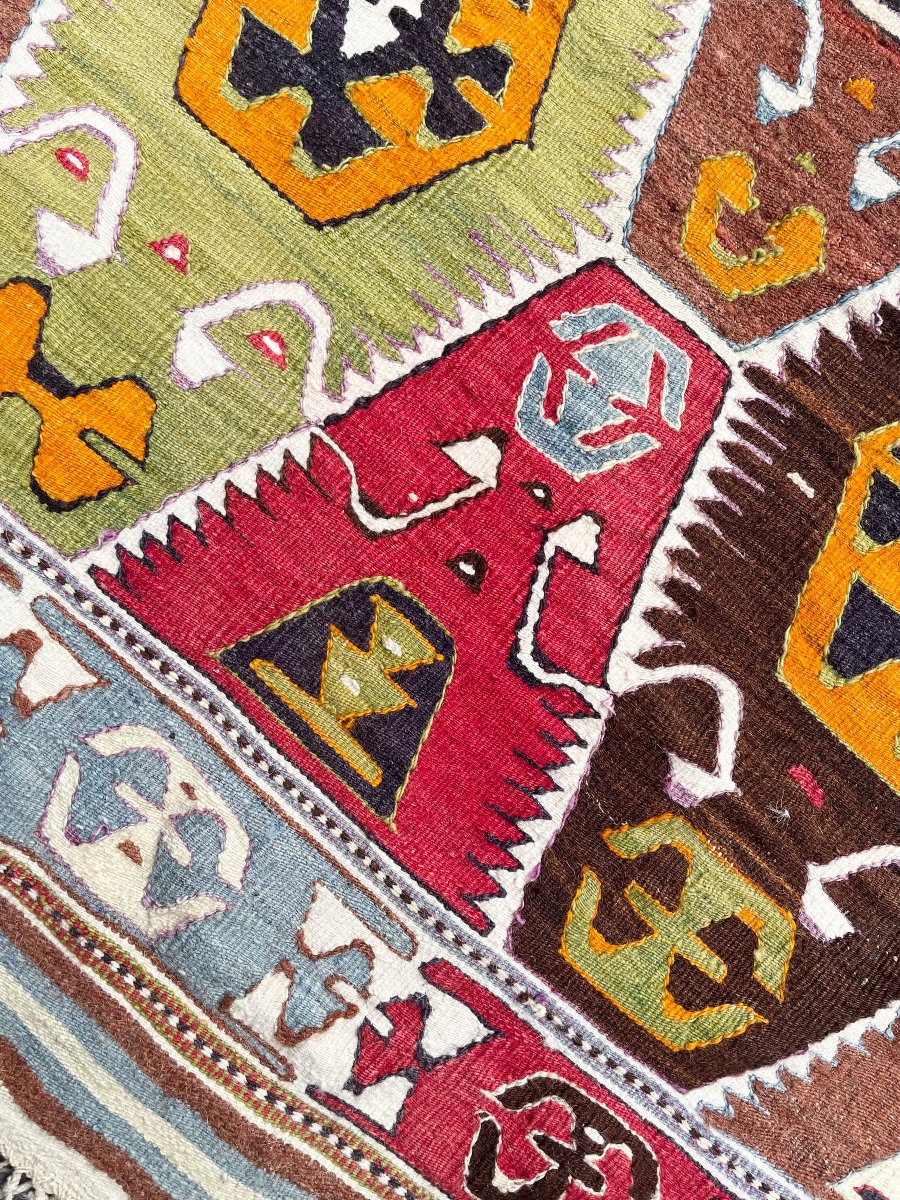
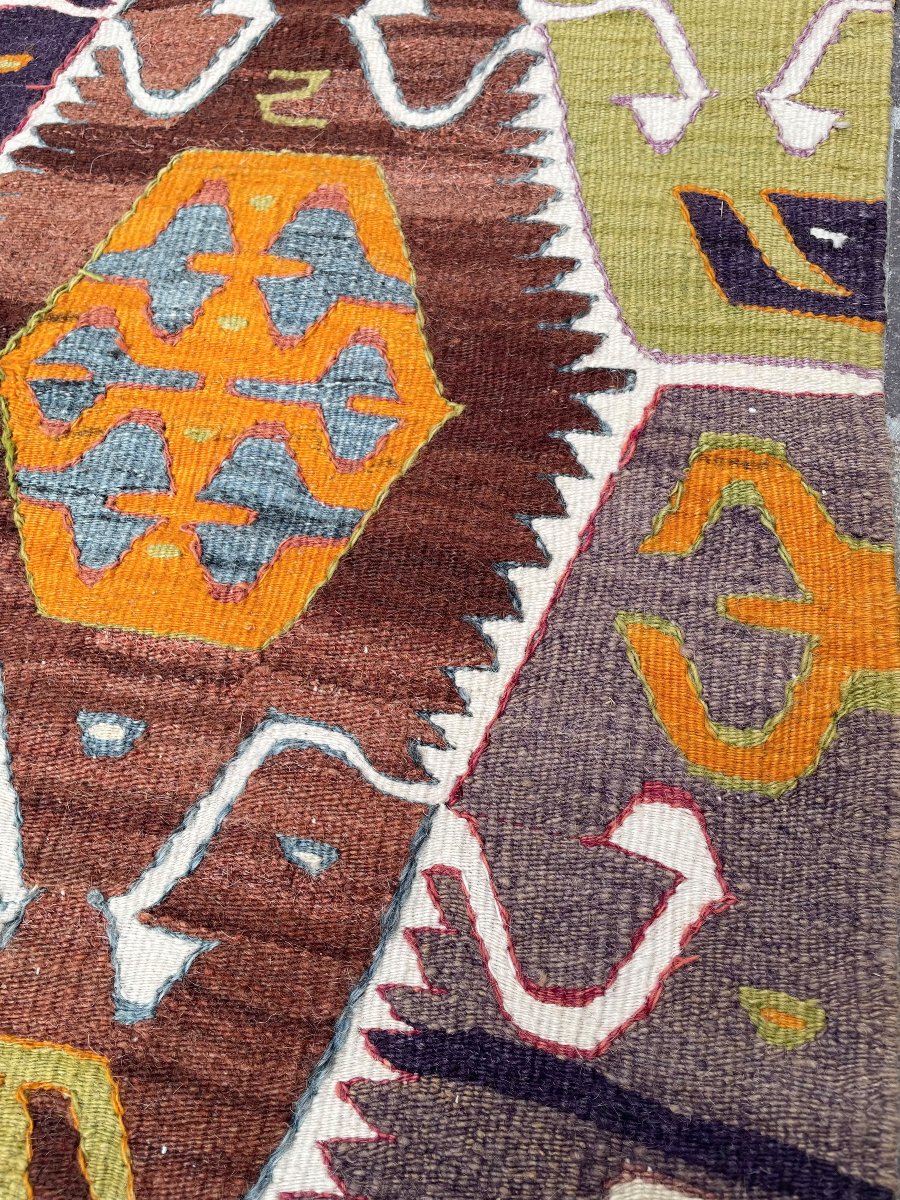
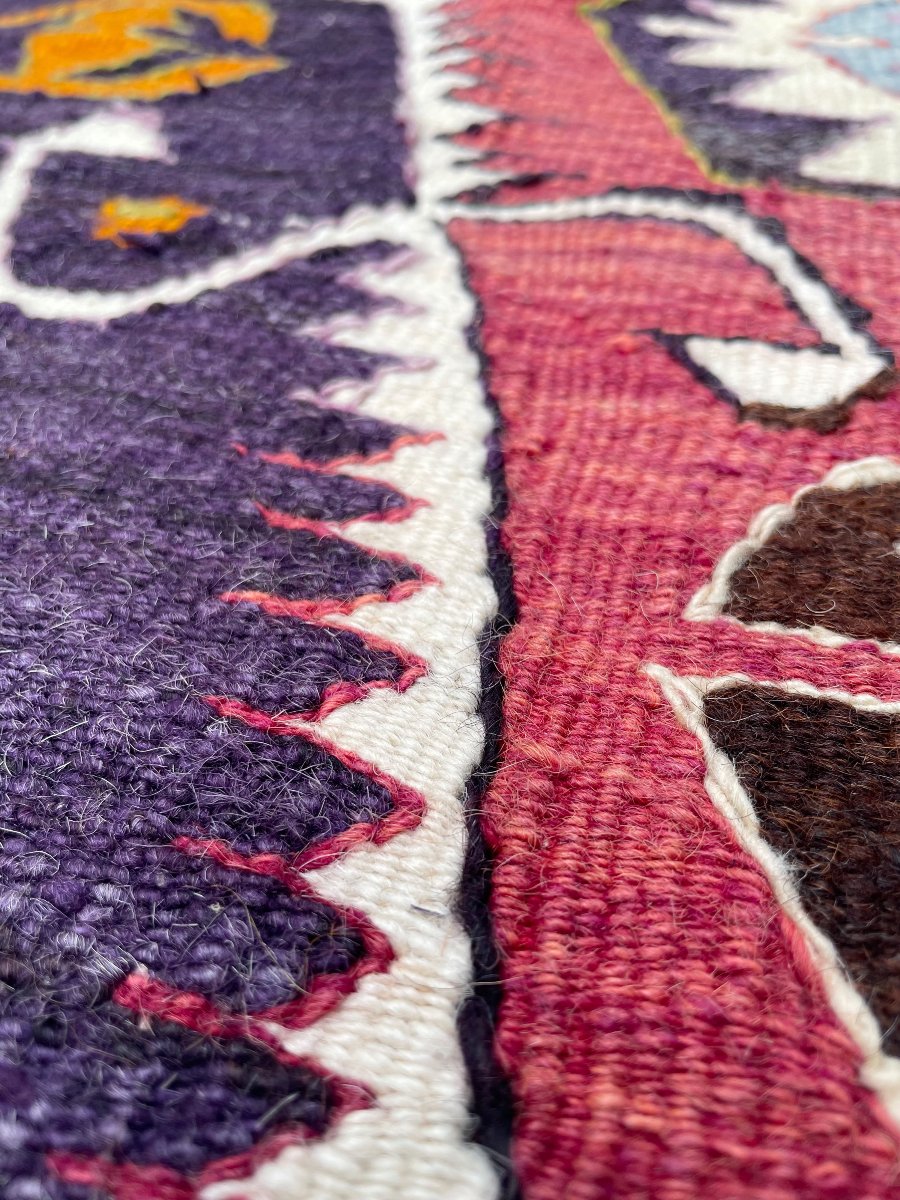
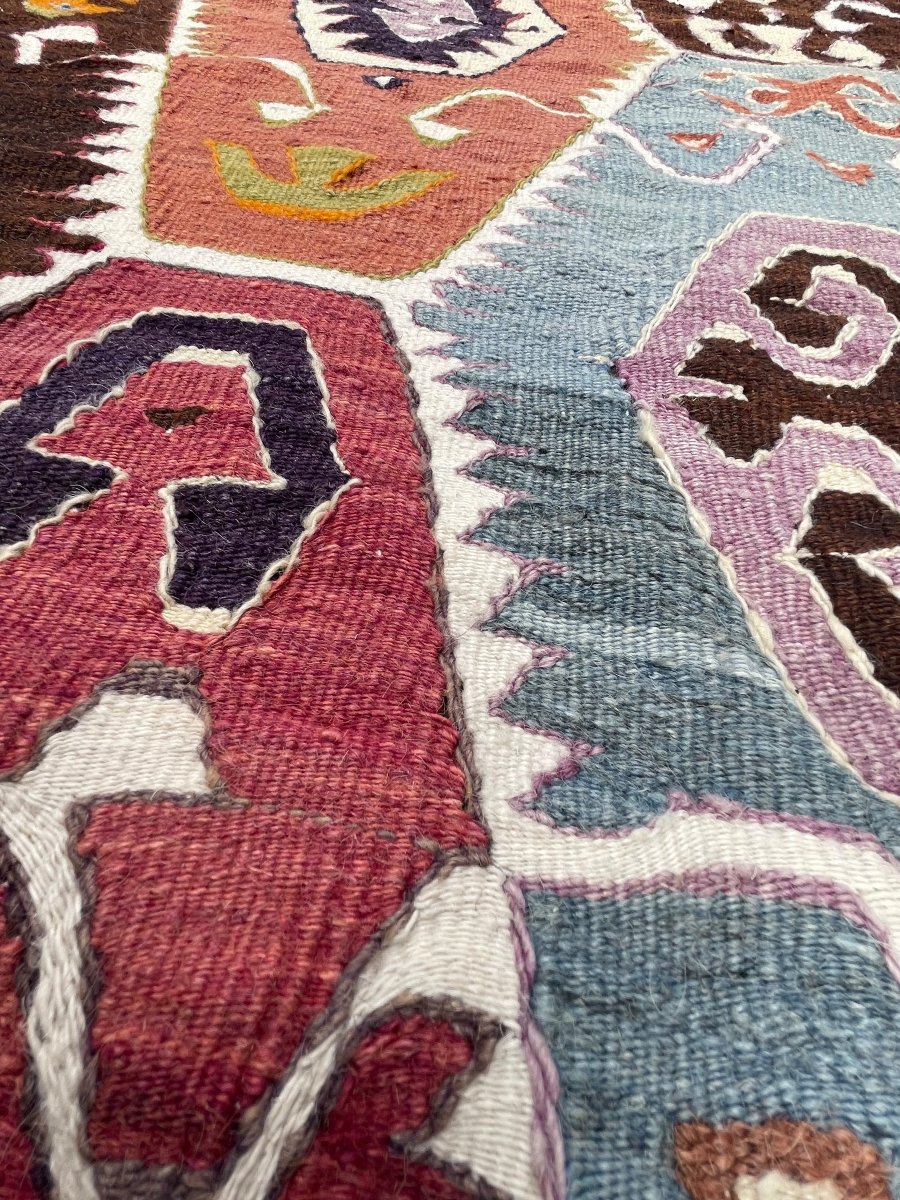
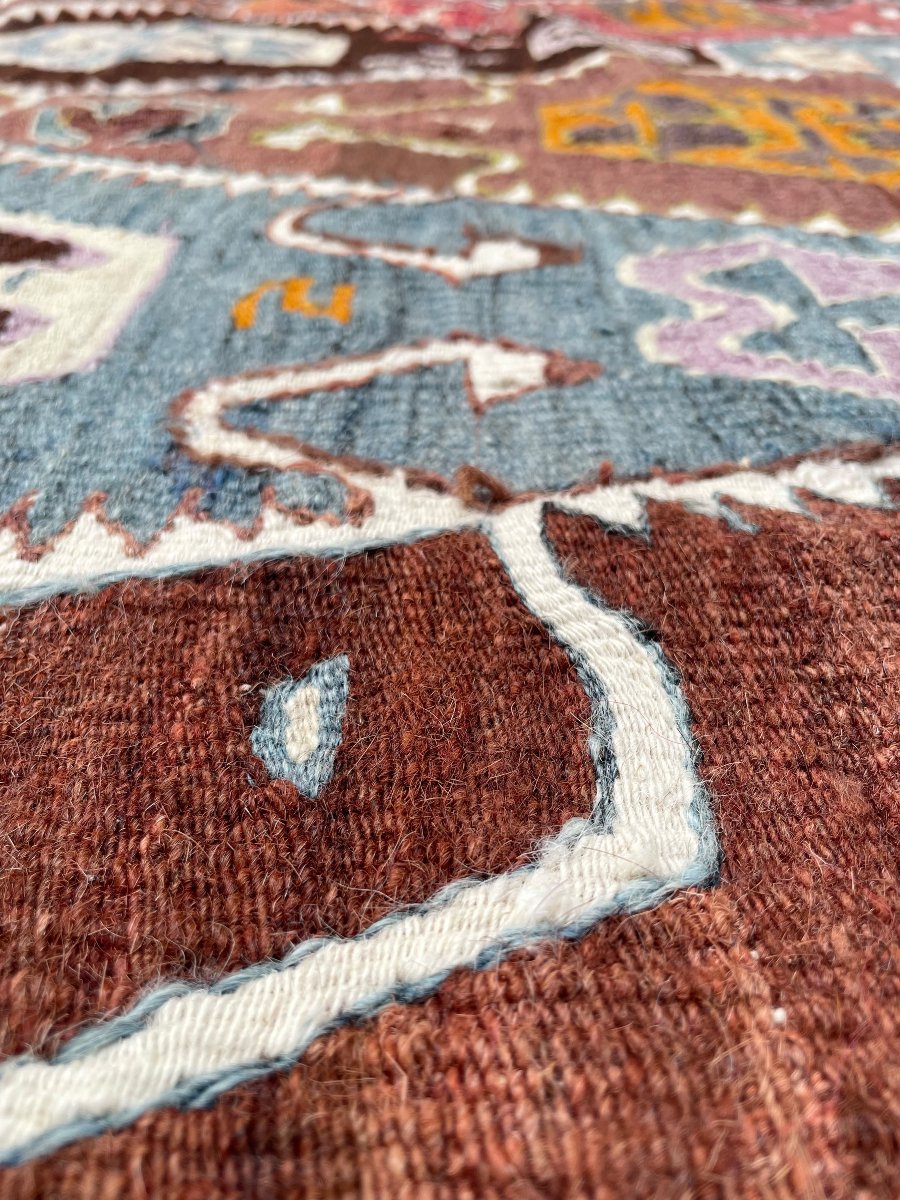
The appeal of these pieces—their beauty and uniqueness—lies precisely in the choice and harmony of their colors. It is quite simply extraordinary. In this example, one is immediately captivated by the softness of the tones and the variations in intensity of each. This is what is known as “abrash”: different shades within a single color.
Plant-based dyes allow for these gradations. During the dyeing process, the weaver gradually removes the wool from the vat as it boils. This yields a range of shades, from the lightest to the darkest. The threads are then selected during weaving, depending on the desired intensity. Craftsmanship, creativity, and a touch of chance all contribute to this result.
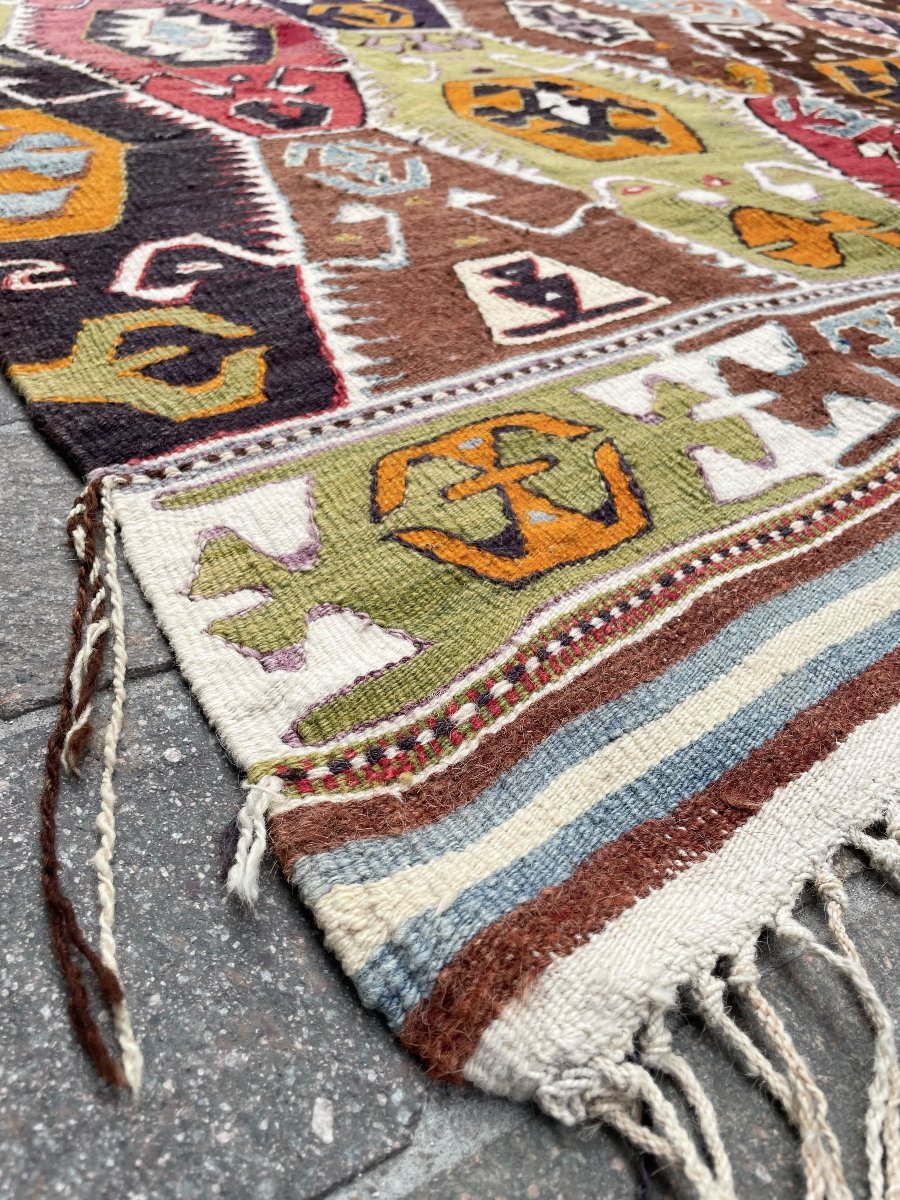
A Barak kilim is recognizable by its patterns repeated across the entire surface, their diagonal arrangement, and their characteristic proportions.
The Mother Goddess motif, evoking femininity, is present throughout the field. Can you see it?
Barak kilims are extraordinary: they move us as much as they captivate us. They are true works of art, like a massive watercolor painting laid out on the floor. Their graphic design and decorative power set them apart immediately.
By extension, I would say that this Barak kilim is not a kilim—much less a rug—and that we are not merchants. It is a sensory universe, a vibrant surface, full of subtlety.
Handwoven
Wool on wool
Circa 1960
Perfect condition
Plant-based dyes
Dimensions: 260 × 150 cm
Choosing an antique rug or textile is often a serendipitous encounter.
If one of our pieces catches your eye, or if you’d like more information or photos, I’d be happy to speak with you.
Laurent Consul
Beauty of Kilims
06 42 61 73 46
To my knowledge, very few antique pieces are known from this region of Antalya, in southwestern Anatolia. The oldest date back to the early 20th century.
The appeal of these pieces—their beauty and uniqueness—lies precisely in the choice and harmony of their colors. It is quite simply extraordinary. In this example, one is immediately captivated by the softness of the tones and the variations in intensity of each. This is what is known as “abrash”: different shades within a single color.
Plant-based dyes allow for these gradations. During the dyeing process, the weaver gradually removes the wool from the vat as it boils. This yields a range of shades, from the lightest to the darkest. The threads are then selected during weaving, depending on the desired intensity. Craftsmanship, creativity, and a touch of chance all contribute to this result.
A Barak kilim is recognizable by its patterns repeated across the entire surface, their diagonal arrangement, and their characteristic proportions.
The Mother Goddess motif, evoking femininity, is present throughout the field. Can you see it?
Barak kilims are extraordinary: they move us as much as they captivate us. They are true works of art, like a massive watercolor painting laid out on the floor. Their graphic design and decorative power set them apart immediately.
By extension, I would say that this Barak kilim is not a kilim—much less a rug—and that we are not merchants. It is a sensory universe, a vibrant surface, full of subtlety.
Handwoven
Wool on wool
Circa 1960
Perfect condition
Plant-based dyes
Dimensions: 260 × 150 cm
Choosing an antique rug or textile is often a serendipitous encounter.
If one of our pieces catches your eye, or if you’d like more information or photos, I’d be happy to speak with you.
Laurent Consul
Beauty of Kilims
06 42 61 73 46
1 500 €
Period: 20th century
Style: Orientalism
Condition: Perfect condition
Material: Wool
Length: 260 cm
Width: 150 cm
Reference (ID): 1835978
Availability: In stock
Print