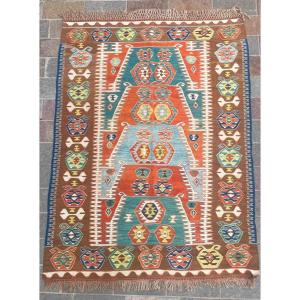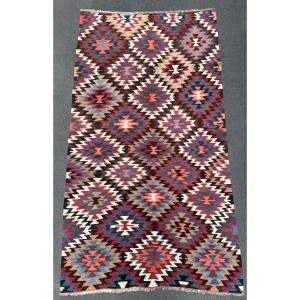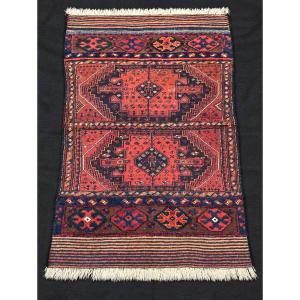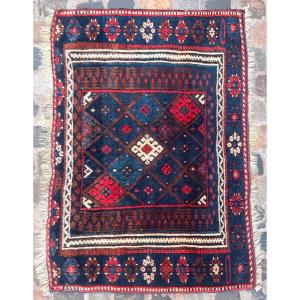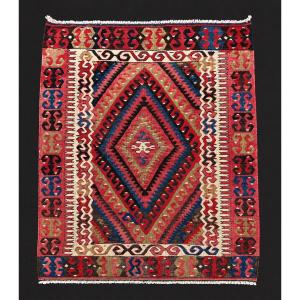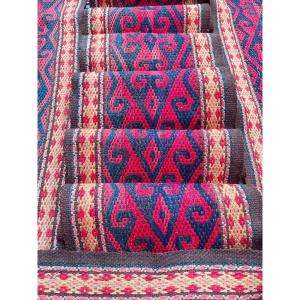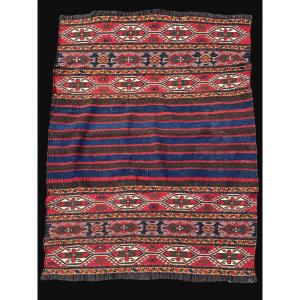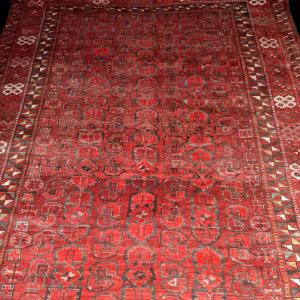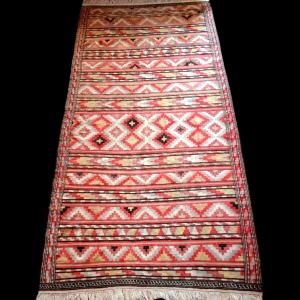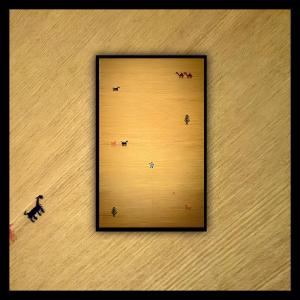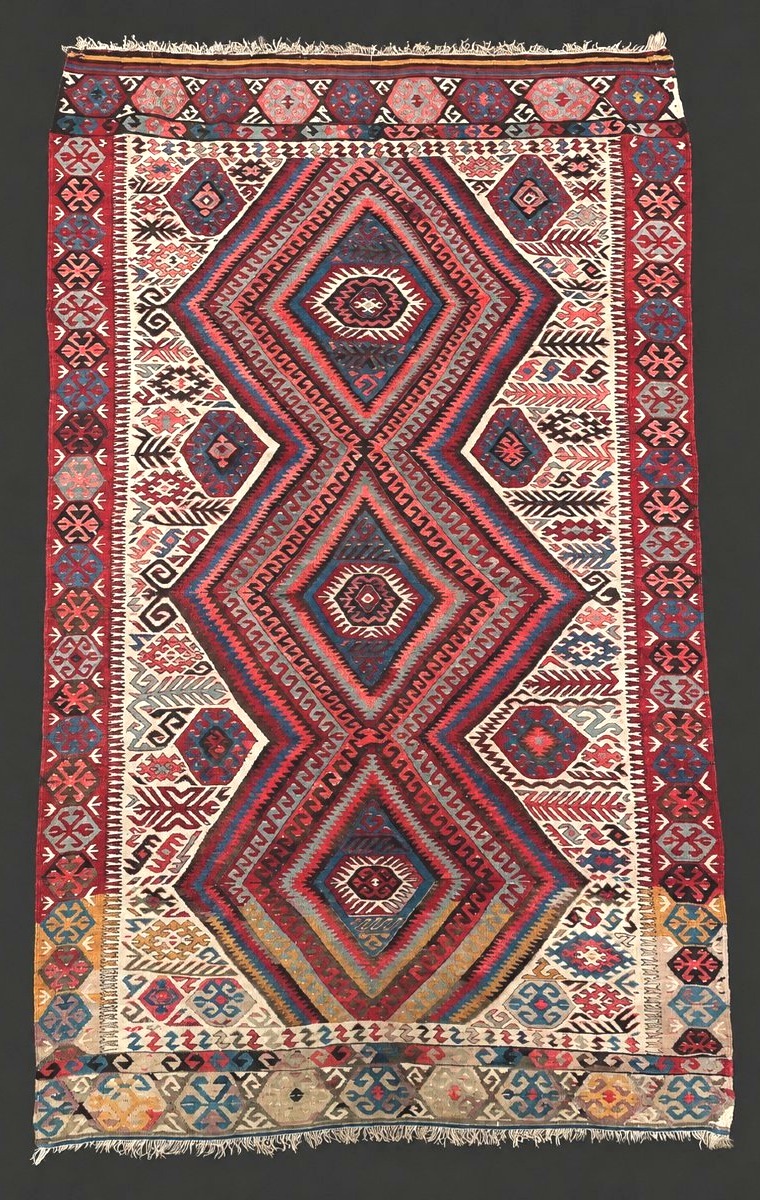
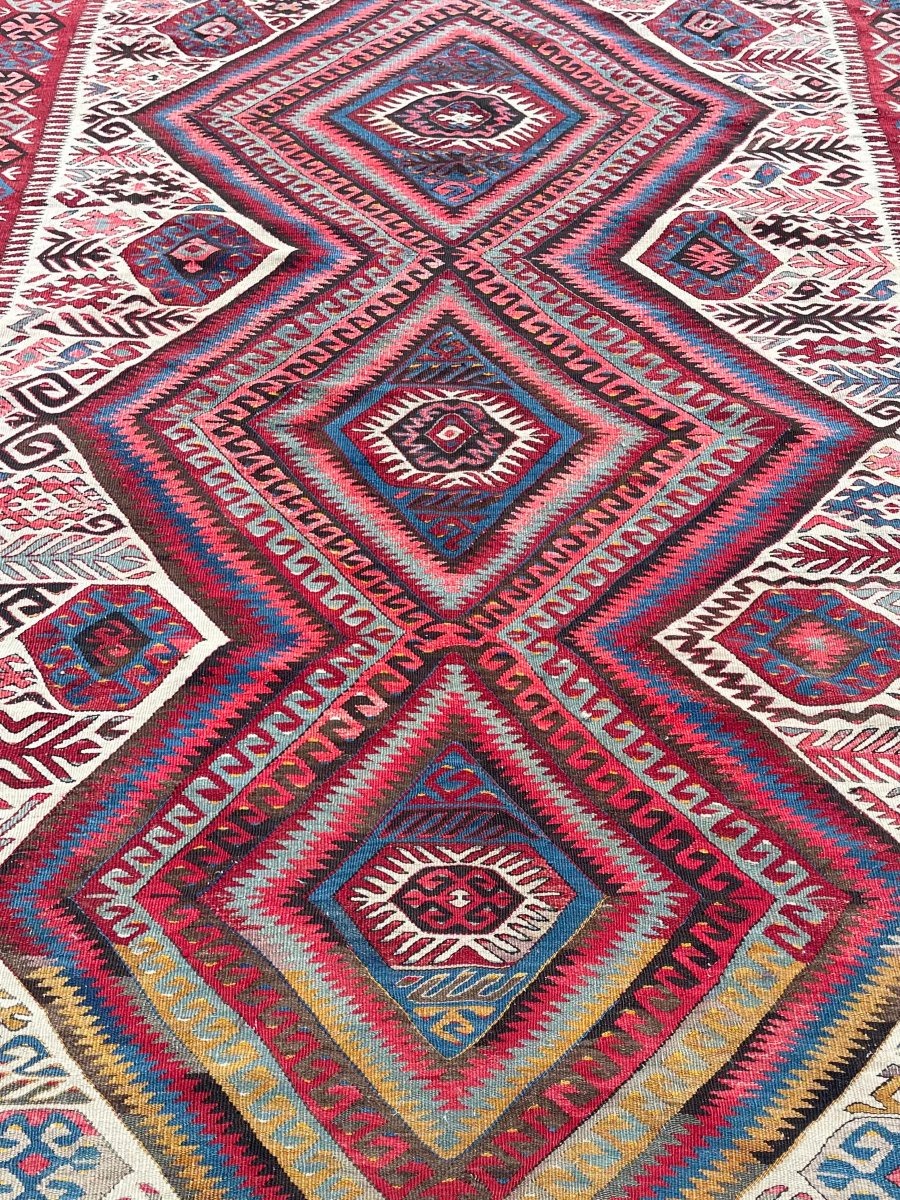
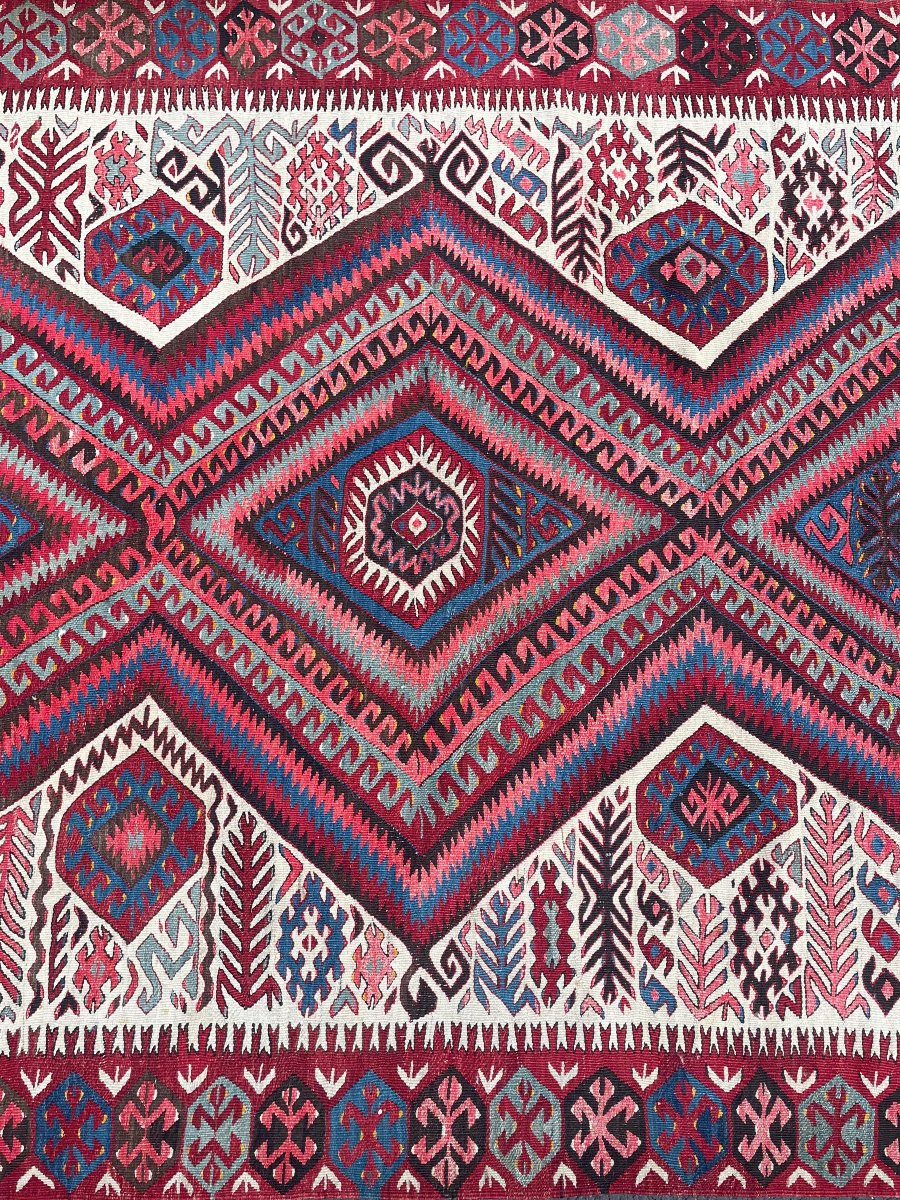
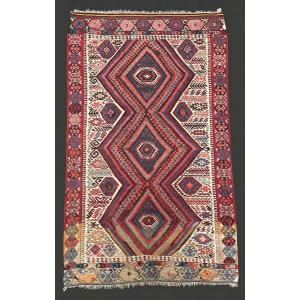


Fethiye Kilim - Anatolia. Circa 1920. 275 X 162 Cm
I often find myself explaining the difference between a kilim and a rug. Ultimately, my role is also to broaden people’s perspectives.
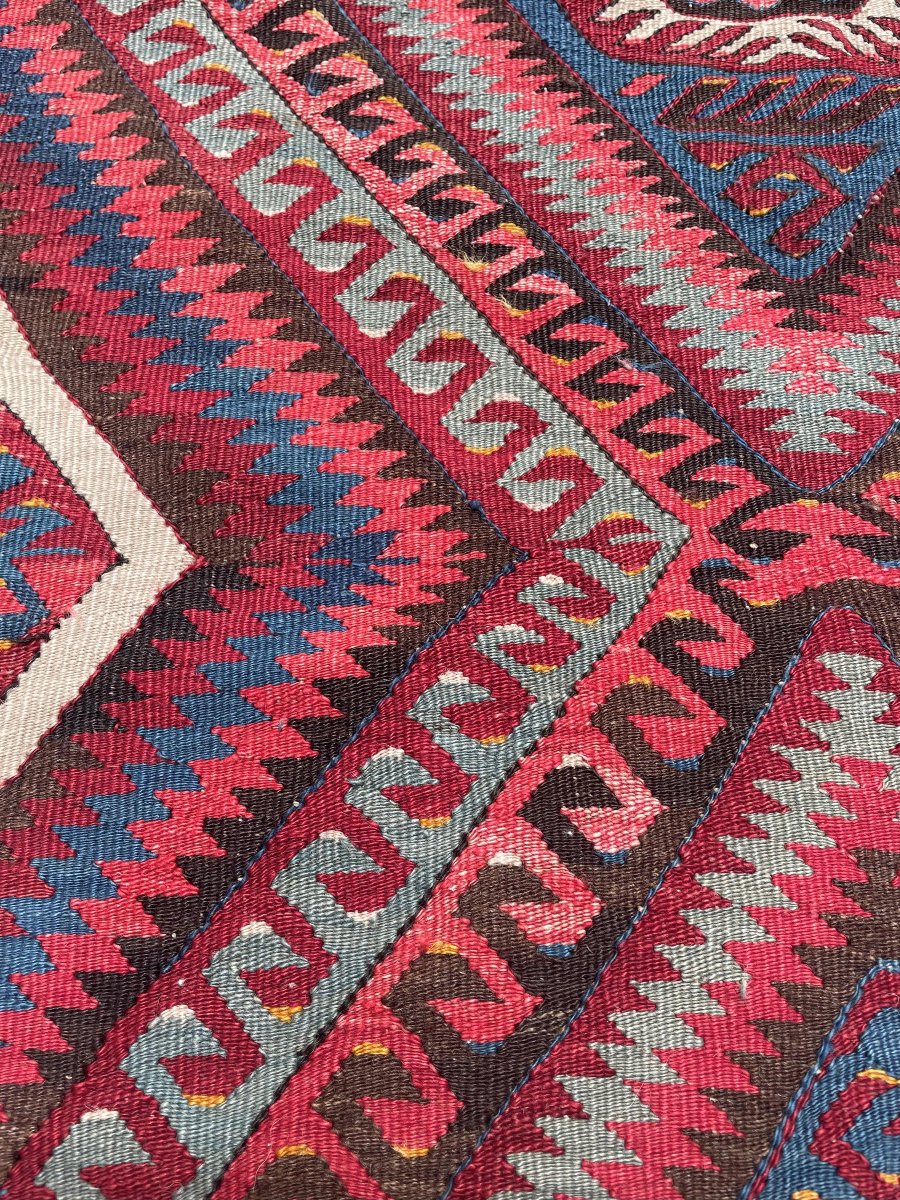
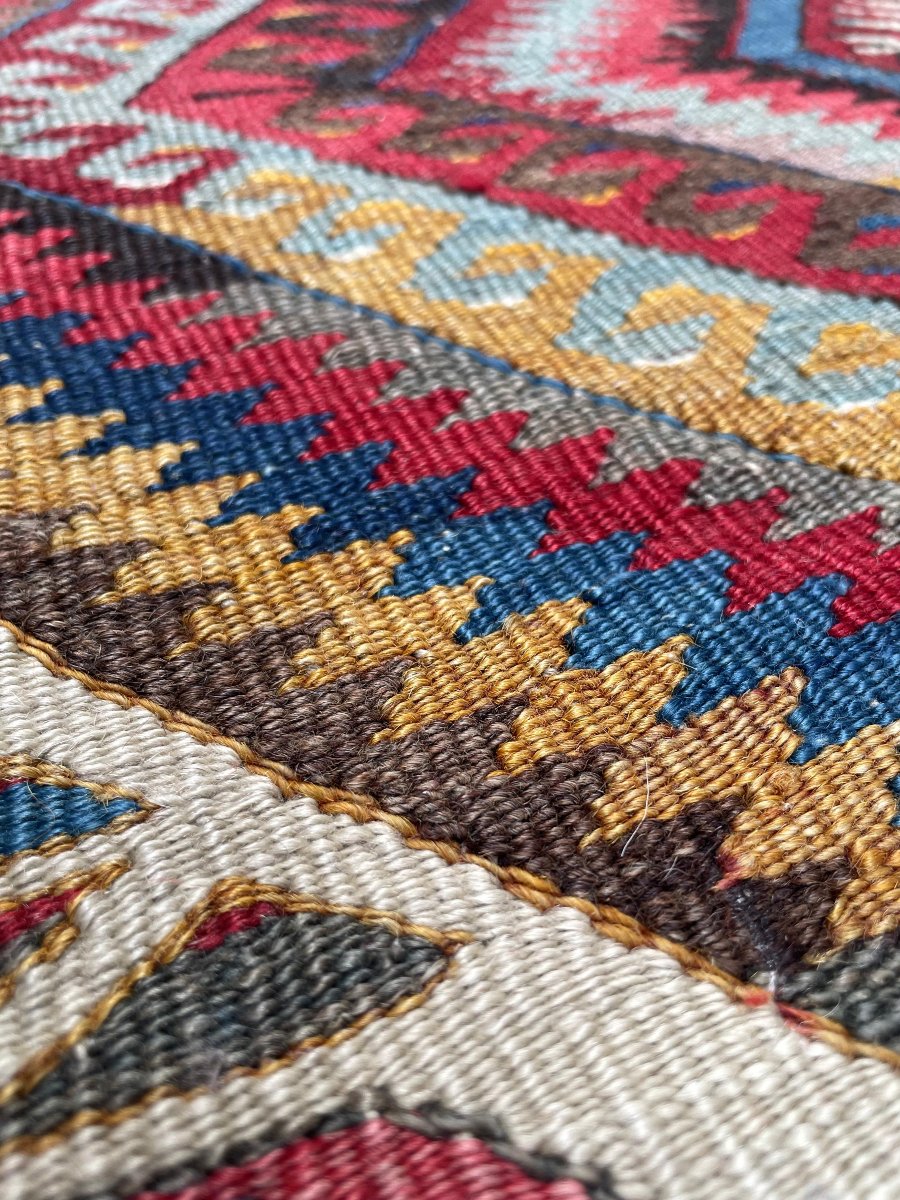
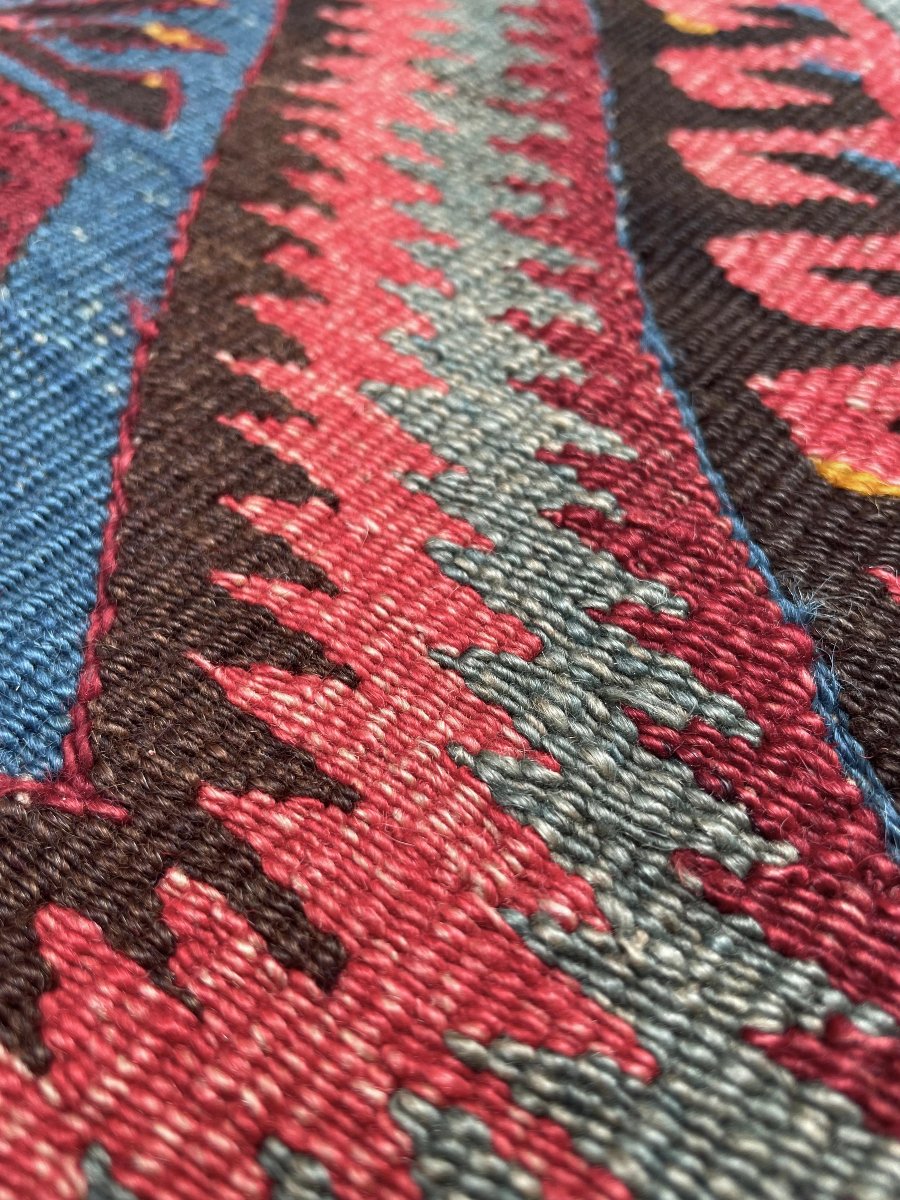
We could stop at the technical aspects. A kilim is woven. It’s the story of two threads that intertwine: the warp, which determines the length of the piece, and the weft, which creates the patterns and gives rise to the design.
A carpet, on the other hand, is knotted. On this same woven structure, the weaver adds a thread with which she ties knots, thus creating the pile, which varies in thickness depending on the region and tradition.
But let’s now move beyond the technique and take a closer look at this work.
I often feel that the art of the kilim, elevated by the boundless imagination of nomadic peoples, is more a matter of free creation than of mere execution. Conversely—though this deserves some qualification—knotted carpets are frequently made based on a design or pattern that the weaver interprets with remarkable skill.
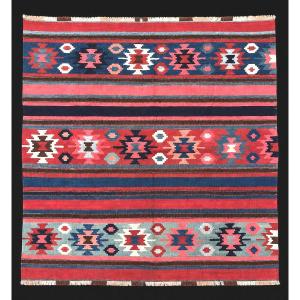
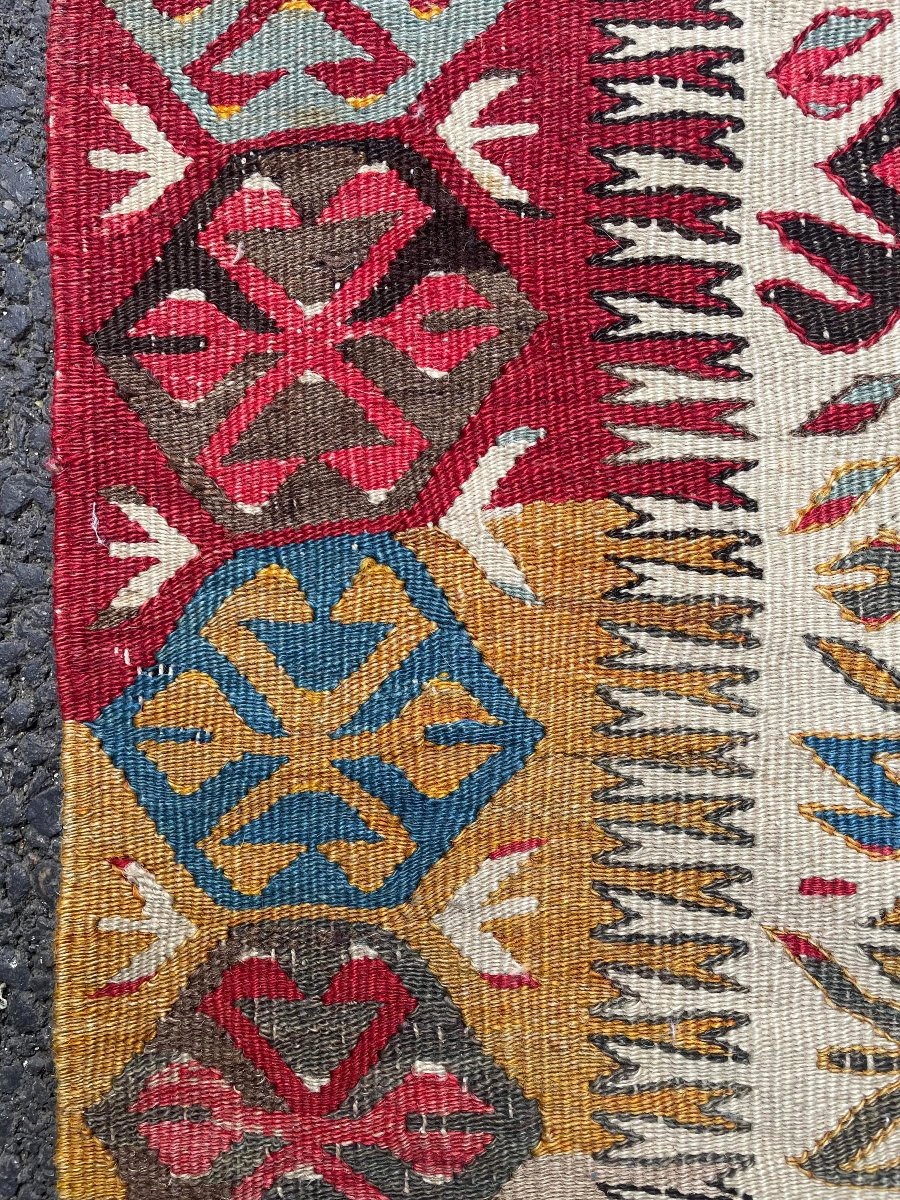
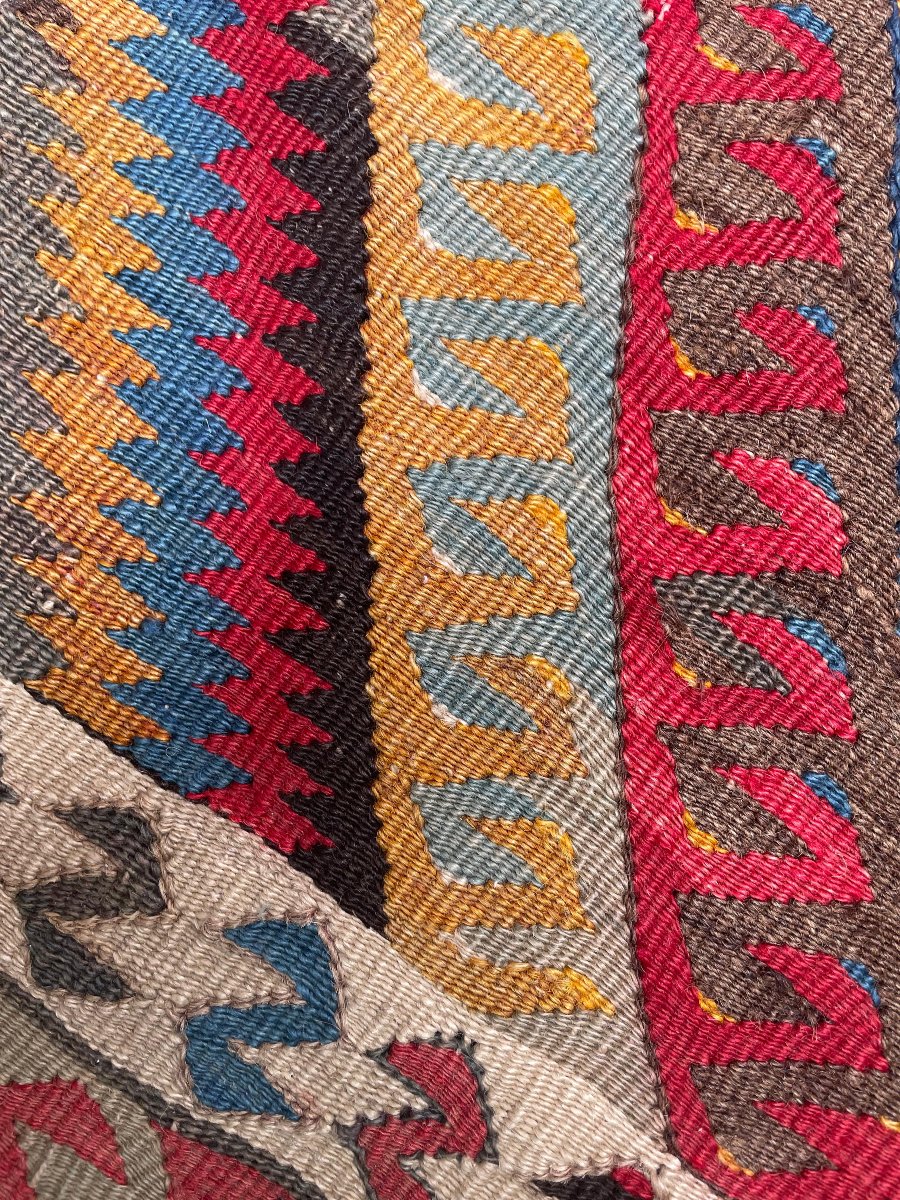
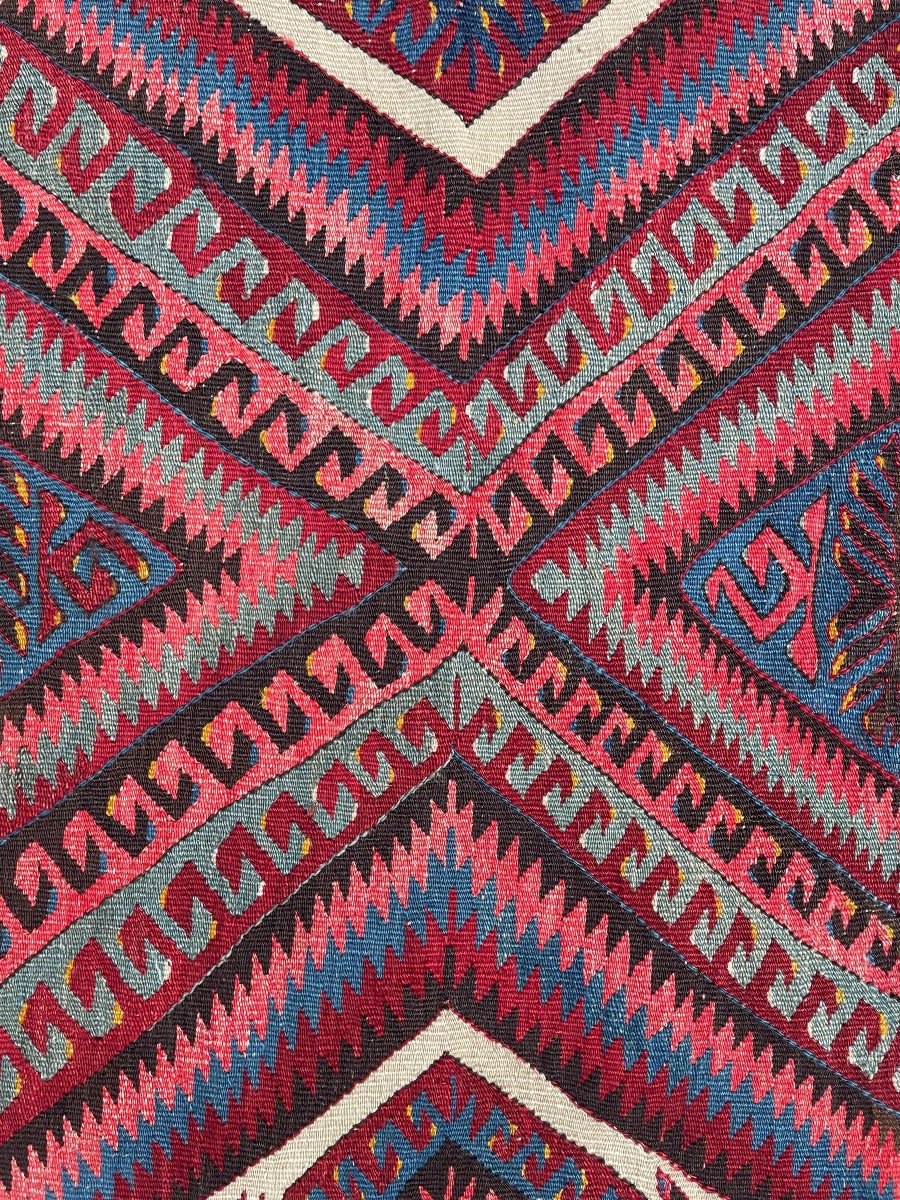
At first glance, some may be surprised by the differences in color tones visible at one end of this kilim. Yet that is precisely where much of its charm lies.
No, this is neither discoloration due to age nor wear caused by light. This variation is an integral part of the weaving. The deliberate introduction of other shades ties the composition together, balances it, and gives it a visual breathing room of surprising modernity.
The idea that the weaver simply ran out of wool profoundly underestimates her work.
In a piece of this quality, nothing is left to chance.
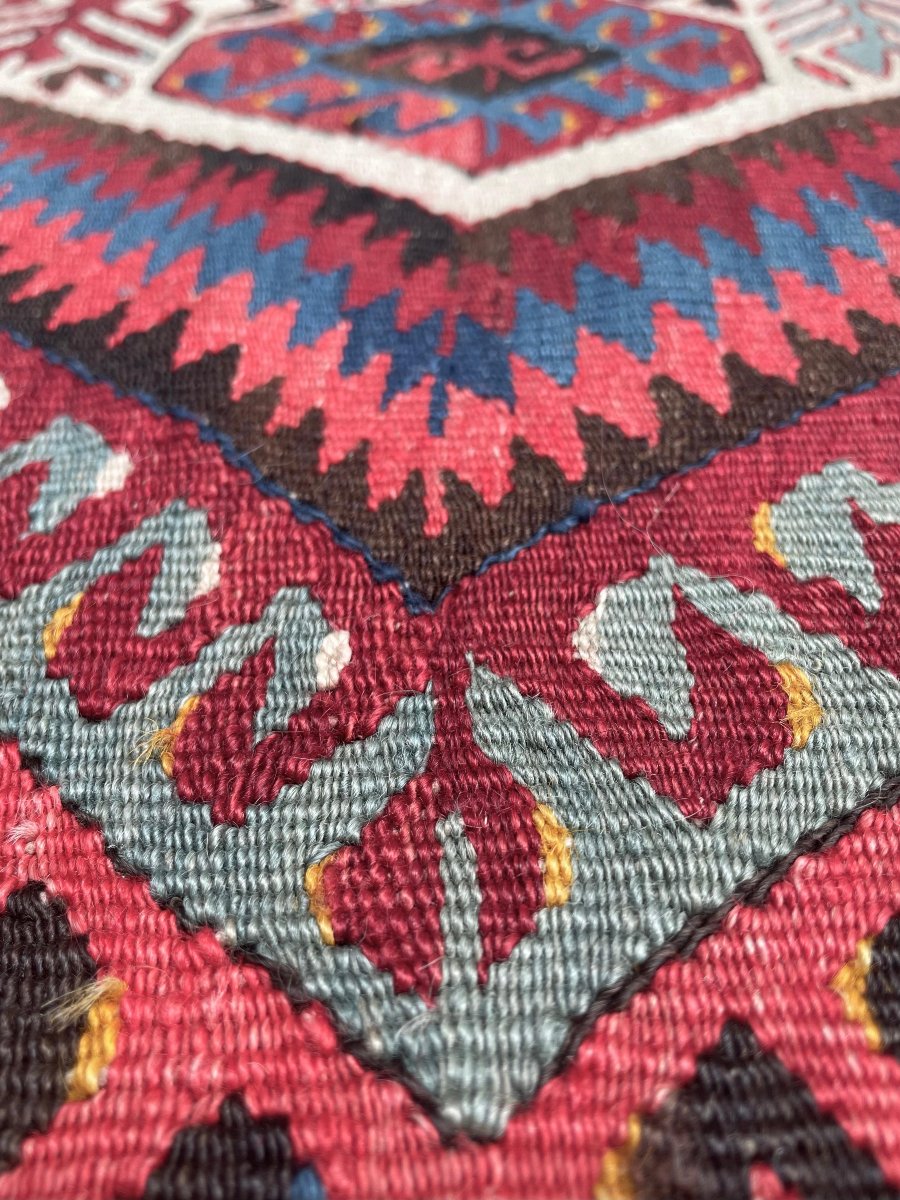
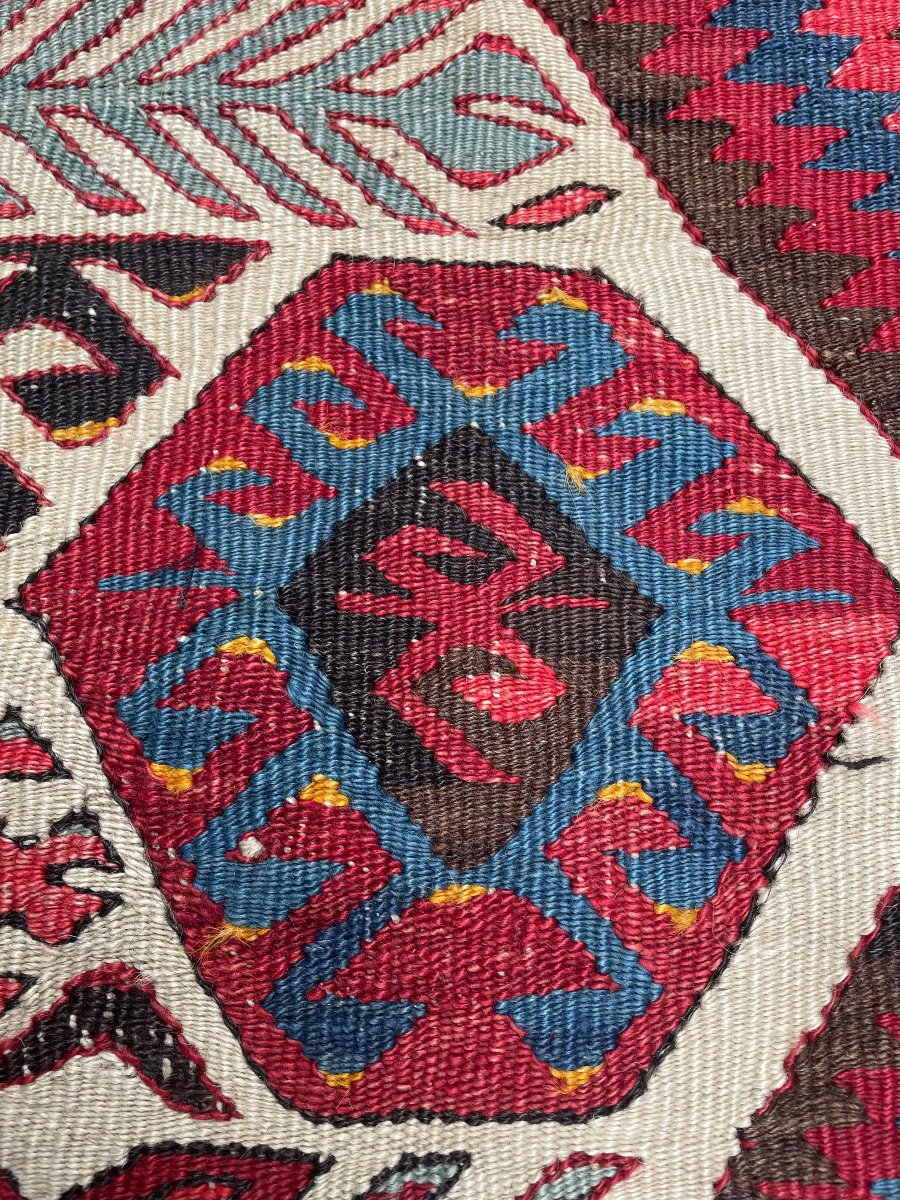
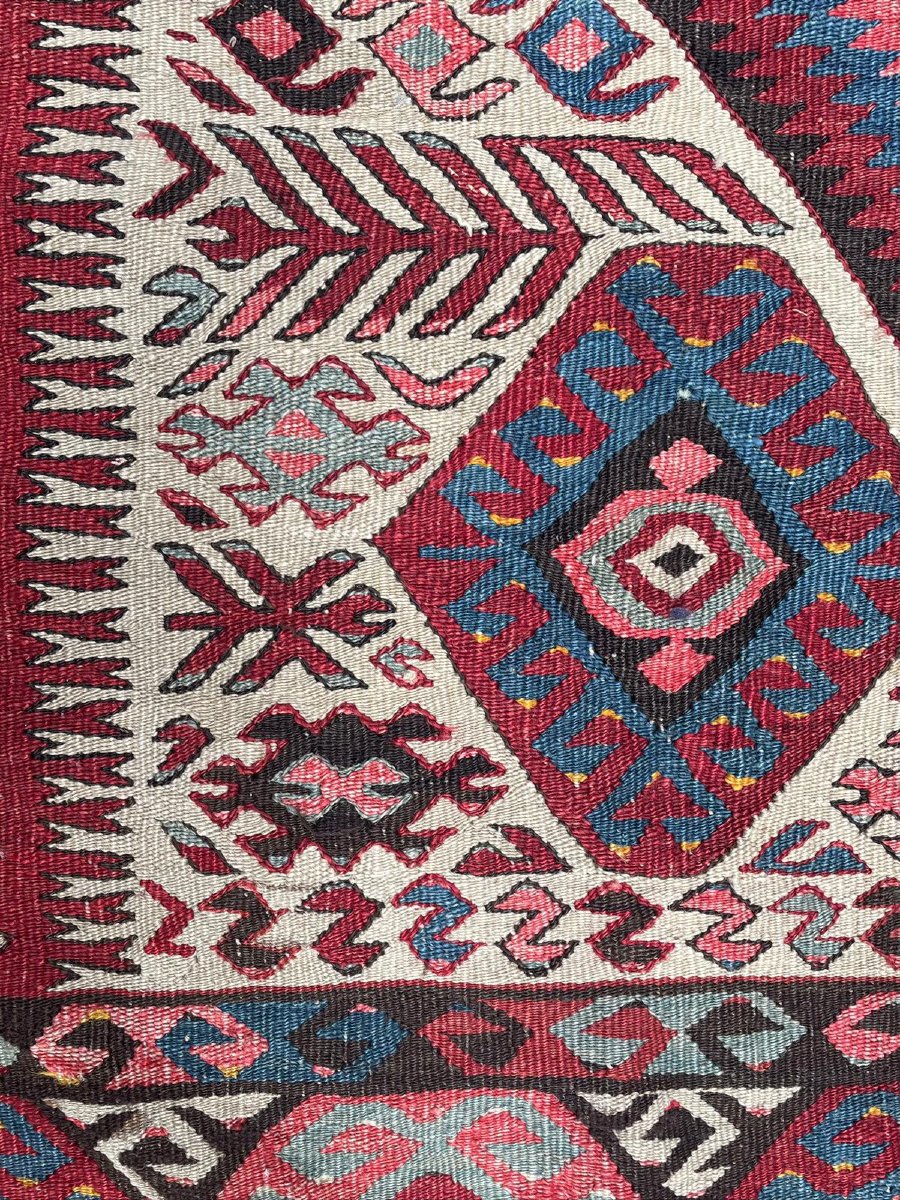
The weave, with its great finesse and perfect regularity, gives this piece remarkable suppleness and lightness. Its palette of plant-based dyes is exceptionally fresh, dominated by deep reds, luminous blues, warm ivories, and, above all, that absolutely irresistible golden yellow.
A graphic, authentic, and deeply decorative work.
Origin: Fethiye, southwestern Anatolia
Wool on wool
Circa 1920
Very good condition
Dimensions: 275 × 162 cm
Laurent
Beauty of Kilims
We could stop at the technical aspects. A kilim is woven. It’s the story of two threads that intertwine: the warp, which determines the length of the piece, and the weft, which creates the patterns and gives rise to the design.
A carpet, on the other hand, is knotted. On this same woven structure, the weaver adds a thread with which she ties knots, thus creating the pile, which varies in thickness depending on the region and tradition.
But let’s now move beyond the technique and take a closer look at this work.
I often feel that the art of the kilim, elevated by the boundless imagination of nomadic peoples, is more a matter of free creation than of mere execution. Conversely—though this deserves some qualification—knotted carpets are frequently made based on a design or pattern that the weaver interprets with remarkable skill.
At first glance, some may be surprised by the differences in color tones visible at one end of this kilim. Yet that is precisely where much of its charm lies.
No, this is neither discoloration due to age nor wear caused by light. This variation is an integral part of the weaving. The deliberate introduction of other shades ties the composition together, balances it, and gives it a visual breathing room of surprising modernity.
The idea that the weaver simply ran out of wool profoundly underestimates her work.
In a piece of this quality, nothing is left to chance.
The weave, with its great finesse and perfect regularity, gives this piece remarkable suppleness and lightness. Its palette of plant-based dyes is exceptionally fresh, dominated by deep reds, luminous blues, warm ivories, and, above all, that absolutely irresistible golden yellow.
A graphic, authentic, and deeply decorative work.
Origin: Fethiye, southwestern Anatolia
Wool on wool
Circa 1920
Very good condition
Dimensions: 275 × 162 cm
Laurent
Beauty of Kilims
1 600 €
Period: 20th century
Style: Orientalism
Condition: Excellent condition
Material: Wool
Length: 275 cm
Width: 162 cm
Reference (ID): 1805570
Availability: In stock
Print