

Persian Rug. Circa 1920. 140 X 100 Cm
Sometimes, certain pieces “speak” to us more than others. This one possesses something remarkable, even relentless. Its simplicity—or more precisely, its restraint—gives it an uncommon power.
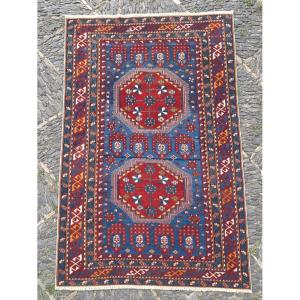
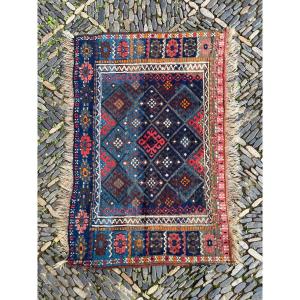
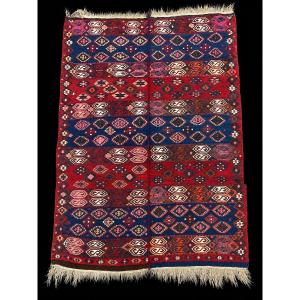
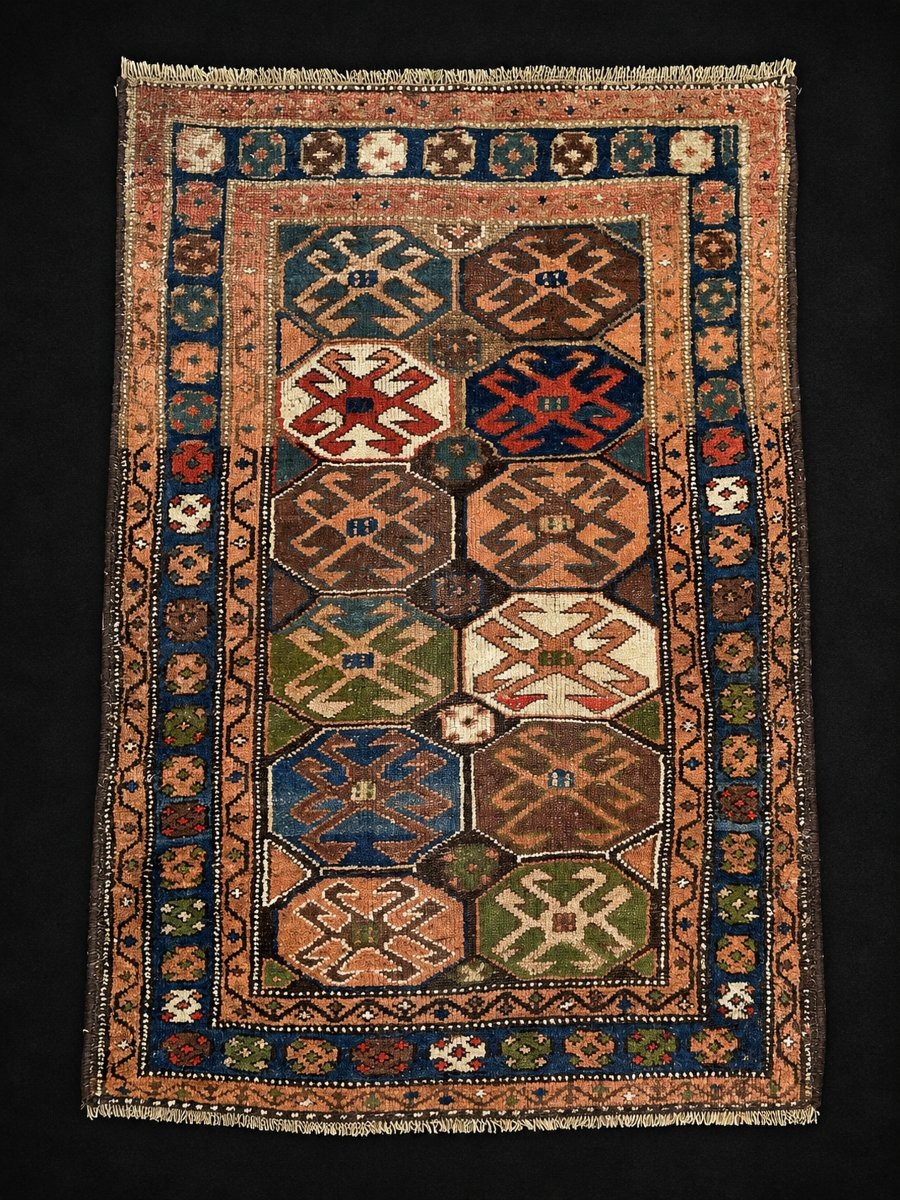
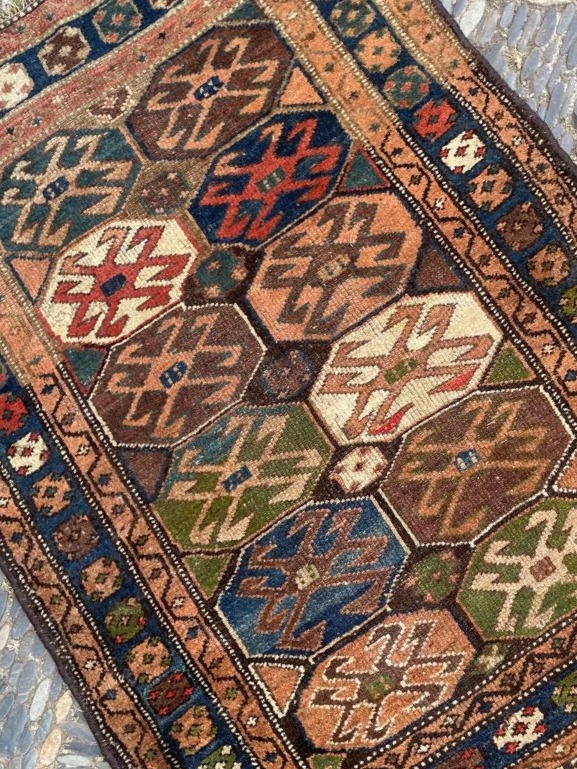
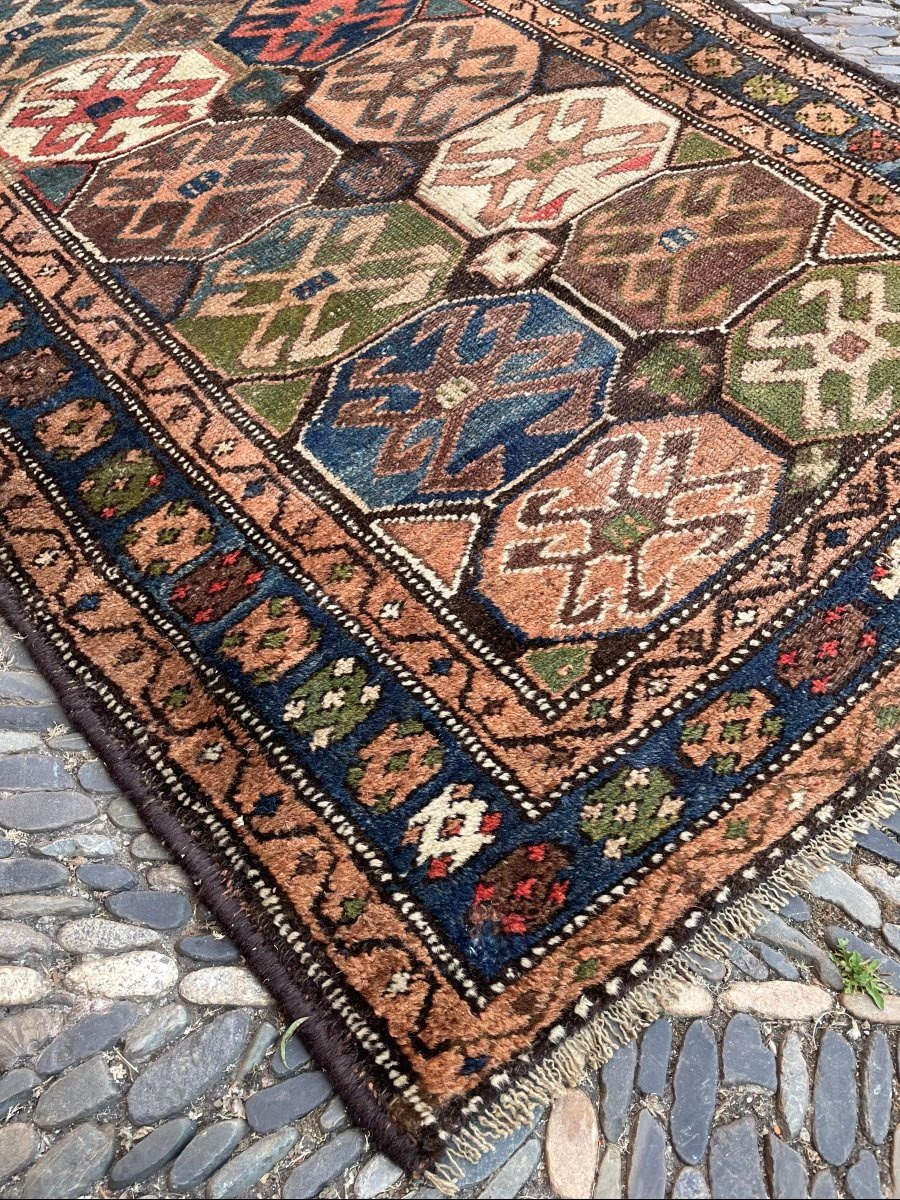
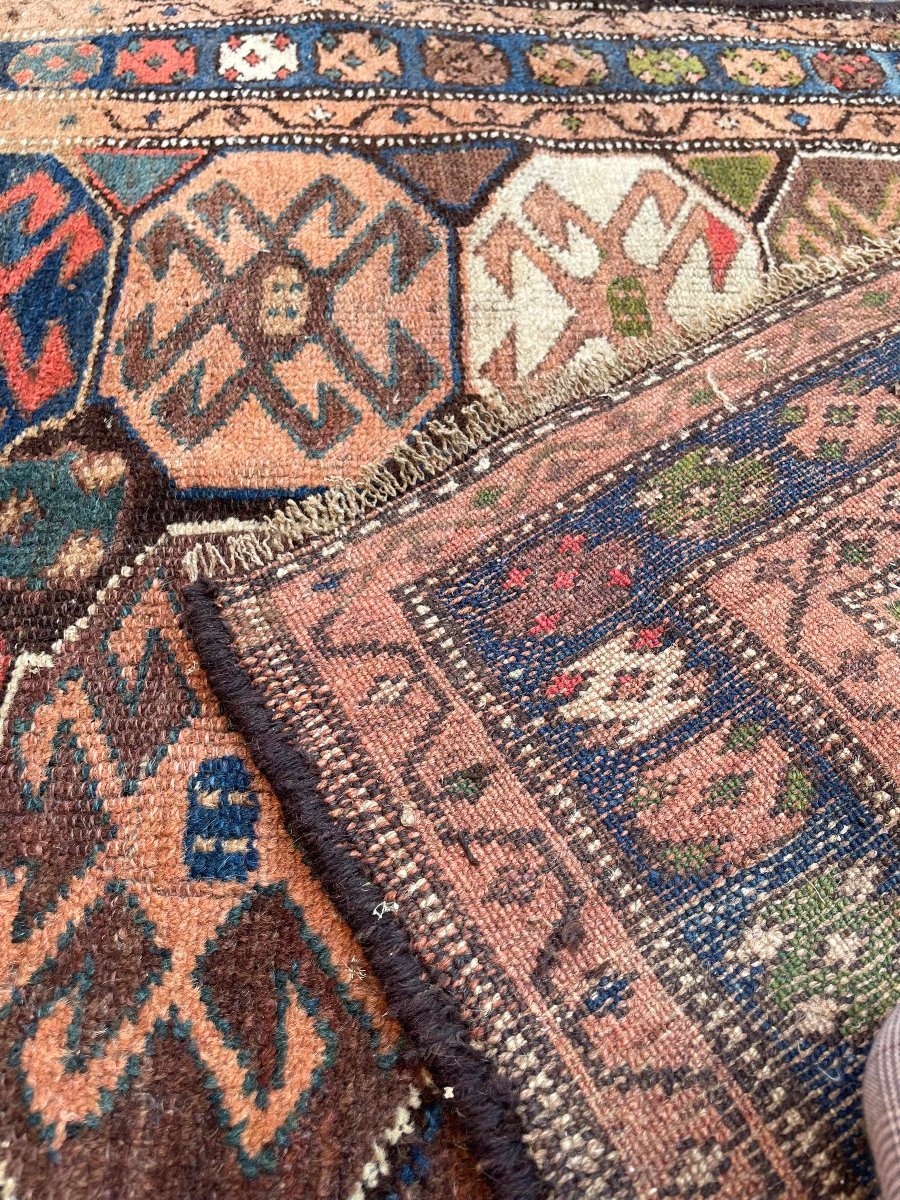
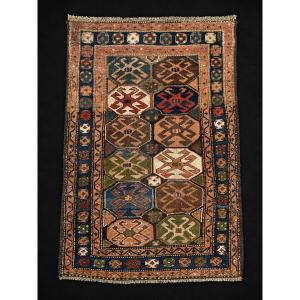
Look at the central field. It is filled with twelve large stylized figures, arranged in two longitudinal rows, which can be likened to the ancestral scorpion motif. Their shapes are never perfectly identical; slightly offset and asymmetrical, they seem almost animated. Each appears to be in motion, as if imbued with that protective function so often associated with symbols from the tribal repertoire.
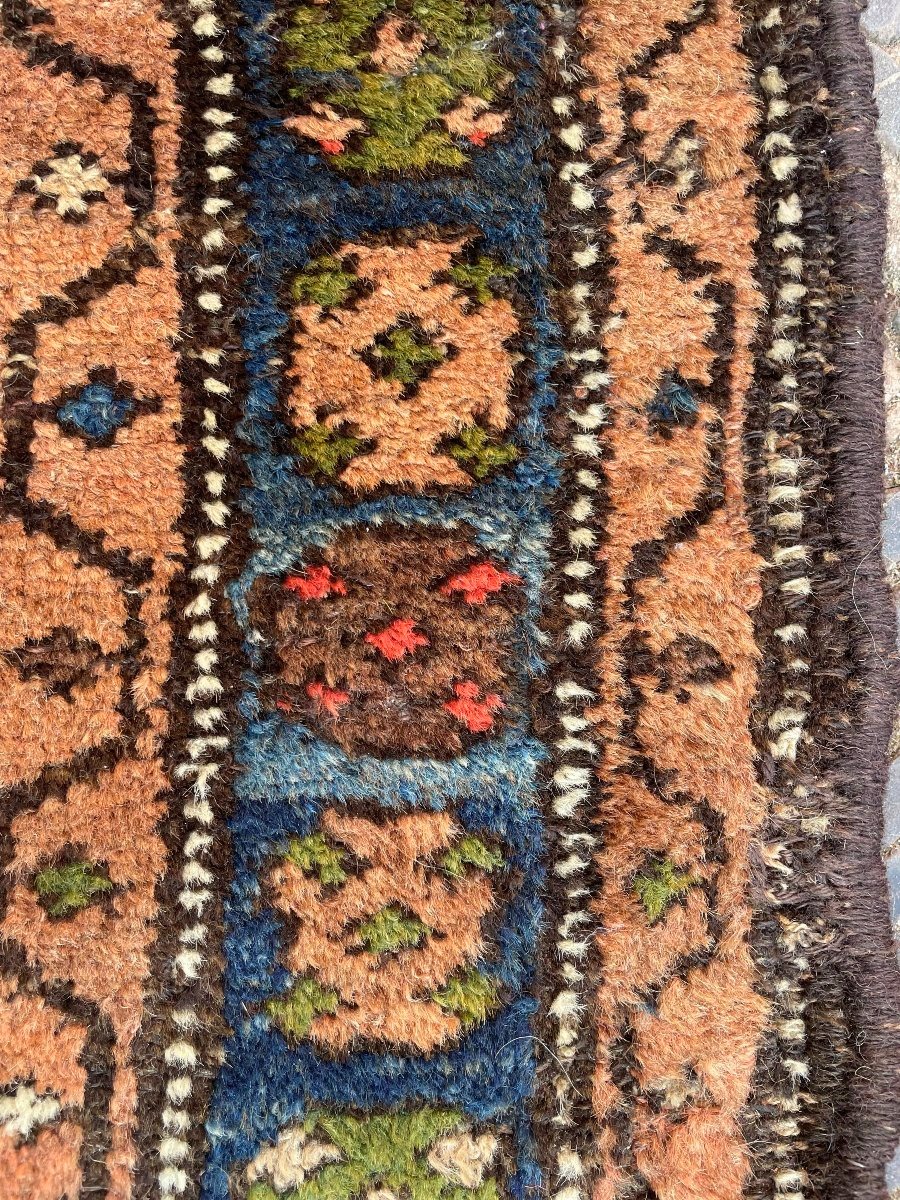
The colors are marvelous. Some are slightly tart, but always tempered by great softness. Pistachio green—particularly alluring and uncommon—indigo blue, sometimes light, sometimes deep and saturated, red ochre, brown, cream… The palette possesses light, depth, and a surprising delicacy. The overall harmony is sensational: subtle, delightful, and perfectly balanced.
The central field is framed by three borders. The two secondary borders feature a continuous geometric pattern that evokes “flowing water,” while the main border, set against a striking indigo-blue background, is punctuated by a succession of small polychrome floral motifs.
Yet this rug does not seek to impress with extreme finesse or showy virtuosity. And that is precisely what fascinates me. Everything here rests on the strength of the design, the quality of the proportions, the freedom of the forms, and above all, this extraordinary selection of colors.
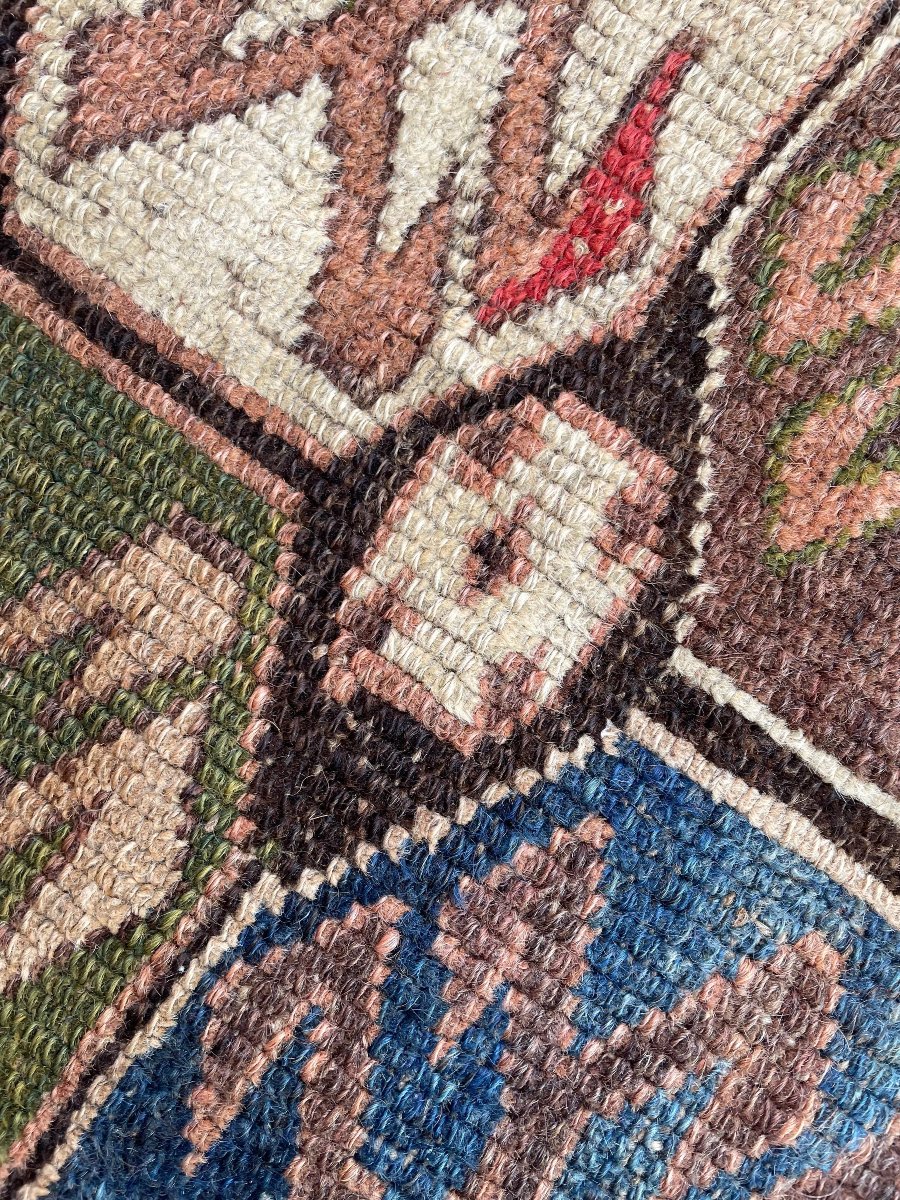
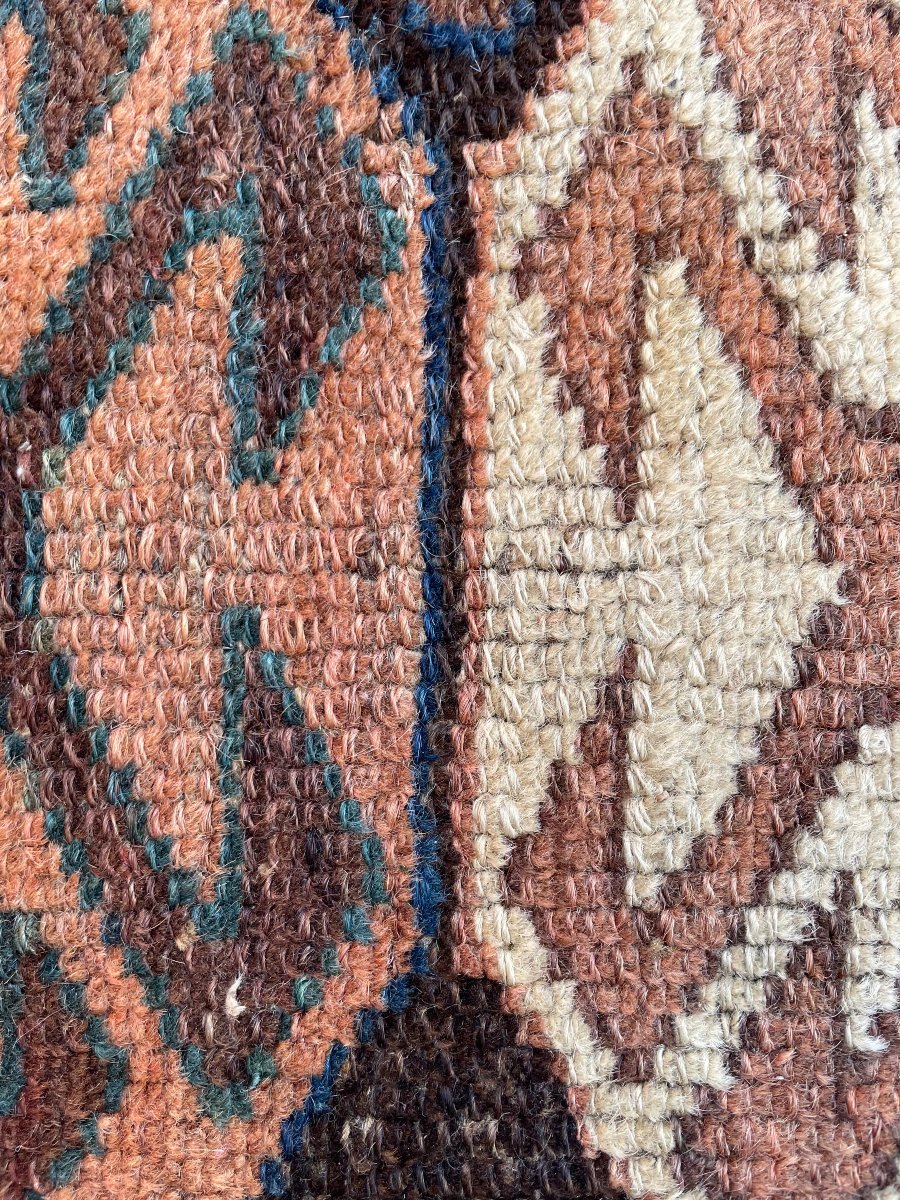
Woven and knotted using wool-on-wool according to traditional techniques. The hand-spun wool is remarkably soft. The generous pile is approximately 1 cm high.
Impeccable edging, with securing stitches at both ends. In very fine condition.
Undoubtedly a work of the Kurdish people, and above all, a true little treasure.
Early 20th century.
Dimensions: 140 × 100 cm
Laurent
Beauty of Kilims
Look at the central field. It is filled with twelve large stylized figures, arranged in two longitudinal rows, which can be likened to the ancestral scorpion motif. Their shapes are never perfectly identical; slightly offset and asymmetrical, they seem almost animated. Each appears to be in motion, as if imbued with that protective function so often associated with symbols from the tribal repertoire.
The colors are marvelous. Some are slightly tart, but always tempered by great softness. Pistachio green—particularly alluring and uncommon—indigo blue, sometimes light, sometimes deep and saturated, red ochre, brown, cream… The palette possesses light, depth, and a surprising delicacy. The overall harmony is sensational: subtle, delightful, and perfectly balanced.
The central field is framed by three borders. The two secondary borders feature a continuous geometric pattern that evokes “flowing water,” while the main border, set against a striking indigo-blue background, is punctuated by a succession of small polychrome floral motifs.
Yet this rug does not seek to impress with extreme finesse or showy virtuosity. And that is precisely what fascinates me. Everything here rests on the strength of the design, the quality of the proportions, the freedom of the forms, and above all, this extraordinary selection of colors.
Woven and knotted using wool-on-wool according to traditional techniques. The hand-spun wool is remarkably soft. The generous pile is approximately 1 cm high.
Impeccable edging, with securing stitches at both ends. In very fine condition.
Undoubtedly a work of the Kurdish people, and above all, a true little treasure.
Early 20th century.
Dimensions: 140 × 100 cm
Laurent
Beauty of Kilims
580 €
Period: 20th century
Style: Orientalism
Condition: Excellent condition
Material: Wool
Length: 140 cm
Width: 100 cm
Reference (ID): 1808595
Availability: In stock
Print