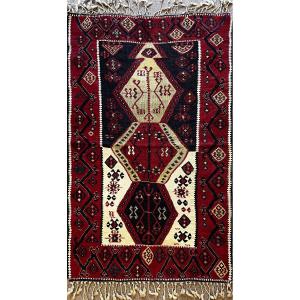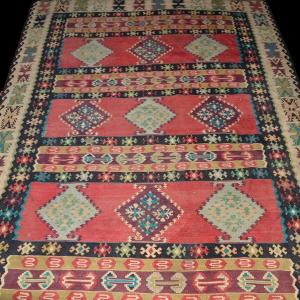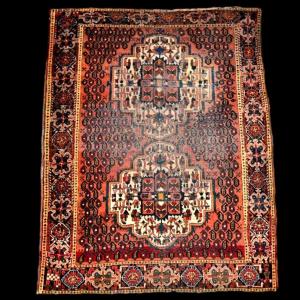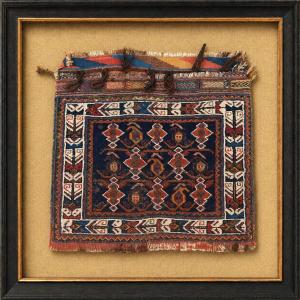


Dagestan Rug. Eastern Caucasus. Circa 1880. 140 X 100 Cm
Rugs from Dagestan are rare; here is an exceptional example.
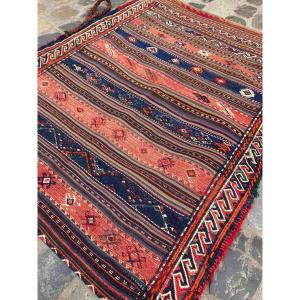
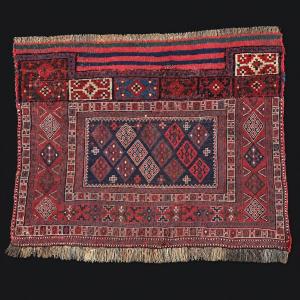
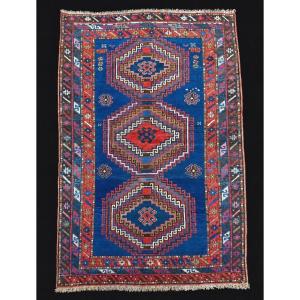
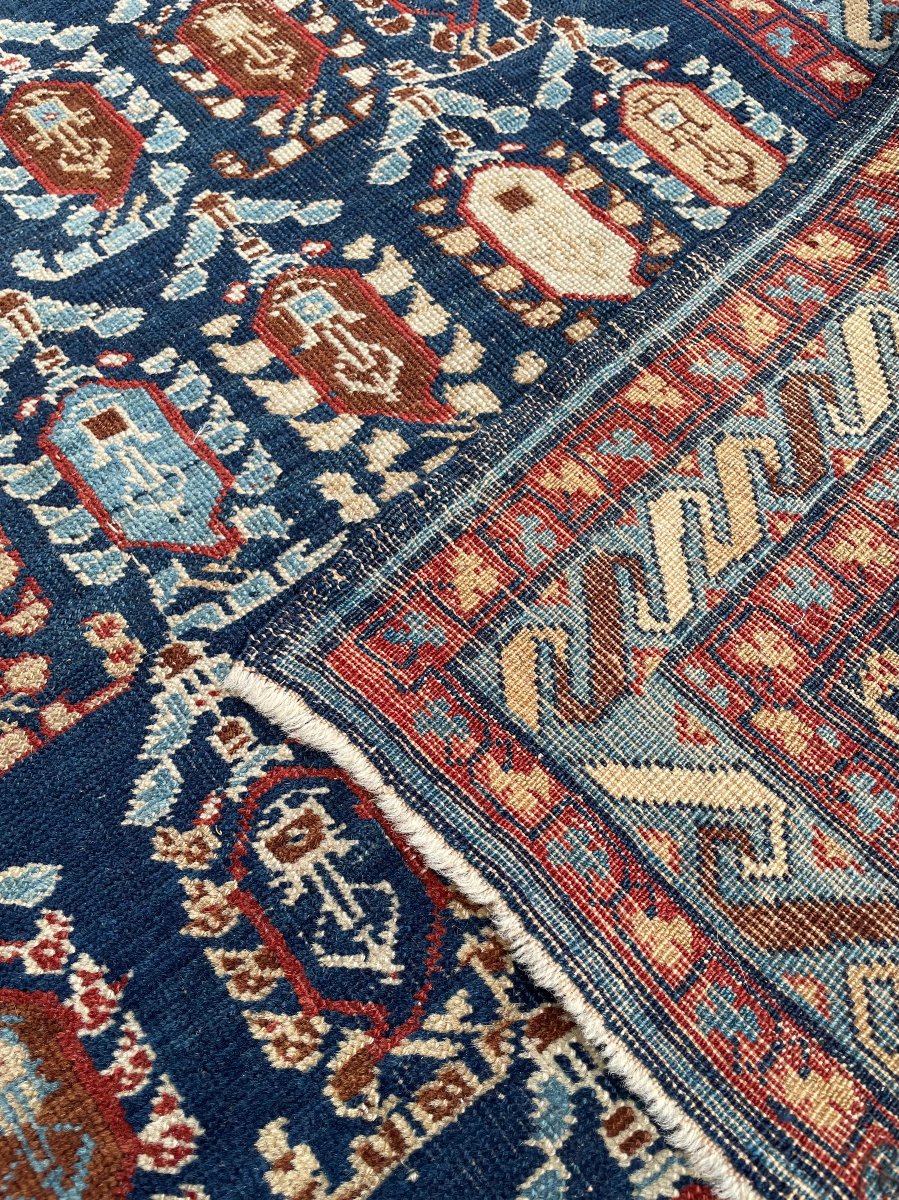
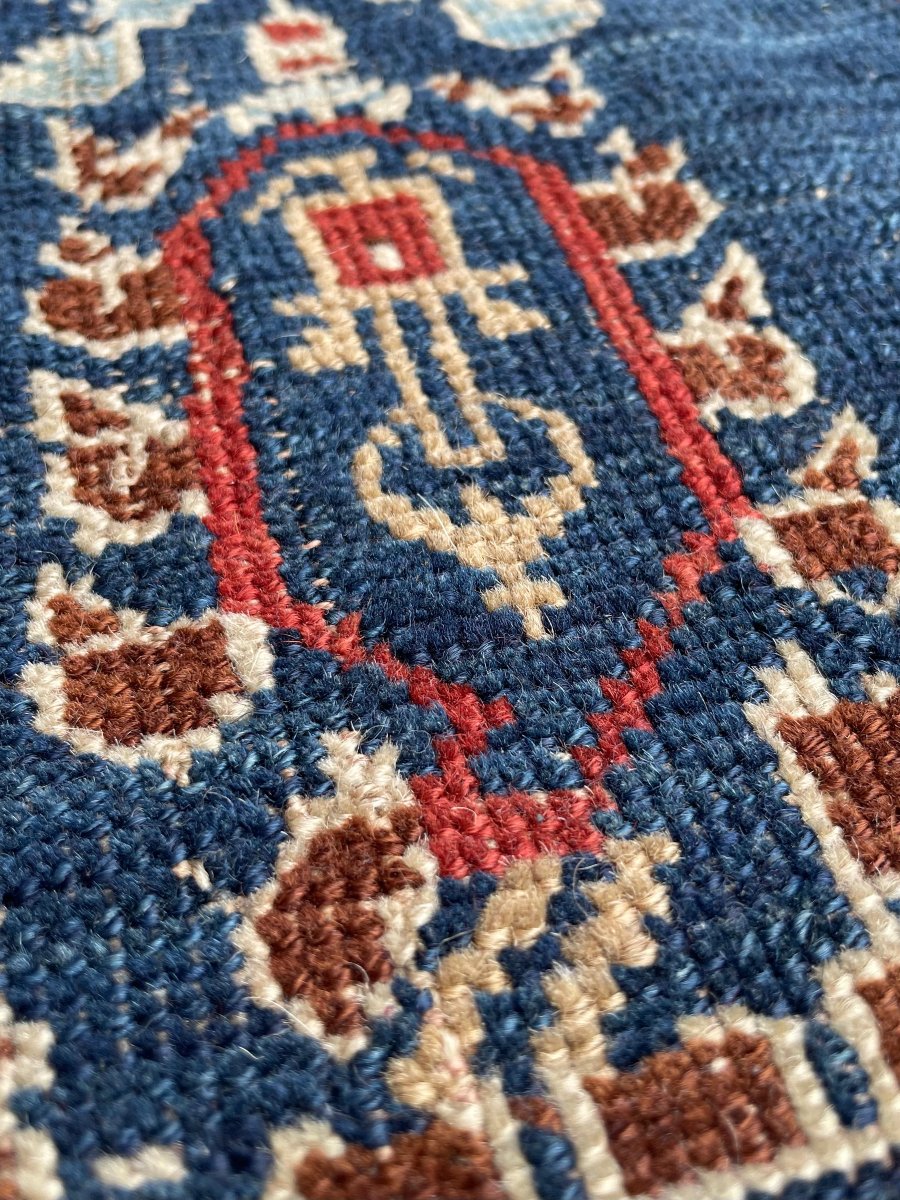
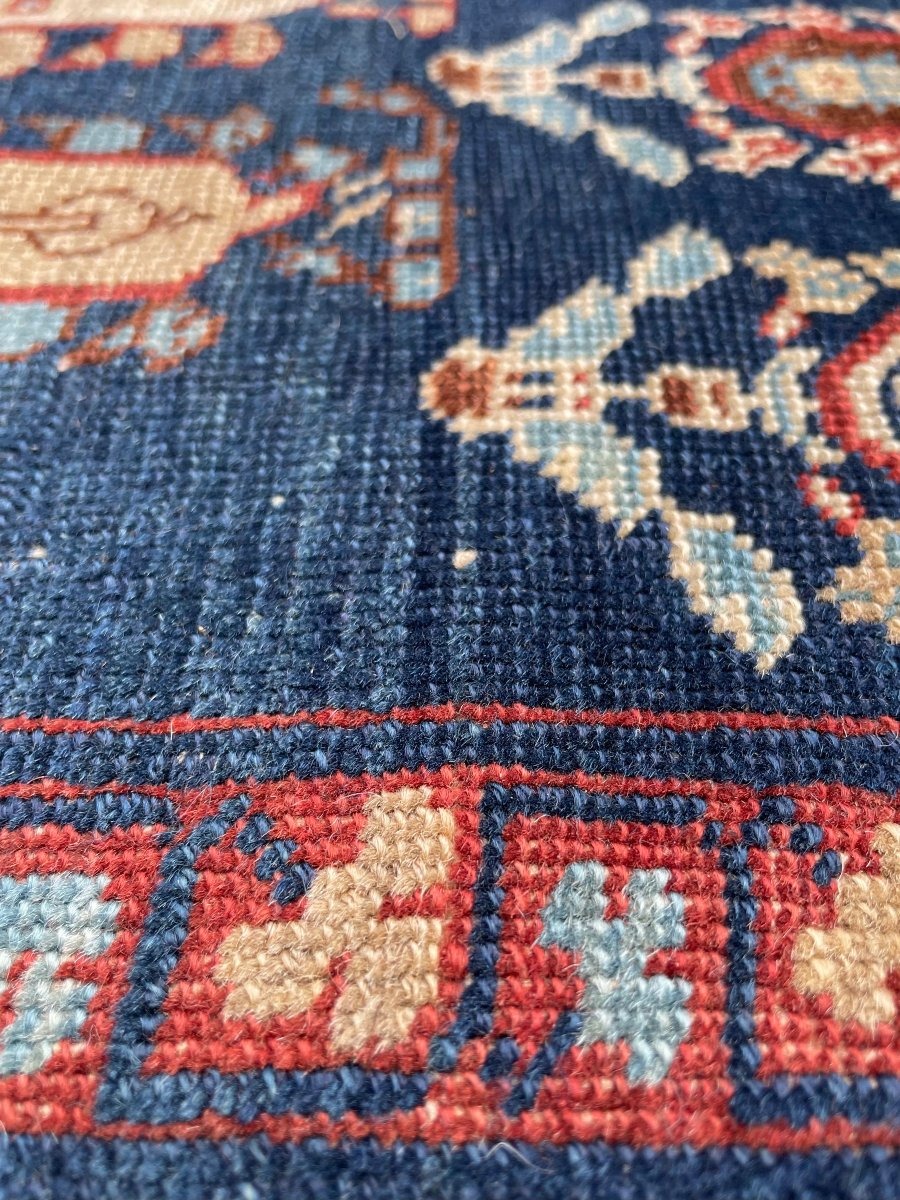
Before even discussing the aesthetic appeal of this piece, it is essential to say a few words about its texture. The knotted weave is delicately fine—almost microscopic—extremely tight and even. Despite this density, the rug remains remarkably supple and light. This precision of craftsmanship is one of the defining qualities of the finest 19th-century Caucasian rugs.
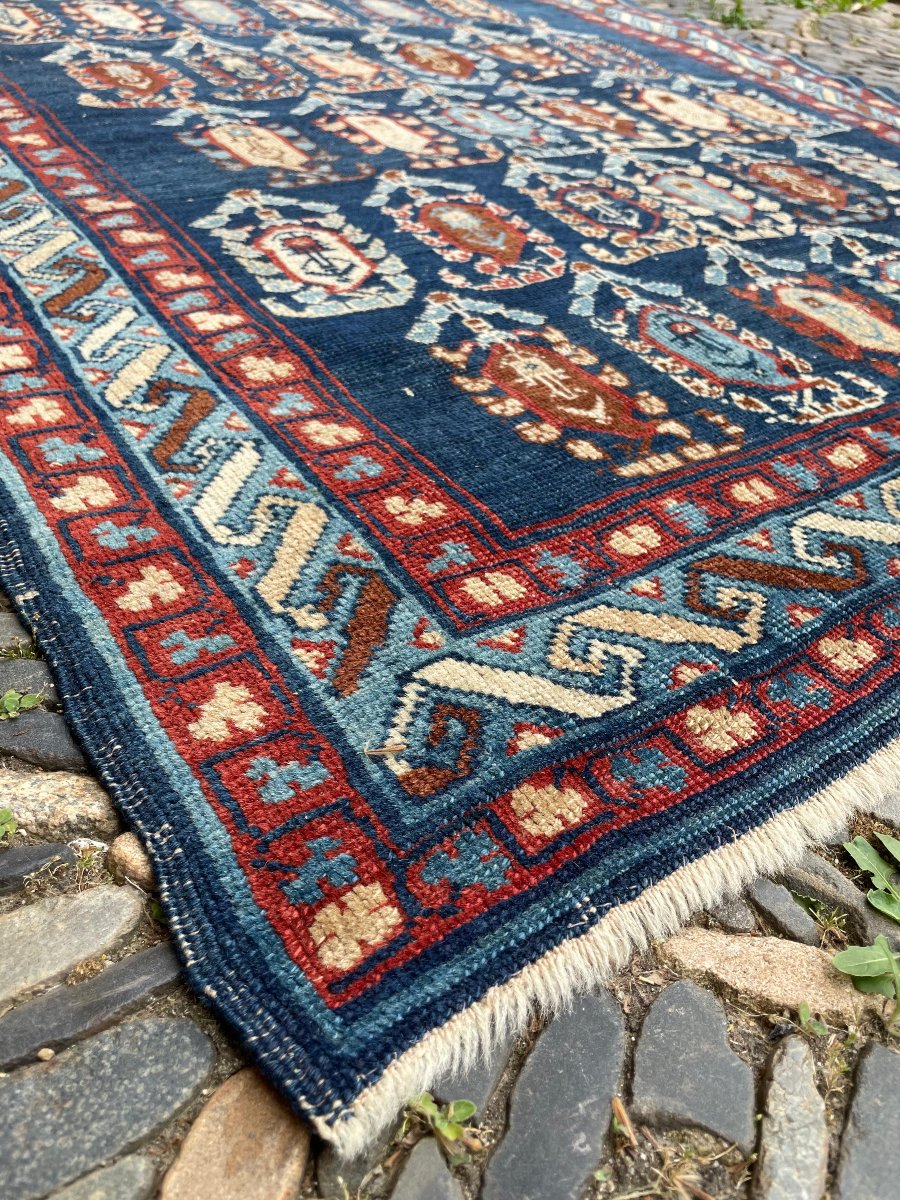
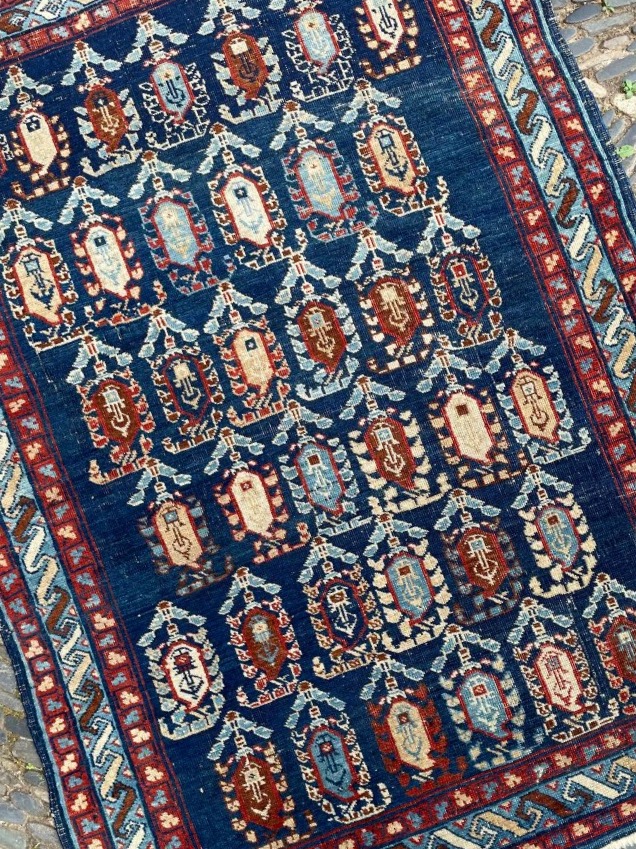
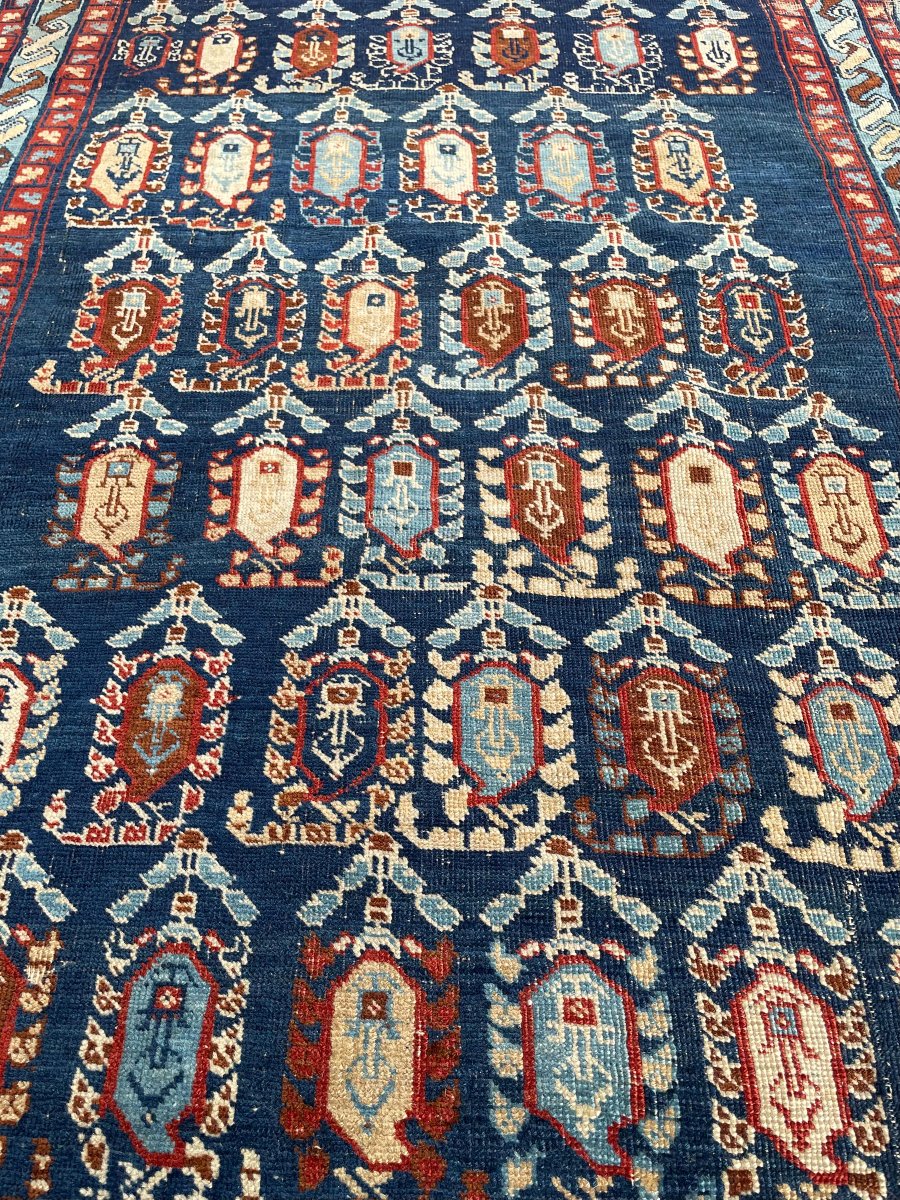
This structural sophistication is further enhanced by the pervasive use of various shades of indigo blue, characterized by great purity and almost infinite depth. Midnight blue, deep indigo, and a lighter, slightly grayish blue: these shades overlap, lending the central field a very distinctive luminosity.
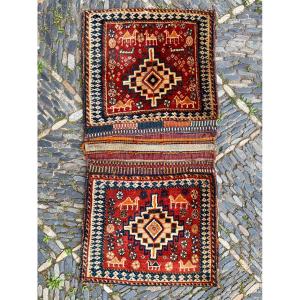
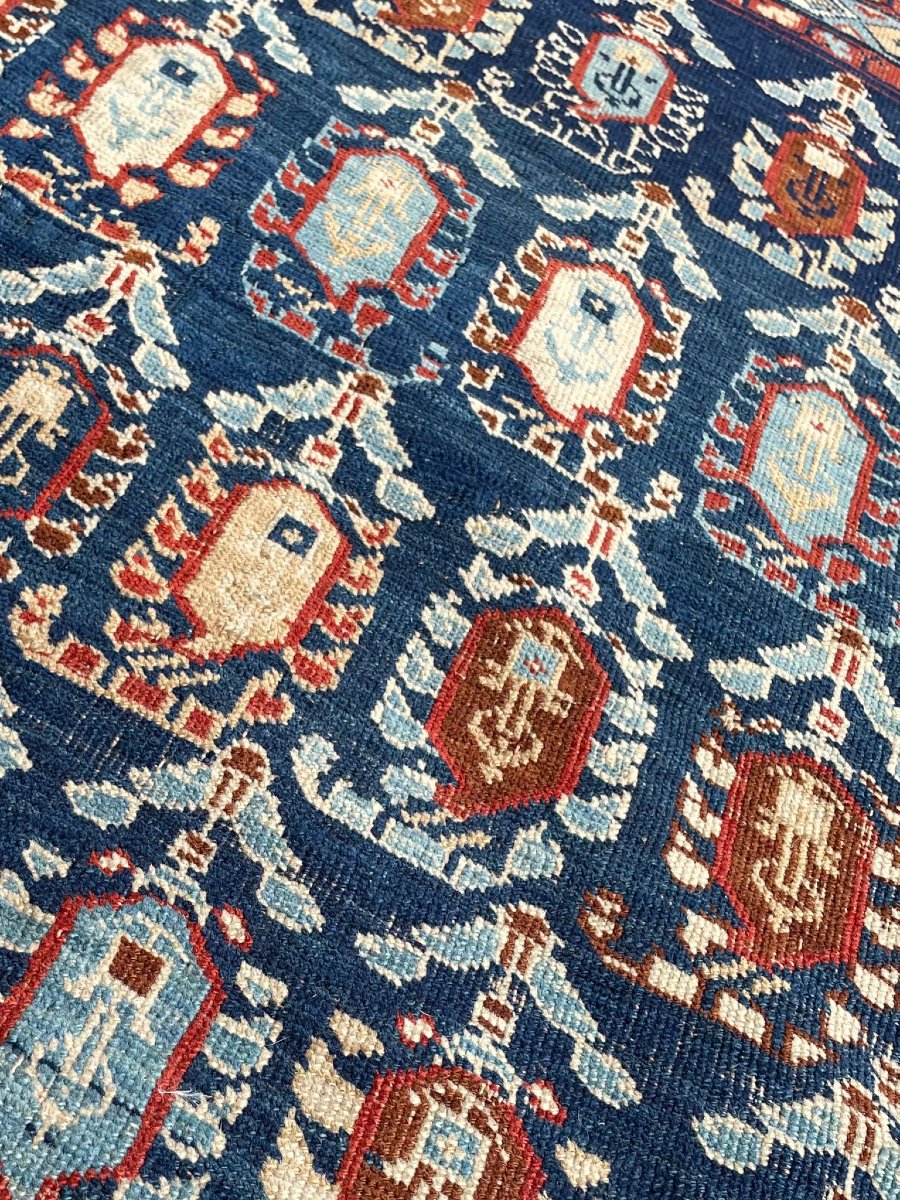
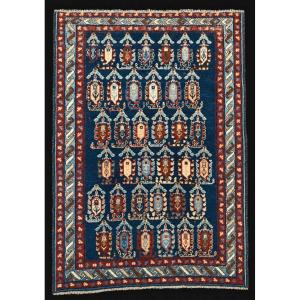
The composition is built around successive rows of stylized figures, each set within a sort of cartouche. Their design is remarkably precise, and yet no two appear to be exactly alike. Some shapes may evoke anthropomorphic silhouettes, while others resemble stylized insects or beetles. More than a literal representation, they belong to the remarkable abstract vocabulary developed by Caucasian weavers, in which the human figure, the animal, the amulet, and the protective symbol sometimes become indistinguishable.
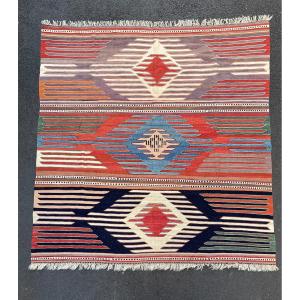
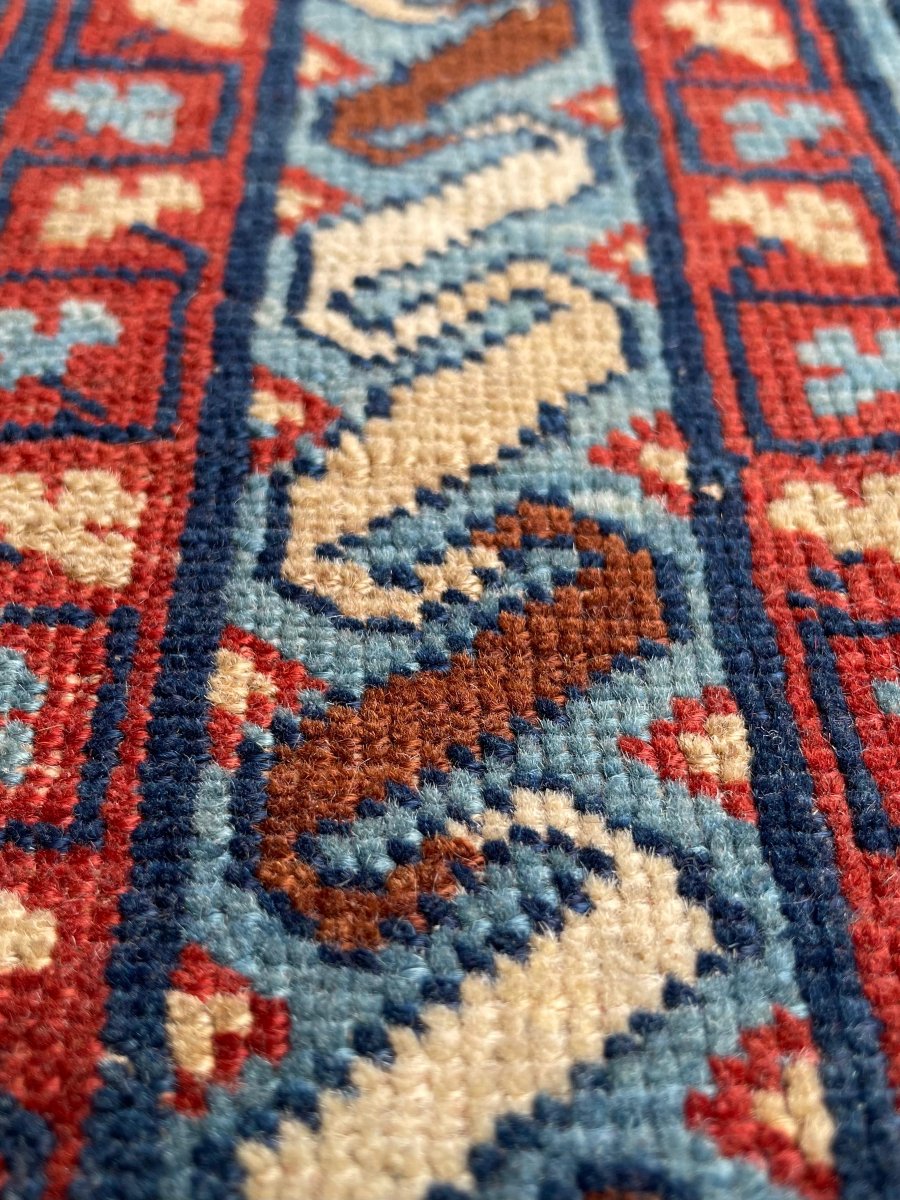
Surrounding this particularly spectacular central field is a succession of borders composed of angular meanders, hooks, small rosettes, and repeated geometric shapes. These motifs are traditionally part of a vocabulary associated with protection, continuity, and cyclical repetition.
Everything about this piece evokes refinement: the extraordinary finesse of the knotting, the lightness, the graphic precision, and above all, the palette of indigo blues that lends it exceptional depth.
Circa 1880
Very good condition
Dimensions: 140 × 100 cm
Laurent
Beauty of Kilims
Before even discussing the aesthetic appeal of this piece, it is essential to say a few words about its texture. The knotted weave is delicately fine—almost microscopic—extremely tight and even. Despite this density, the rug remains remarkably supple and light. This precision of craftsmanship is one of the defining qualities of the finest 19th-century Caucasian rugs.
This structural sophistication is further enhanced by the pervasive use of various shades of indigo blue, characterized by great purity and almost infinite depth. Midnight blue, deep indigo, and a lighter, slightly grayish blue: these shades overlap, lending the central field a very distinctive luminosity.
The composition is built around successive rows of stylized figures, each set within a sort of cartouche. Their design is remarkably precise, and yet no two appear to be exactly alike. Some shapes may evoke anthropomorphic silhouettes, while others resemble stylized insects or beetles. More than a literal representation, they belong to the remarkable abstract vocabulary developed by Caucasian weavers, in which the human figure, the animal, the amulet, and the protective symbol sometimes become indistinguishable.
Surrounding this particularly spectacular central field is a succession of borders composed of angular meanders, hooks, small rosettes, and repeated geometric shapes. These motifs are traditionally part of a vocabulary associated with protection, continuity, and cyclical repetition.
Everything about this piece evokes refinement: the extraordinary finesse of the knotting, the lightness, the graphic precision, and above all, the palette of indigo blues that lends it exceptional depth.
Circa 1880
Very good condition
Dimensions: 140 × 100 cm
Laurent
Beauty of Kilims
1 200 €
Period: 19th century
Style: Orientalism
Condition: Excellent condition
Material: Wool
Length: 140 cm
Width: 100 cm
Reference (ID): 1808236
Availability: In stock
Print