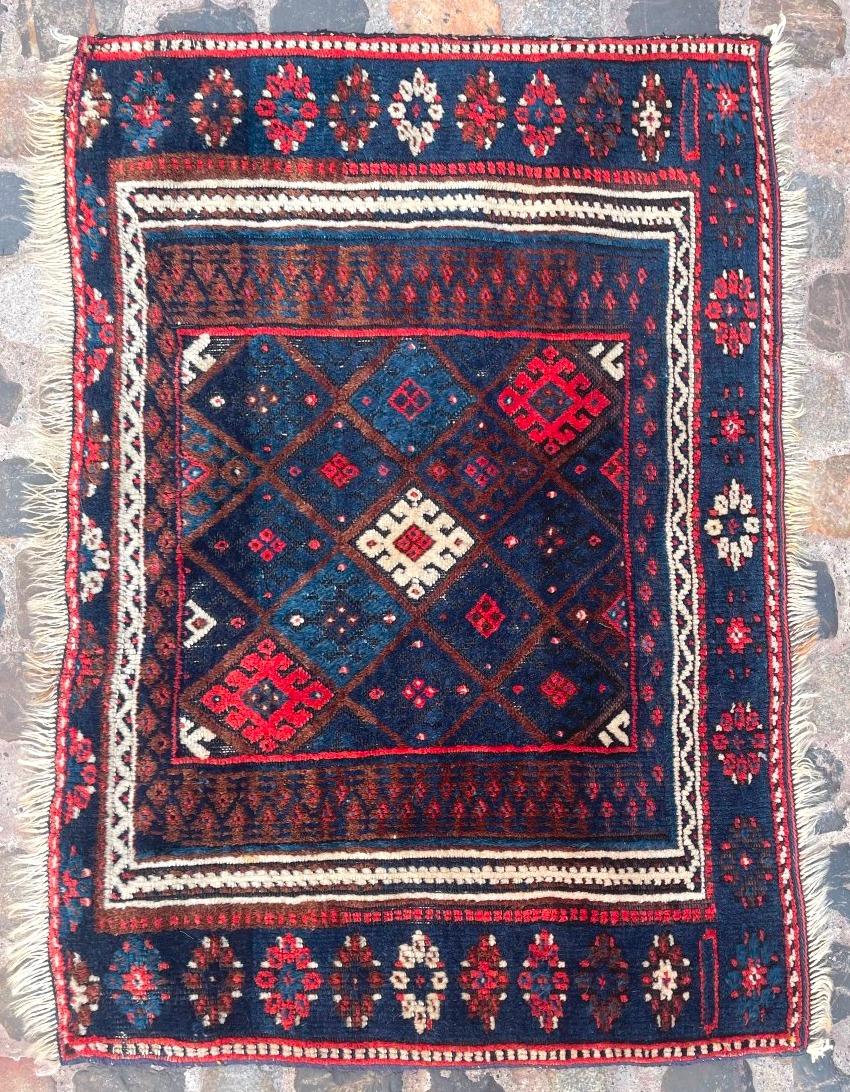
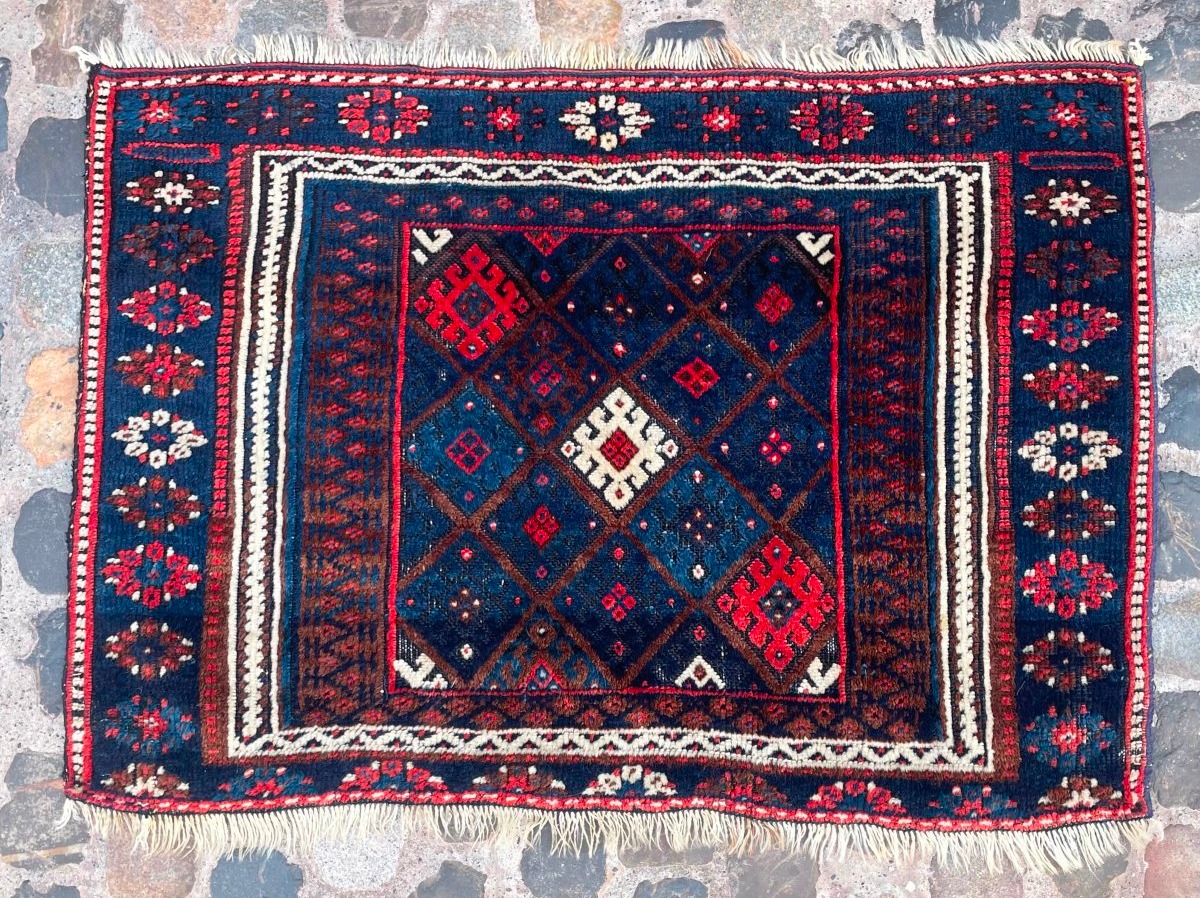
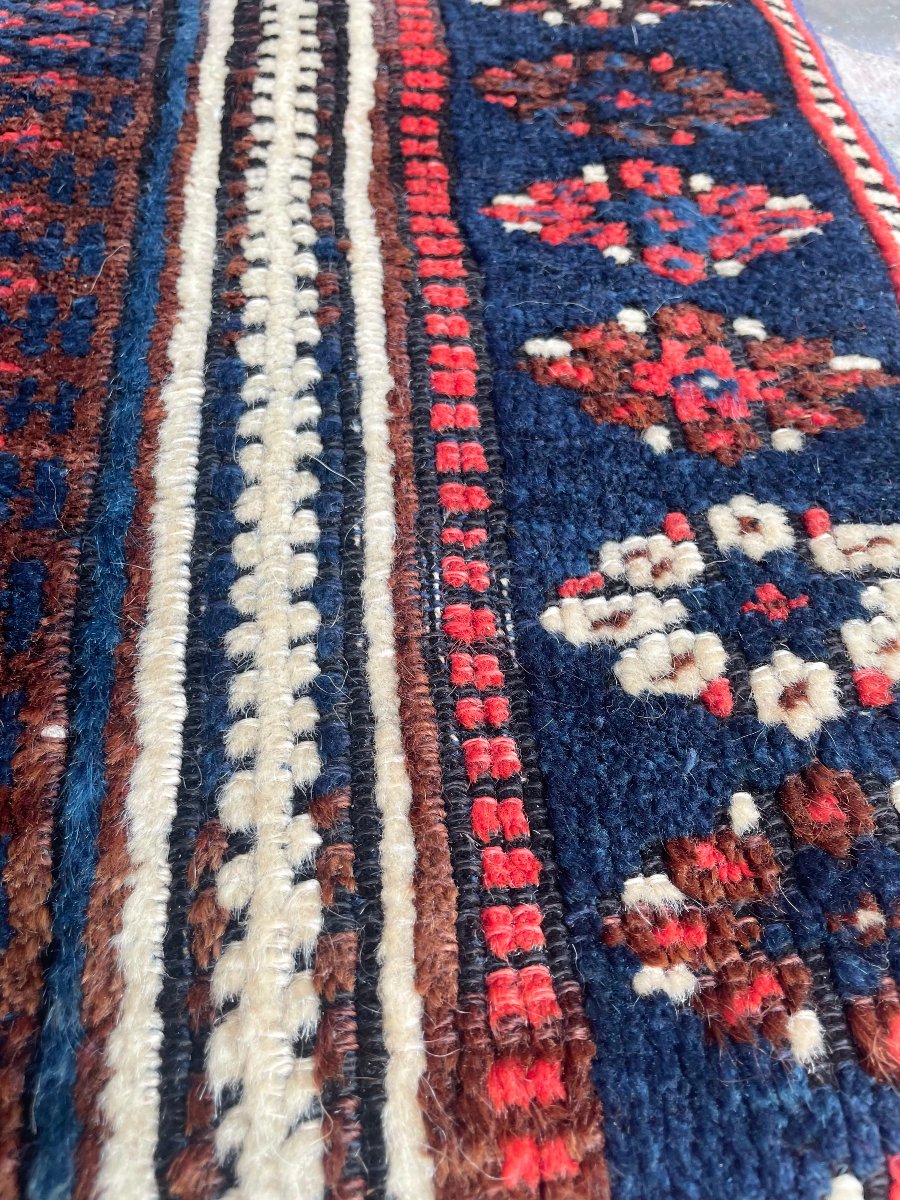
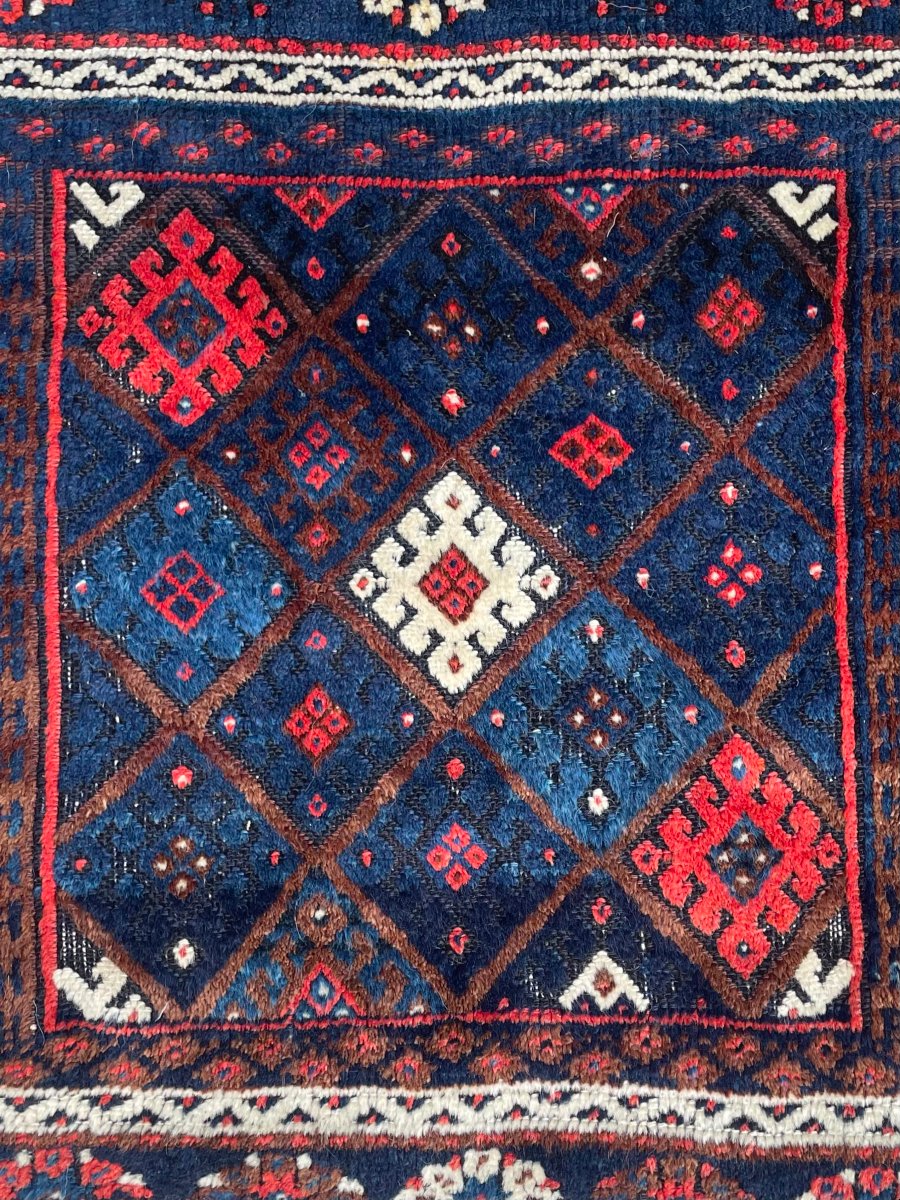
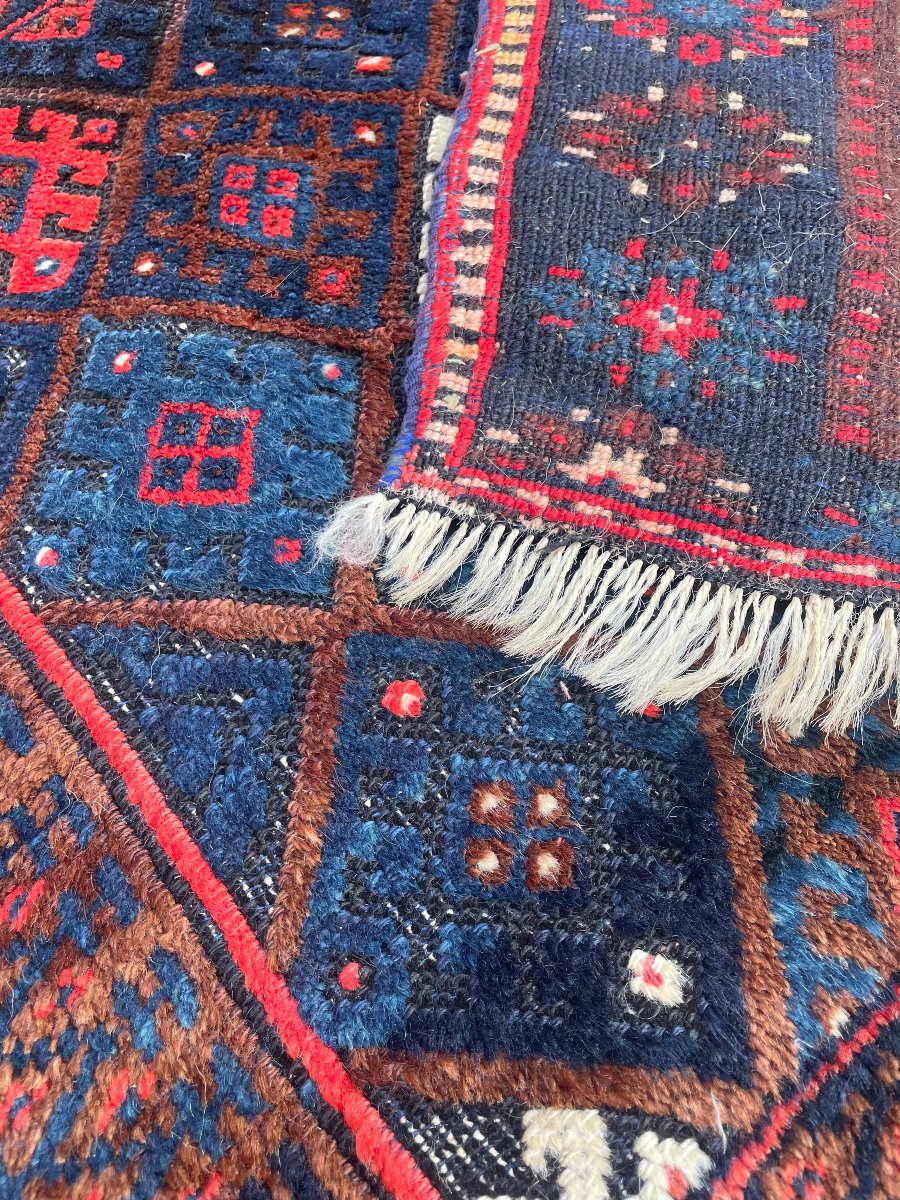
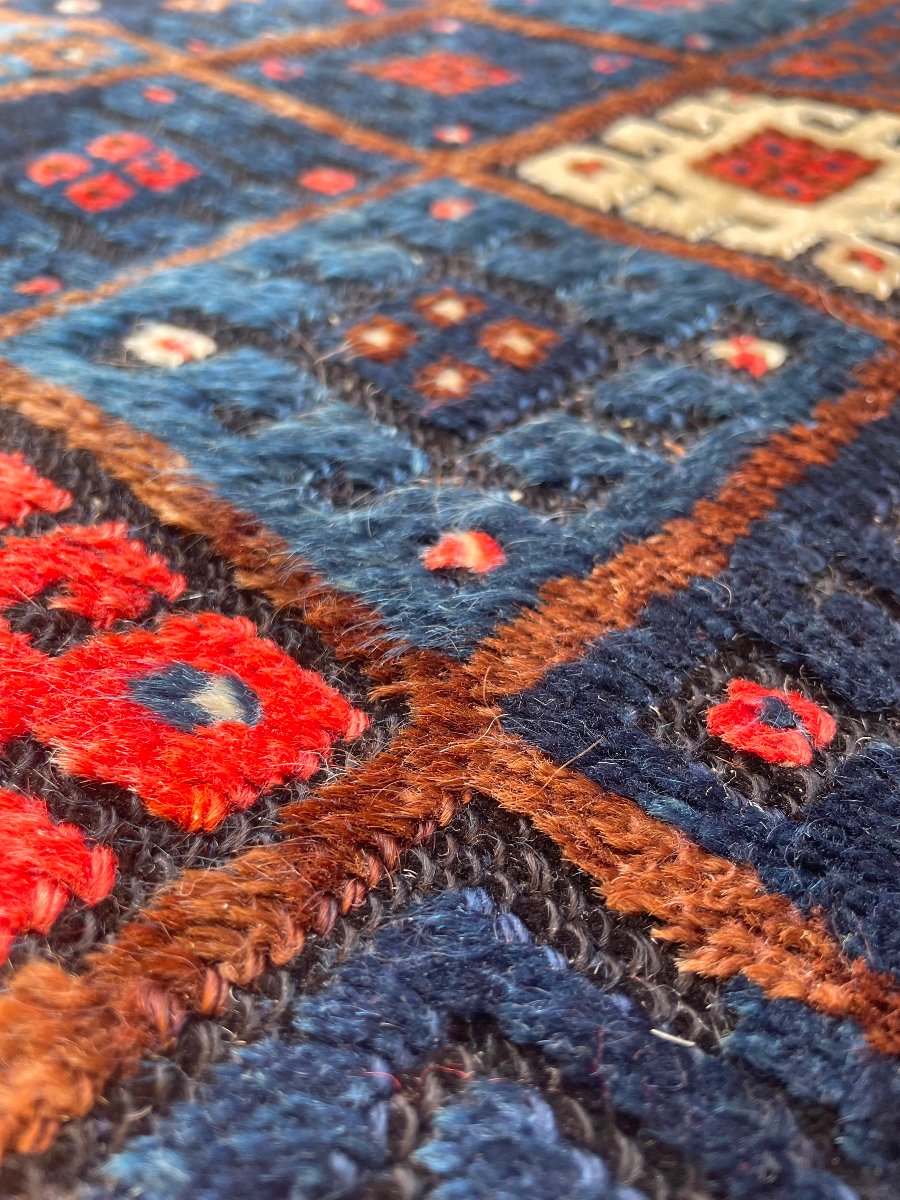


Khorjin Rug. Kurdish Jaff. Circa 1900. 110 X 78 Cm
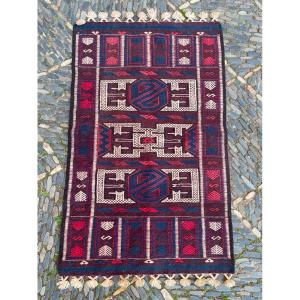
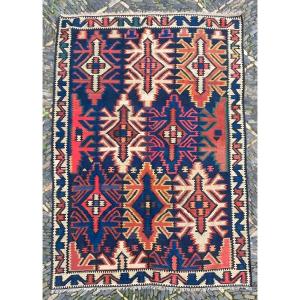
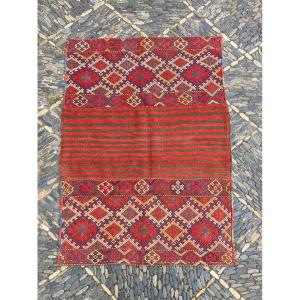
There are pieces in which color does more than simply complement the design—it gives it its full power. Here, it is the blue that immediately commands attention.
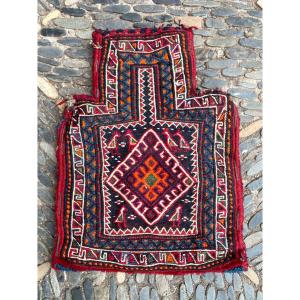
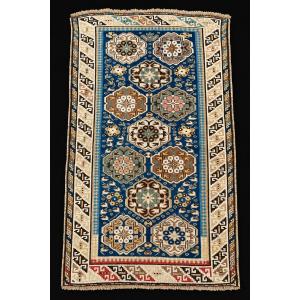
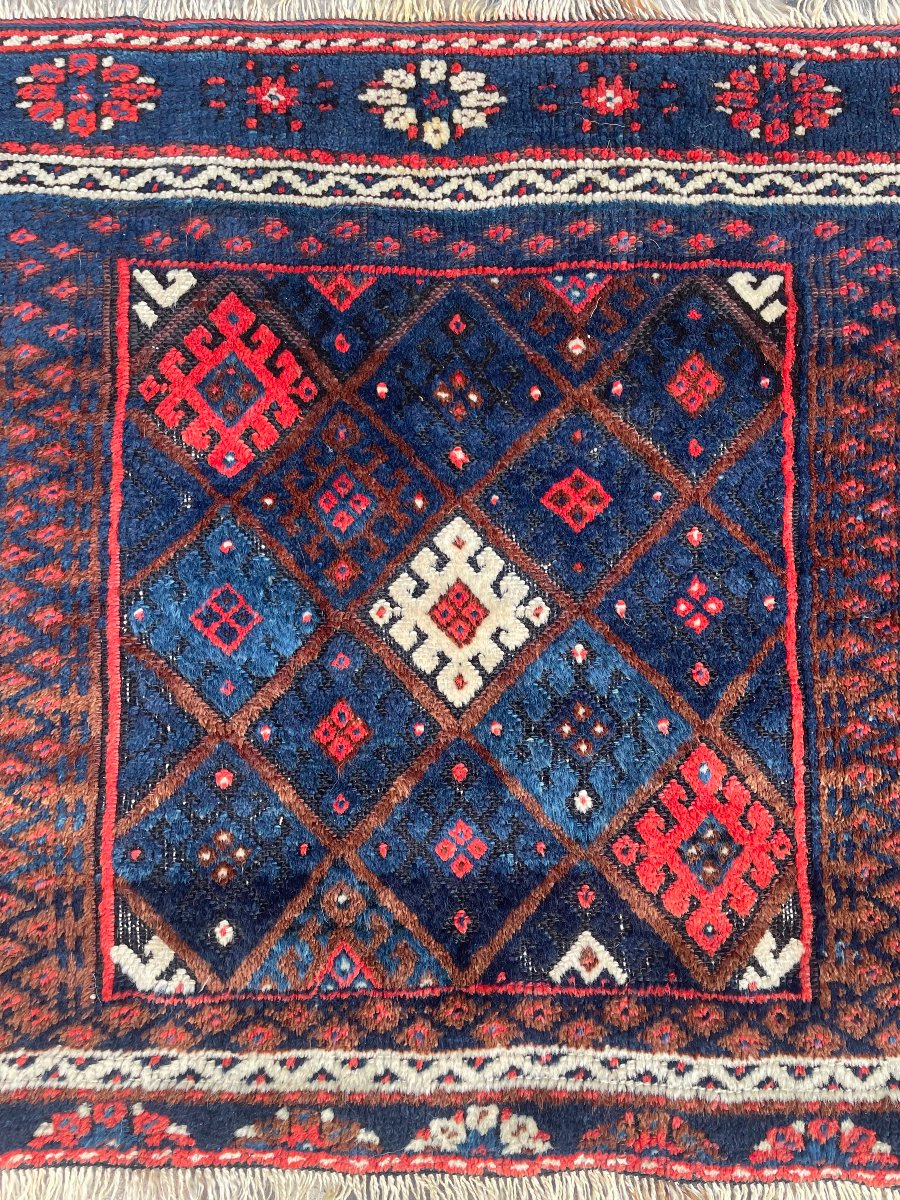
Indigo blue, midnight blue, petrol blue, and a few lighter shades combine to create remarkable depth. Against this blue backdrop, madder red, brick red, and coral stand out, along with deep browns, a few touches of ochre, and—above all—accents of ivory that bring light and dimension to the whole piece. The color palette is more restrained than in some of Jaff’s other works, yet also more intense—almost graphic. The colors seem to emerge from the blue.
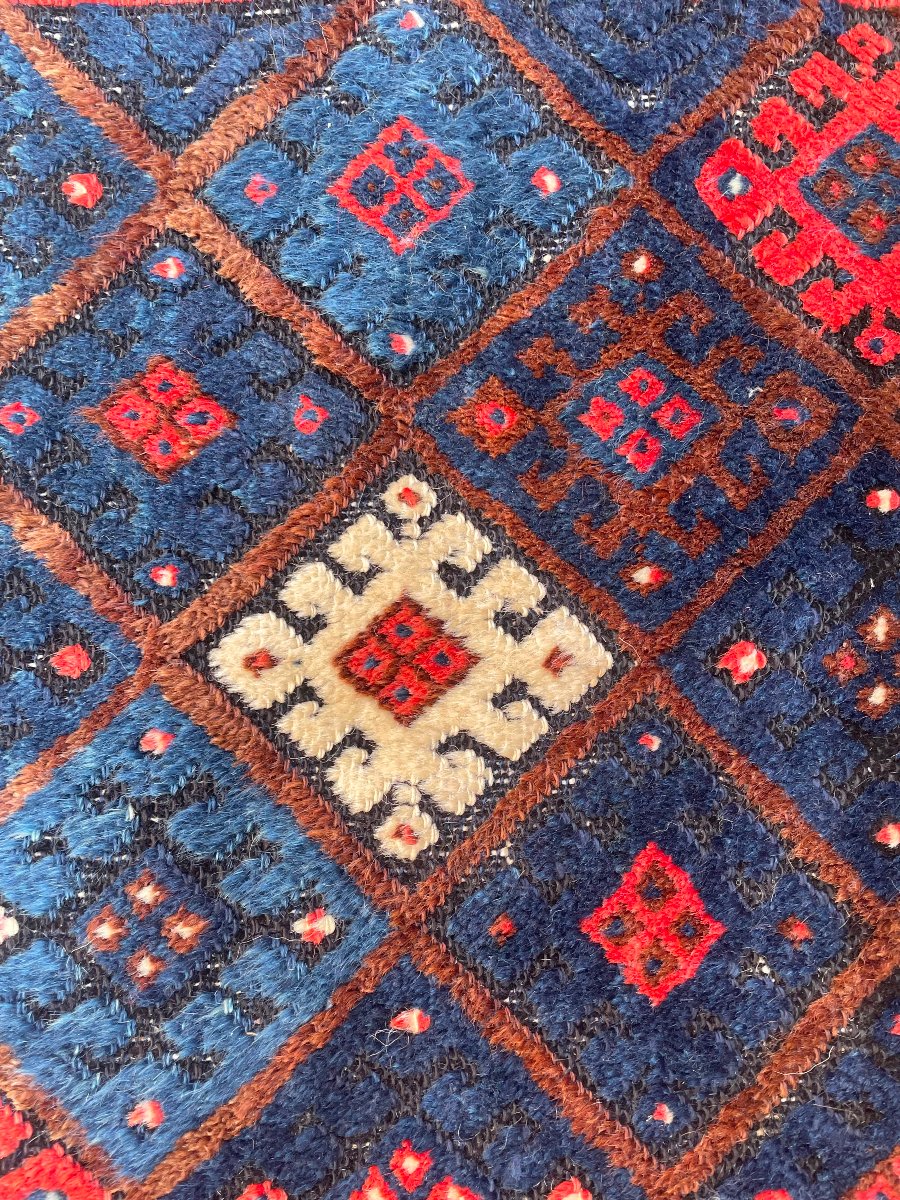
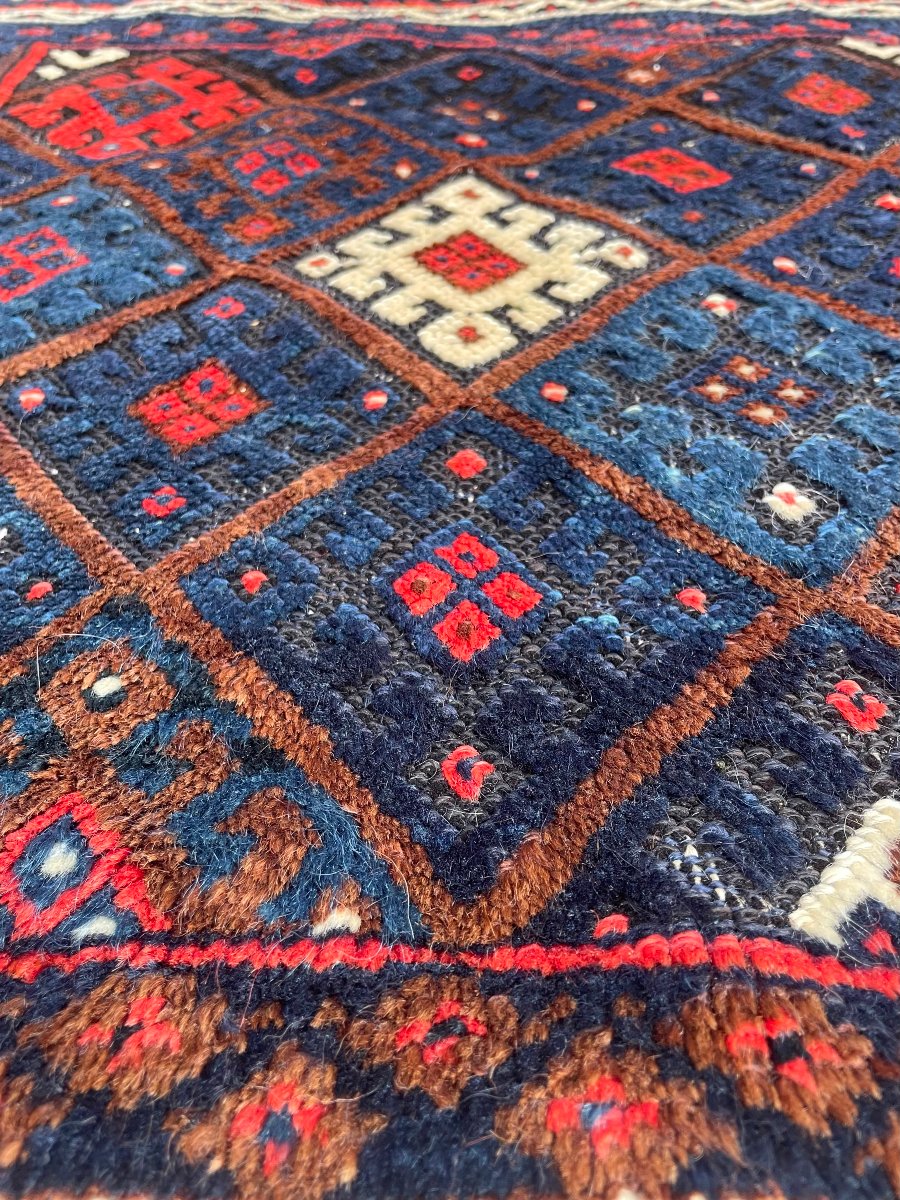
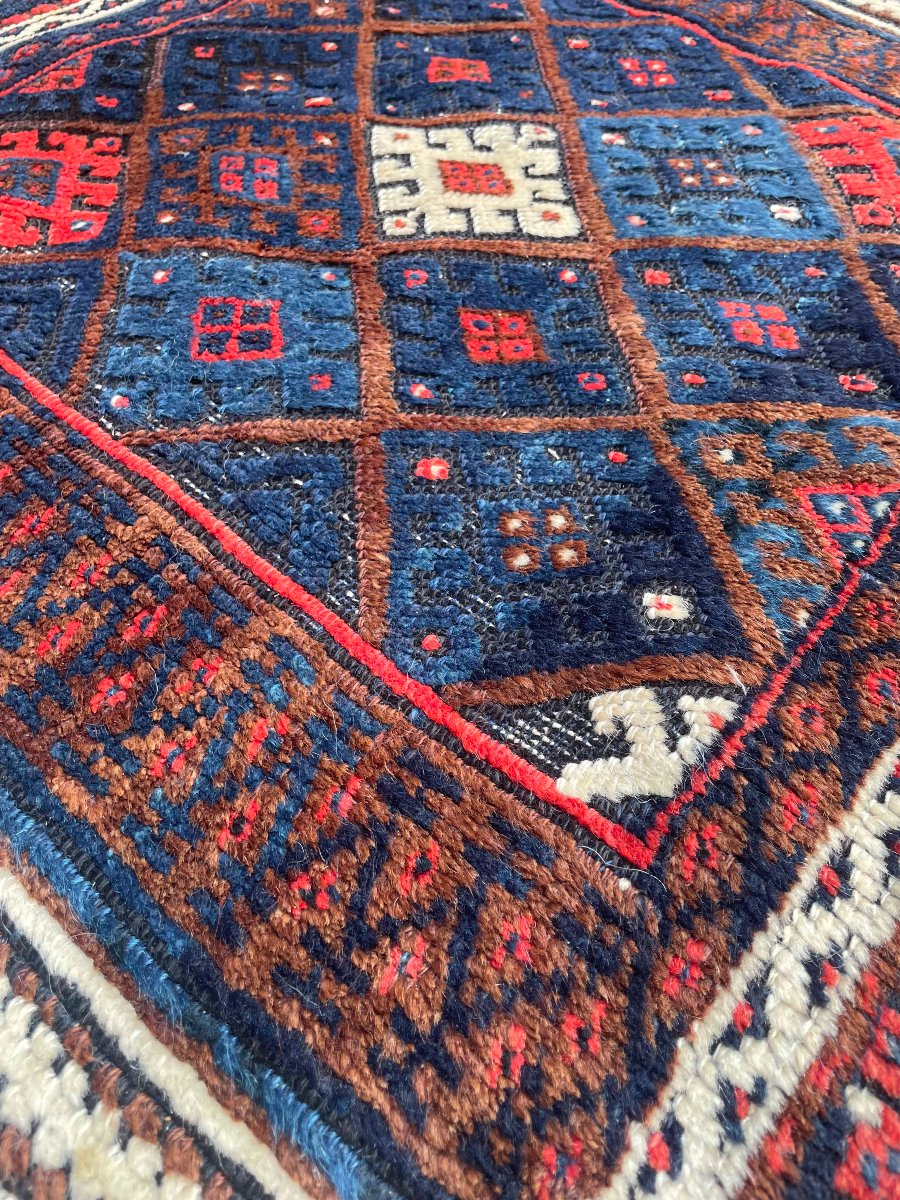
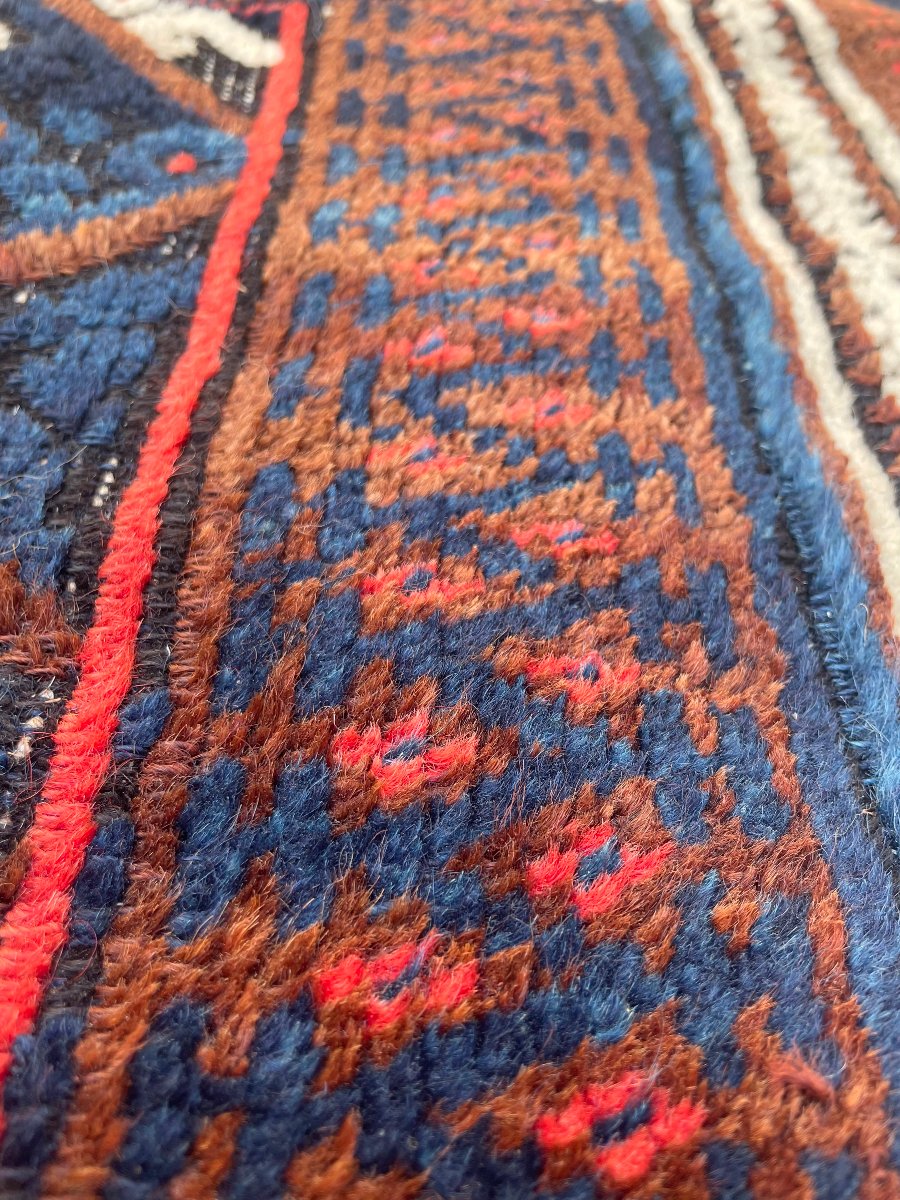
Woven and knotted using traditional techniques, the piece features beautiful, dense, and supple wool. The fabric catches the light and reveals the various shades of the plant-based dyes, particularly noticeable in the blues, whose variations constantly enliven the surface.
This piece was originally the knotted side of a khorjin, a bag used by nomadic peoples. Its central field is organized around a network of geometric diamonds arranged diagonally. Within this field, hooked motifs, small cross-shaped elements, and geometric shapes follow one another without ever being perfectly identical. Repetition provides the rhythm; variations bring it to life.
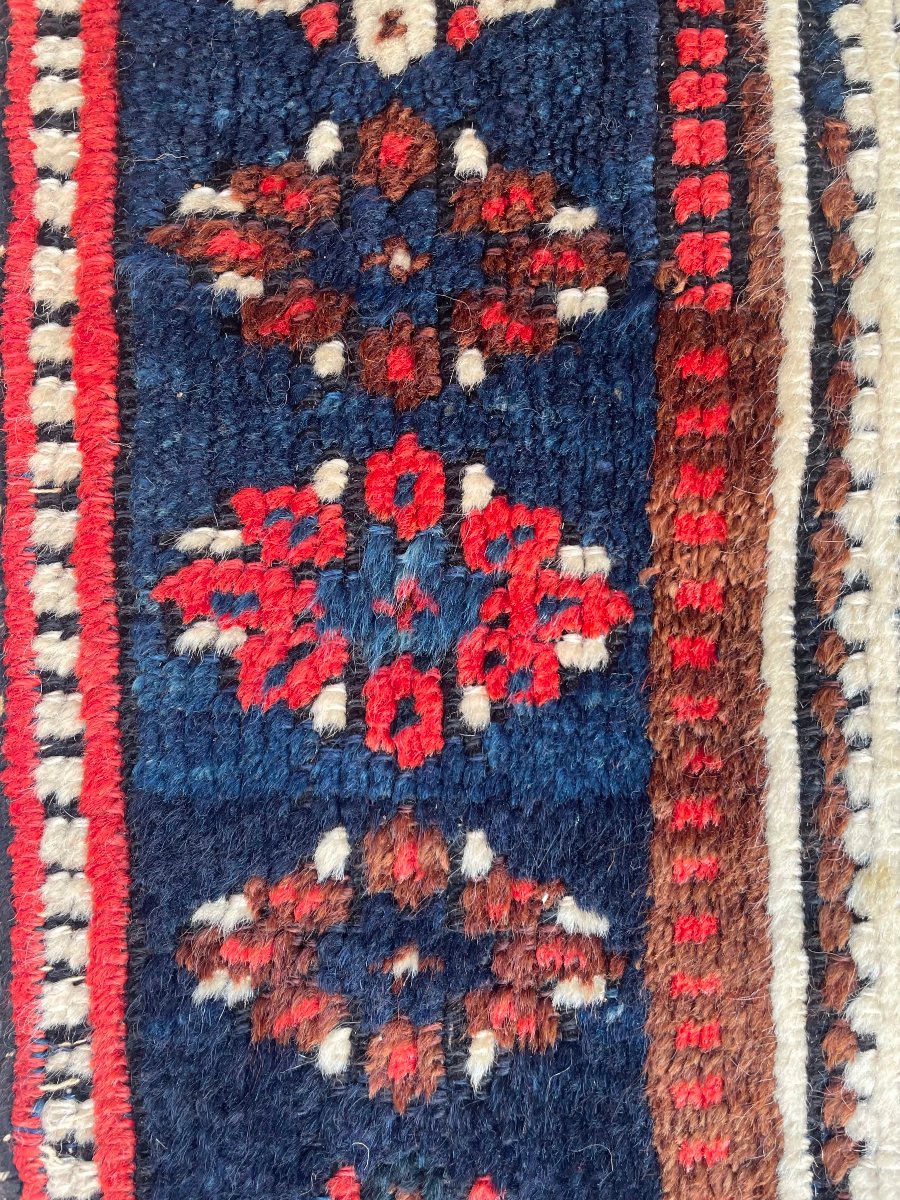
Around the central field, the design becomes particularly interesting. Several narrow ivory and brown borders frame two wider bands, while the outer border, set against a midnight blue background, features a succession of highly stylized polychrome motifs. Their regular alternation gives the piece a distinct architectural quality and further accentuates the depth of the central field.
This grid-like arrangement of hooked diamond shapes is particularly characteristic of Kurdish Jaff khorjins. Historically settled in the mountainous regions of the Zagros, between western Persia and Iraqi Kurdistan, the Jaff have produced some of the most distinctive knotted saddlebags in the Persian tribal world.
Here, the power of the design meets that of a color palette dominated by indigo hues of remarkable depth. A small antique textile work, whose decorative character is today as evident as its ethnographic significance.
Origin: Kurdish Jaff – Western Persia, Zagros region
Woven and knotted wool on wool – plant-based dyes
Circa 1900
Very good condition
Dimensions: 110 x 78 cm
Laurent
Beauty of Kilims
Indigo blue, midnight blue, petrol blue, and a few lighter shades combine to create remarkable depth. Against this blue backdrop, madder red, brick red, and coral stand out, along with deep browns, a few touches of ochre, and—above all—accents of ivory that bring light and dimension to the whole piece. The color palette is more restrained than in some of Jaff’s other works, yet also more intense—almost graphic. The colors seem to emerge from the blue.
Woven and knotted using traditional techniques, the piece features beautiful, dense, and supple wool. The fabric catches the light and reveals the various shades of the plant-based dyes, particularly noticeable in the blues, whose variations constantly enliven the surface.
This piece was originally the knotted side of a khorjin, a bag used by nomadic peoples. Its central field is organized around a network of geometric diamonds arranged diagonally. Within this field, hooked motifs, small cross-shaped elements, and geometric shapes follow one another without ever being perfectly identical. Repetition provides the rhythm; variations bring it to life.
Around the central field, the design becomes particularly interesting. Several narrow ivory and brown borders frame two wider bands, while the outer border, set against a midnight blue background, features a succession of highly stylized polychrome motifs. Their regular alternation gives the piece a distinct architectural quality and further accentuates the depth of the central field.
This grid-like arrangement of hooked diamond shapes is particularly characteristic of Kurdish Jaff khorjins. Historically settled in the mountainous regions of the Zagros, between western Persia and Iraqi Kurdistan, the Jaff have produced some of the most distinctive knotted saddlebags in the Persian tribal world.
Here, the power of the design meets that of a color palette dominated by indigo hues of remarkable depth. A small antique textile work, whose decorative character is today as evident as its ethnographic significance.
Origin: Kurdish Jaff – Western Persia, Zagros region
Woven and knotted wool on wool – plant-based dyes
Circa 1900
Very good condition
Dimensions: 110 x 78 cm
Laurent
Beauty of Kilims
480 €
Period: 20th century
Style: Orientalism
Condition: Excellent condition
Material: Wool
Length: 110 cm
Width: 78 cm
Reference (ID): 1809036
Availability: In stock
Print