

Antique Rug. Bathiyari / Persia. Circa 1880. Mixed Media. 185 X 120 Cm
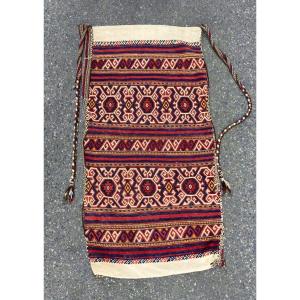
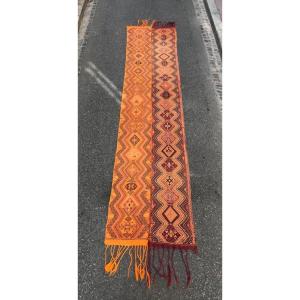
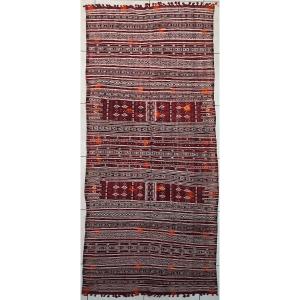
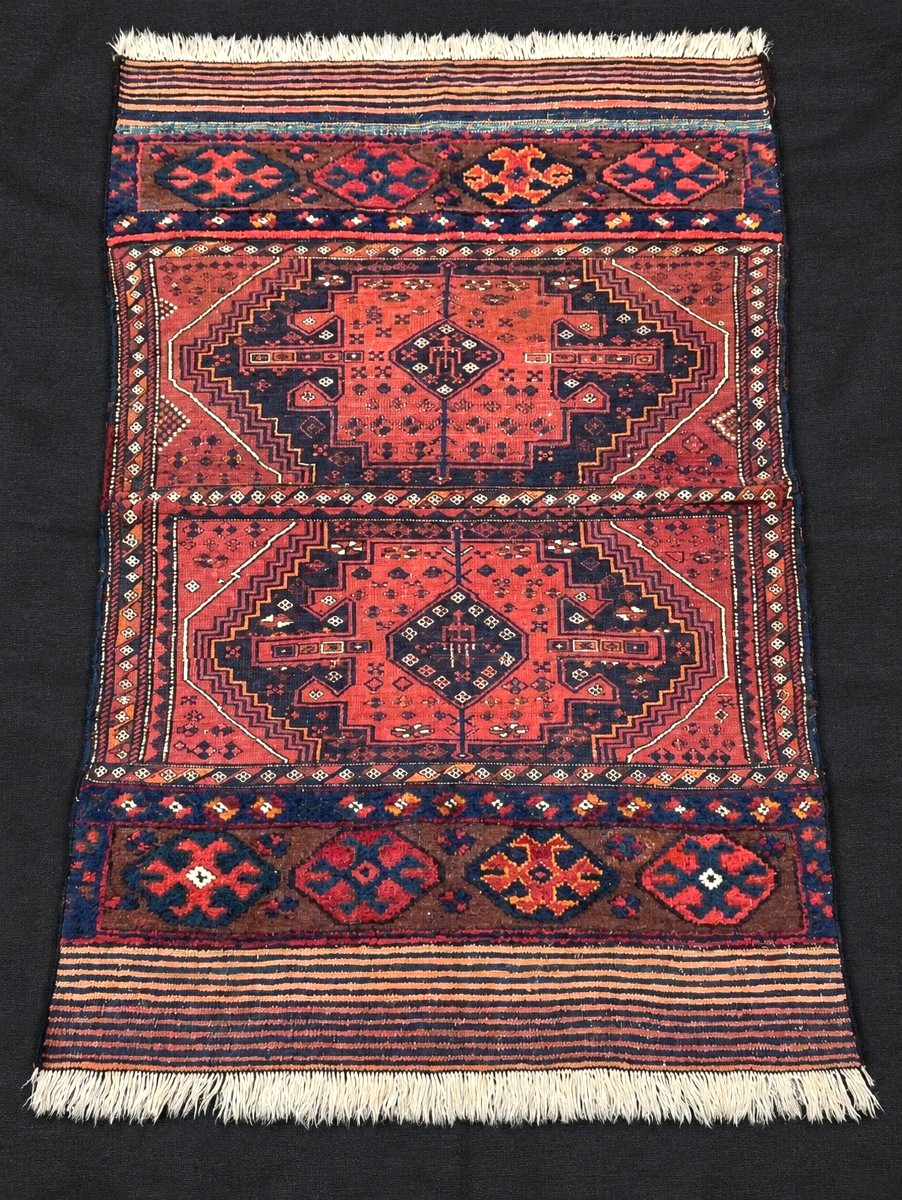
This double Bakhtiari bag is particularly fascinating because of the richness of its construction. Opened along its entire length, it now allows us to clearly see its structure and understand how a utilitarian object could become, in the hands of the weavers, a true canvas for expression.
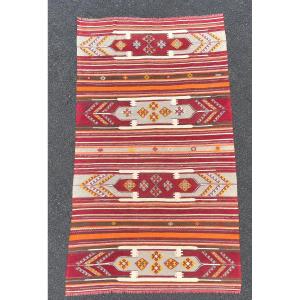
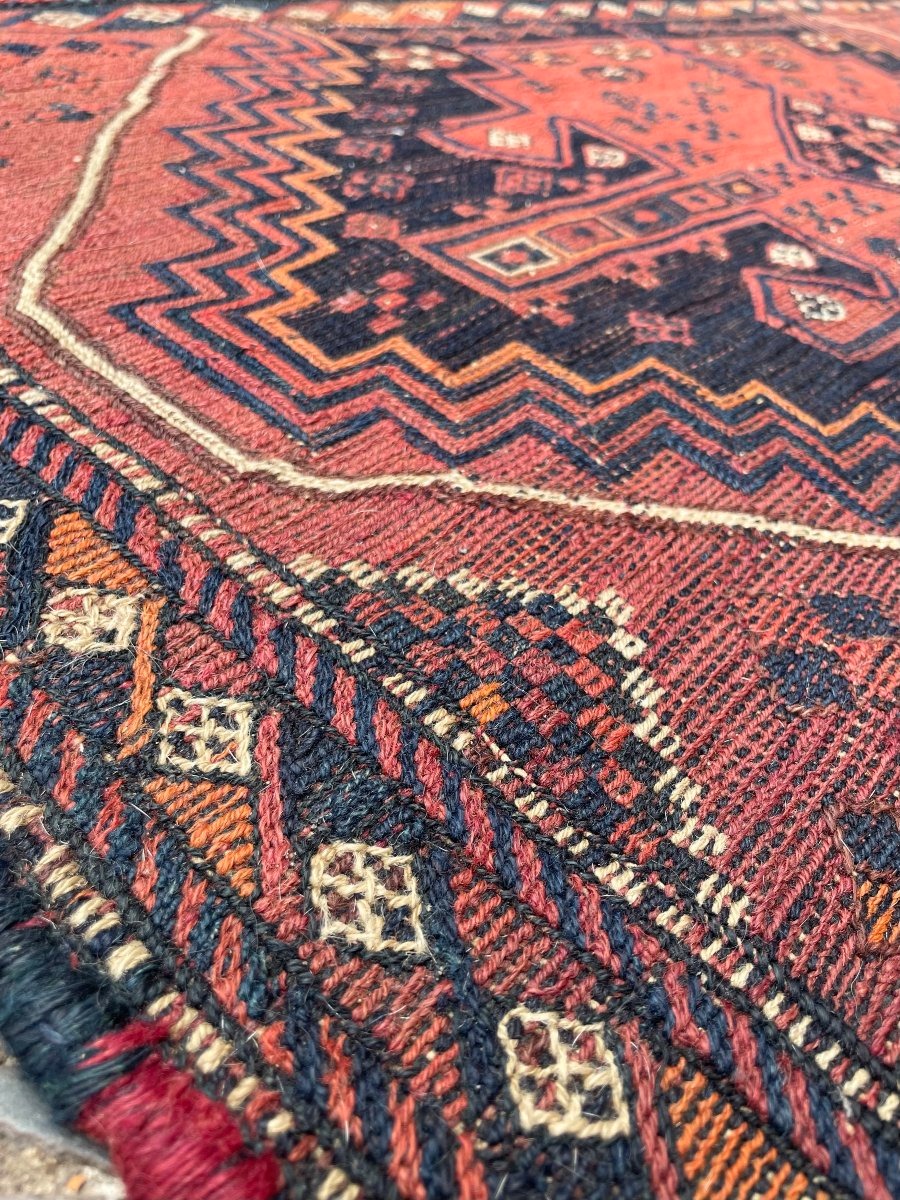
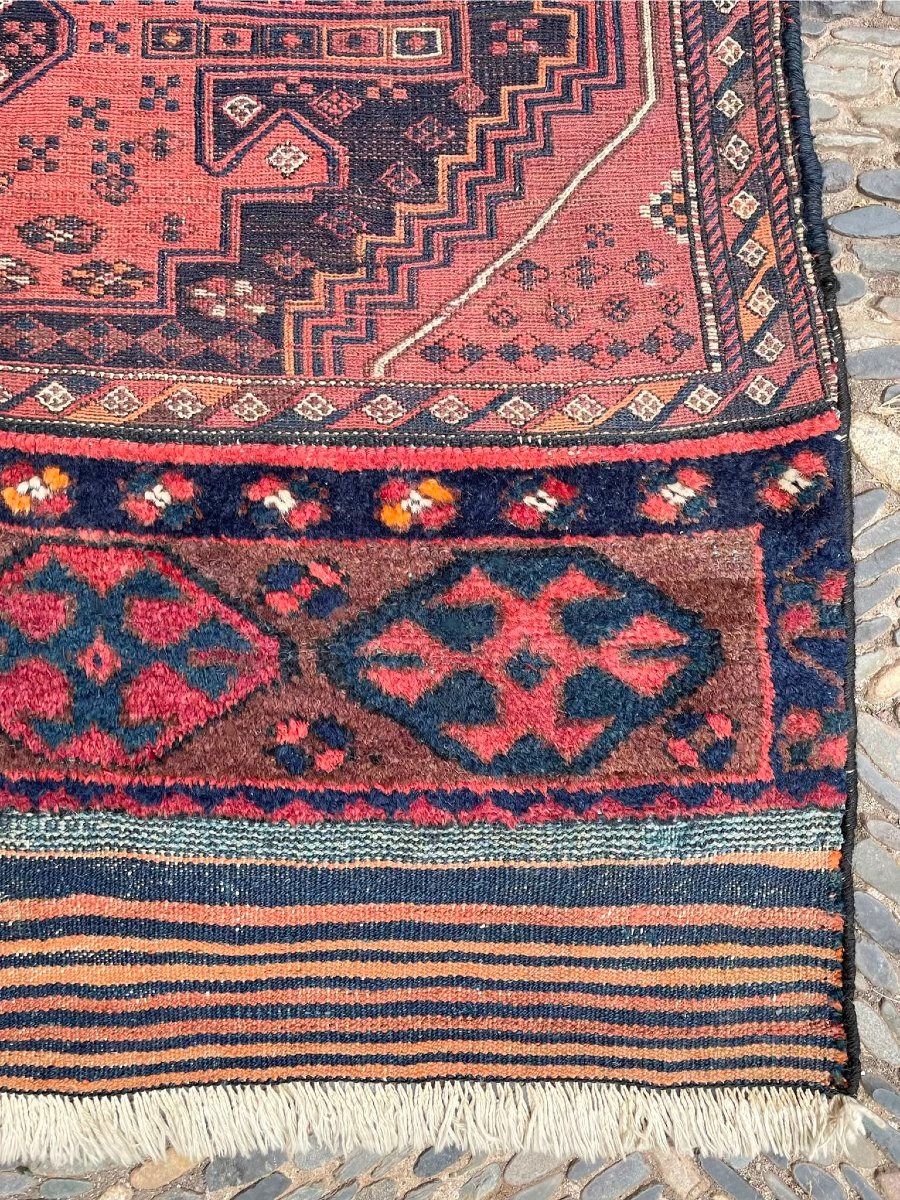
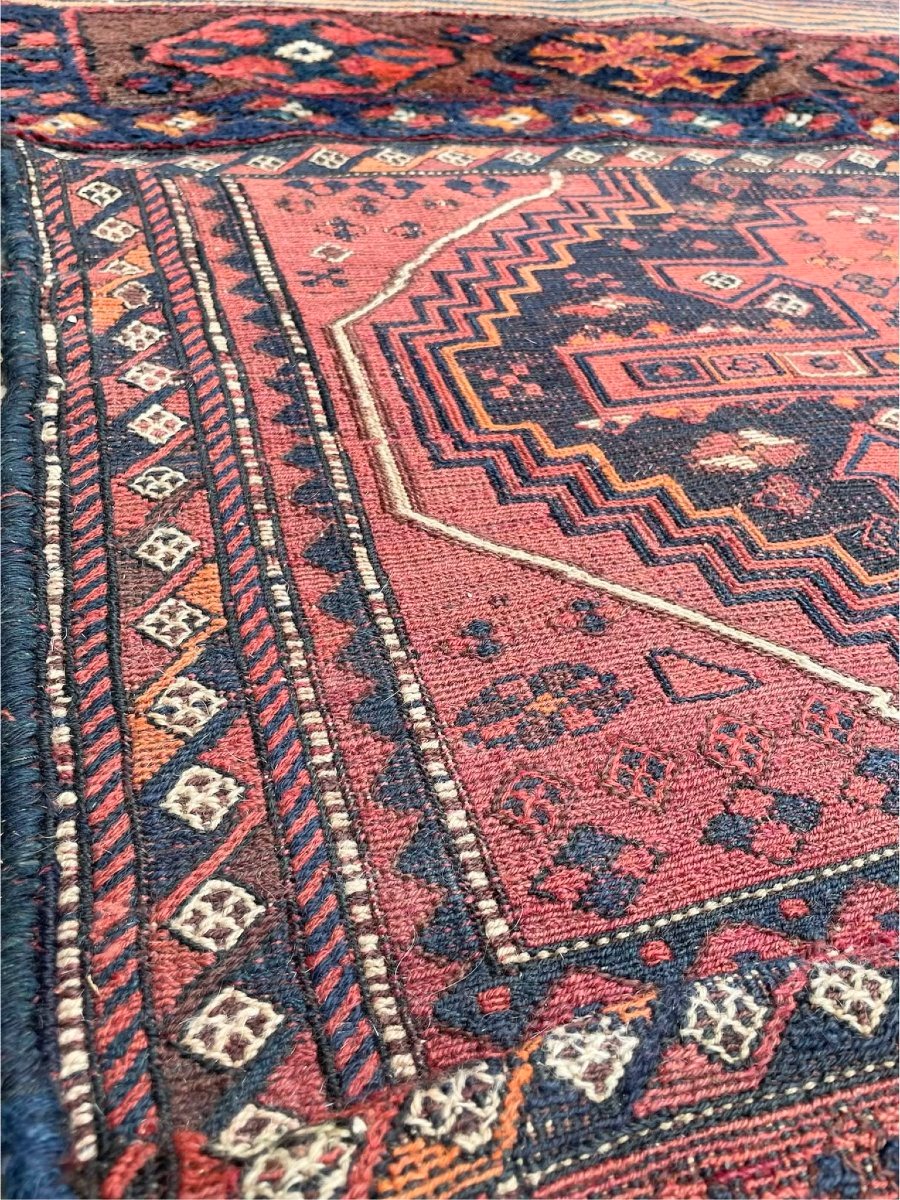
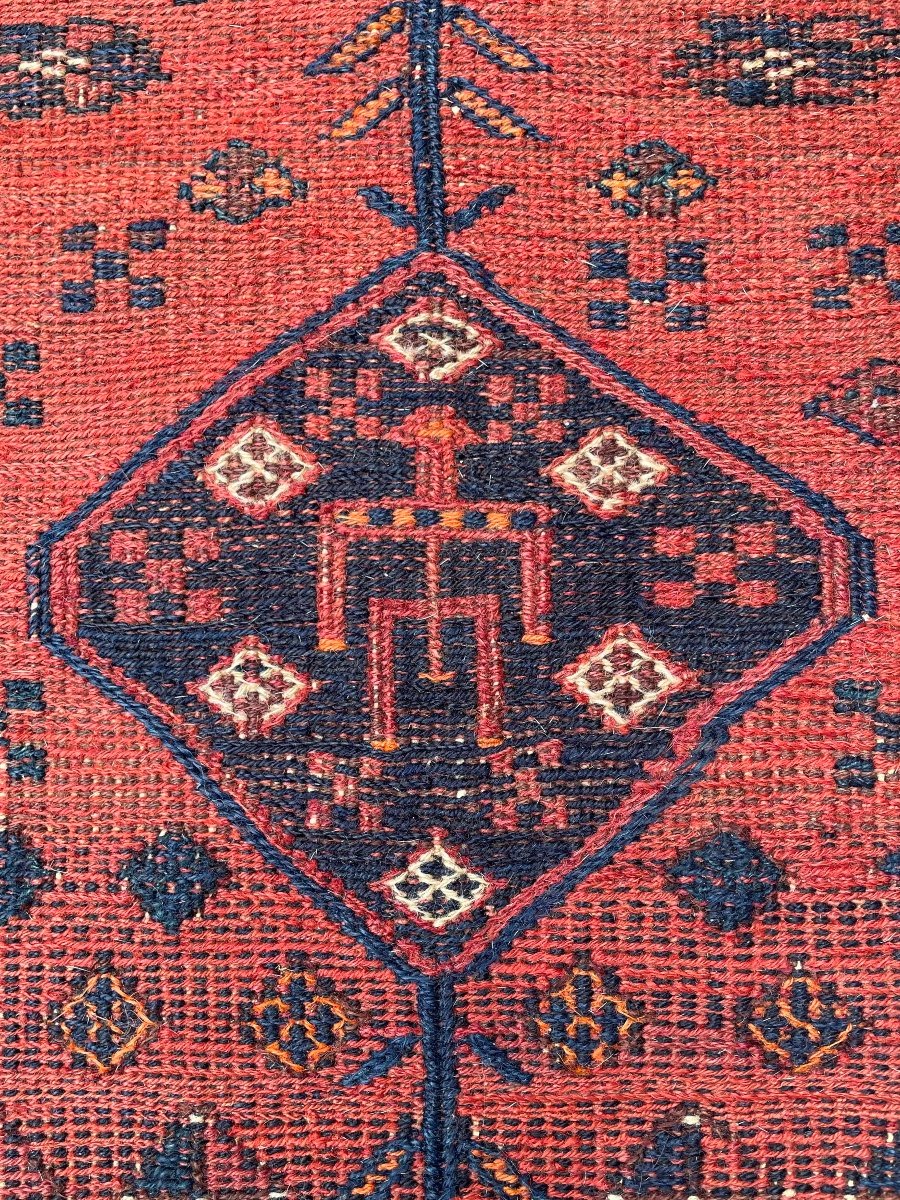
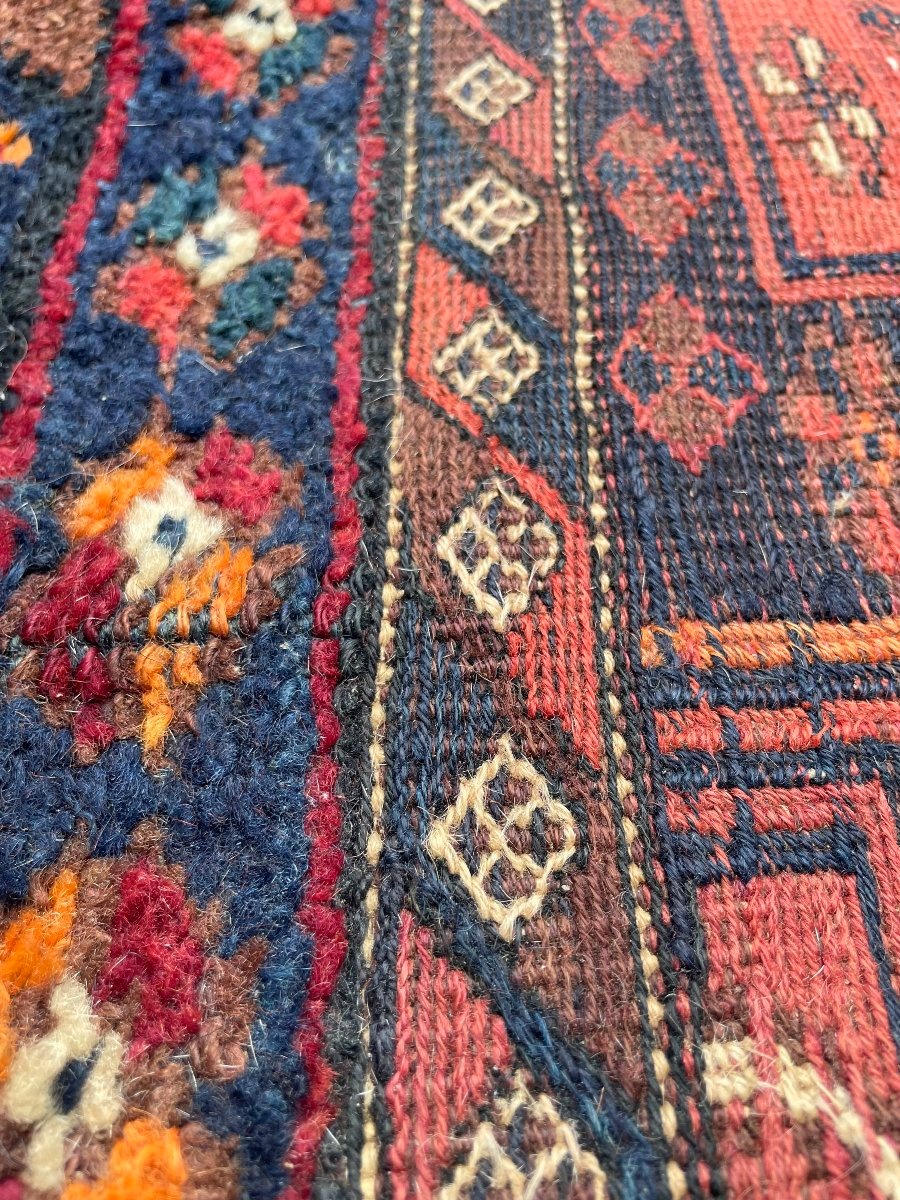
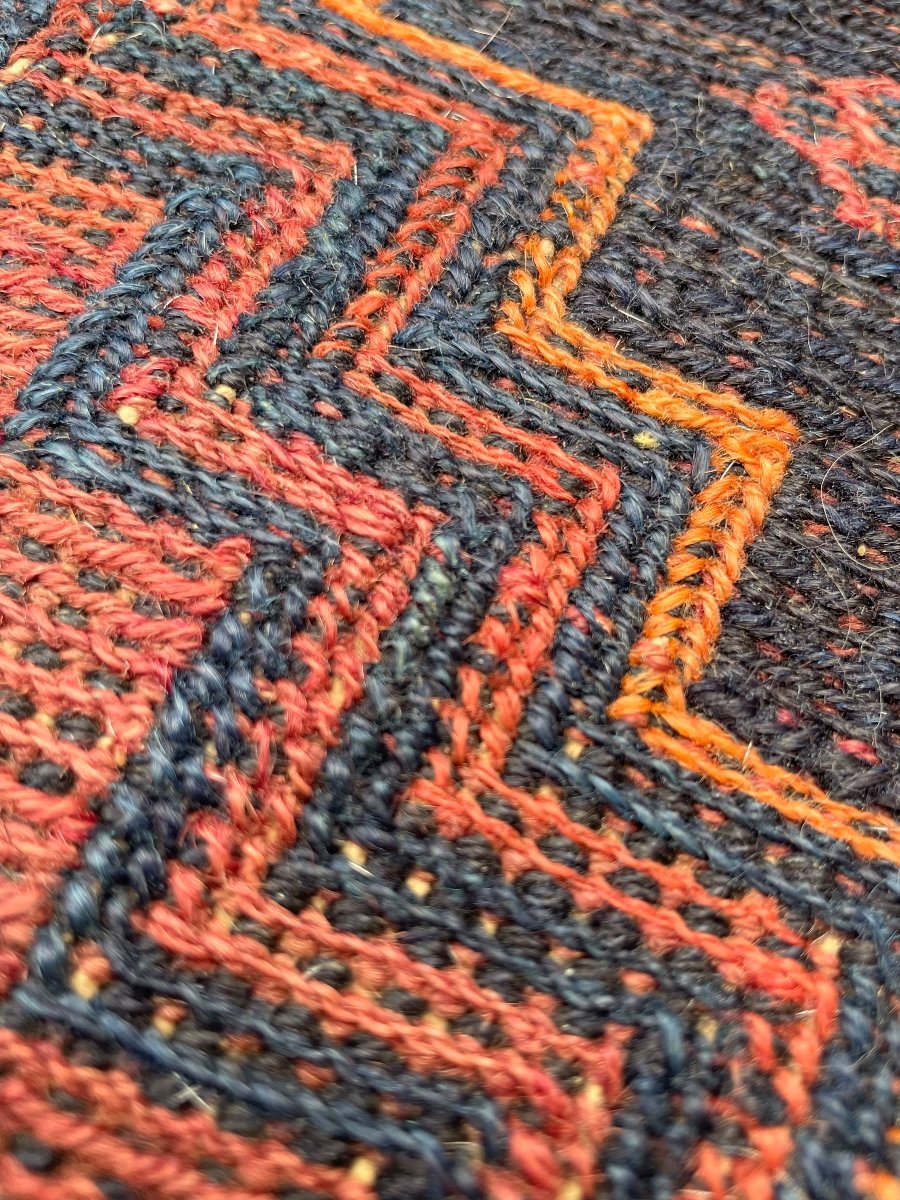
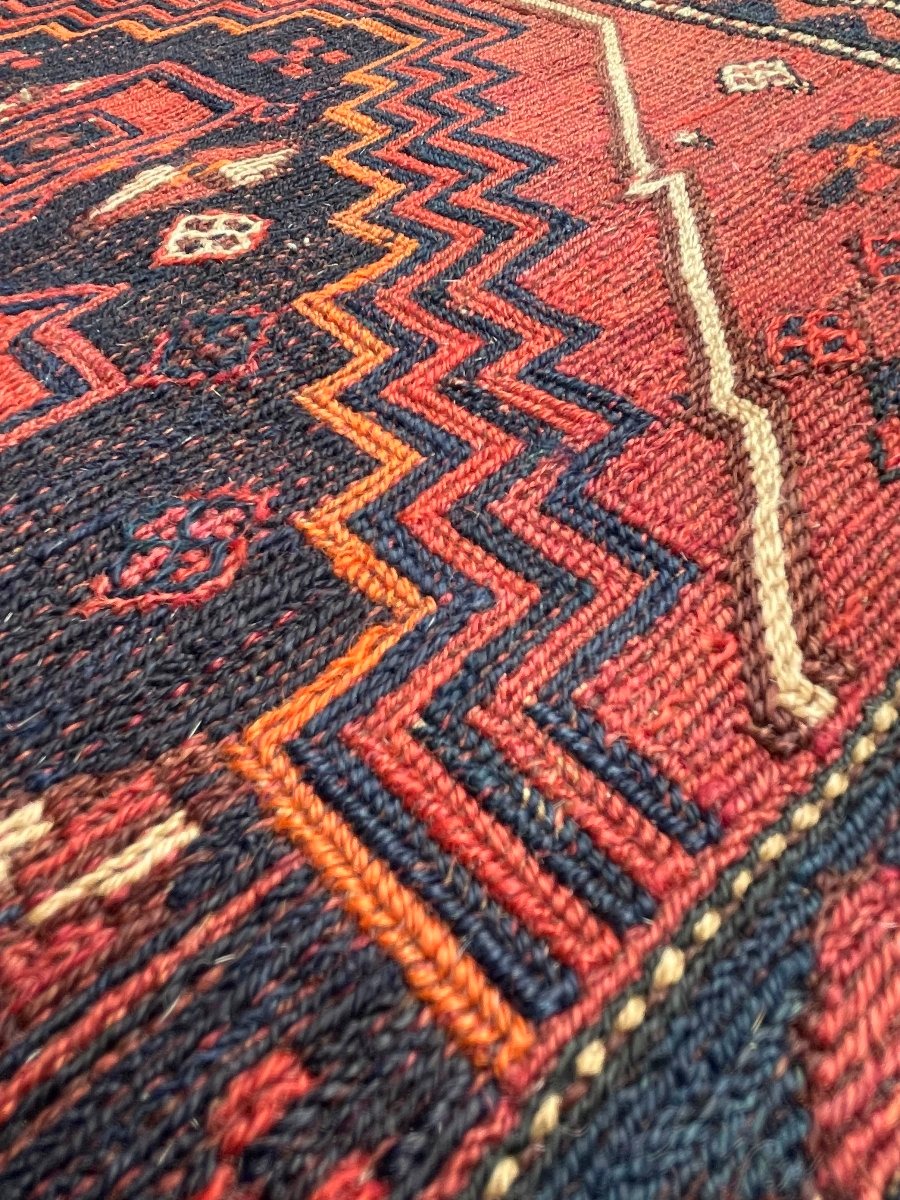
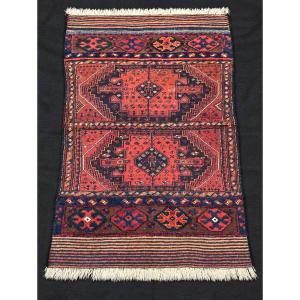
The piece combines three different techniques. At both ends are wide woven sections, punctuated by fine stripes. These are followed by two sections in the knotted weave technique, which are thicker and denser, adorned with bold geometric patterns. In the center, two large panels created using the sumak technique constitute the most elaborate part of the piece. This succession of materials and techniques gives the piece remarkable depth and rhythm.
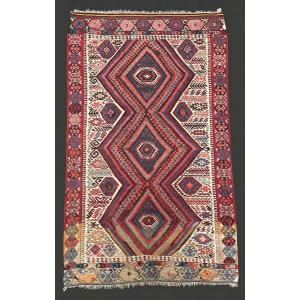
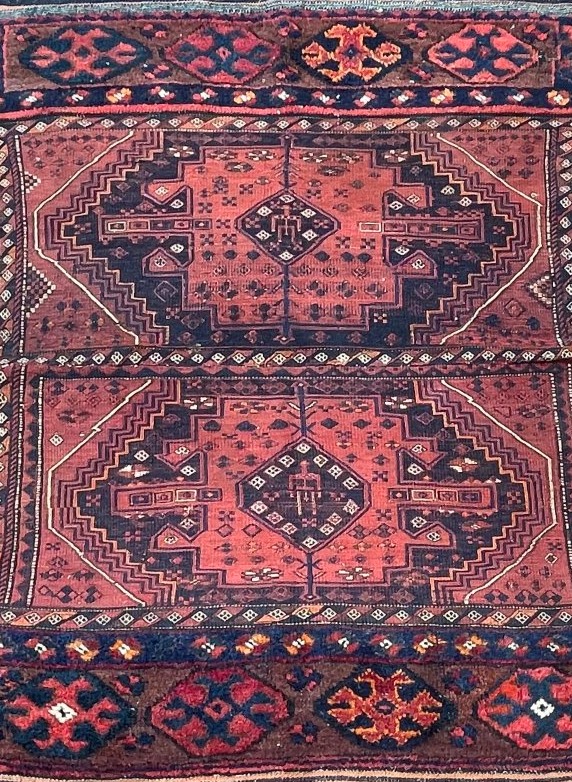
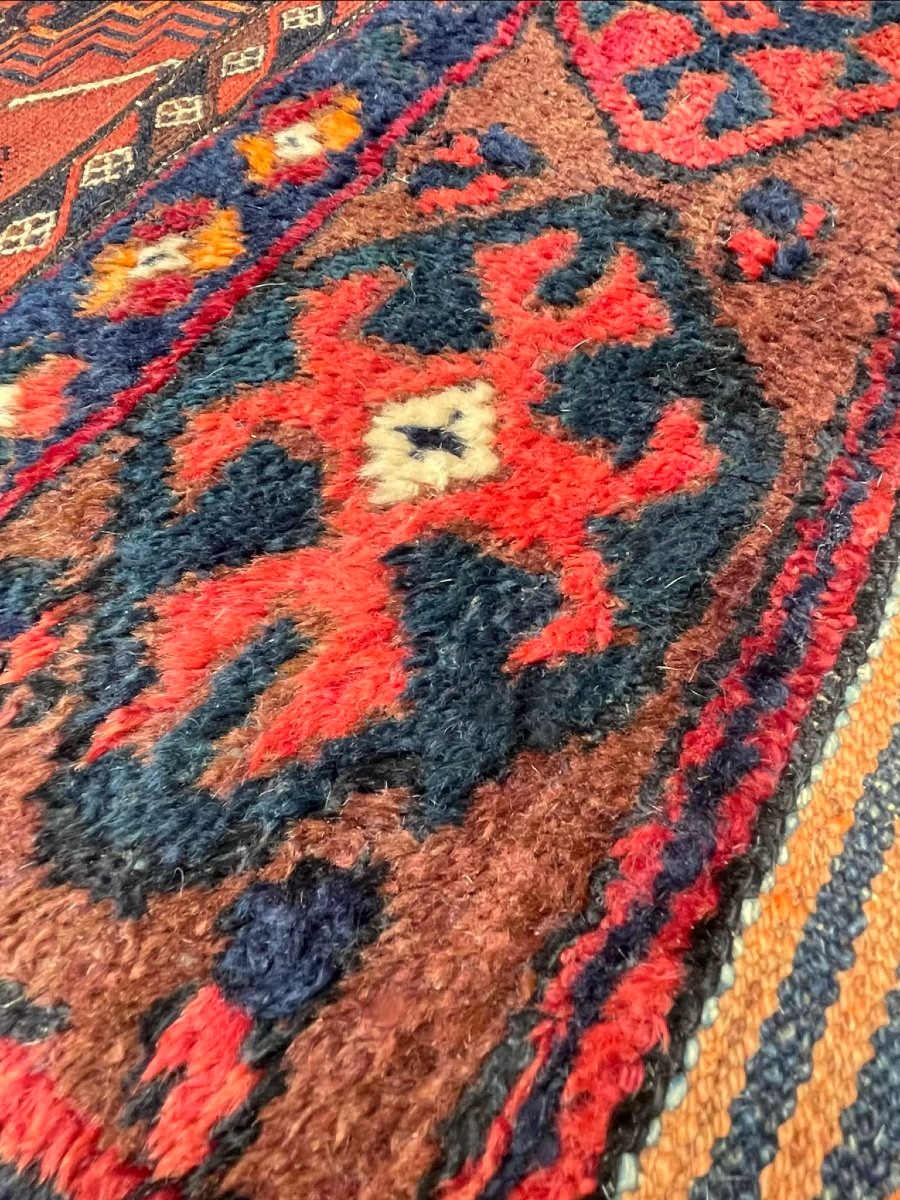
The central composition is highly structured. Two large medallions are arranged almost mirror-like, with their stepped outlines, diamonds, and numerous small symbols. The piece as a whole appears highly geometric, almost architectural, but this geometry is entirely part of the vocabulary of tribal art: behind the abstract forms lies a whole repertoire of stylized motifs linked to protection, fertility, and the animal and plant worlds.
More than mere decoration in the strict sense, it is a language passed down and freely interpreted by the weaver.
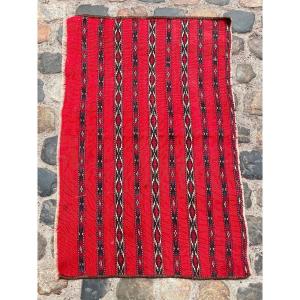
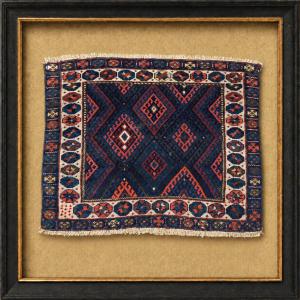
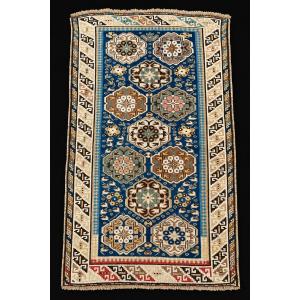
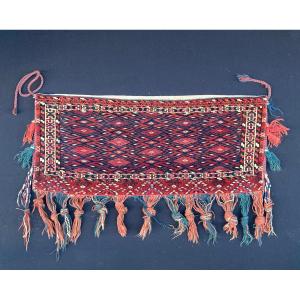
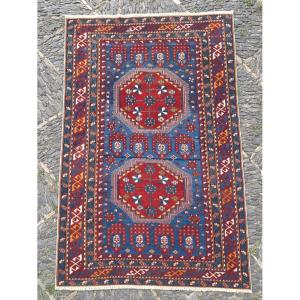
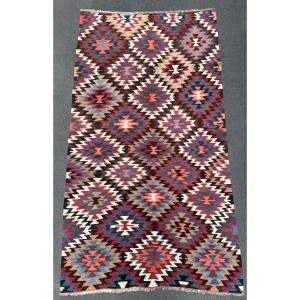
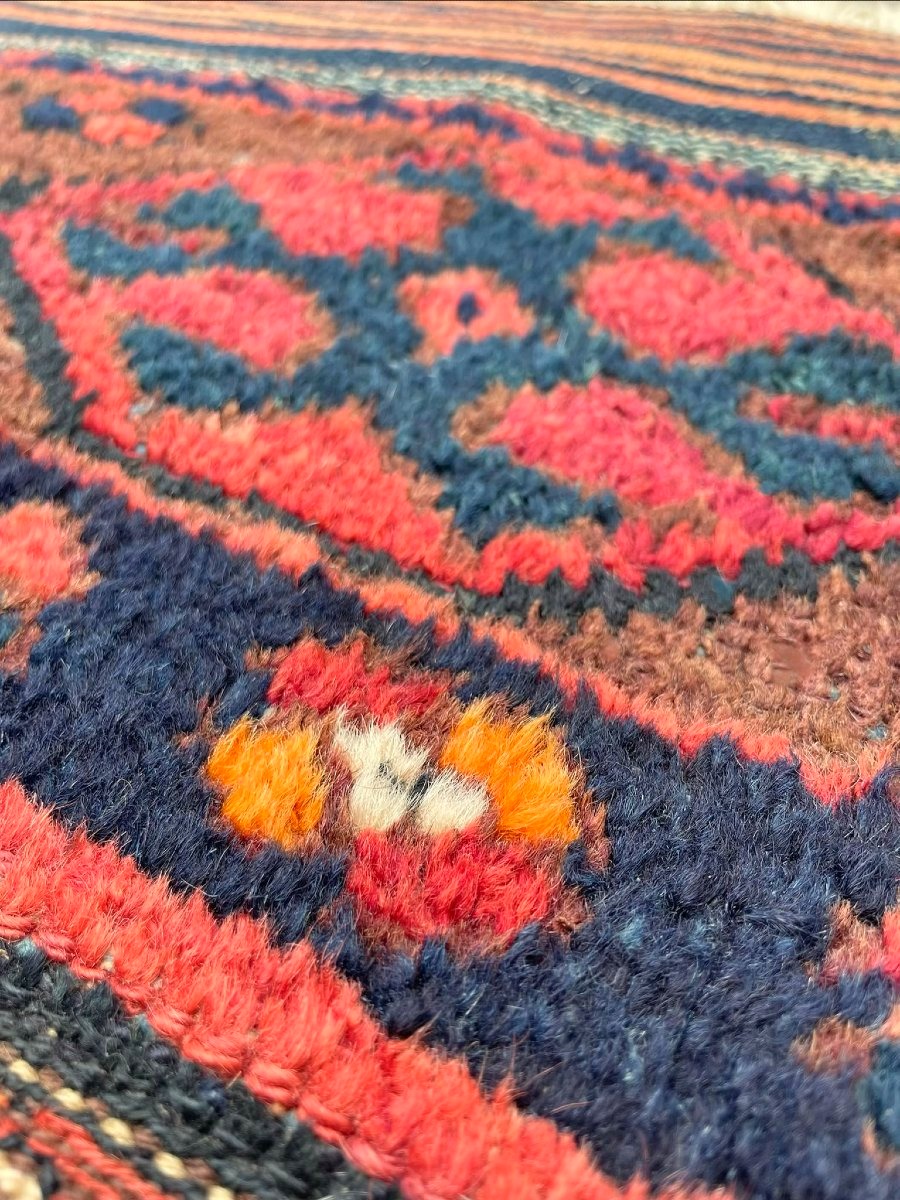
The colors contribute greatly to the piece’s impact. Deep reds, browns, very dark blues, and small touches of ivory create a palette that is both rich and luminous. Despite the variety of motifs, no single color truly dominates: they interact with great balance, while the lighter tones punctuate the composition and give it depth.
Originally an everyday object, this double bag accompanied the Bakhtiari people on their journeys and in their domestic lives. It is precisely this blend of function, craftsmanship, and personal expression that makes it so compelling today: an ethnographic object whose graphic power remains surprisingly contemporary.
Bakhtiari, Persia. Very late 19th century. Mixed media: weaving, knotted stitch, and sumak.
Wool on wool
Plant-based dyes
Dimensions: 185 x 120 cm
Choosing an antique rug or textile is often a matter of serendipity.
If one of our pieces catches your eye, or if you’d like more information or photos, I’d be happy to speak with you.
Laurent Consul
Beauty of Kilims
06 42 61 73 46
The piece combines three different techniques. At both ends are wide woven sections, punctuated by fine stripes. These are followed by two sections in the knotted weave technique, which are thicker and denser, adorned with bold geometric patterns. In the center, two large panels created using the sumak technique constitute the most elaborate part of the piece. This succession of materials and techniques gives the piece remarkable depth and rhythm.
The central composition is highly structured. Two large medallions are arranged almost mirror-like, with their stepped outlines, diamonds, and numerous small symbols. The piece as a whole appears highly geometric, almost architectural, but this geometry is entirely part of the vocabulary of tribal art: behind the abstract forms lies a whole repertoire of stylized motifs linked to protection, fertility, and the animal and plant worlds.
More than mere decoration in the strict sense, it is a language passed down and freely interpreted by the weaver.
The colors contribute greatly to the piece’s impact. Deep reds, browns, very dark blues, and small touches of ivory create a palette that is both rich and luminous. Despite the variety of motifs, no single color truly dominates: they interact with great balance, while the lighter tones punctuate the composition and give it depth.
Originally an everyday object, this double bag accompanied the Bakhtiari people on their journeys and in their domestic lives. It is precisely this blend of function, craftsmanship, and personal expression that makes it so compelling today: an ethnographic object whose graphic power remains surprisingly contemporary.
Bakhtiari, Persia. Very late 19th century. Mixed media: weaving, knotted stitch, and sumak.
Wool on wool
Plant-based dyes
Dimensions: 185 x 120 cm
Choosing an antique rug or textile is often a matter of serendipity.
If one of our pieces catches your eye, or if you’d like more information or photos, I’d be happy to speak with you.
Laurent Consul
Beauty of Kilims
06 42 61 73 46
1 200 €
Period: 19th century
Style: Orientalism
Condition: Excellent condition
Material: Wool
Length: 185 cm
Width: 120 cm
Reference (ID): 1831152
Availability: In stock
Print