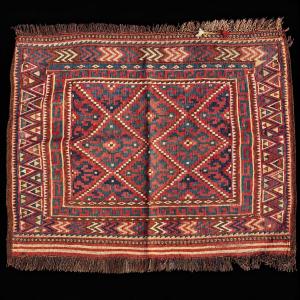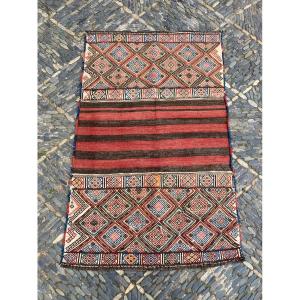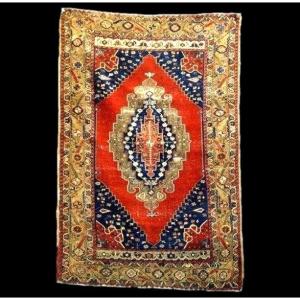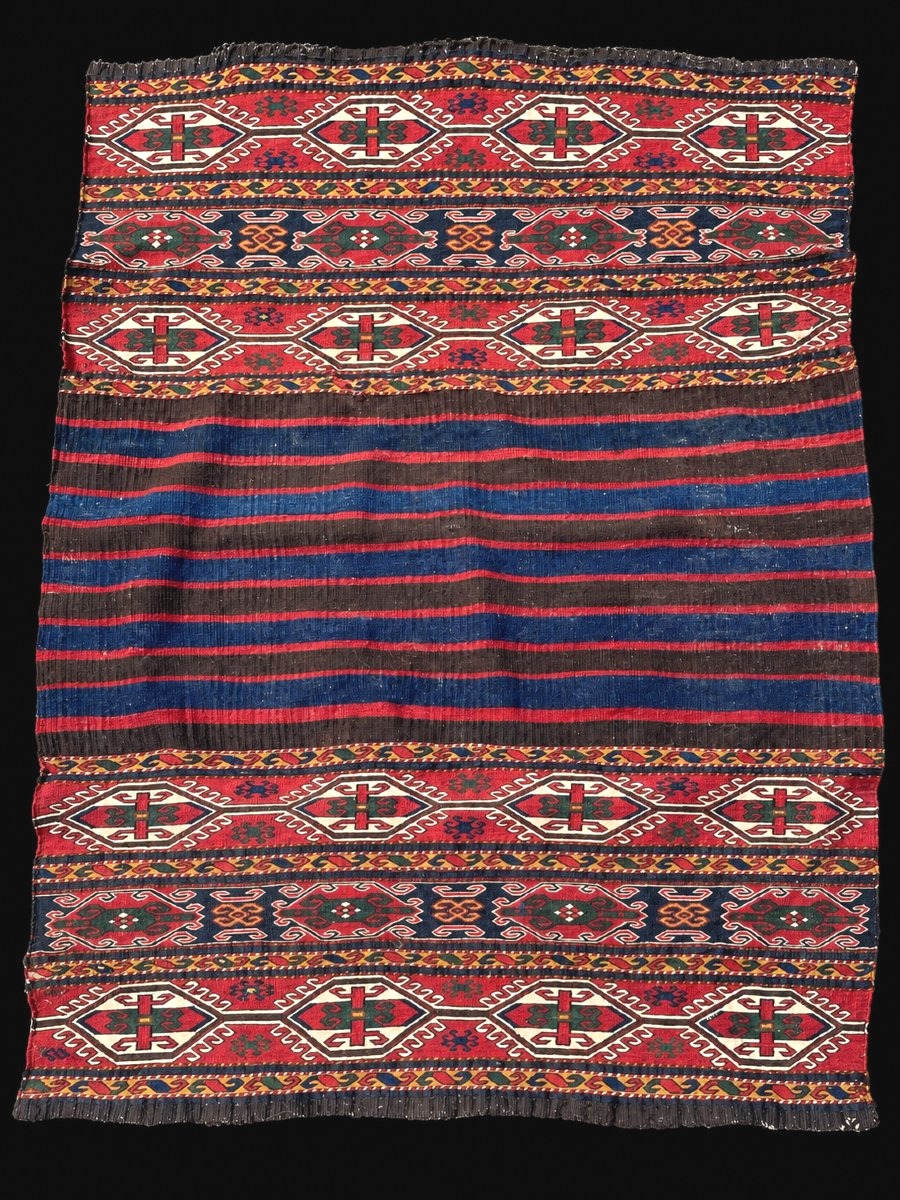
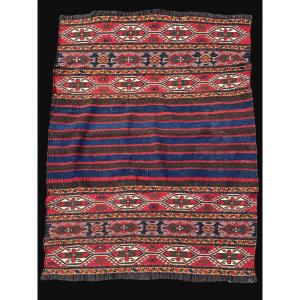


Maffrash From Karabakh, Caucasus. Circa 1870. 140 X 100 Cm
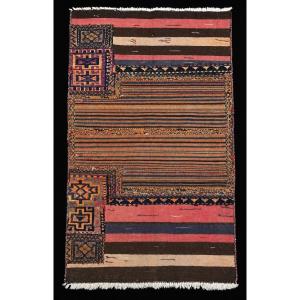
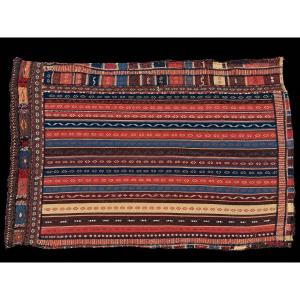
This Karabakh mafrash is a beautiful example of traditional Caucasian craftsmanship.
Beyond its aesthetic quality, it is also a piece whose various characteristics allow for a fairly precise dating.
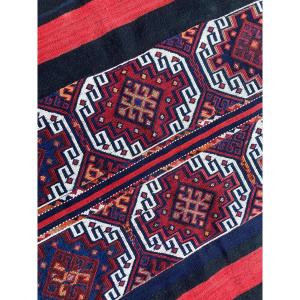
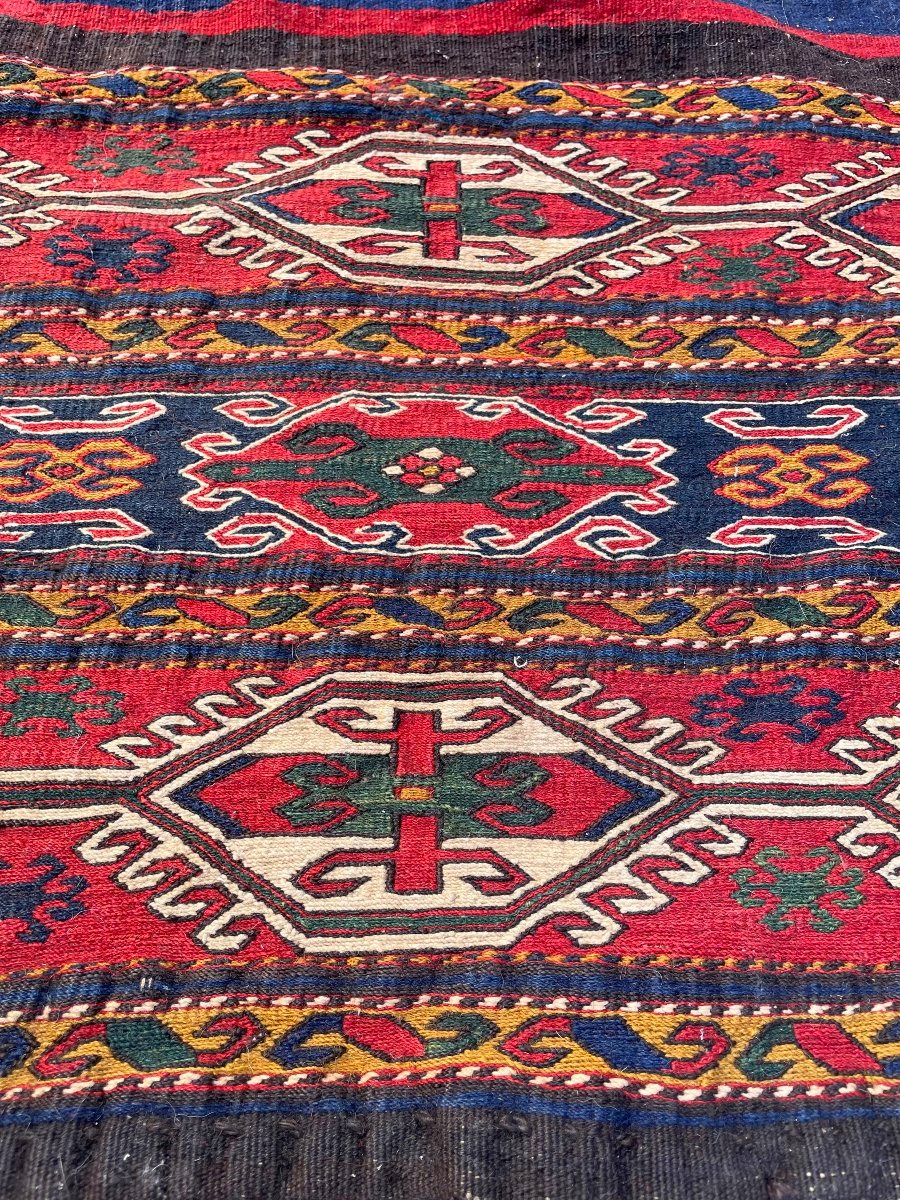
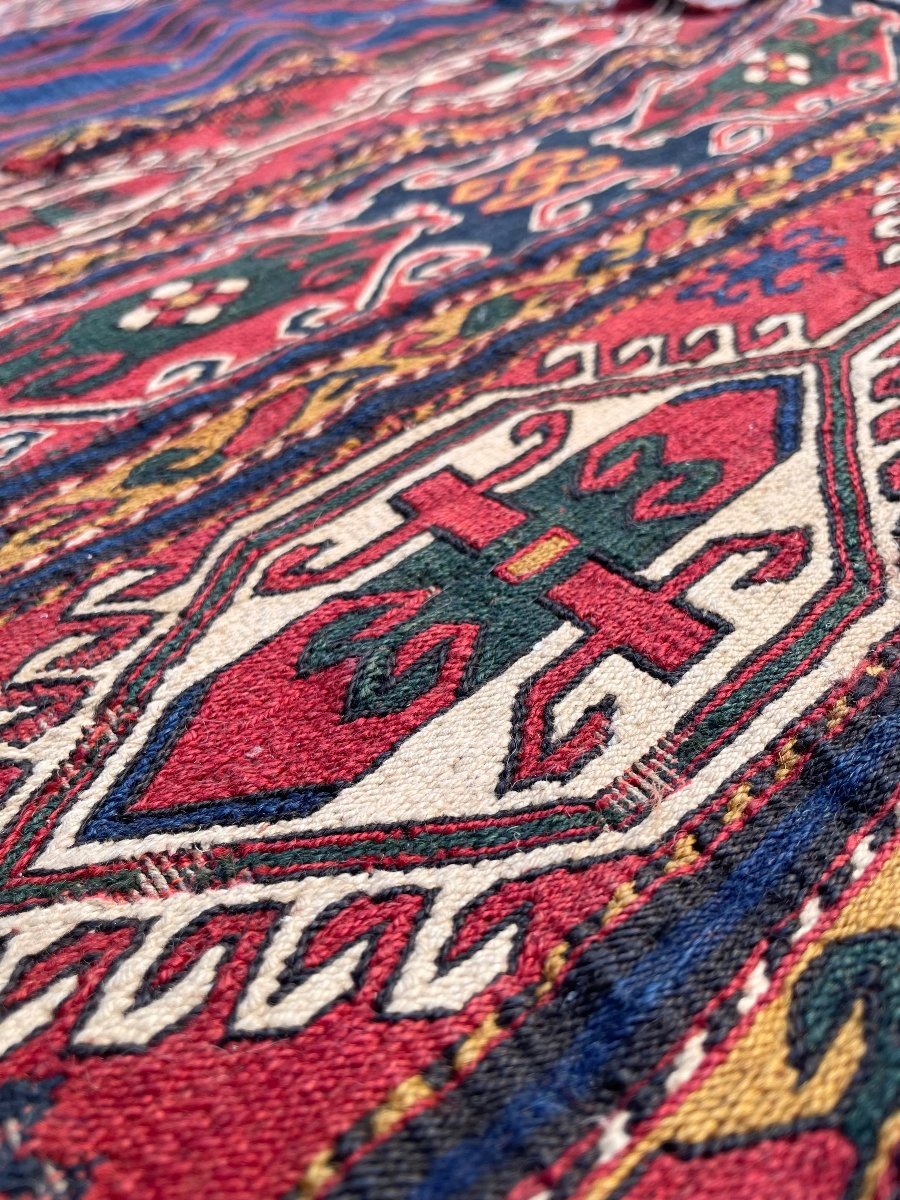
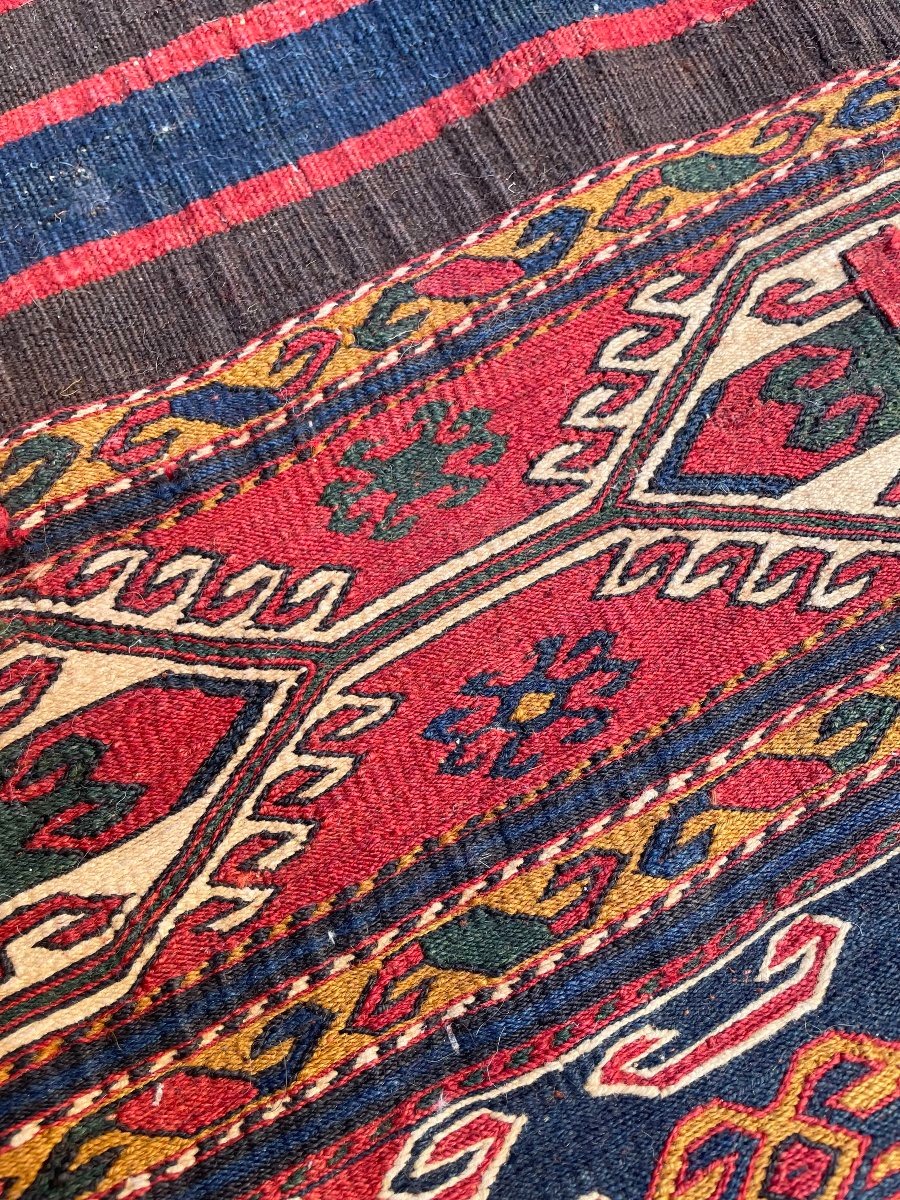
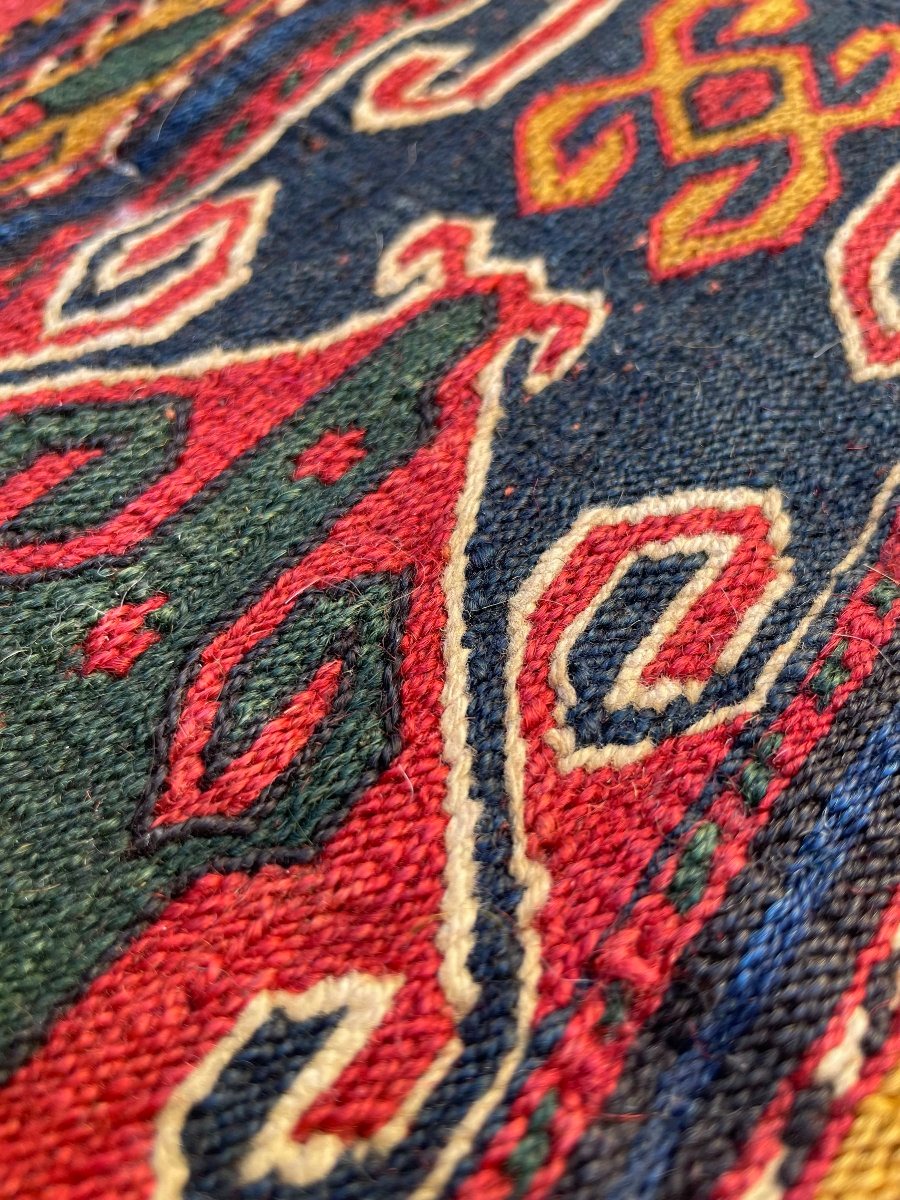
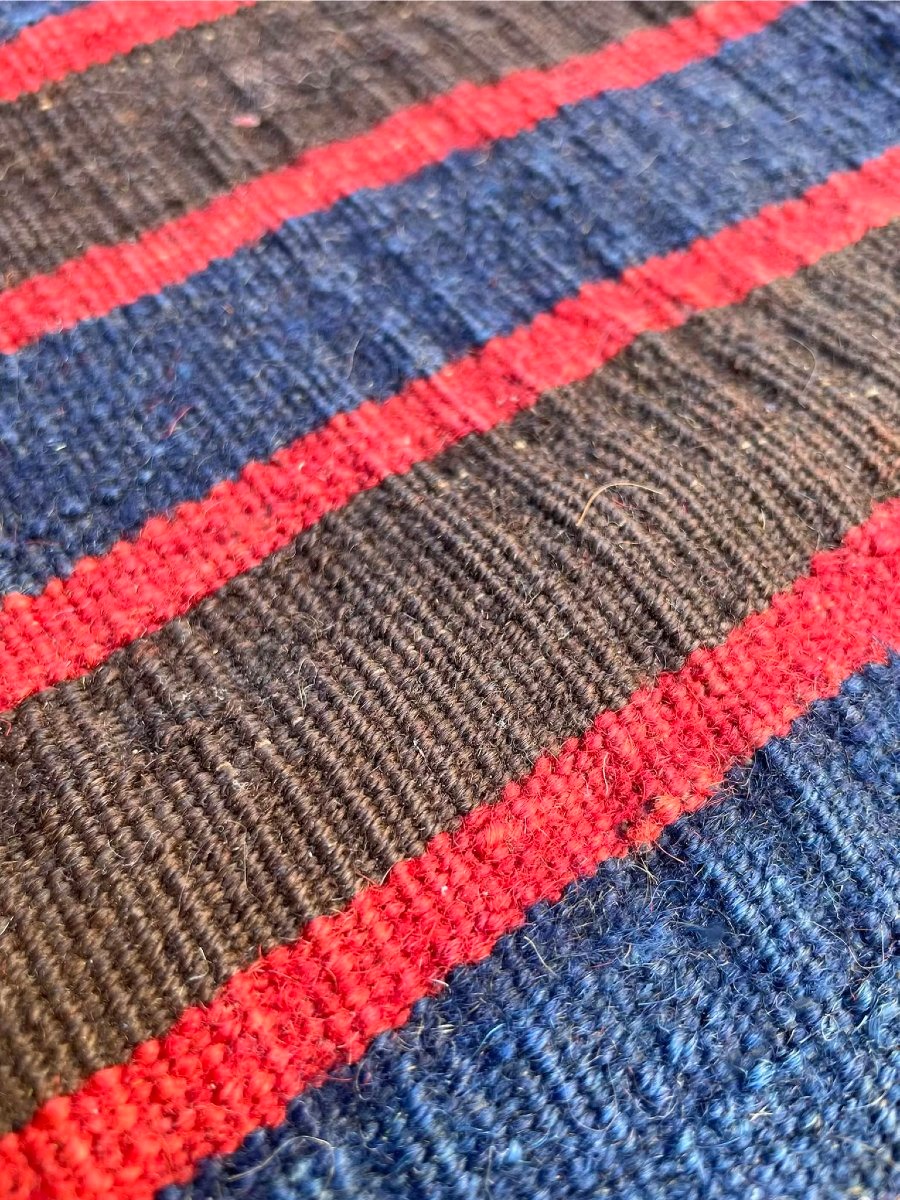
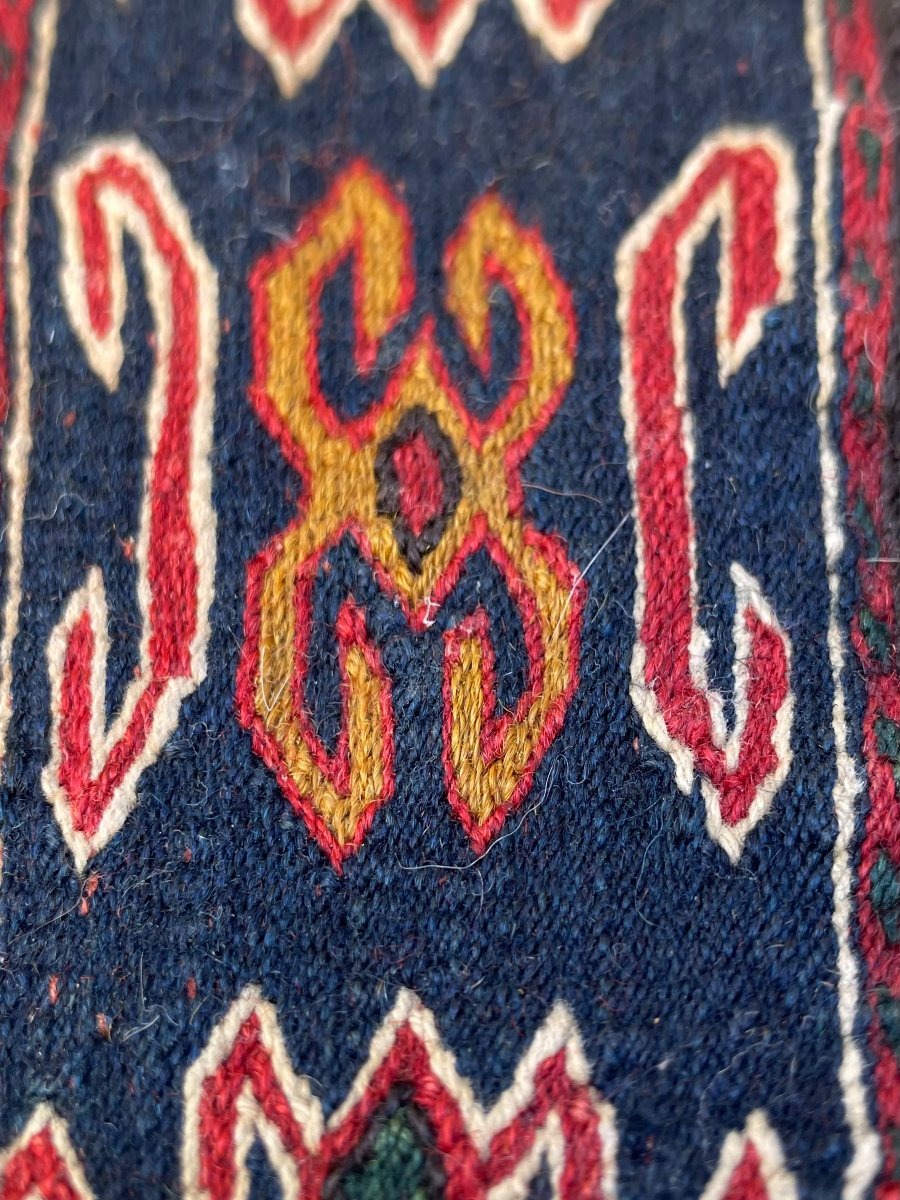
The construction is typical: the two large panels are made using the sumak technique—wool-over-wool—while the central section is woven. The sumak work here displays remarkable finesse. The patterns are extremely precise, with sharp, perfectly controlled outlines; they appear almost sculpted into the fabric. This quality of workmanship attests to the weaver’s great dexterity.
But it is likely the colors that provide one of the most interesting clues. In ancient Caucasian textiles, the depth, density, and nuances of the dyes—along with the technique and design—often help pinpoint a piece’s era.
Particularly striking here is a stunning bottle green, slightly tinged with yellow, paired with an extremely deep and saturated indigo blue, close to midnight blue. Surrounding these two hues is a rich and luminous palette, whose variations lend great depth to the composition.
Ultimately, it is the convergence of all these elements—the quality and depth of the colors, the exceptional finesse of the sumak weave, the precision of the motifs, and the overall mastery of the execution—that supports a dating to the mid- to late 19th century. Karabakh mafrash panels woven in the soumak technique, exhibiting comparable finesse and color palette, are also documented in the specialized literature.
A remarkable piece, notable both for the intensity of its colors and the extreme precision of its workmanship.
Origin: Karabakh – Caucasus
Period: mid- to late 19th century
Technique: soumak and weaving – wool on wool
Museum-quality condition
Dimensions: 140 x 100 cm
Mafrashs hold a very special place in our collection. Over the years, we have gathered nearly a hundred of them, some preserved in their entirety, others as fragments or panels, thus offering a very broad overview of the diversity of these textiles.
Please feel free to contact us if you’d like to explore other pieces, research a specific origin or composition, or simply discuss these antique textiles that are particularly dear to us.
Laurent
Beauty of Kilims
Beyond its aesthetic quality, it is also a piece whose various characteristics allow for a fairly precise dating.
The construction is typical: the two large panels are made using the sumak technique—wool-over-wool—while the central section is woven. The sumak work here displays remarkable finesse. The patterns are extremely precise, with sharp, perfectly controlled outlines; they appear almost sculpted into the fabric. This quality of workmanship attests to the weaver’s great dexterity.
But it is likely the colors that provide one of the most interesting clues. In ancient Caucasian textiles, the depth, density, and nuances of the dyes—along with the technique and design—often help pinpoint a piece’s era.
Particularly striking here is a stunning bottle green, slightly tinged with yellow, paired with an extremely deep and saturated indigo blue, close to midnight blue. Surrounding these two hues is a rich and luminous palette, whose variations lend great depth to the composition.
Ultimately, it is the convergence of all these elements—the quality and depth of the colors, the exceptional finesse of the sumak weave, the precision of the motifs, and the overall mastery of the execution—that supports a dating to the mid- to late 19th century. Karabakh mafrash panels woven in the soumak technique, exhibiting comparable finesse and color palette, are also documented in the specialized literature.
A remarkable piece, notable both for the intensity of its colors and the extreme precision of its workmanship.
Origin: Karabakh – Caucasus
Period: mid- to late 19th century
Technique: soumak and weaving – wool on wool
Museum-quality condition
Dimensions: 140 x 100 cm
Mafrashs hold a very special place in our collection. Over the years, we have gathered nearly a hundred of them, some preserved in their entirety, others as fragments or panels, thus offering a very broad overview of the diversity of these textiles.
Please feel free to contact us if you’d like to explore other pieces, research a specific origin or composition, or simply discuss these antique textiles that are particularly dear to us.
Laurent
Beauty of Kilims
900 €
Period: 19th century
Style: Orientalism
Condition: Excellent condition
Material: Wool
Length: 140 cm
Width: 100 cm
Reference (ID): 1827625
Availability: In stock
Print