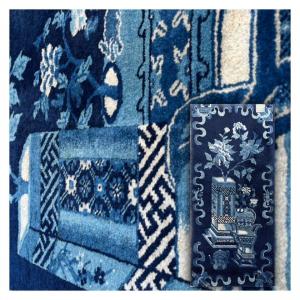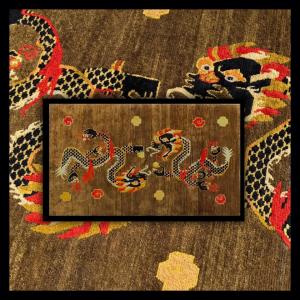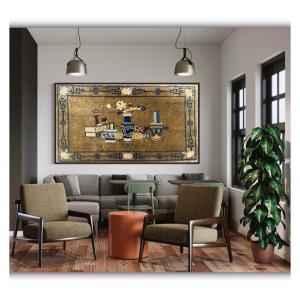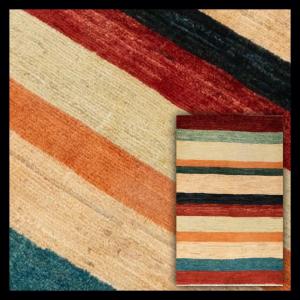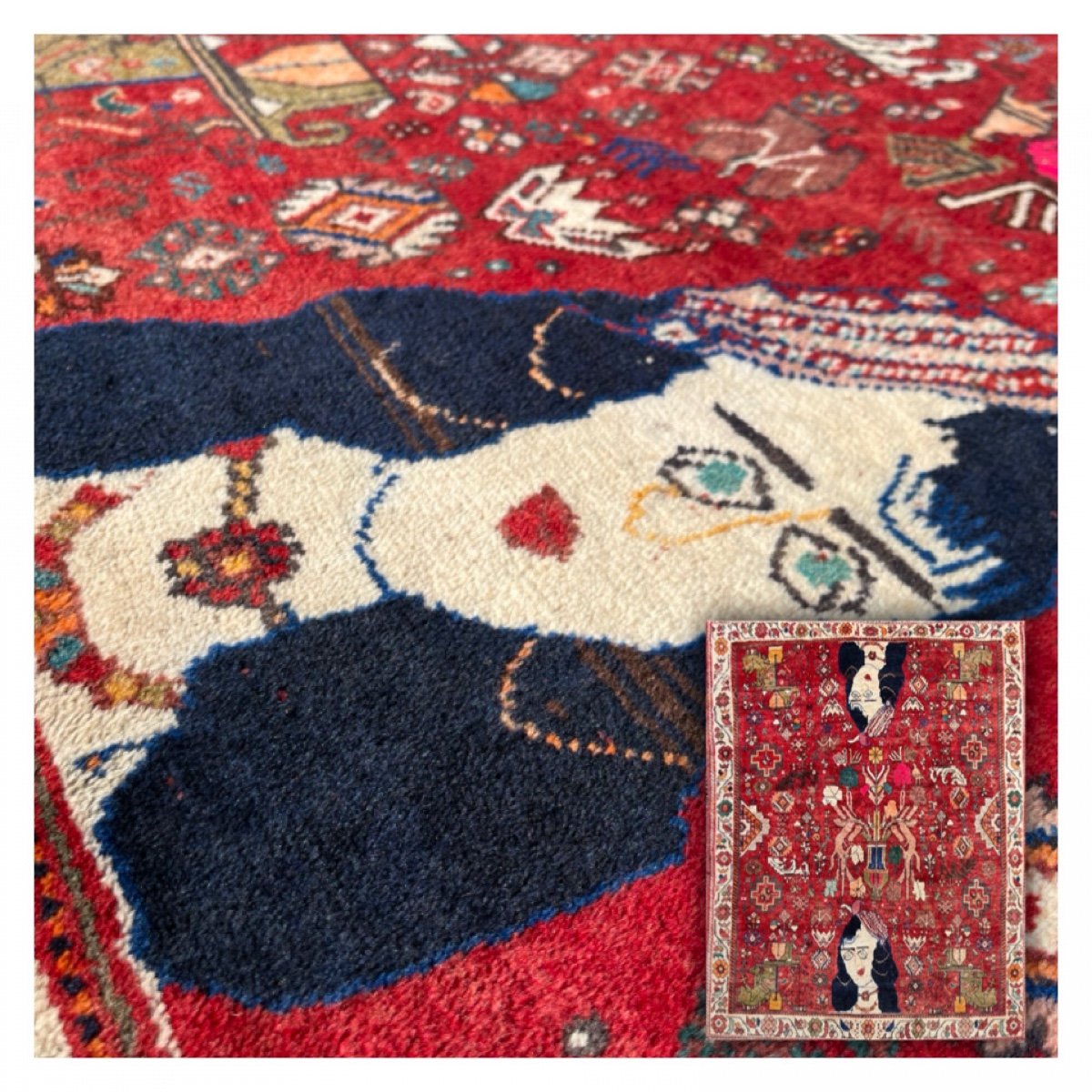
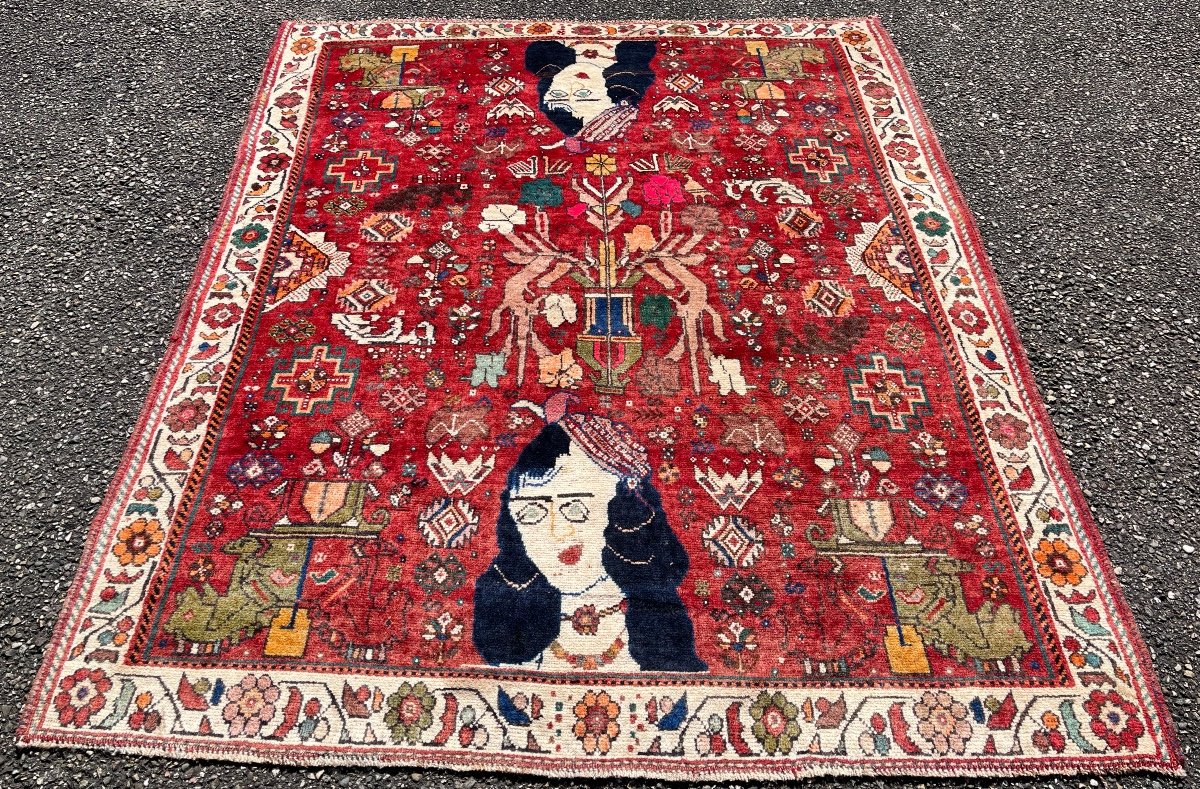


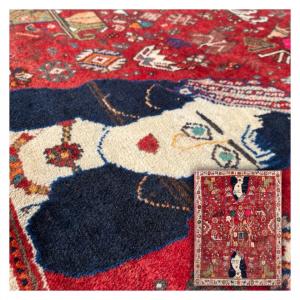


Gashgai Nomad Rug / Figurative Rug Circa 1920
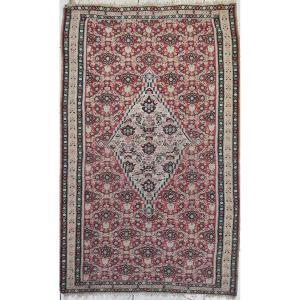
Qashqai rugs are knotted by the nomadic Kashkai (or Ghashghai) tribes in the high mountains of southwestern Iran. Once nomadic, these shepherds and weavers are now semi-nomadic, having lived in the provinces of Fars, Khuzestan and South Isfahan.
Today, they are overwhelmingly gathered in the surrounding region of Shiraz, which was once the center of the Persian Empire. Historically, the Kashkai tribes migrated twice a year between their winter pastures near the Persian Gulf and their summer pastures in the Zagros Mountains.
Carpets as well as the art of weaving carpets, kilims, bags, saddlebags, tents, ribbons and other ornaments are an integral part of nomadic culture and heritage. Qashqai rugs can feature a multitude of artistic combinations, each more astonishing than the next, which, always in red and brown tones, represent nomadic life. These mats are very sturdy as well.
Among the motifs, there are often beautiful medallions, but also representations of everyday life, birds, flowers, trees, human forms and four-legged animals. The weavers also draw their inspiration from the frescoes and columns of Persepolis, capital of Persia at the time of the Achaemenids.
Size : 168x130 cm
Condition : Good
MY COMPLETE GALLERY
Today, they are overwhelmingly gathered in the surrounding region of Shiraz, which was once the center of the Persian Empire. Historically, the Kashkai tribes migrated twice a year between their winter pastures near the Persian Gulf and their summer pastures in the Zagros Mountains.
Carpets as well as the art of weaving carpets, kilims, bags, saddlebags, tents, ribbons and other ornaments are an integral part of nomadic culture and heritage. Qashqai rugs can feature a multitude of artistic combinations, each more astonishing than the next, which, always in red and brown tones, represent nomadic life. These mats are very sturdy as well.
Among the motifs, there are often beautiful medallions, but also representations of everyday life, birds, flowers, trees, human forms and four-legged animals. The weavers also draw their inspiration from the frescoes and columns of Persepolis, capital of Persia at the time of the Achaemenids.
Size : 168x130 cm
Condition : Good
MY COMPLETE GALLERY
1 300 €
Period: 20th century
Style: Orientalism
Condition: Good condition
Material: Wool
Length: 168
Width: 130
Diameter: n°257
Reference (ID): 1114971
Availability: In stock
Print