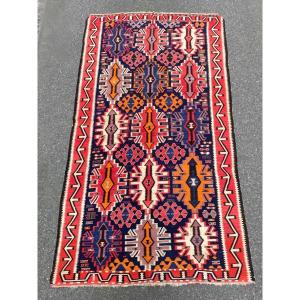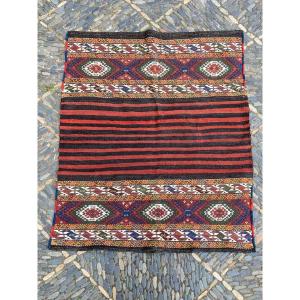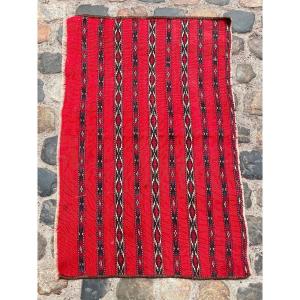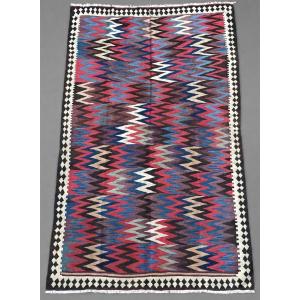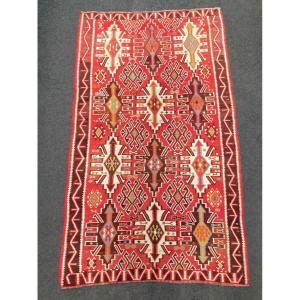
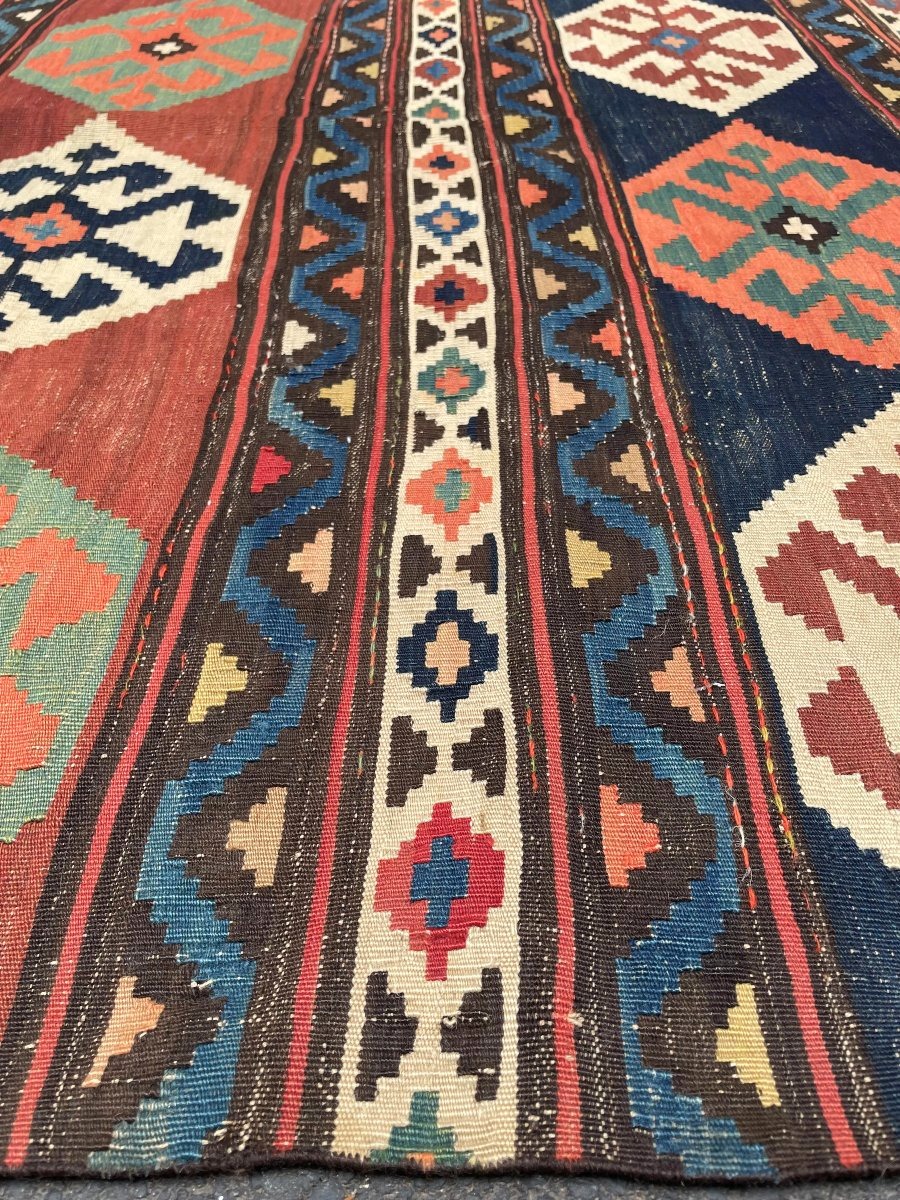


Kazak Kilim. Caucasus. Circa 1900. 280 X 165 Cm
Renaissance, or the Secret to a Restoration Done by the Book...
We are accustomed to receiving antique pieces that deserve attention commensurate with their prestige. Our gallery then becomes a sanctuary, and the conversation begins with planning—together with our restorer, Saïd—the priorities and the various stages of the work.
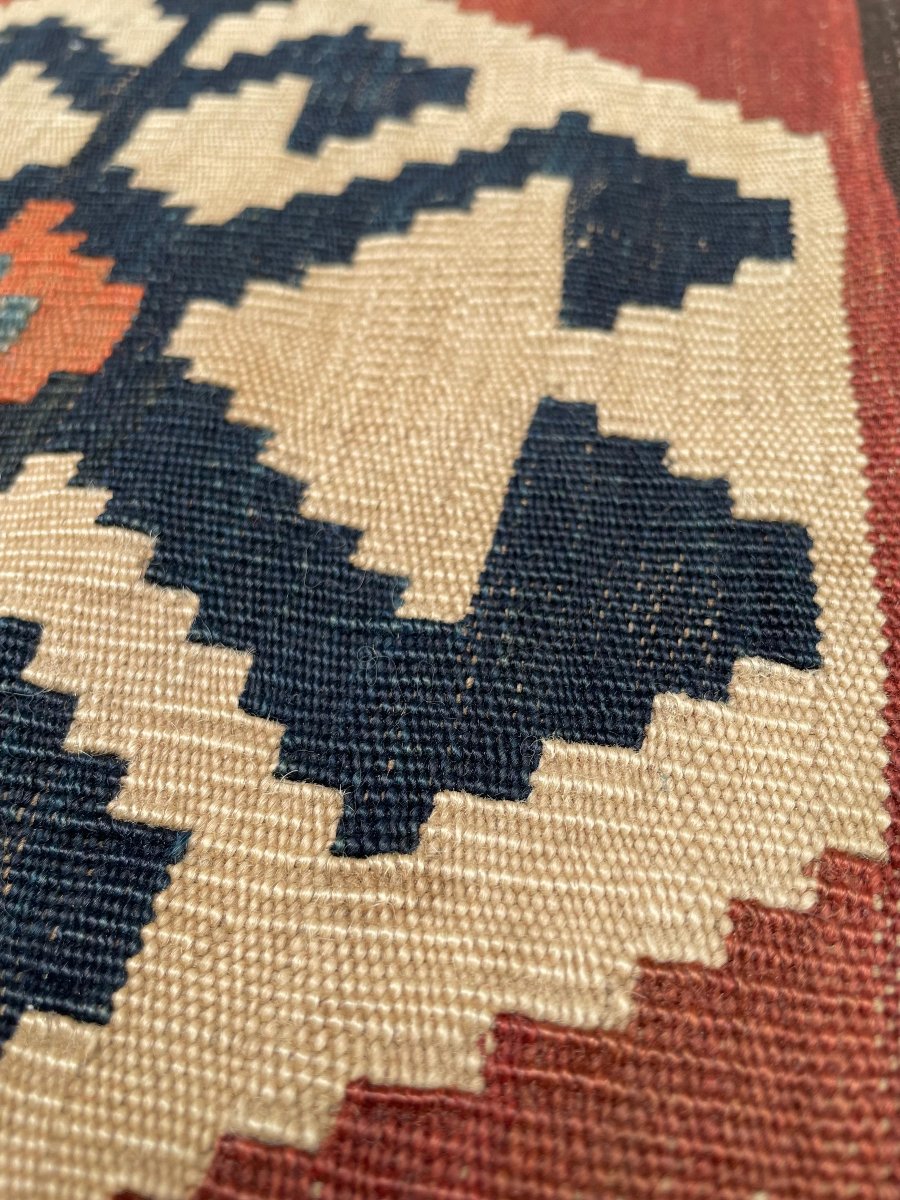
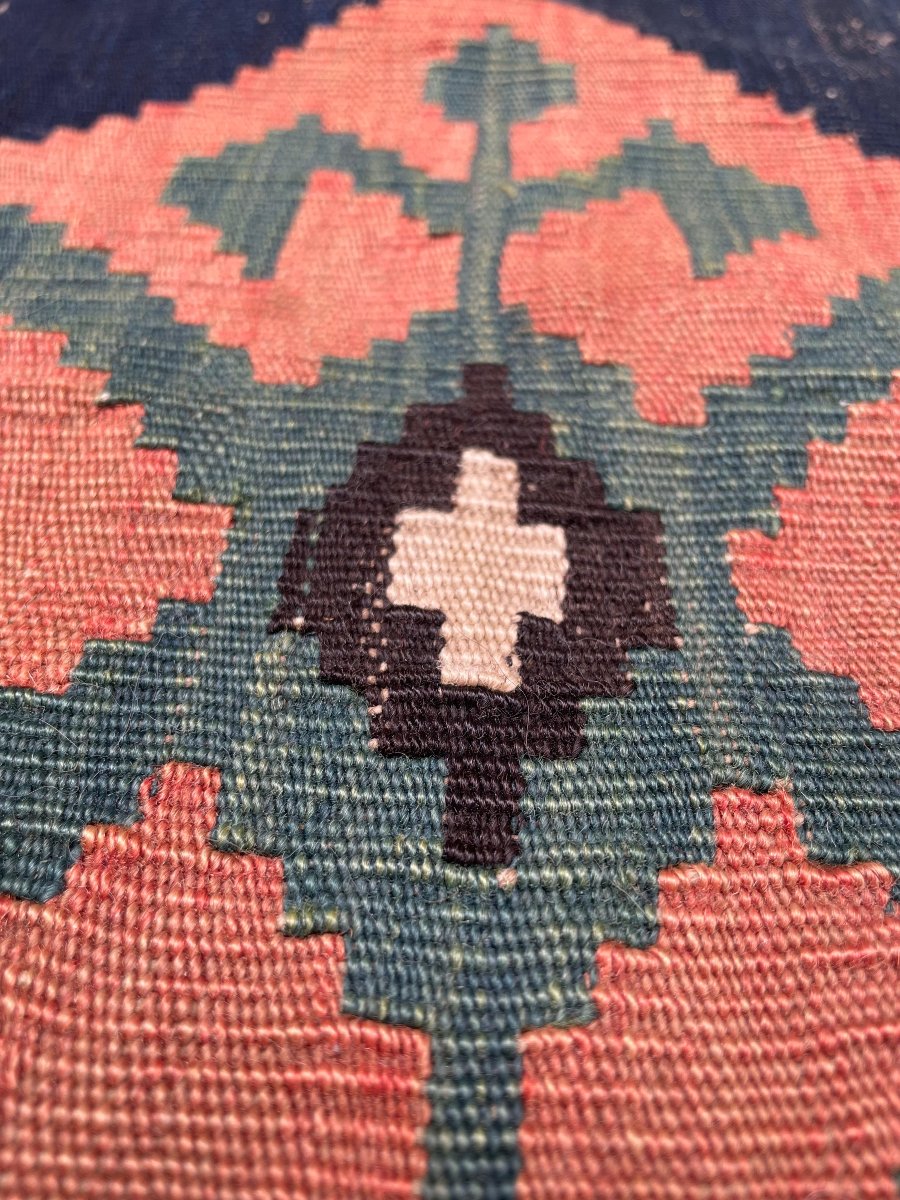
On this kilim, all of the outer borders were completely re-stitched by hand. The warp was exposed in several places, and the weft also had to be restored here and there. Matching the exact shades, selecting the wool, and then spinning it by hand to achieve the perfect diameter—it’s quite an art. And when fifteen years of experience are focused on such meticulous work, the visual result is almost magical.
This explains the admirable condition of this Kazak-patterned kilim, originally from the Caucasus.
The Turks have a beautiful expression to compliment work executed with mastery: “Eline sağlık,” literally, “Health to your hands.” That says it all.
Let’s now turn our attention to the composition and narrative vocabulary of this exceptional piece.
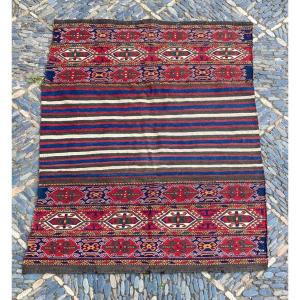
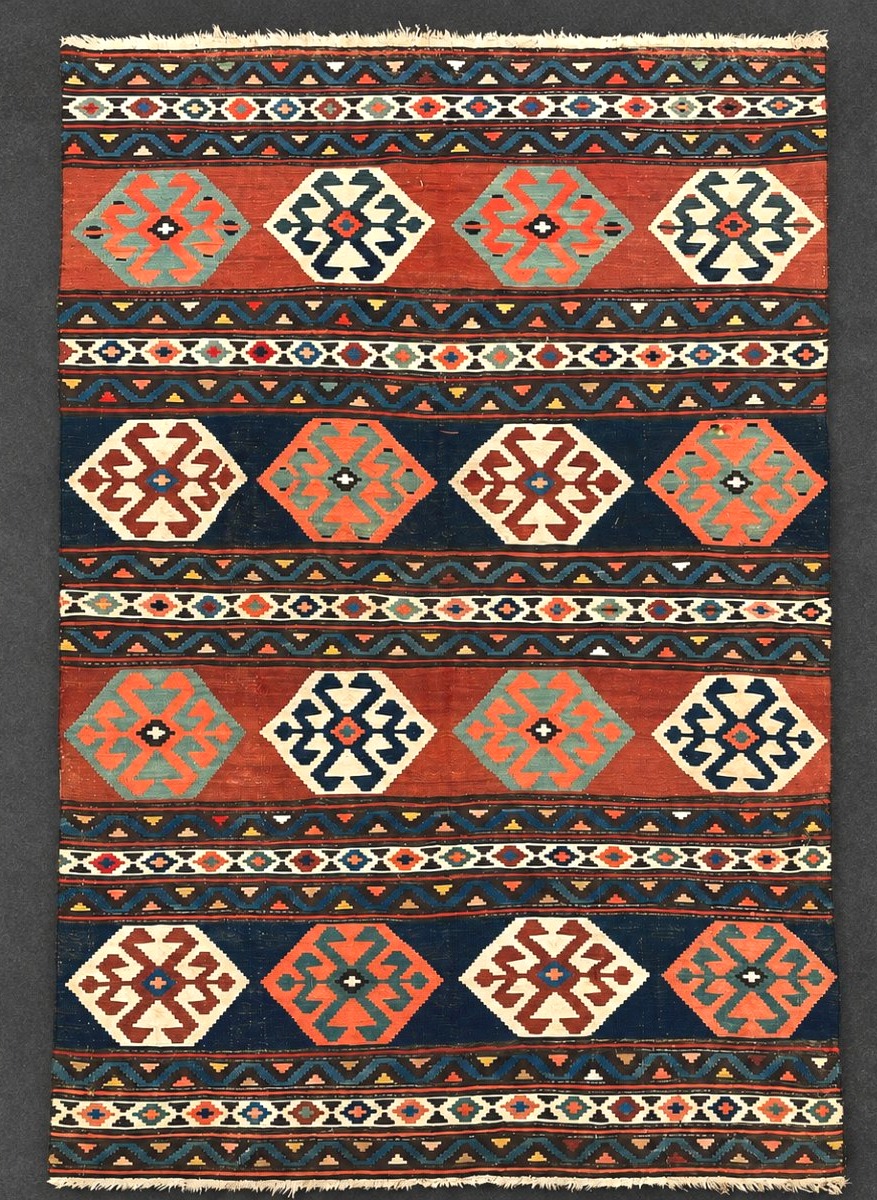
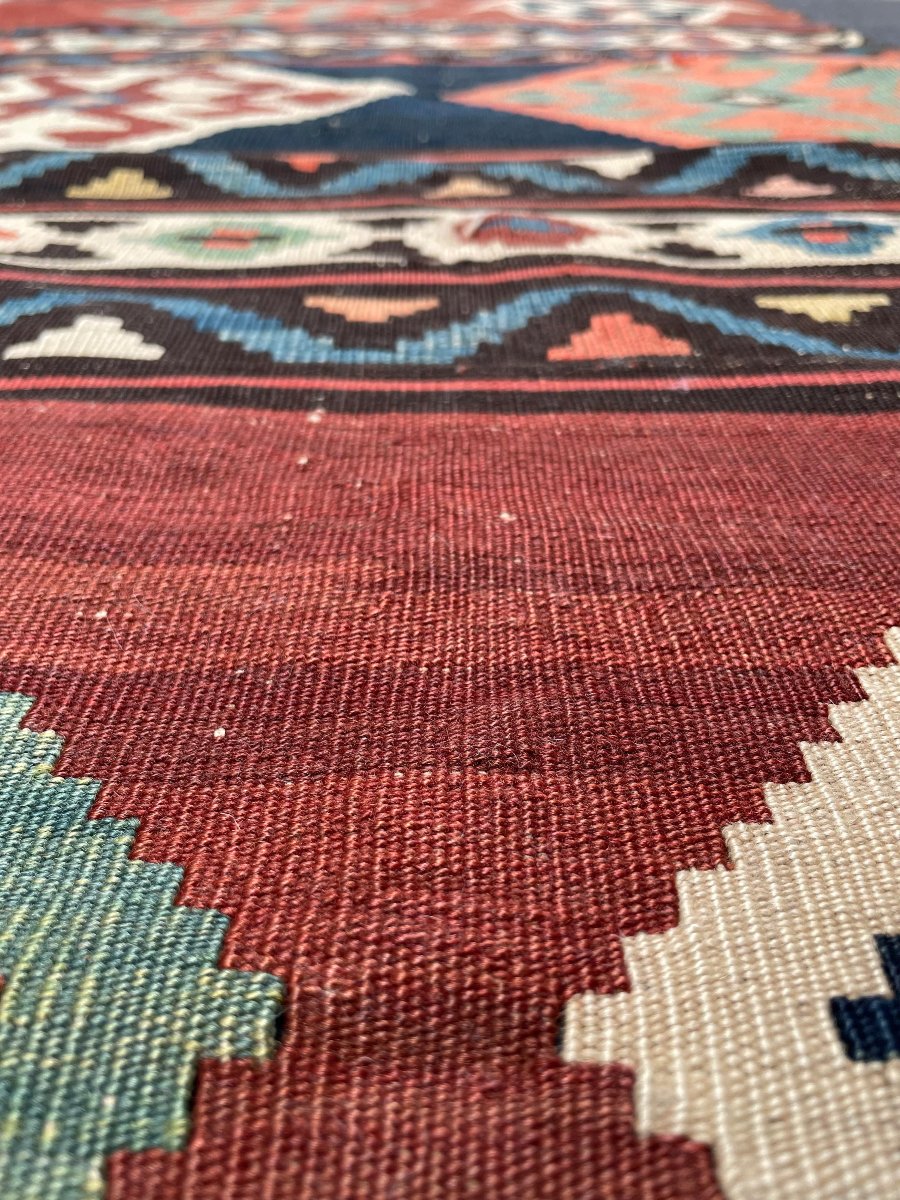
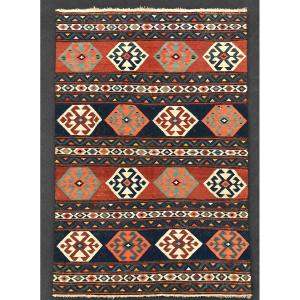
At first glance, it’s already clear that this kilim belongs to the broad family of weaves organized around a succession of horizontal bands of varying widths. The visual impact is immediate: the piece is experienced in layers, like an invitation to explore its depths, rhythms, and contrasts.
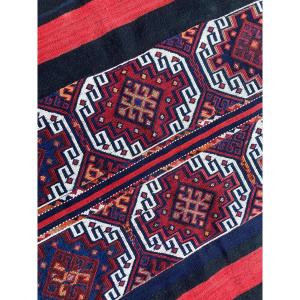
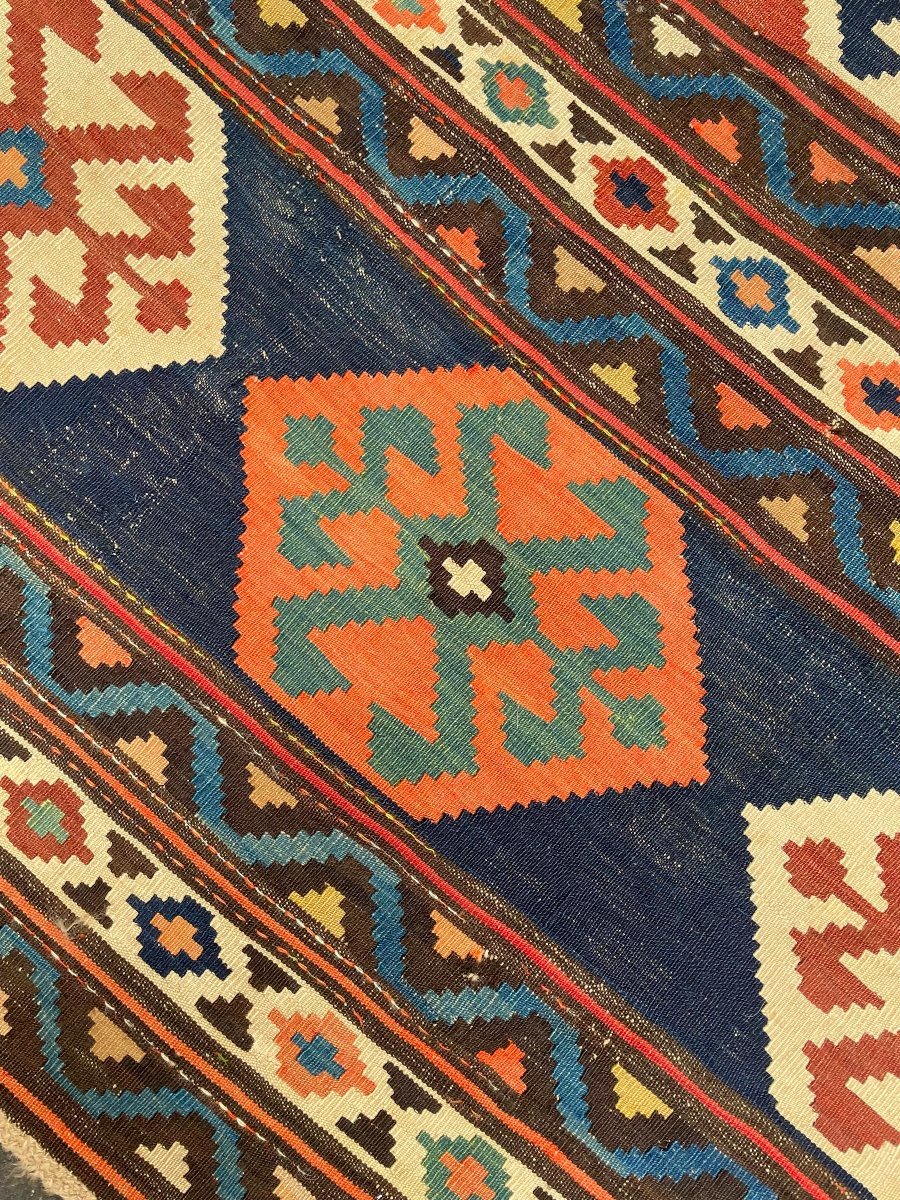
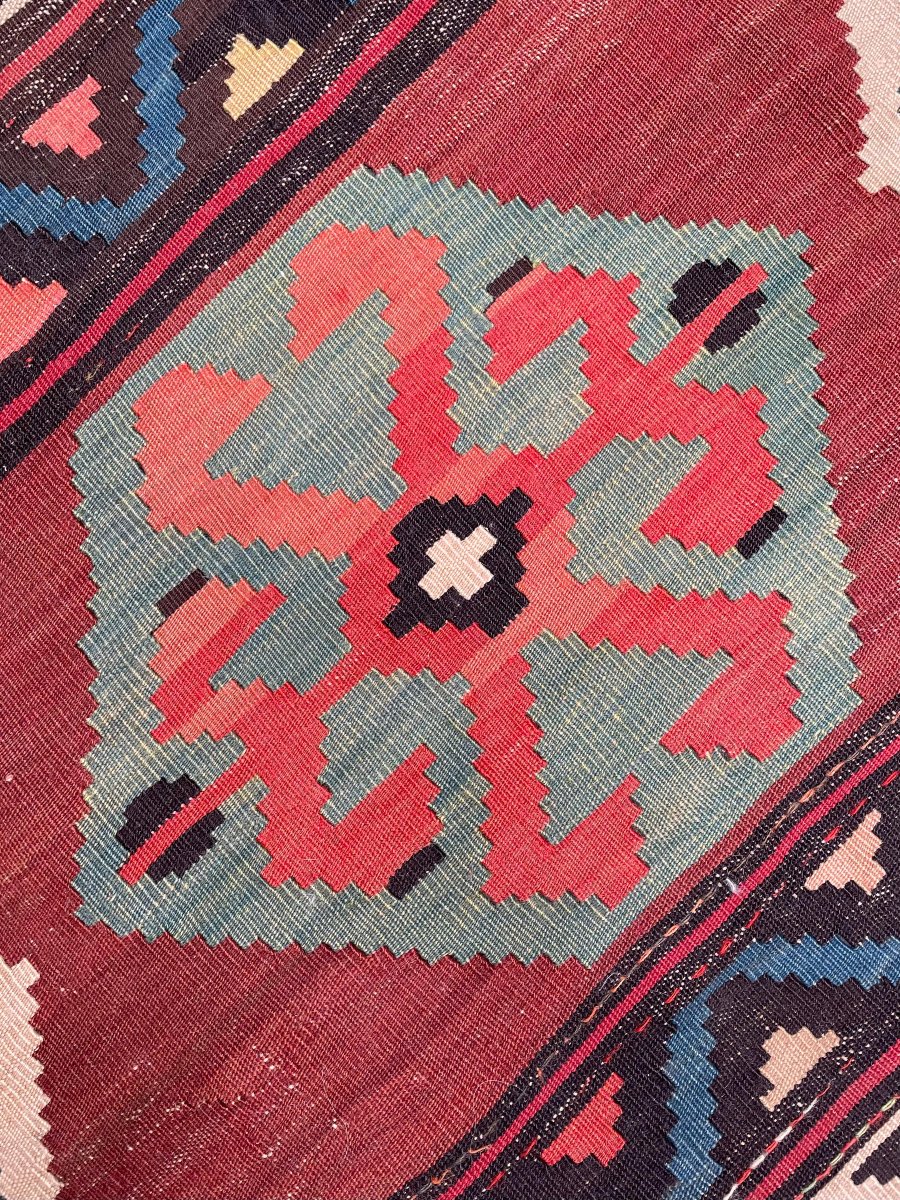
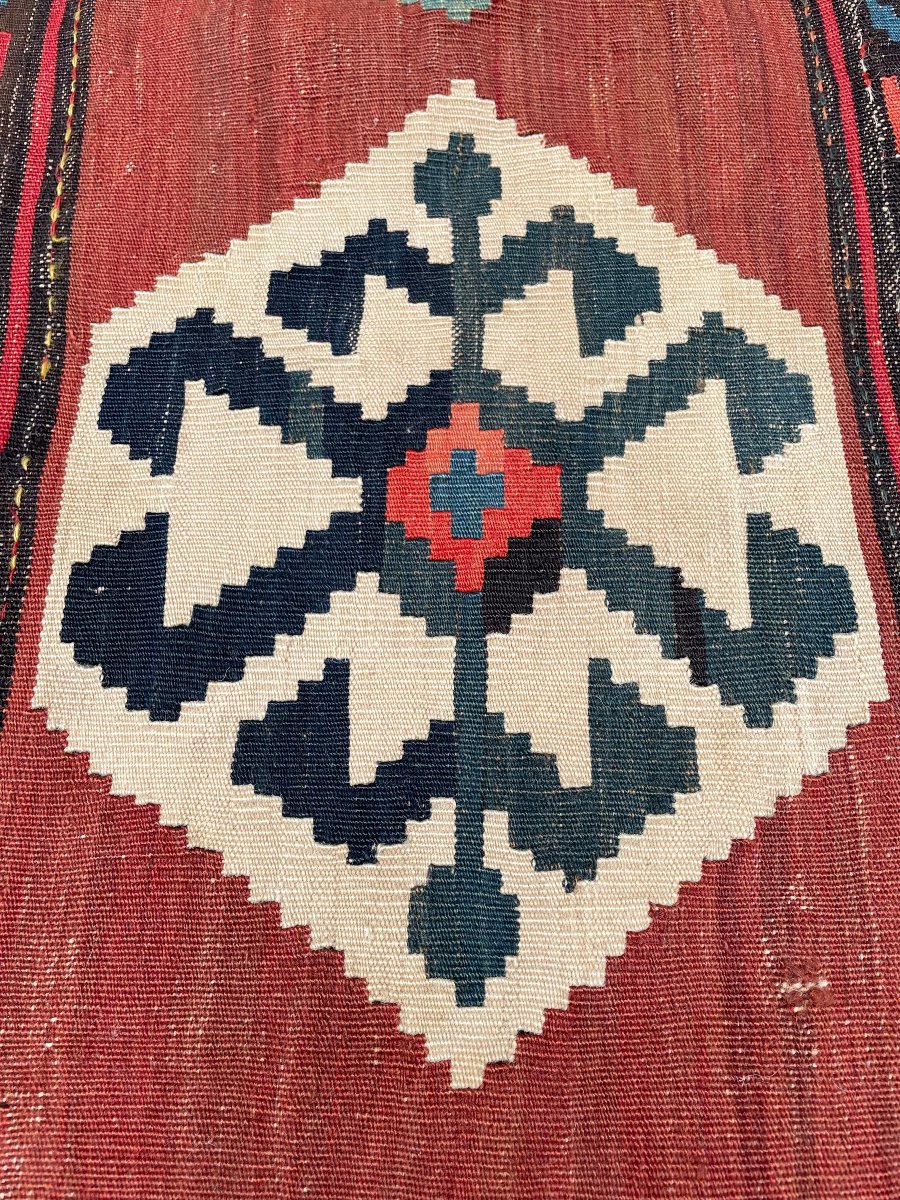
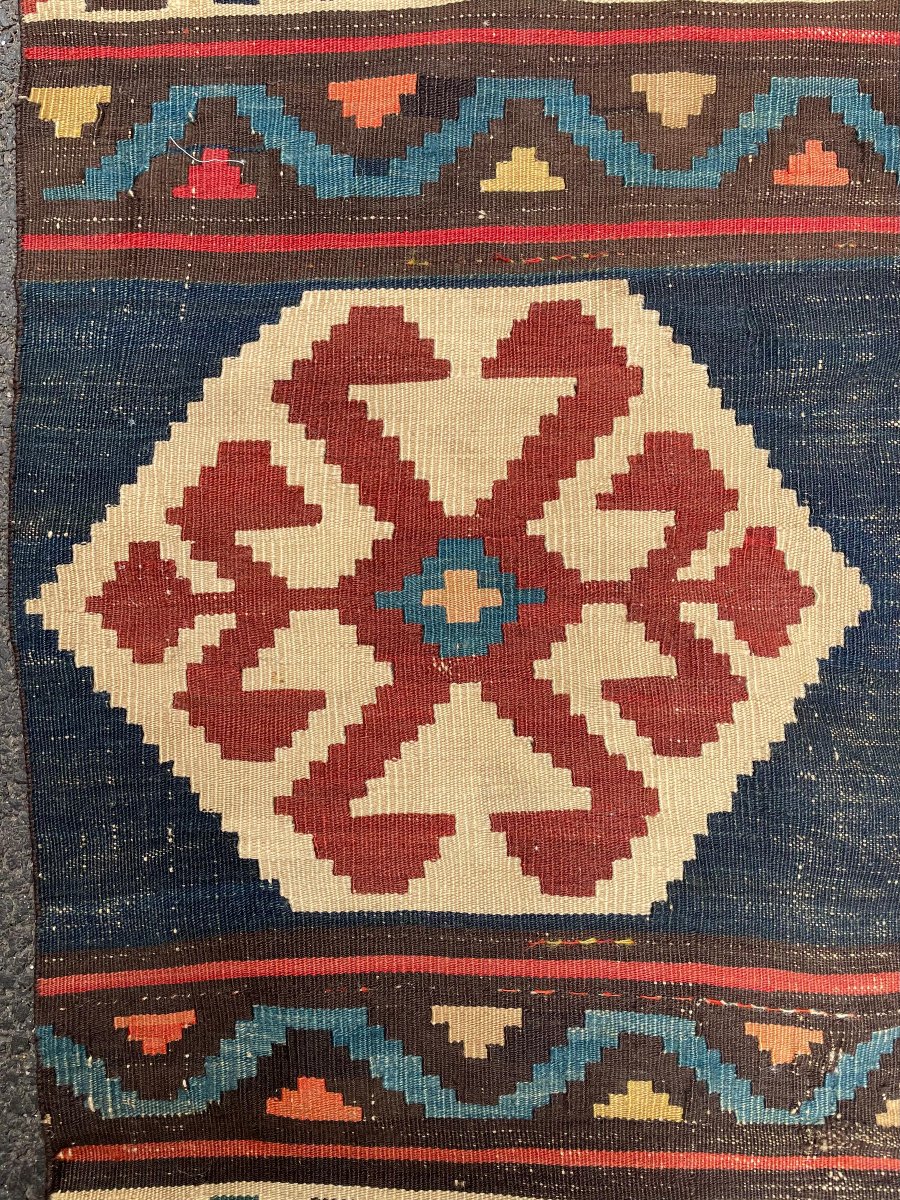
Everything here rests on a remarkable balance of volumes and a particularly accomplished harmony of hues derived from natural dyes. The indigo blues are deep, almost incandescent, while the large motifs set against an ecru background appear like diamonds scattered across the surface of the weave.
These large motifs are arranged in groups of four across four wide horizontal bands, for a total of sixteen motifs. Their highly stylized design can be likened to the scorpion motif, traditionally associated with a protective function in Anatolian and Caucasian textile traditions.
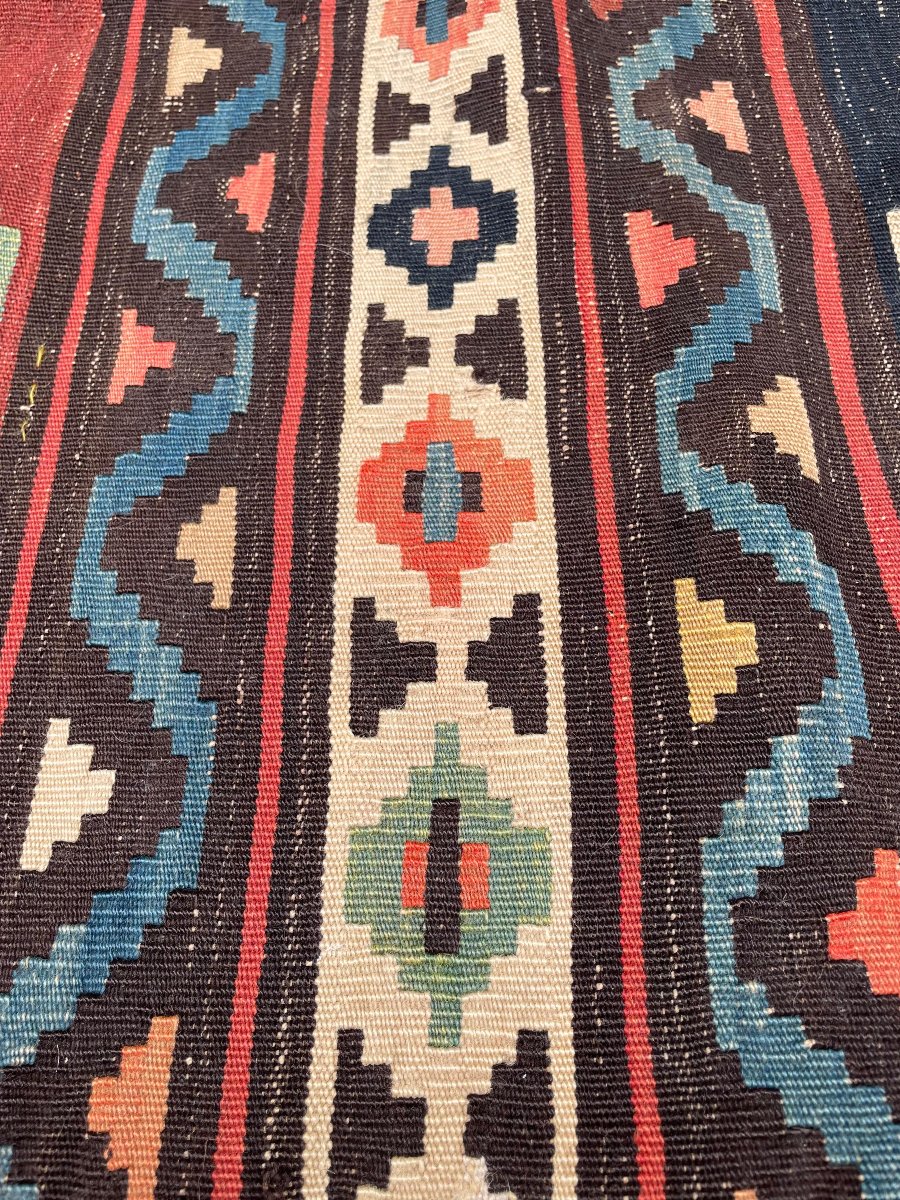
They are separated by narrower bands crisscrossed with zigzag patterns, often likened to flowing water—an evocation of life, movement, and fertility.
Small star- and cross-shaped motifs also appear on the thin ecru bands, belonging to the same symbolic register of protection, particularly against the evil eye.
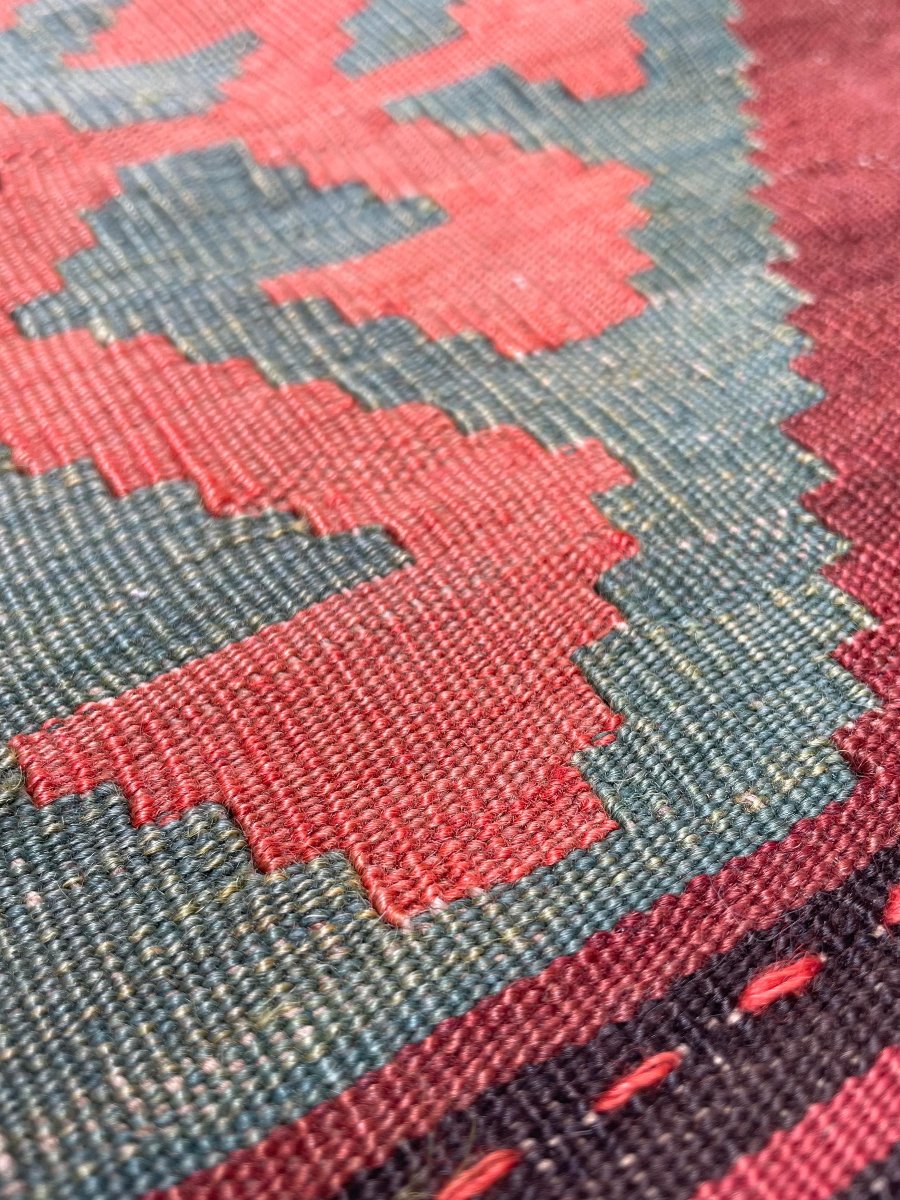
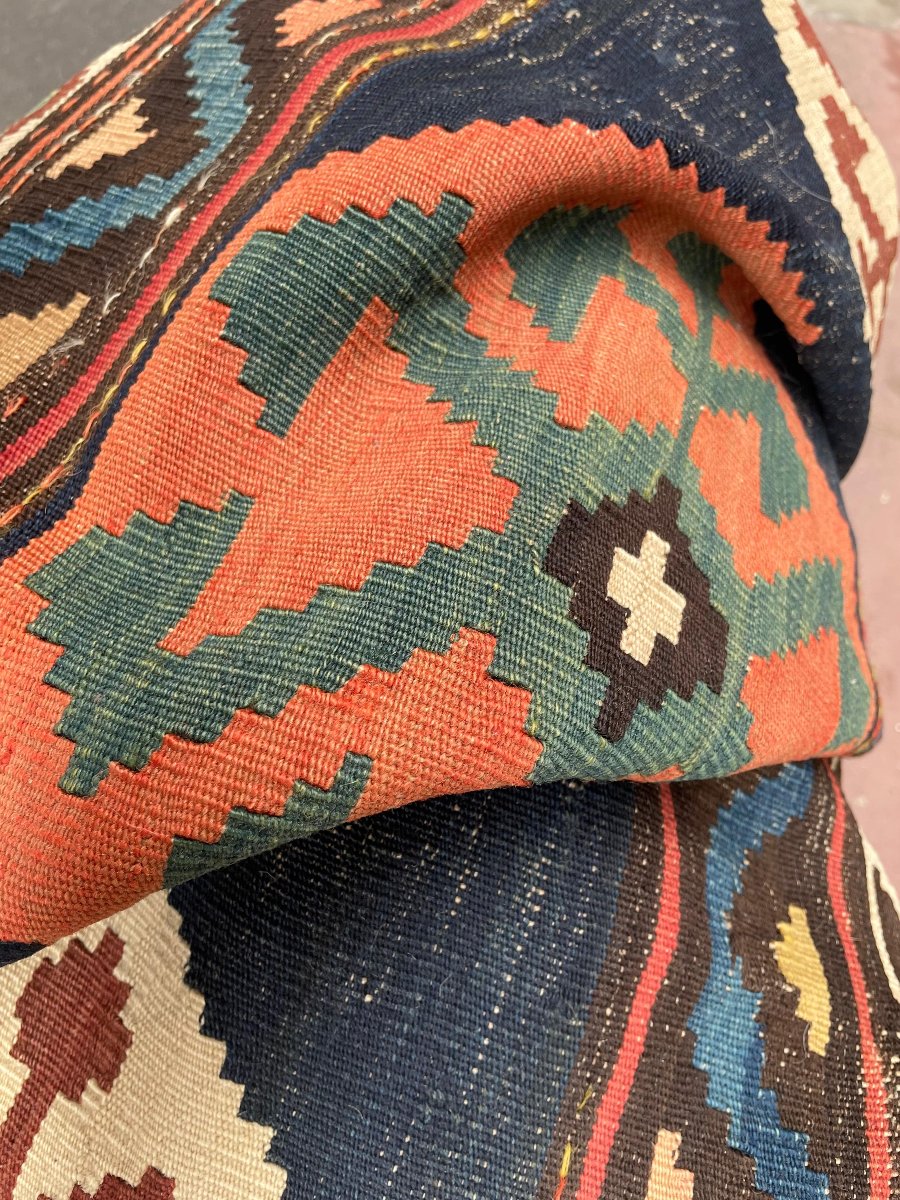
As for the weaving and texture, it’s hard to imagine anything better. The piece is surprisingly light, fine, and exceptionally supple. The remarkable quality of the weaving gives it a truly distinctive feel when handled.
Ultimately, a whole chapter of the history of the nomadic peoples of the Caucasus unfolds here in a polychrome version: a testament to this ancient art of weaving that has made their weavers famous and to which, through our passion, we pay tribute every day.
Caucasus – Kazakh motifs
Circa 1880–1900
Dimensions: 280 × 165 cm
Laurent
Beauty of Kilims
We are accustomed to receiving antique pieces that deserve attention commensurate with their prestige. Our gallery then becomes a sanctuary, and the conversation begins with planning—together with our restorer, Saïd—the priorities and the various stages of the work.
On this kilim, all of the outer borders were completely re-stitched by hand. The warp was exposed in several places, and the weft also had to be restored here and there. Matching the exact shades, selecting the wool, and then spinning it by hand to achieve the perfect diameter—it’s quite an art. And when fifteen years of experience are focused on such meticulous work, the visual result is almost magical.
This explains the admirable condition of this Kazak-patterned kilim, originally from the Caucasus.
The Turks have a beautiful expression to compliment work executed with mastery: “Eline sağlık,” literally, “Health to your hands.” That says it all.
Let’s now turn our attention to the composition and narrative vocabulary of this exceptional piece.
At first glance, it’s already clear that this kilim belongs to the broad family of weaves organized around a succession of horizontal bands of varying widths. The visual impact is immediate: the piece is experienced in layers, like an invitation to explore its depths, rhythms, and contrasts.
Everything here rests on a remarkable balance of volumes and a particularly accomplished harmony of hues derived from natural dyes. The indigo blues are deep, almost incandescent, while the large motifs set against an ecru background appear like diamonds scattered across the surface of the weave.
These large motifs are arranged in groups of four across four wide horizontal bands, for a total of sixteen motifs. Their highly stylized design can be likened to the scorpion motif, traditionally associated with a protective function in Anatolian and Caucasian textile traditions.
They are separated by narrower bands crisscrossed with zigzag patterns, often likened to flowing water—an evocation of life, movement, and fertility.
Small star- and cross-shaped motifs also appear on the thin ecru bands, belonging to the same symbolic register of protection, particularly against the evil eye.
As for the weaving and texture, it’s hard to imagine anything better. The piece is surprisingly light, fine, and exceptionally supple. The remarkable quality of the weaving gives it a truly distinctive feel when handled.
Ultimately, a whole chapter of the history of the nomadic peoples of the Caucasus unfolds here in a polychrome version: a testament to this ancient art of weaving that has made their weavers famous and to which, through our passion, we pay tribute every day.
Caucasus – Kazakh motifs
Circa 1880–1900
Dimensions: 280 × 165 cm
Laurent
Beauty of Kilims
2 200 €
Period: 20th century
Style: Orientalism
Condition: Excellent condition
Material: Wool
Length: 280 cm
Width: 165 cm
Reference (ID): 1805602
Availability: In stock
Print