



16th-century Terracotta Mold, Saint Paul In "pijpaarde," Utrecht, Dated 1513, High Renaissance
16th-Century Terracotta Mould of Saint Paul, in “Pijpaarde”, Utrecht, Dated 1513 — High Period
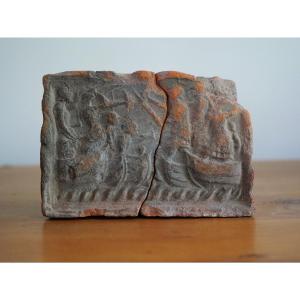
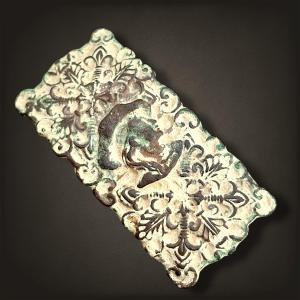
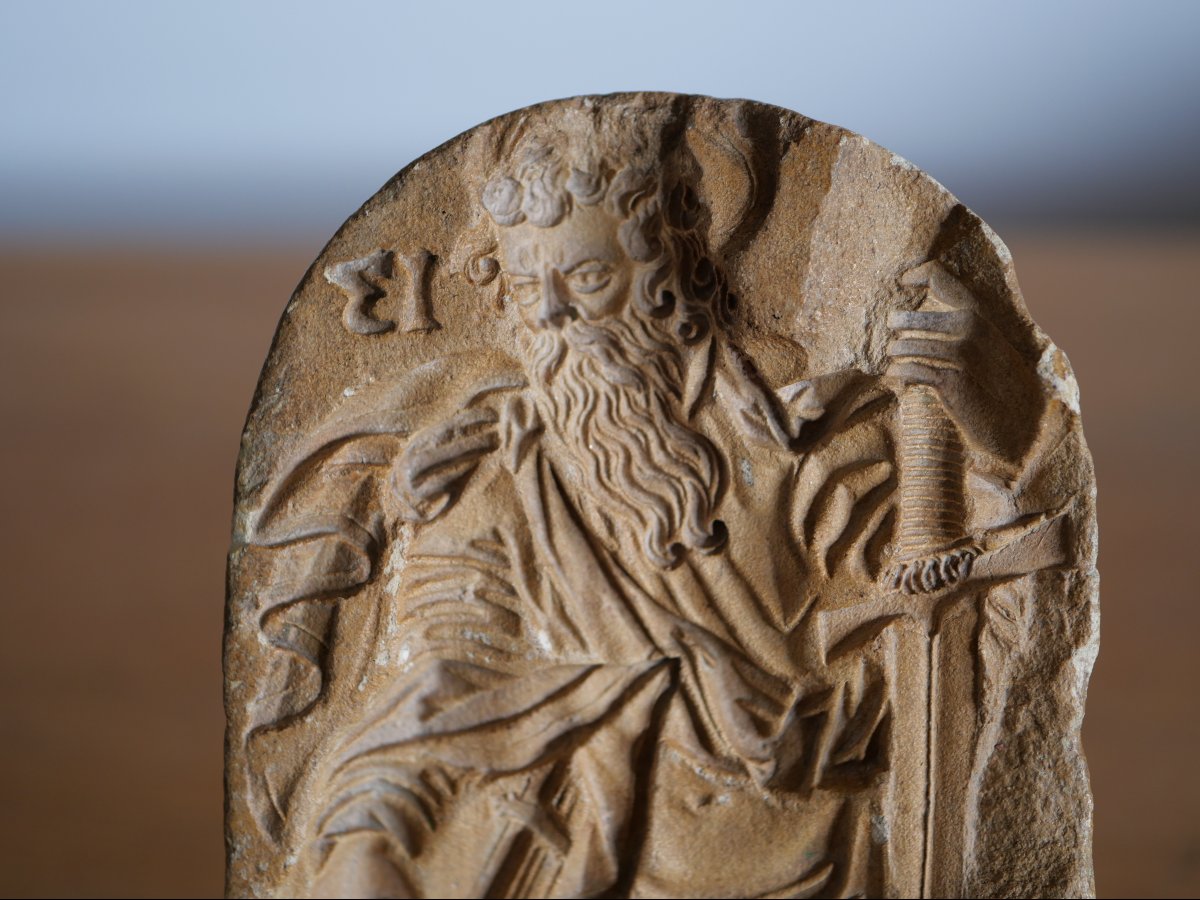
Exceptional and extremely rare ceramic mould of the “pipe clay” or “pijpaarde” type, intended for the production of small religious images in white clay, known in the Netherlands as heiligenbeeldjes. This mould, originating from the northern Netherlands and most probably from Utrecht, is precisely dated 1513.
The mould presents the figure of Saint Paul in negative, unmistakably identifiable thanks to the incised inscription at the base: “S. PAVLVS”.
The saint is depicted standing, with a long beard, dressed in a voluminous garment with deeply articulated folds. He holds a book and a large sword in his hands, his two traditional attributes.
The quality and precision of the modelling are particularly remarkable: the treatment of the drapery, beard, hands and attributes testify to a carefully sculpted model intended to be reproduced serially by moulding.
Terracotta moulds used for the production of small religious statuettes in pijpaarde are now extremely rare. Museum collections preserve far more statuettes, statuette fragments and mould fragments than complete moulds.
The Rijksmuseum, for example, holds pijpaarde works attributed to beeldenbakker from the northern Netherlands, possibly including Utrecht origins, and specialist literature emphasises the importance of this devotional production in the Netherlands between the 14th and 16th centuries.
The present example is therefore particularly remarkable for its excellent state of preservation as a matrix, but above all because it provides a concrete understanding of the manufacturing process of these small devotional images.
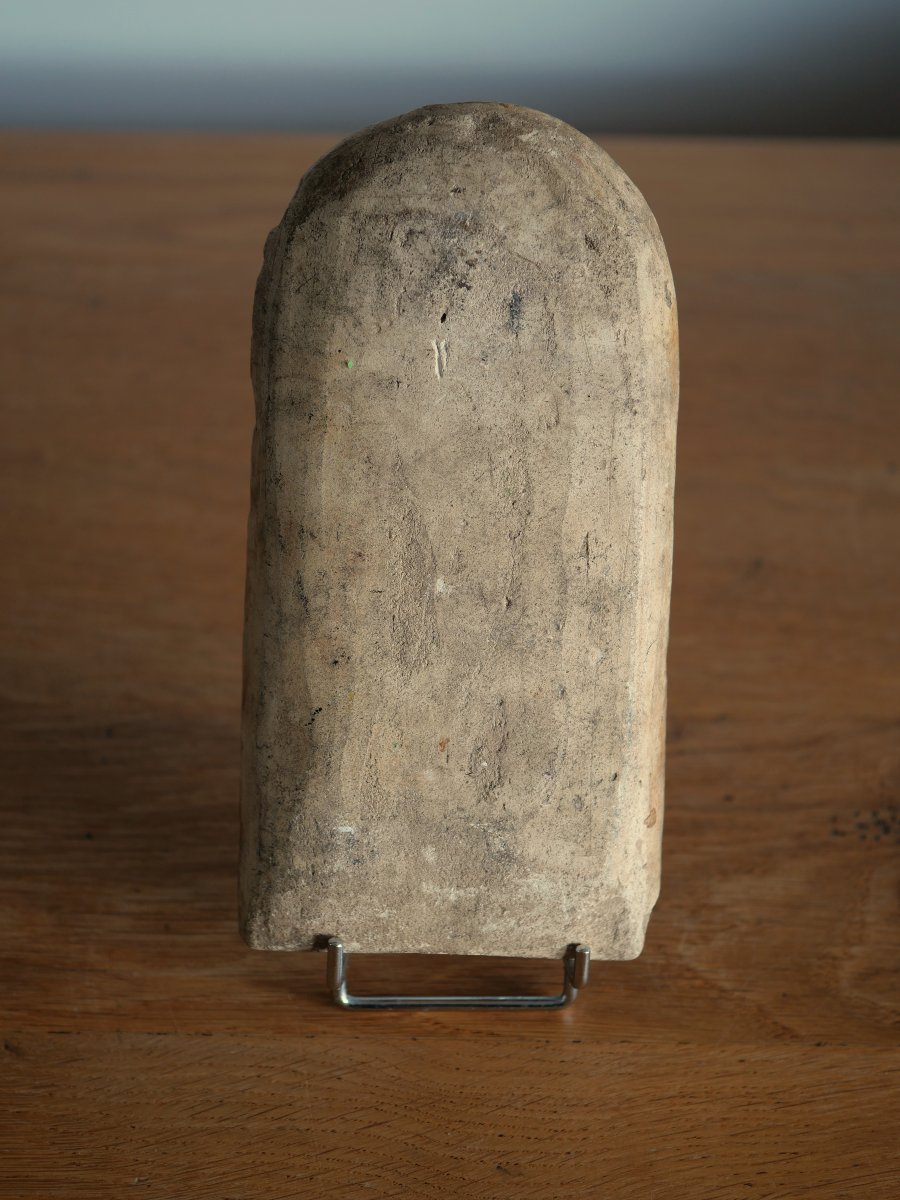
These moulds generally consisted of two parts, allowing the front and back of the statuette to be reproduced separately. The present example corresponds to the mould intended for the front of the figure; it was associated with a second element that is now lost.
A particularly interesting comparison can be made with several pijpaarde fragments discovered in Utrecht, near the Tolsteegpoort, during archaeological excavations in 1841. An old catalogue of the Stedelijk Museum van Oudheden in Utrecht indeed states that a substantial series of remains from a workshop producing small terracotta saints had been discovered at this location in 1841, including statuettes and mould fragments. The text specifies that this production must have been active in the early 16th century.
The catalogue mentions, under number 198:
“Fragment van een relief van pijpaarde, voorstellende het bovenlijf van St. Paulus met langen baard, het zwaard met beide handen vasthoudende. Nog hg. 0.075, nog br. 0.045. Gevonden in den wal te Utrecht. In bruikleen afgestaan door het Provinciaal Utrechtsch genootschap (geschenk van de heeren W. F. M. en F. E. G. Selle).”
(Fragment of a pipe-clay relief depicting the upper body of Saint Paul with a long beard, holding the sword with both hands. Remaining height 7.5 cm, remaining width 4.5 cm. Found in the rampart at Utrecht. Lent by the Provincial Society of Utrecht, a gift from Messrs. W. F. M. and F. E. G. Selle.)
The same catalogue also mentions, under number 248:
“Hoofd van een beeldje van pijpaarde, voorstellende St. Paulus met langen baard. Nog hg. 0.04.”
(Head of a small pipe-clay statuette depicting Saint Paul with a long beard. Remaining height: 4 cm.)
This latter dimension is particularly striking: the head visible in the present mould measures precisely 4 cm.
The iconographic correspondence is equally remarkable: Saint Paul with a long beard, holding his sword with both hands, corresponds very closely to the description of the Utrecht fragment. It is therefore particularly tempting to regard this mould as the matrix used to produce the statuettes now known only through such fragments.
One of the most exceptional aspects of this object lies in the date inscribed directly into the matrix itself. In the upper left section of the mould, the number “13” is clearly visible. The “15” that would have completed the date has unfortunately disappeared with a chip affecting this part of the mould. Nevertheless, the reading 1513 is particularly consistent with the object as a whole, both stylistically and iconographically.
To my knowledge, after comparison with a very large number of pijpaarde moulds and statuettes, this is the only mould of this type bearing a date. This inscription therefore gives the object a very particular documentary significance.
The representation of Saint Paul holding both the book and the large sword was very fashionable at the beginning of the 16th century and belongs fully to the iconographic vocabulary of the period.
A particularly interesting comparison is provided by the papal coinage of Julius II (1503–1513): certain issues depict Saint Paul with precisely these two attributes, the sword and the book, together with Saint Peter. The chronological correspondence is remarkable, since Julius II died in February 1513 and Leo X succeeded him in March 1513.
Another particularly convincing comparison is provided by the stone sculpture of Saint Paul preserved in the Church of St. Lawrence in Nuremberg, attributed to Veit Wirsberger and precisely dated 1513. Sources indicate that Wirsberger received the commission in 1513 for a monumental figure of Saint Paul for the Lorenzkirche. Like our mould, the statue presents a bearded Saint Paul, wearing a heavily draped garment and holding a book and a sword with both hands, with a treatment of the folds and a silhouette that reflect the same artistic vocabulary of the very beginning of the 16th century. This is, of course, not to suggest that the mould should be attributed to the sculptor Veit Wirsberger; rather, the comparison helps to place its stylistic language very precisely within the artistic context of 1513.
These small devotional images in white terracotta were produced by specialised craftsmen, the beeldenbakker, whose Utrecht production remains relatively poorly documented due to the fragility and dispersal of the objects.
The 1841 discovery at the Tolsteegpoort is particularly important, as it appears to have revealed the remains of a genuine workshop producing these small religious images. The Utrecht museum catalogue thus refers to a “collectie overblijfsels eener fabriek van heiligenbeeldjes in gebakken pijpaarde” — (collection of remains from a factory producing small saints’ images in fired pipe clay) — active in the late 15th and early 16th centuries.
The present mould is therefore not only a rare devotional object, but also direct evidence of the techniques used for the serial production of religious images on the eve of the Reformation. By virtue of its completeness, its inscription “S. PAVLVS”, the exceptional correspondence with fragments of Saint Paul discovered in Utrecht in 1841, and above all its date of 1513, this mould constitutes an object of very great documentary rarity. It offers the opportunity to move from the isolated statuette to the very tool used to manufacture it, providing a concrete understanding of how these small religious images in white clay were produced in the Netherlands at the beginning of the 16th century.
A true museum-quality object, exceptional both for its rarity and for the historical, technical and iconographic information it preserves.
Dimensions: 8.7 × 17 cm.
Price excludes shipping costs
Police Register Ref.: A220
Professional Antique Dealer – Guarantee & Peace of MindAs a professional antique dealer, I undertake to offer only authentic objects, carefully selected and legally marketable. Each piece is chosen for its historical, aesthetic or collecting interest and is subject to a rigorous verification of its provenance.
Invoice and traceability. Each purchase is accompanied by a detailed invoice and a certificate of authenticity, guaranteeing the provenance of the object and ensuring complete transparency.
Legal compliance. All objects comply with current French and European legislation. Any archaeological objects are offered in accordance with the French Heritage Code (Code du patrimoine, Articles L.542-1 et seq.). Objects that may be subject to specific regulations (cultural property, antiques, particular materials) are sold within a strictly legal framework.
International buyers. Buyers outside France are invited to check the regulations applicable in their country concerning the importation of cultural property or antiques.
Right of withdrawal. In accordance with the law (Article L.221-18 of the French Consumer Code), you have a period of 14 days following receipt of the item to return it. Return shipping costs remain the responsibility of the buyer. The object must be returned in its original condition.
Quality commitment. Buying from a professional means benefiting from security, transparency and professionalism. I remain at your disposal for any further questions before purchase.
Period: 16th century
Style: Renaissance, Louis 13th
Condition: Excellent condition
Material: Ceramic
Width: 8.7 cm
Height: 17 cm
Reference (ID): 1829026
Availability: In stock