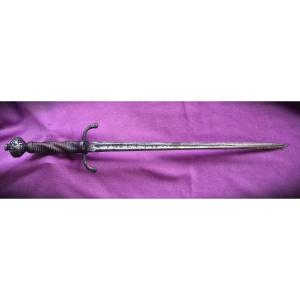


Large Italian Left-handed Dagger; Blade Signed "toledo"
Artist: Toledo
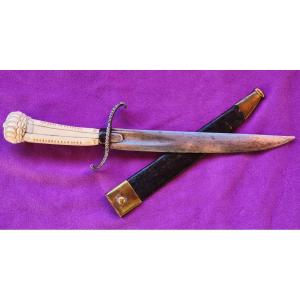
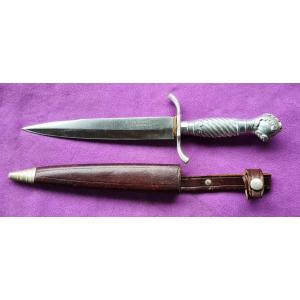
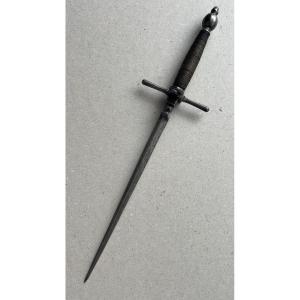
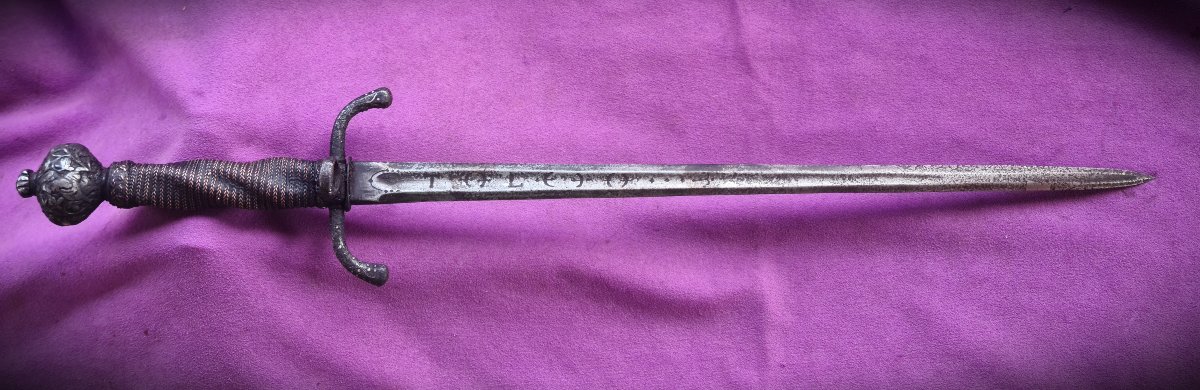
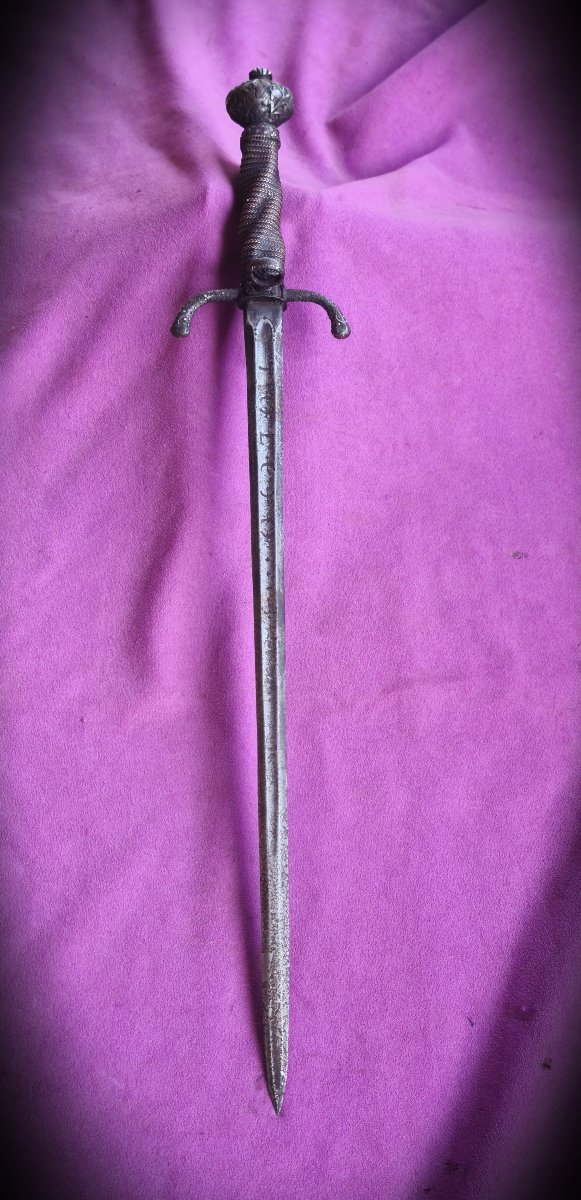
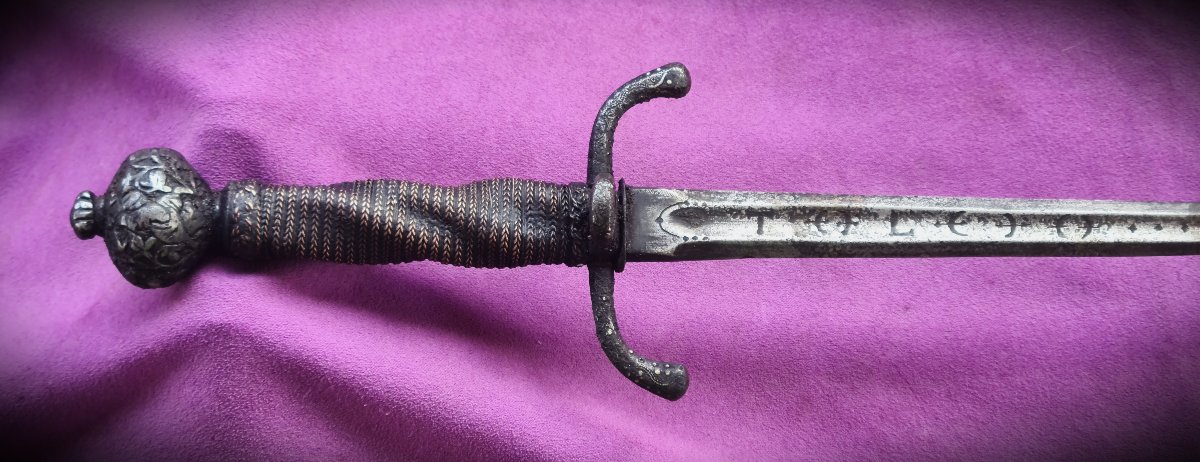
This large left-handed dagger is probably Italian, but with a Spanish blade. It can be dated to the late 16th century. When you hold it in your hand, you can see that left-handed daggers, when intended for real use in combat, were quite large. This is the case with this one, as it measures 51.2 cm in total, with a blade of 37.3 cm.
The type of hilt on this dagger is much more in the Italian style than in the Spanish style, which generally features fairly wide quillons. Indeed, some contemporary Spanish writings do not hesitateto describe these daggerswith their long, slender blades and small guards as “assassin’s daggers.”
In 16th-century fencing treatises, Achille Marozzo and his successors—especially Camillo Agrippa, but also Ridolfo Capo Ferro—recommend the use of these long daggers when there is not enough space to fight easily with a sword.
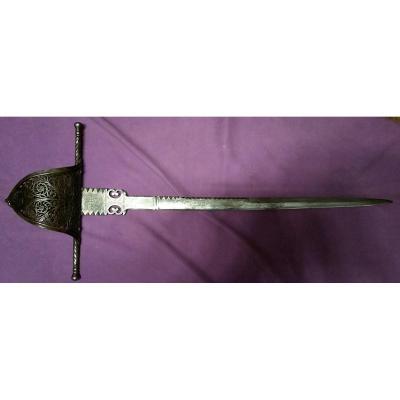
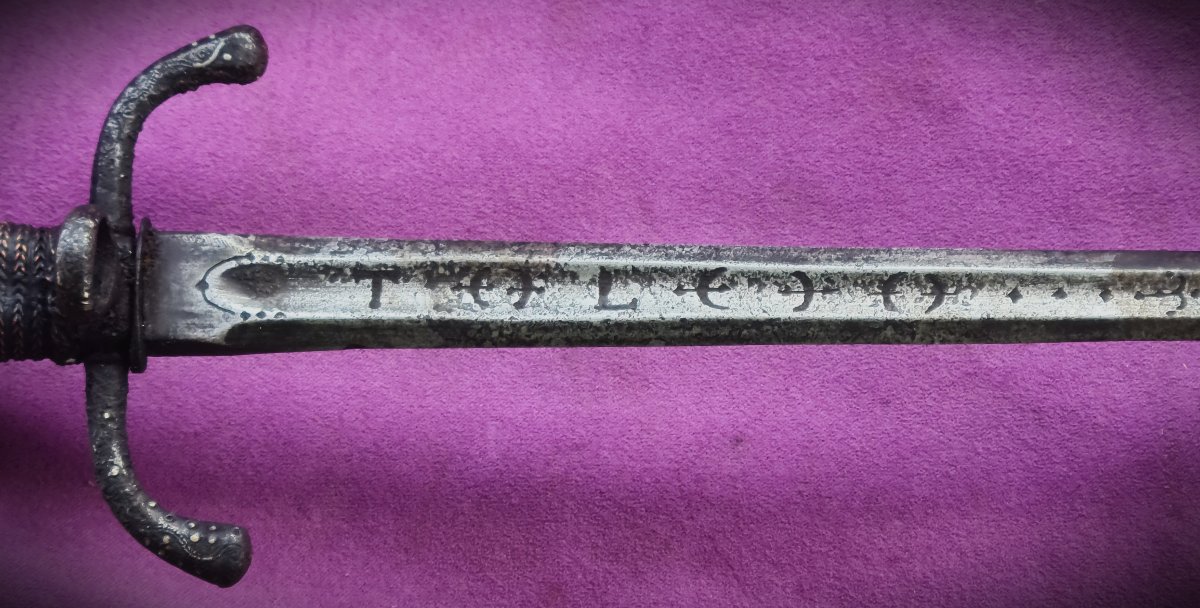
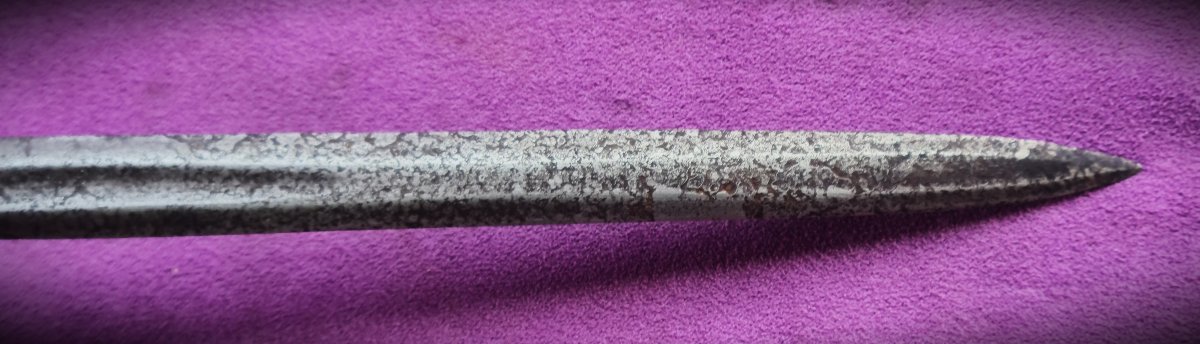
BLADE: It bears the characteristics of 16th-century Spanish rapier blades. It is possible, though not certain, that this is a reused rapier blade, but if that were the case, the modification would date from the time when the dagger was manufactured, since the edges on each side converge in acompletely natural way to form the point. It is therefore not a dubious “combination” from a later period.
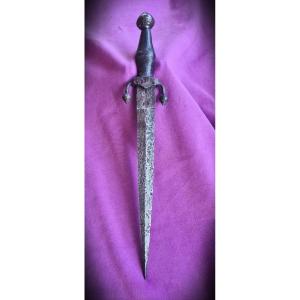
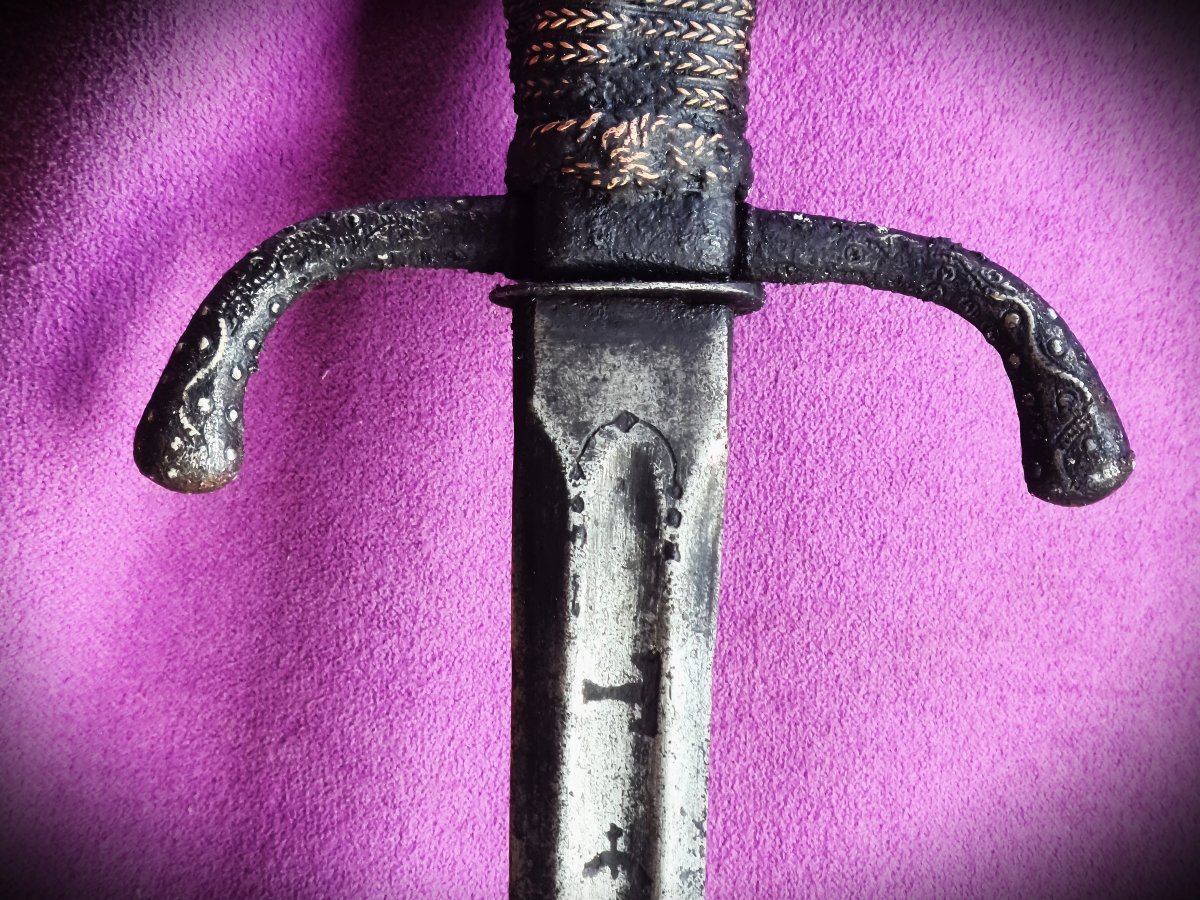
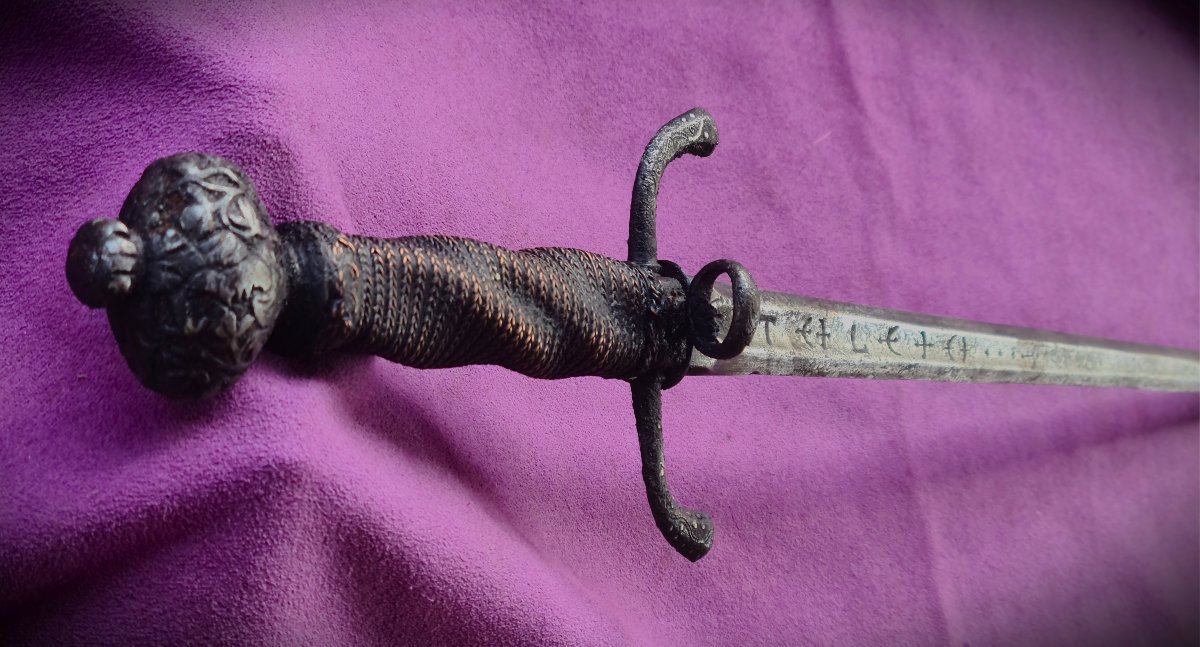
After a short 1.5 cm ricasso, the blade takes on a six-sided profile, with a deep central fuller that continues for 26 cm.I n this fuller, on each side,we find the inscription T O L E D O + + + in the distinctive writing style of theToledo engravers.
Blade length = 37.3 cm, width at the ricasso = 1.9cm, thickness at the ricasso = 8.3 mm
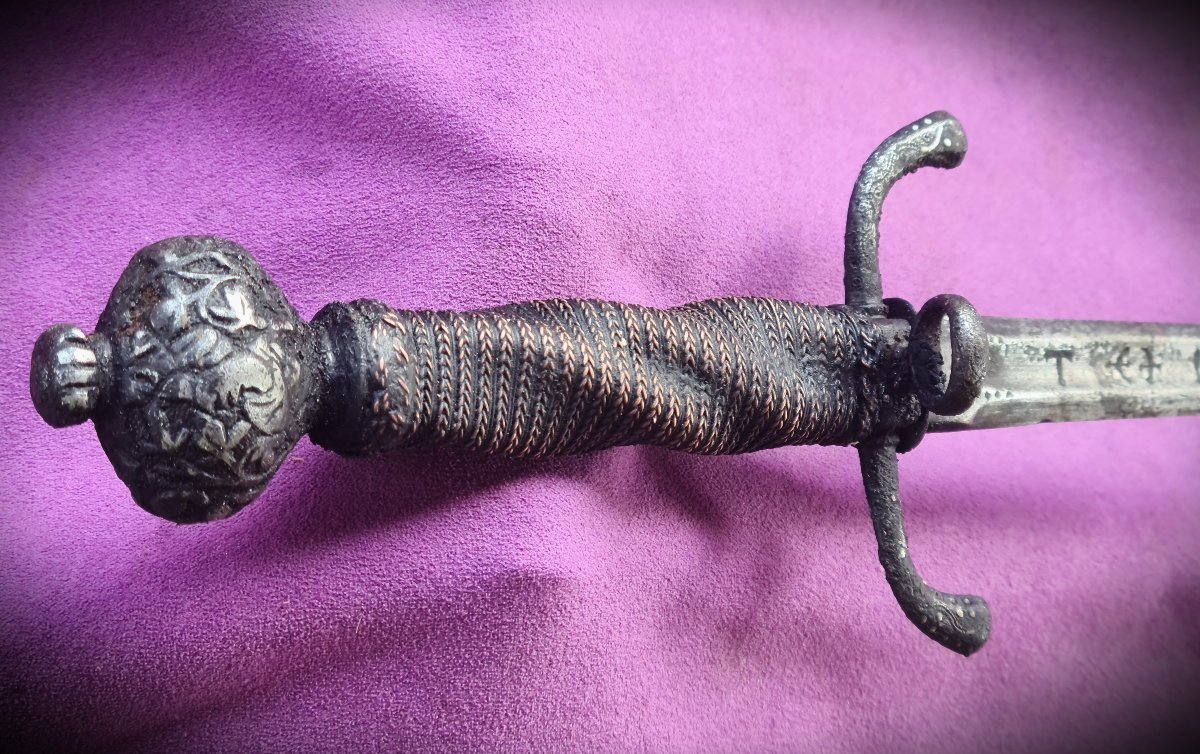
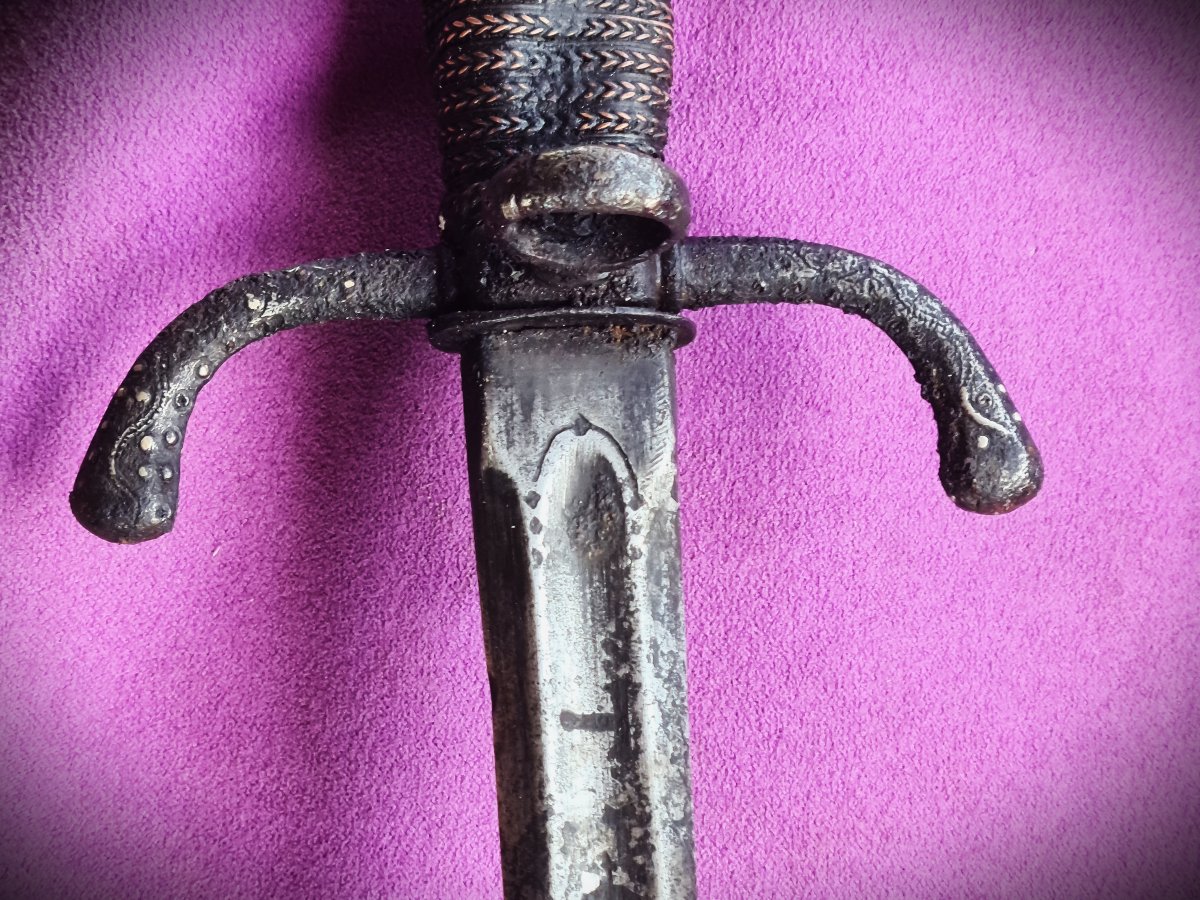
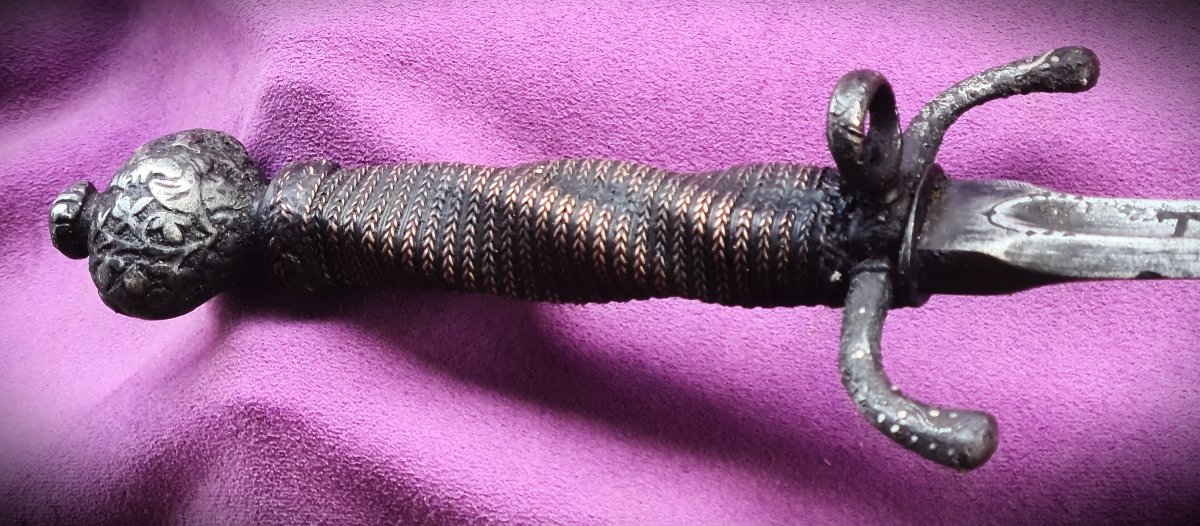
GUARD: This is a guard whose quillons are curved toward the blade and feature silver inlays. A small ring provides finger protection. Note the presence of a sort of oval washer at the junction between the guard and the ricasso; its purpose is most likely to ensure a watertight seal at the entrance to the scabbard.
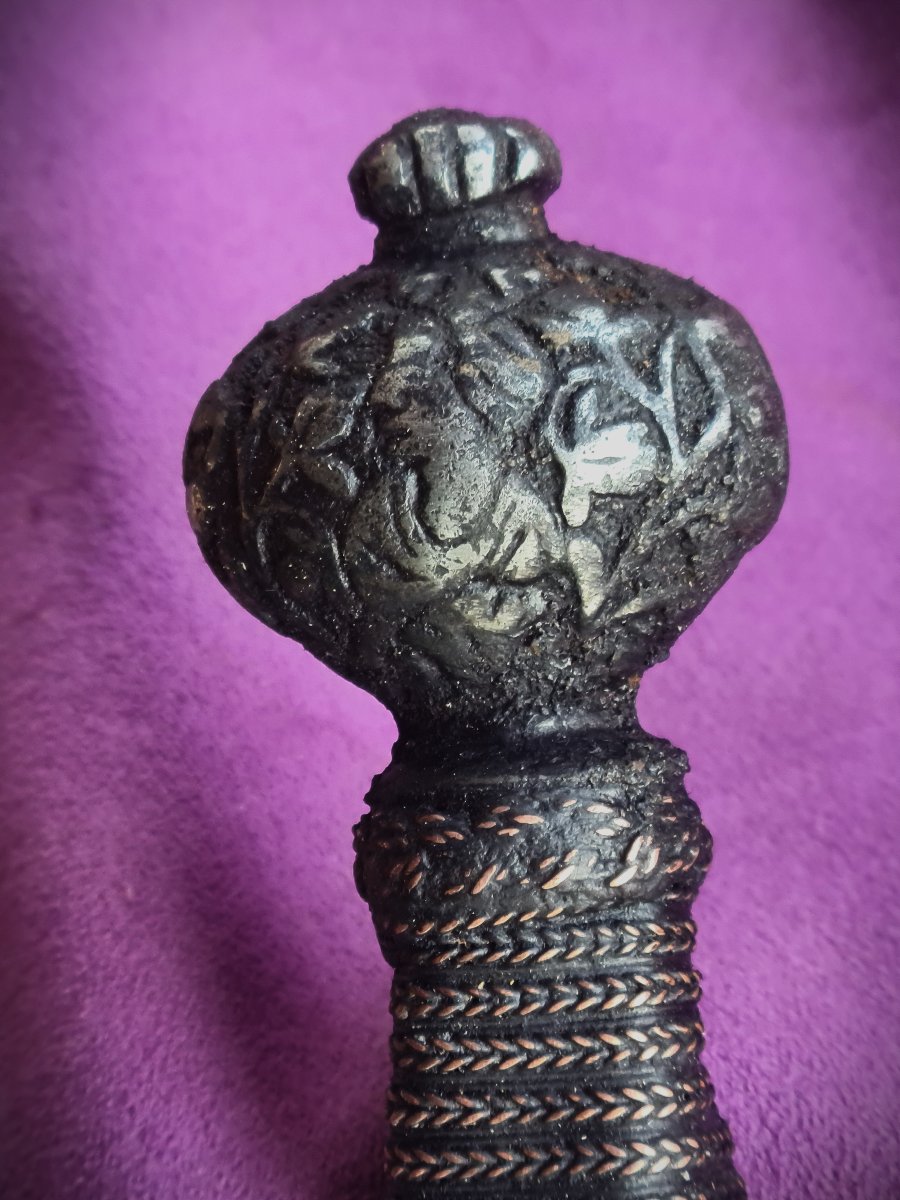
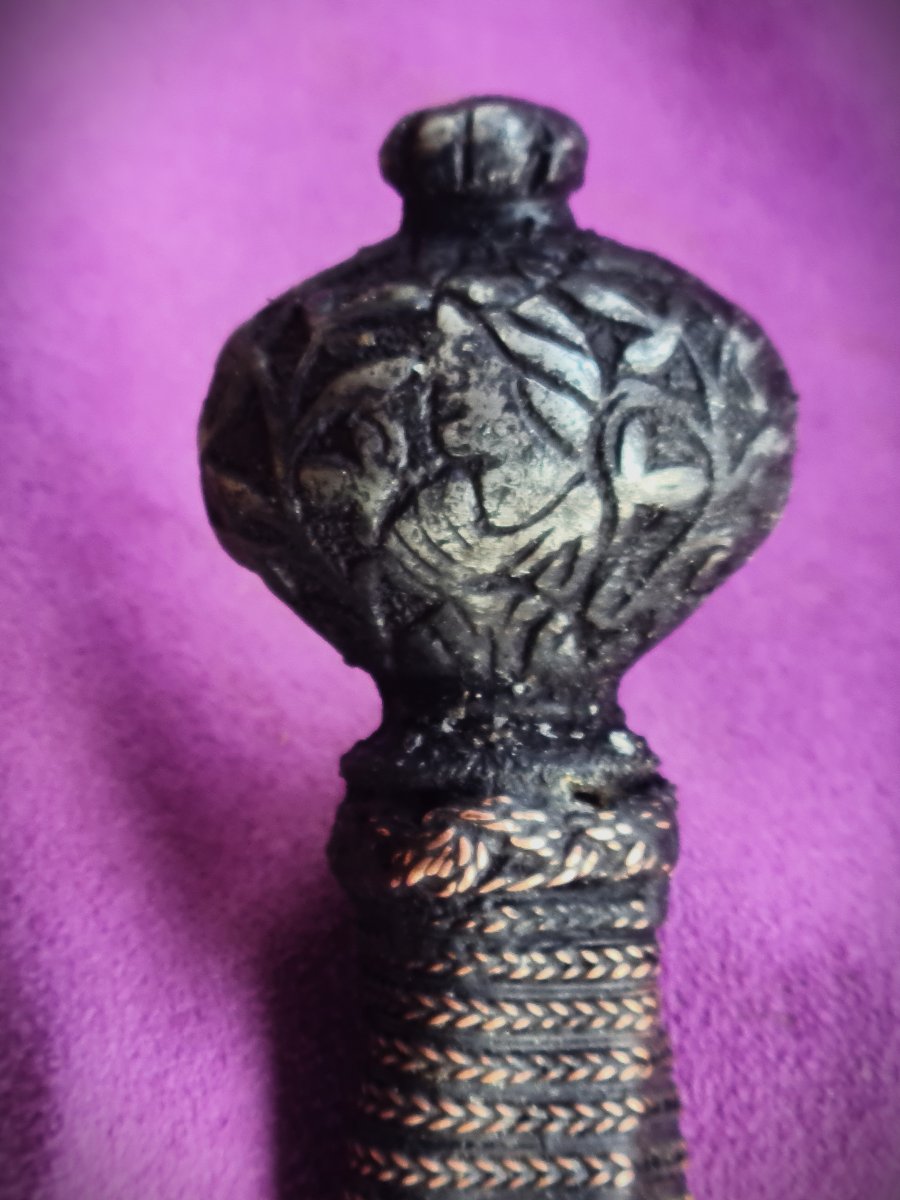
POMMEL : It is made of chiseled iron, shaped like a flattened bulb, with on each side a bus tof a man in profile amid foliage. A small chiseled knob to which the blade tang is riveted surmounts the pommel.
GRIP :It is twisted and covered with a complex binding pattern of twisted copper in a herring bone design alternating with a double binding pattern. The braided crown-shaped ferrules, known as “Turk's heads,” are made of copper; they are present and in perfect condition.
Ref C-2646
Shipping costs with insurance: France €30, Europe €40
The type of hilt on this dagger is much more in the Italian style than in the Spanish style, which generally features fairly wide quillons. Indeed, some contemporary Spanish writings do not hesitateto describe these daggerswith their long, slender blades and small guards as “assassin’s daggers.”
In 16th-century fencing treatises, Achille Marozzo and his successors—especially Camillo Agrippa, but also Ridolfo Capo Ferro—recommend the use of these long daggers when there is not enough space to fight easily with a sword.
BLADE: It bears the characteristics of 16th-century Spanish rapier blades. It is possible, though not certain, that this is a reused rapier blade, but if that were the case, the modification would date from the time when the dagger was manufactured, since the edges on each side converge in acompletely natural way to form the point. It is therefore not a dubious “combination” from a later period.
After a short 1.5 cm ricasso, the blade takes on a six-sided profile, with a deep central fuller that continues for 26 cm.I n this fuller, on each side,we find the inscription T O L E D O + + + in the distinctive writing style of theToledo engravers.
Blade length = 37.3 cm, width at the ricasso = 1.9cm, thickness at the ricasso = 8.3 mm
GUARD: This is a guard whose quillons are curved toward the blade and feature silver inlays. A small ring provides finger protection. Note the presence of a sort of oval washer at the junction between the guard and the ricasso; its purpose is most likely to ensure a watertight seal at the entrance to the scabbard.
POMMEL : It is made of chiseled iron, shaped like a flattened bulb, with on each side a bus tof a man in profile amid foliage. A small chiseled knob to which the blade tang is riveted surmounts the pommel.
GRIP :It is twisted and covered with a complex binding pattern of twisted copper in a herring bone design alternating with a double binding pattern. The braided crown-shaped ferrules, known as “Turk's heads,” are made of copper; they are present and in perfect condition.
Ref C-2646
Shipping costs with insurance: France €30, Europe €40
1 350 €
Period: 16th century
Style: Renaissance, Louis 13th
Condition: Excellent condition
Material: Other
Length: 51.2 cm
Width: aux quillons 9. cm
Reference (ID): 1809395
Availability: In stock
Print