


Japanese Tanto "yoroï Dashi"—blade Polished In Japan . Edo Period
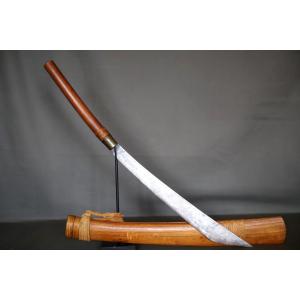
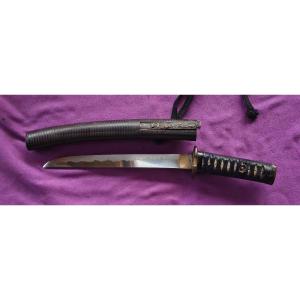
This Japanese dagger, which belongs to the tanto family, is specifically a “YOROÏ DASHI,” that is, a “armor-piercer,” whose defining feature is a blade that is significantly thicker than that of a traditional tanto.
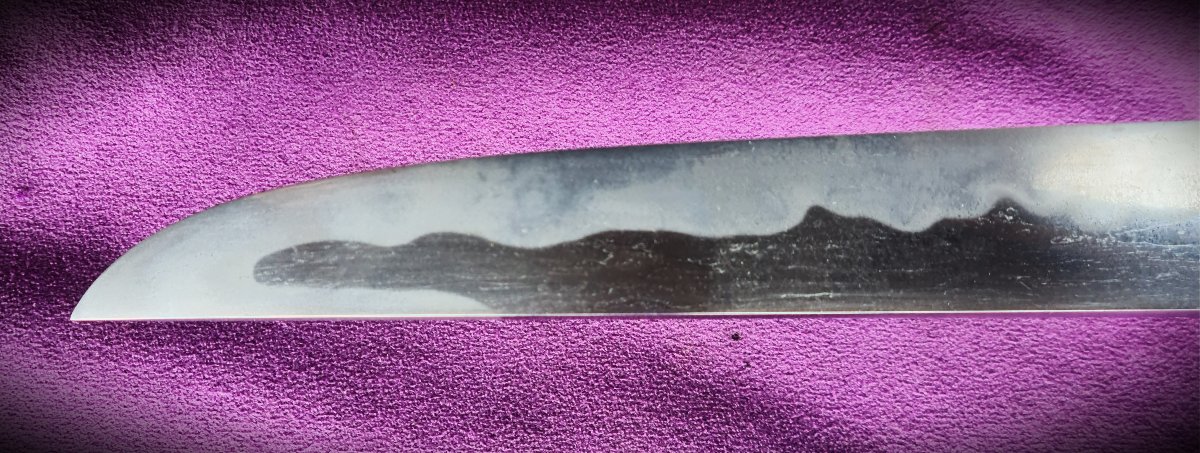
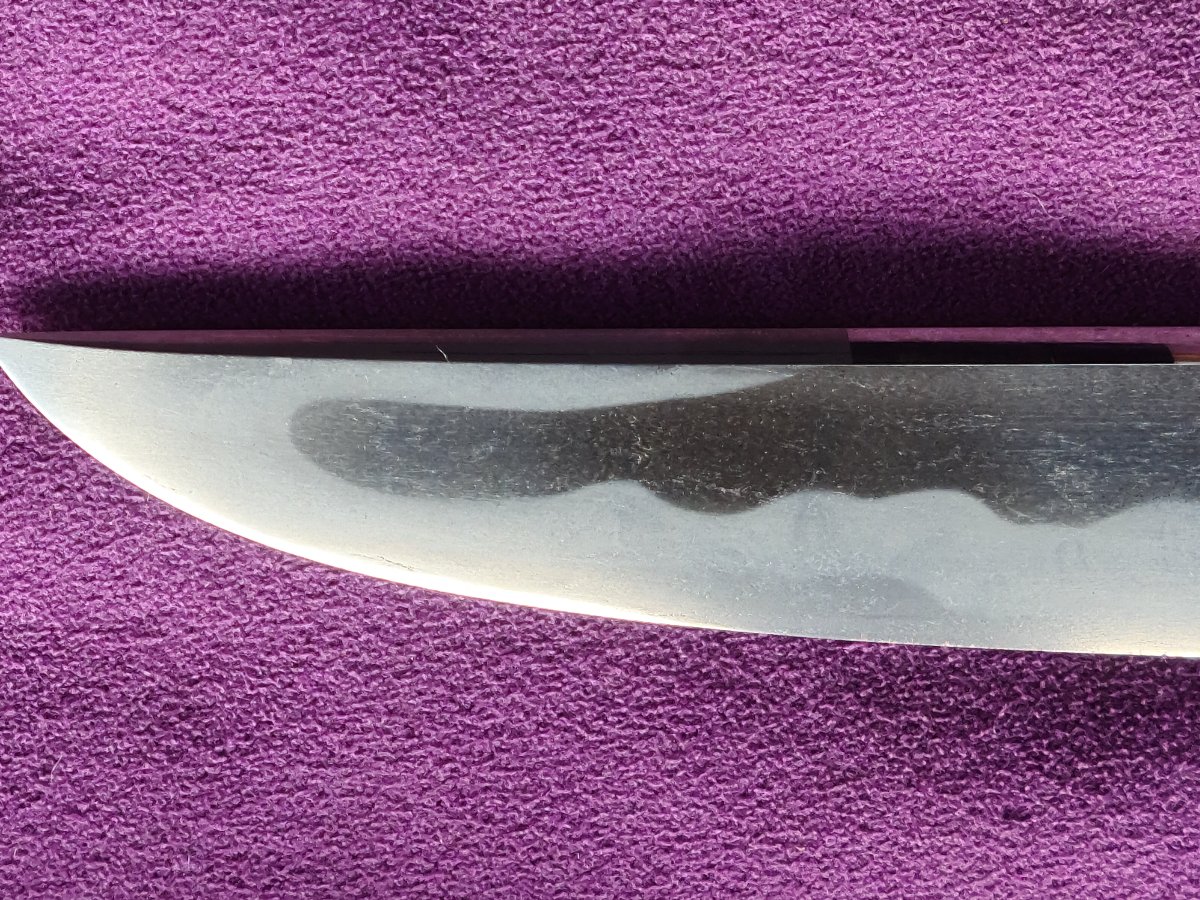
The blade retains its original Japanese polish and is in perfect condition. It was crafted during the Edo period in theShin-shin-tô style, 1772–1876.
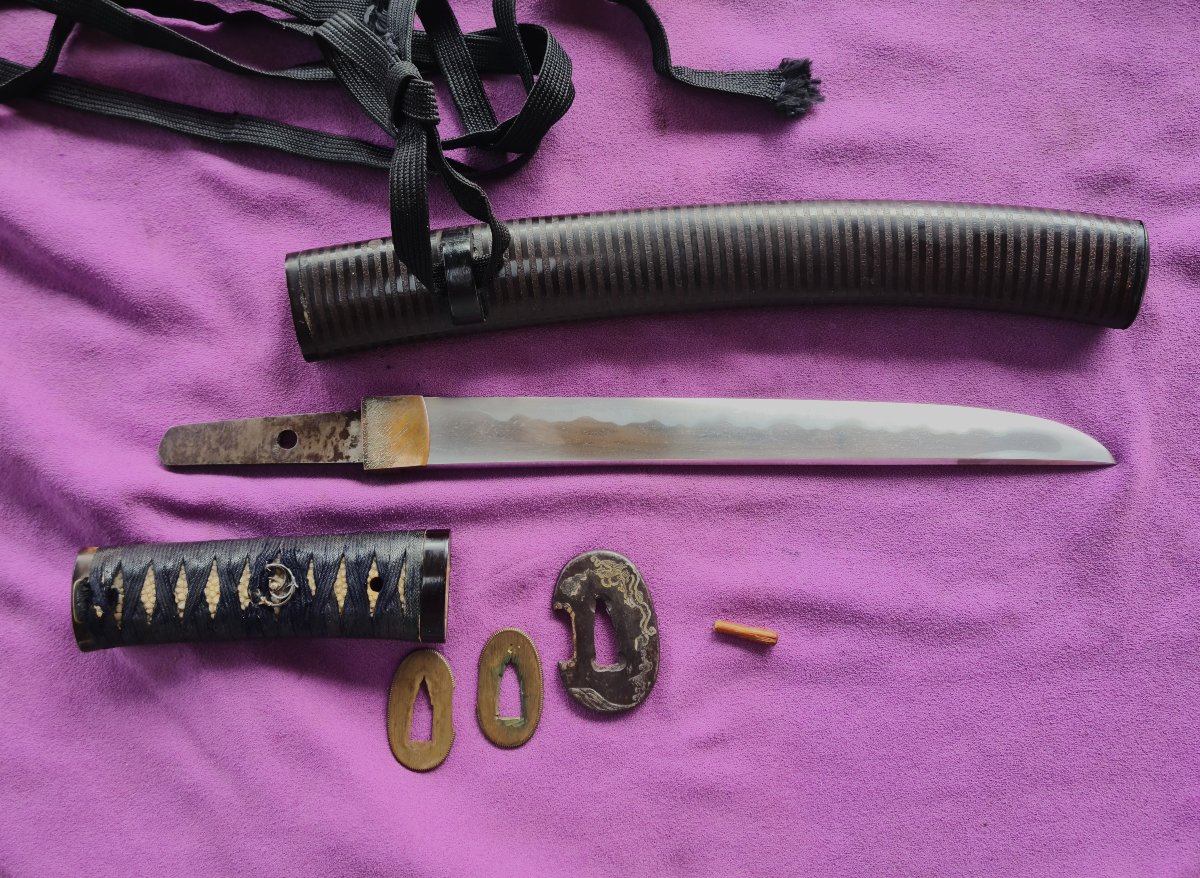
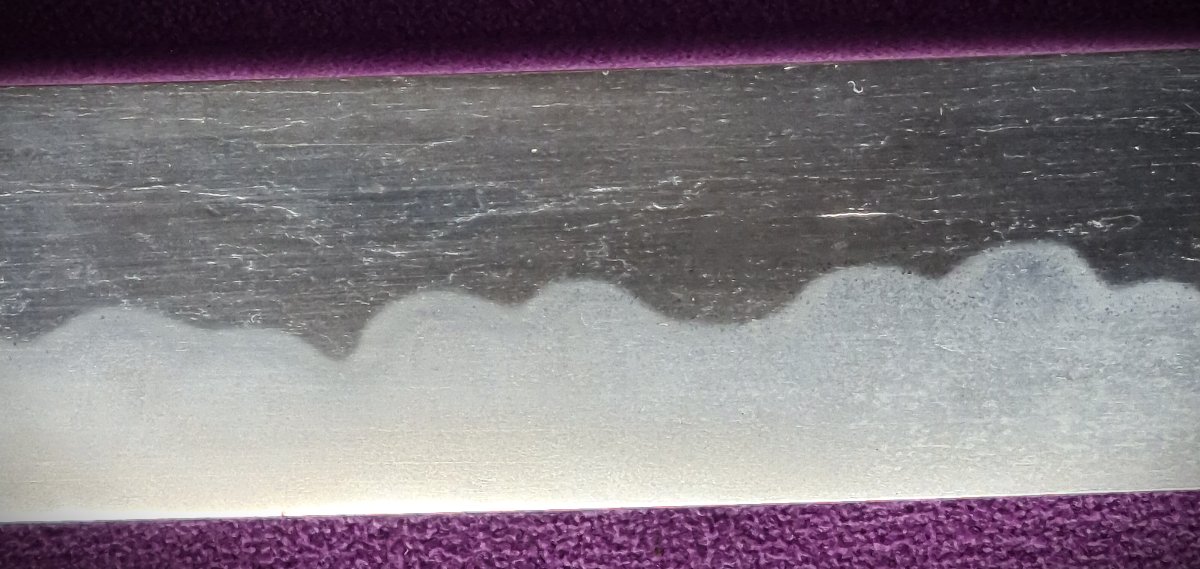
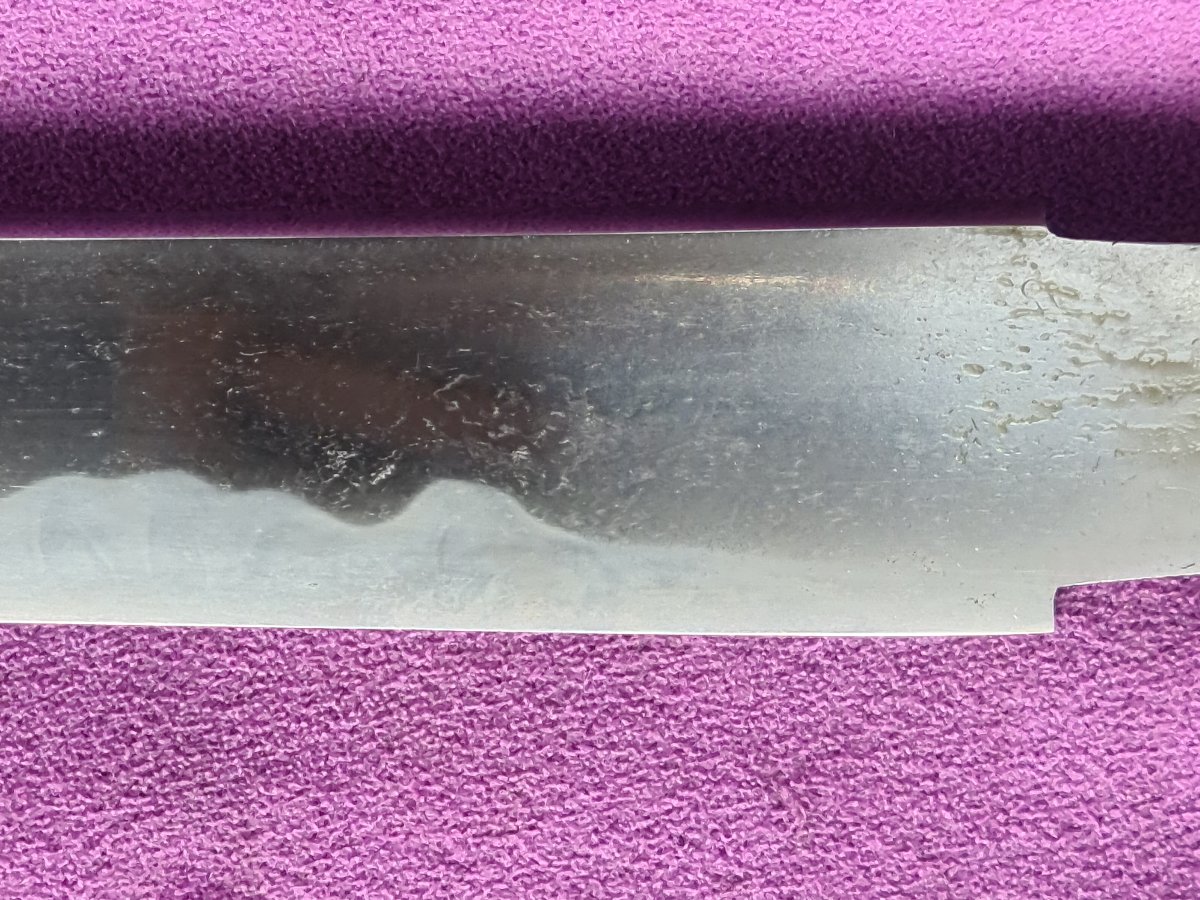
BLADE: Hira-zukuri (flat) shape. Itame hada , Gunome Choji tempering with Nioi and Nie. Ko-Maru-Boshi tempering at the tip with kaen (= flamed pattern) on the Ura side, and strong Kaeri (temper line on theback of the blade) on each side. Nakago (blade tang) unsigned, with Kiri Yasuri file marks.
This forging work evokes the Shin Shin Tô schools, which have revived the tradition of the Suke Sada school of Bizen. One example is Yuki Hide of Tosa. Since the precise attribution of a blade to a blacksmith (kantei )is a highly complex discipline, I can offer no more than a general indication here. For further research, I particularly recommend “Nihon Tô Koza,” Volume5 (Shin Shin Tô), translated by Afu Watson.
Nagasa = 23.2 cm Moto haba = 2.4 cm Moto kasane = 7.1mm
HABAKI : It is made of red copper and decorated with “raindrops” —that is, fine diagonal lines and raised silver-colored metal droplets. This type of work is characteristic of a blade of superior quality.
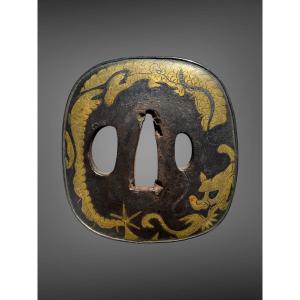
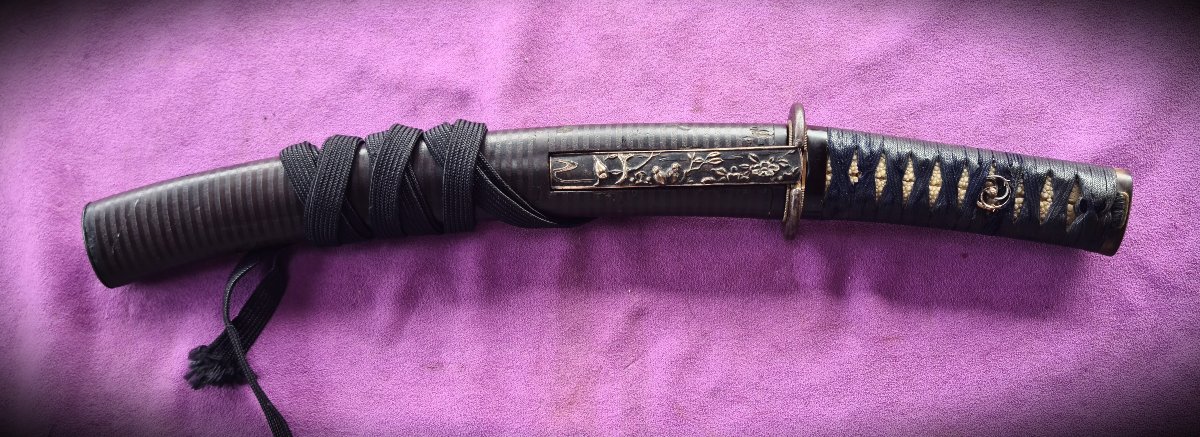
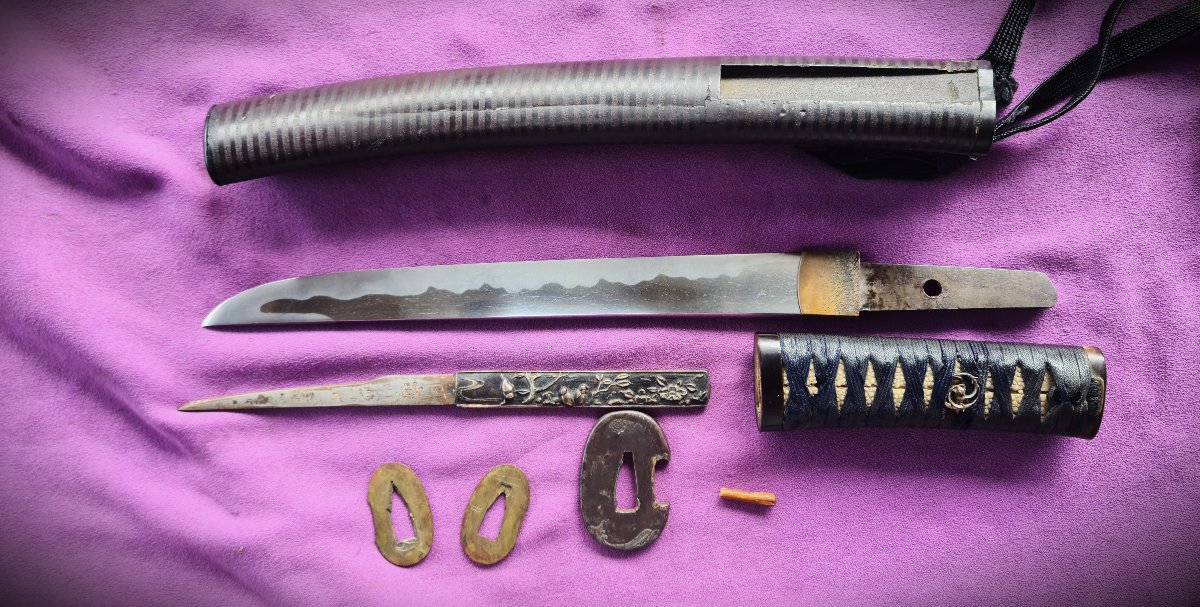
TSUBA : It is made of iron, in the Hamidashi style (with a notched opening for the Kozuka) and naga maru gata (elongated oval shape), in theHigo school style, with Hira Zogan (flat inlay) decoration featuring a silver “dragon of the mists,” accented with gold, flying above the waves, and the interior of the Kozuka opening accented with gold. This gold decoration at the Kozuka opening is found only on high-quality mountings.
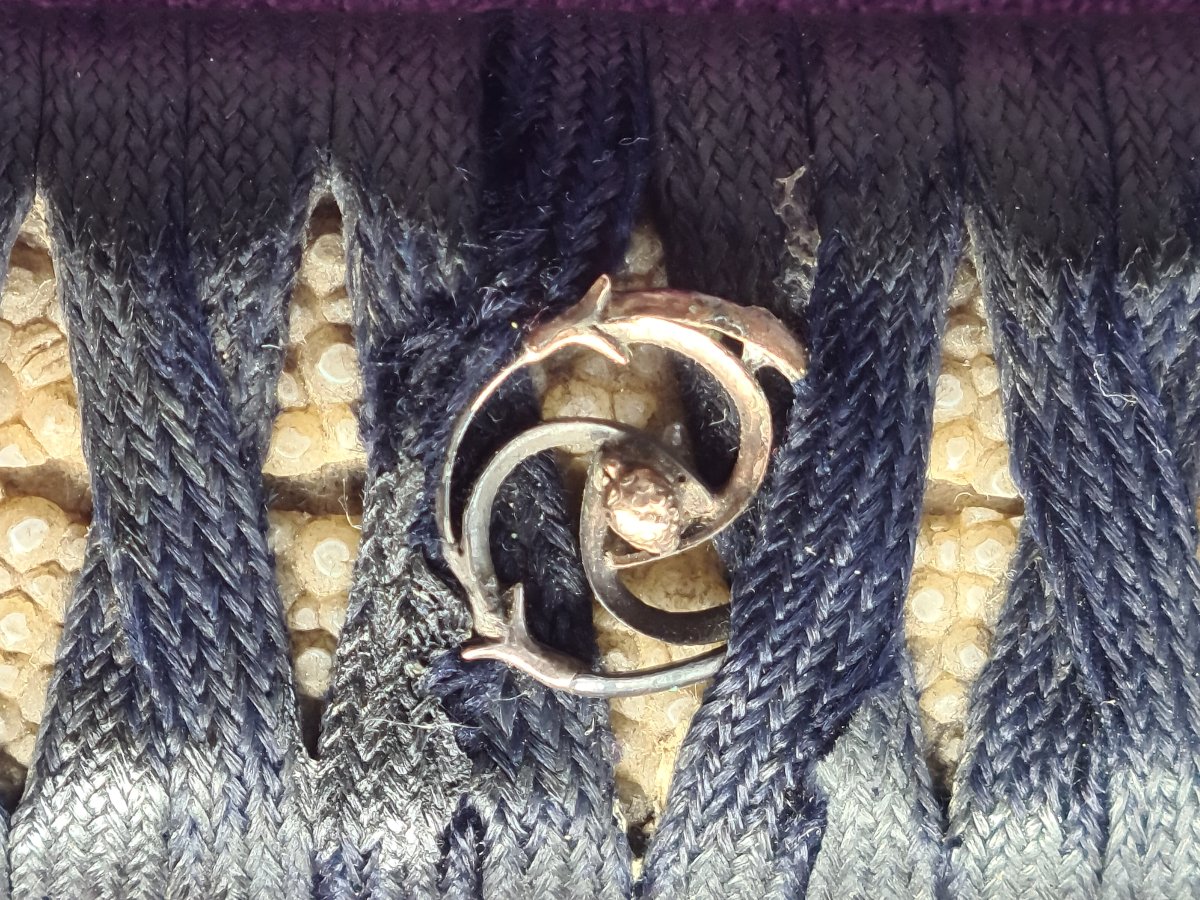
HANDLE : original dark blue silk braiding with circular silver and gold menuki depicting stylized flowers Horn Fuchi Kashira
SCABBARD : covered in lacquer in smooth ribbons on a textured background (complex workmanship); this is the only part of the weapon that has a minor flaw: a stable crack in the lacquer on the inner surface. This flaw is very easy to conceal by wrapping the sageo (fastening cord) around the scabbard in any pattern. I also noticed a very small crack—which is not visible—on the Kuri Gata (mountingbracket)
KOZUKA made of copper with a floral and bird motif. Blade bearing an apocryphal signature
Ref. H-2650
Shipping costs: France €30, Europe €40
The blade retains its original Japanese polish and is in perfect condition. It was crafted during the Edo period in theShin-shin-tô style, 1772–1876.
BLADE: Hira-zukuri (flat) shape. Itame hada , Gunome Choji tempering with Nioi and Nie. Ko-Maru-Boshi tempering at the tip with kaen (= flamed pattern) on the Ura side, and strong Kaeri (temper line on theback of the blade) on each side. Nakago (blade tang) unsigned, with Kiri Yasuri file marks.
This forging work evokes the Shin Shin Tô schools, which have revived the tradition of the Suke Sada school of Bizen. One example is Yuki Hide of Tosa. Since the precise attribution of a blade to a blacksmith (kantei )is a highly complex discipline, I can offer no more than a general indication here. For further research, I particularly recommend “Nihon Tô Koza,” Volume5 (Shin Shin Tô), translated by Afu Watson.
Nagasa = 23.2 cm Moto haba = 2.4 cm Moto kasane = 7.1mm
HABAKI : It is made of red copper and decorated with “raindrops” —that is, fine diagonal lines and raised silver-colored metal droplets. This type of work is characteristic of a blade of superior quality.
TSUBA : It is made of iron, in the Hamidashi style (with a notched opening for the Kozuka) and naga maru gata (elongated oval shape), in theHigo school style, with Hira Zogan (flat inlay) decoration featuring a silver “dragon of the mists,” accented with gold, flying above the waves, and the interior of the Kozuka opening accented with gold. This gold decoration at the Kozuka opening is found only on high-quality mountings.
HANDLE : original dark blue silk braiding with circular silver and gold menuki depicting stylized flowers Horn Fuchi Kashira
SCABBARD : covered in lacquer in smooth ribbons on a textured background (complex workmanship); this is the only part of the weapon that has a minor flaw: a stable crack in the lacquer on the inner surface. This flaw is very easy to conceal by wrapping the sageo (fastening cord) around the scabbard in any pattern. I also noticed a very small crack—which is not visible—on the Kuri Gata (mountingbracket)
KOZUKA made of copper with a floral and bird motif. Blade bearing an apocryphal signature
Ref. H-2650
Shipping costs: France €30, Europe €40
1 800 €
Period: 19th century
Style: Asian art
Condition: Excellent condition
Material: Other
Length: 40 cm
Reference (ID): 1831452
Availability: In stock
Print