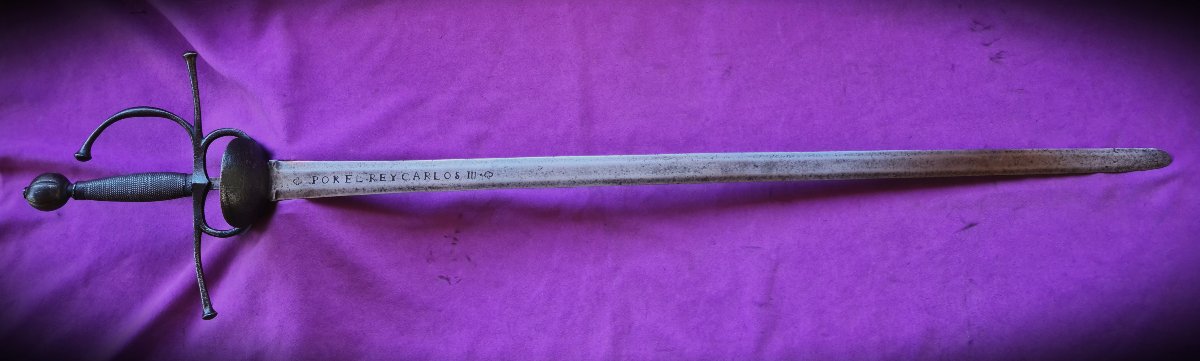


Spanish Cavalry Sword, Model 1728, Regimental, Dated 1774, Cavalleria, Por El Rey Carlos III
Artist: Manufacture De Tolède
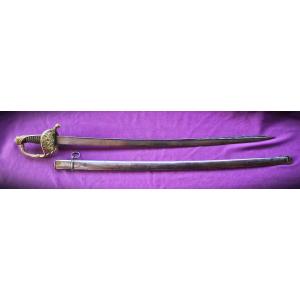
This Spanish cavalry sword is the so-called 1728 model, named after the royal ordinance of July 12, 1728. It is commonly known as “Boca de Caballo” sword
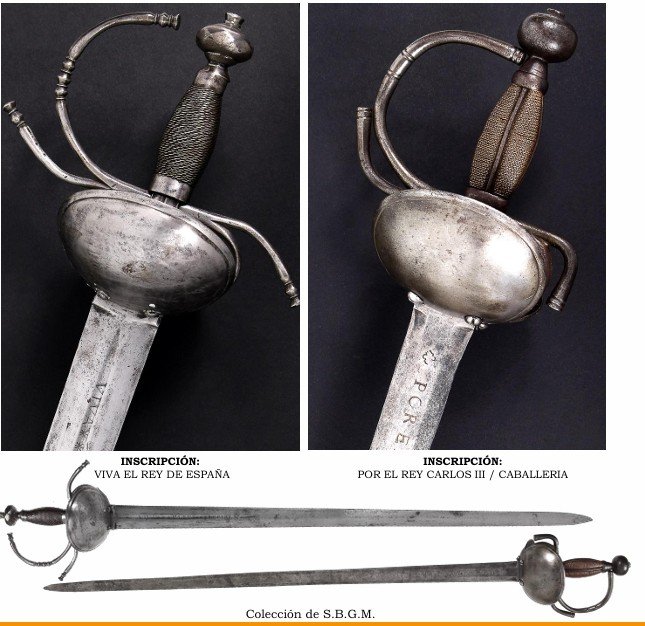
This royal ordinance of July 12, 1728, merely standardized a model that had already been widely adopted by the cavalry for a century, albeit with numerous variations. The 17th-century models that preceded the strictly regulated model were initially called “espadas deconchas” (= “shell swords”). From the years 1730s–1740s, the term “boca de caballo”(= horse's mouth) became the most commonly used, referring to the two asymmetrical guard plates that resemble a horse’s mouth.
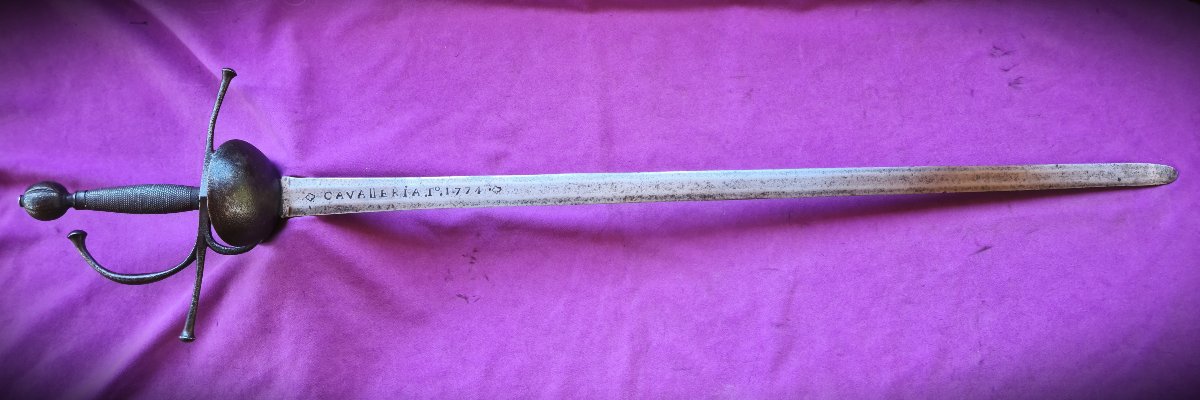
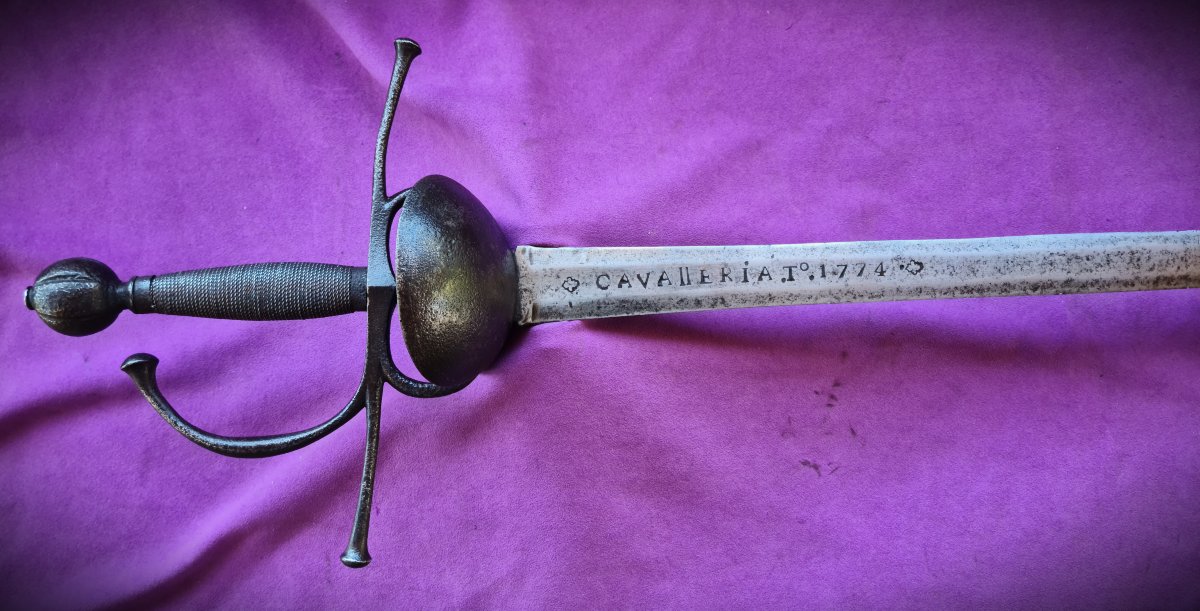
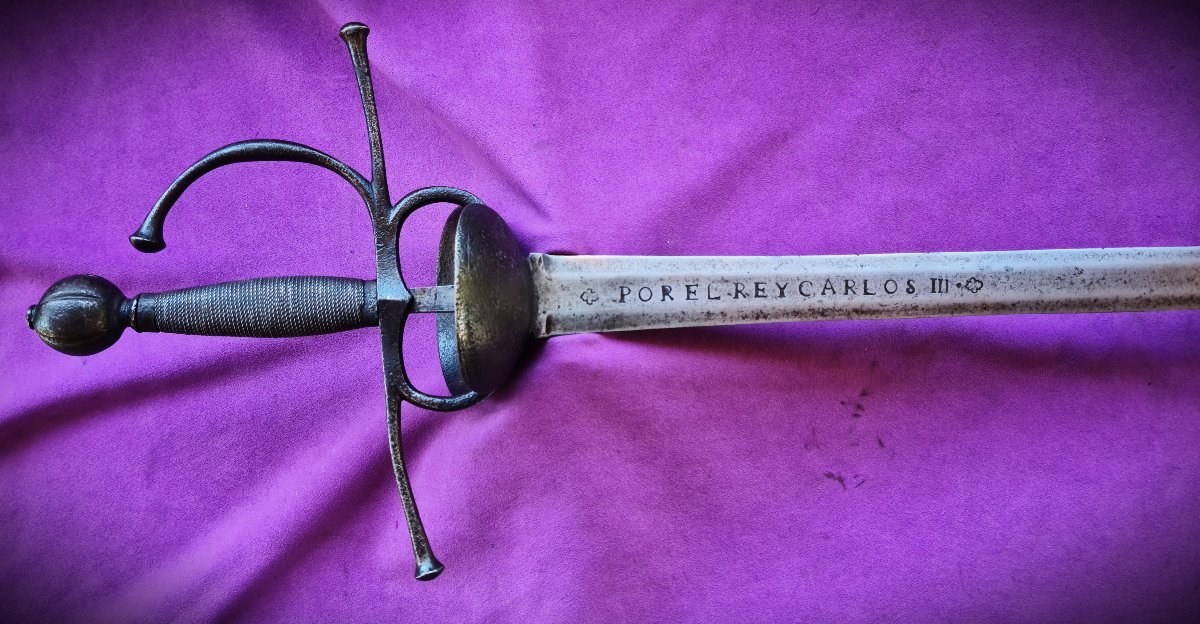
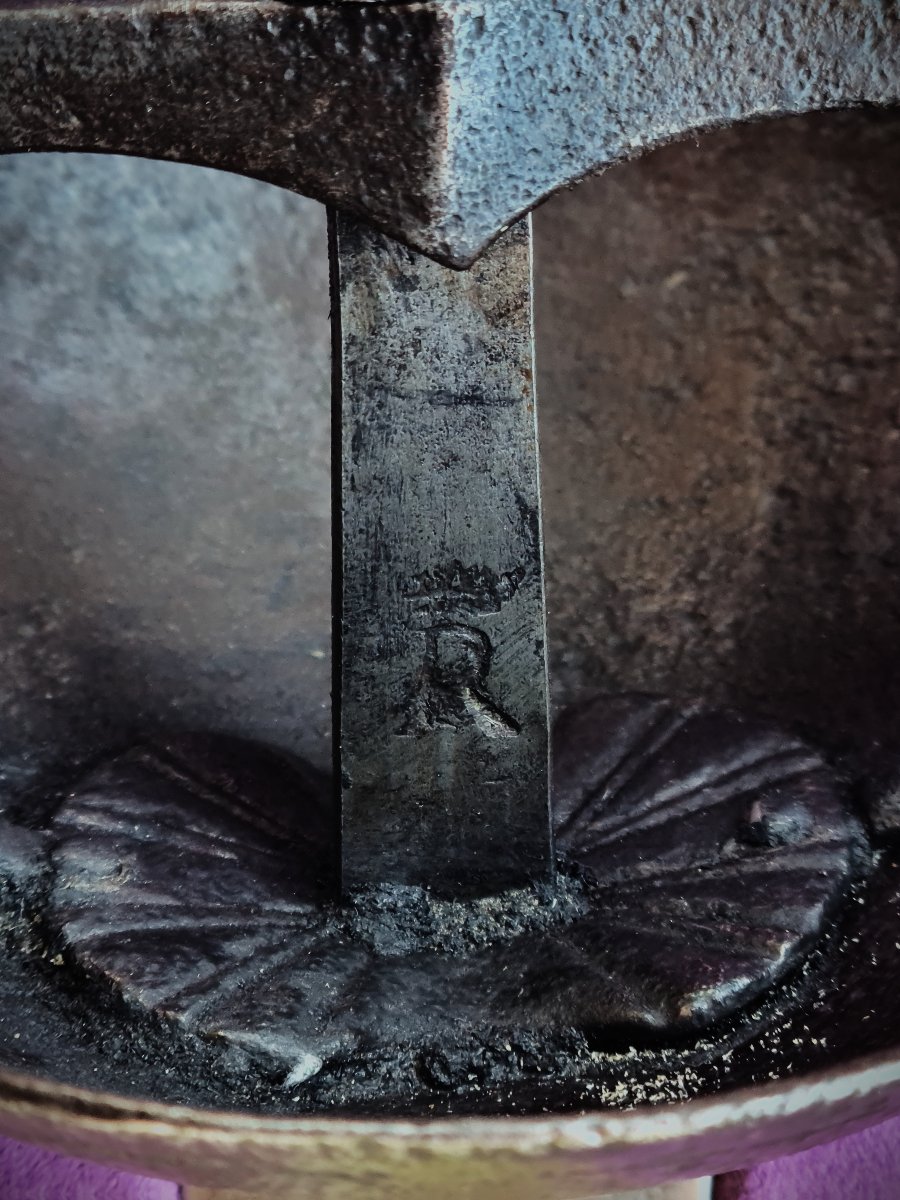
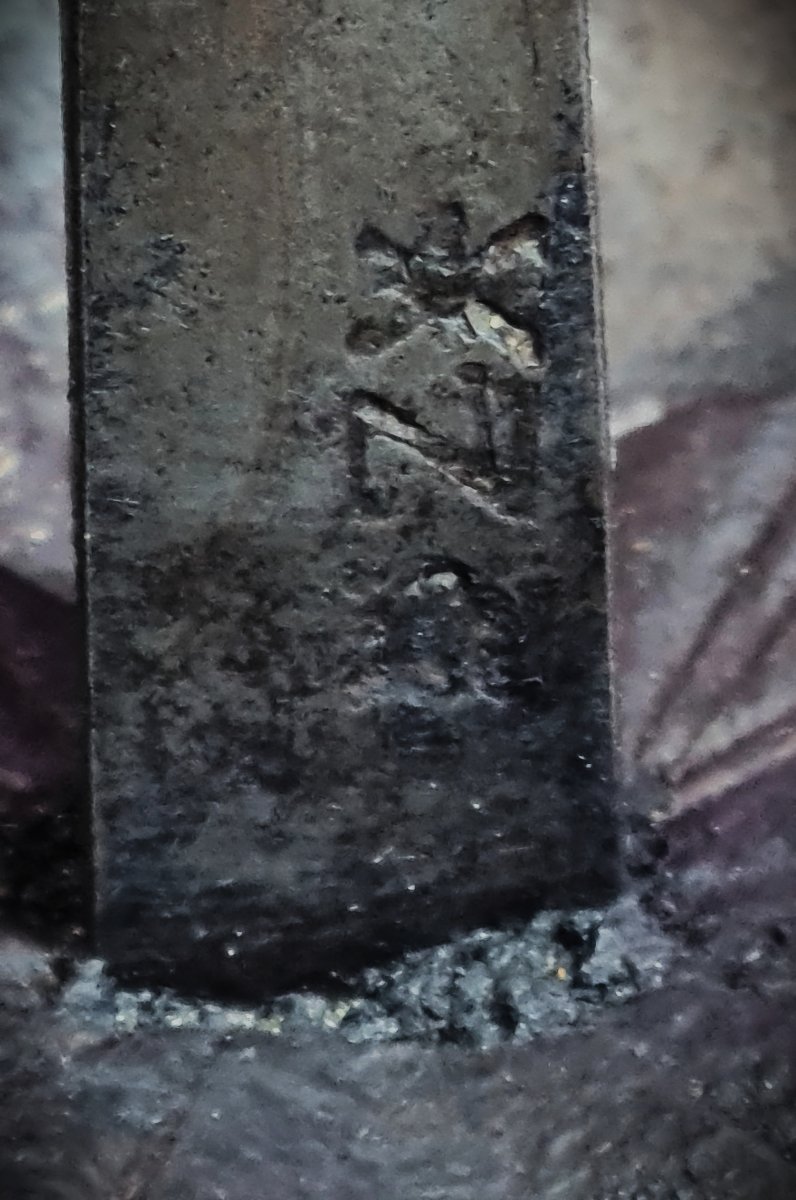
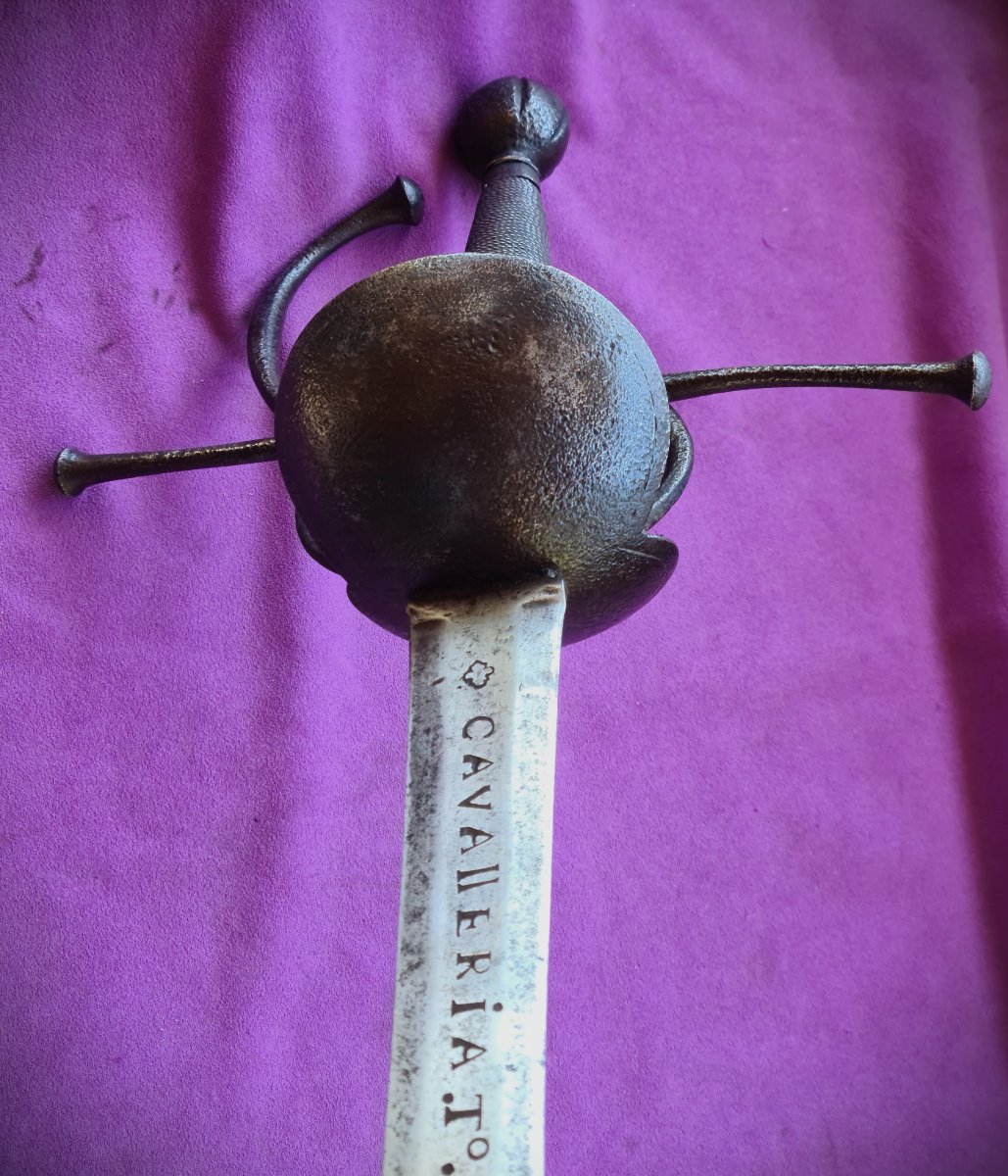
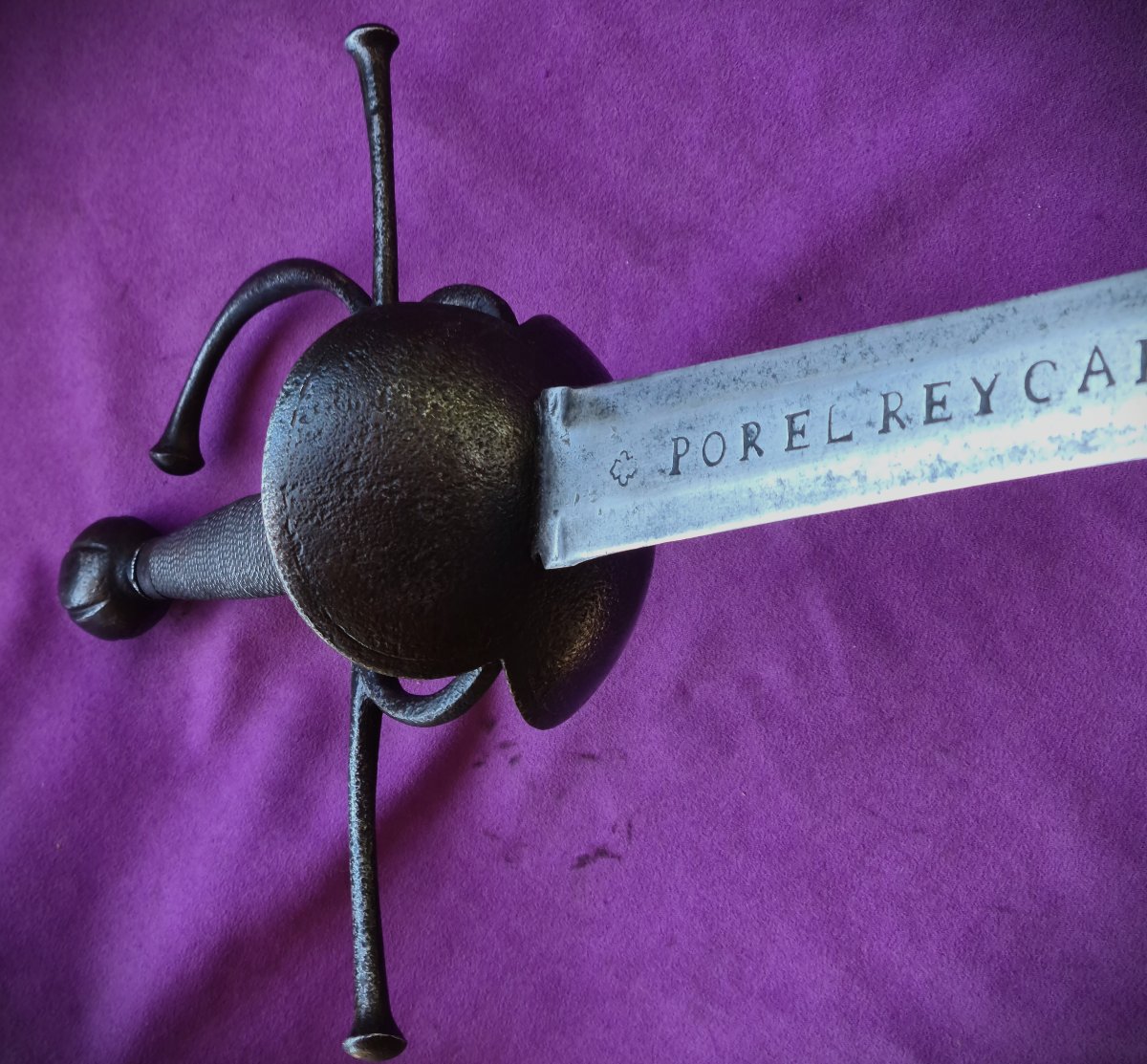
These 1728 regulation swords remained in service with the cavalry until 1803, when they were replaced by sabers. The “crowned R” mark on the ricasso indicates that this is a regulation blade; the “R” signifies royalownership. Most of these regulation swords were returned to thearsenals in 1803, and they are there fore significantly rarer than the officer’s models with personal blades. The markings in large characters on the blade allow for very precise identification of this weapon,since they read “POR EL REY CARLOS III ” = For King Carlos III (1759–1788) and “ CAVALLERIA. T°.1774” = Toledo Cavalry 1774. The blade was therefore manufactured at the famousToledo arms factory.
BLADE : after a very short ricasso, it takes on a hexagonal cross-section all the way to the tip. The markings are clearly visible and in very good condition:
Outer face = between two fleurs-de-lis " CAVALLERIA . T°. 1774 - " and between the shells and the quillons, a marking of *N* (or perhaps * Z *) whose meaning I do not know.
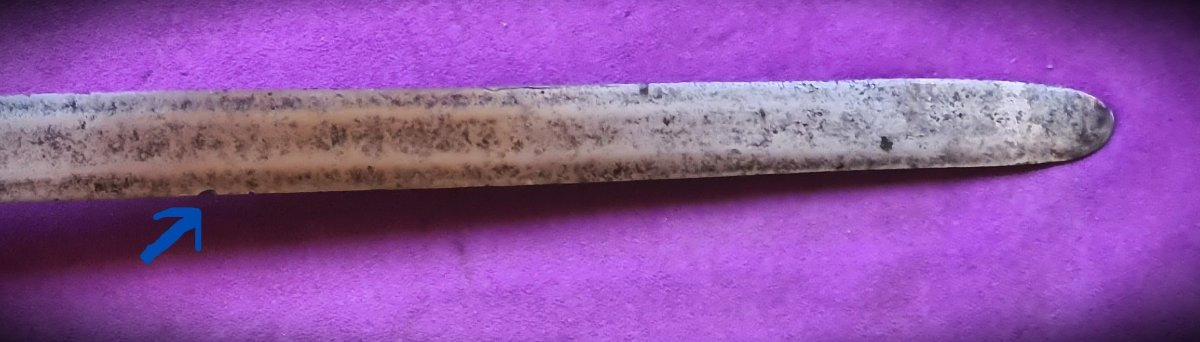
Inner side = between two fleurs-de-lis " POR EL REY CARLOS III -” and between the shells and the quillons, “ crowned R ” There are tiny nicks on the edges, which are signs of use, and a larger nick, 1.5 mm deep, 25 cm from the tip, which is a battle mark caused by an oblique impact against another blade. This indicates that this weapon did not remain in its sheath or stored in an armory, but saw action on the battlefield.
Blade length: 88.5 cm; width at the ricasso: 3.8 cm;thickness at the ricasso: 6 mm
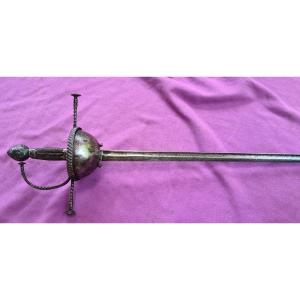
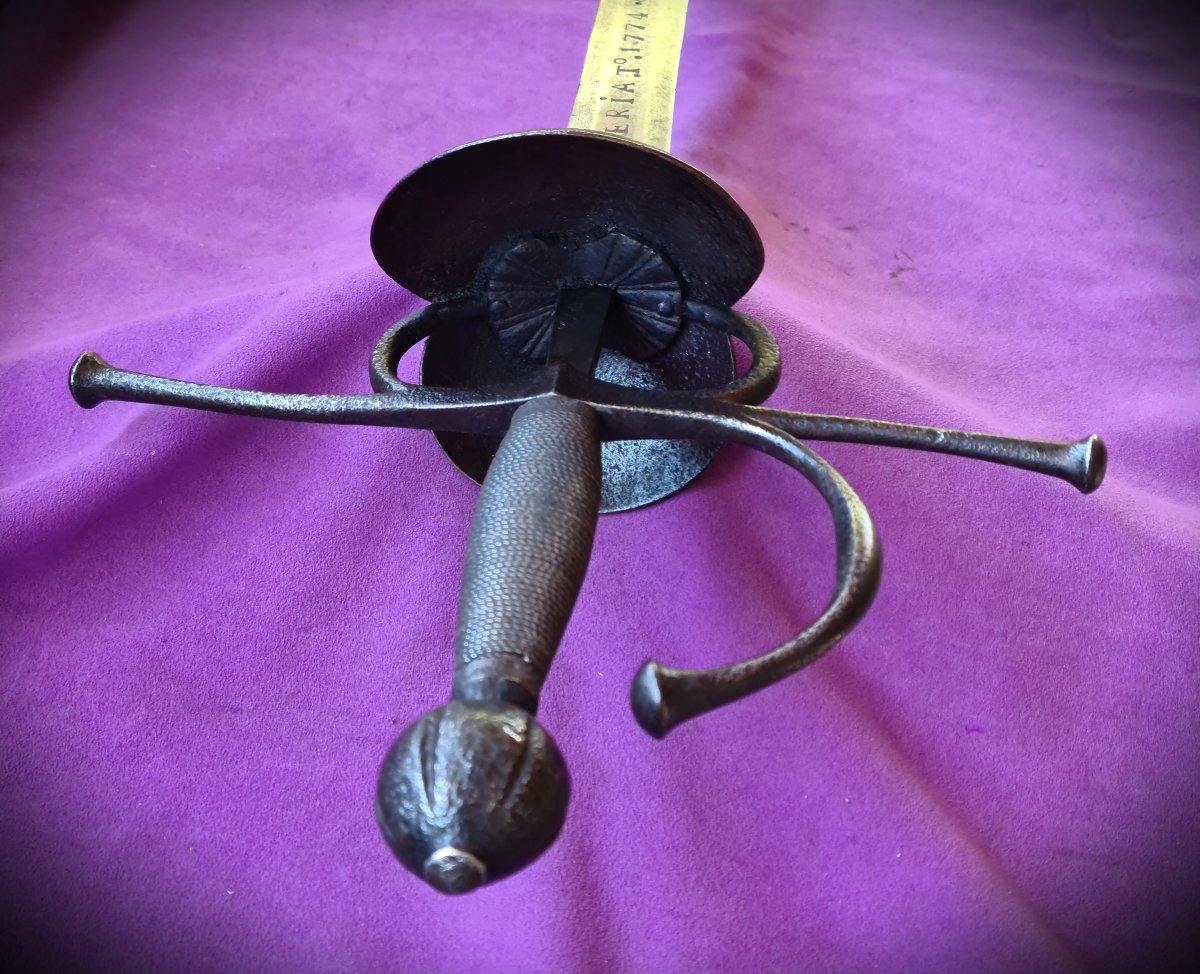
GUARD: This is the classic “boca de caballo” with two large shells, the outer shell being larger than theinner shell. The quillons are slightly counter-curved. I should note that they are not accidentally twisted but rather intentionally and slightly counter-curved, exactlyas on the model described by VicenteToledo Momparler under ref. 2 1750 E
The two large finger rings, or "arms" or “donkey’s hooves,” connect to a plate called “guarda polvo,” to which they are riveted. The guard’s crossguard ends near the pommel without being attached to it.
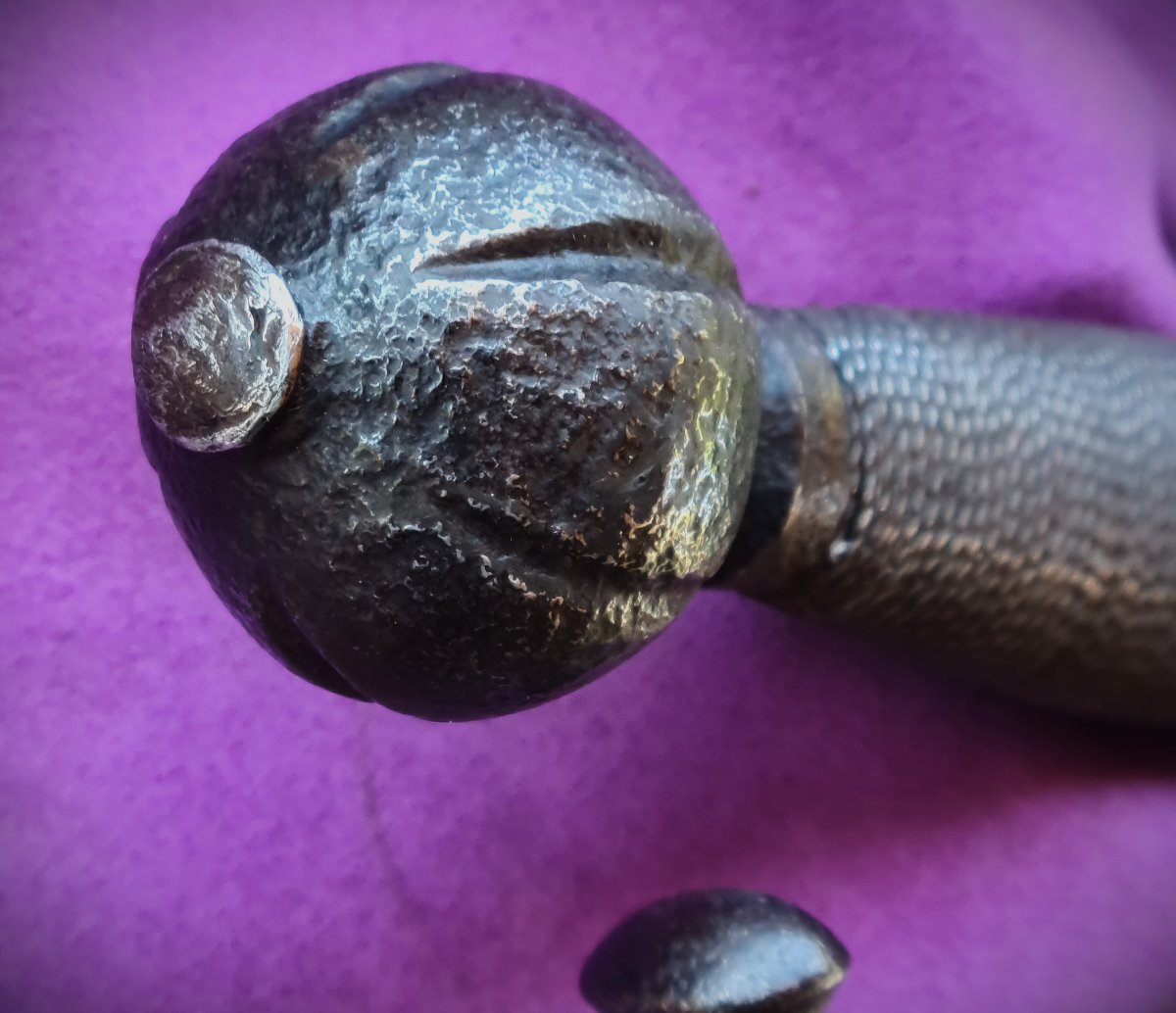
POMMEL : It is ovoid, with six segments separated by grooves.
TANG: It is covered with twisted iron binding. The ferrules are made of iron.
This sword is therefore a historic reference model. The mount has a beautiful dark patina that I have chosen to preserve. The weapon is in its original condition, never disassembled, never restored.
Ref E-2636Shipping costs: France €30, Europe €40
This royal ordinance of July 12, 1728, merely standardized a model that had already been widely adopted by the cavalry for a century, albeit with numerous variations. The 17th-century models that preceded the strictly regulated model were initially called “espadas deconchas” (= “shell swords”). From the years 1730s–1740s, the term “boca de caballo”(= horse's mouth) became the most commonly used, referring to the two asymmetrical guard plates that resemble a horse’s mouth.
These 1728 regulation swords remained in service with the cavalry until 1803, when they were replaced by sabers. The “crowned R” mark on the ricasso indicates that this is a regulation blade; the “R” signifies royalownership. Most of these regulation swords were returned to thearsenals in 1803, and they are there fore significantly rarer than the officer’s models with personal blades. The markings in large characters on the blade allow for very precise identification of this weapon,since they read “POR EL REY CARLOS III ” = For King Carlos III (1759–1788) and “ CAVALLERIA. T°.1774” = Toledo Cavalry 1774. The blade was therefore manufactured at the famousToledo arms factory.
BLADE : after a very short ricasso, it takes on a hexagonal cross-section all the way to the tip. The markings are clearly visible and in very good condition:
Outer face = between two fleurs-de-lis " CAVALLERIA . T°. 1774 - " and between the shells and the quillons, a marking of *N* (or perhaps * Z *) whose meaning I do not know.
Inner side = between two fleurs-de-lis " POR EL REY CARLOS III -” and between the shells and the quillons, “ crowned R ” There are tiny nicks on the edges, which are signs of use, and a larger nick, 1.5 mm deep, 25 cm from the tip, which is a battle mark caused by an oblique impact against another blade. This indicates that this weapon did not remain in its sheath or stored in an armory, but saw action on the battlefield.
Blade length: 88.5 cm; width at the ricasso: 3.8 cm;thickness at the ricasso: 6 mm
GUARD: This is the classic “boca de caballo” with two large shells, the outer shell being larger than theinner shell. The quillons are slightly counter-curved. I should note that they are not accidentally twisted but rather intentionally and slightly counter-curved, exactlyas on the model described by VicenteToledo Momparler under ref. 2 1750 E
The two large finger rings, or "arms" or “donkey’s hooves,” connect to a plate called “guarda polvo,” to which they are riveted. The guard’s crossguard ends near the pommel without being attached to it.
POMMEL : It is ovoid, with six segments separated by grooves.
TANG: It is covered with twisted iron binding. The ferrules are made of iron.
This sword is therefore a historic reference model. The mount has a beautiful dark patina that I have chosen to preserve. The weapon is in its original condition, never disassembled, never restored.
Ref E-2636Shipping costs: France €30, Europe €40
1 450 €
Period: 18th century
Style: Louis 15th - Transition
Condition: Good condition
Material: Other
Length: 111 cm
Width: aux quillons 25 cm
Reference (ID): 1800835
Availability: In stock
Print