

Small Steel Box From Tula, Ca. 1860–1880
Artist: Russie, Toula, Seconde Moitié Du Xixe Siècle
Russia, Tula, second half of the 19th century (ca. 1860–1880)
Small box
Burnished and polished steel with engraved and chiseled decoration
H 3 × W 12 × D 8 cm
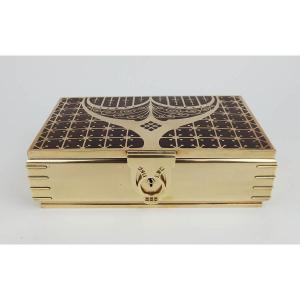
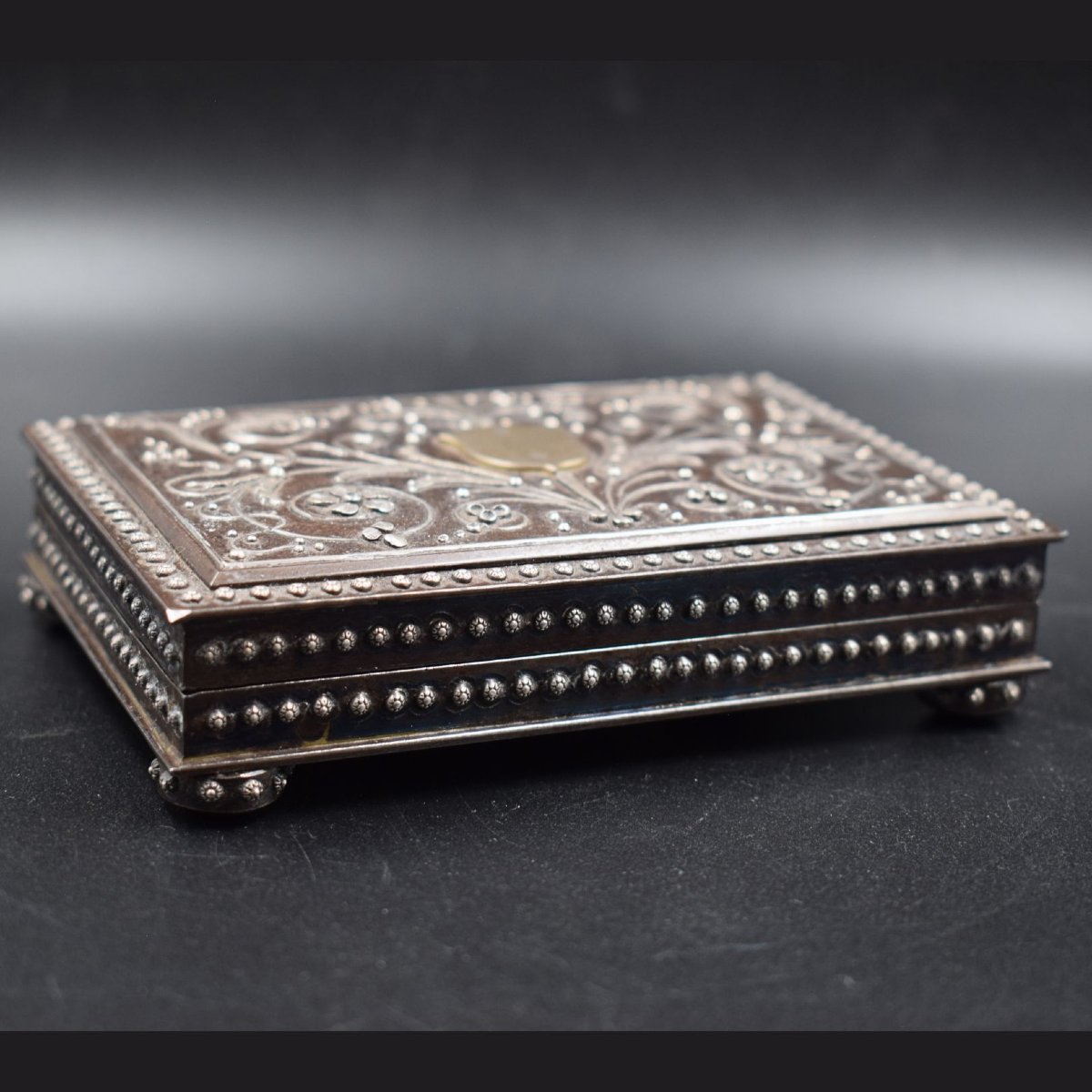
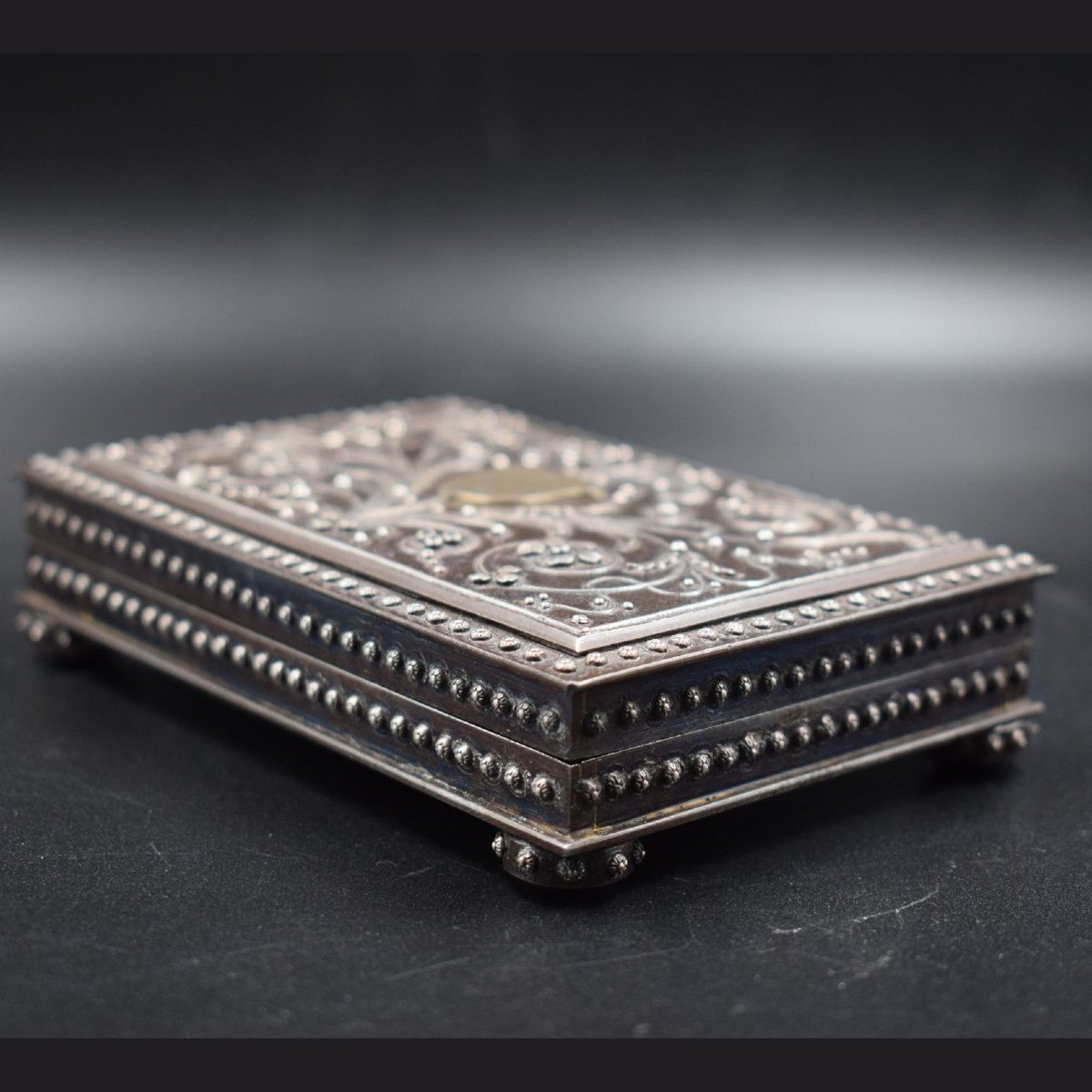
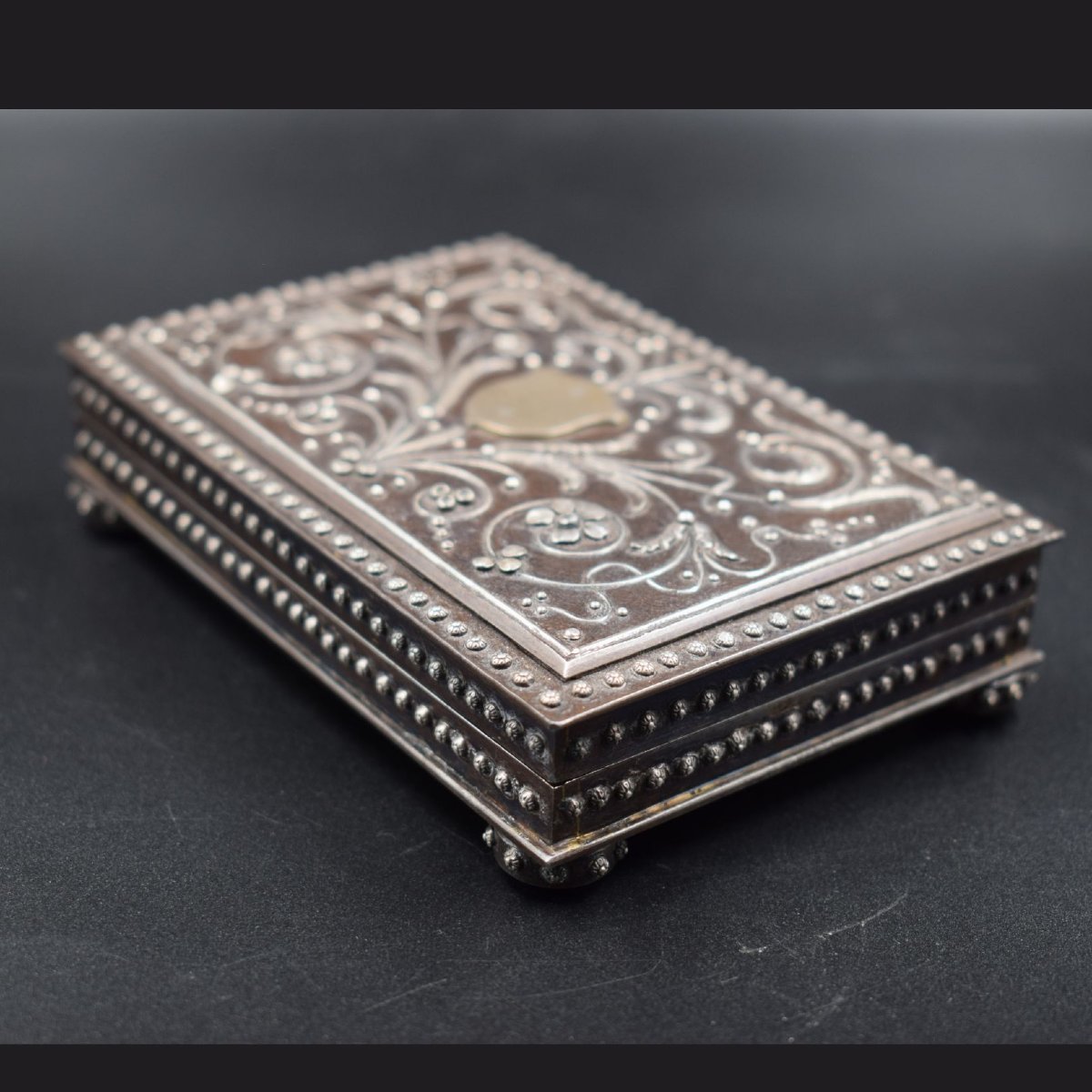
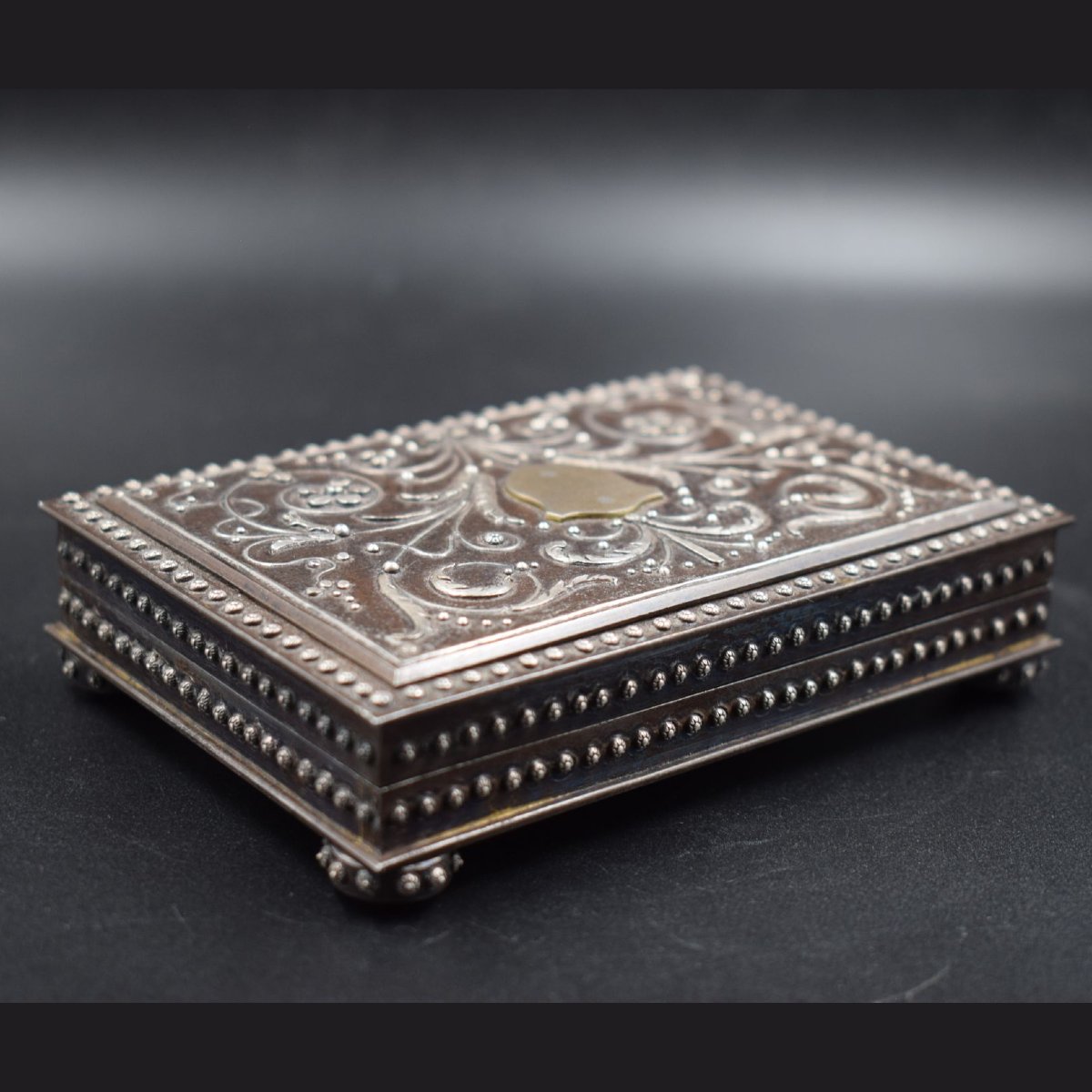
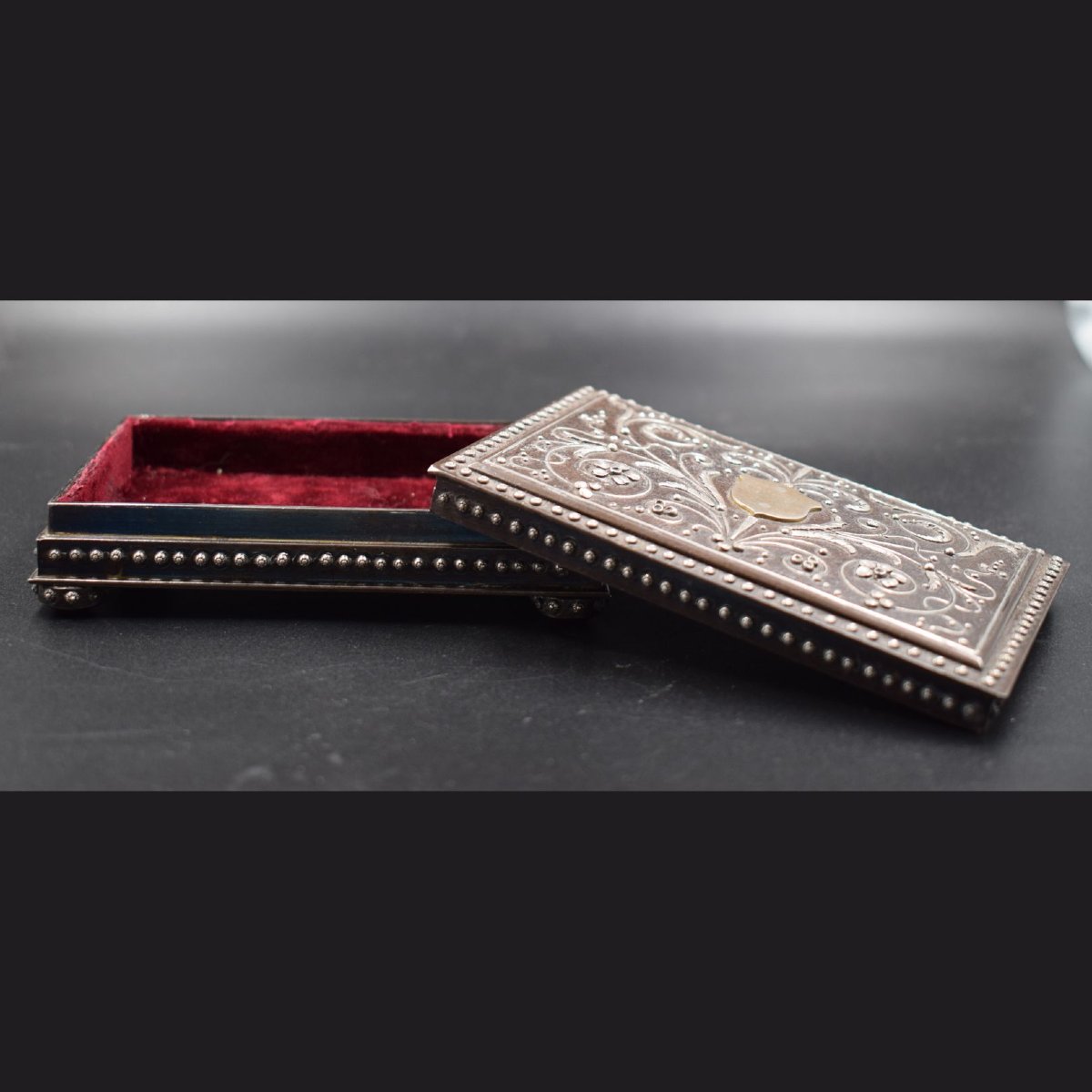
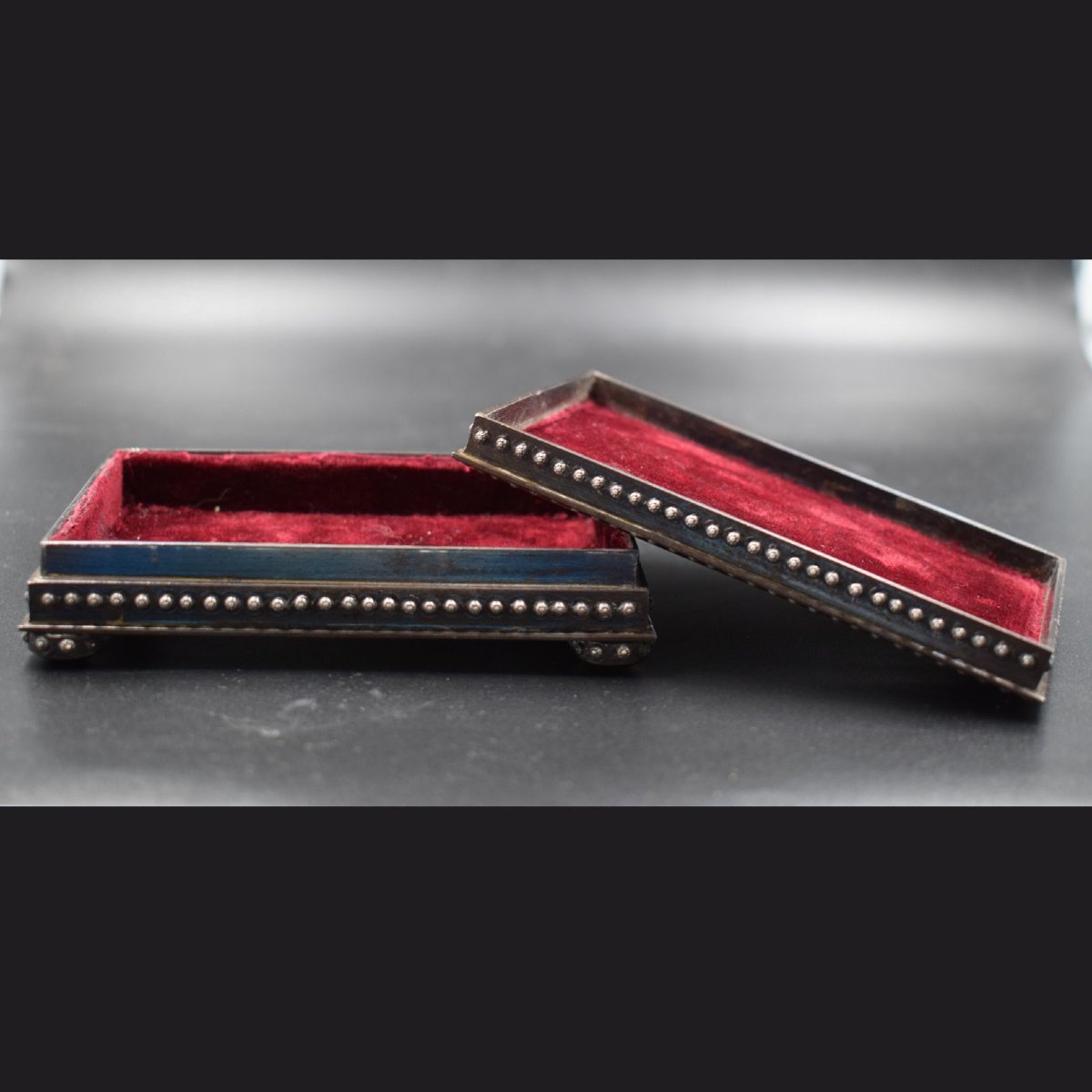
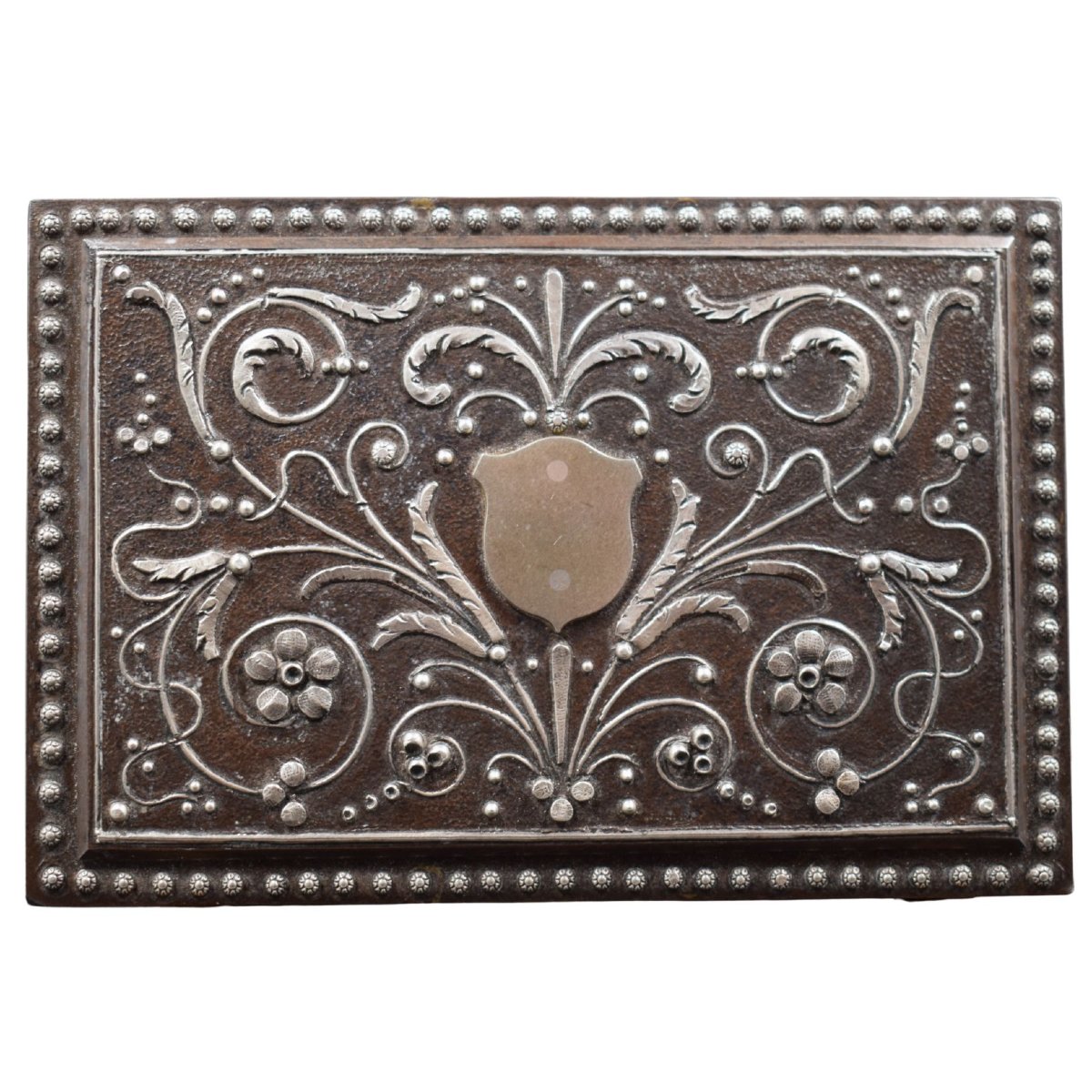
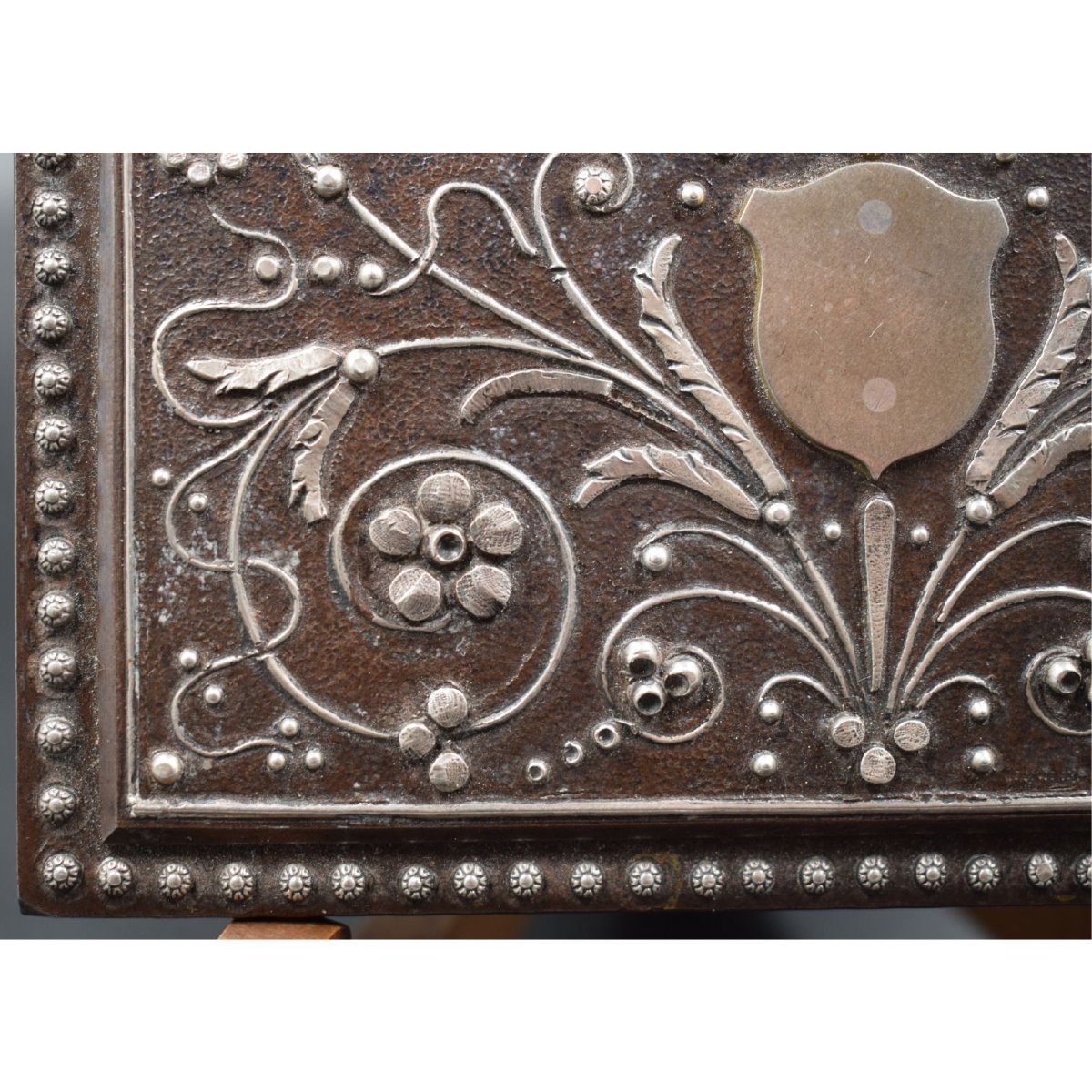
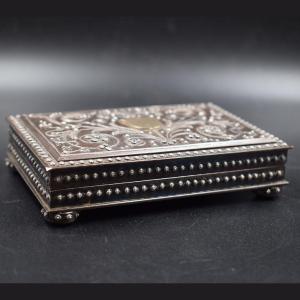
An elegant rectangular box belonging to the famous Tula school of artistic steelwork, one of the most prestigious workshops in the Russian Empire during the 18th and 19th centuries. The lid, which is completely removable, features rich decoration with phytomorphic motifs and vegetal scrolls, arranged in a strict symmetrical pattern around a central heraldic shield left smooth—likely intended for engraving with the patron’s initials or coat of arms.
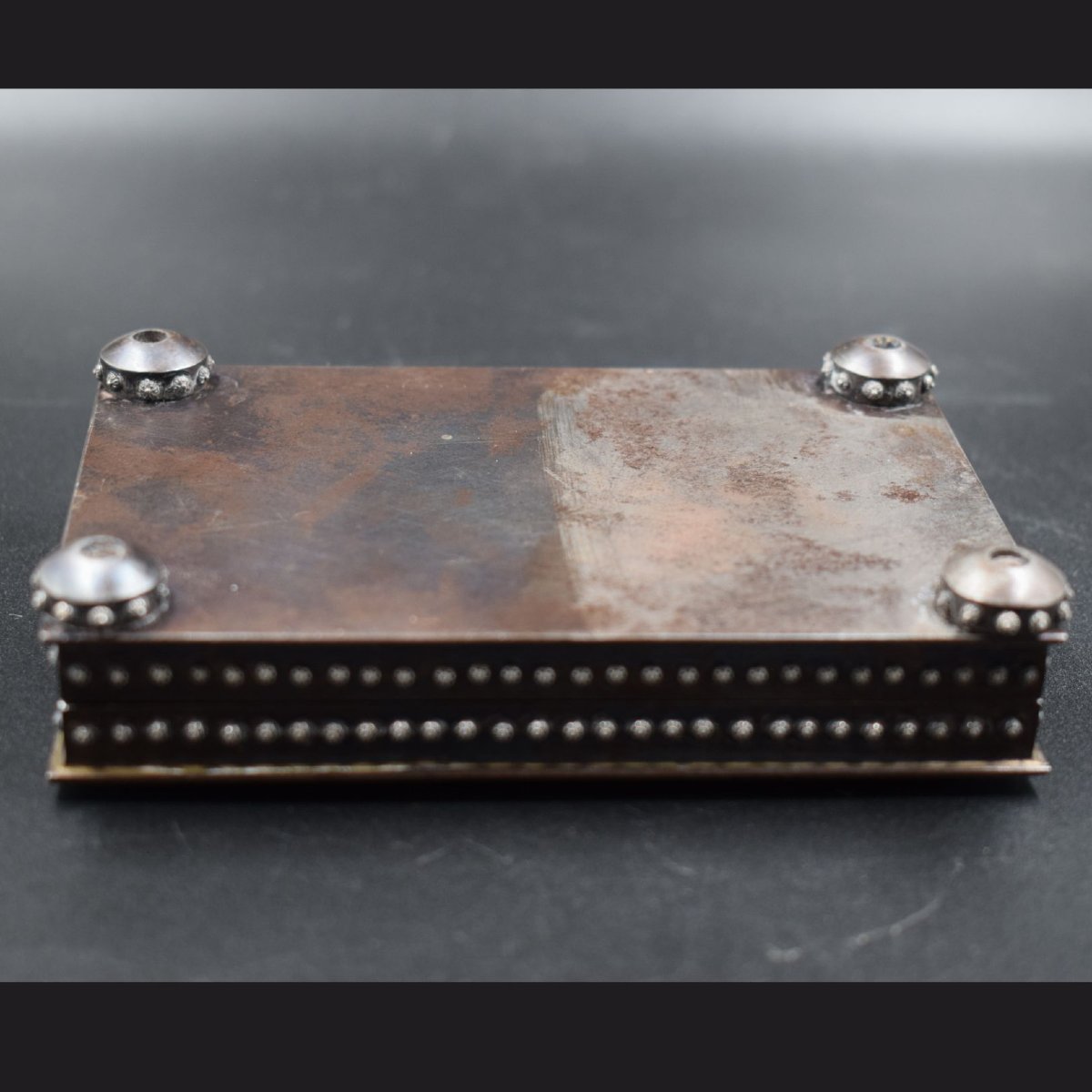
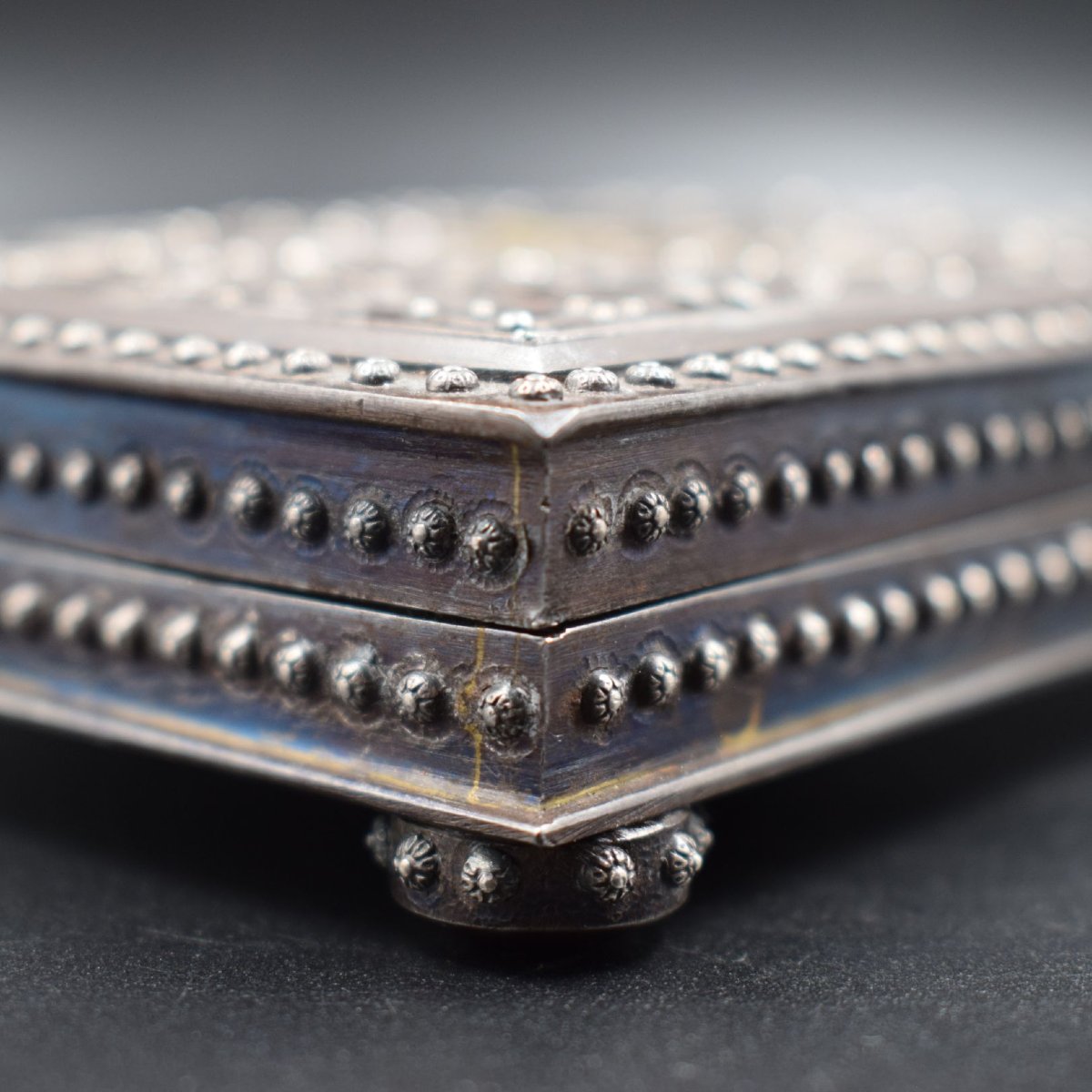
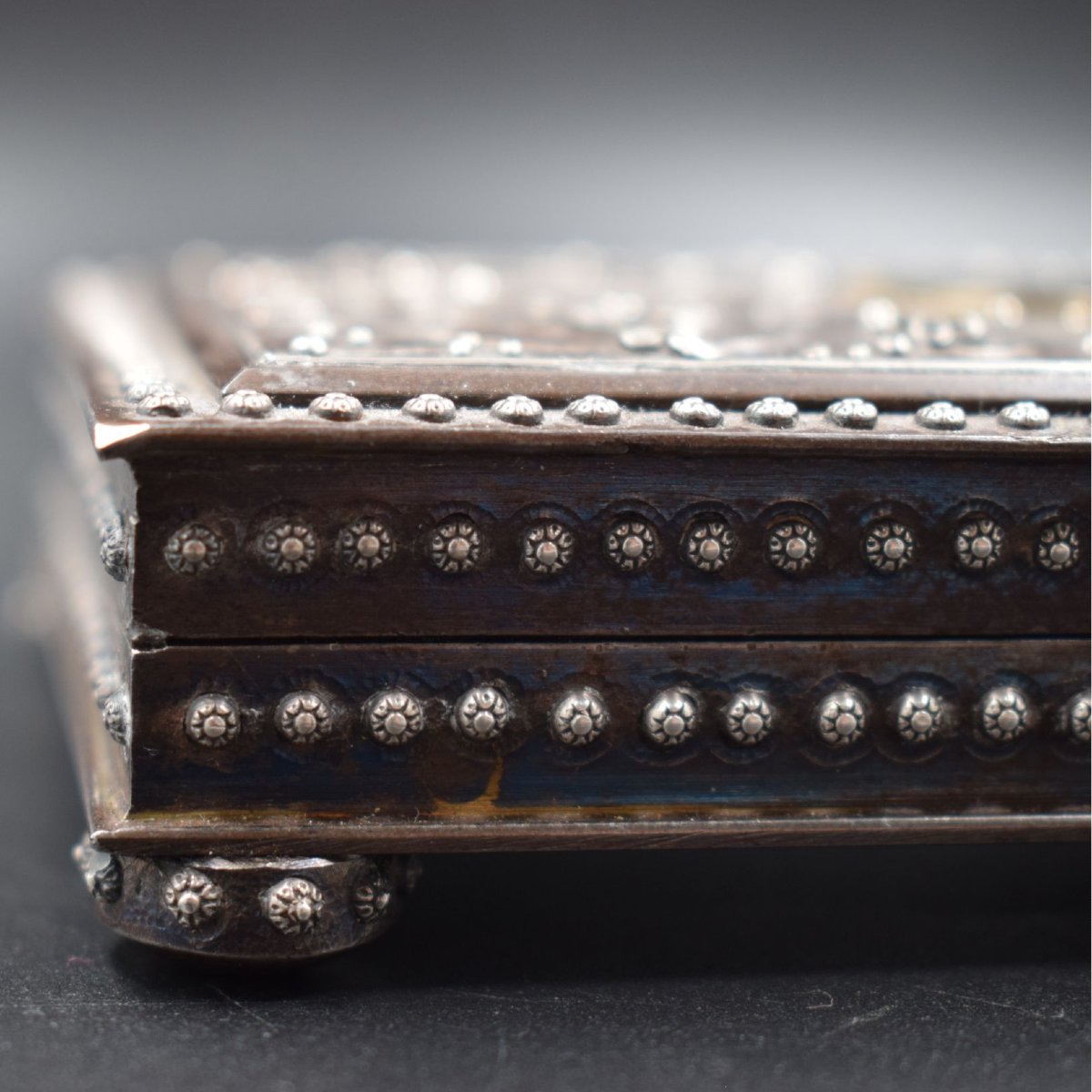
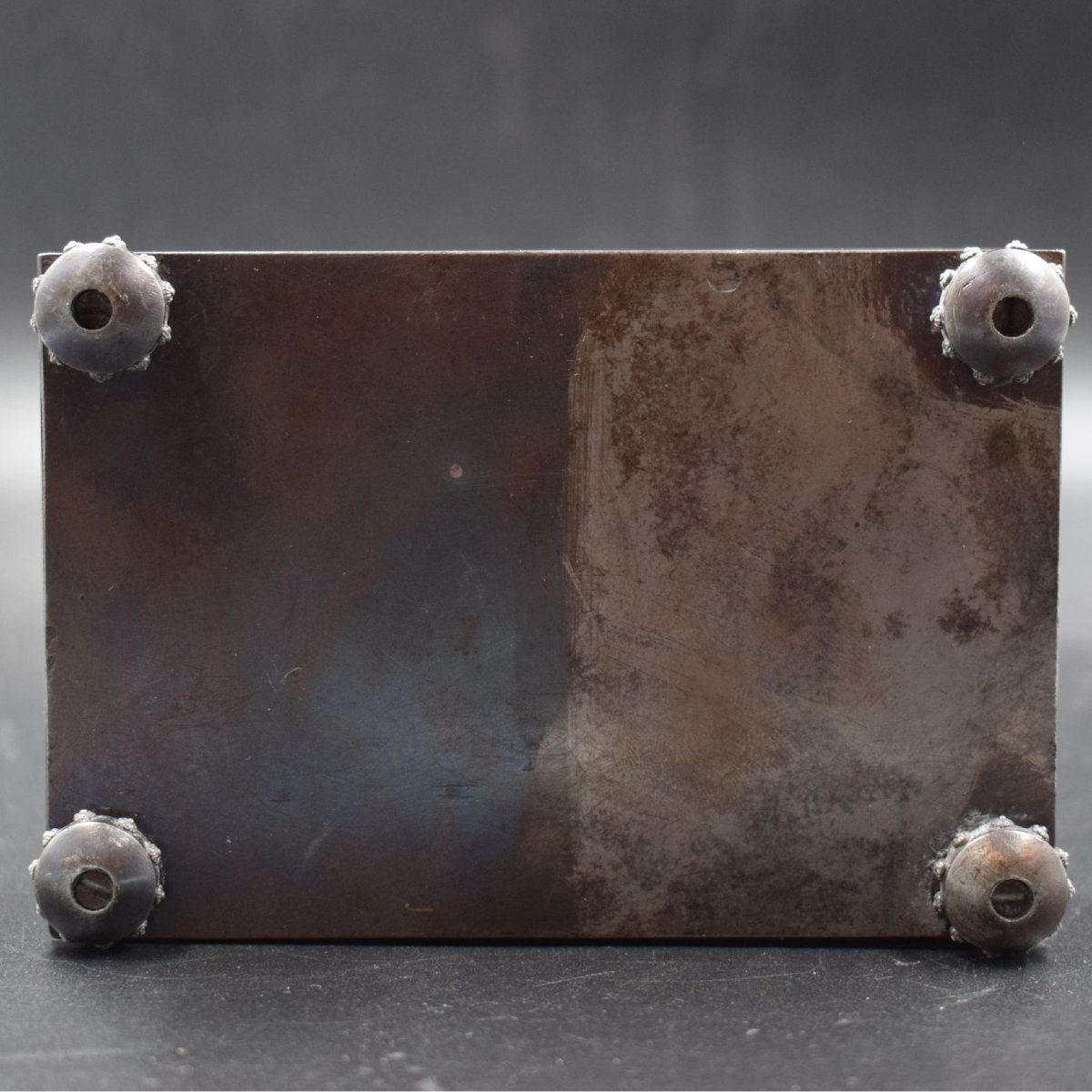
The entire surface is embellished with refined engraving, chiseling, and stamping, with a finely grained background that creates an elegant chiaroscuro contrast with the polished sections. The rim is bordered by a double frame consisting of a continuous series of small rosettes in relief, a motif that continues along the sides of the container and on the four flattened-sphere feet, decorated with the same ornamental repertoire, attesting to the remarkable attention to detail reserved even for the secondary parts of the object.
The lower compartment is designed as a separate container on which the lid simply rests, in a style intended for storing small precious objects, snuff, or desk accessories.
The city of Tula, located about 180 kilometers south of Moscow, has been one of Russia’s most important metallurgical centers since the 17th century. Its fame stems from the production of weapons, facilitated by the presence of rich iron ore deposits and the founding, in 1712 by order of Peter the Great, of the Imperial Arsenal of Tula, which was destined to become the Empire’s principal military facility.
Alongside military production, a refined art of steelworking rapidly developed. The gunsmiths themselves, possessing exceptional technical skill in hardening, engraving, and chasing, began to create luxury items for the Russian aristocracy and European courts.
Between the second half of the 18th century and throughout the 19th century, production included boxes and caskets, snuffboxes, jewelry boxes, travel kits, document holders, picture frames, writing sets, candlesticks, and small ornamental objects.
These artifacts were true luxury goods, often given as diplomatic gifts or commissioned by Russian noble families.
“Tula steel” does not refer to a particular type of alloy, but rather to a specific decorative technique. Artisans worked the steel by hardening and mirror-polishing it, burnishing the surface, engraving with a burin, chiseling, stamping, and sometimes applying gold, silver, or damascene work.
The contrast between the burnished surface and the polished decorations was the hallmark of these works, which were able to mimic the preciousness of silver while retaining the extraordinary strength of steel.
Tula steel objects became widely popular throughout the 19th century, both in the Russian domestic market and through international trade.
They were displayed at major European world’s fairs and found buyers at the leading European royal courts, where they were particularly prized for their exceptional technical quality and their ability to combine functionality with elegance.
Today, Tula works are preserved in the collections of the Hermitage Museum in St. Petersburg, the State Historical Museum in Moscow, and in numerous European collections dedicated to Russian decorative arts and artistic metalwork.
- All our pieces come with a detailed certificate of authenticity.
- Professional packaging and insured shipping to ensure maximum safety during transport.
- For further information, please do not hesitate to contact us at +39 329 319 4887 – info@dequart.com
- Option for VIDEO CALLS and in-person viewings by appointment in MILAN and BORGOMANERO (NO).
- Additional information and photos: www.dequart.com IG - FB @dequ.art
Small box
Burnished and polished steel with engraved and chiseled decoration
H 3 × W 12 × D 8 cm
An elegant rectangular box belonging to the famous Tula school of artistic steelwork, one of the most prestigious workshops in the Russian Empire during the 18th and 19th centuries. The lid, which is completely removable, features rich decoration with phytomorphic motifs and vegetal scrolls, arranged in a strict symmetrical pattern around a central heraldic shield left smooth—likely intended for engraving with the patron’s initials or coat of arms.
The entire surface is embellished with refined engraving, chiseling, and stamping, with a finely grained background that creates an elegant chiaroscuro contrast with the polished sections. The rim is bordered by a double frame consisting of a continuous series of small rosettes in relief, a motif that continues along the sides of the container and on the four flattened-sphere feet, decorated with the same ornamental repertoire, attesting to the remarkable attention to detail reserved even for the secondary parts of the object.
The lower compartment is designed as a separate container on which the lid simply rests, in a style intended for storing small precious objects, snuff, or desk accessories.
The city of Tula, located about 180 kilometers south of Moscow, has been one of Russia’s most important metallurgical centers since the 17th century. Its fame stems from the production of weapons, facilitated by the presence of rich iron ore deposits and the founding, in 1712 by order of Peter the Great, of the Imperial Arsenal of Tula, which was destined to become the Empire’s principal military facility.
Alongside military production, a refined art of steelworking rapidly developed. The gunsmiths themselves, possessing exceptional technical skill in hardening, engraving, and chasing, began to create luxury items for the Russian aristocracy and European courts.
Between the second half of the 18th century and throughout the 19th century, production included boxes and caskets, snuffboxes, jewelry boxes, travel kits, document holders, picture frames, writing sets, candlesticks, and small ornamental objects.
These artifacts were true luxury goods, often given as diplomatic gifts or commissioned by Russian noble families.
“Tula steel” does not refer to a particular type of alloy, but rather to a specific decorative technique. Artisans worked the steel by hardening and mirror-polishing it, burnishing the surface, engraving with a burin, chiseling, stamping, and sometimes applying gold, silver, or damascene work.
The contrast between the burnished surface and the polished decorations was the hallmark of these works, which were able to mimic the preciousness of silver while retaining the extraordinary strength of steel.
Tula steel objects became widely popular throughout the 19th century, both in the Russian domestic market and through international trade.
They were displayed at major European world’s fairs and found buyers at the leading European royal courts, where they were particularly prized for their exceptional technical quality and their ability to combine functionality with elegance.
Today, Tula works are preserved in the collections of the Hermitage Museum in St. Petersburg, the State Historical Museum in Moscow, and in numerous European collections dedicated to Russian decorative arts and artistic metalwork.
- All our pieces come with a detailed certificate of authenticity.
- Professional packaging and insured shipping to ensure maximum safety during transport.
- For further information, please do not hesitate to contact us at +39 329 319 4887 – info@dequart.com
- Option for VIDEO CALLS and in-person viewings by appointment in MILAN and BORGOMANERO (NO).
- Additional information and photos: www.dequart.com IG - FB @dequ.art
780 €
Period: 19th century
Style: Art Nouveau
Condition: Good condition
Material: Wrought iron
Width: 12
Height: 3
Depth: 8
Reference (ID): 1799025
Availability: In stock
Print