



Polychrome And Gilded Wooden Sculpture Depicting Saint Luke The Evangelist, 16th Century
Artist: Xvie Siècle
16th century
Saint Luke the Evangelist
Carved wood, polychrome and gilded
H 50 × W 22 × D 27 cm
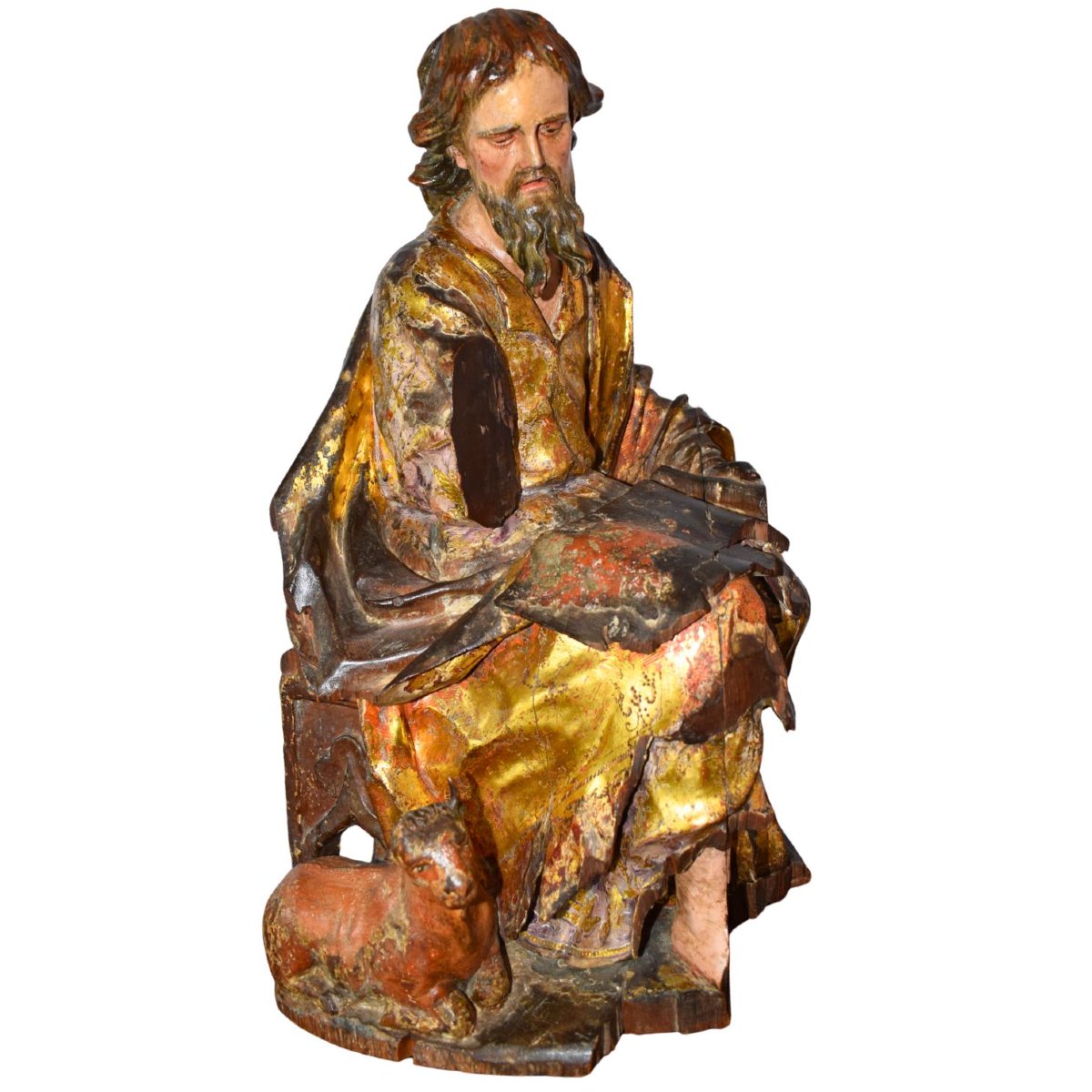
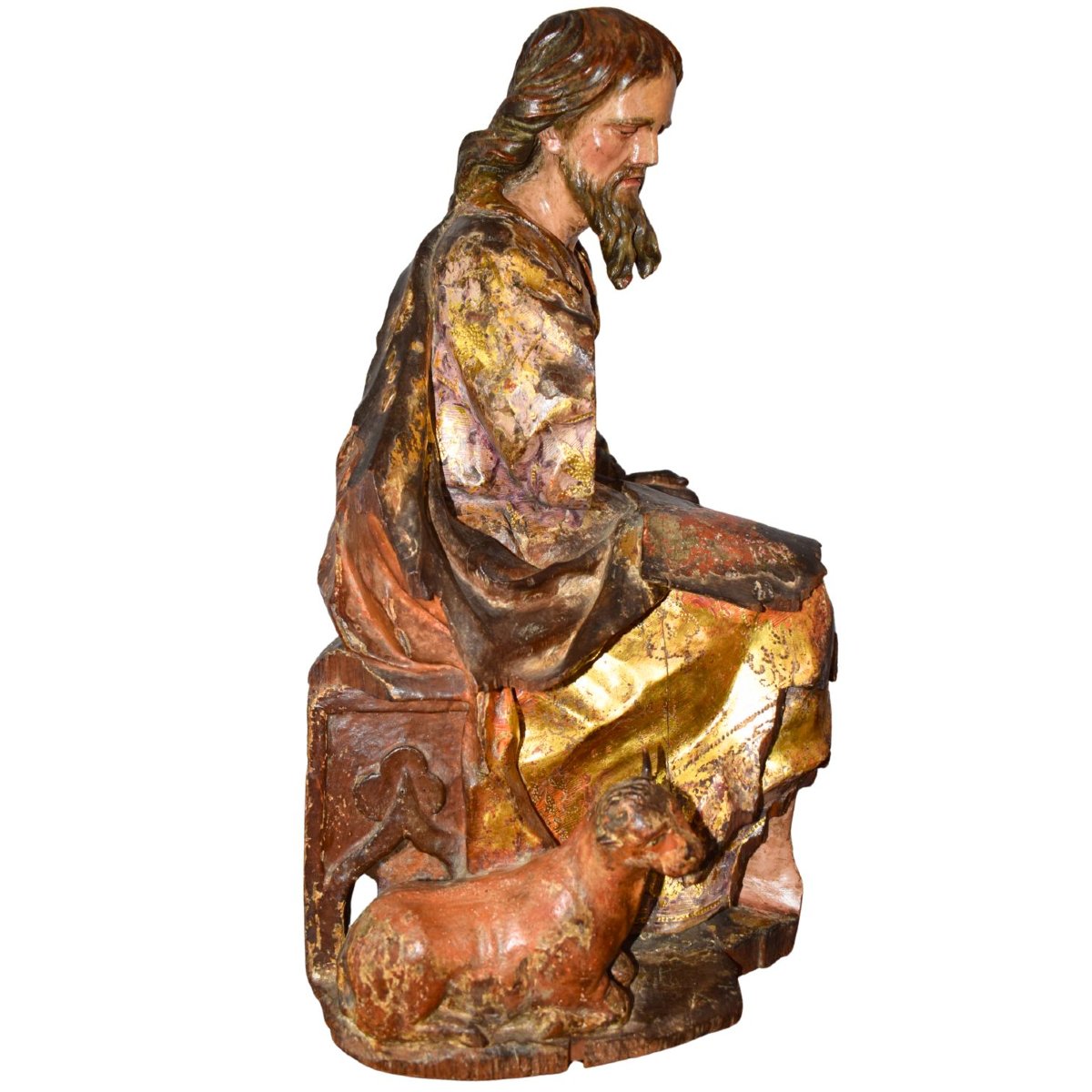
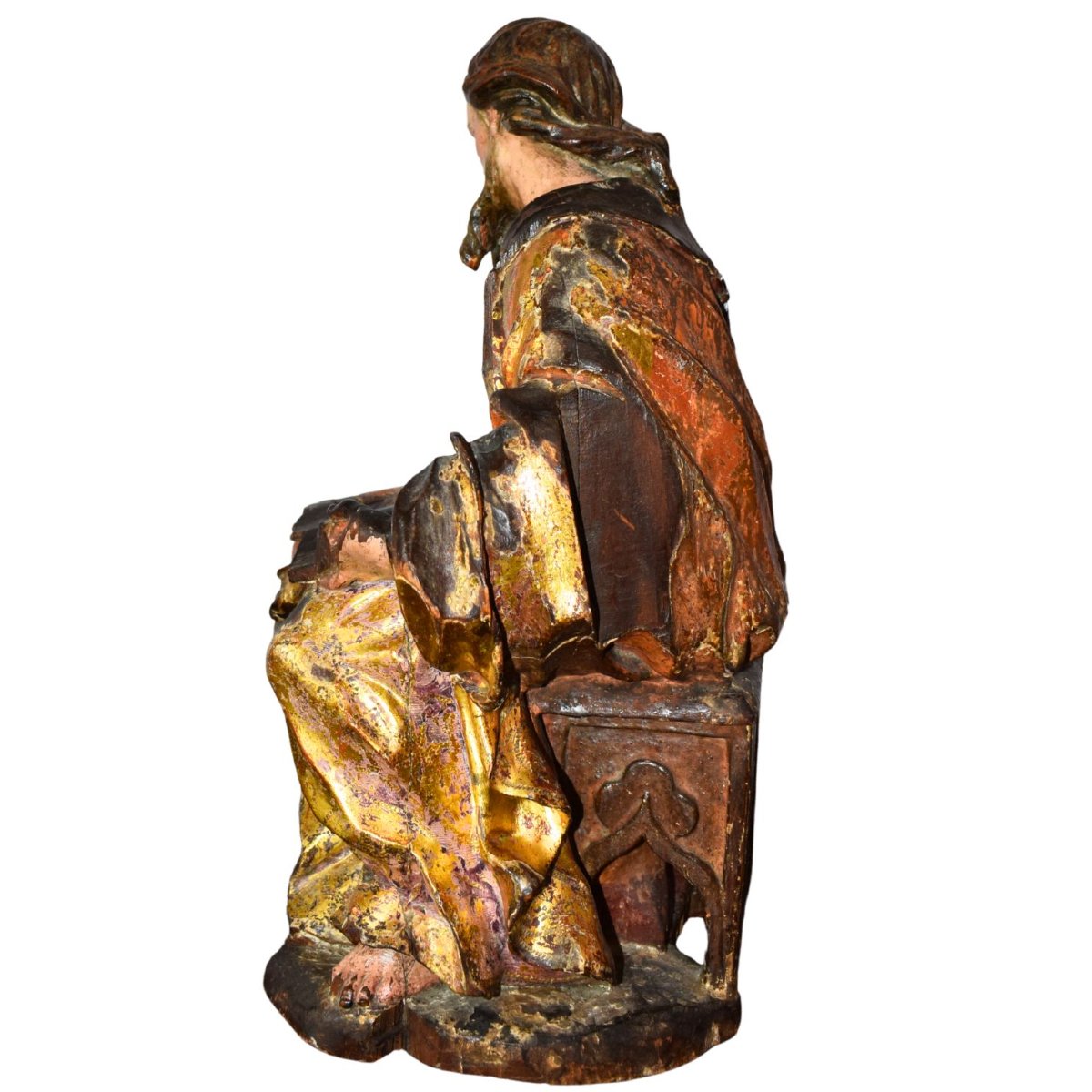
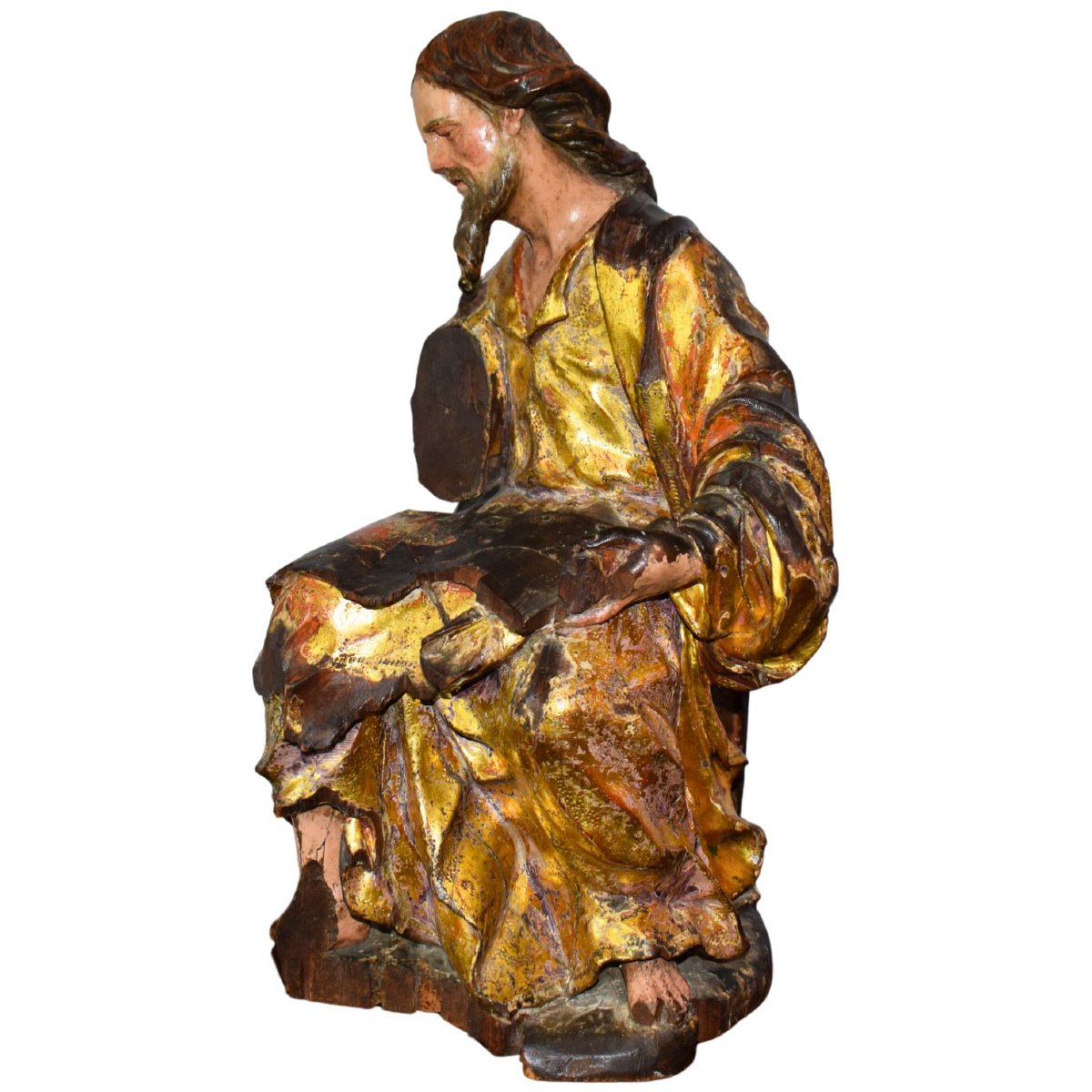
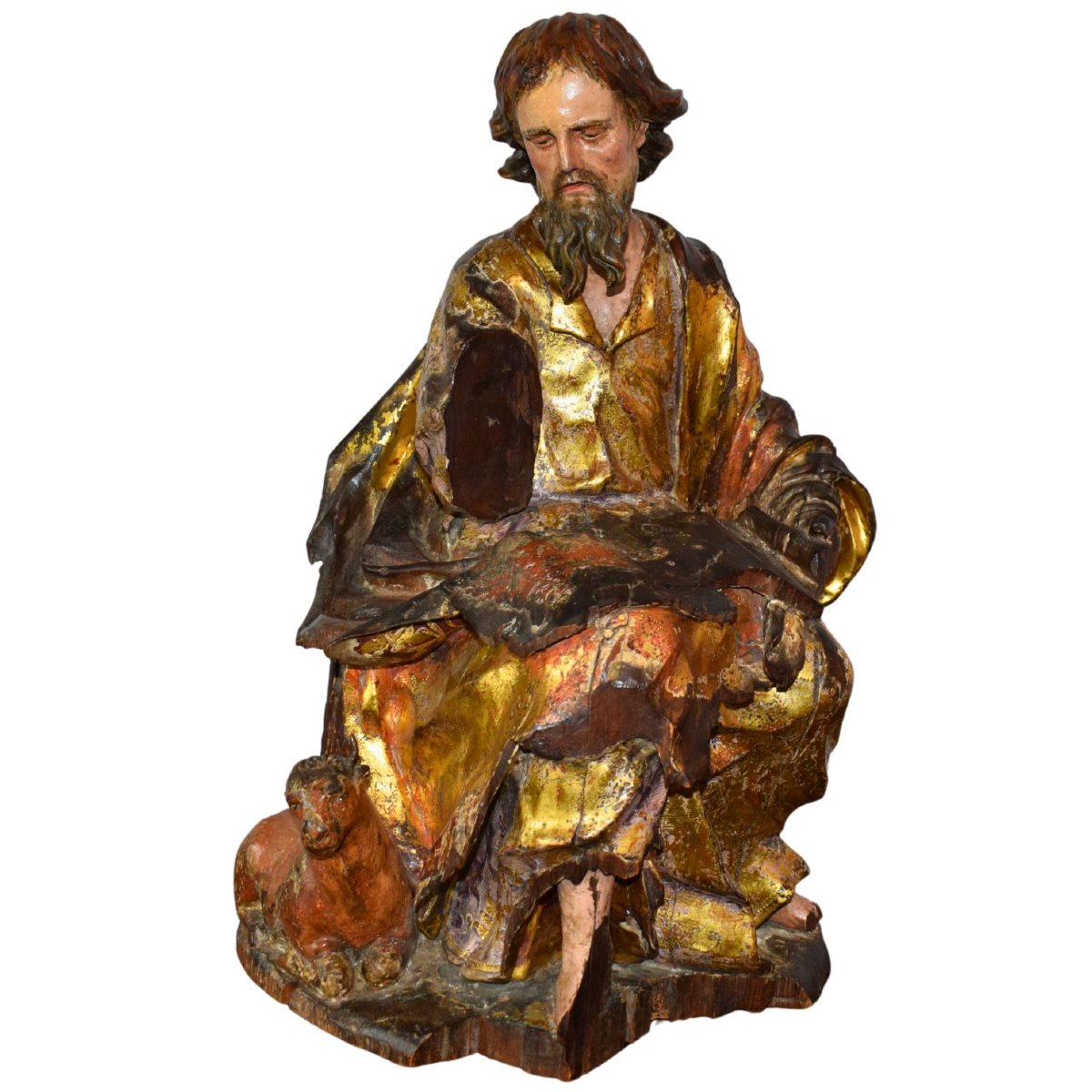
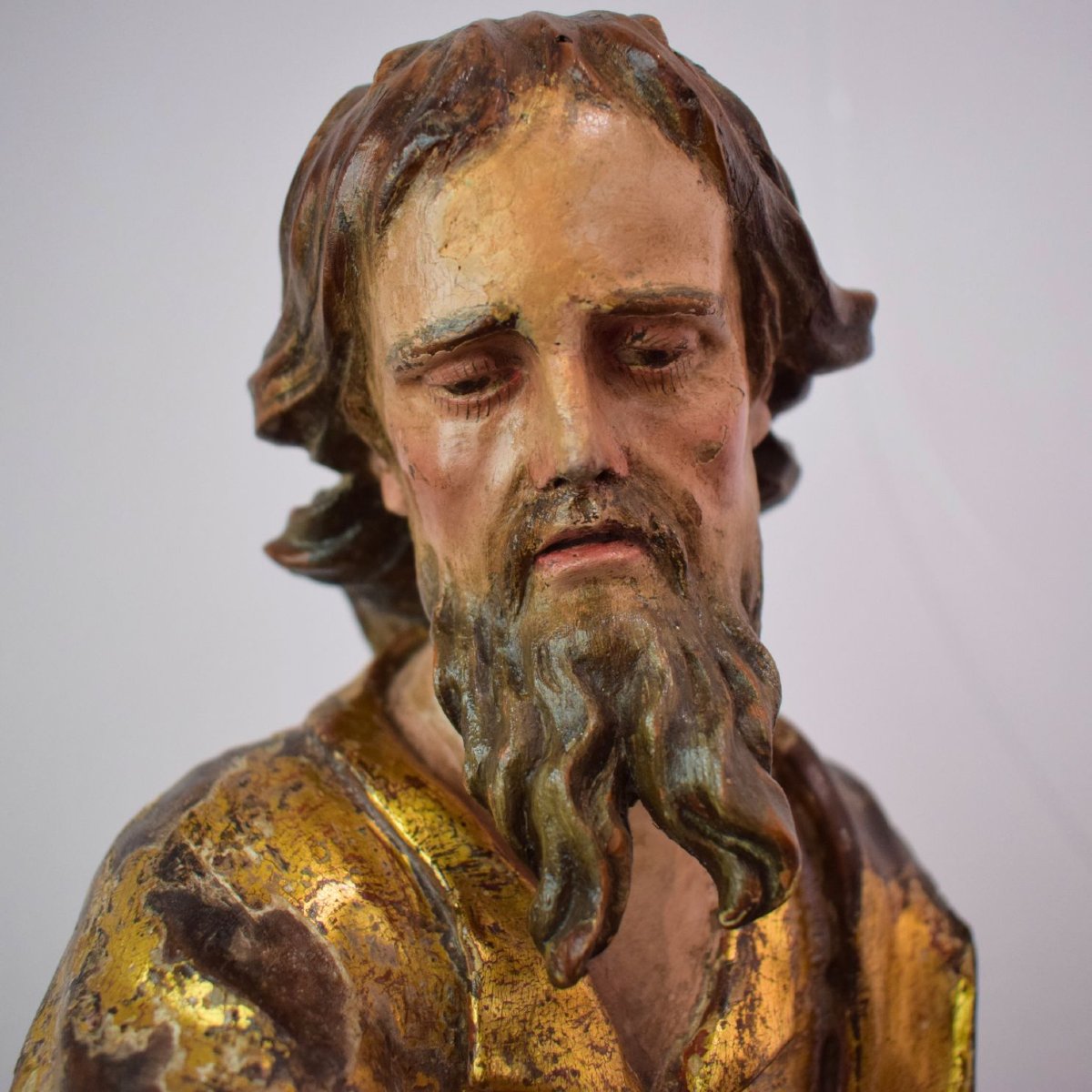
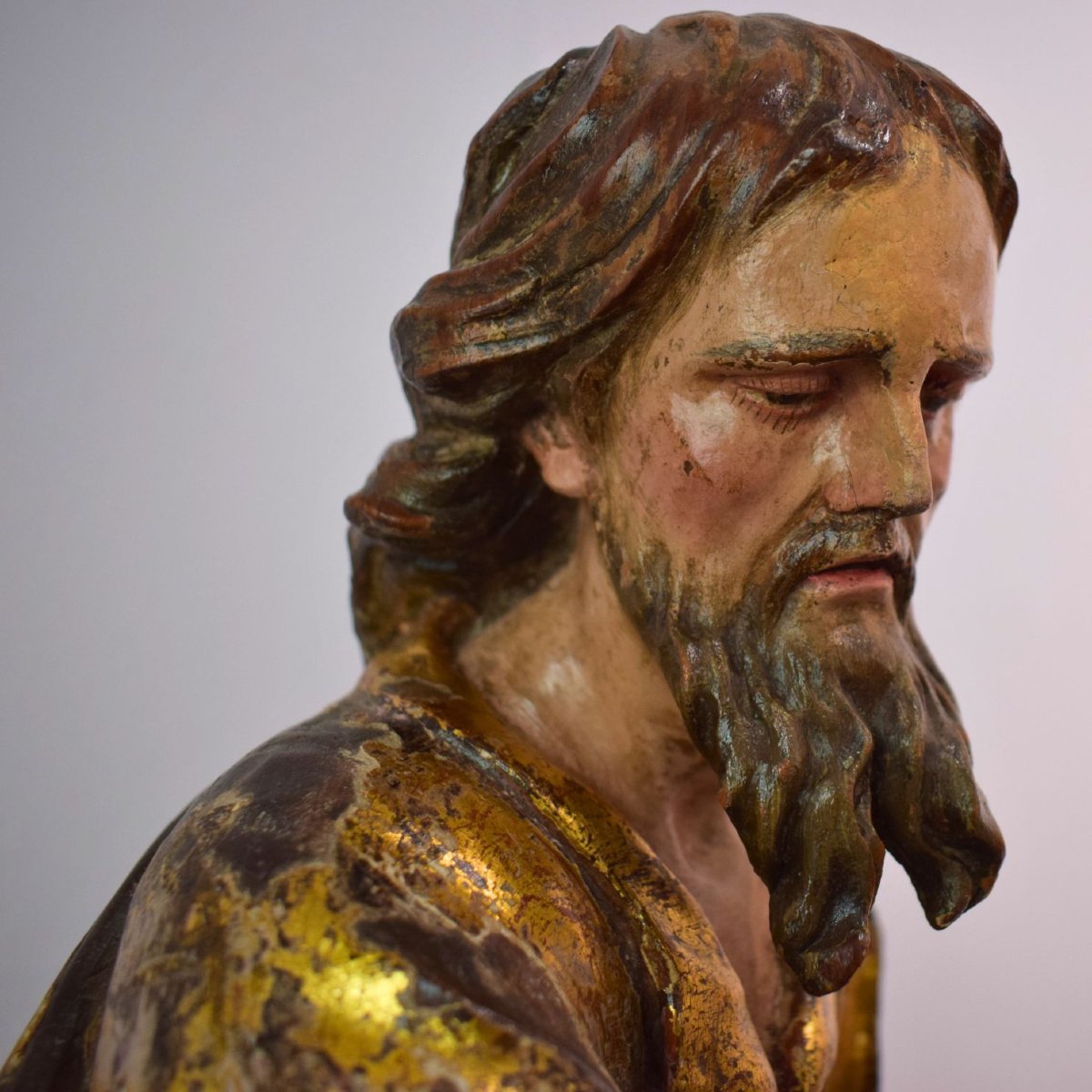
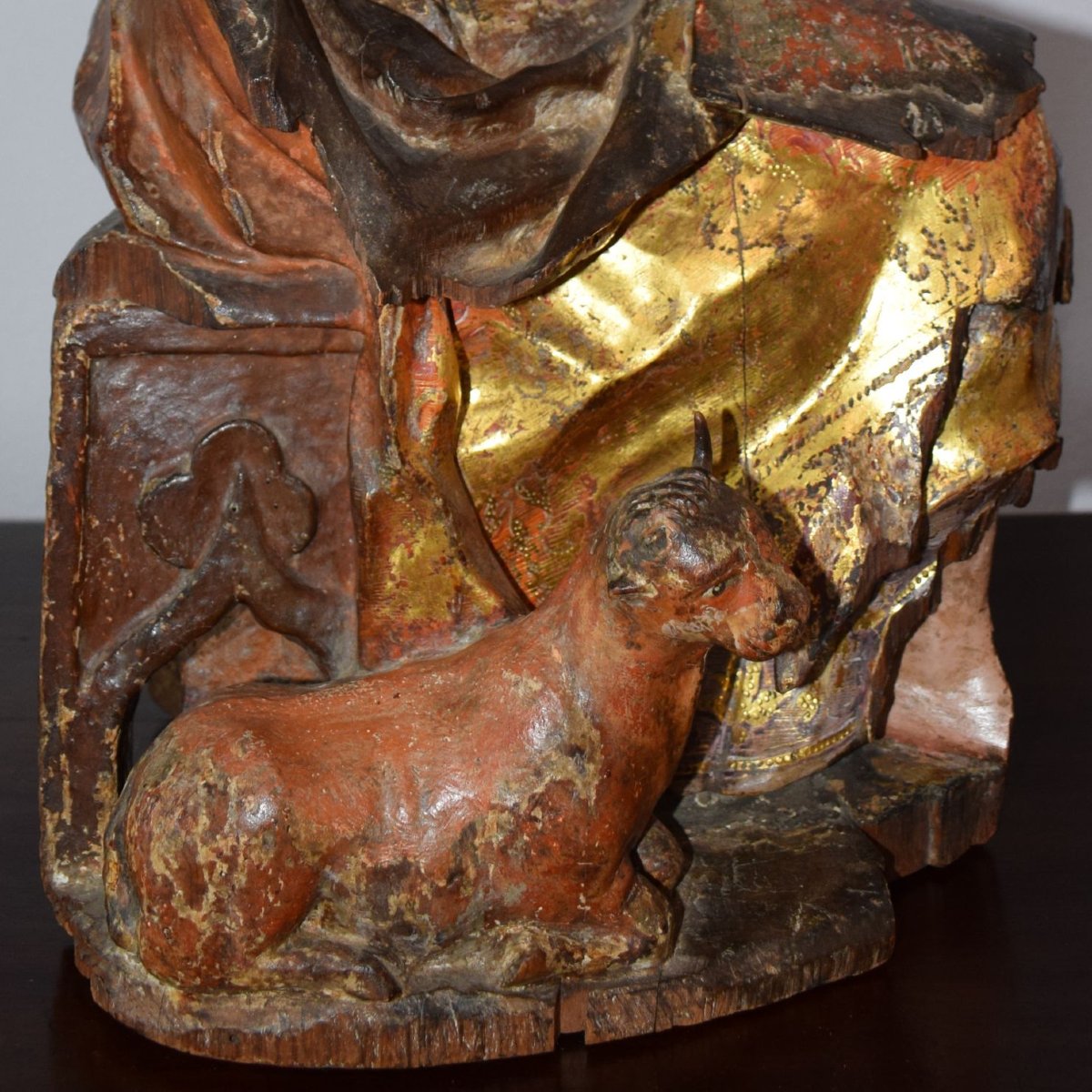
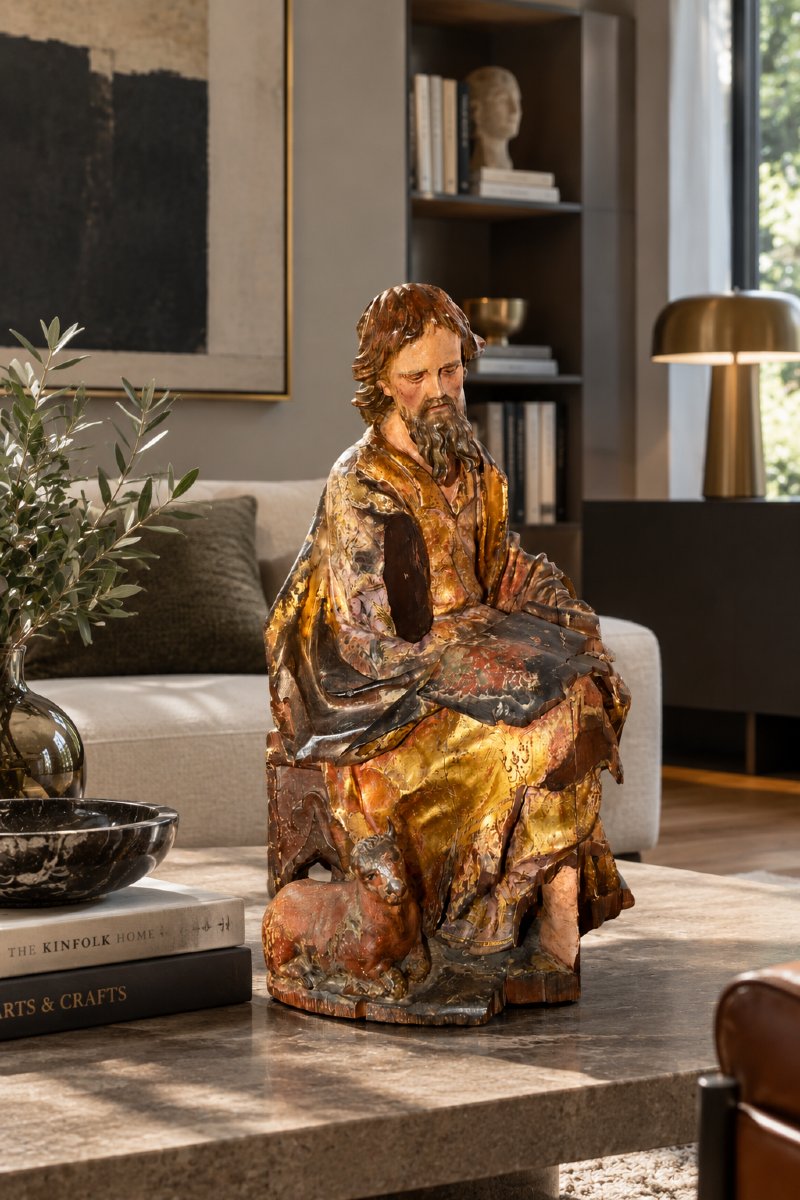
Wooden sculpture depicting Saint Luke the Evangelist, shown seated with his head slightly bowed and his gaze directed toward the open book resting on his lap. At his feet, crouching near the seat, is the ox, the evangelist’s traditional iconographic attribute.
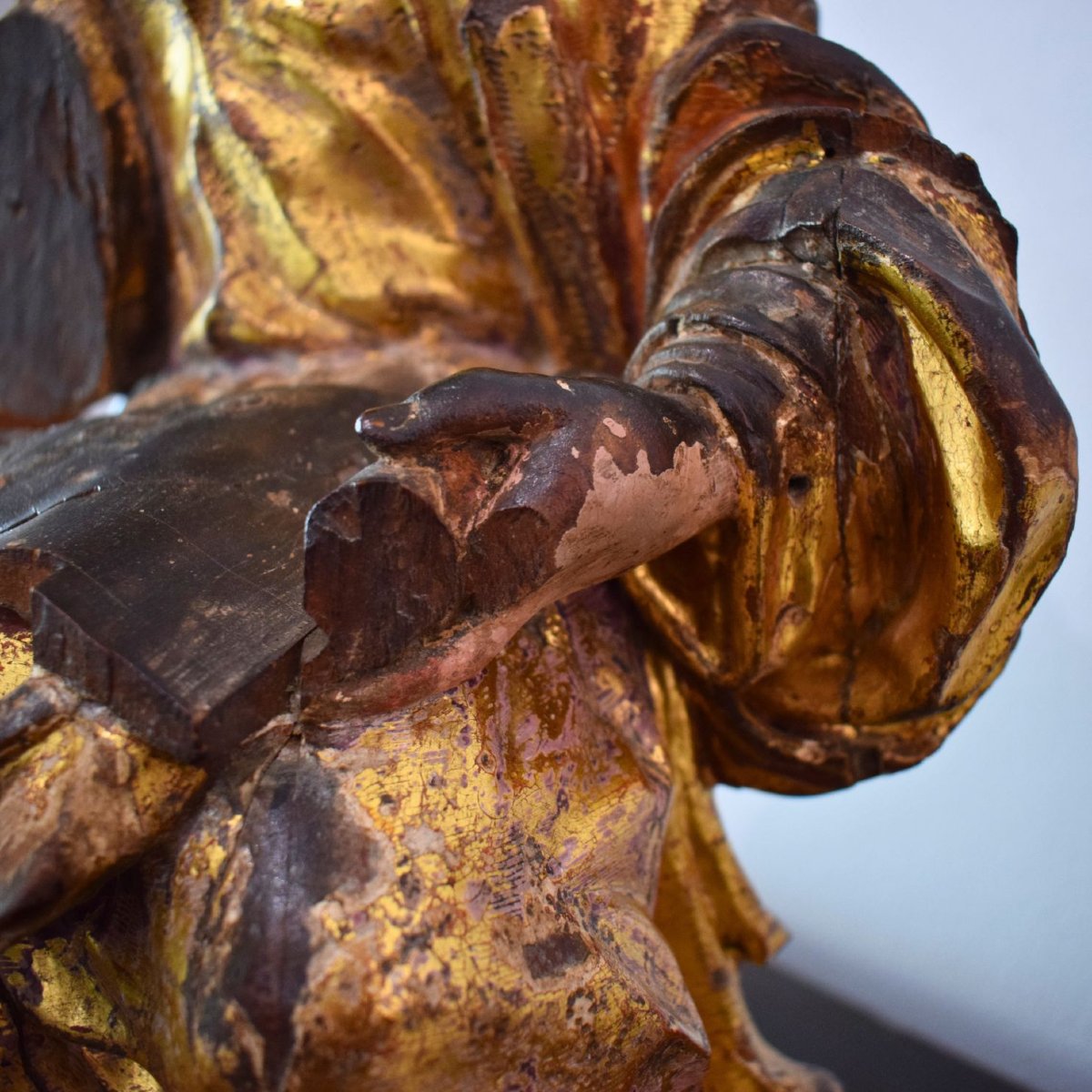
The figure stands out for the richness of the rendering of the robes, articulated in broad, deep folds, and for the vibrant polychrome and gilded decoration. Warm shades of red, ochre, and brown alternate with gilded surfaces, helping to emphasize the volume of the drapery and the solemn character of the depiction.
The face, framed by wavy hair and a flowing beard, has a pensive and meditative expression. His posture and focus on the volume evoke the intellectual and spiritual dimension of the evangelist, traditionally associated with the writing of the third Gospel and the Acts of the Apostles.
The ox at his feet, in the iconographic tradition of the Tetramorph, is the symbol of Saint Luke and distinguishes him from the other three evangelists, who are represented instead by the angel for Matthew, the lion for Mark, and the eagle for John.
Christian tradition has also associated Saint Luke with the medical profession (Colossians 4:14), and, in the Byzantine context between the 8th and 9th centuries (during the Iconoclastic Crisis), as an argument in favor of the veneration of sacred images, to his reputation as the first portraitist of the Virgin Mary. This connection contributed to his particular popularity among painters’ guilds.
This sculpture attests to the popularity of polychrome wooden statuary in 16th-century devotional art. Wood carving allowed for striking three-dimensional effects and immediate expressiveness, while the polychromy and gilding helped give the figure a particularly striking visual presence.
The subject matter, the technique, and the richness of the robe make the work of interest to collectors of ancient sculpture and to scholars studying 16th-century polychrome wood sculpture.
A work with a strong sculptural presence, capable of combining devotional function with the decorative refinement of 16th-century wood sculpture.
- All our works are accompanied by a detailed certificate of authenticity.
- Professional packaging and insured shipping to ensure maximum safety during transport.
- For further information, please do not hesitate to contact us at +39 329 319 4887 – info@dequart.com
- Option for VIDEO CALLS and in-person viewings by appointment in MILAN and OMEGNA (Vb).
- Additional information and photos: www.dequart.com IG - FB @dequ.art
4 950 €
Period: 16th century
Style: Renaissance, Louis 13th
Condition: Some scratches and chips
Material: Gilted wood
Width: 22
Height: 50
Depth: 27
Reference (ID): 1845621
Availability: In stock
Print