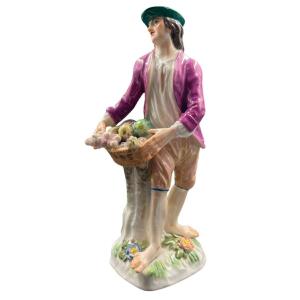


Meissen Porcelain Manufactory, Ortolano, Porcelain
Artist: Manufacture De Meissen
Meissen Manufactory
Germany, First half of the 20th century
Young vegetable seller with a basket of vegetables
Hand-painted polychrome hard-paste porcelain, H 19 cm
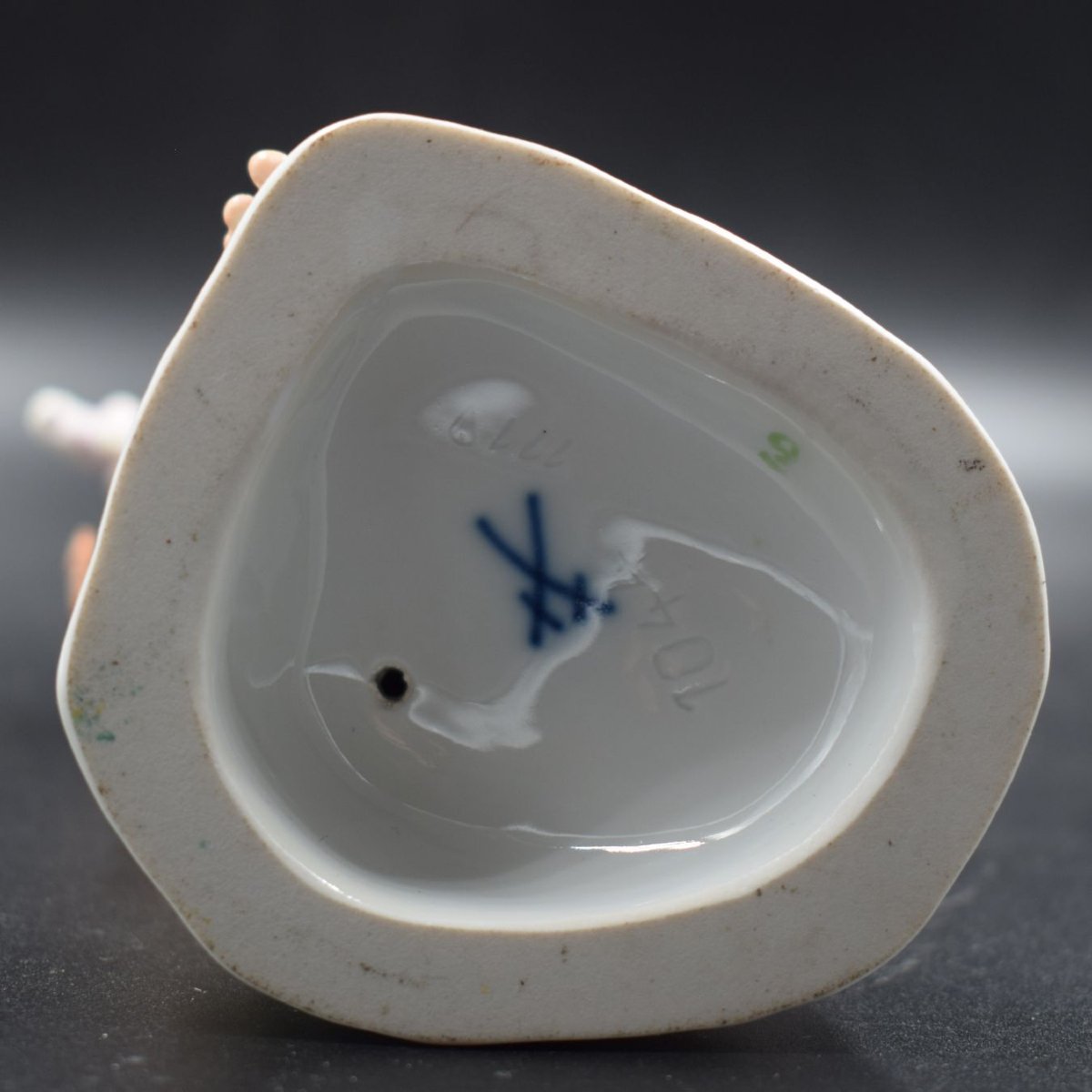
Double crossed blue swords beneath the base
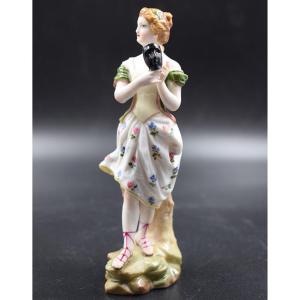
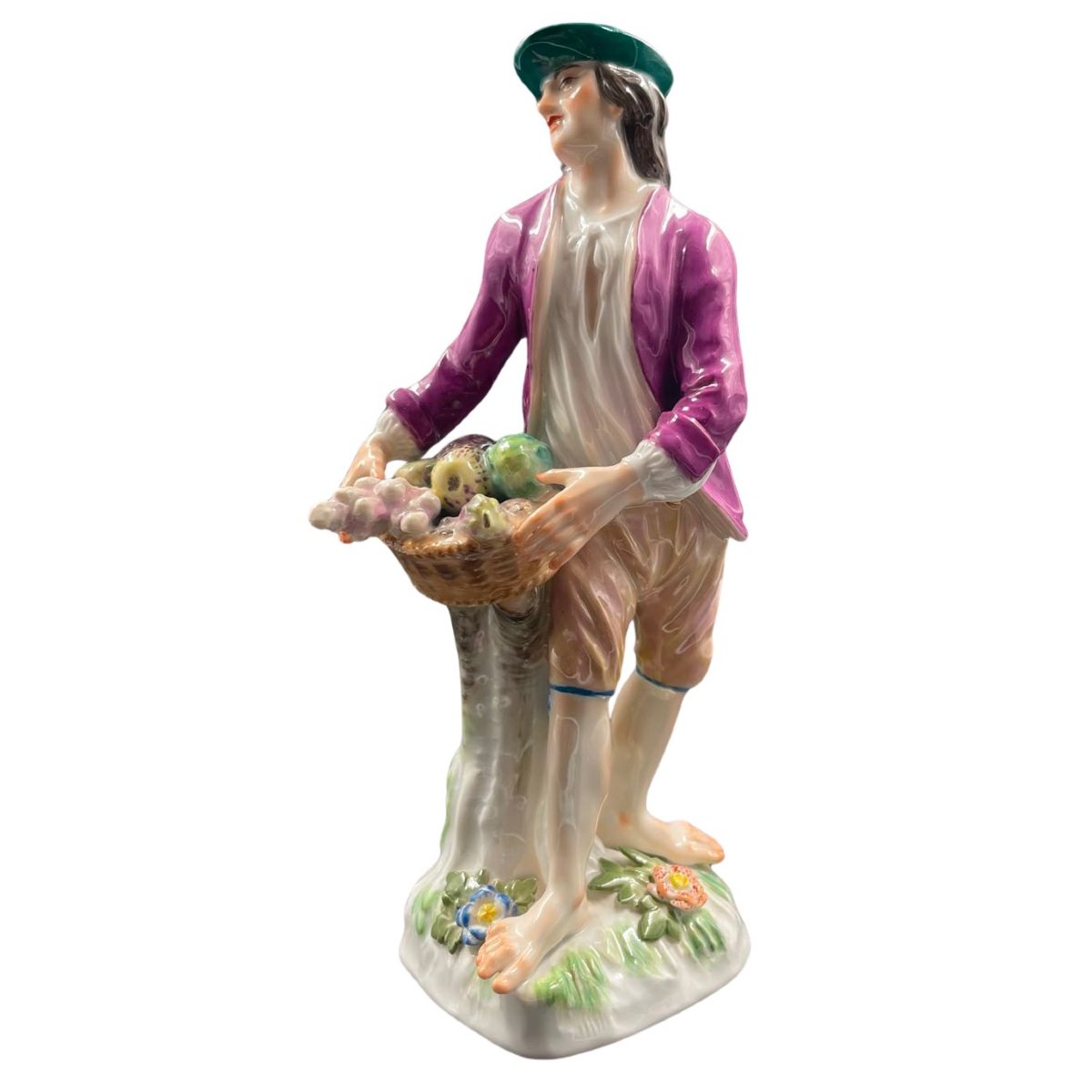
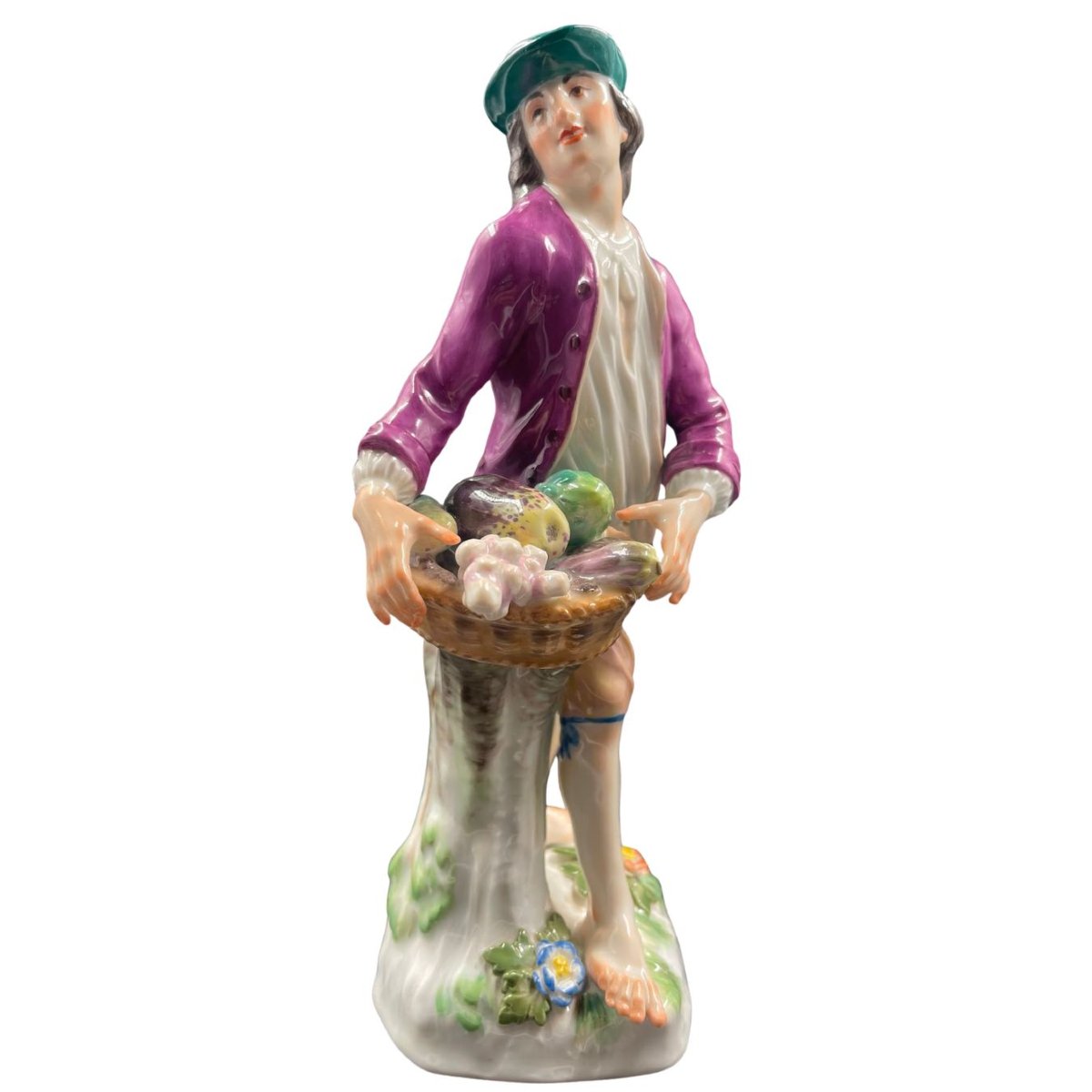
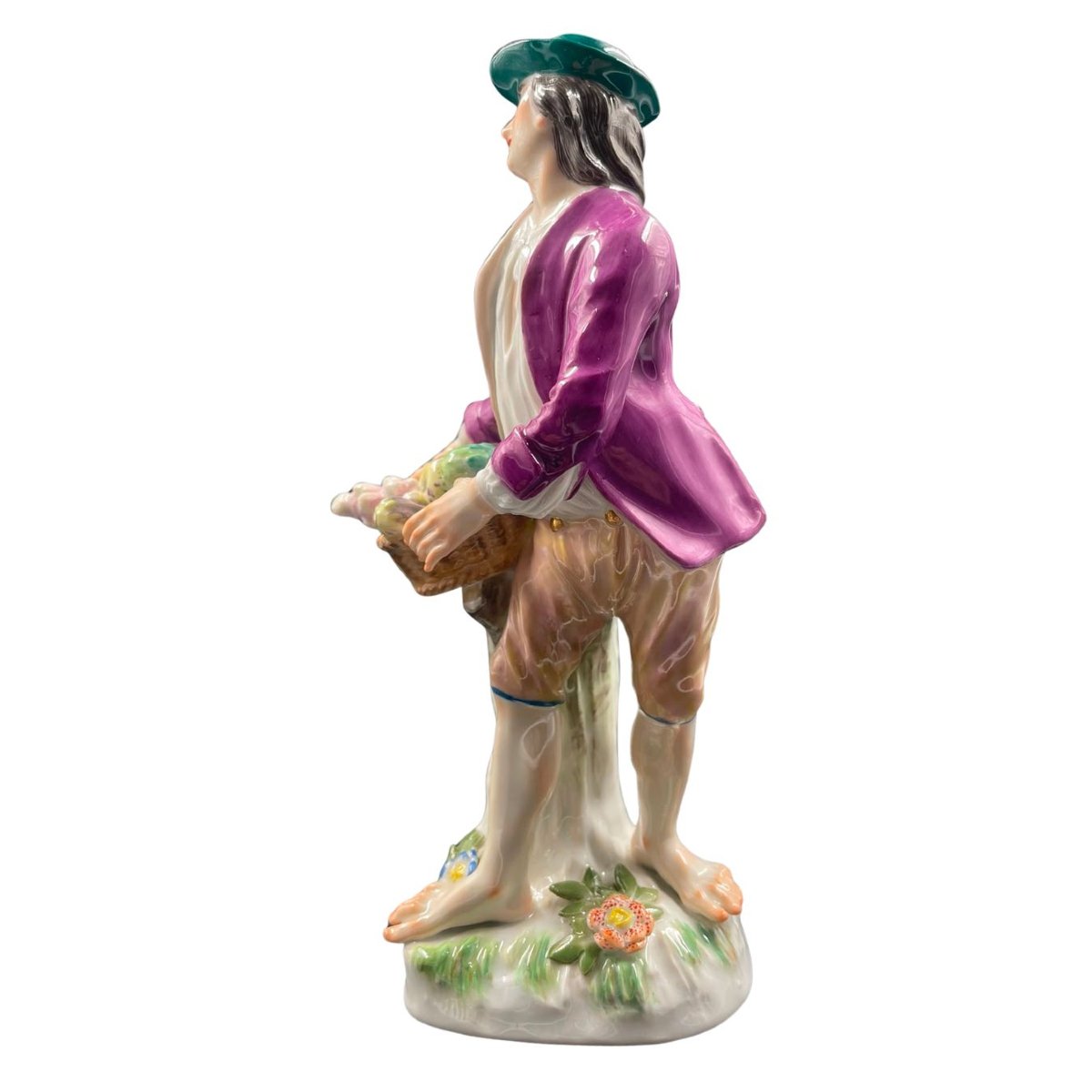
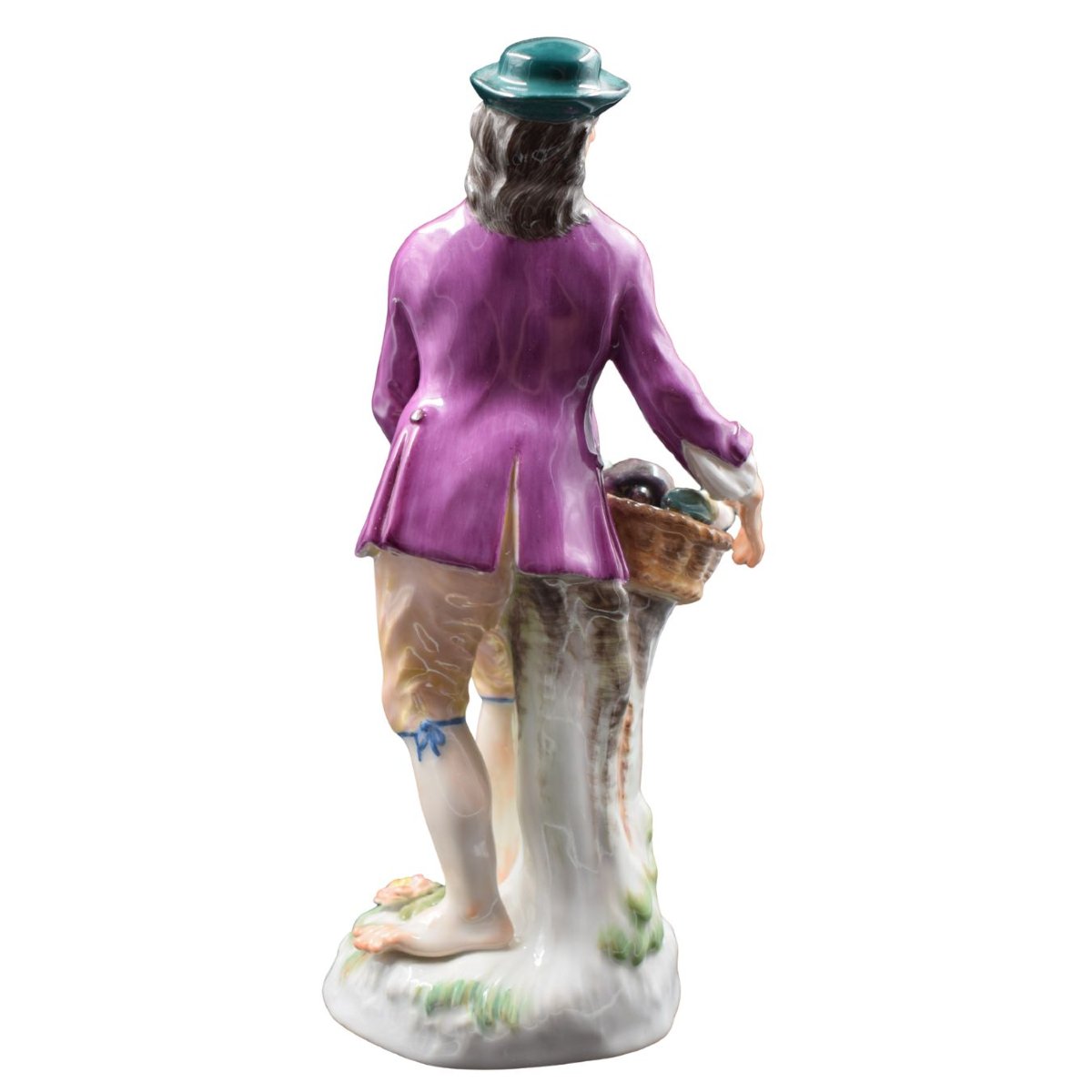
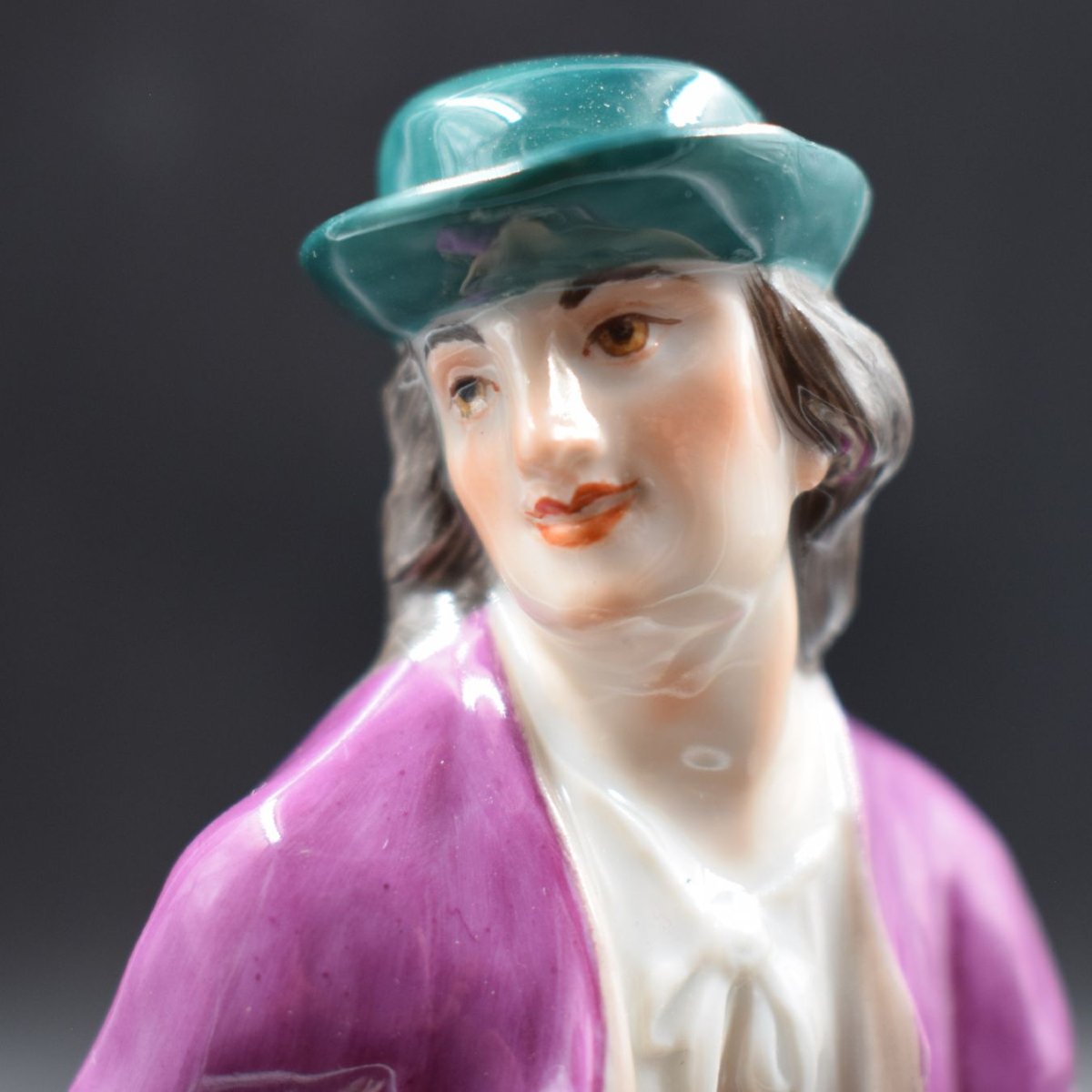
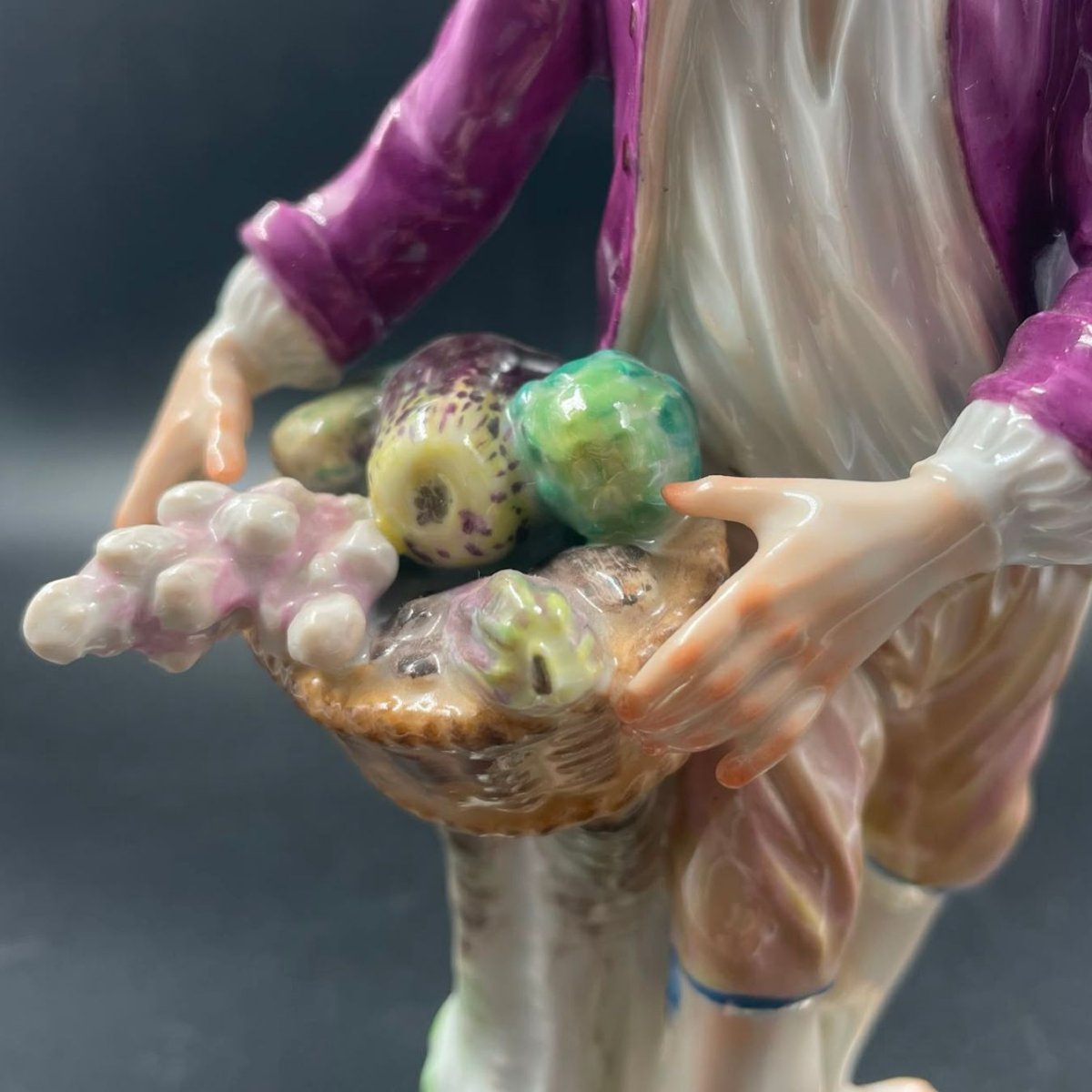
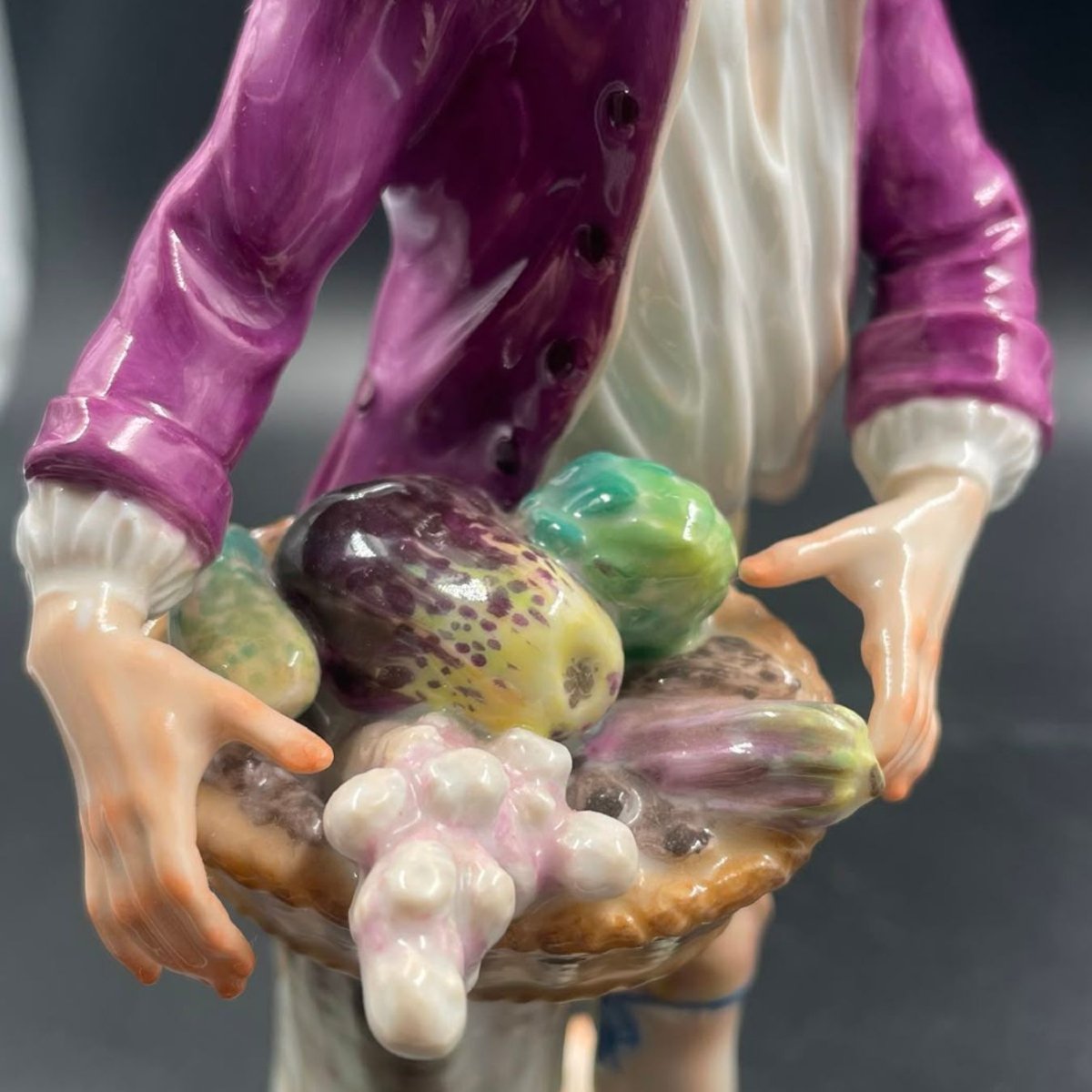
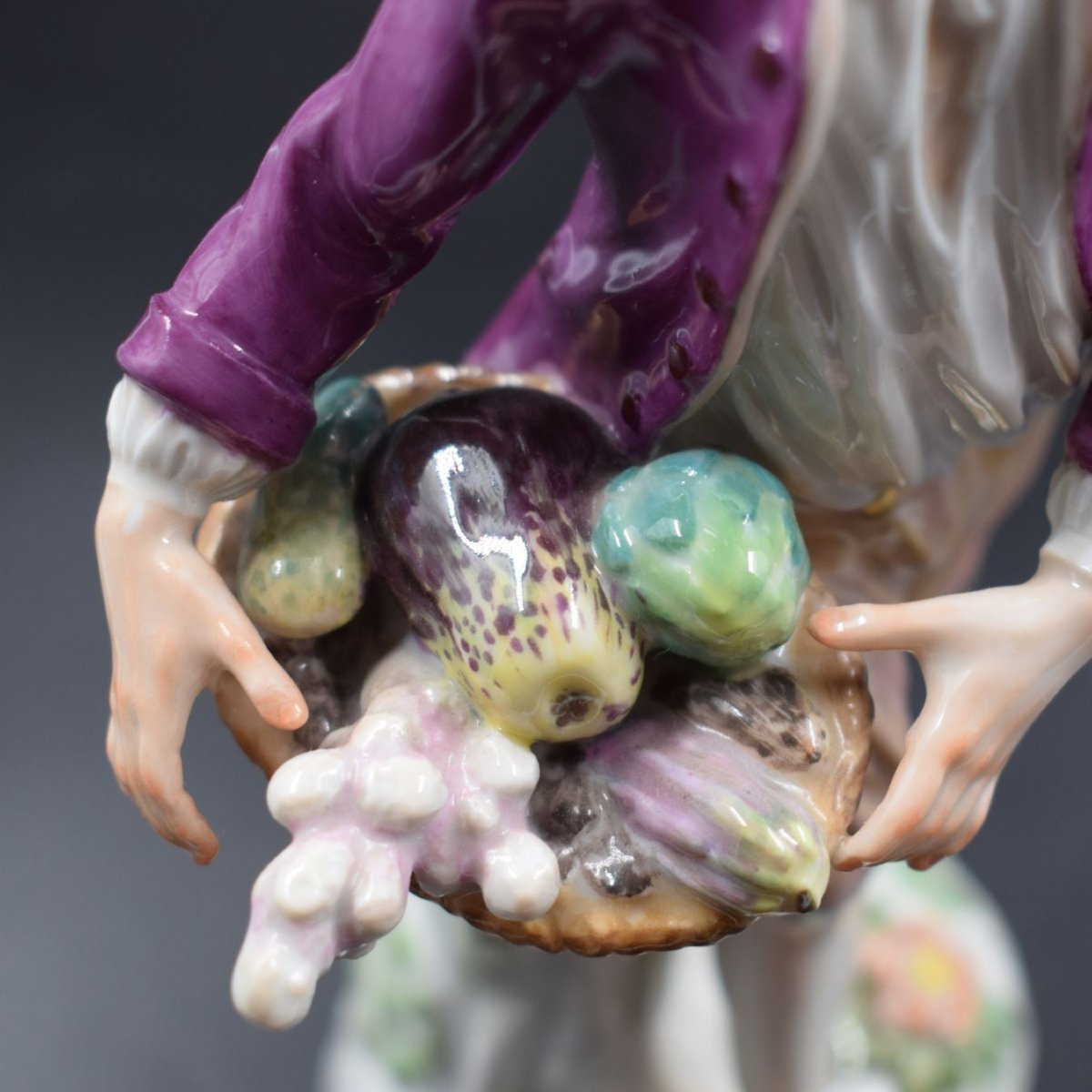
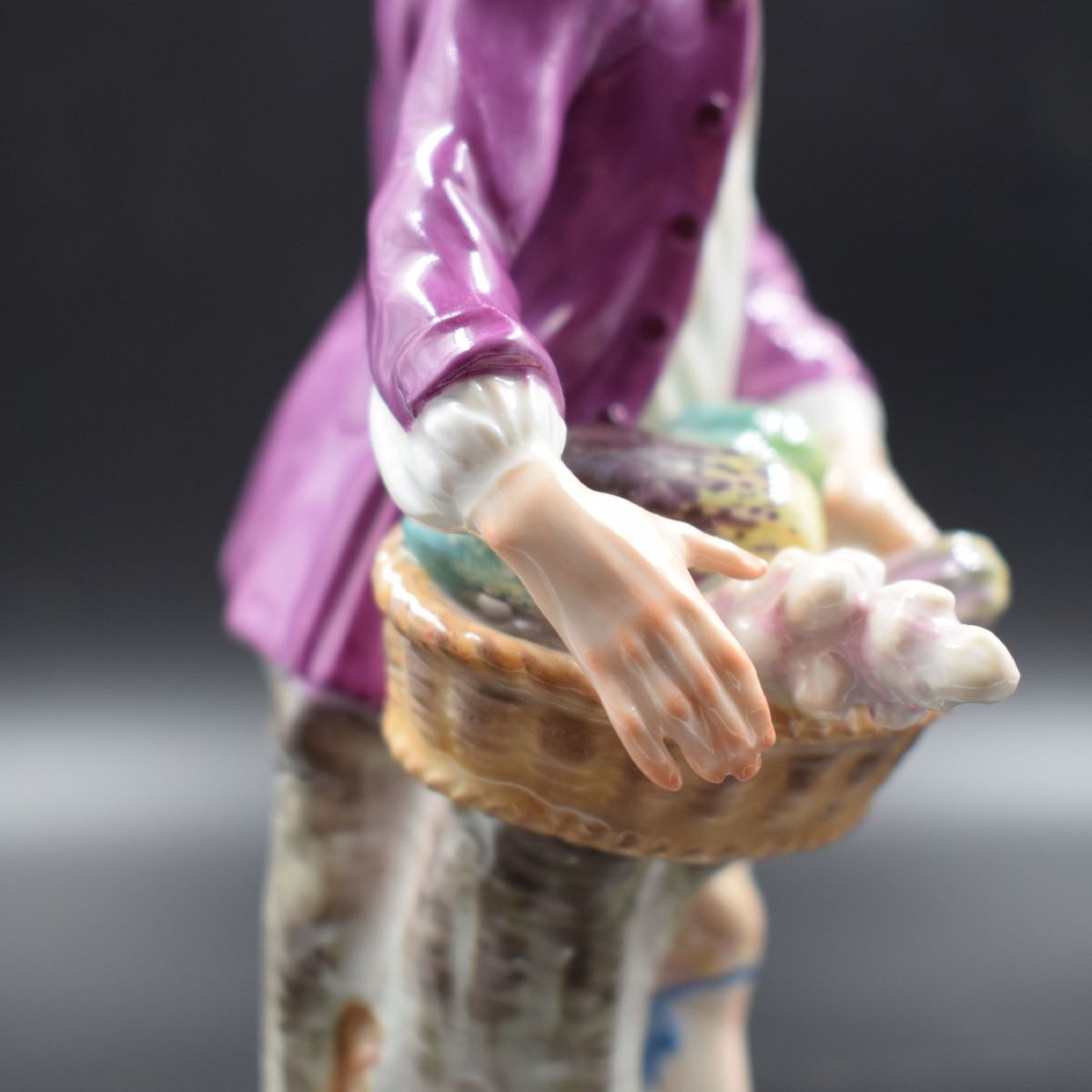
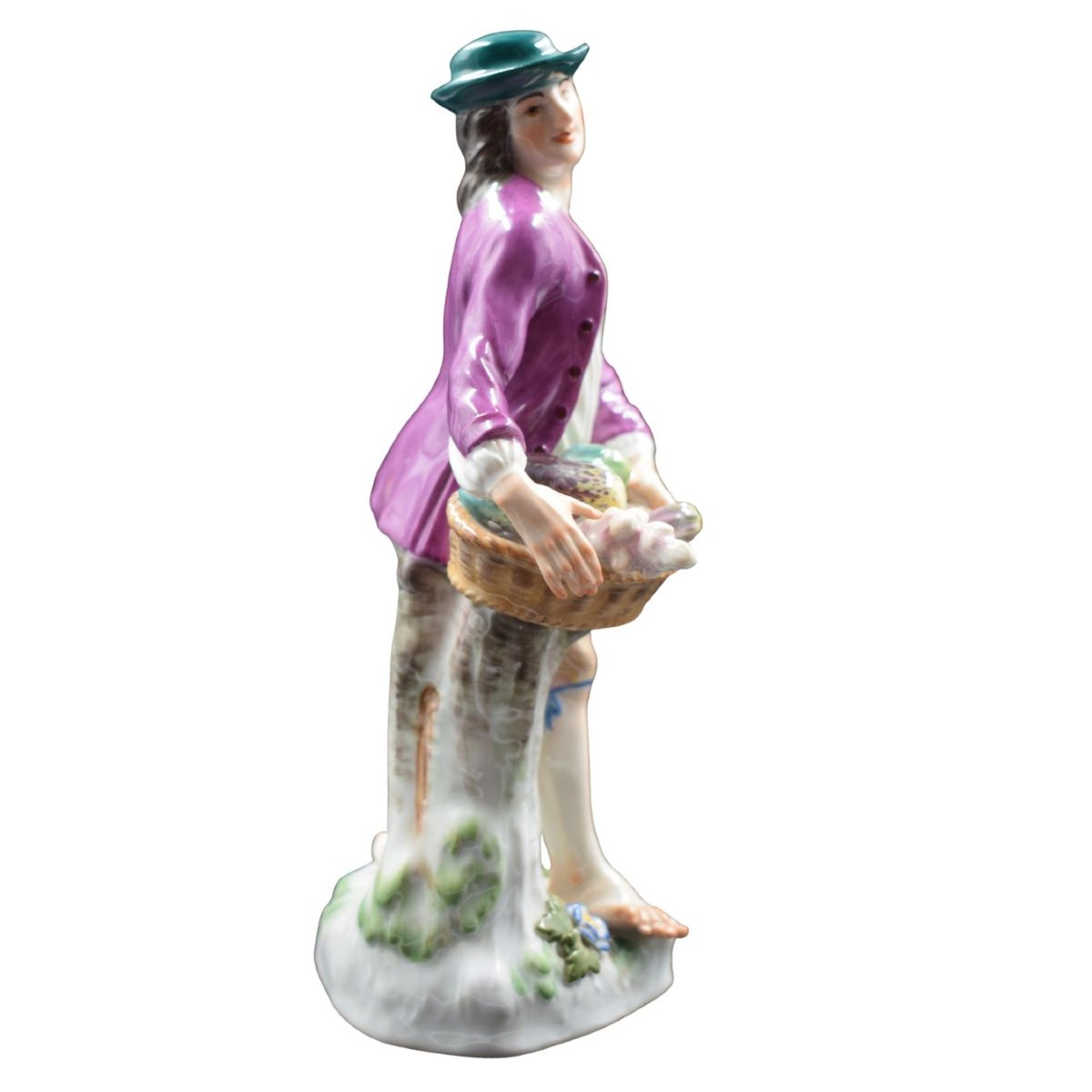
Elegant hard-paste porcelain figurine depicting a young market gardener holding a basket full of vegetables—eggplants, cabbage, and other garden produce—rendered with extraordinary chromatic naturalism and precise sculptural definition. The young man, depicted wearing the typical green hat, purple jacket, white shirt, and stockings fastened with light blue ribbons, strikes a dynamic and graceful pose, characteristic of the Rococo style that the Meissen manufactory has consistently reinterpreted over the centuries.
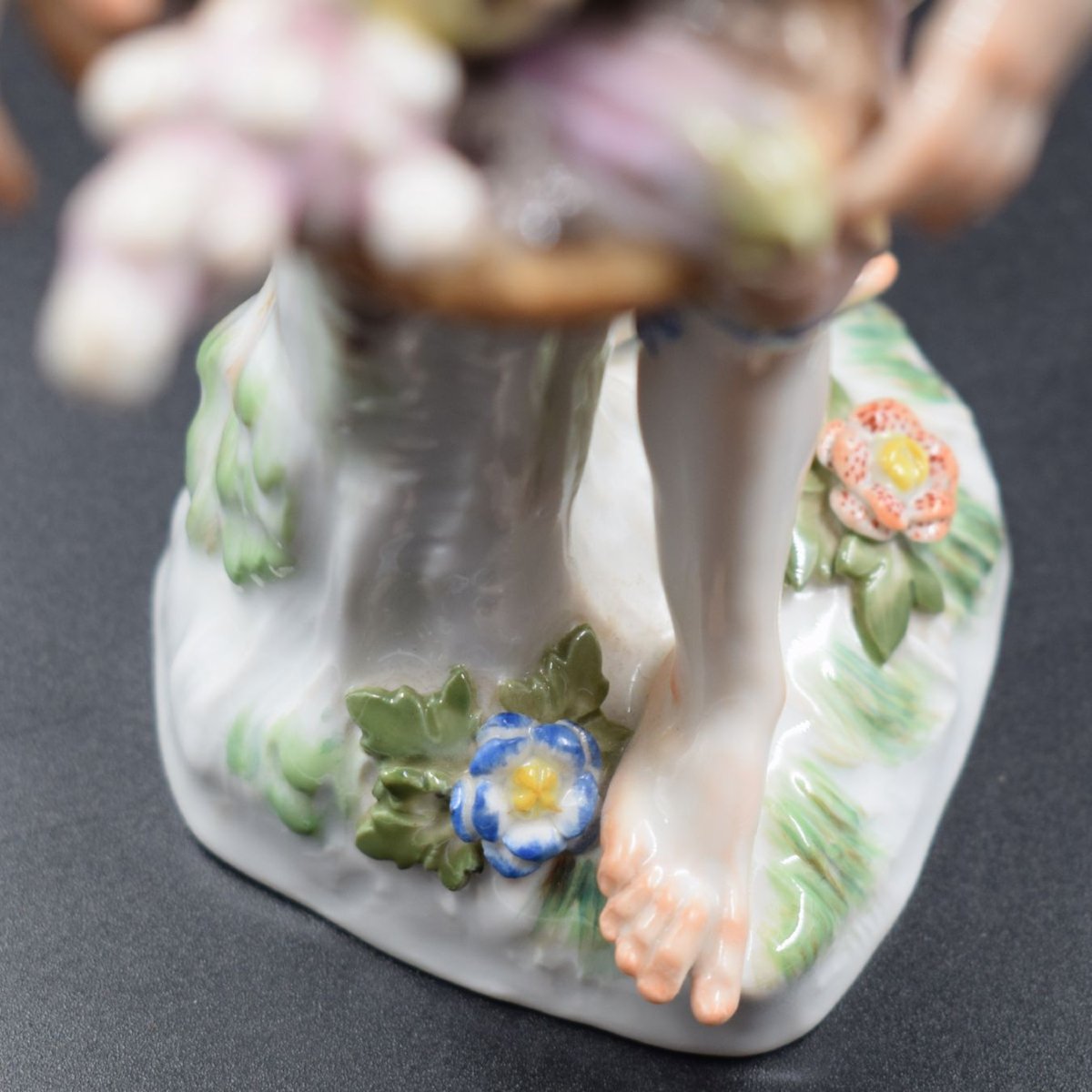
The composition stands out for its refined anatomical modeling, the brilliance of the glazing, and the rich polychrome palette—elements that attest to the exceptionally high technical level achieved by the Saxon manufactory. The naturalistic base, featuring a tree trunk and small applied flowers, harmoniously completes the scene, lending the figure an elegant compositional balance.
Founded in 1710 by Augustus the Strong, the Meissen Porcelain Manufactory was the first in Europe to successfully produce true hard-paste porcelain, marking a decisive turning point in the history of Western decorative arts. Beginning in the 1730s, thanks to the designs of Johann Joachim Kaendler and his collaborators, the production of figurines became one of the manufactory’s principal areas of excellence, featuring subjects inspired by daily life and trades, such as gardeners and street vendors, initially intended to adorn the sumptuous “surtout de table”—the refined porcelain centerpieces for the tables of European courts, where multiple sculptures were arranged together in decorative groups, creating elaborate Rococo-style scenes.
This piece is a fine example of this successful iconographic tradition of gardeners and fruit and vegetable vendors, a repertoire that was constantly revisited and reinterpreted by the manufactory between the 19th and 20th centuries. The figure bears similarities to the numerous statuettes of gardeners and fruit pickers still found today in the Meissen historical catalog, which are derived from the famous 18th-century models.
The base bears the mark of the famous crossed swords in blue underglaze, the symbol of the Meissen Manufactory since the 18th century. Also present are the model number 1042, an engraved production number (611), and the green control number 9—elements consistent with the factory’s production practices in the first half of the 20th century. The presence of the underglaze mark and factory codes confirms the authenticity of the Meissen production and allows the work to be attributed to the Saxon manufactory.
From a collector’s perspective, these figurines are particularly prized for the quality of their modeling, the vibrancy of their polychrome decoration, and their ability to evoke the Rocaille style of the renowned Meissen manufactory. The balance between formal elegance and narrative character makes the piece extremely decorative, ideal both as a standalone piece and as part of a collection dedicated to European porcelain.
- All our pieces are accompanied by a detailed certificate of authenticity.
- Professional packaging and insured shipping to ensure maximum safety during transport.
- For further information, please do not hesitate to contact us at +39 329 319 4887 – info@dequart.com
- Option for VIDEO CALLS and in-person viewings by appointment in MILAN and BORGOMANERO (NO).
- Additional information and photos: www.dequart.com IG - FB @dequ.art
Germany, First half of the 20th century
Young vegetable seller with a basket of vegetables
Hand-painted polychrome hard-paste porcelain, H 19 cm
Double crossed blue swords beneath the base
Elegant hard-paste porcelain figurine depicting a young market gardener holding a basket full of vegetables—eggplants, cabbage, and other garden produce—rendered with extraordinary chromatic naturalism and precise sculptural definition. The young man, depicted wearing the typical green hat, purple jacket, white shirt, and stockings fastened with light blue ribbons, strikes a dynamic and graceful pose, characteristic of the Rococo style that the Meissen manufactory has consistently reinterpreted over the centuries.
The composition stands out for its refined anatomical modeling, the brilliance of the glazing, and the rich polychrome palette—elements that attest to the exceptionally high technical level achieved by the Saxon manufactory. The naturalistic base, featuring a tree trunk and small applied flowers, harmoniously completes the scene, lending the figure an elegant compositional balance.
Founded in 1710 by Augustus the Strong, the Meissen Porcelain Manufactory was the first in Europe to successfully produce true hard-paste porcelain, marking a decisive turning point in the history of Western decorative arts. Beginning in the 1730s, thanks to the designs of Johann Joachim Kaendler and his collaborators, the production of figurines became one of the manufactory’s principal areas of excellence, featuring subjects inspired by daily life and trades, such as gardeners and street vendors, initially intended to adorn the sumptuous “surtout de table”—the refined porcelain centerpieces for the tables of European courts, where multiple sculptures were arranged together in decorative groups, creating elaborate Rococo-style scenes.
This piece is a fine example of this successful iconographic tradition of gardeners and fruit and vegetable vendors, a repertoire that was constantly revisited and reinterpreted by the manufactory between the 19th and 20th centuries. The figure bears similarities to the numerous statuettes of gardeners and fruit pickers still found today in the Meissen historical catalog, which are derived from the famous 18th-century models.
The base bears the mark of the famous crossed swords in blue underglaze, the symbol of the Meissen Manufactory since the 18th century. Also present are the model number 1042, an engraved production number (611), and the green control number 9—elements consistent with the factory’s production practices in the first half of the 20th century. The presence of the underglaze mark and factory codes confirms the authenticity of the Meissen production and allows the work to be attributed to the Saxon manufactory.
From a collector’s perspective, these figurines are particularly prized for the quality of their modeling, the vibrancy of their polychrome decoration, and their ability to evoke the Rocaille style of the renowned Meissen manufactory. The balance between formal elegance and narrative character makes the piece extremely decorative, ideal both as a standalone piece and as part of a collection dedicated to European porcelain.
- All our pieces are accompanied by a detailed certificate of authenticity.
- Professional packaging and insured shipping to ensure maximum safety during transport.
- For further information, please do not hesitate to contact us at +39 329 319 4887 – info@dequart.com
- Option for VIDEO CALLS and in-person viewings by appointment in MILAN and BORGOMANERO (NO).
- Additional information and photos: www.dequart.com IG - FB @dequ.art
450 €
Period: 20th century
Style: Art Nouveau
Condition: Excellent condition
Material: Porcelain
Width: 7,5
Height: 19
Reference (ID): 1798558
Availability: In stock
Print