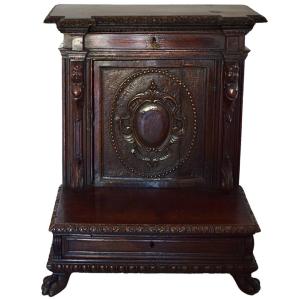


17th-century Genoese Kneeler Made Of Walnut
Genoa, 17th century
Prayer stool
Carved solid walnut, H 98 cm × W 85 cm × D 50 cm
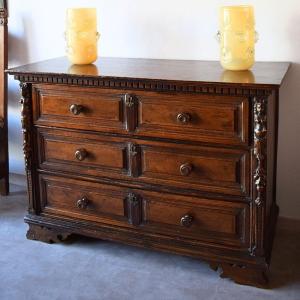
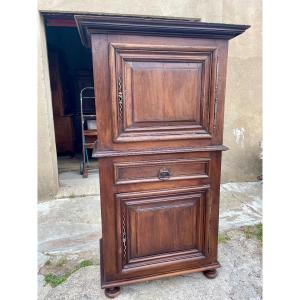
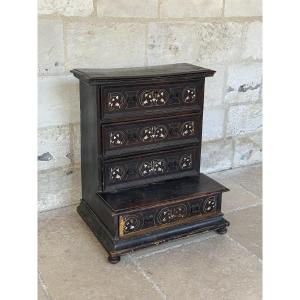
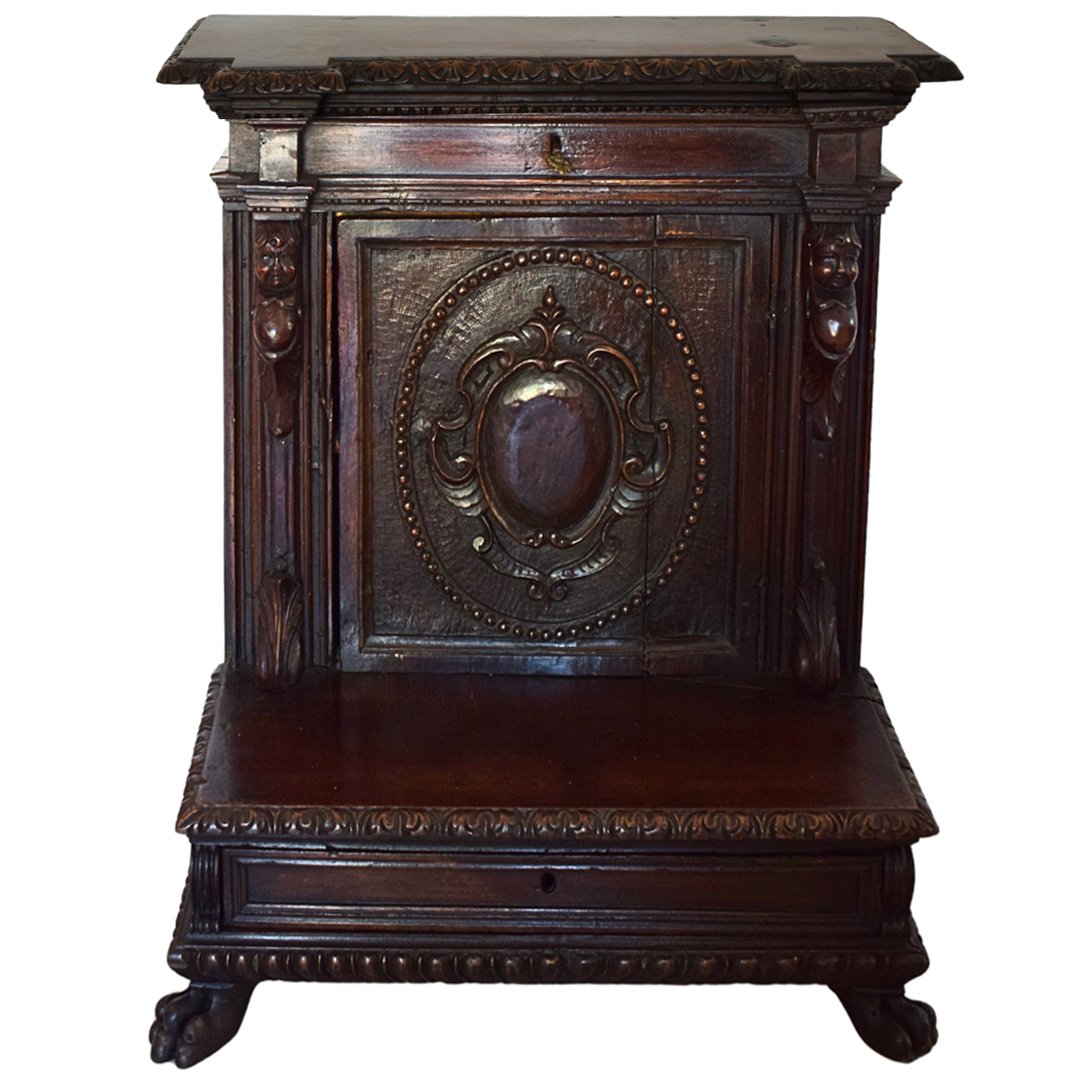
An important solid walnut kneeler, attributable to 17th-century Genoese cabinetmaking, reflecting the refined furniture culture that developed in the Republic of Genoa during its period of greatest economic and artistic splendor.
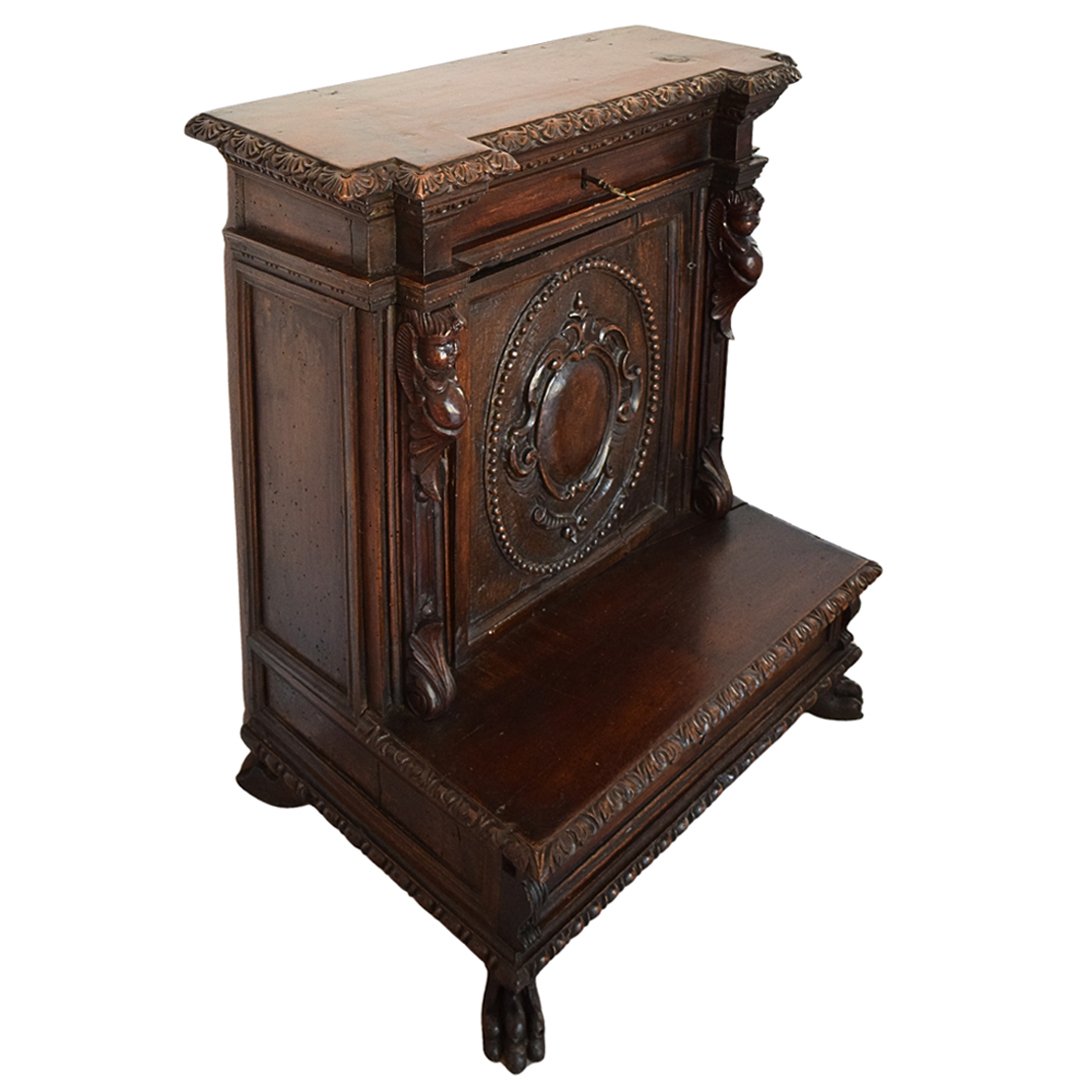
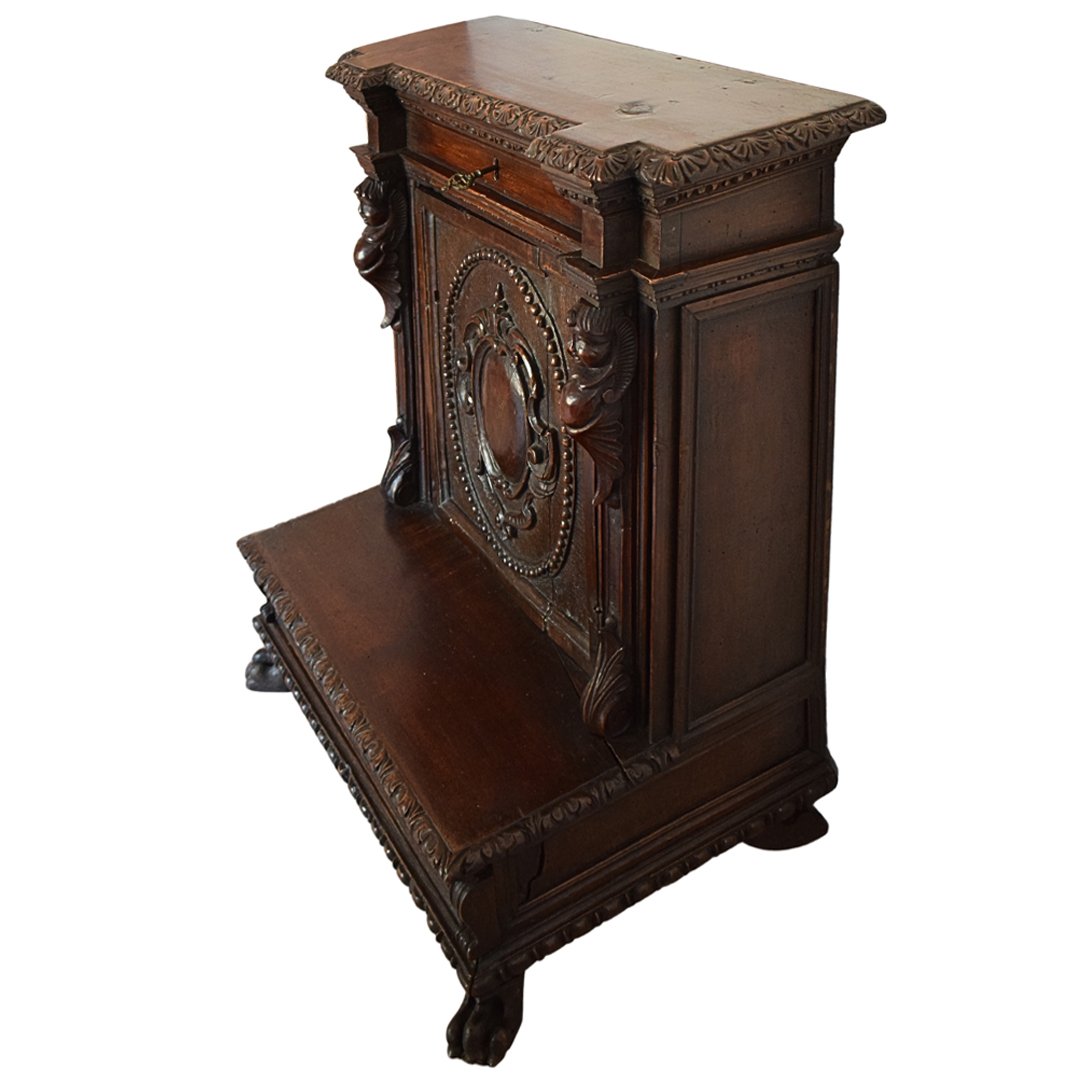
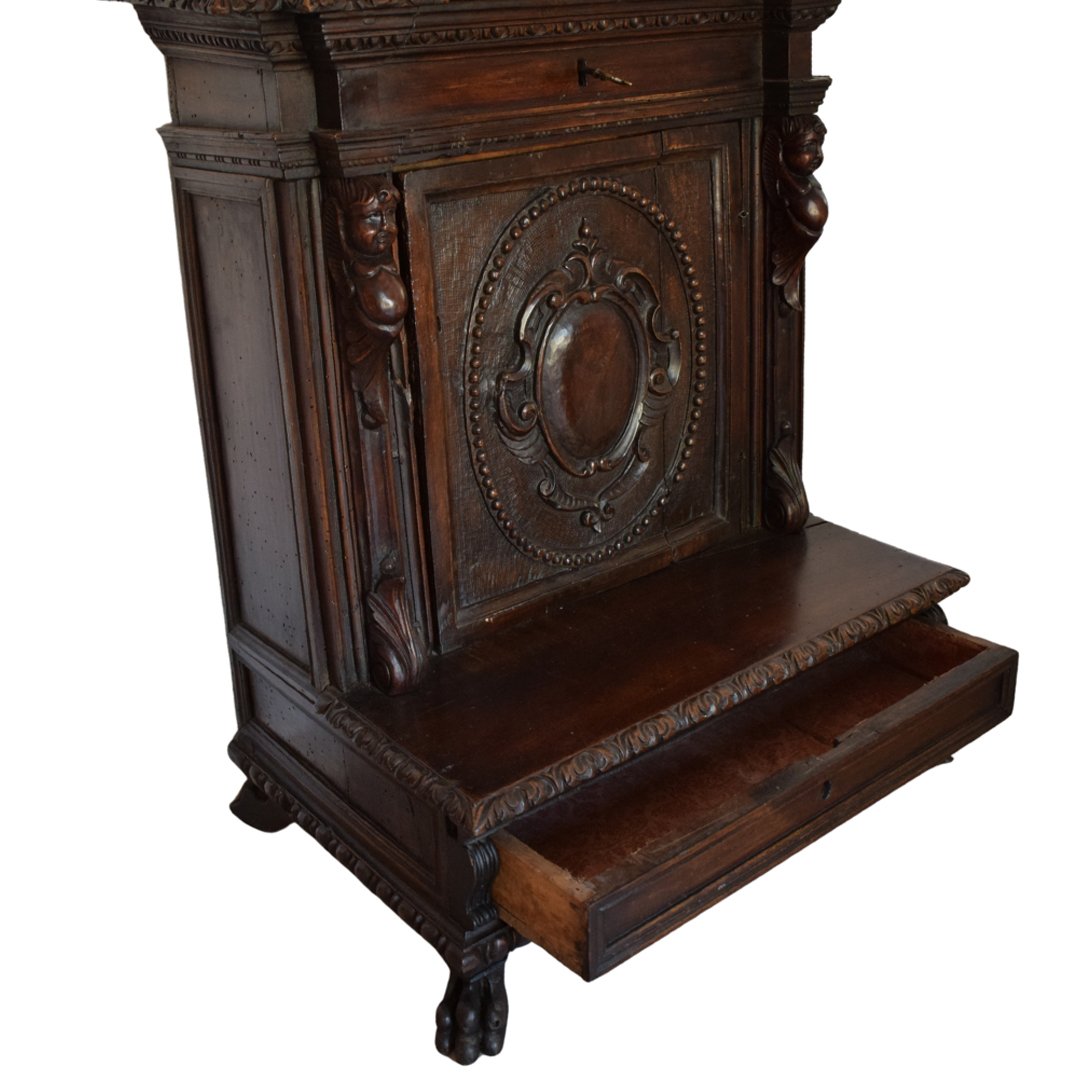
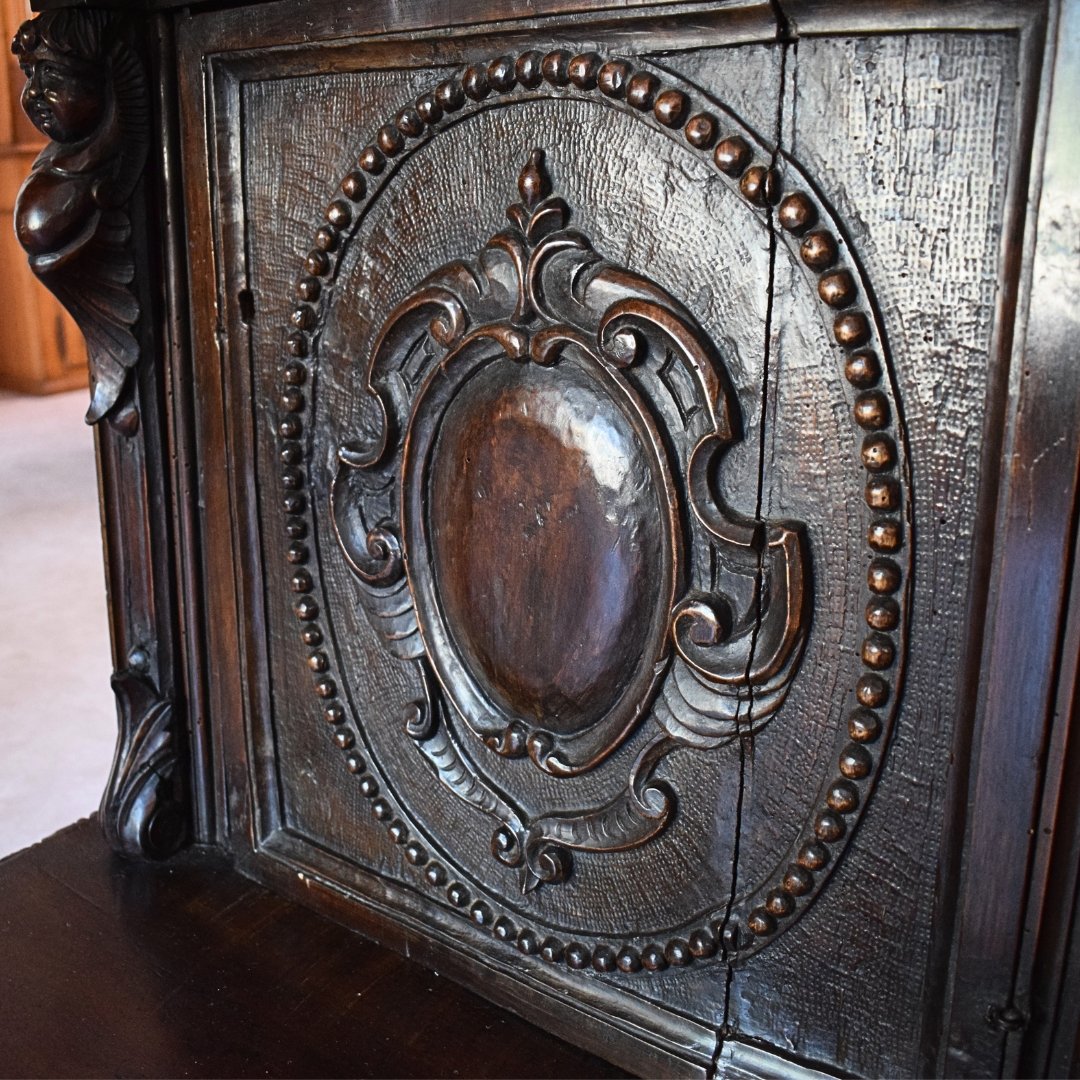
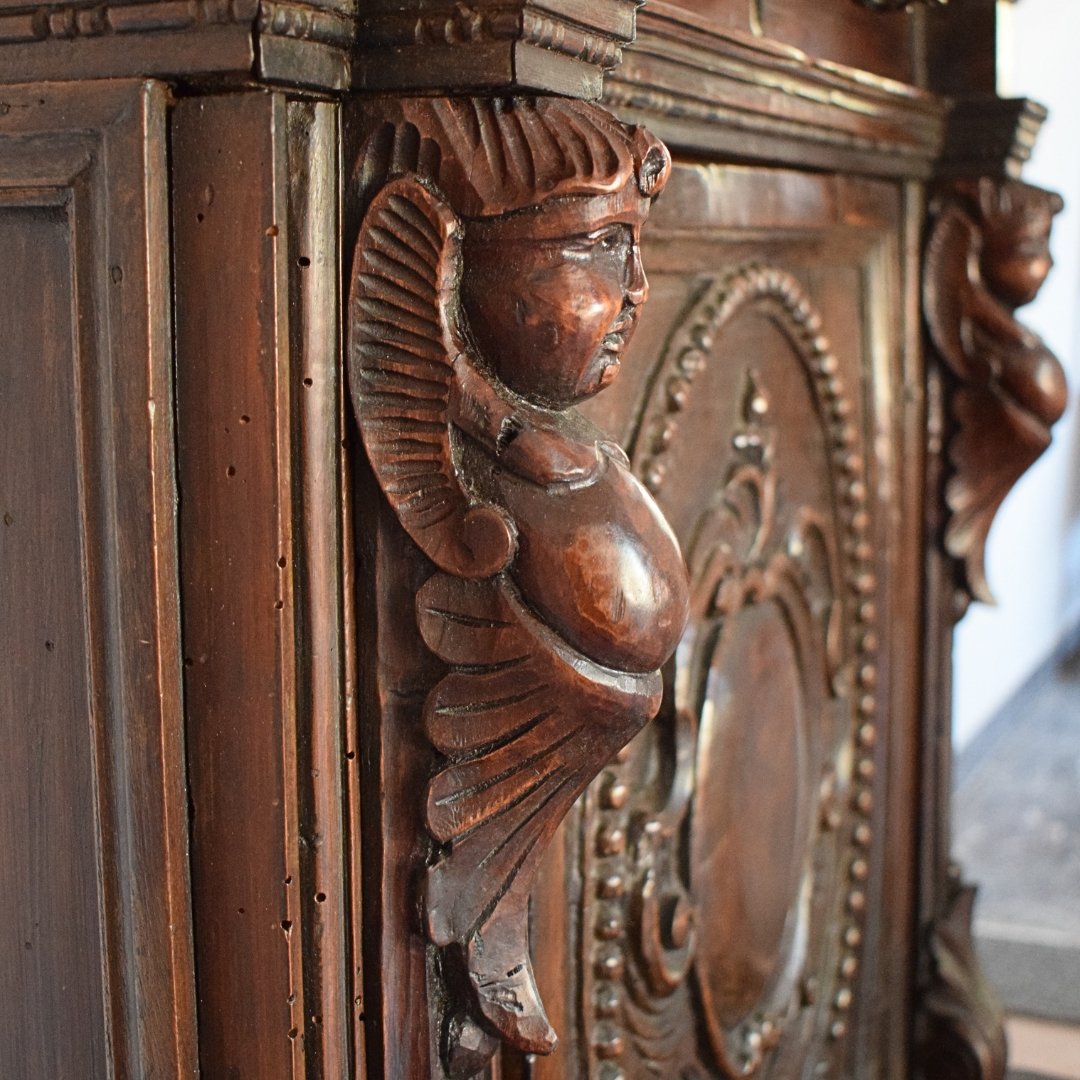
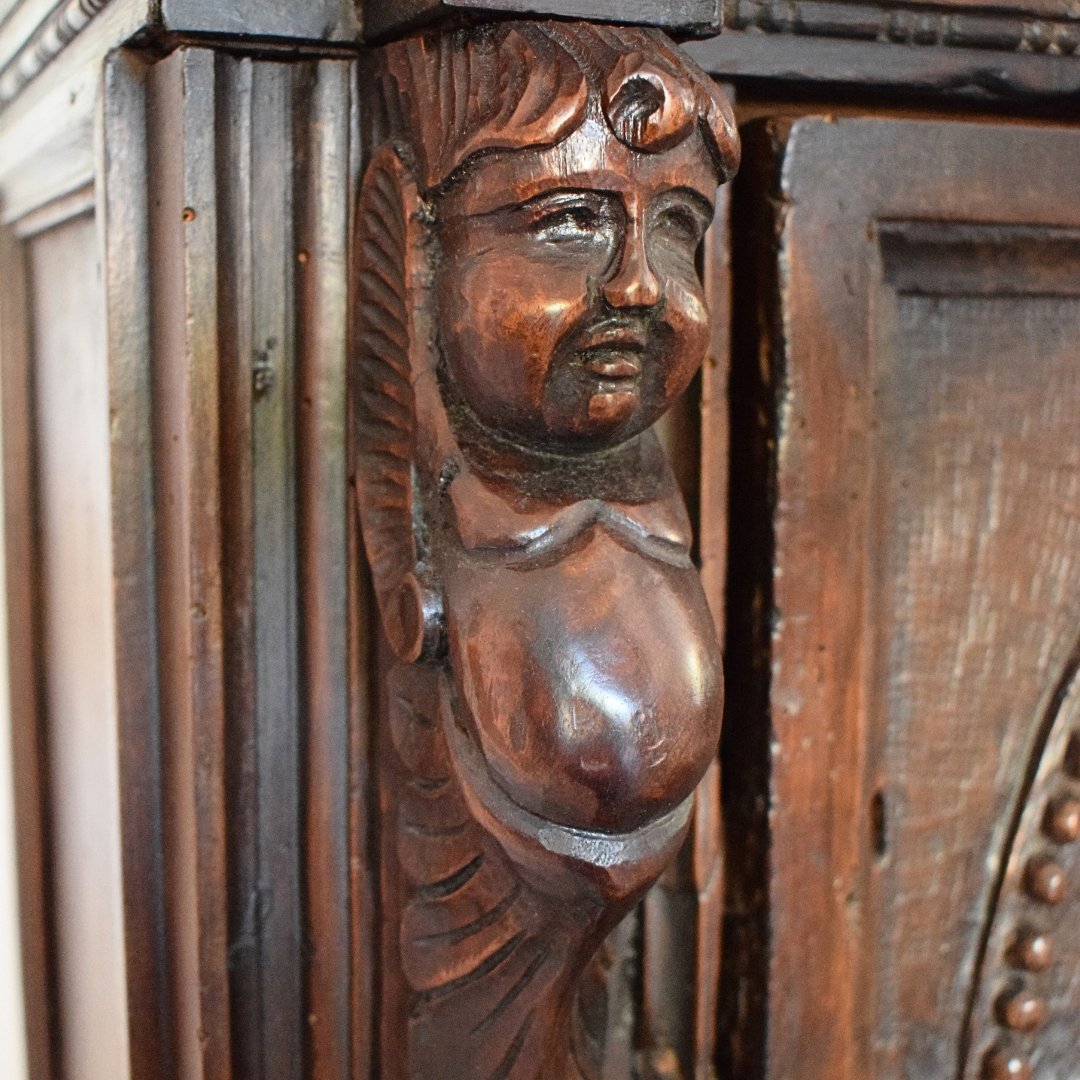
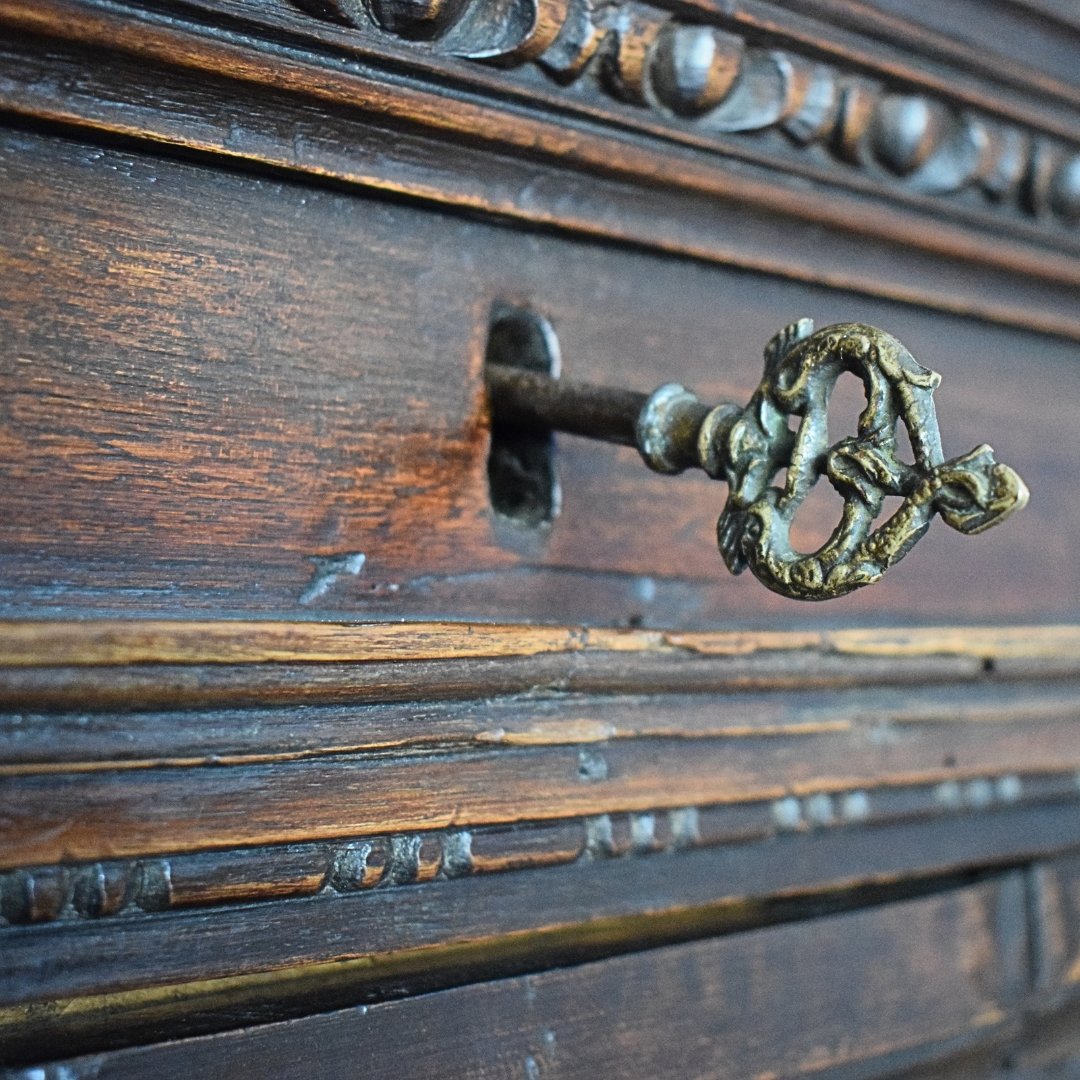
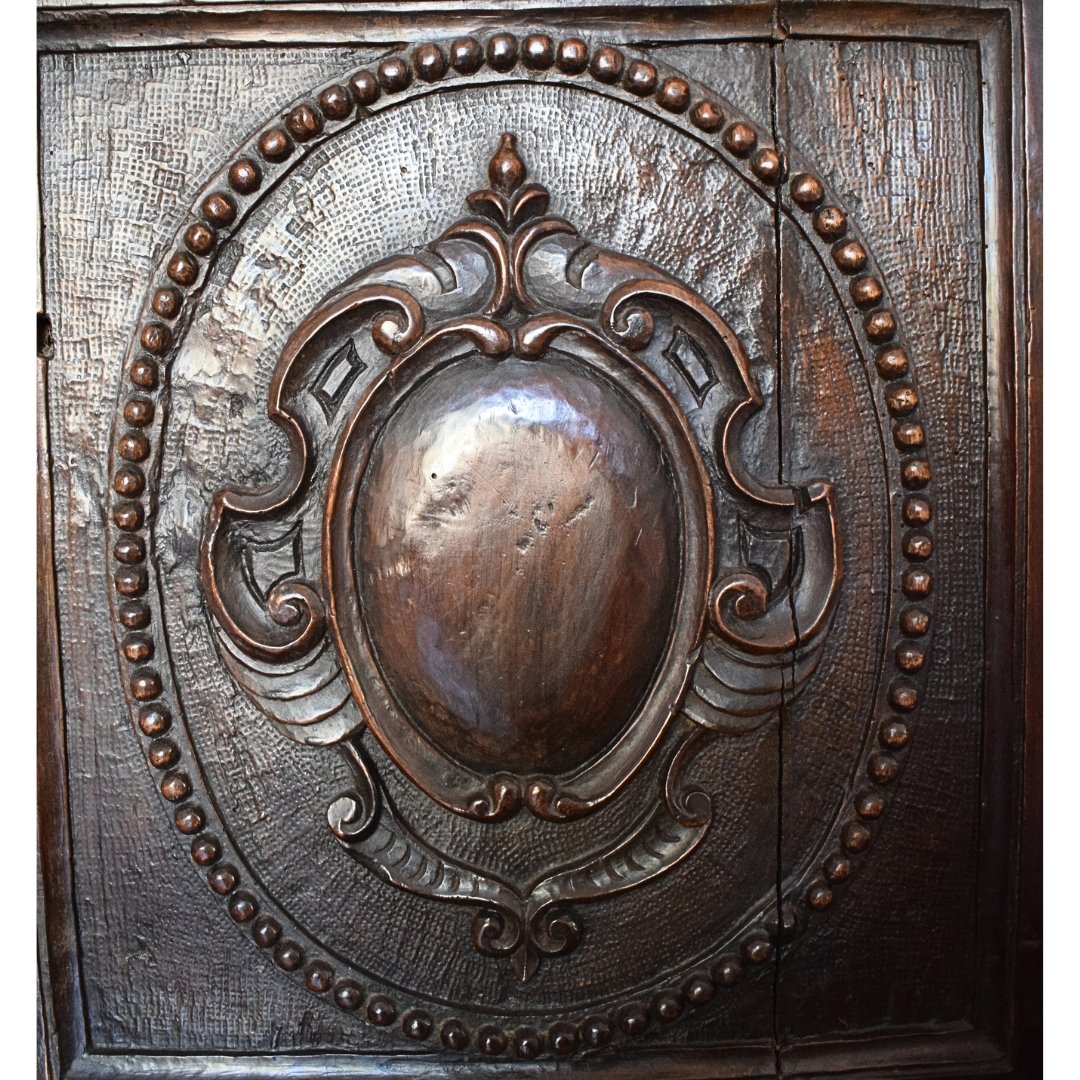
The piece features a striking architectural structure, punctuated by corner pilasters with finely carved anthropomorphic corbels—a decorative element typical of high-quality Ligurian cabinetmaking. The front door is dominated by a large oval medallion in high relief that once bore the heraldic insignia of the commissioning family, framed by rich volute ornamentation and a double border of scallops and beads, while the upper and lower frames are embellished with an elegant carved phytomorphic frieze.
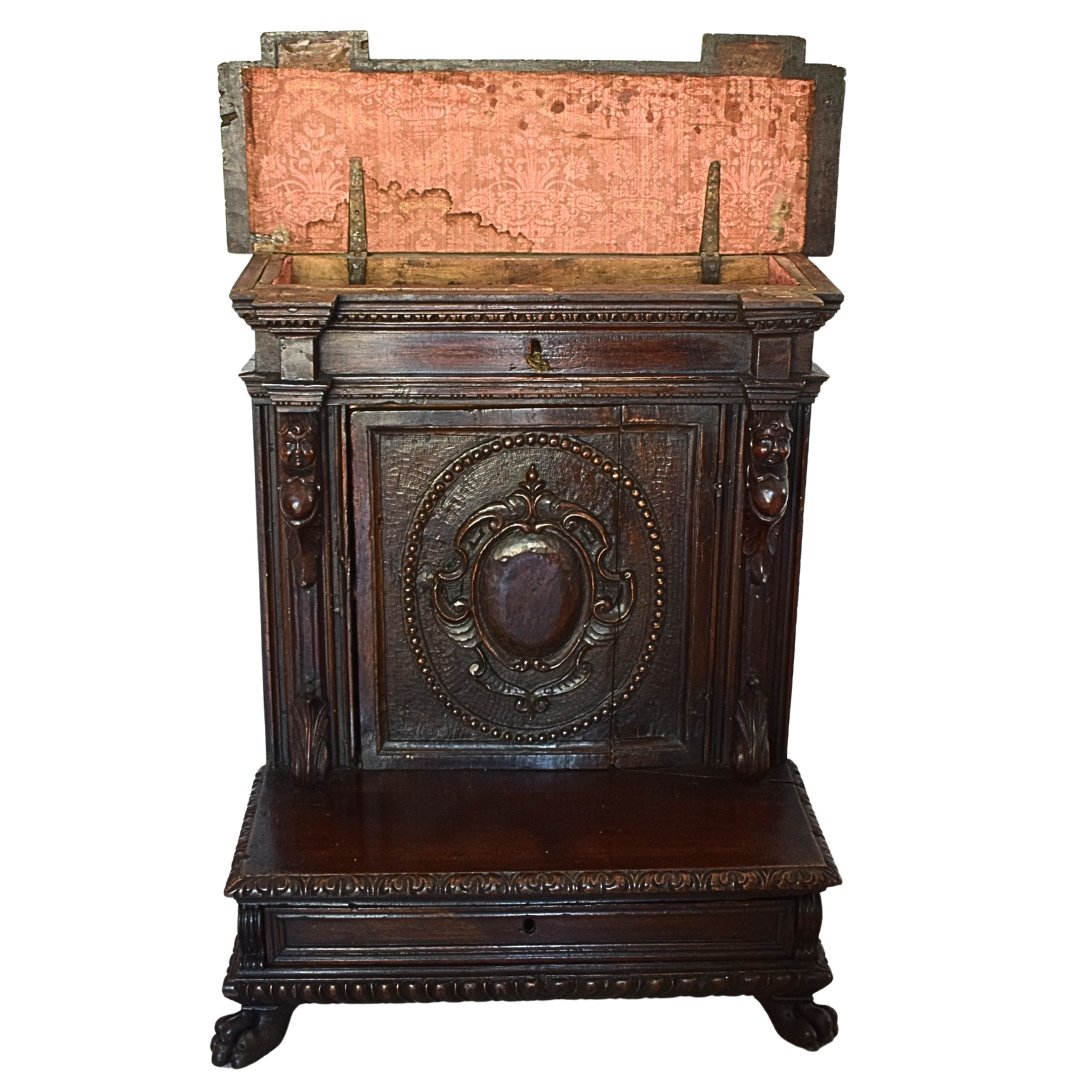
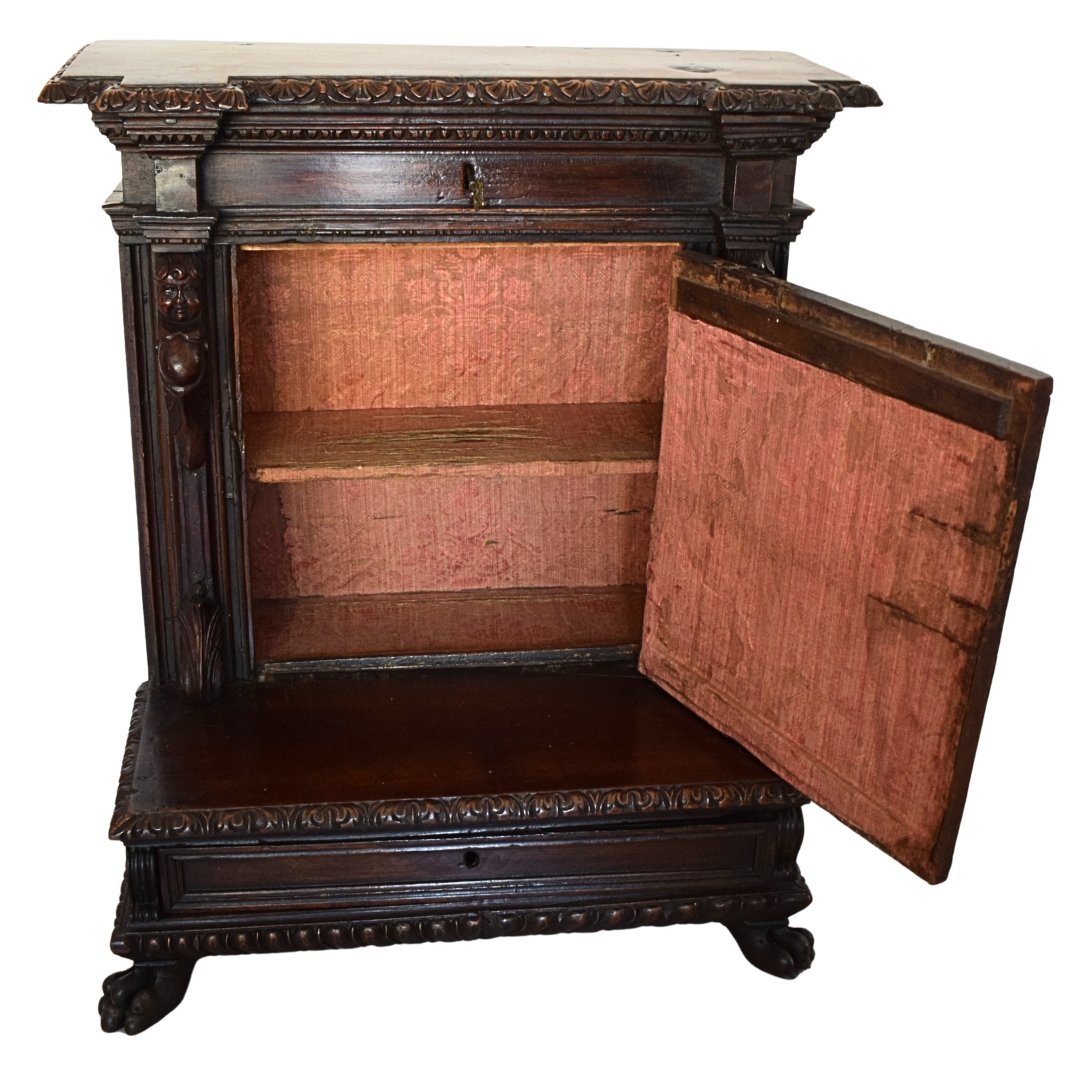
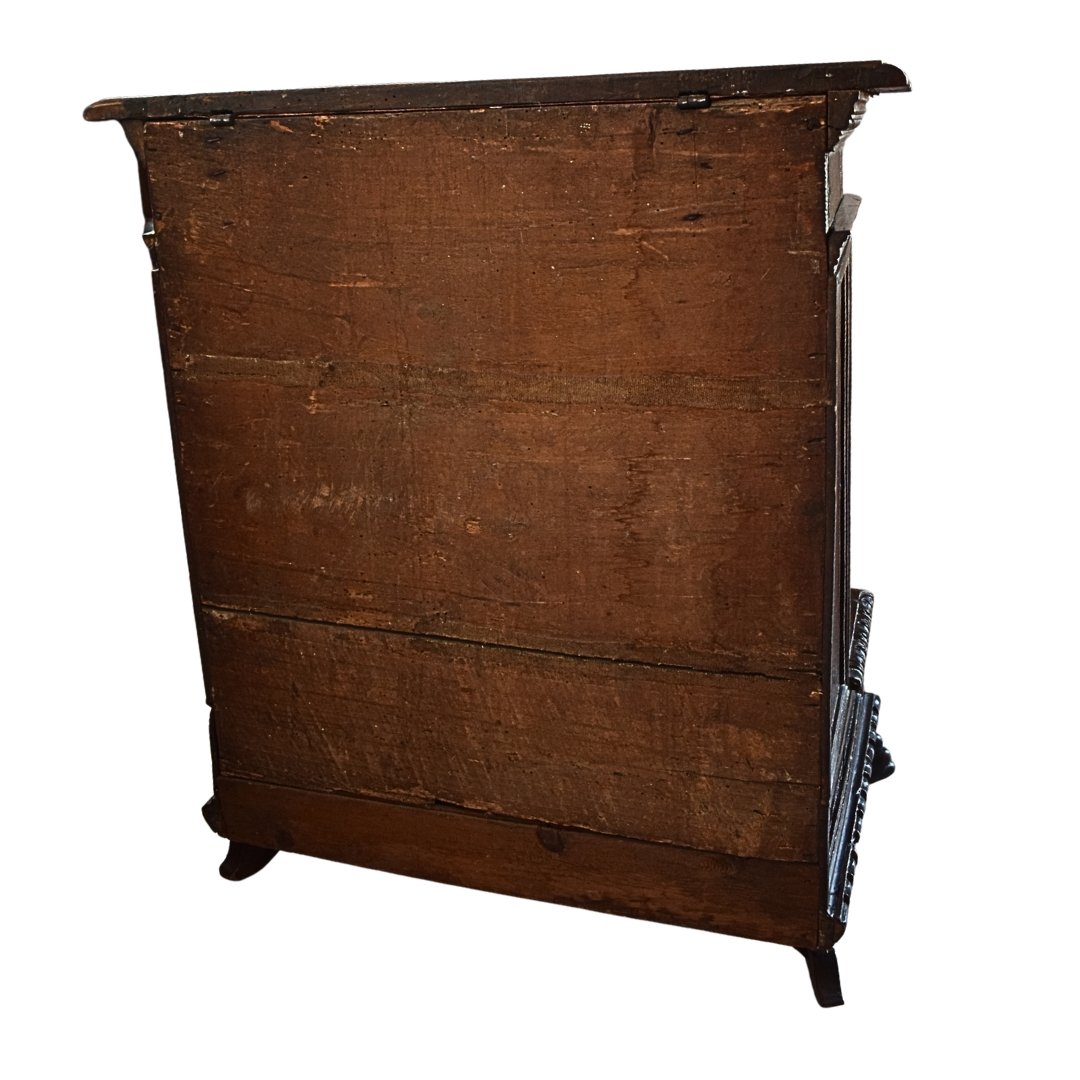
The base rests on sturdy animal-shaped feet—a recurring feature in Genoese Baroque furniture—which lend the piece both elegance and solidity. The door conceals a storage compartment originally intended for liturgical books, missals, rosaries, and objects for private devotion. The lower predella opens to reveal a spacious drawer, while the top surface conceals an additional storage compartment.
The craftsmanship highlights the skill of 17th-century Genoese cabinetmakers. Ligurian workshops developed an original decorative style, influenced as much by the Renaissance tradition as by the Baroque taste of Flemish and Spanish origin, fostered by Genoa’s extensive commercial ties with the Mediterranean and Northern Europe.
The kneeler was an essential piece of furniture in the homes of the Genoese aristocracy and the merchant upper middle class. It was placed in the master bedroom or in a private oratory as a space dedicated to daily prayer and meditation, while also serving as a symbol of devotion and family prestige.
Today, this important piece of furniture is finding new appreciation even in contemporary living spaces: in addition to its original function, it can be used as a refined entryway piece, an elegant living room console, a side table in a study or library, or as a statement piece within classical or eclectic interiors, where the quality of the carving and the centuries-old patina take center stage in the decor.
The preservation of its antique patina, its balanced proportions, and the richness of its decorative elements make it a piece of considerable collector’s interest, representative of the excellence of 17th-century Ligurian cabinetmaking.
- All our pieces come with a detailed certificate of authenticity.
- Professional packagingand insured shipping to ensure maximum safety during transport.
- For further information, please do not hesitate to contact us at +39 329 319 4887 – info@dequart.com
- Option for VIDEO CALLS and in-person viewings by appointment in MILAN and BORGOMANERO (NO).
- Additional information and photos: www.dequart.com IG - FB @dequ.art
Prayer stool
Carved solid walnut, H 98 cm × W 85 cm × D 50 cm
An important solid walnut kneeler, attributable to 17th-century Genoese cabinetmaking, reflecting the refined furniture culture that developed in the Republic of Genoa during its period of greatest economic and artistic splendor.
The piece features a striking architectural structure, punctuated by corner pilasters with finely carved anthropomorphic corbels—a decorative element typical of high-quality Ligurian cabinetmaking. The front door is dominated by a large oval medallion in high relief that once bore the heraldic insignia of the commissioning family, framed by rich volute ornamentation and a double border of scallops and beads, while the upper and lower frames are embellished with an elegant carved phytomorphic frieze.
The base rests on sturdy animal-shaped feet—a recurring feature in Genoese Baroque furniture—which lend the piece both elegance and solidity. The door conceals a storage compartment originally intended for liturgical books, missals, rosaries, and objects for private devotion. The lower predella opens to reveal a spacious drawer, while the top surface conceals an additional storage compartment.
The craftsmanship highlights the skill of 17th-century Genoese cabinetmakers. Ligurian workshops developed an original decorative style, influenced as much by the Renaissance tradition as by the Baroque taste of Flemish and Spanish origin, fostered by Genoa’s extensive commercial ties with the Mediterranean and Northern Europe.
The kneeler was an essential piece of furniture in the homes of the Genoese aristocracy and the merchant upper middle class. It was placed in the master bedroom or in a private oratory as a space dedicated to daily prayer and meditation, while also serving as a symbol of devotion and family prestige.
Today, this important piece of furniture is finding new appreciation even in contemporary living spaces: in addition to its original function, it can be used as a refined entryway piece, an elegant living room console, a side table in a study or library, or as a statement piece within classical or eclectic interiors, where the quality of the carving and the centuries-old patina take center stage in the decor.
The preservation of its antique patina, its balanced proportions, and the richness of its decorative elements make it a piece of considerable collector’s interest, representative of the excellence of 17th-century Ligurian cabinetmaking.
- All our pieces come with a detailed certificate of authenticity.
- Professional packagingand insured shipping to ensure maximum safety during transport.
- For further information, please do not hesitate to contact us at +39 329 319 4887 – info@dequart.com
- Option for VIDEO CALLS and in-person viewings by appointment in MILAN and BORGOMANERO (NO).
- Additional information and photos: www.dequart.com IG - FB @dequ.art
2 400 €
Period: 17th century
Style: Renaissance, Louis 13th
Condition: Good condition
Material: Wallnut
Width: 85
Height: 98
Depth: 50
Reference (ID): 1791596
Availability: In stock
Print