THIS OBJECT WAS SOLD
Architectural Capriccio Painting By Giovanni Ghisolfi:
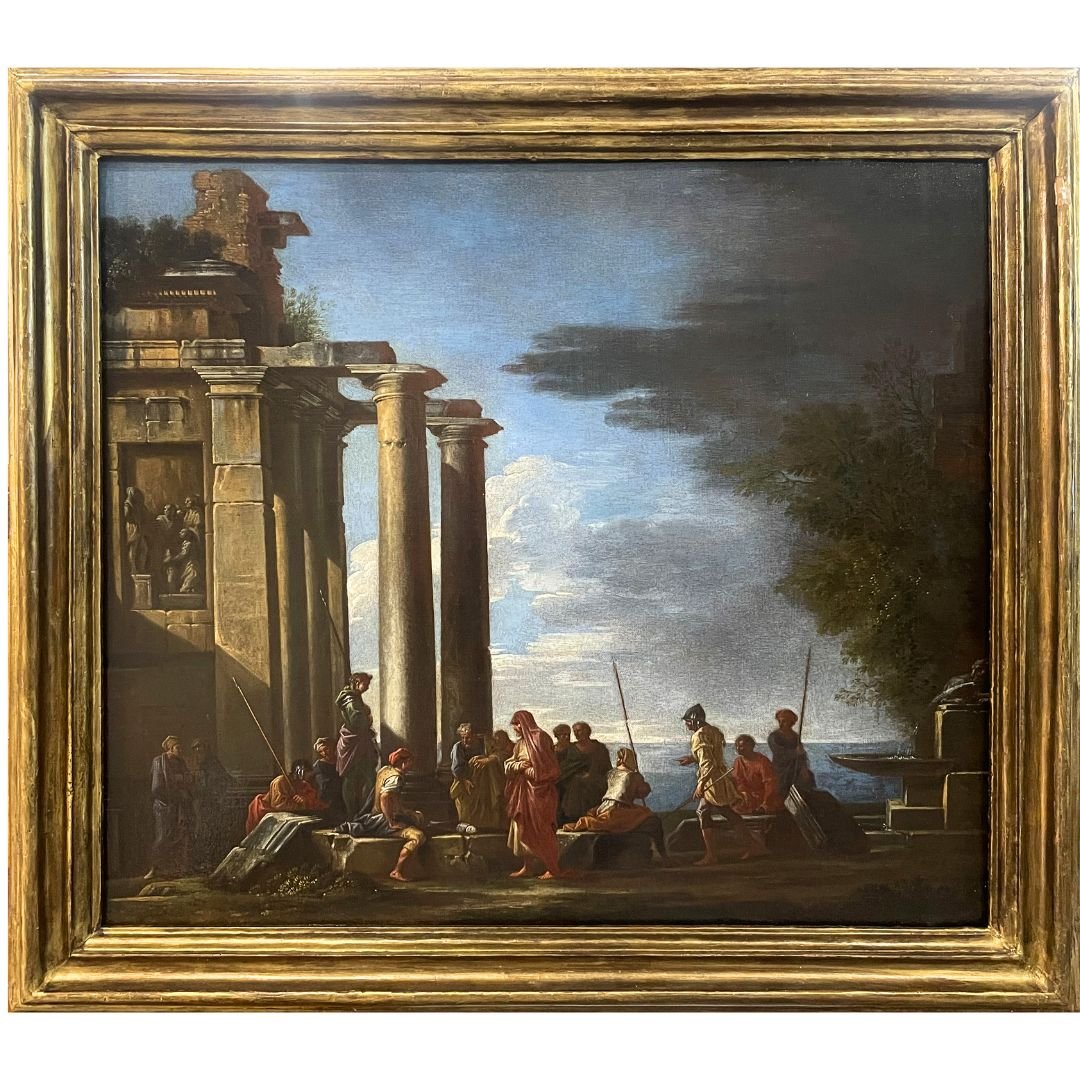


Giovanni Ghisolfi (Milan, 1623–1683)
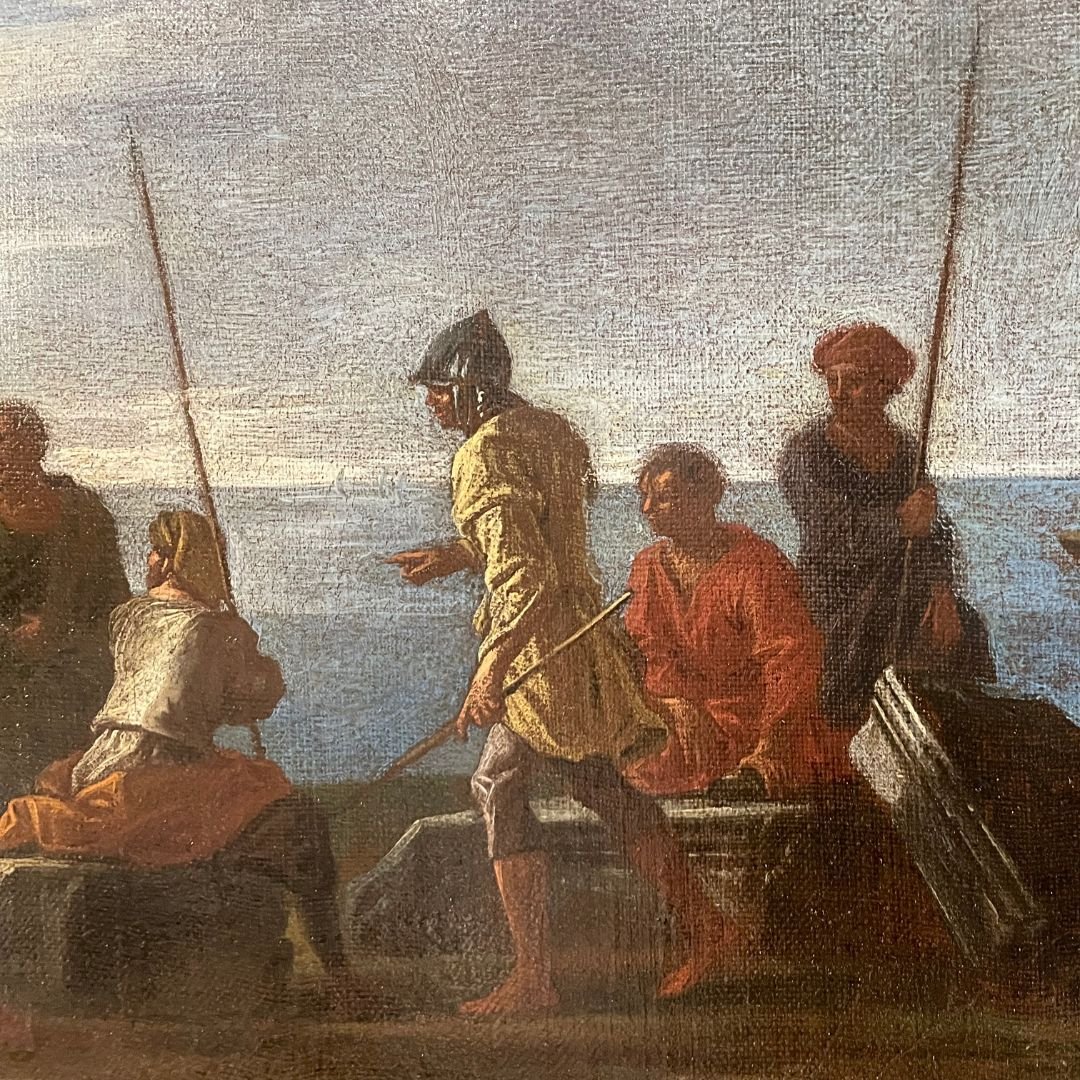
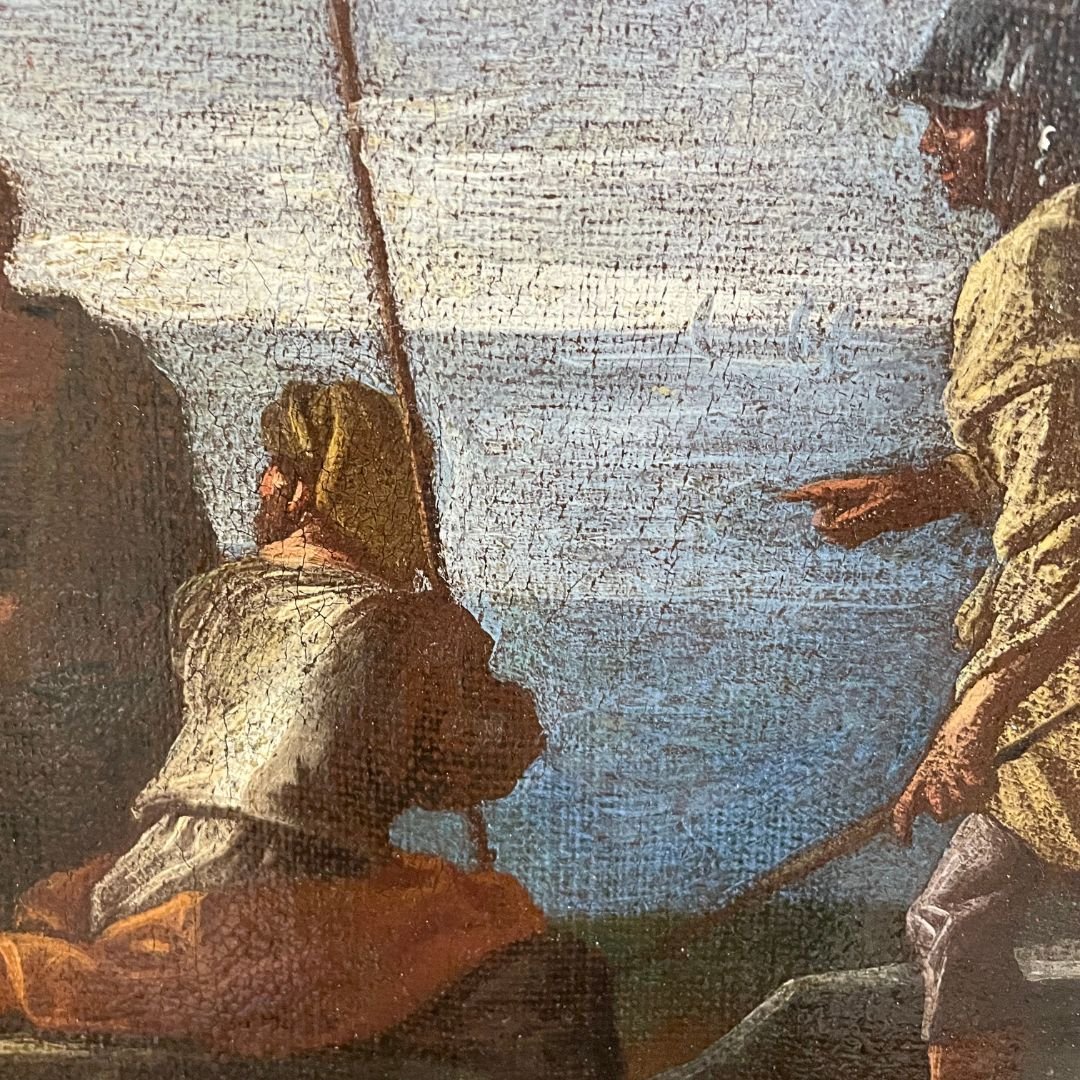
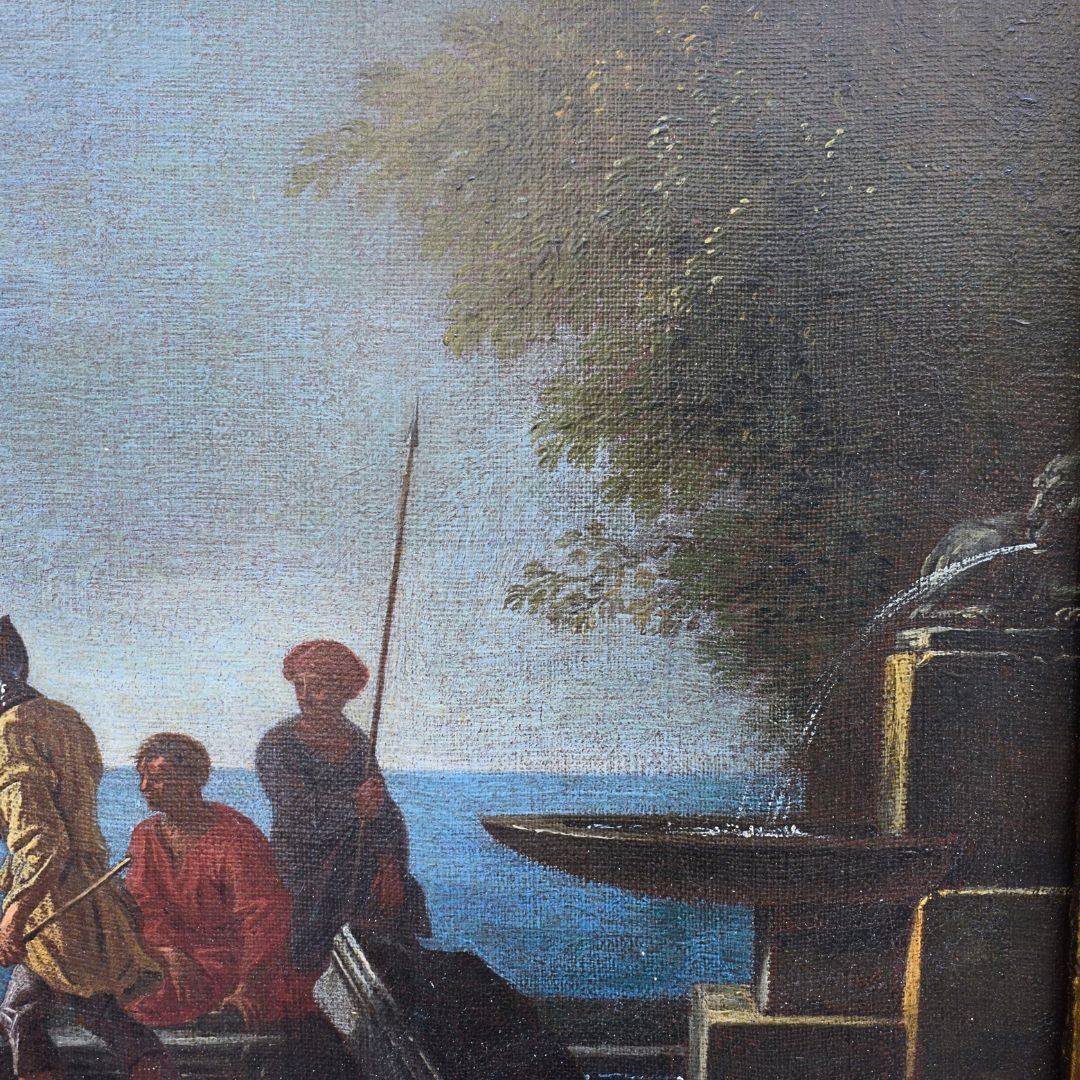
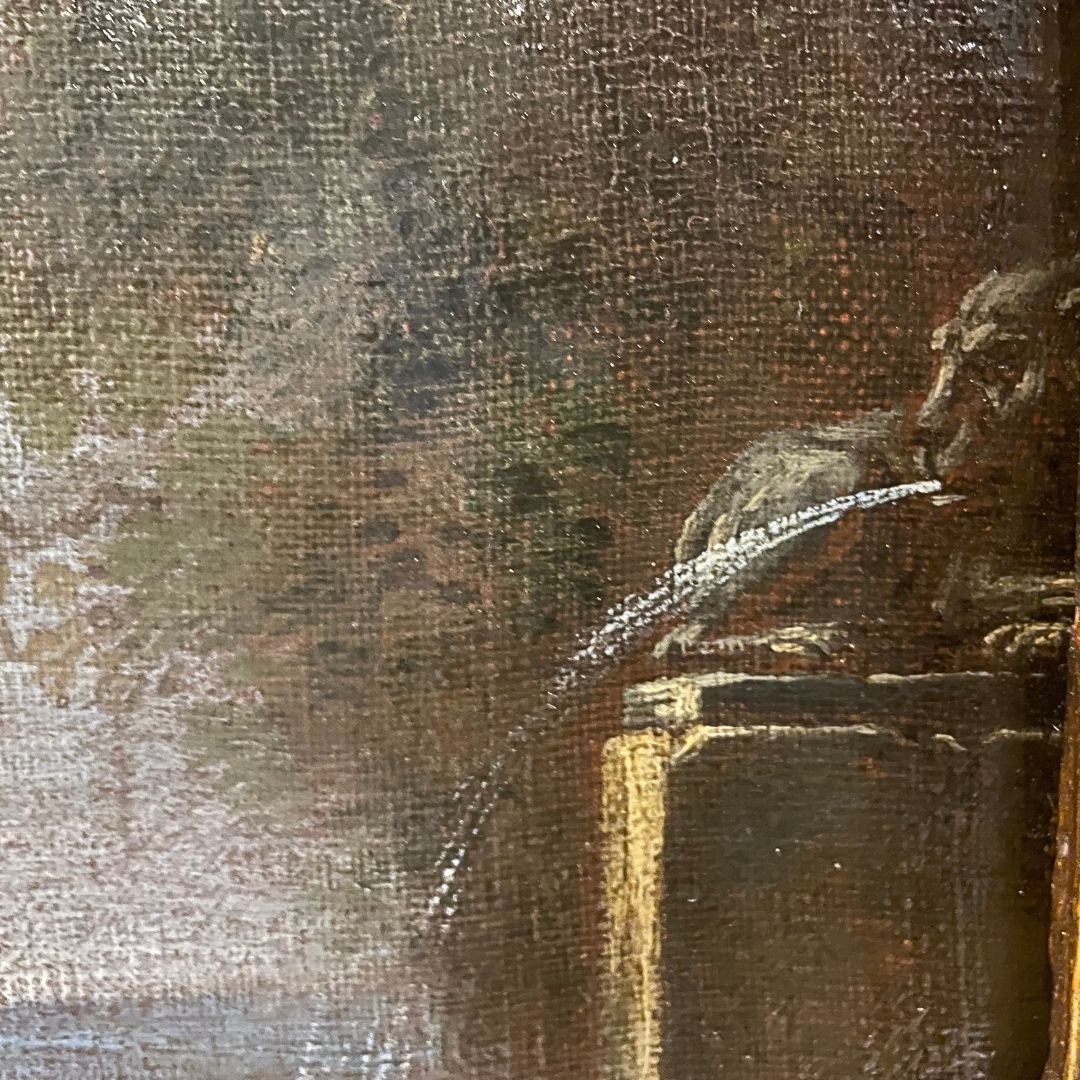
Architectural Capriccio with the Tribute of the Coin
Oil on canvas, 78 × 90 cm
Antique frame from the same period or slightly later, 93 × 103 cm
Giancarlo Sestieri, expert report.
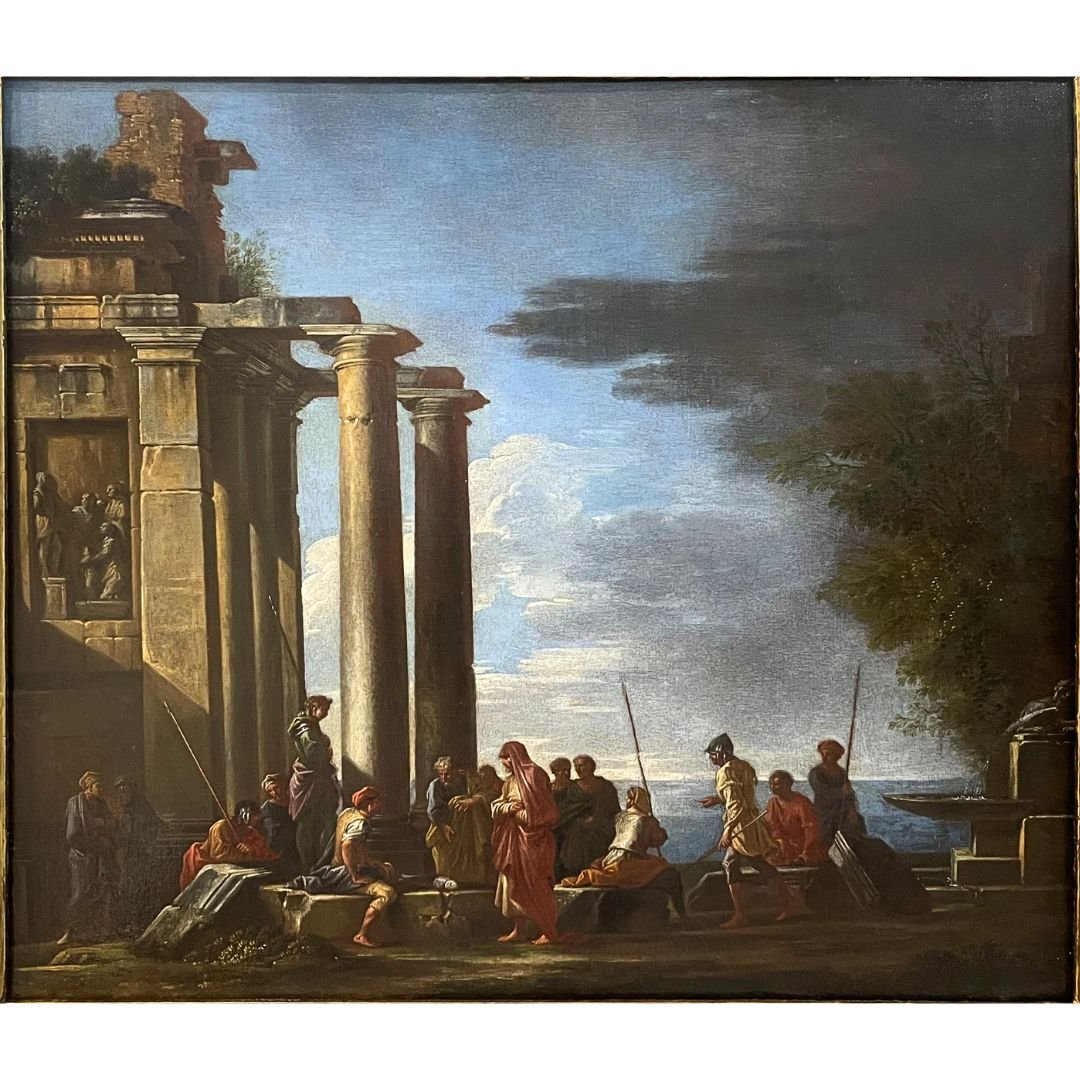
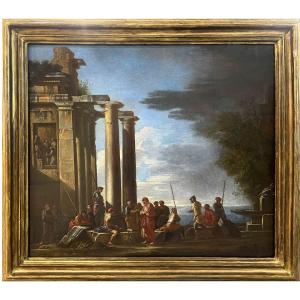
The important and refined architectural capriccio under examination depicts the Gospel episode of The Tribute of the Coin and dates to the full maturity of Giovanni Ghisolfi (1623–1683), one of the leading Italian specialists in fantastic architectural painting in the second half of the seventeenth century.
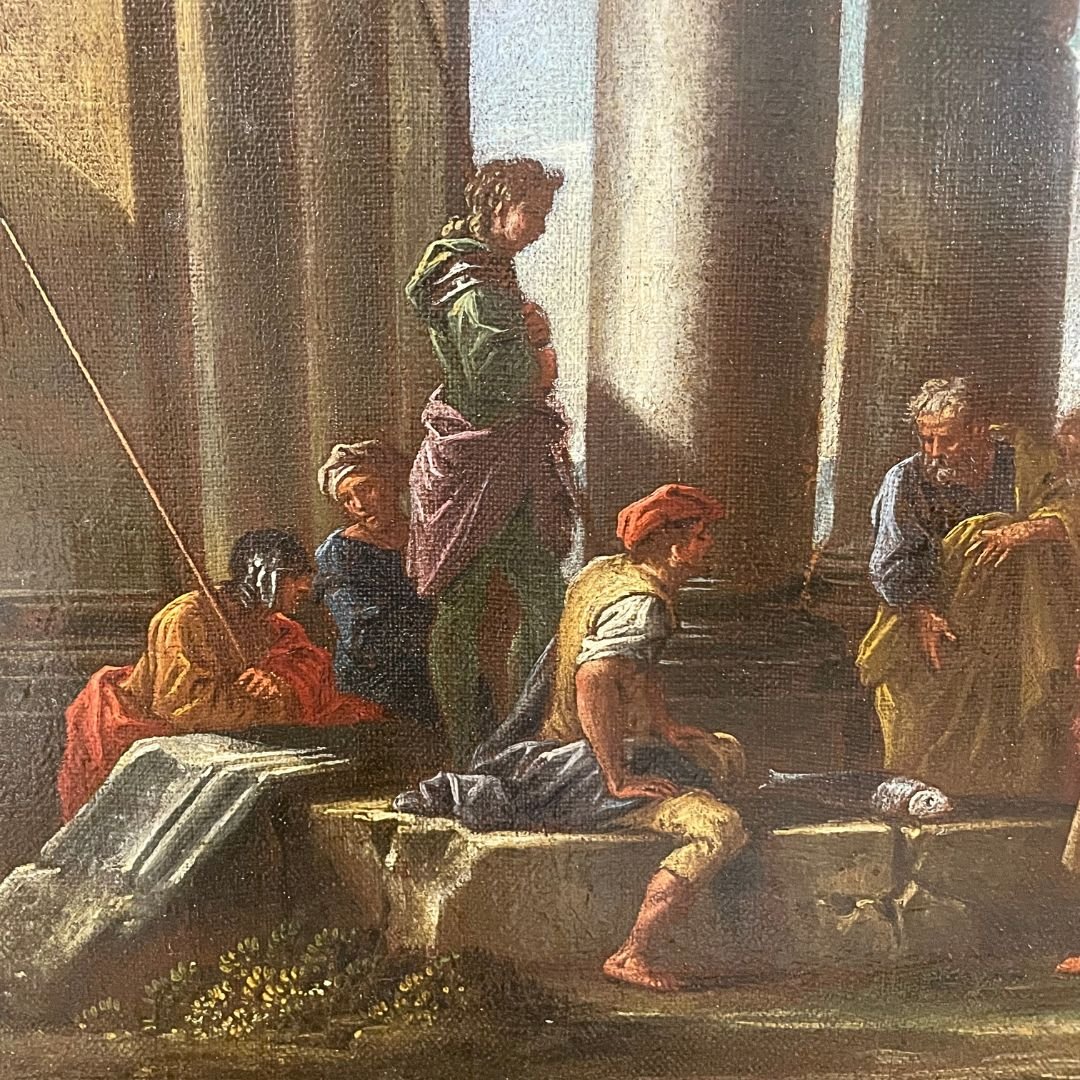
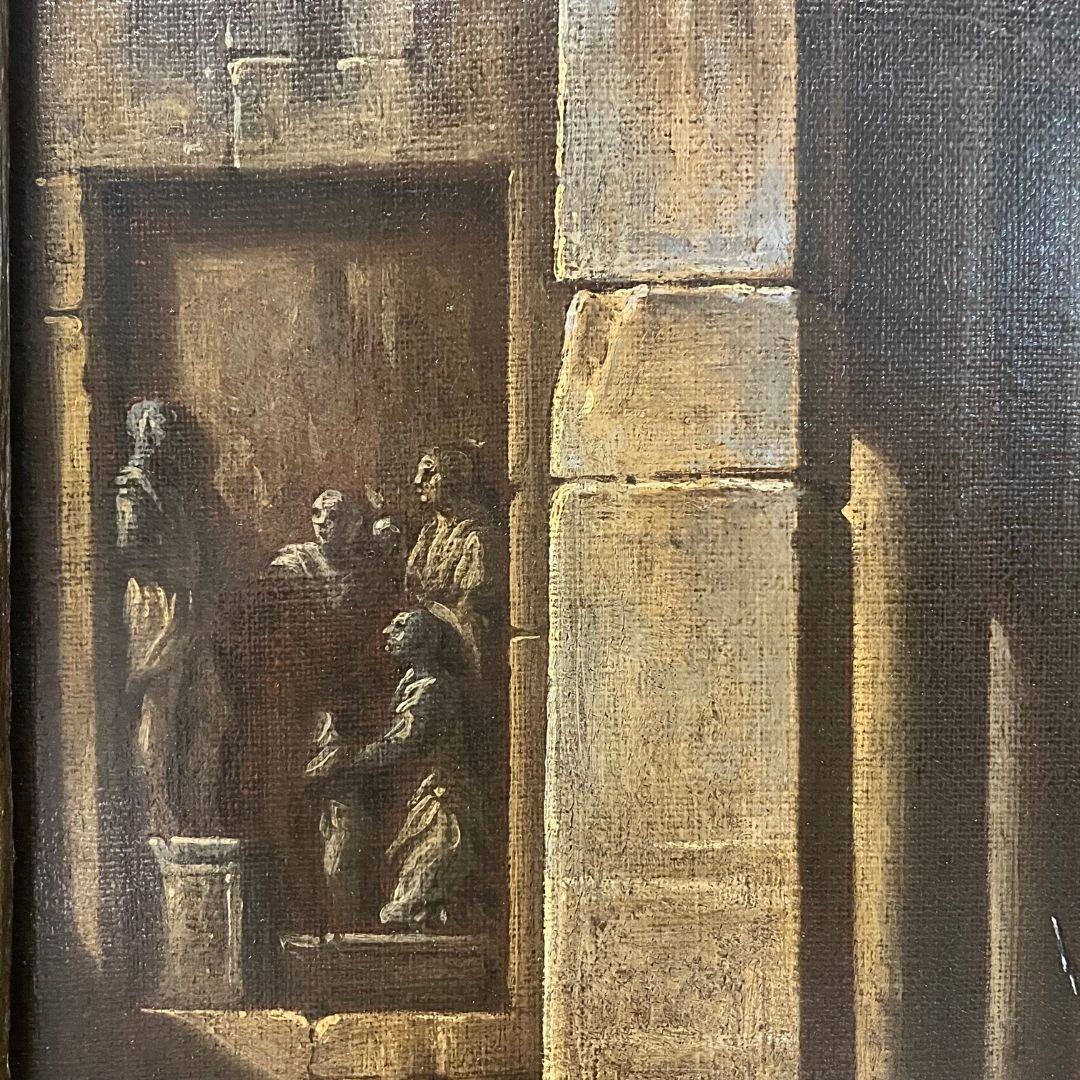
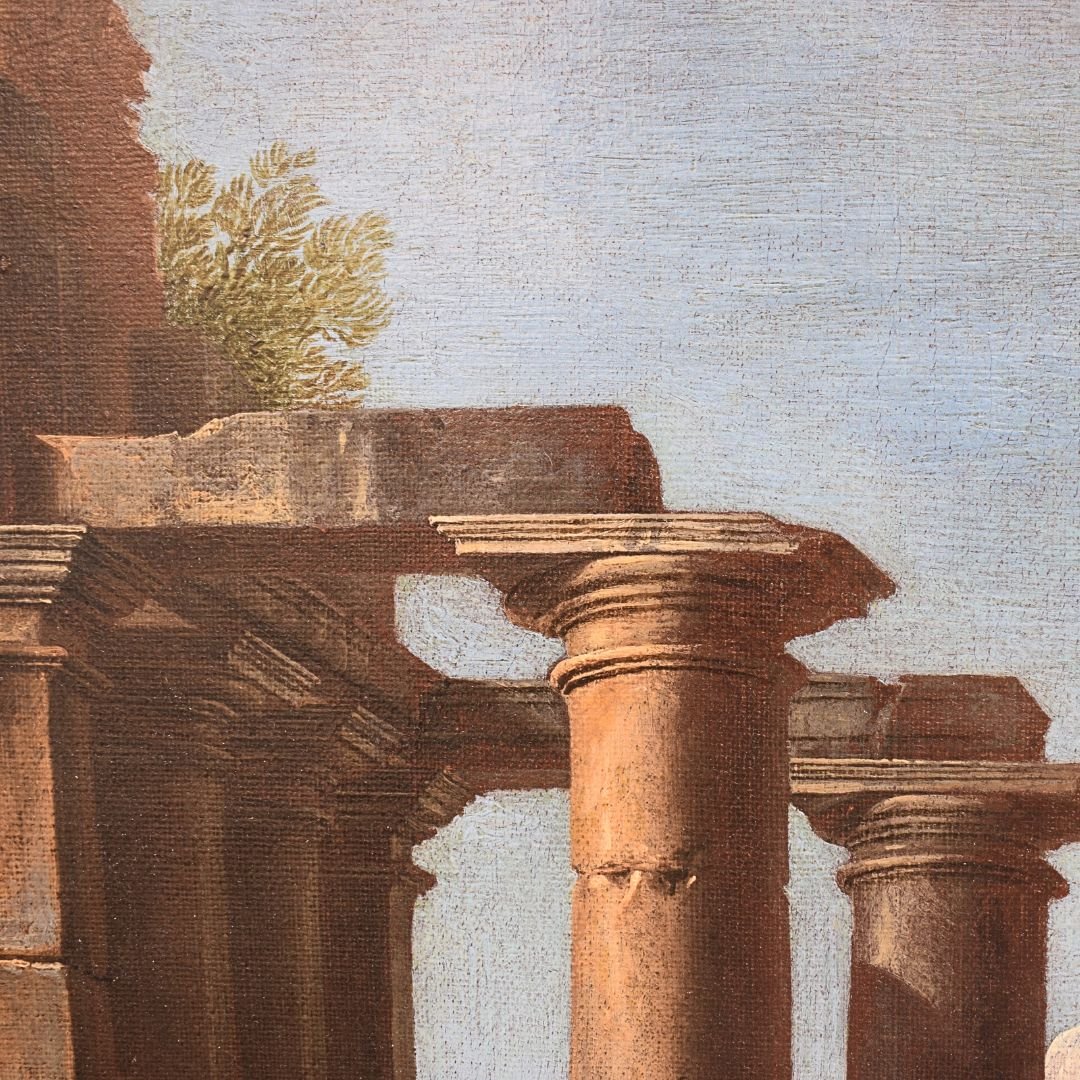
The composition unfolds according to a scheme typical of the artist’s work: a monumental architectural backdrop occupies the left side of the scene, consisting of a classical-style building in ruins with tall Corinthian columns and imposing ancient masonry. The architecture, bathed in a raking light that enhances its three-dimensional volume, serves as a dramatic backdrop for the small figurative episode in the foreground.
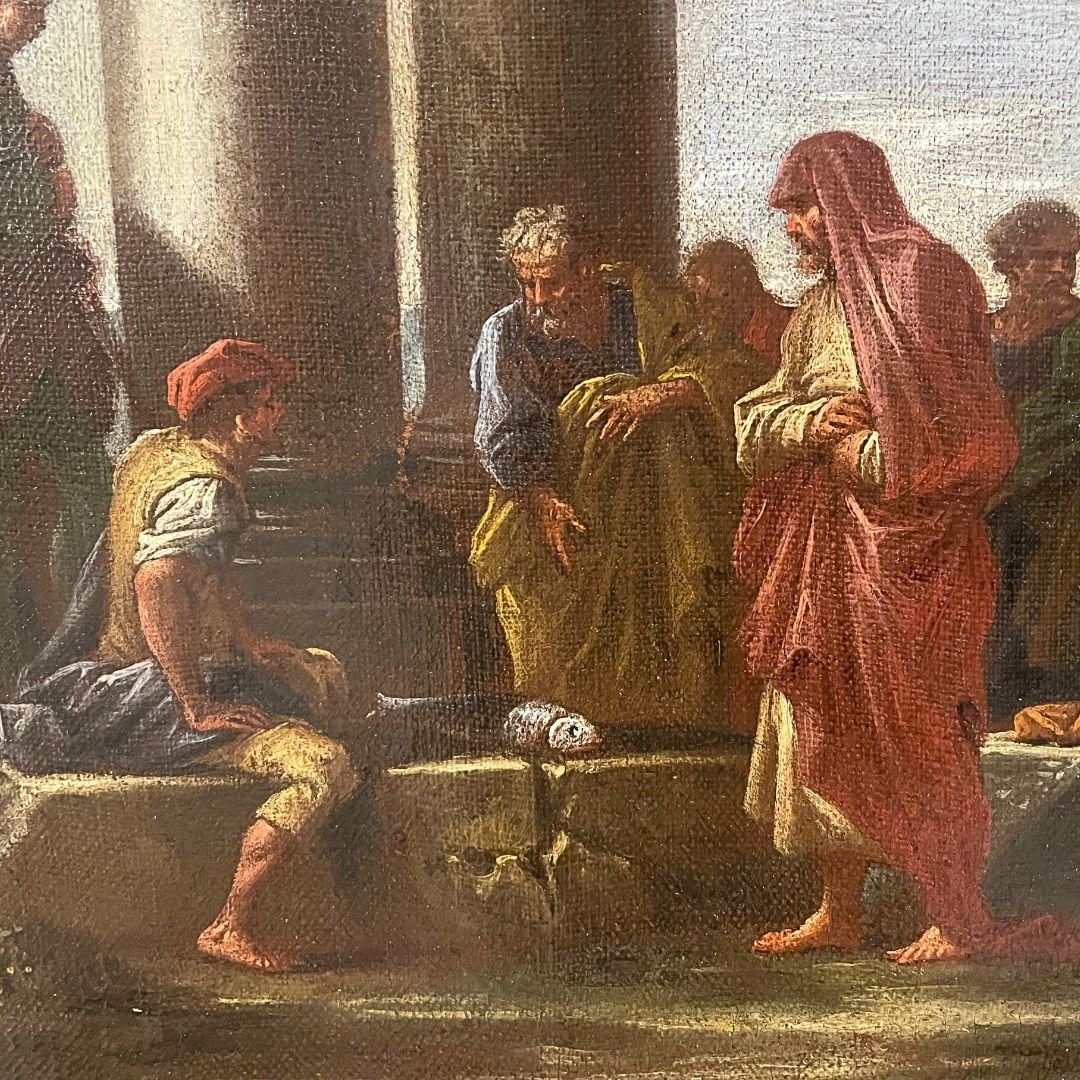
At the center of the composition unfolds the Gospel theme of the Tribute to Caesar (Matthew 22:15–22), in which Christ, questioned by the Pharisees about the lawfulness of paying tribute to Caesar, utters the famous phrase: “Render to Caesar what is Caesar’s, and to God what is God’s.” The narrative is deliberately subordinated to the grandiose architectural setting, in accordance with a concept typical of 17th-century capriccio painting, in which the historical or sacred episode becomes an opportunity to exalt space and perspective.
The balance between the monumental masses, the open landscape in the background, and the effective use of light attest to the work’s full adherence to the most representative characteristics of Ghisolfi’s artistic language.
Giovanni Ghisolfi was born in Milan in 1623. Trained likely in the Lombard milieu dominated by the culture of perspective and quadratura, he developed a personal style that combined the tradition of Northern architectural views with Roman and Bolognese classicism. He worked primarily in Milan, Piacenza, and Parma, coming into contact with some of the most important aristocratic patrons in northern Italy. In 1650, he moved to Rome, where he benefited from the teachings of Cortona and his collaboration with Salvator Rosa, devoting himself to painting landscapes and architectural views. This penchant for landscapes and archaeology soon revealed an intimate classicist vein, marked by elegant compositional balance, which would constitute an essential precedent for Pannini.
His fame was linked above all to the creation of architectural capriccios, which found favor among cultured collectors. His works were particularly appreciated for their ability to blend antiquarian erudition, fantastical invention, and rigorous perspective construction.
The capriccio represents one of the most original inventions of Baroque figurative culture. Unlike the real veduta, it offers an ideal and imaginary reconstruction of antiquity through the combination of classical buildings, ruins, monuments, and landscapes created by the artist’s imagination.
In Ghisolfi’s work, the capriccio takes on a particular monumentality: the architecture dominates the scene and is conceived as grand stages designed to host historical, mythological, or religious episodes. The primary focus is not on narrative but on the celebration of the grandeur of antiquity, interpreted through the theatrical sensibility of the Baroque.
This painting is a particularly significant example of this concept, in which the Gospel subject is harmoniously integrated into a grandiose archaeological vision.
The work bears striking similarities to numerous paintings by Ghisolfi held in public and private collections, as noted in the entry written by Prof. Sestieri
From a compositional standpoint, the paintings in which a classical building occupies the entire side of the scene, leaving the human figure with a secondary narrative function, are particularly similar. This follows a model derived from Viviano Codazzi’s Roman experiences and subsequently developed in a personal manner by Ghisolfi.
- All our works are accompanied by a detailed certificate of authenticity.
- Professional packaging and sinsured shipping to ensure maximum safety during transport.
- For further information, please do not hesitate to contact us +39 329 319 4887 – info@dequart.com
- Option for VIDEO CALLS and in-person viewings by appointment in MILAN and BORGOMANERO (NO).
- Additional information and photos: www.dequart.com IG - FB @dequ.art
Architectural Capriccio with the Tribute of the Coin
Oil on canvas, 78 × 90 cm
Antique frame from the same period or slightly later, 93 × 103 cm
Giancarlo Sestieri, expert report.
The important and refined architectural capriccio under examination depicts the Gospel episode of The Tribute of the Coin and dates to the full maturity of Giovanni Ghisolfi (1623–1683), one of the leading Italian specialists in fantastic architectural painting in the second half of the seventeenth century.
The composition unfolds according to a scheme typical of the artist’s work: a monumental architectural backdrop occupies the left side of the scene, consisting of a classical-style building in ruins with tall Corinthian columns and imposing ancient masonry. The architecture, bathed in a raking light that enhances its three-dimensional volume, serves as a dramatic backdrop for the small figurative episode in the foreground.
At the center of the composition unfolds the Gospel theme of the Tribute to Caesar (Matthew 22:15–22), in which Christ, questioned by the Pharisees about the lawfulness of paying tribute to Caesar, utters the famous phrase: “Render to Caesar what is Caesar’s, and to God what is God’s.” The narrative is deliberately subordinated to the grandiose architectural setting, in accordance with a concept typical of 17th-century capriccio painting, in which the historical or sacred episode becomes an opportunity to exalt space and perspective.
The balance between the monumental masses, the open landscape in the background, and the effective use of light attest to the work’s full adherence to the most representative characteristics of Ghisolfi’s artistic language.
Giovanni Ghisolfi was born in Milan in 1623. Trained likely in the Lombard milieu dominated by the culture of perspective and quadratura, he developed a personal style that combined the tradition of Northern architectural views with Roman and Bolognese classicism. He worked primarily in Milan, Piacenza, and Parma, coming into contact with some of the most important aristocratic patrons in northern Italy. In 1650, he moved to Rome, where he benefited from the teachings of Cortona and his collaboration with Salvator Rosa, devoting himself to painting landscapes and architectural views. This penchant for landscapes and archaeology soon revealed an intimate classicist vein, marked by elegant compositional balance, which would constitute an essential precedent for Pannini.
His fame was linked above all to the creation of architectural capriccios, which found favor among cultured collectors. His works were particularly appreciated for their ability to blend antiquarian erudition, fantastical invention, and rigorous perspective construction.
The capriccio represents one of the most original inventions of Baroque figurative culture. Unlike the real veduta, it offers an ideal and imaginary reconstruction of antiquity through the combination of classical buildings, ruins, monuments, and landscapes created by the artist’s imagination.
In Ghisolfi’s work, the capriccio takes on a particular monumentality: the architecture dominates the scene and is conceived as grand stages designed to host historical, mythological, or religious episodes. The primary focus is not on narrative but on the celebration of the grandeur of antiquity, interpreted through the theatrical sensibility of the Baroque.
This painting is a particularly significant example of this concept, in which the Gospel subject is harmoniously integrated into a grandiose archaeological vision.
The work bears striking similarities to numerous paintings by Ghisolfi held in public and private collections, as noted in the entry written by Prof. Sestieri
From a compositional standpoint, the paintings in which a classical building occupies the entire side of the scene, leaving the human figure with a secondary narrative function, are particularly similar. This follows a model derived from Viviano Codazzi’s Roman experiences and subsequently developed in a personal manner by Ghisolfi.
- All our works are accompanied by a detailed certificate of authenticity.
- Professional packaging and sinsured shipping to ensure maximum safety during transport.
- For further information, please do not hesitate to contact us +39 329 319 4887 – info@dequart.com
- Option for VIDEO CALLS and in-person viewings by appointment in MILAN and BORGOMANERO (NO).
- Additional information and photos: www.dequart.com IG - FB @dequ.art
Explore similar pieces and discover your ideal find:
religious paintings