

The Annunciation – Workshop Of Pietro Candido (peter De Witte) Late 16th – Early 17th Century
Artist: Atelier De Pietro Candido, Fin Du Xvie – Début Du Xviie Siècle
Workshop of Pietro Candido, Late 16th – early 17th century
Annunciation
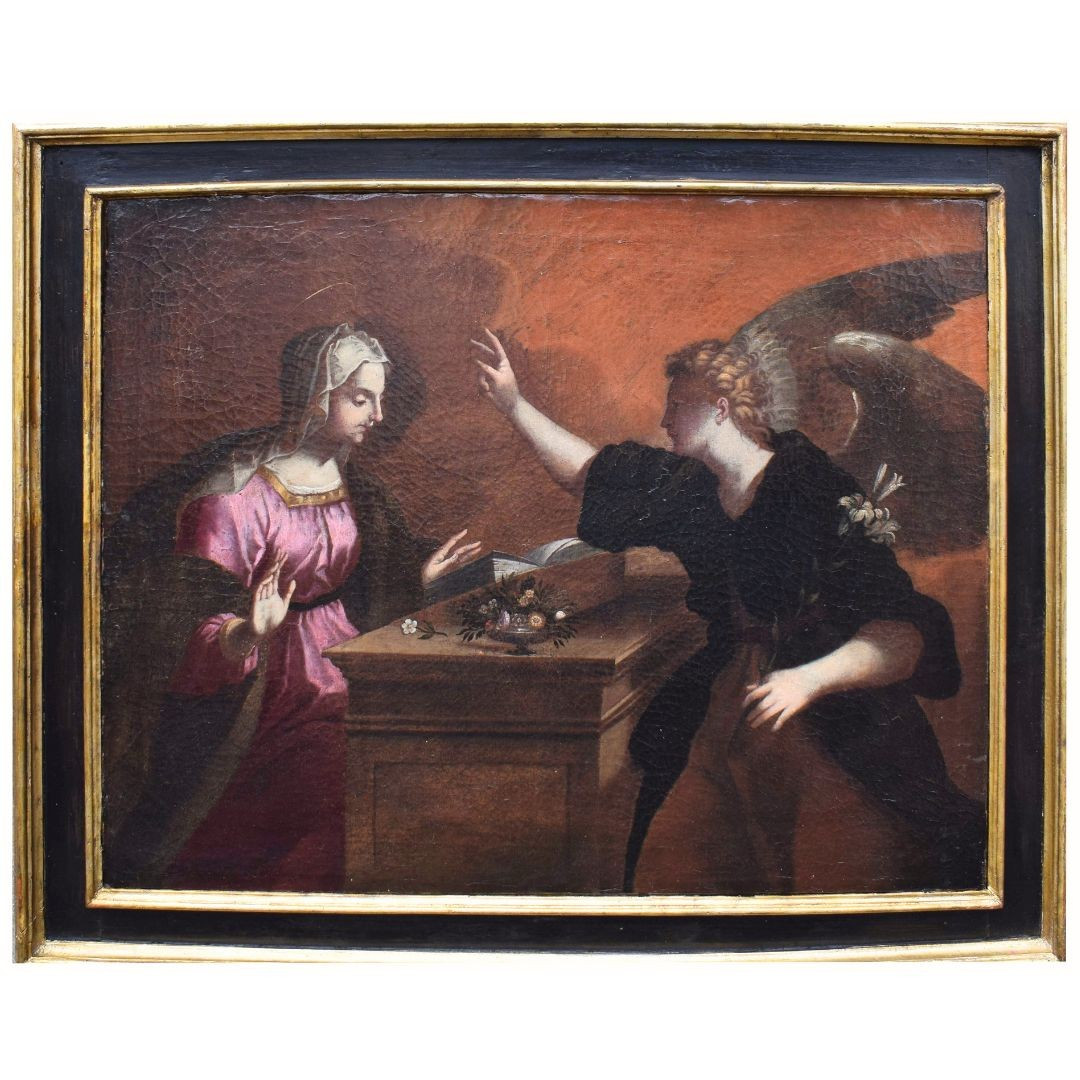
Oil on canvas, 70 x 84.5 cm
Antique frame, 85 x 100
A striking depiction of the Annunciation, executed by a painter from the workshop of Pieter de Witte, also known as Peter Candid or Pietro Candido (Bruges, 1540/1548 – Munich, 1628), a prominent figure in the artistic landscape between the late 16th and early 17th centuries.
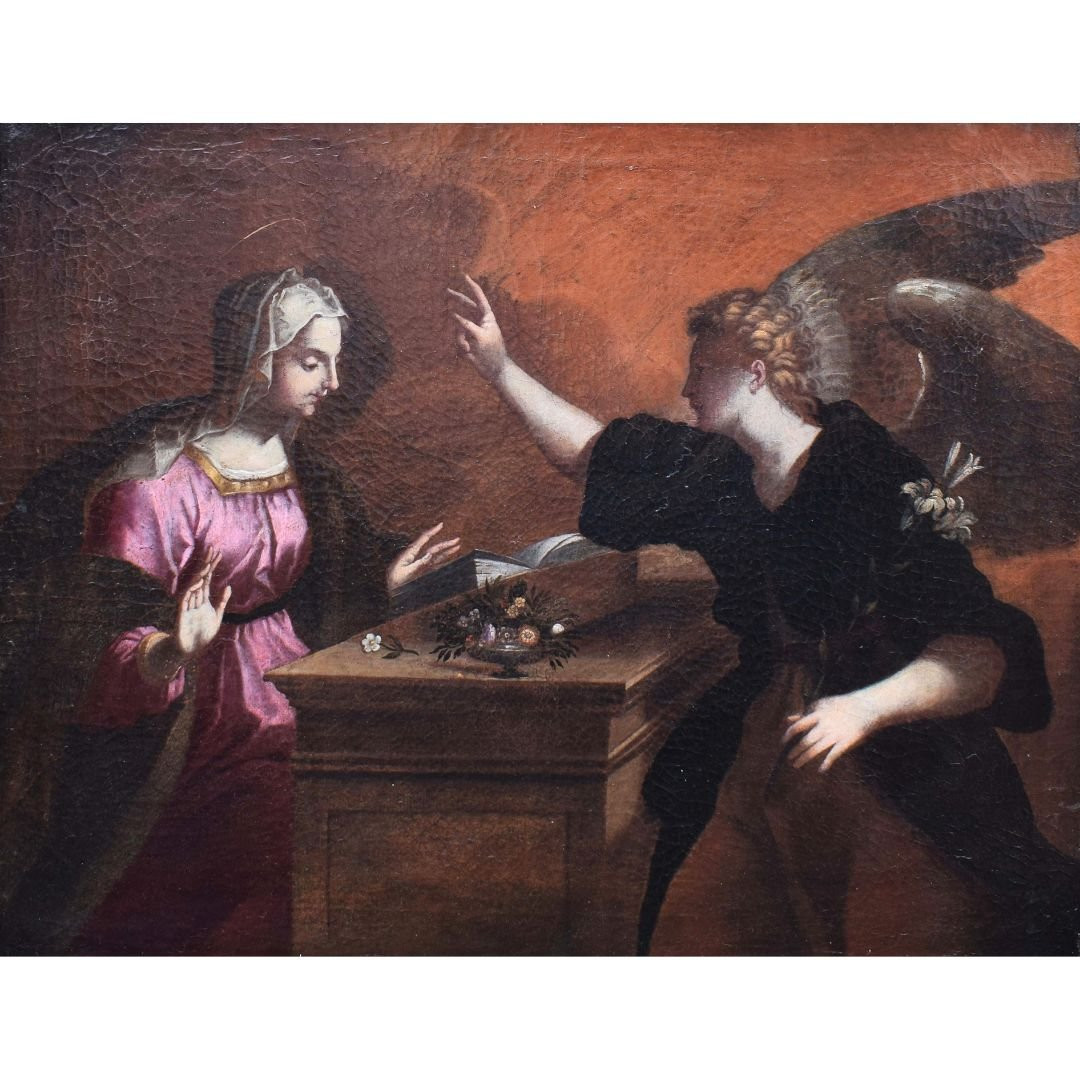
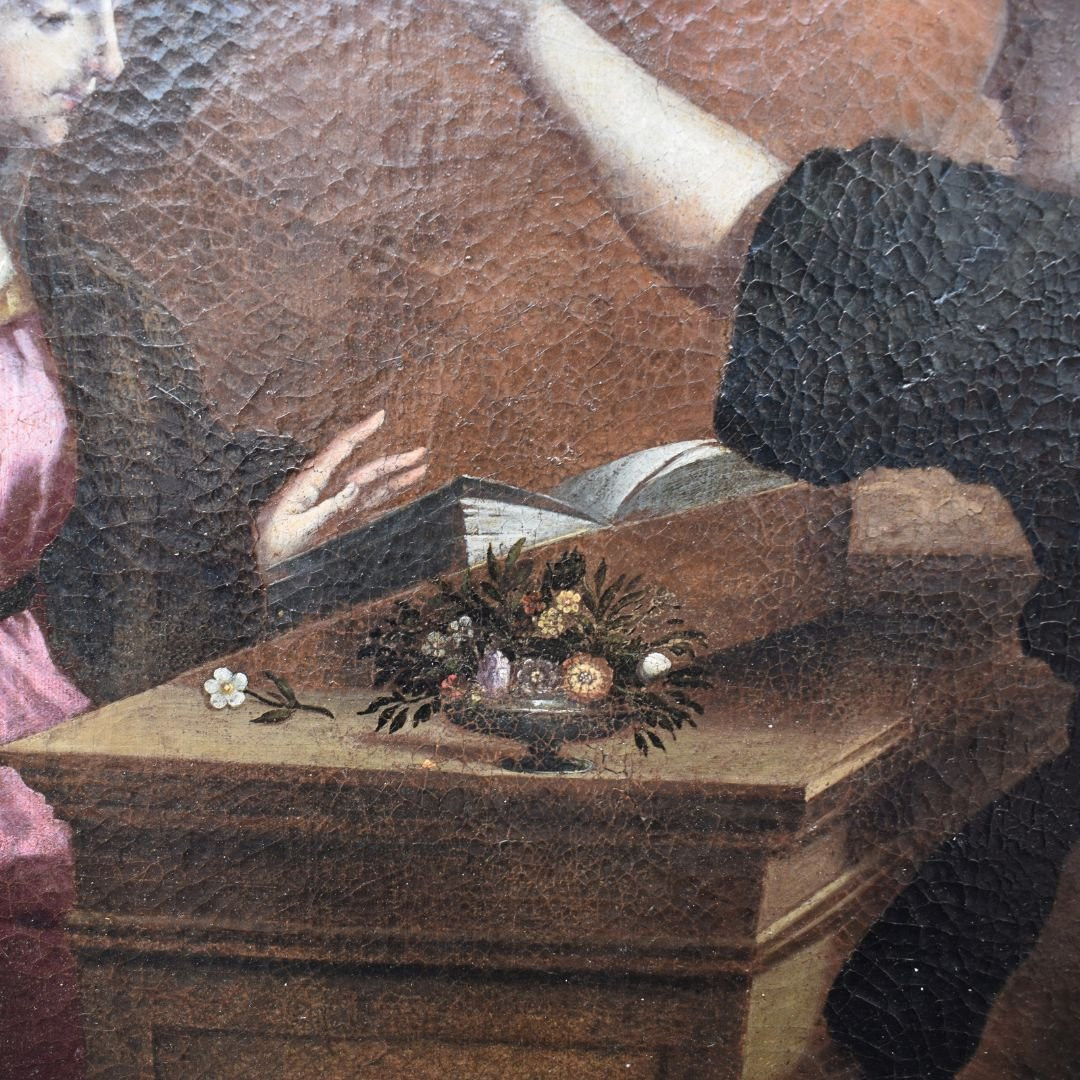
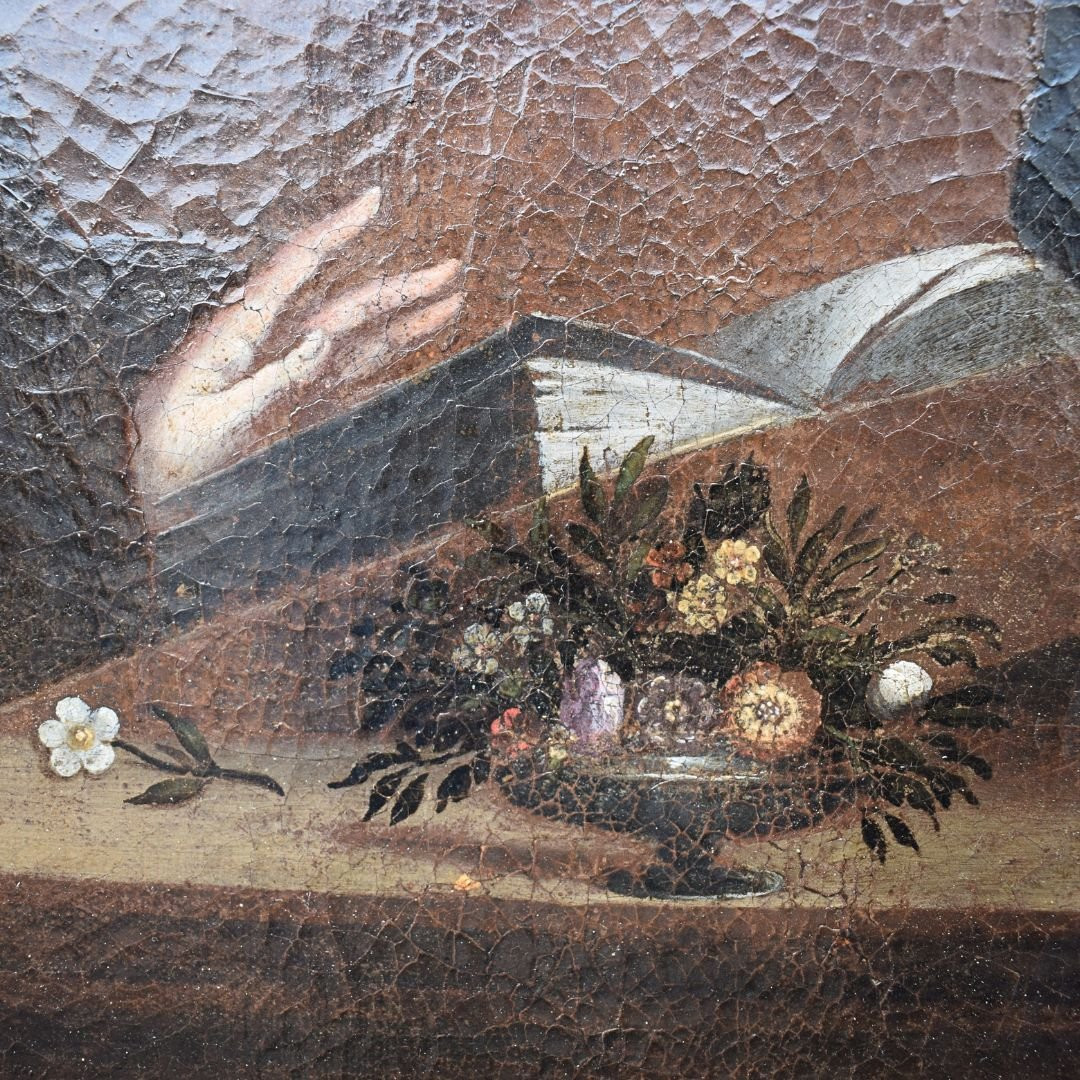
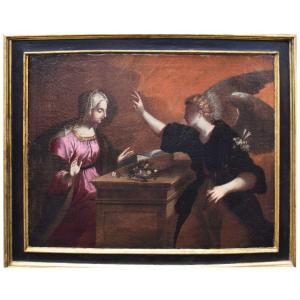
The composition unfolds in a cozy, intimate interior: the Virgin, depicted in a posture of humble acceptance, pauses from reading the Holy Scriptures, while the Archangel Gabriel bursts onto the scene with a solemn and dynamic gesture. The presence of the lectern with the open book and the vase of flowers in the foreground enriches the symbolic meaning and contributes to the spatial composition.
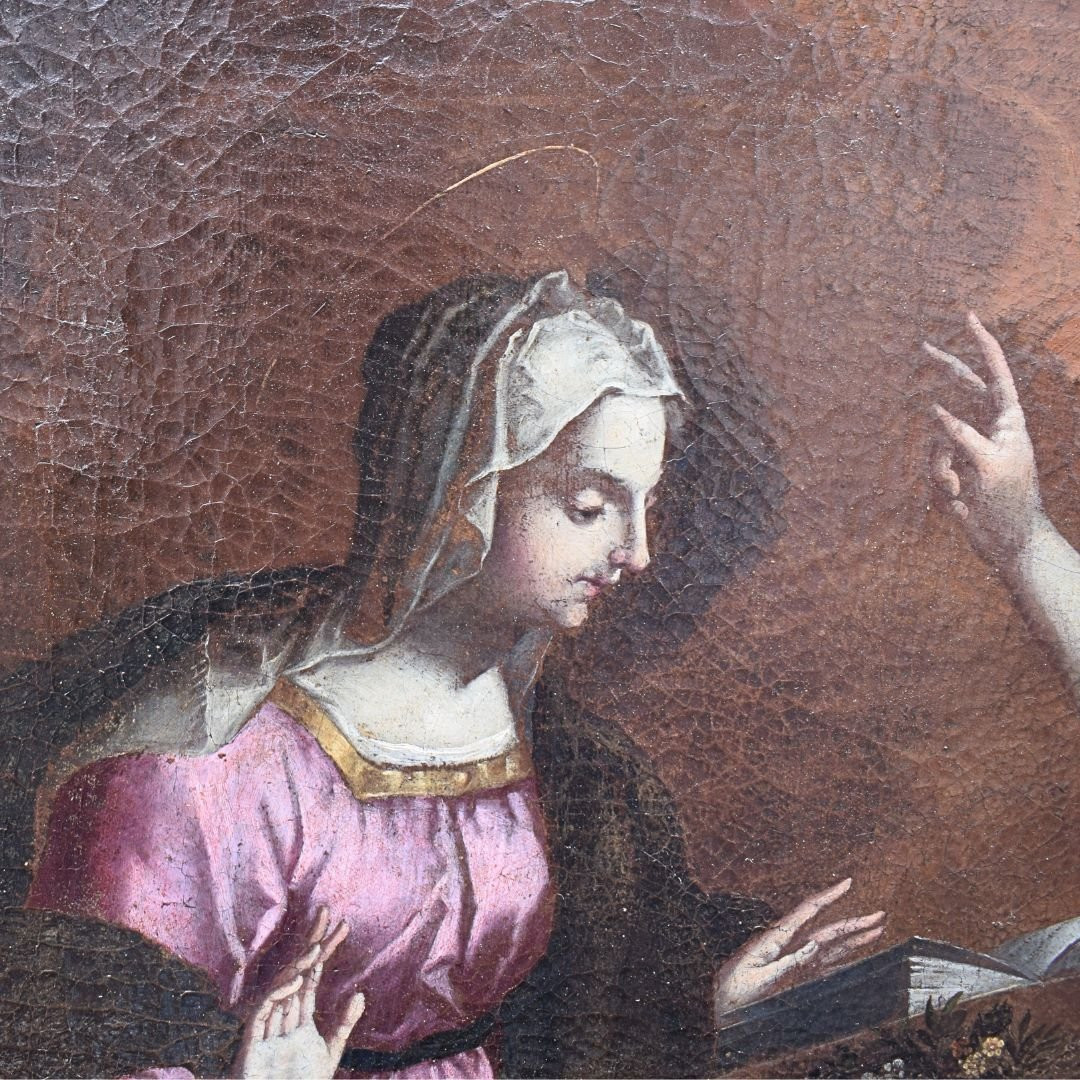
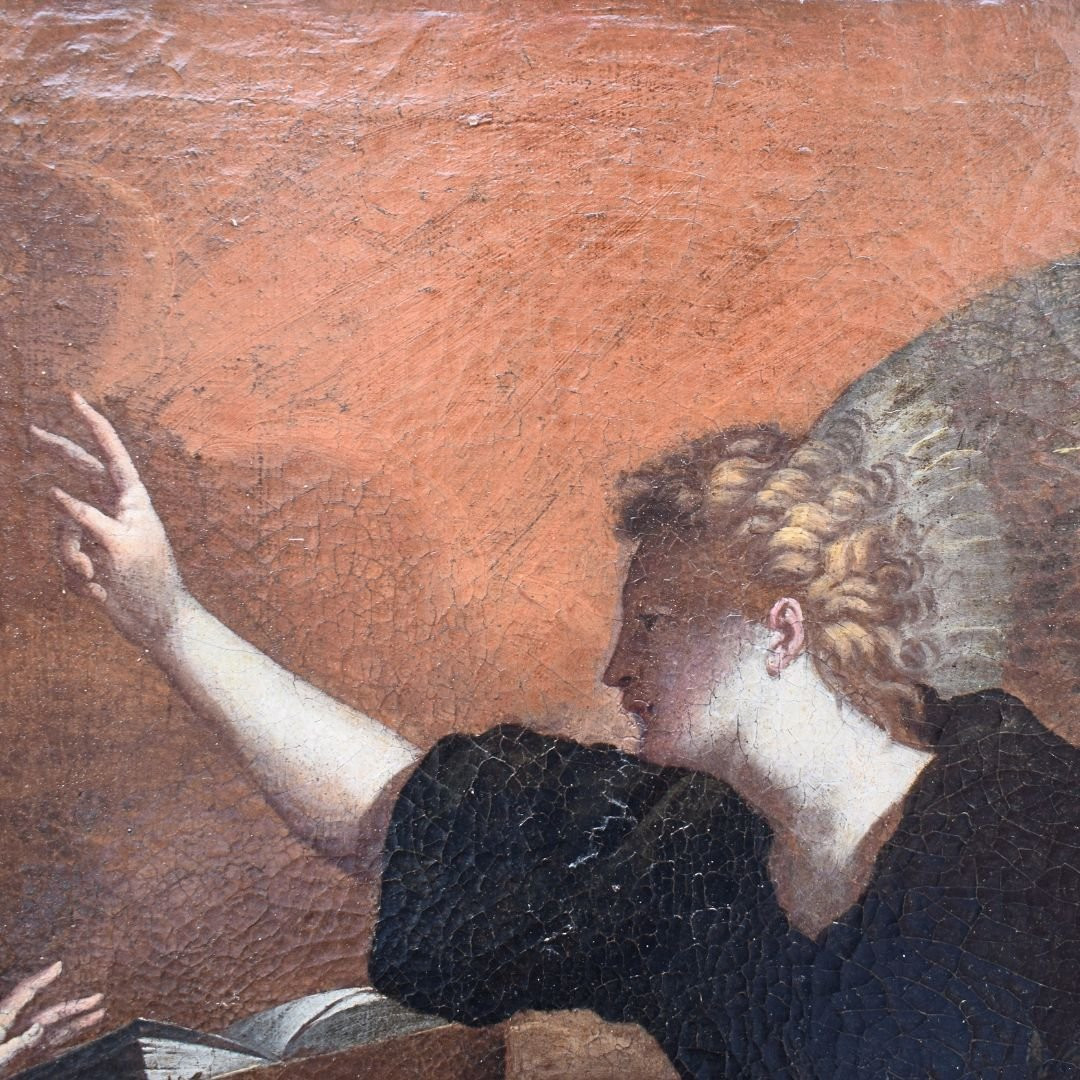
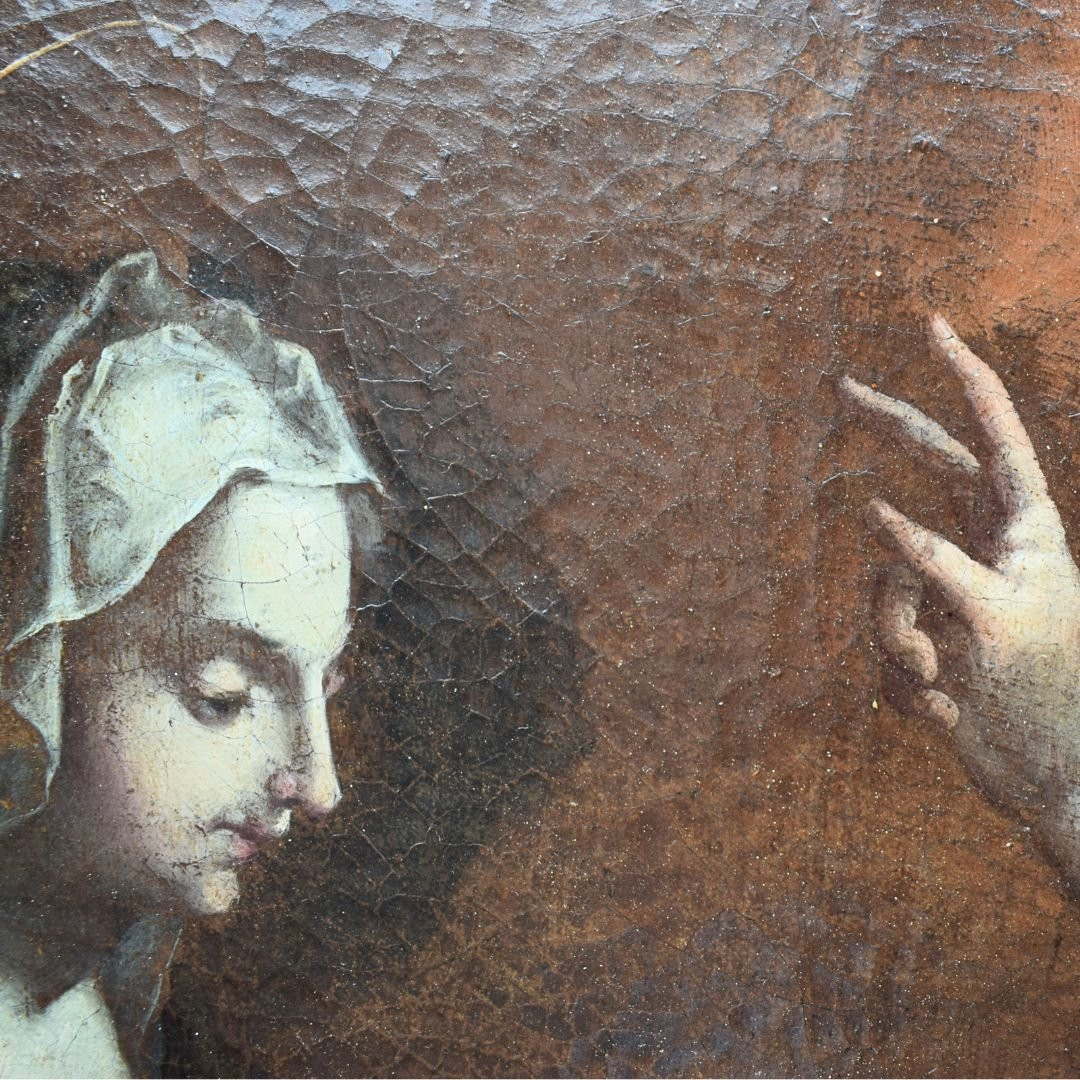
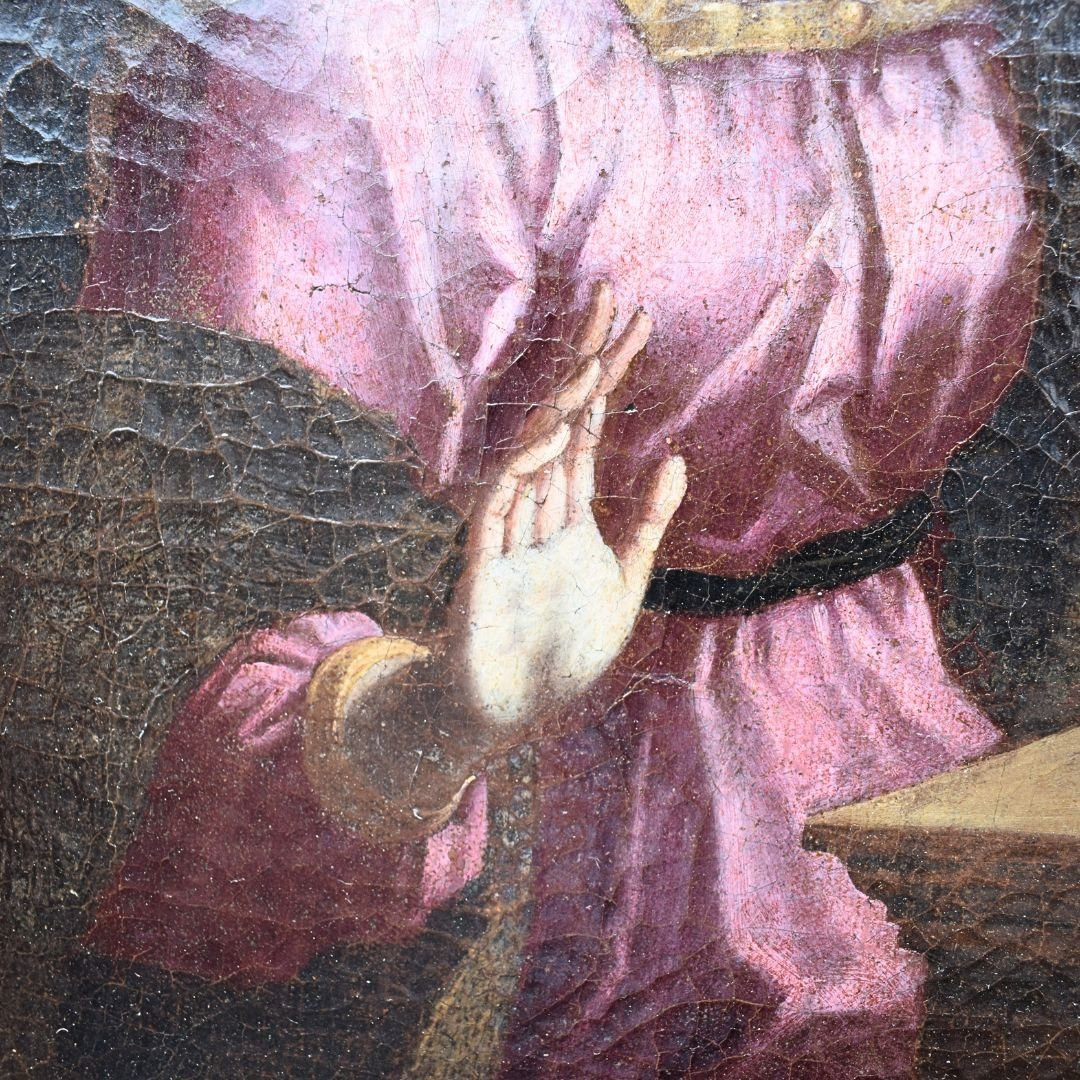
Particularly effective is the gestural dialogue between the protagonists: the Virgin’s hand, raised to her chest, expresses wonder and devotion, while the angel’s points upward, signifying divine communication.
The episode of the Annunciation, taken from the Gospel of Luke, is one of the most popular themes in sacred art. The composition of the work under examination is inspired by the famous prototype of the Annunciation conceived around 1586–1595 by Pietro Candido, now lost but made known and widely disseminated thanks to the engraving created and published by Jan Sadeler I (1550–1600). This model enjoyed great success, as evidenced by the numerous replicas and variations preserved in various museums and collections, attesting to its widespread dissemination and iconographic popularity. Notable examples include the works housed at the National Museum in Prague and the Finnish National Museum in Helsinki, as well as the interpretation on two separate panels now preserved at the Accademia Carrara in Bergamo.
The work features soft, nuanced brushwork, with a careful use of light that shapes the figures and creates depth. The warm color palette, dominated by brown and pinkish tones, contributes to the intimate and meditative atmosphere.
The rendering of the faces and drapery, together with the balanced composition of the scene, reflect the figurative style of Pietro Candido’s workshop, where elements of the Italian tradition blend with Nordic influences.
Pietro Candido (1548–1628), also known as Peter de Witte or Peter Candid, was a Flemish painter active for many years in Italy, particularly between Florence and Munich. Trained in the Mannerist tradition, he assimilated the lessons of the great Italian masters, contributing to the spread of an elegant and cultured pictorial language.
His workshop was particularly active in the production of devotional works, intended for both private and ecclesiastical patrons. His paintings are distinguished by narrative clarity, compositional balance, and a refined chromatic sensibility.
All our works are accompanied by a detailed certificate of authenticity.
Professional packaging and insured shipping to ensure maximum safety during transport.
For further information, please do not hesitate to contact us +39 329 319 4887 – info@dequart.com
Video calls and in-person viewings are available by appointment in MILAN and BORGOMANERO (NO).
Further information and photos: www.dequart.com IG - FB @dequ.art
Annunciation
Oil on canvas, 70 x 84.5 cm
Antique frame, 85 x 100
A striking depiction of the Annunciation, executed by a painter from the workshop of Pieter de Witte, also known as Peter Candid or Pietro Candido (Bruges, 1540/1548 – Munich, 1628), a prominent figure in the artistic landscape between the late 16th and early 17th centuries.
The composition unfolds in a cozy, intimate interior: the Virgin, depicted in a posture of humble acceptance, pauses from reading the Holy Scriptures, while the Archangel Gabriel bursts onto the scene with a solemn and dynamic gesture. The presence of the lectern with the open book and the vase of flowers in the foreground enriches the symbolic meaning and contributes to the spatial composition.
Particularly effective is the gestural dialogue between the protagonists: the Virgin’s hand, raised to her chest, expresses wonder and devotion, while the angel’s points upward, signifying divine communication.
The episode of the Annunciation, taken from the Gospel of Luke, is one of the most popular themes in sacred art. The composition of the work under examination is inspired by the famous prototype of the Annunciation conceived around 1586–1595 by Pietro Candido, now lost but made known and widely disseminated thanks to the engraving created and published by Jan Sadeler I (1550–1600). This model enjoyed great success, as evidenced by the numerous replicas and variations preserved in various museums and collections, attesting to its widespread dissemination and iconographic popularity. Notable examples include the works housed at the National Museum in Prague and the Finnish National Museum in Helsinki, as well as the interpretation on two separate panels now preserved at the Accademia Carrara in Bergamo.
The work features soft, nuanced brushwork, with a careful use of light that shapes the figures and creates depth. The warm color palette, dominated by brown and pinkish tones, contributes to the intimate and meditative atmosphere.
The rendering of the faces and drapery, together with the balanced composition of the scene, reflect the figurative style of Pietro Candido’s workshop, where elements of the Italian tradition blend with Nordic influences.
Pietro Candido (1548–1628), also known as Peter de Witte or Peter Candid, was a Flemish painter active for many years in Italy, particularly between Florence and Munich. Trained in the Mannerist tradition, he assimilated the lessons of the great Italian masters, contributing to the spread of an elegant and cultured pictorial language.
His workshop was particularly active in the production of devotional works, intended for both private and ecclesiastical patrons. His paintings are distinguished by narrative clarity, compositional balance, and a refined chromatic sensibility.
All our works are accompanied by a detailed certificate of authenticity.
Professional packaging and insured shipping to ensure maximum safety during transport.
For further information, please do not hesitate to contact us +39 329 319 4887 – info@dequart.com
Video calls and in-person viewings are available by appointment in MILAN and BORGOMANERO (NO).
Further information and photos: www.dequart.com IG - FB @dequ.art
3 800 €
Period: 17th century
Style: Renaissance, Louis 13th
Condition: Good condition
Material: Oil painting
Width: 84,5
Height: 70
Reference (ID): 1748371
Availability: In stock
Print