

Stipo - Coin Cabinet Decorated With Village Scenes, 16th Century, Piedmont, Northern Italy
Artist: Italie Du Nord, Piémont, Seconde Moitié Du Xviie Siècle
Northern Italy, Piedmont, Second half of the 17th century
Coin cabinet with “paesini” inlay
Various types of wood, H 52 x W 89 x D 40 cm
Piedmontese craftsmanship with references to the cabinetmaking tradition of Augsburg, Germany.
Various inlaid woods; walnut, boxwood, maple, ebony
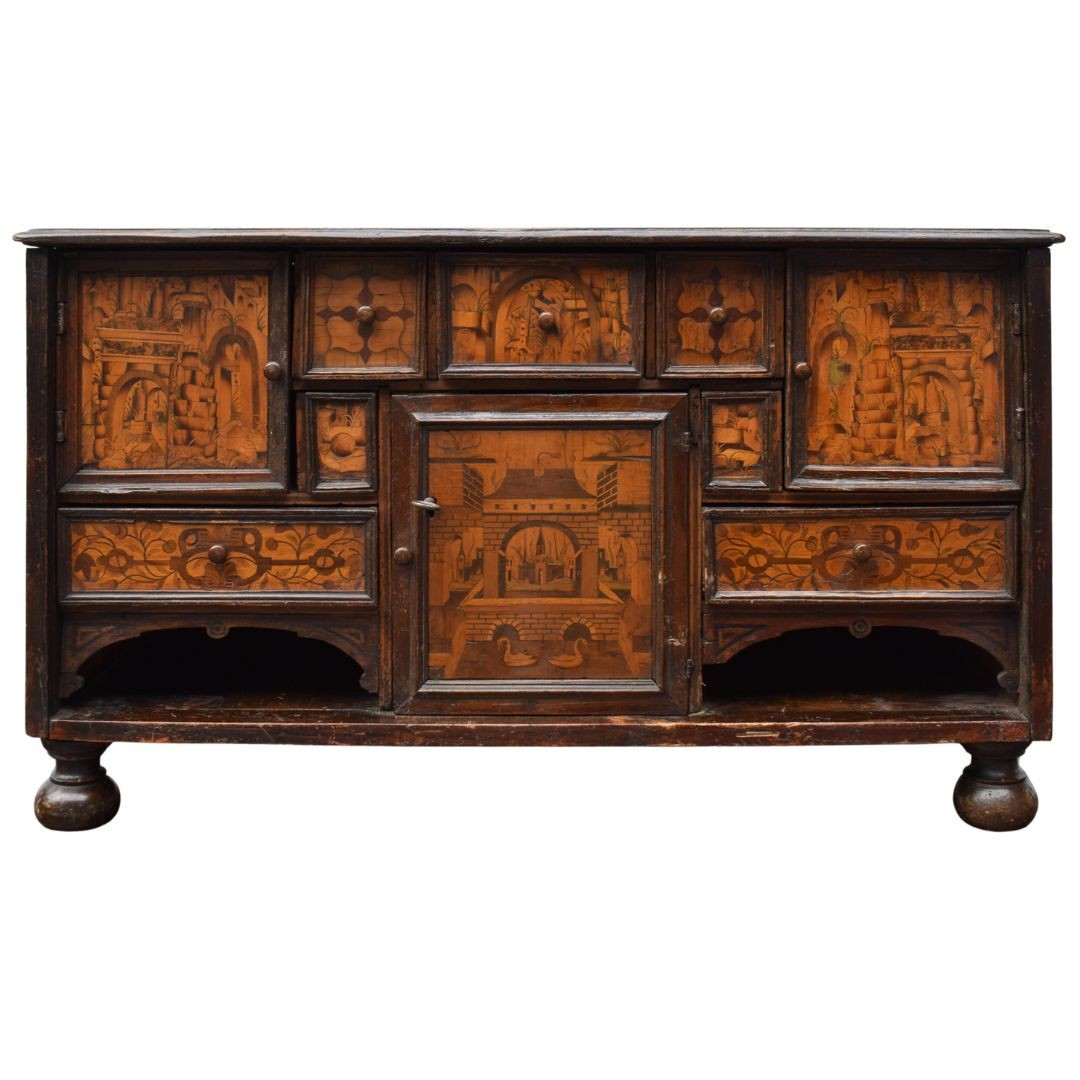
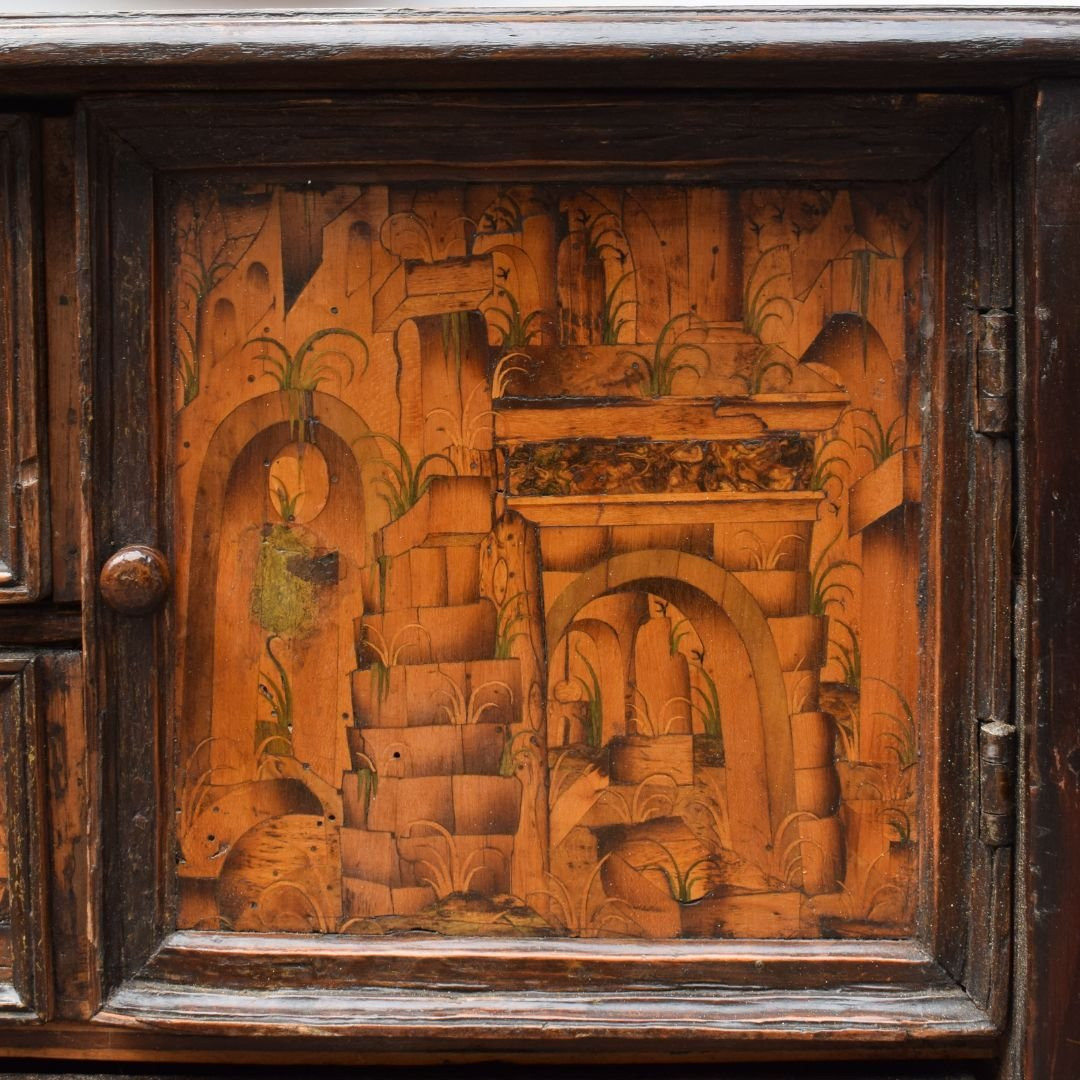
“Paesini” inlay (architectural and landscape views)
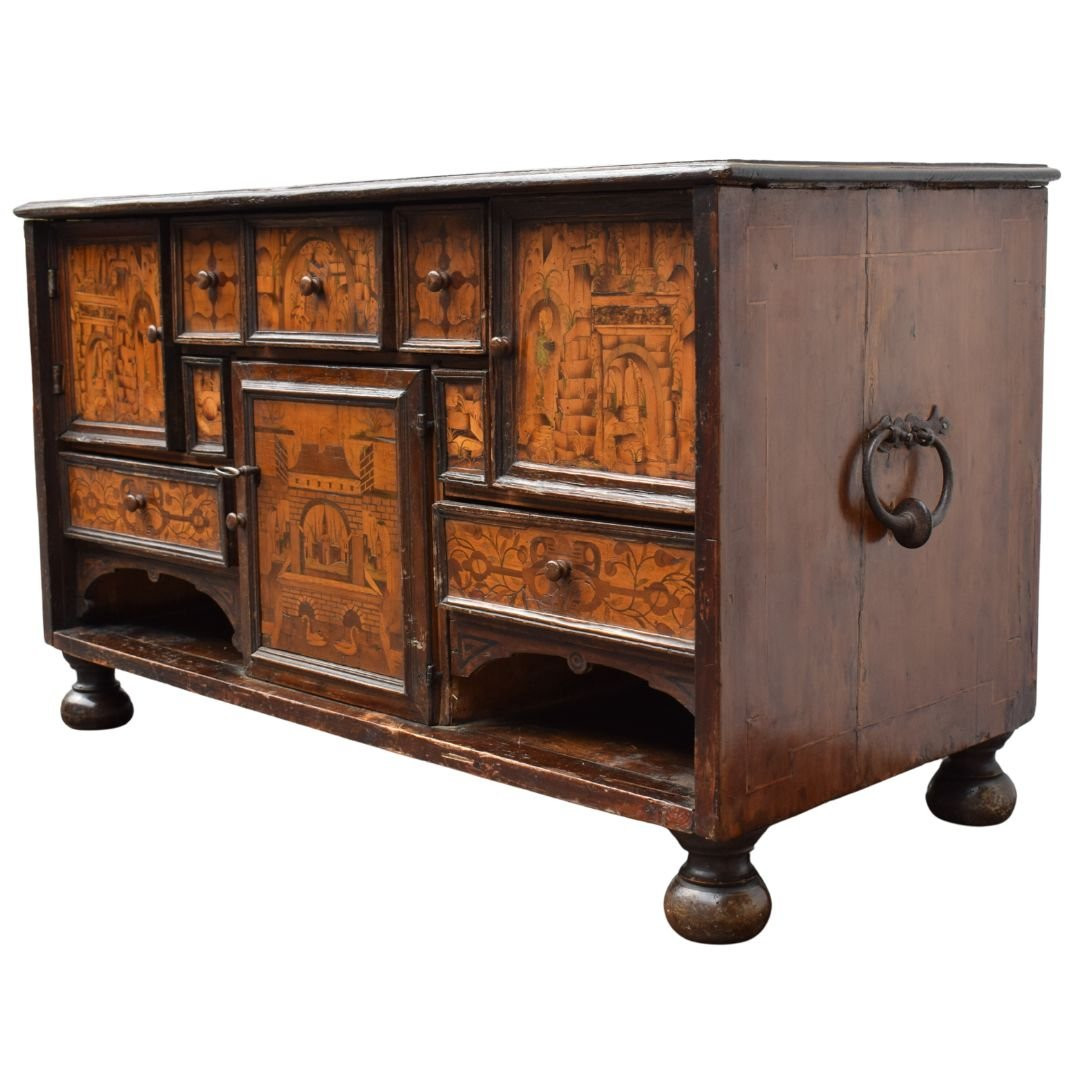
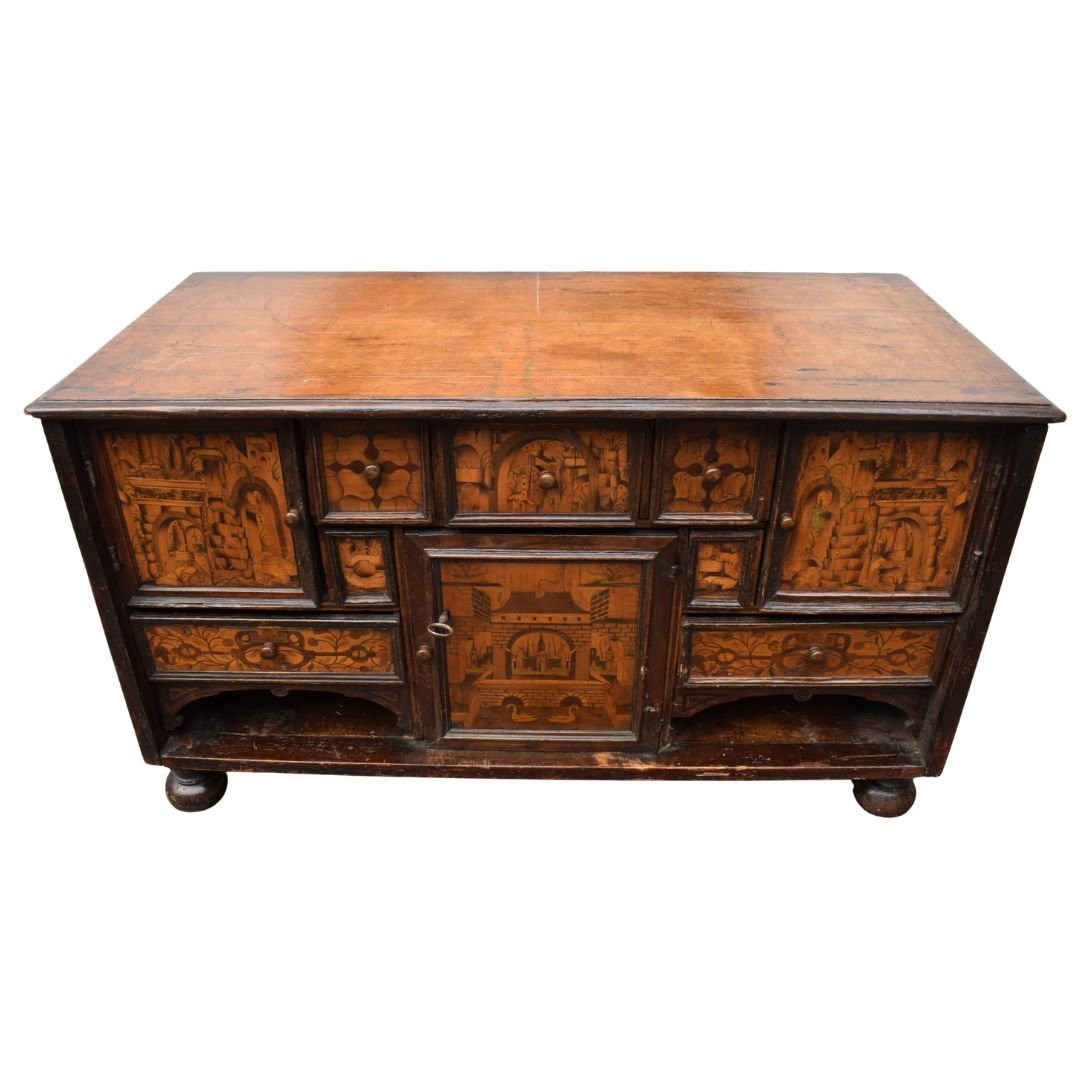
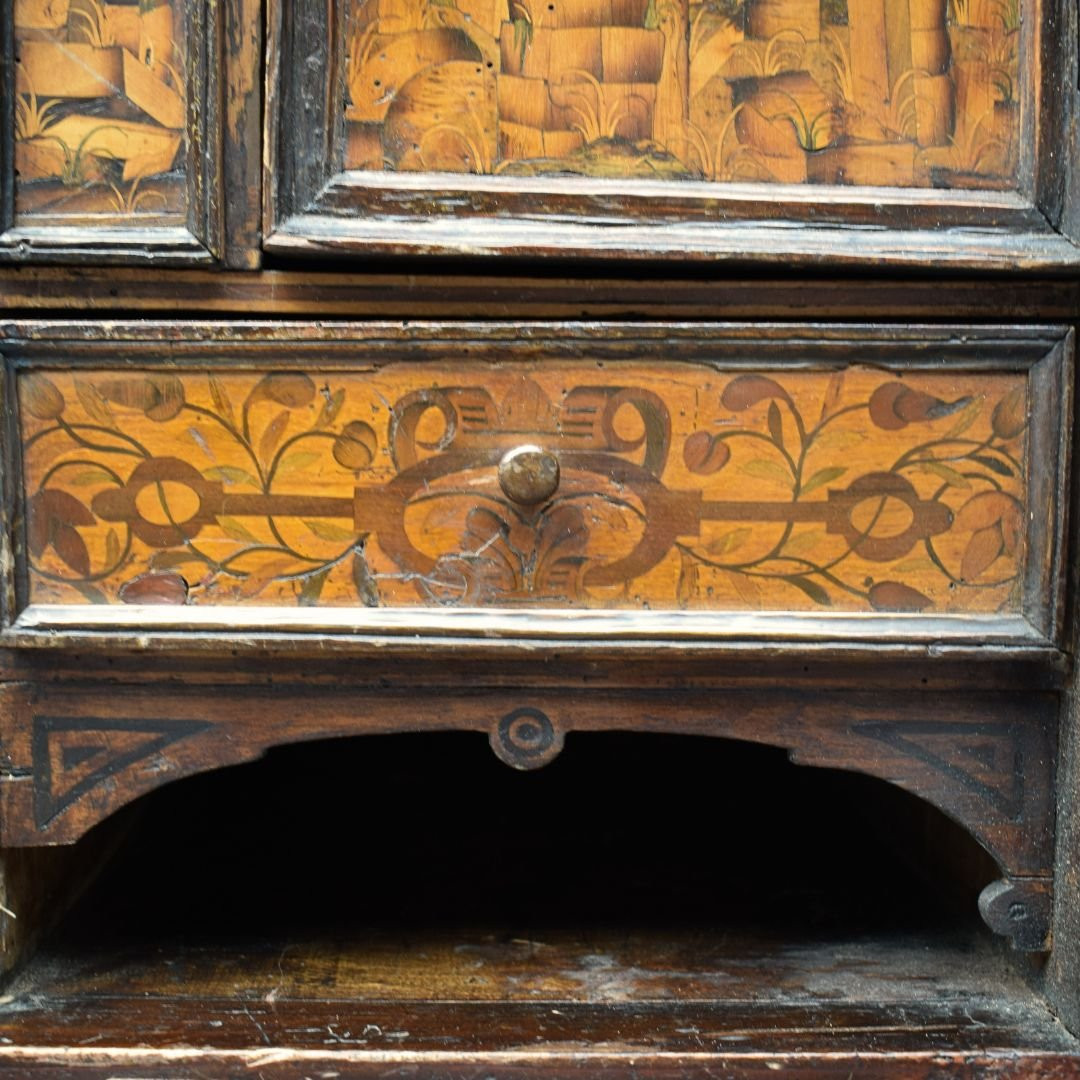
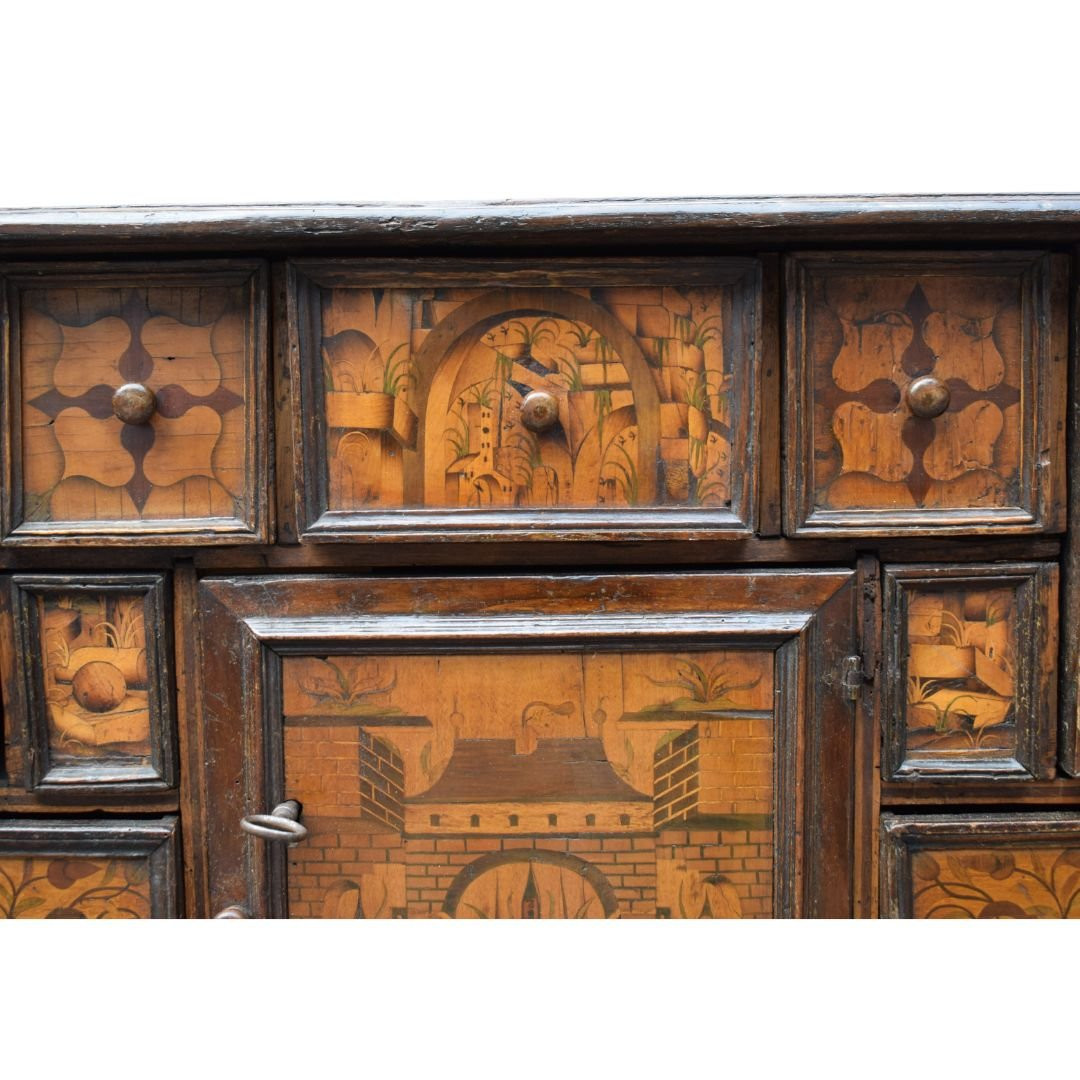
Elegant inlaid wooden coin cabinet, a specimen of rare quality that attests to the spread of the German style of Augsburg in the Piedmont region between the 17th and early 18th centuries.
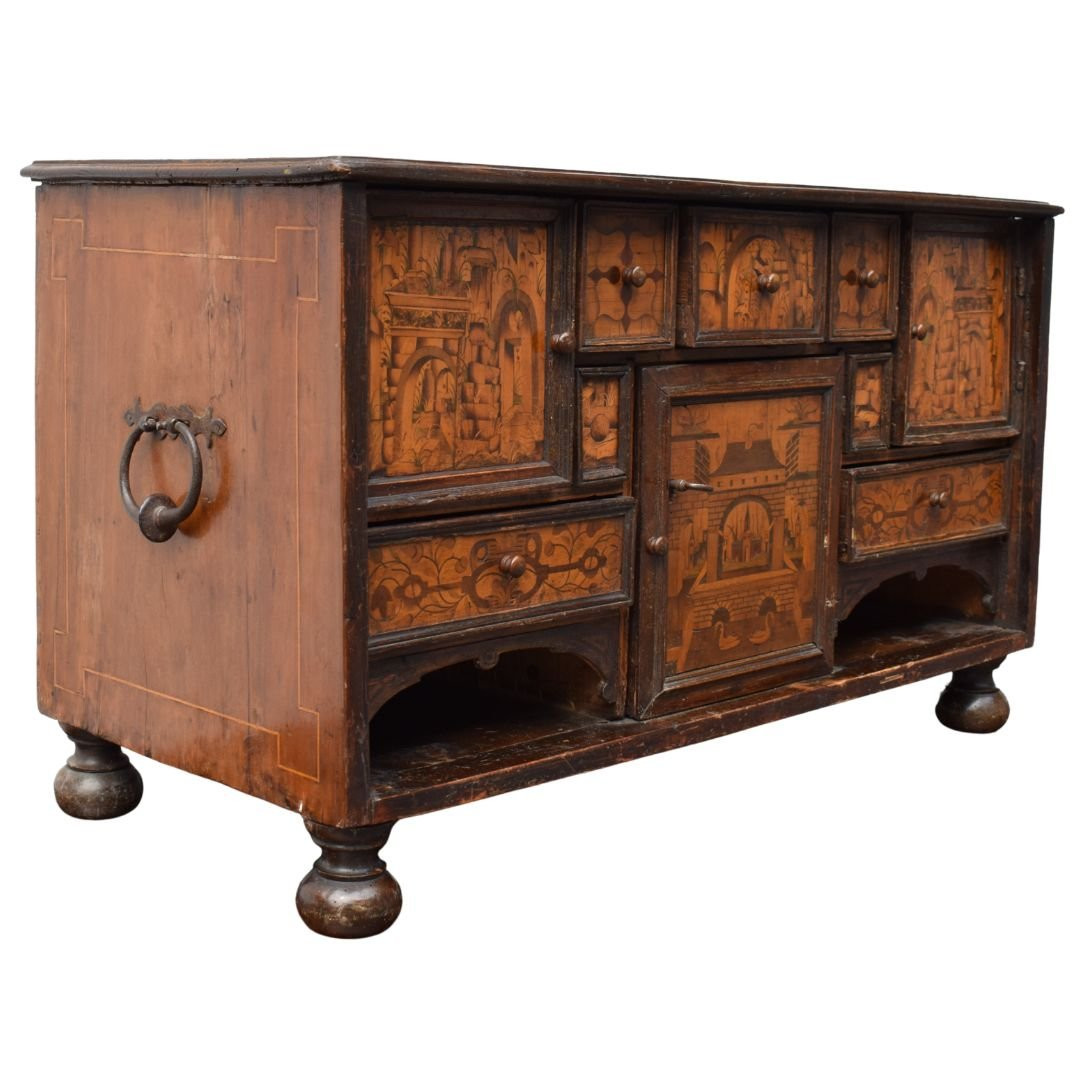
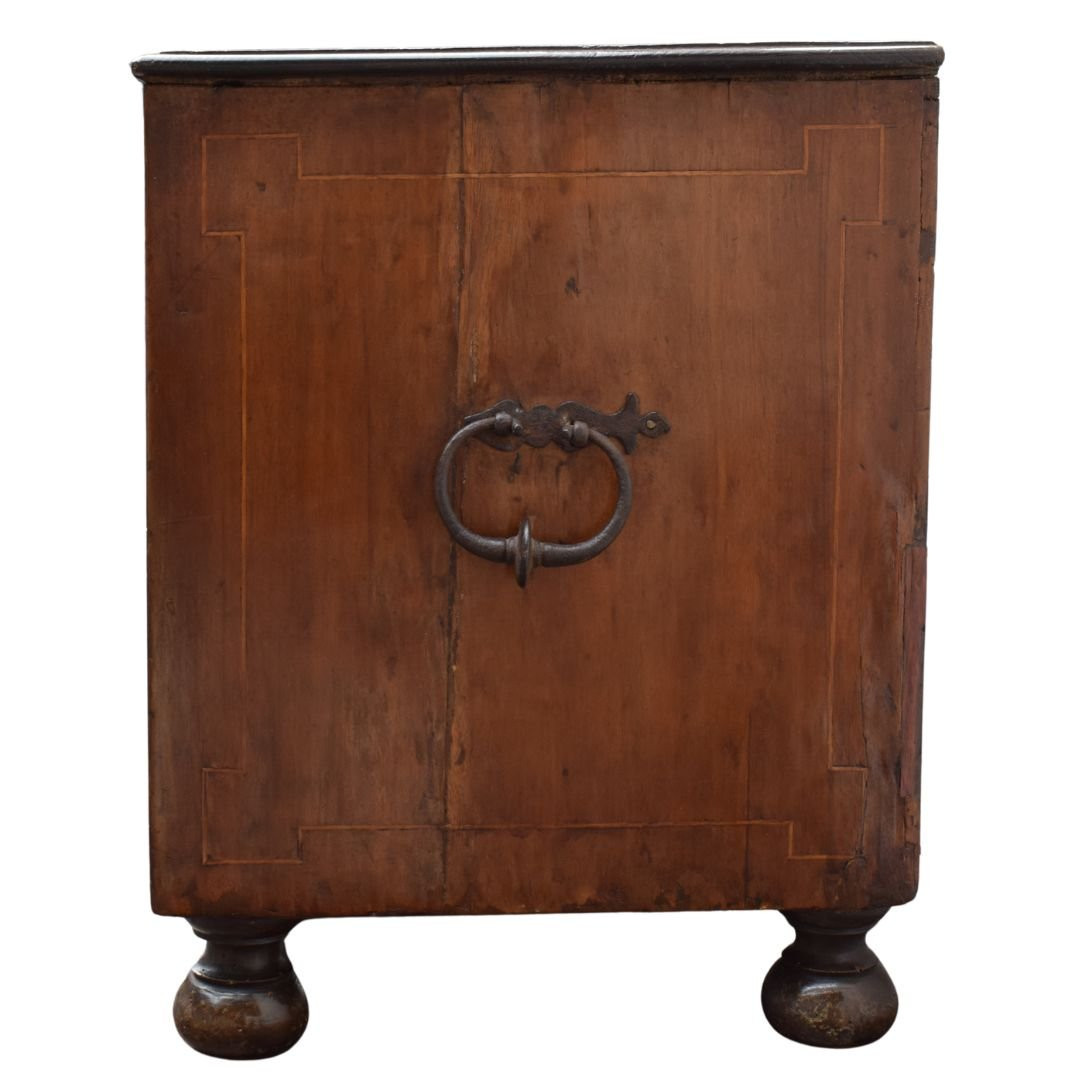
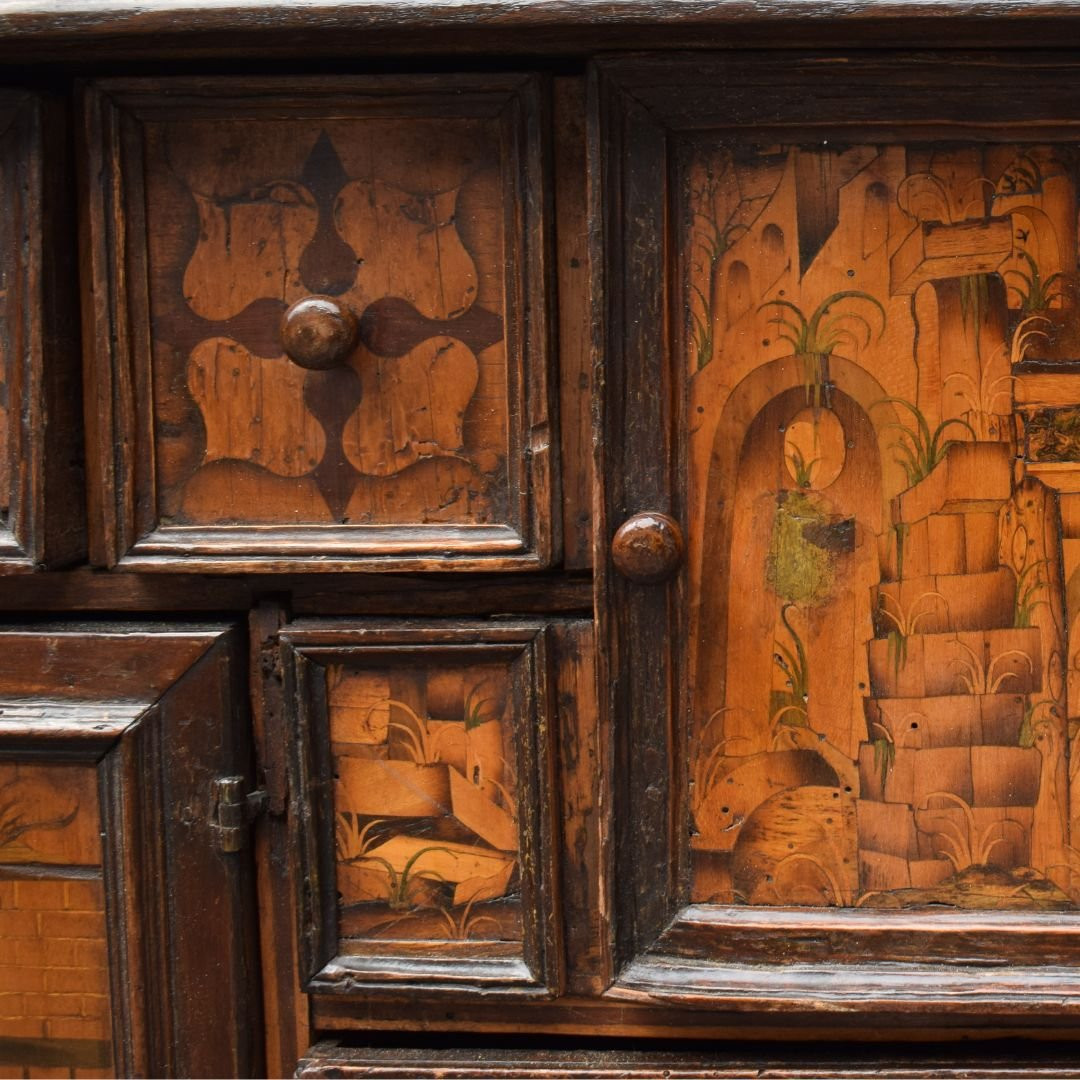
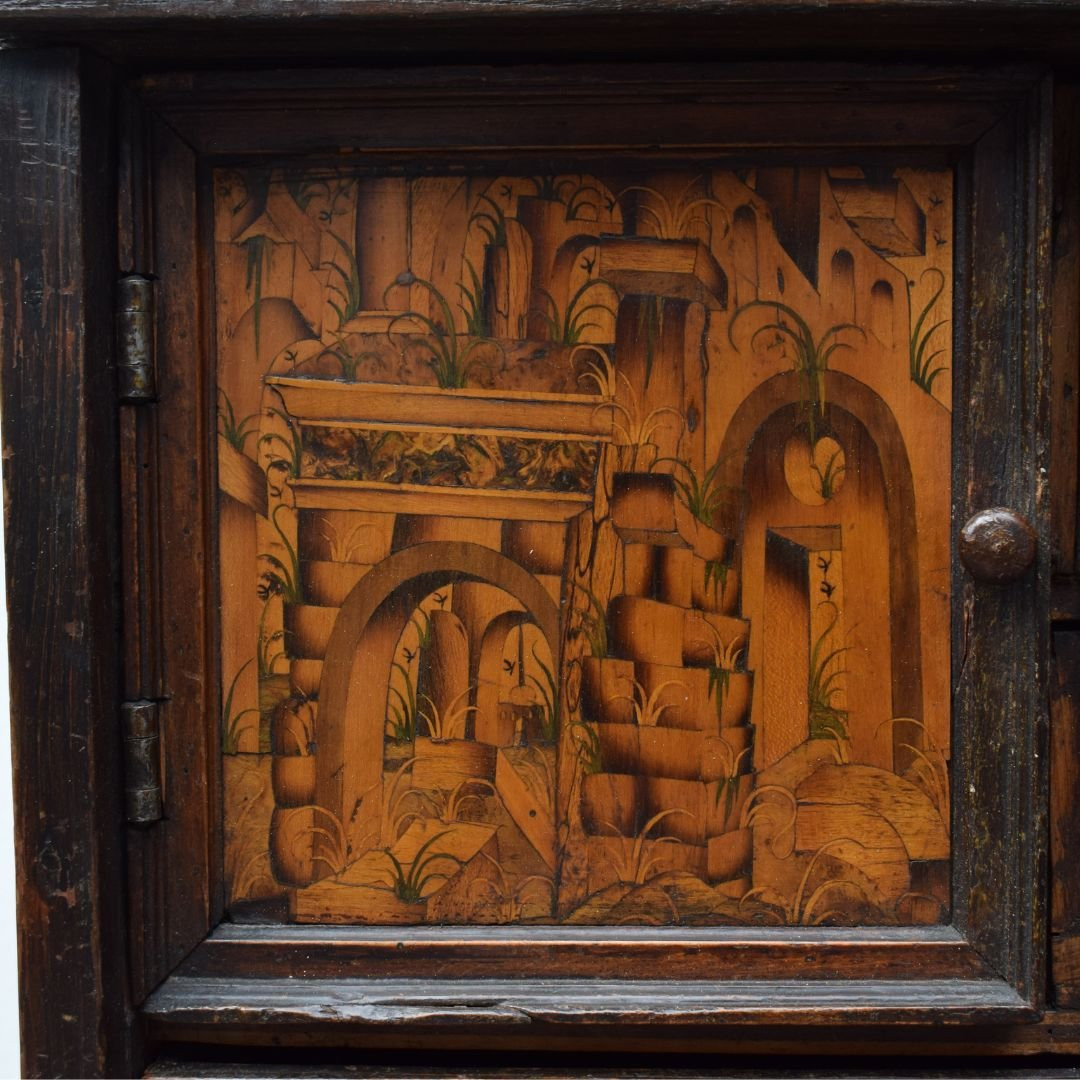
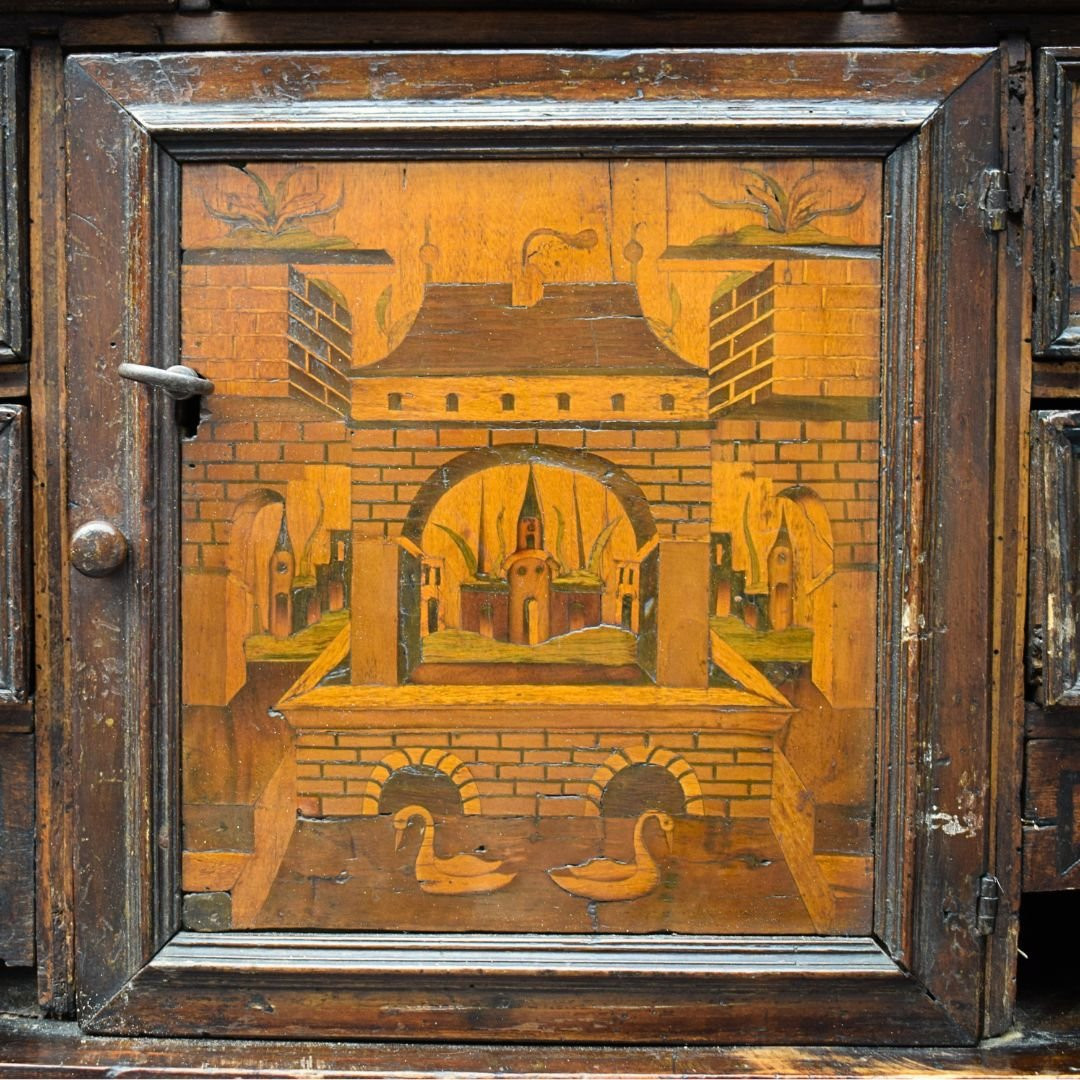
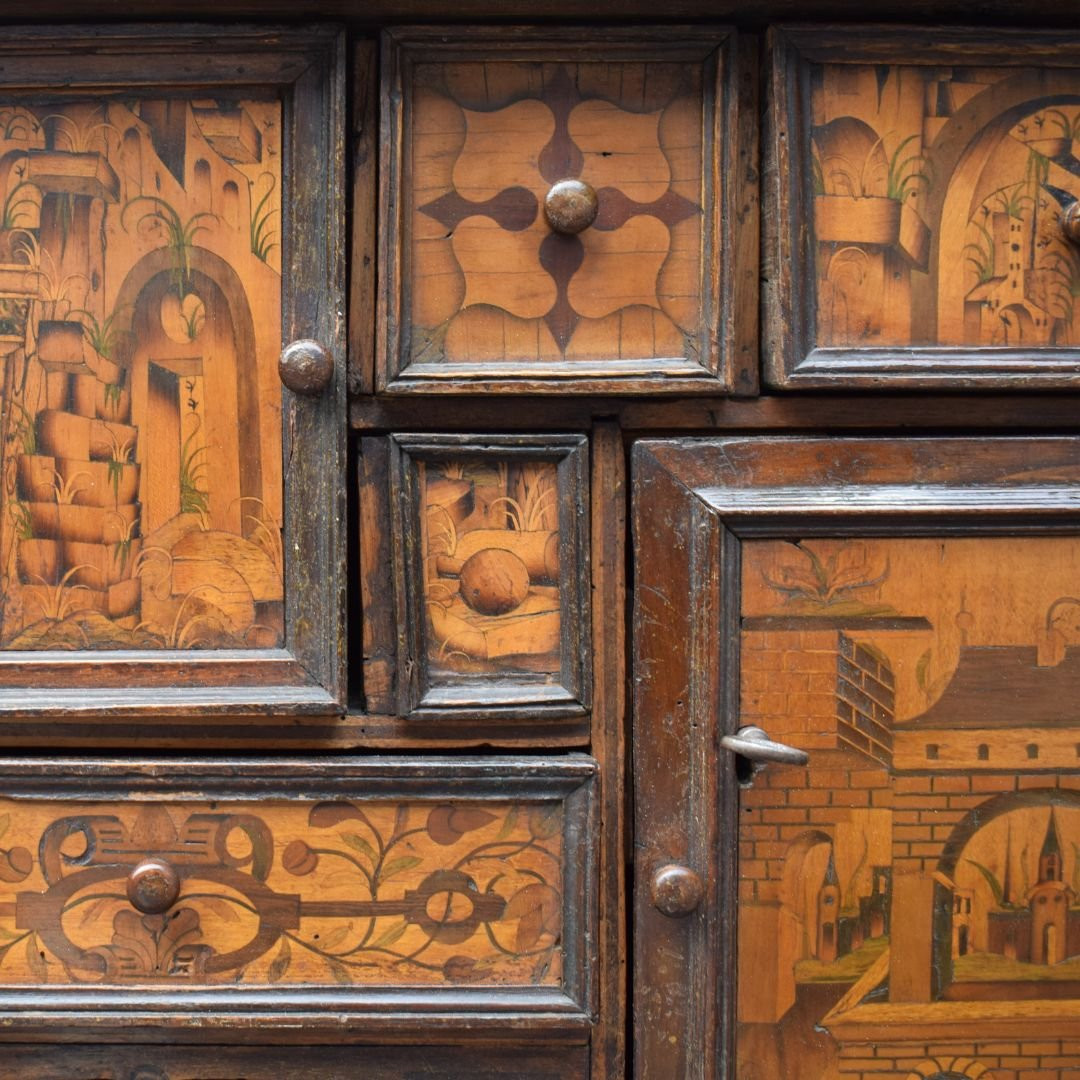
The structure, typically Italian in style with small drawers arranged around a central door, rests on turned legs with spherical fluting; the molded walnut frames enclose refined polychrome inlays. The inlaid scenes depict idealized architecture and urban views—the so-called “village scenes”—populated by small buildings, bridges, aquatic animals (such as the swans on the central door), and plant elements, rendered with superb craftsmanship through the contrast between light and dark woods and varying hues. Side handles in gilded bronze.
The decorative style clearly references the Augsburg cabinetmaking tradition, widespread and highly regarded throughout Central Europe. However, the construction of the piece, its undulating design, and its decorative style suggest a Piedmontese reinterpretation, likely in the Turin area, where German and Flemish craftsmen active in the Savoy ducal workshops settled and worked.
The coin cabinet with small panels is an important example of Baroque collecting, created to house coins, cameos, and precious objects. These are pieces of furniture for the study and for wonder, in which the technical virtuosity of marquetry is combined with the encyclopedic and symbolic taste of the time.
Condition:
Good. Slight signs of use and patina consistent with its age. Minor imperfections in the inlay.
All our works are accompanied by a detailed certificate of authenticity.
Professional packagingand insured shipping to ensure maximum safety during transport.
For further information, please do not hesitate to contact us +39 329 319 4887 – info@dequart.com
Option for VIDEO CALLS and in-person viewings by appointment in MILAN and BORGOMANERO (NO).
Further information and photos: www.dequart.com IG - FB @dequ.art
Coin cabinet with “paesini” inlay
Various types of wood, H 52 x W 89 x D 40 cm
Piedmontese craftsmanship with references to the cabinetmaking tradition of Augsburg, Germany.
Various inlaid woods; walnut, boxwood, maple, ebony
“Paesini” inlay (architectural and landscape views)
Elegant inlaid wooden coin cabinet, a specimen of rare quality that attests to the spread of the German style of Augsburg in the Piedmont region between the 17th and early 18th centuries.
The structure, typically Italian in style with small drawers arranged around a central door, rests on turned legs with spherical fluting; the molded walnut frames enclose refined polychrome inlays. The inlaid scenes depict idealized architecture and urban views—the so-called “village scenes”—populated by small buildings, bridges, aquatic animals (such as the swans on the central door), and plant elements, rendered with superb craftsmanship through the contrast between light and dark woods and varying hues. Side handles in gilded bronze.
The decorative style clearly references the Augsburg cabinetmaking tradition, widespread and highly regarded throughout Central Europe. However, the construction of the piece, its undulating design, and its decorative style suggest a Piedmontese reinterpretation, likely in the Turin area, where German and Flemish craftsmen active in the Savoy ducal workshops settled and worked.
The coin cabinet with small panels is an important example of Baroque collecting, created to house coins, cameos, and precious objects. These are pieces of furniture for the study and for wonder, in which the technical virtuosity of marquetry is combined with the encyclopedic and symbolic taste of the time.
Condition:
Good. Slight signs of use and patina consistent with its age. Minor imperfections in the inlay.
All our works are accompanied by a detailed certificate of authenticity.
Professional packagingand insured shipping to ensure maximum safety during transport.
For further information, please do not hesitate to contact us +39 329 319 4887 – info@dequart.com
Option for VIDEO CALLS and in-person viewings by appointment in MILAN and BORGOMANERO (NO).
Further information and photos: www.dequart.com IG - FB @dequ.art
5 500 €
Period: 17th century
Style: Louis 14th, Regency
Condition: Good condition
Material: Marquetry
Width: 89
Height: 52
Depth: 40
Reference (ID): 1746216
Availability: In stock
Print