


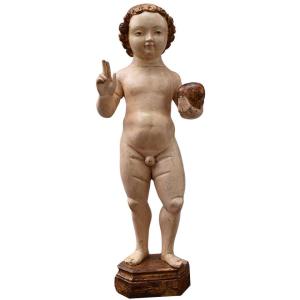


16th Century, The Infant Jesus Of Malines, Sculpture
Artist: Flandre, Première Moitié Du Xvie Siècle
Flanders, first half of the 16th century
The Child Jesus of Malines, or Salvator Mundi
Polychrome wood, H 45
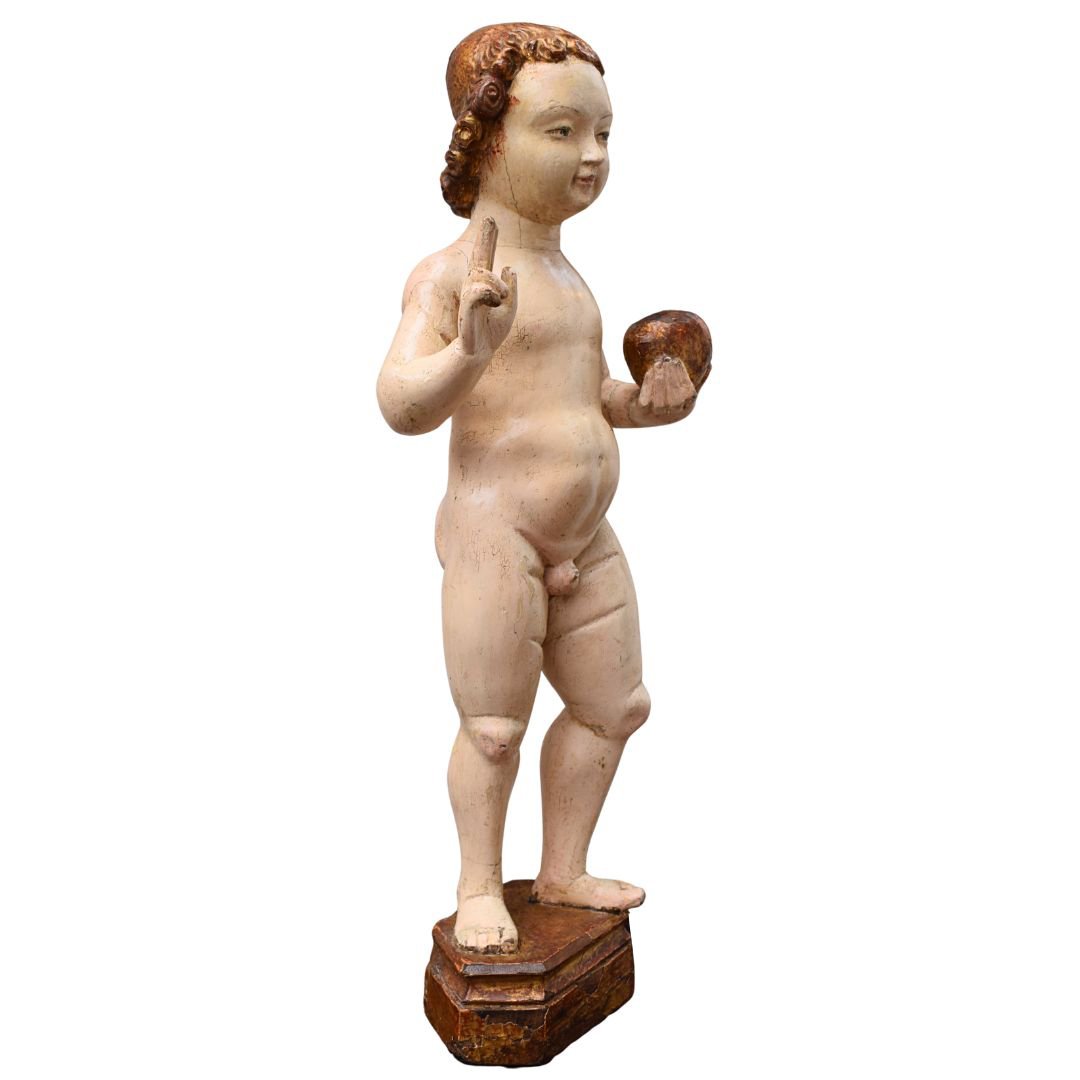
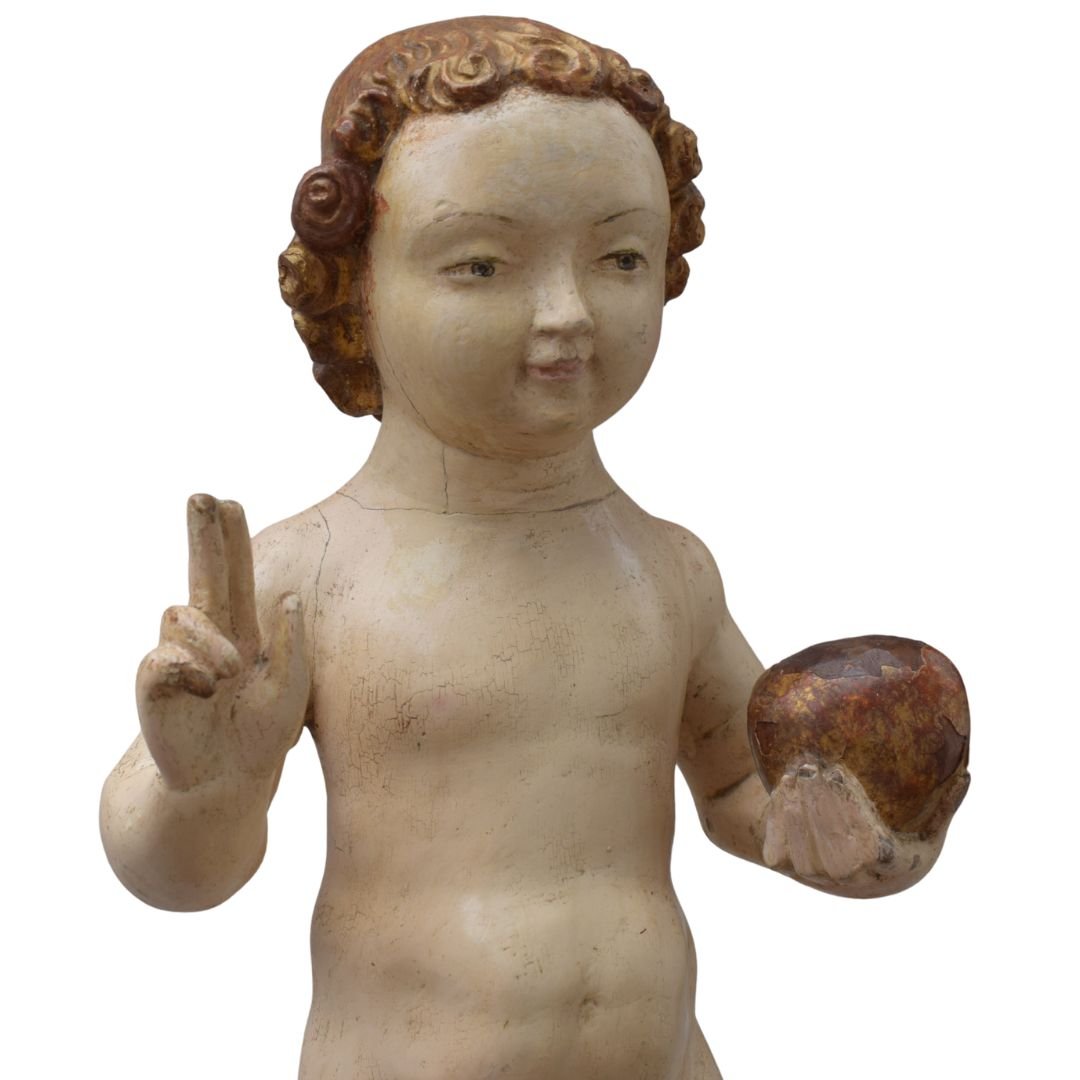
The sculpture under examination depicts the Infant Jesus according to the famous type of the Infant Jesus of Mechelen (in Flemish, Mechels Kindje), a devotional image particularly widespread in the Southern Netherlands between the late 15th and the first half of the 16th century, with its main center in the city of Mechelen (Malines in the French tradition). The iconography, intended primarily for private and monastic devotion, enjoyed great commercial success and circulated widely in Germanic, Iberian, and Italian regions as well, thanks to the international trade of Flemish workshops.
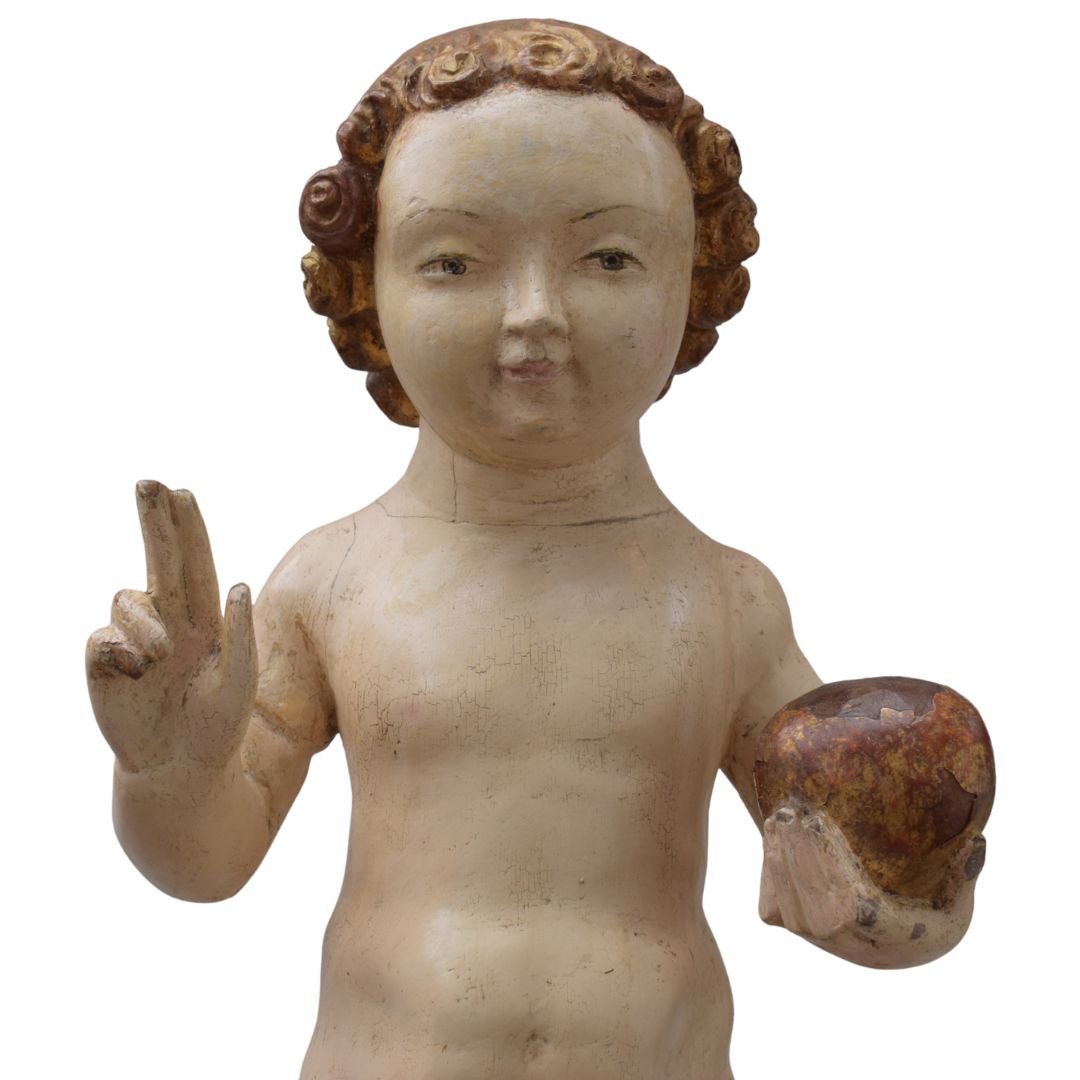
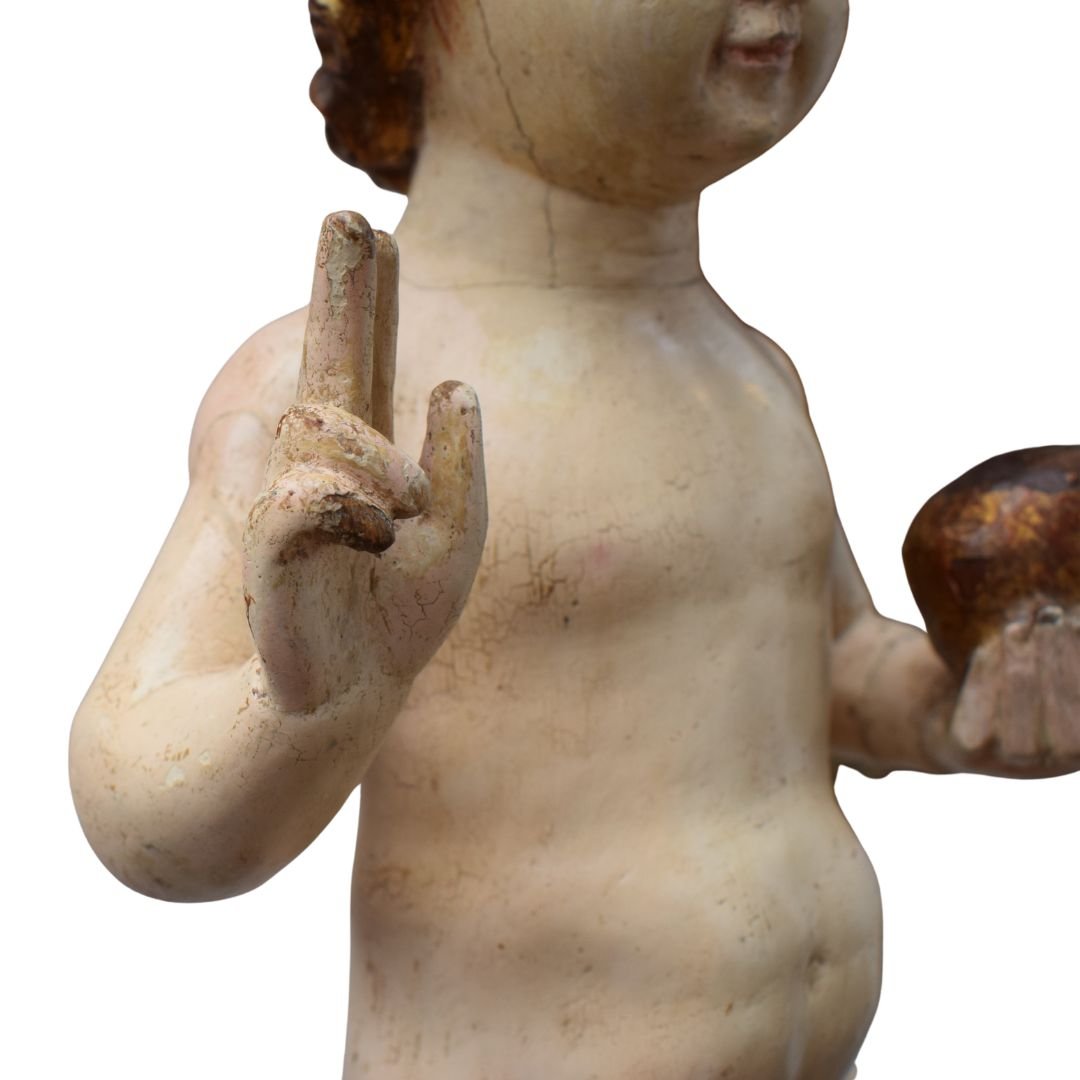
The figure belongs to the type of the infant Salvator Mundi: the Child, depicted standing and nude, advances his right leg slightly in a dynamic, blessing gesture, while his opposite hand holds the globe, a symbol of Christ’s universal sovereignty over the world. The frontal posture, the gesture of the Latin blessing, and the globe with a cross derive directly from the iconography of the adult Christ as Salvator Mundi, here reinterpreted in an infant form according to a strongly narrative and affective late-Gothic sensibility.
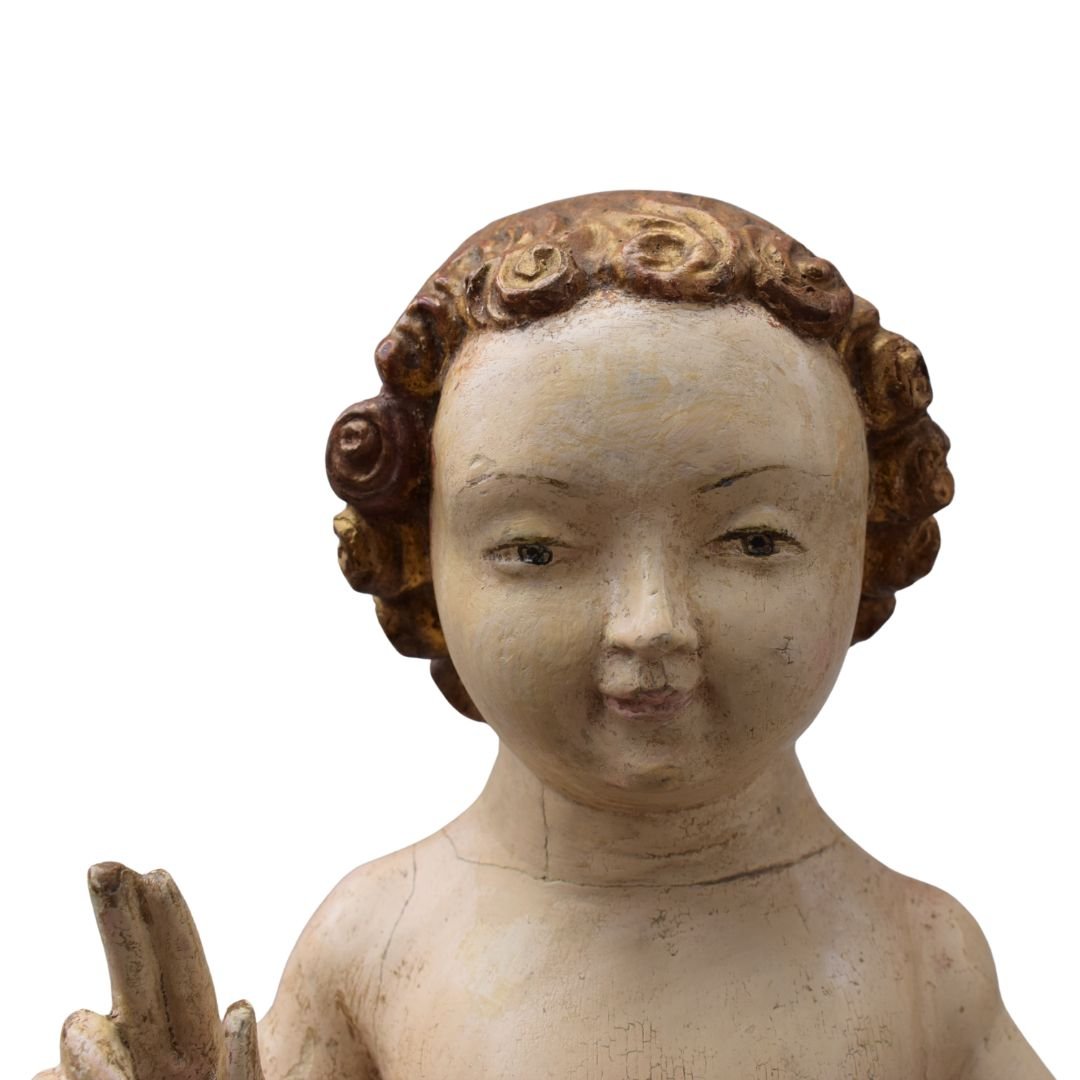
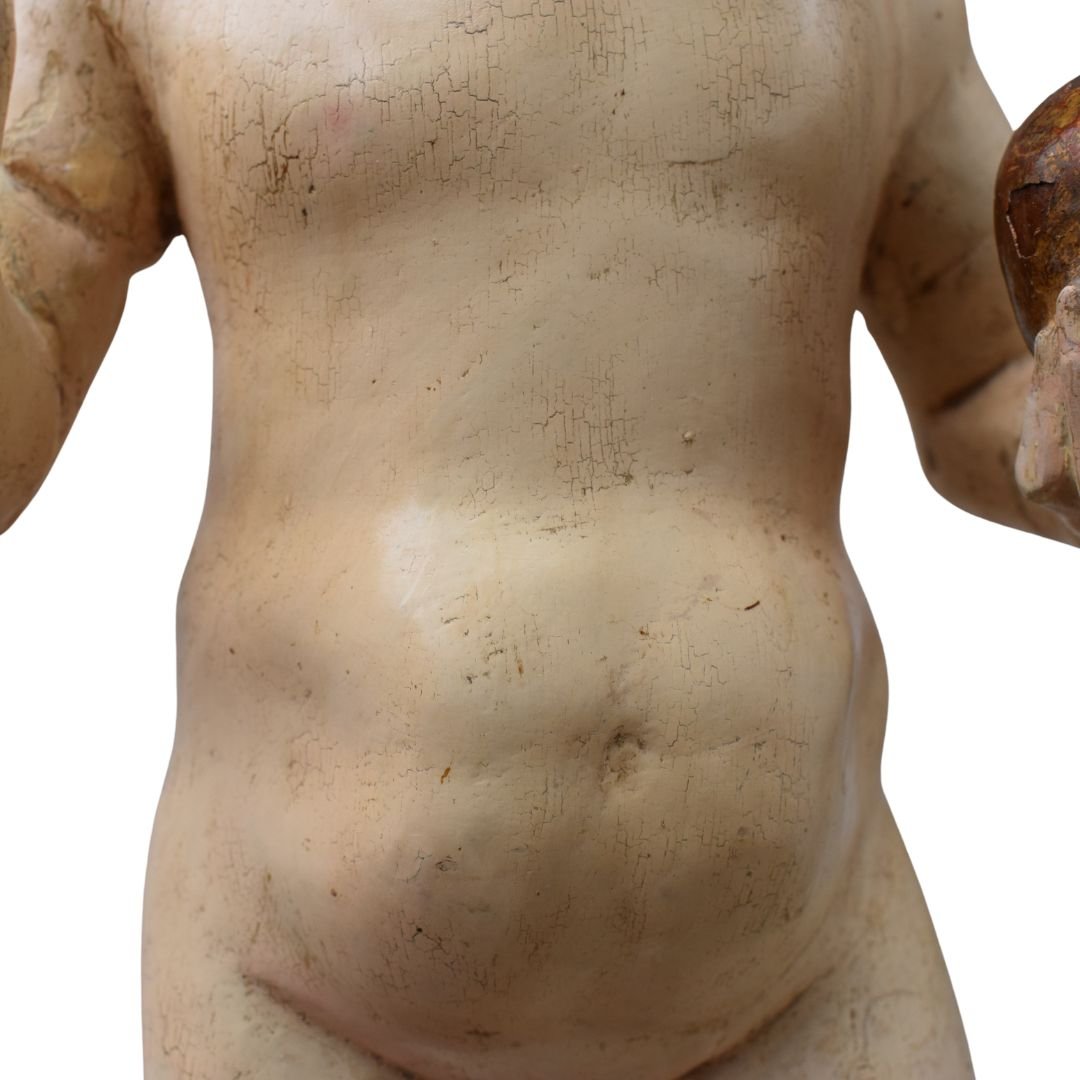
From a stylistic point of view, the sculpture displays the typical characteristics of the Malines school: the rounded face with full cheeks, small, closely set eyes, a faint smile, and short hair with fine, ringed curls neatly arranged on the forehead. The anatomy appears deliberately simplified and concise, with cylindrical limbs and a rough modeling, in accordance with the serial production methods typical of the specialized workshops active in the Flemish city between the 15th and 16th centuries. The original polychromy, an essential element of these works, helped accentuate the figure’s naturalism and its devotional impact.
The Children of Mechelen were often conceived as “dressable” images: the sculpture could be adorned with precious fabrics, small crowns, votive necklaces, or small metal ex-votos, in accordance with devotional practices widespread especially in women’s monasteries and aristocratic domestic settings. This custom explains both the relative anatomical schematism and the frequent presence of holes or adaptations intended for the application of clothing and accessories.
The success of these images was aided by the proto-industrial organization of Mechelen’s workshops, which specialized in the production of small wooden sculptures intended for export. The city became, in fact, along with Antwerp and Brussels, one of the major European centers for devotional polychrome wood sculpture.
From an iconographic and typological perspective, the work can be compared to the Infant Jesus housed at the Museum Hof van Busleyden, to the examples in the Leuven Museum, and to the numerous Niños de Flandes found in museum collections—such as that of the Madeira Museum—or in private Spanish and Portuguese collections, bearing witness to the Iberian diffusion of this Flemish production. Relevant comparisons can also be drawn with the small devotional sculptures exported to Venice and central Italy in the early 16th century, where such models also influenced some local productions.
This sculpture thus fits squarely within the successful production of “Mechelen toys,” a term used in Anglo-Saxon historiography to identify these small-format devotional images, appreciated for their intimate, domestic, and affective character. The work constitutes significant evidence of the European circulation of Flemish figurative models in the early sixteenth century and of the spread of a Christological devotion centered on the infant humanity of Christ.
- All our works are accompanied by a detailed certificate of authenticity.
- Professional packaging and insured shipping to ensure maximum safety during transport.
- For further information, please do not hesitate to contact us +39 329 319 4887 – info@dequart.com
- Option for VIDEO CALLS and in-person viewings by appointment in MILAN and BORGOMANERO (NO).
- Additional information and photos: www.dequart.com IG - FB @dequ.art
The Child Jesus of Malines, or Salvator Mundi
Polychrome wood, H 45
The sculpture under examination depicts the Infant Jesus according to the famous type of the Infant Jesus of Mechelen (in Flemish, Mechels Kindje), a devotional image particularly widespread in the Southern Netherlands between the late 15th and the first half of the 16th century, with its main center in the city of Mechelen (Malines in the French tradition). The iconography, intended primarily for private and monastic devotion, enjoyed great commercial success and circulated widely in Germanic, Iberian, and Italian regions as well, thanks to the international trade of Flemish workshops.
The figure belongs to the type of the infant Salvator Mundi: the Child, depicted standing and nude, advances his right leg slightly in a dynamic, blessing gesture, while his opposite hand holds the globe, a symbol of Christ’s universal sovereignty over the world. The frontal posture, the gesture of the Latin blessing, and the globe with a cross derive directly from the iconography of the adult Christ as Salvator Mundi, here reinterpreted in an infant form according to a strongly narrative and affective late-Gothic sensibility.
From a stylistic point of view, the sculpture displays the typical characteristics of the Malines school: the rounded face with full cheeks, small, closely set eyes, a faint smile, and short hair with fine, ringed curls neatly arranged on the forehead. The anatomy appears deliberately simplified and concise, with cylindrical limbs and a rough modeling, in accordance with the serial production methods typical of the specialized workshops active in the Flemish city between the 15th and 16th centuries. The original polychromy, an essential element of these works, helped accentuate the figure’s naturalism and its devotional impact.
The Children of Mechelen were often conceived as “dressable” images: the sculpture could be adorned with precious fabrics, small crowns, votive necklaces, or small metal ex-votos, in accordance with devotional practices widespread especially in women’s monasteries and aristocratic domestic settings. This custom explains both the relative anatomical schematism and the frequent presence of holes or adaptations intended for the application of clothing and accessories.
The success of these images was aided by the proto-industrial organization of Mechelen’s workshops, which specialized in the production of small wooden sculptures intended for export. The city became, in fact, along with Antwerp and Brussels, one of the major European centers for devotional polychrome wood sculpture.
From an iconographic and typological perspective, the work can be compared to the Infant Jesus housed at the Museum Hof van Busleyden, to the examples in the Leuven Museum, and to the numerous Niños de Flandes found in museum collections—such as that of the Madeira Museum—or in private Spanish and Portuguese collections, bearing witness to the Iberian diffusion of this Flemish production. Relevant comparisons can also be drawn with the small devotional sculptures exported to Venice and central Italy in the early 16th century, where such models also influenced some local productions.
This sculpture thus fits squarely within the successful production of “Mechelen toys,” a term used in Anglo-Saxon historiography to identify these small-format devotional images, appreciated for their intimate, domestic, and affective character. The work constitutes significant evidence of the European circulation of Flemish figurative models in the early sixteenth century and of the spread of a Christological devotion centered on the infant humanity of Christ.
- All our works are accompanied by a detailed certificate of authenticity.
- Professional packaging and insured shipping to ensure maximum safety during transport.
- For further information, please do not hesitate to contact us +39 329 319 4887 – info@dequart.com
- Option for VIDEO CALLS and in-person viewings by appointment in MILAN and BORGOMANERO (NO).
- Additional information and photos: www.dequart.com IG - FB @dequ.art
4 900 €
Period: 16th century
Style: Renaissance, Louis 13th
Condition: Good condition
Material: Painted wood
Height: 45
Reference (ID): 1767856
Availability: In stock
Print