THIS OBJECT WAS SOLD
Scagliola Tabletop, Northern Italy, 18th Century


Northern Italy, 18th century
Scagliola tabletop
Polychrome scagliola, 116 × 61 × 5.5 cm
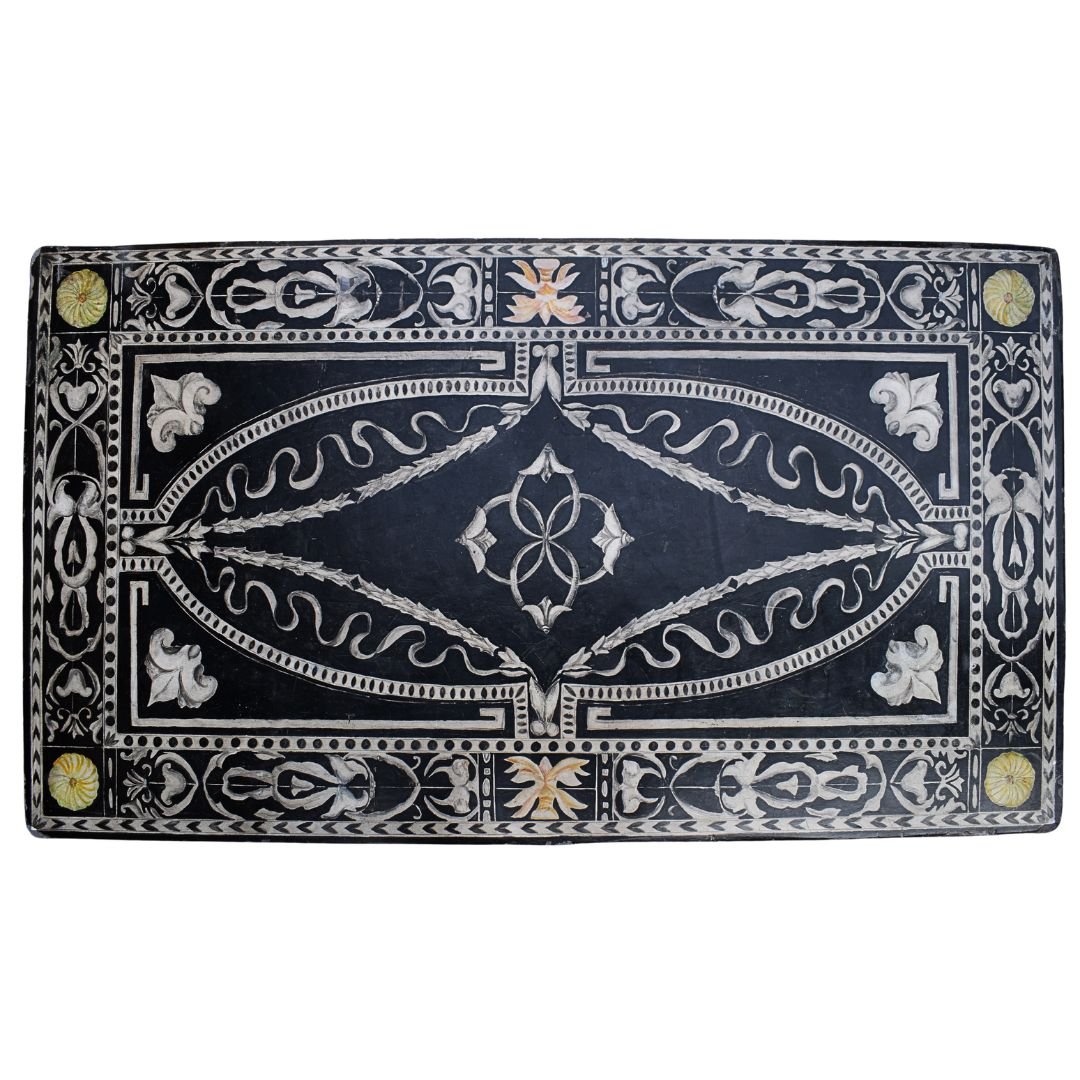
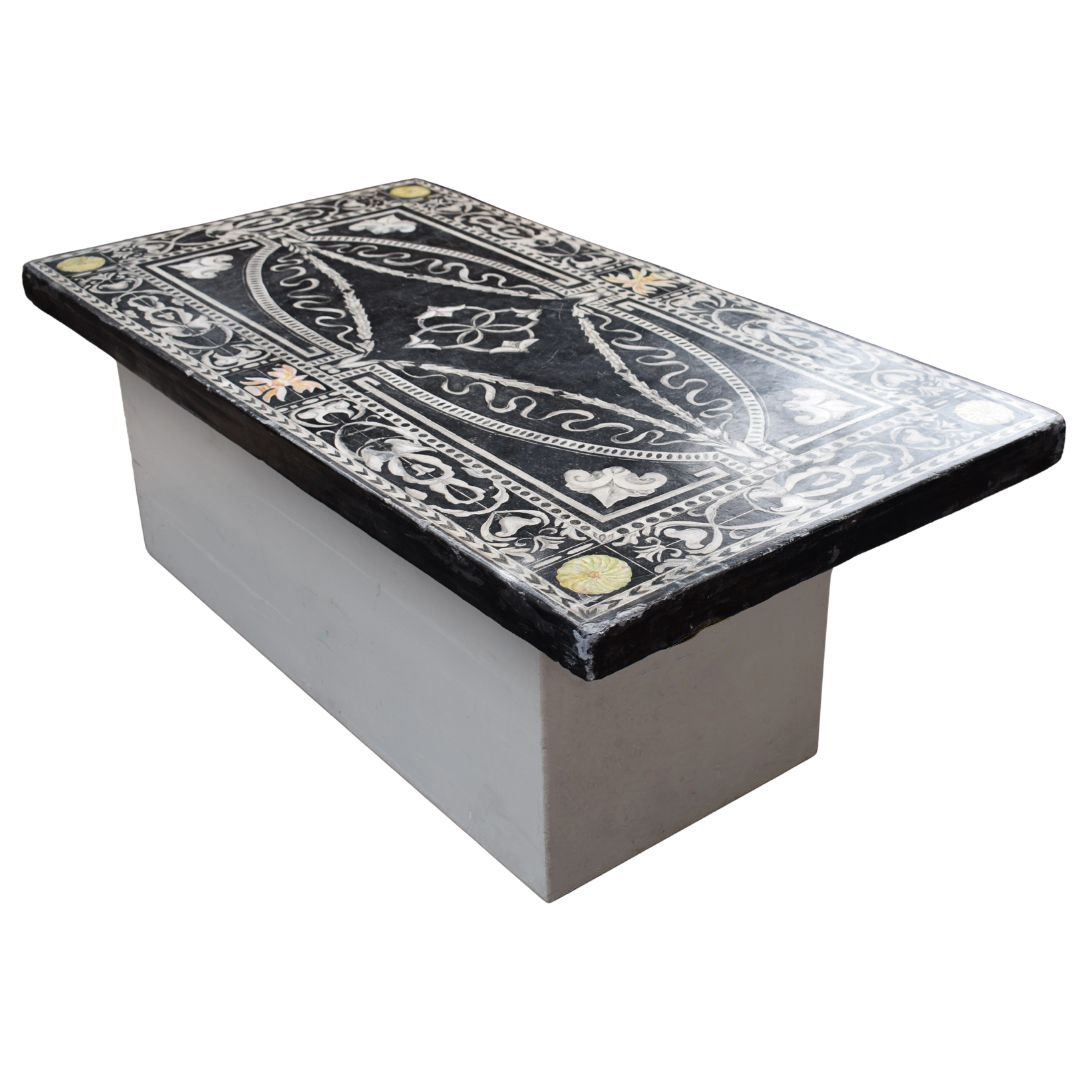
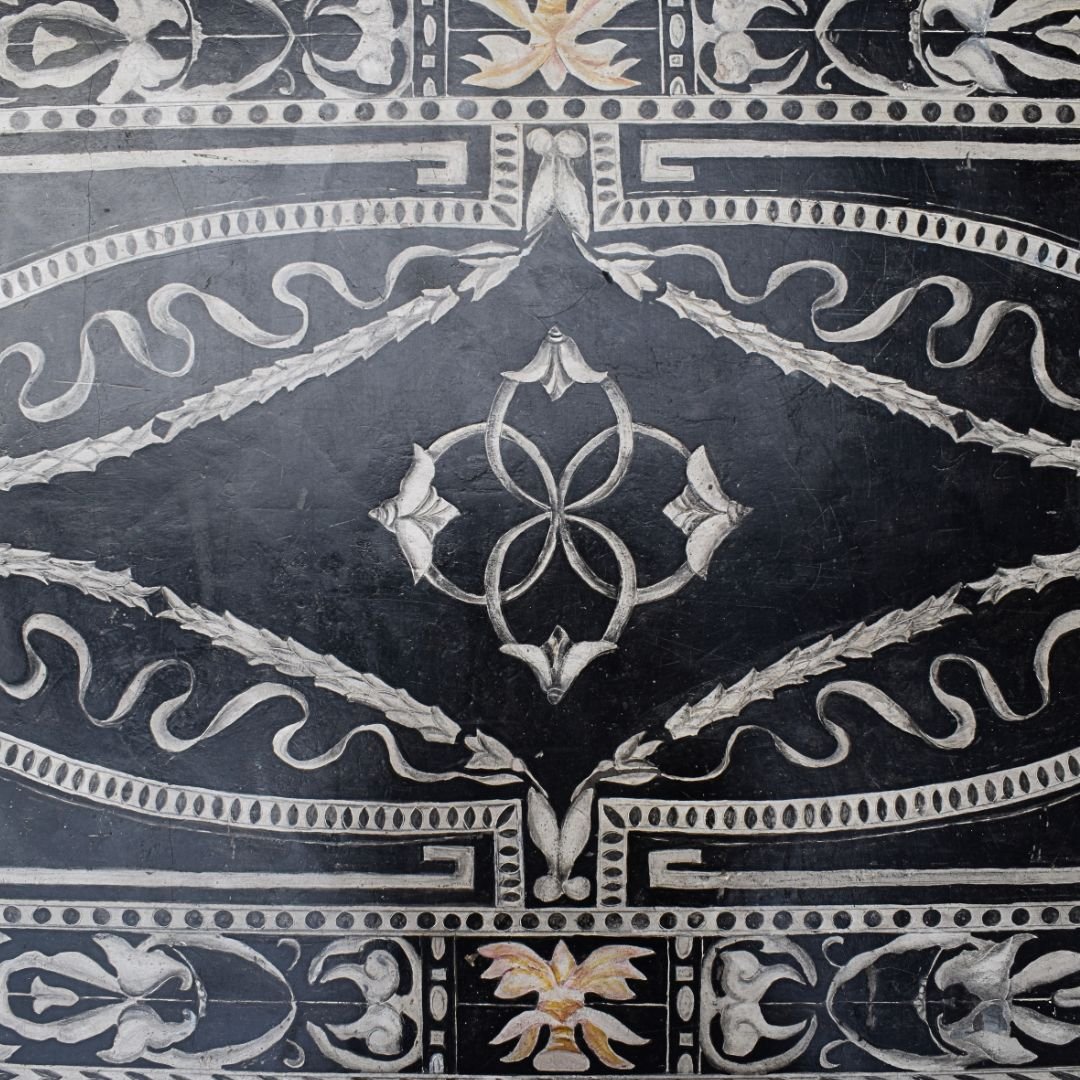
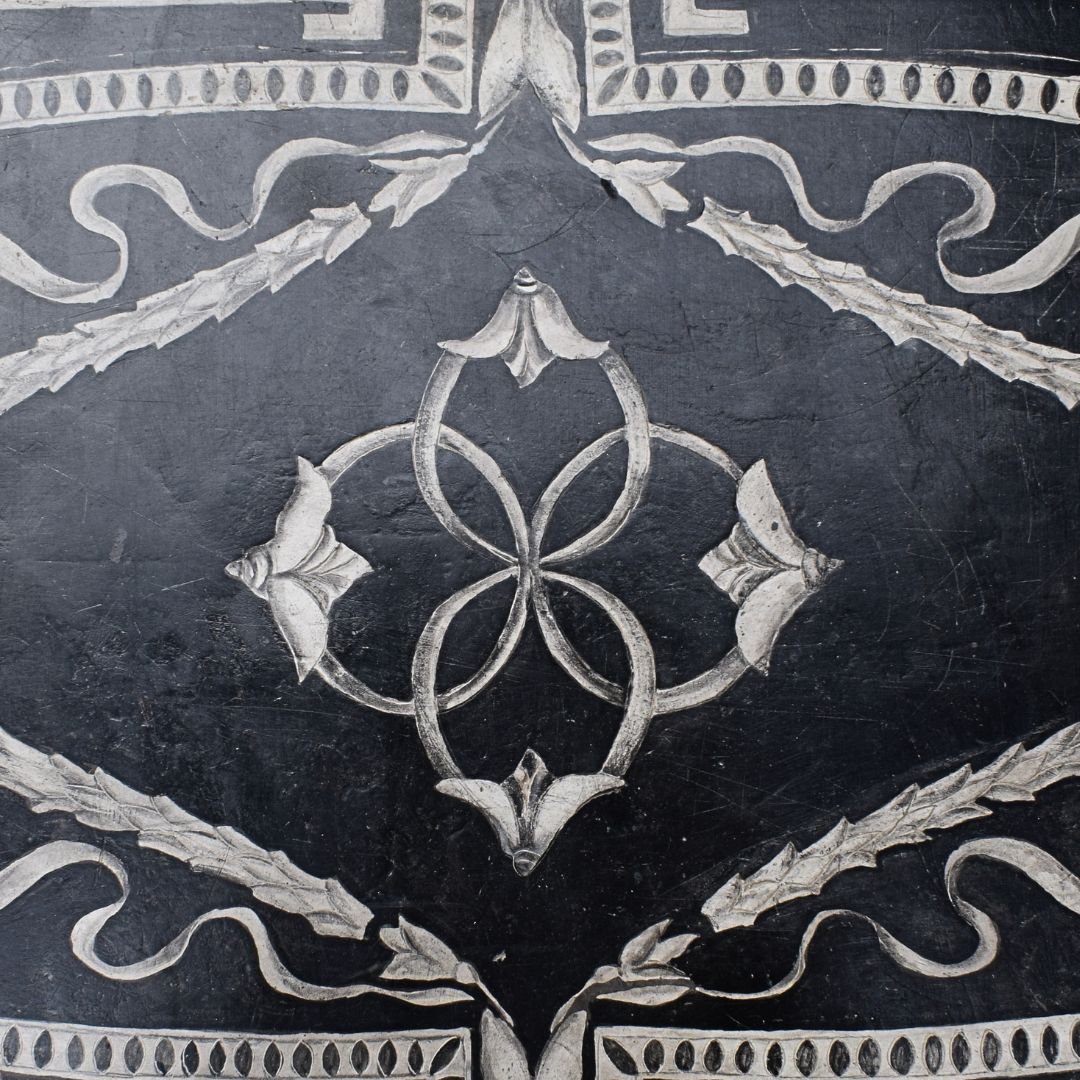
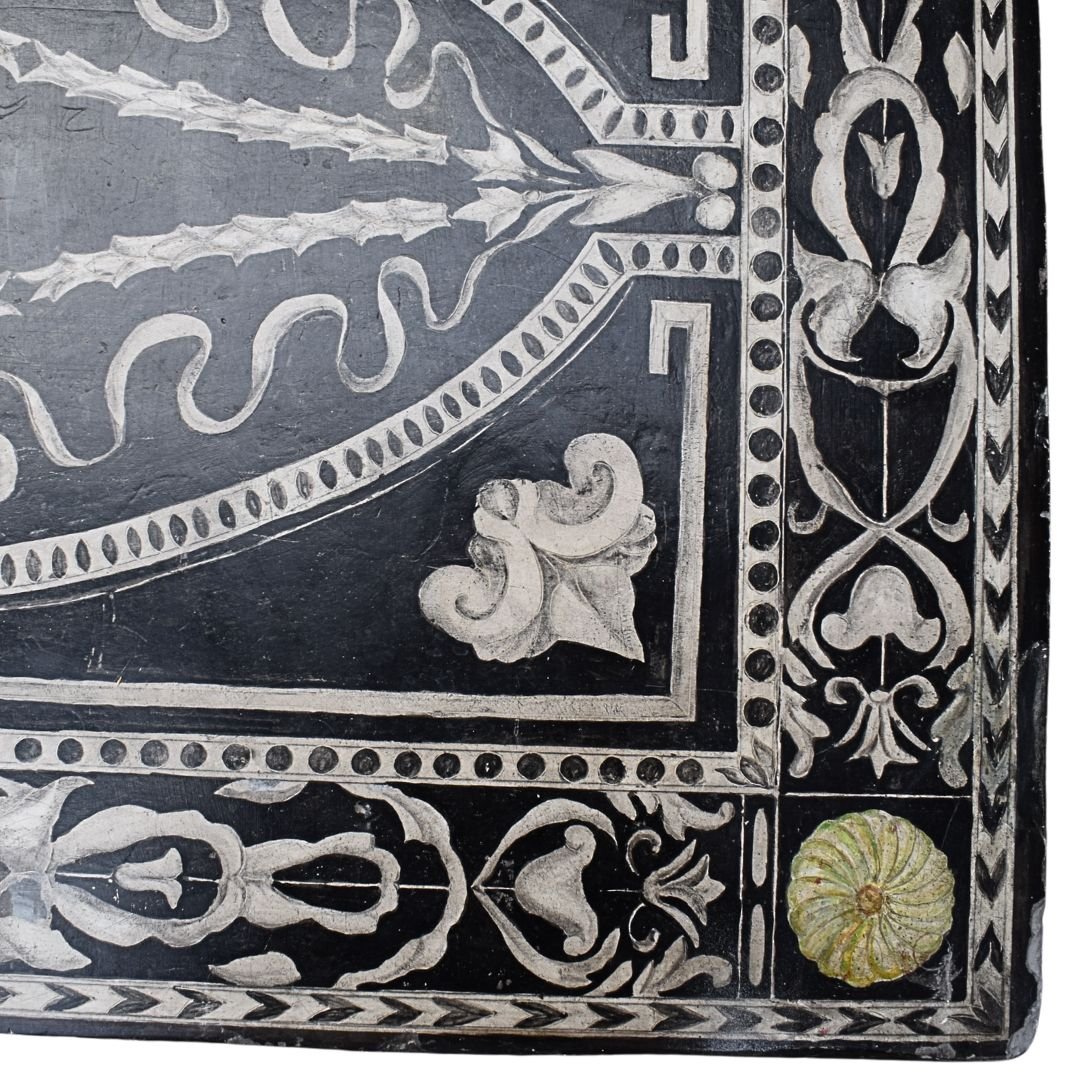
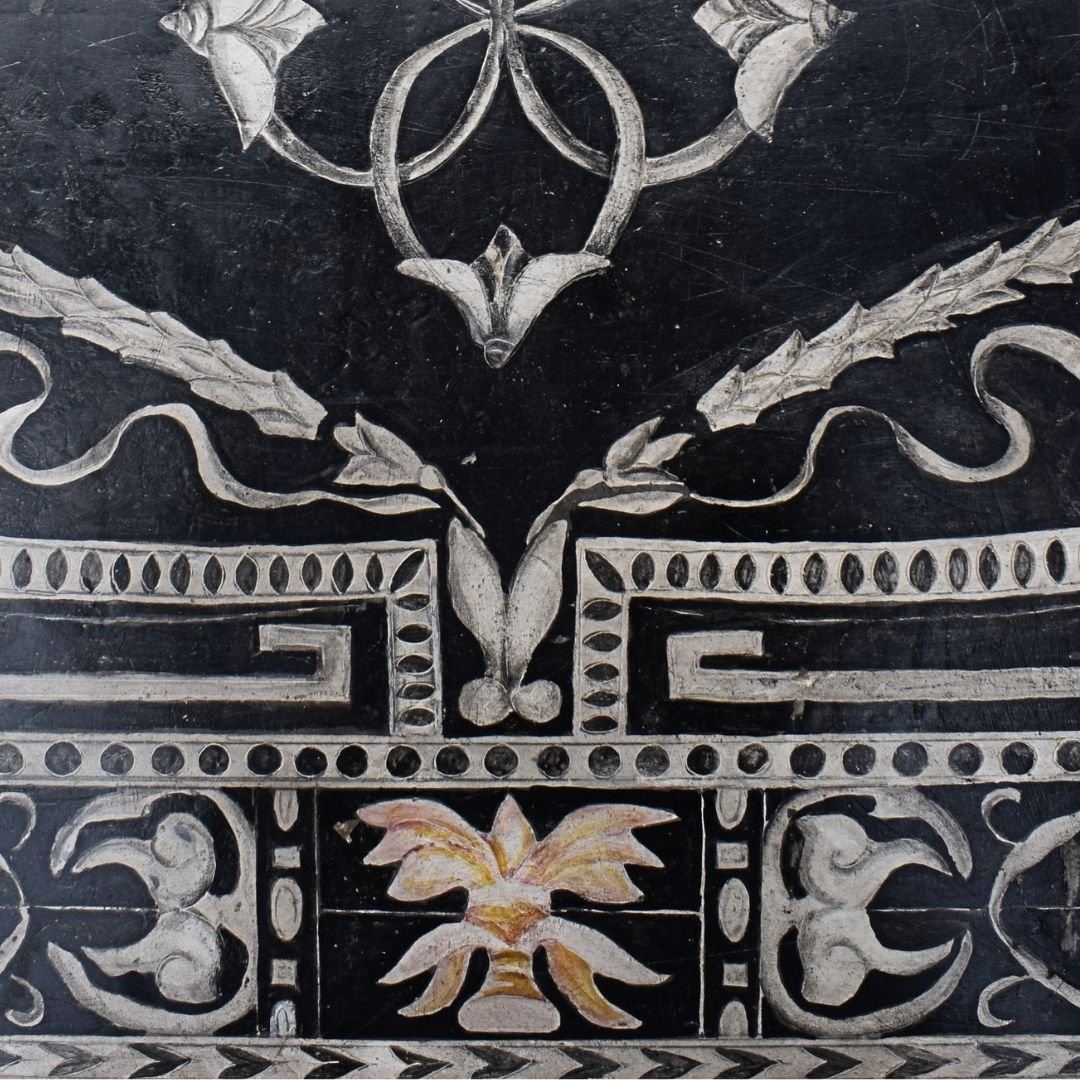
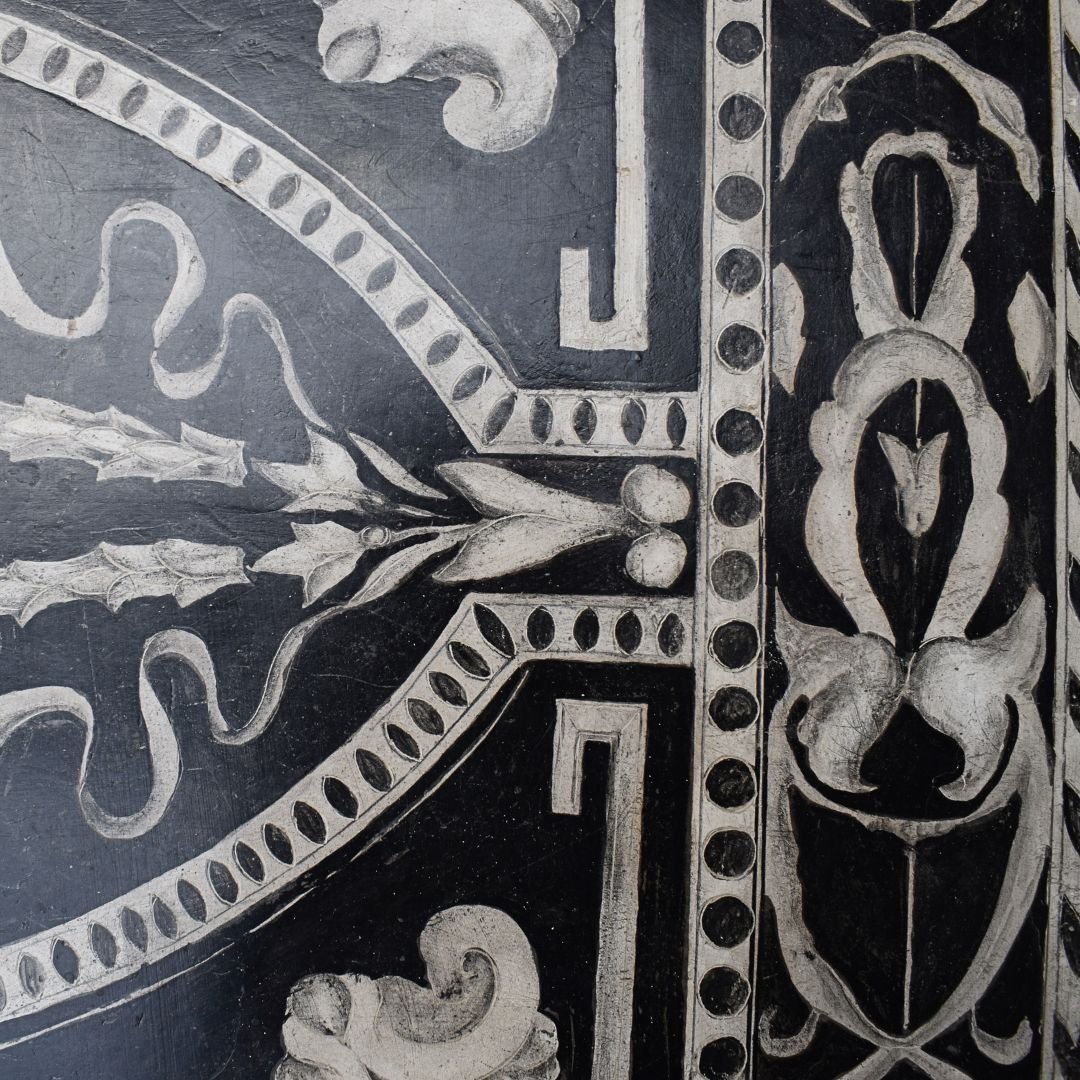
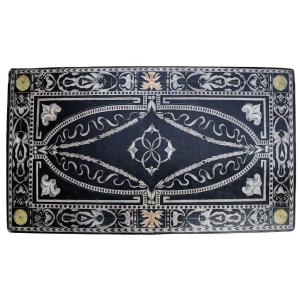
Elegant rectangular tabletop in polychrome scagliola decorated with a refined ornamental scheme in the late Baroque style. The composition is organized around a large central rhomboidal panel inscribed within an elongated mandorla, defined by plant scrolls, stylized racemes, and phytomorphic motifs arranged according to a strict symmetrical pattern. The perimeter frame features a rich succession of ornamental elements including volutes, palmettes, scrolls, and floral motifs, executed primarily in shades of ivory white on a black background, with limited but effective chromatic accents in shades of yellow.
The quality of the design and the balance of the decorative composition clearly place the work within the tradition of ornamental scagliola that developed in northern Italy between the 17th and 18th centuries, with particular reference to Emilian and Lombard productions intended for the decoration of aristocratic residences, city palaces, and stately homes.
Scagliola is a decorative technique developed in Italy beginning in the late 16th century and perfected during the 17th century, created using a mixture of finely ground selenite gypsum, animal glues, natural pigments, and colored earths. The material was worked using intarsia or commesso techniques, simulating with extraordinary effectiveness the preciousness of marble inlays and semi-precious stones.
The excellent chromatic contrast between the dark background and the light ornamental motifs is one of the most appreciated characteristics of 18th-century northern Italian production.
Between the 17th and 18th centuries, scagliola represented one of the most sophisticated expressions of Italian decorative arts. The main workshops developed in the Emilia region, particularly in Carpi, Modena, and Reggio Emilia, and later in Lombardy and Tuscany, where the technique became widely used in the decoration of altars, altar frontals, tables, consoles, and center tables.
During the 18th century, the mature Baroque style evolved toward greater compositional regularity, favoring rigorous geometric patterns and ornamental motifs derived both from the 17th-century tradition and from the archaizing decoration that foreshadowed the Neoclassical style. This tabletop effectively fits into this transitional period, combining Baroque decorative richness with an extremely orderly and symmetrical compositional structure.
The tabletop retains a remarkable clarity of its ornamental design and presents a decorative impact of great elegance. The two-tone combination of the deep black background and the delicate white decoration creates a particularly refined graphic effect, highly valued today in the international decorative arts market.
In terms of size, craftsmanship, and typological rarity, the piece constitutes an interesting example of 18th-century Italian scagliola production.
- All our works are accompanied by a detailed certificate of authenticity.
- Professional packaging and insured shipping to ensure maximum safety during transport.
- For further information, please do not hesitate to contact us +39 329 319 4887 – info@dequart.com
- Option for VIDEO CALLS and in-person viewings by appointment in MILAN and BORGOMANERO (NO).
- Additional information and photos: www.dequart.com IG - FB @dequ.art
Scagliola tabletop
Polychrome scagliola, 116 × 61 × 5.5 cm
Elegant rectangular tabletop in polychrome scagliola decorated with a refined ornamental scheme in the late Baroque style. The composition is organized around a large central rhomboidal panel inscribed within an elongated mandorla, defined by plant scrolls, stylized racemes, and phytomorphic motifs arranged according to a strict symmetrical pattern. The perimeter frame features a rich succession of ornamental elements including volutes, palmettes, scrolls, and floral motifs, executed primarily in shades of ivory white on a black background, with limited but effective chromatic accents in shades of yellow.
The quality of the design and the balance of the decorative composition clearly place the work within the tradition of ornamental scagliola that developed in northern Italy between the 17th and 18th centuries, with particular reference to Emilian and Lombard productions intended for the decoration of aristocratic residences, city palaces, and stately homes.
Scagliola is a decorative technique developed in Italy beginning in the late 16th century and perfected during the 17th century, created using a mixture of finely ground selenite gypsum, animal glues, natural pigments, and colored earths. The material was worked using intarsia or commesso techniques, simulating with extraordinary effectiveness the preciousness of marble inlays and semi-precious stones.
The excellent chromatic contrast between the dark background and the light ornamental motifs is one of the most appreciated characteristics of 18th-century northern Italian production.
Between the 17th and 18th centuries, scagliola represented one of the most sophisticated expressions of Italian decorative arts. The main workshops developed in the Emilia region, particularly in Carpi, Modena, and Reggio Emilia, and later in Lombardy and Tuscany, where the technique became widely used in the decoration of altars, altar frontals, tables, consoles, and center tables.
During the 18th century, the mature Baroque style evolved toward greater compositional regularity, favoring rigorous geometric patterns and ornamental motifs derived both from the 17th-century tradition and from the archaizing decoration that foreshadowed the Neoclassical style. This tabletop effectively fits into this transitional period, combining Baroque decorative richness with an extremely orderly and symmetrical compositional structure.
The tabletop retains a remarkable clarity of its ornamental design and presents a decorative impact of great elegance. The two-tone combination of the deep black background and the delicate white decoration creates a particularly refined graphic effect, highly valued today in the international decorative arts market.
In terms of size, craftsmanship, and typological rarity, the piece constitutes an interesting example of 18th-century Italian scagliola production.
- All our works are accompanied by a detailed certificate of authenticity.
- Professional packaging and insured shipping to ensure maximum safety during transport.
- For further information, please do not hesitate to contact us +39 329 319 4887 – info@dequart.com
- Option for VIDEO CALLS and in-person viewings by appointment in MILAN and BORGOMANERO (NO).
- Additional information and photos: www.dequart.com IG - FB @dequ.art
Explore similar pieces and discover your ideal find:
tables