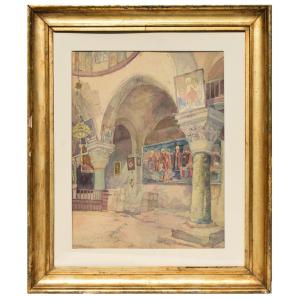


Orientalist Watercolor: Interior Of The Chapel Of Saint Helena, Church Of The Holy Sepulcher, 1932
Artist: H. G. Gray, 1932
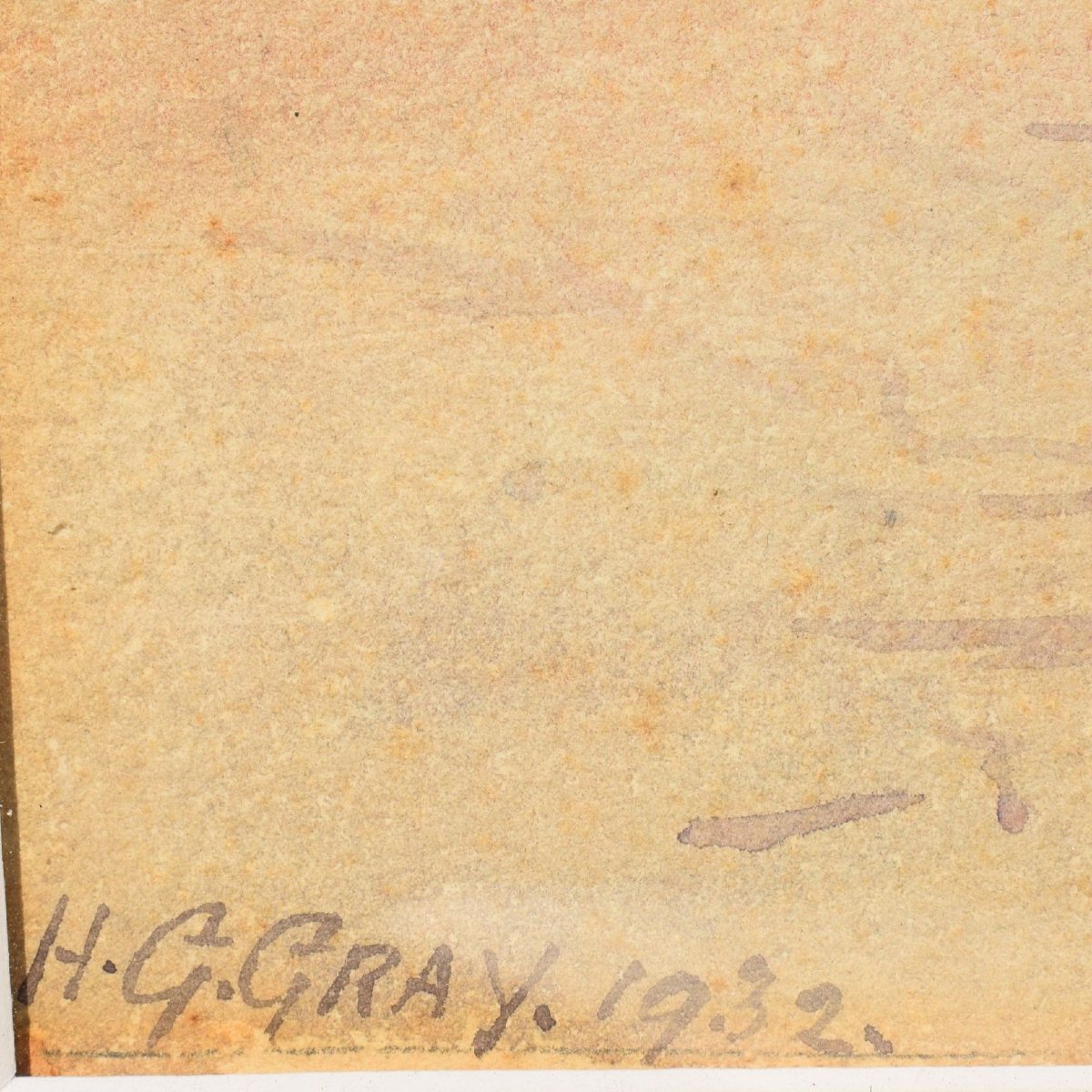
H. G. Gray, 1932
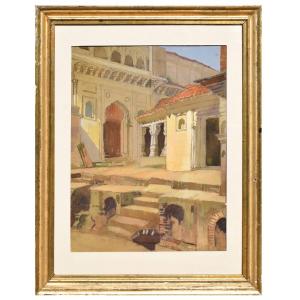
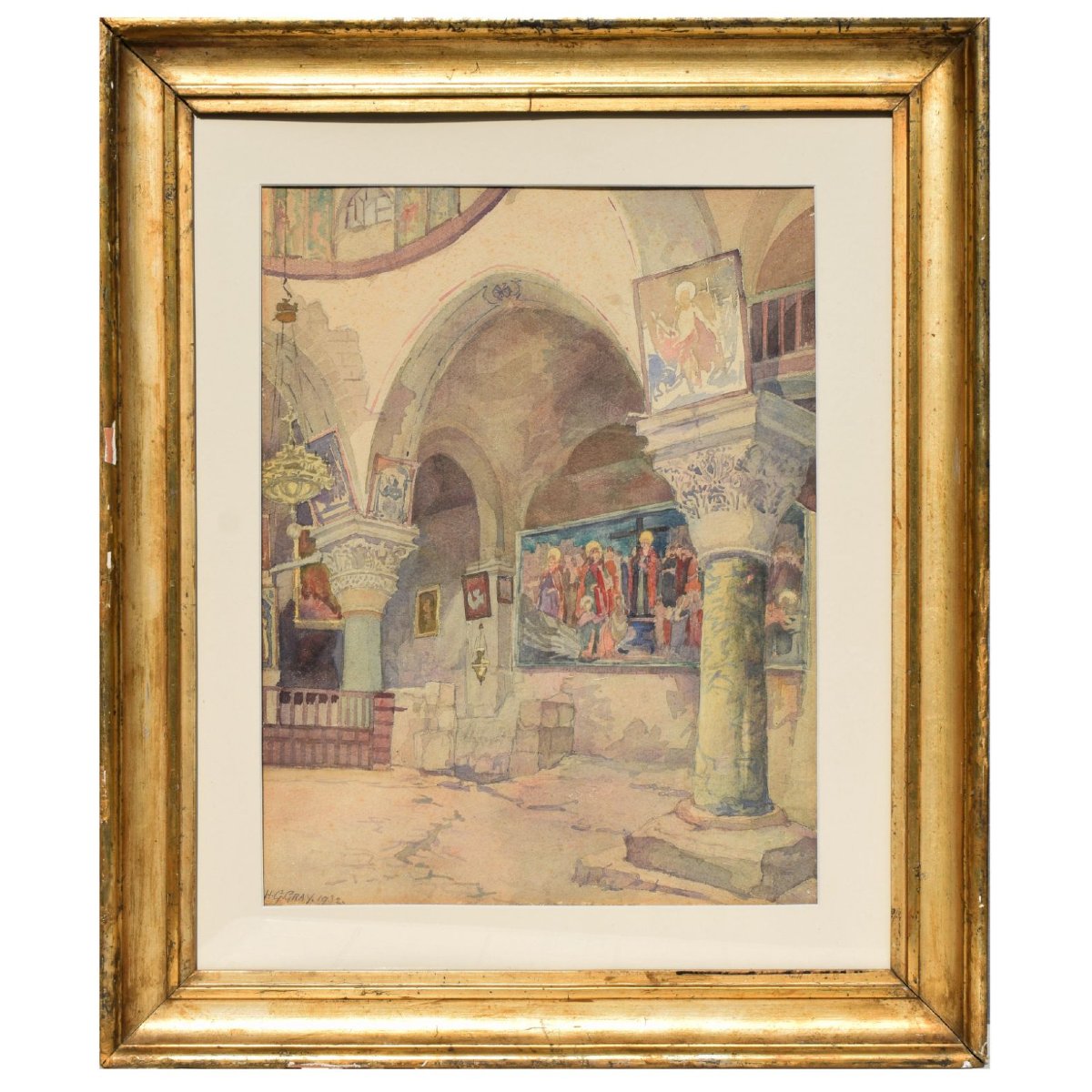
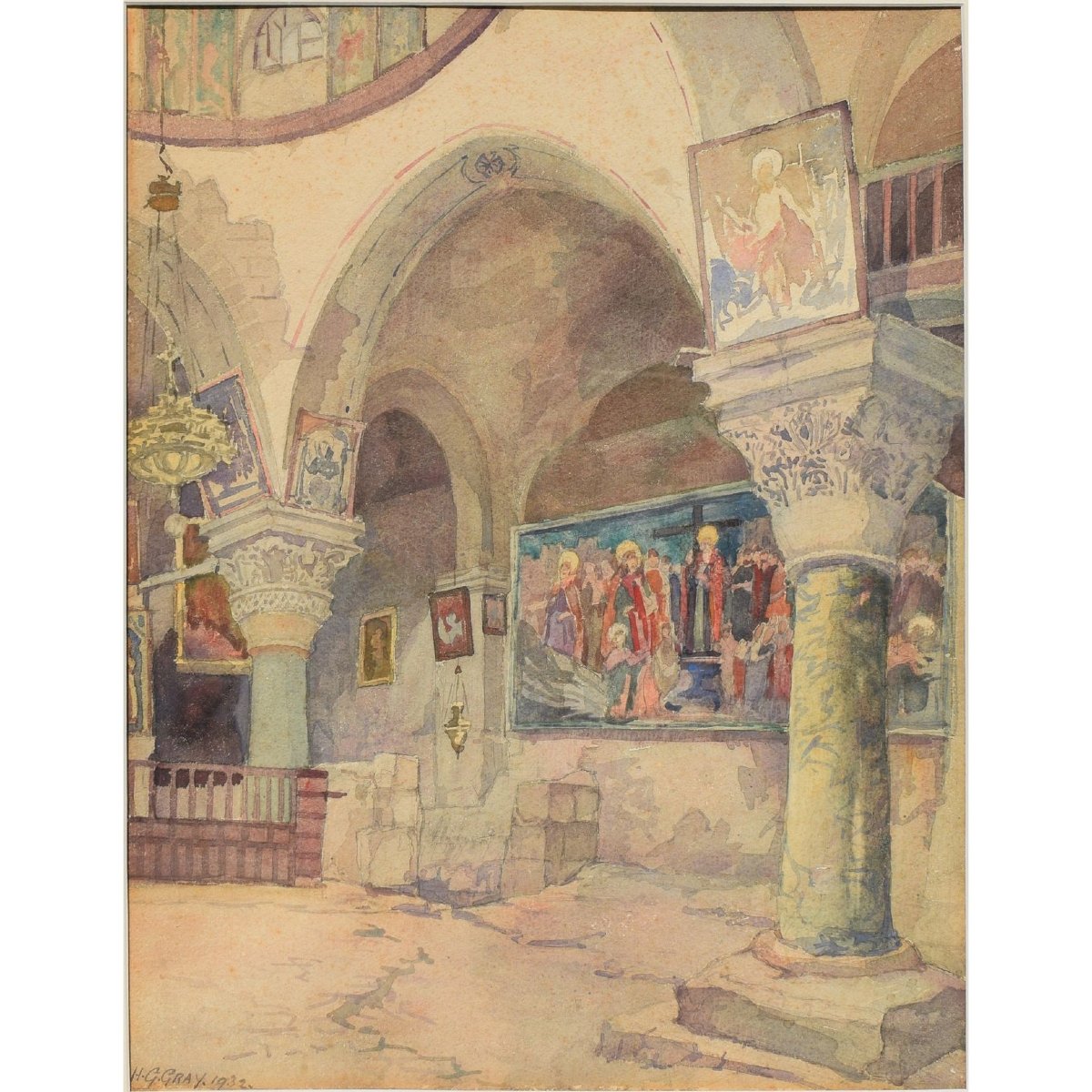
Interior of the Chapel of St. Helena, Church of the Holy Sepulcher, Jerusalem
Watercolor on paper, 55 × 42 cm
Frame: 79 × 66 cm
Signed and dated lower left H. G. Gray, 1932
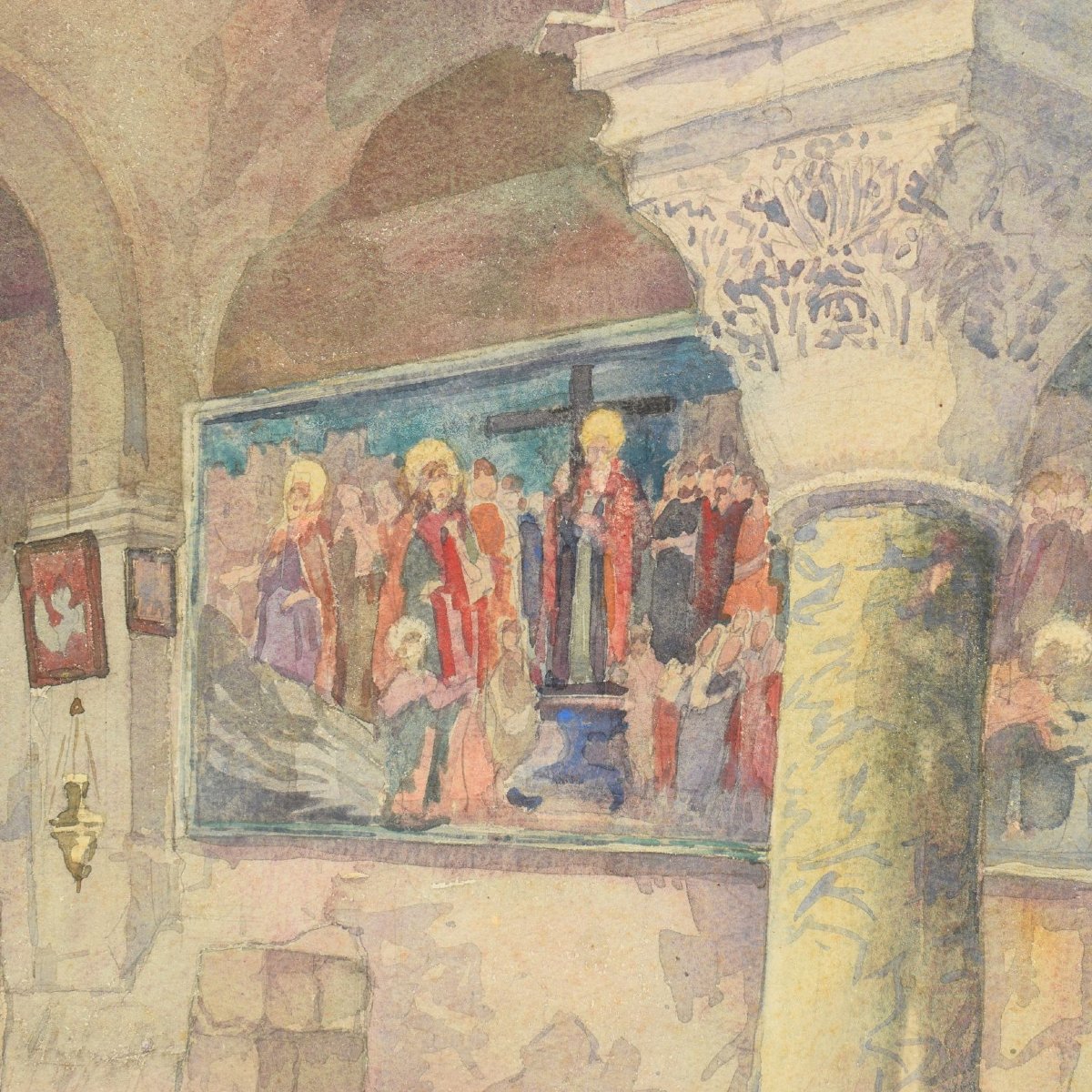
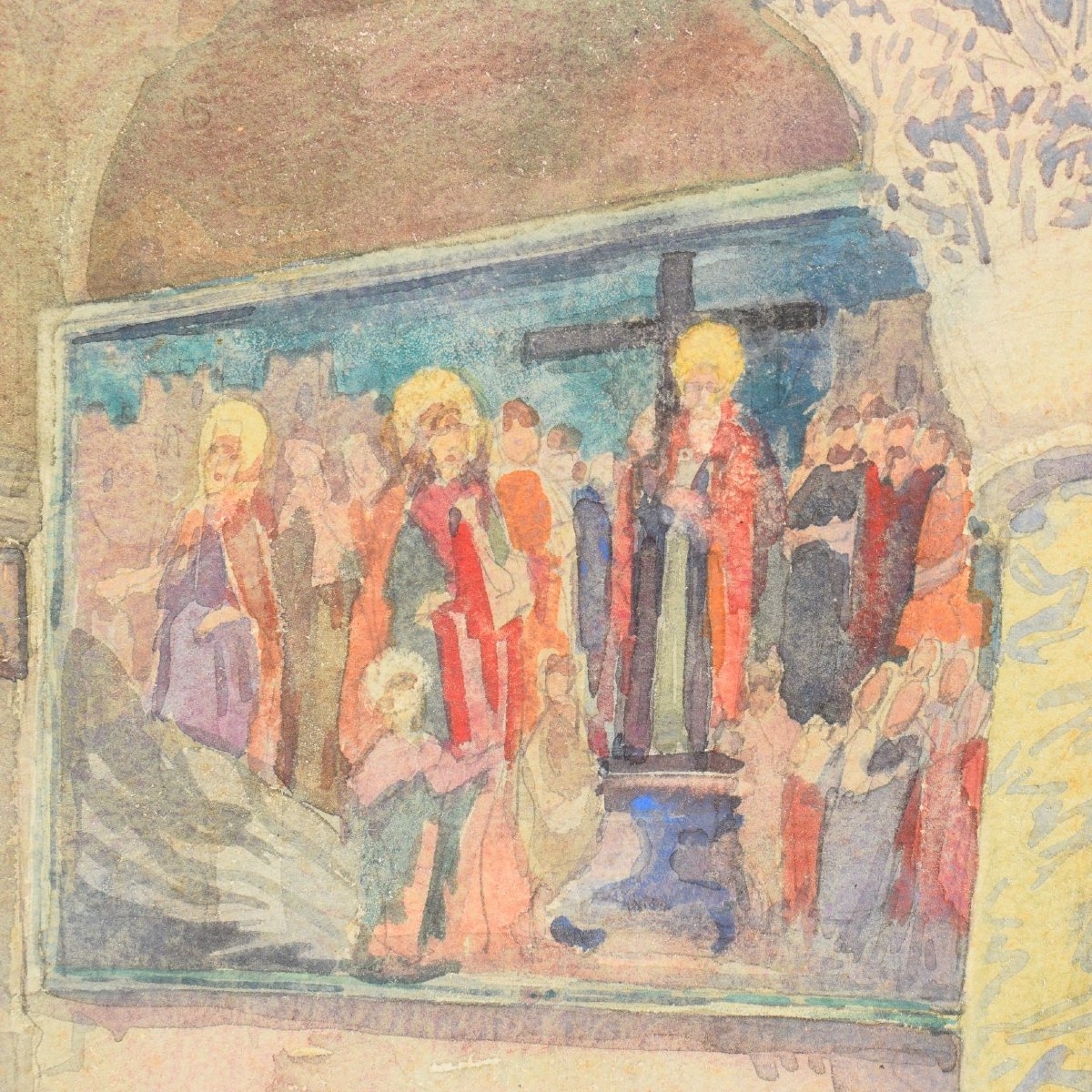
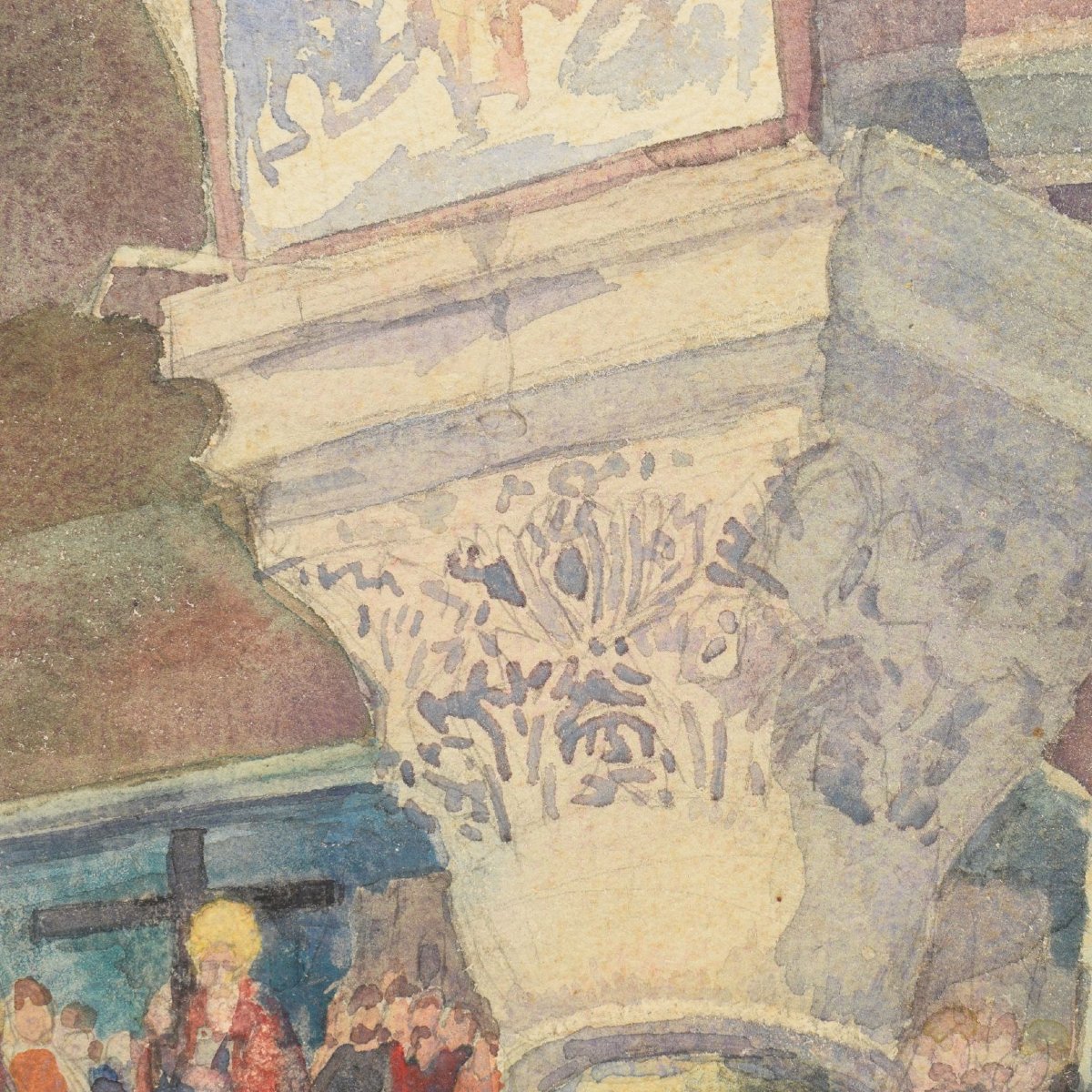
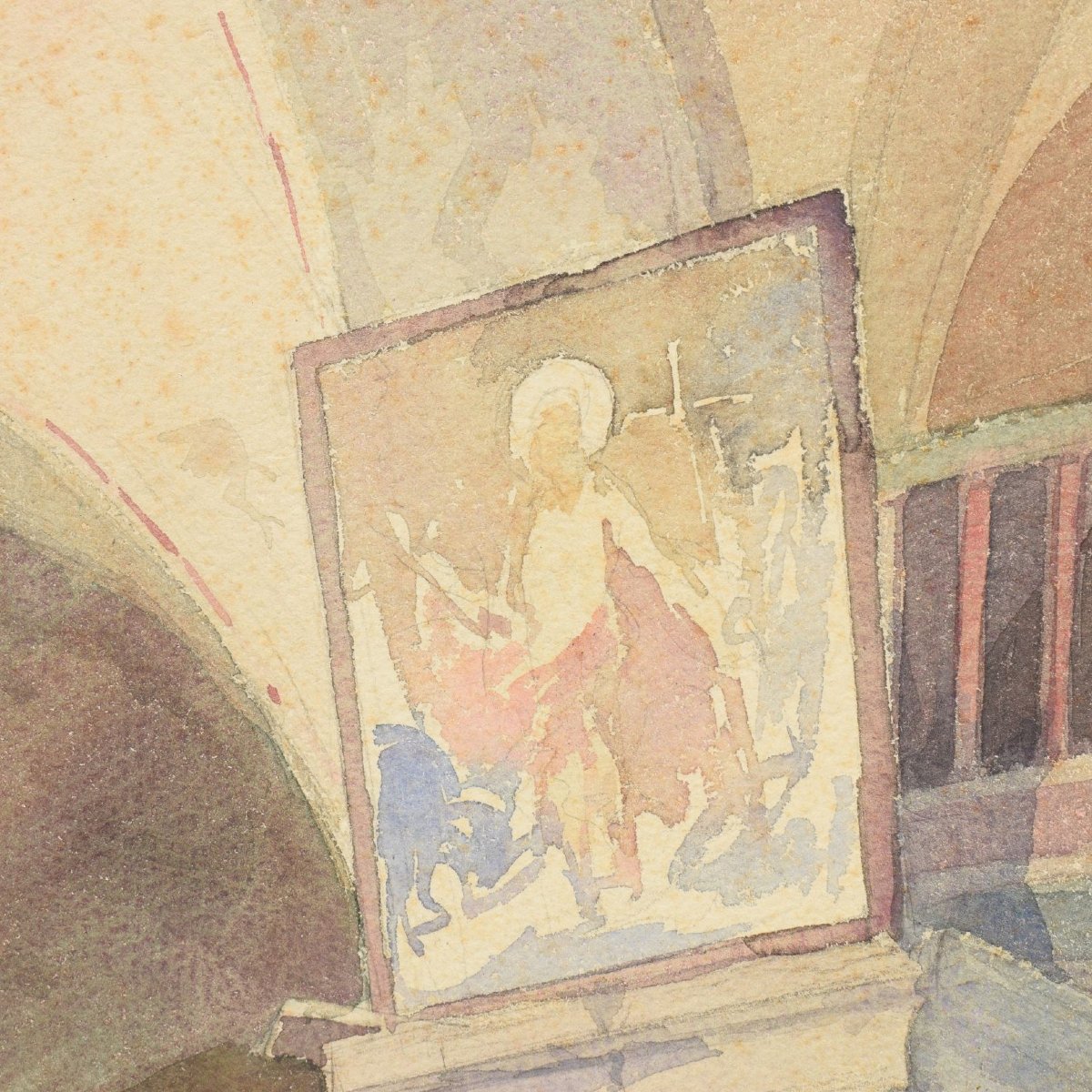
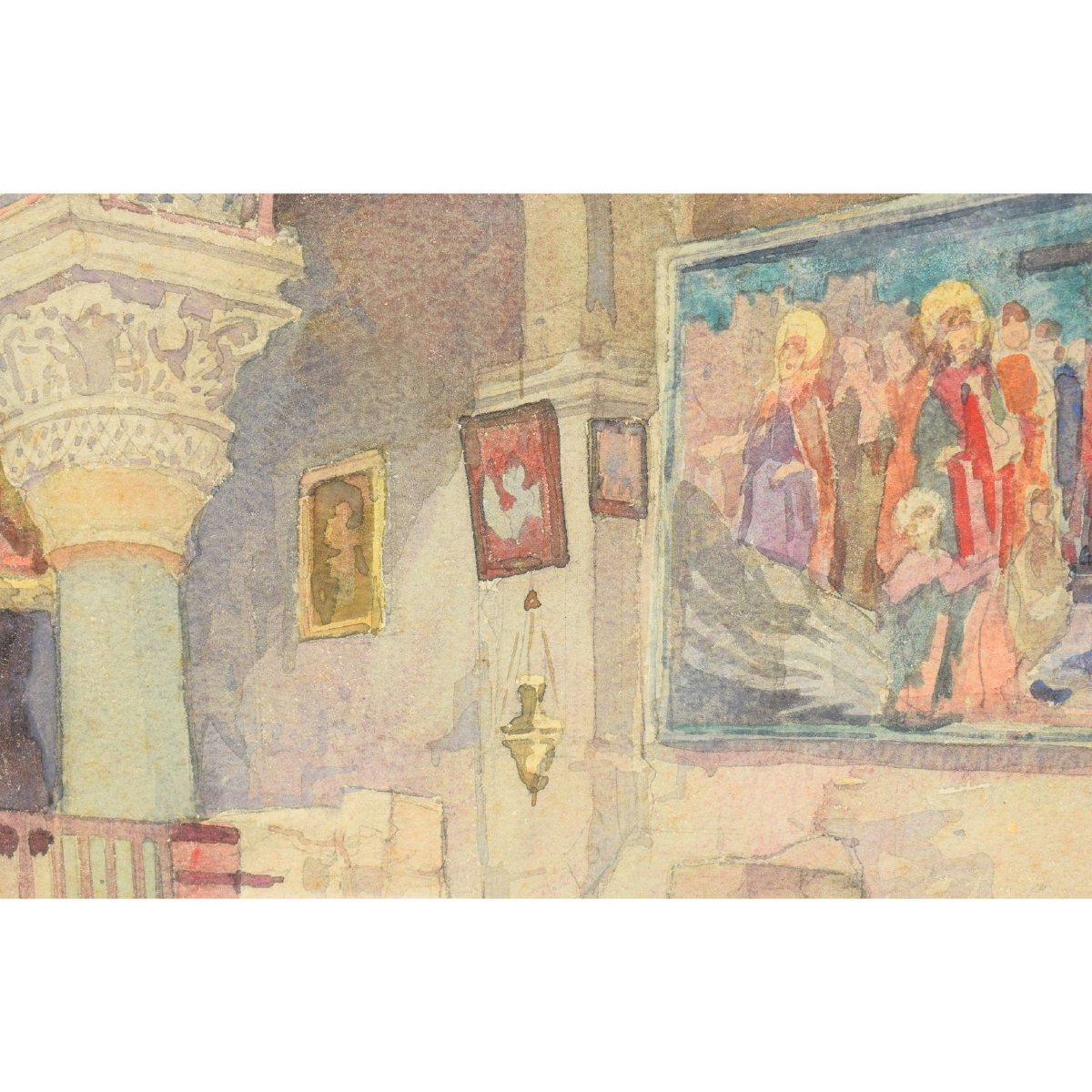
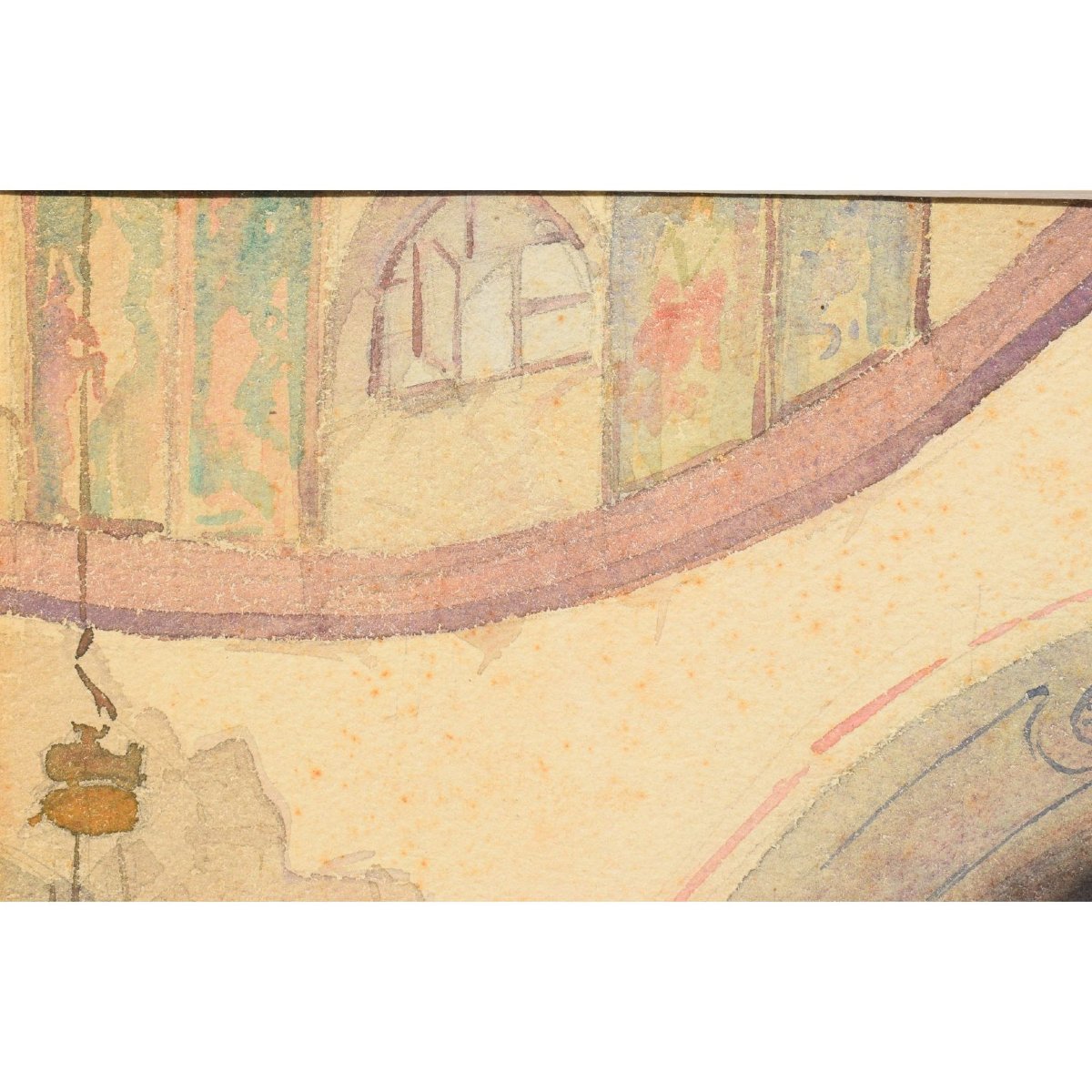
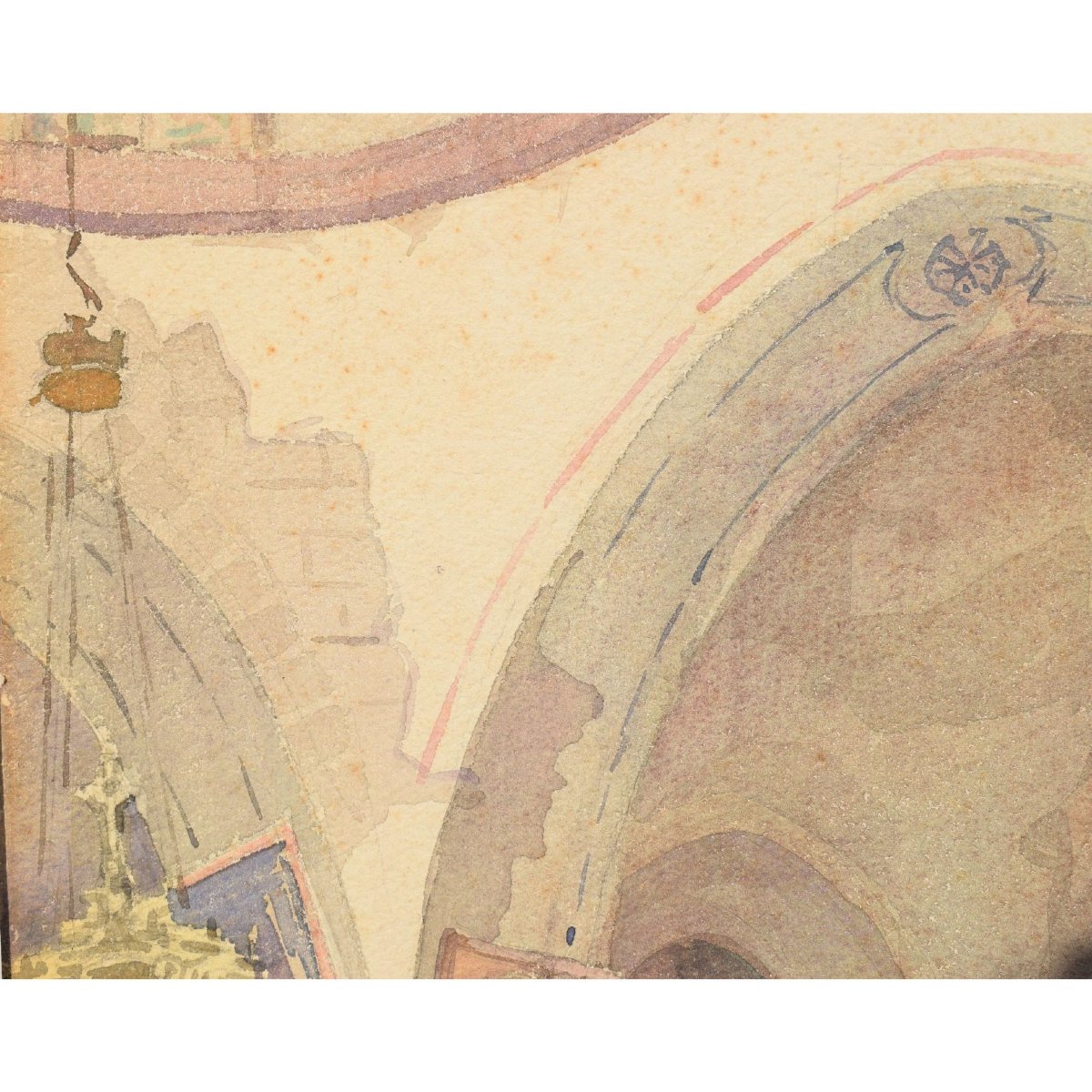
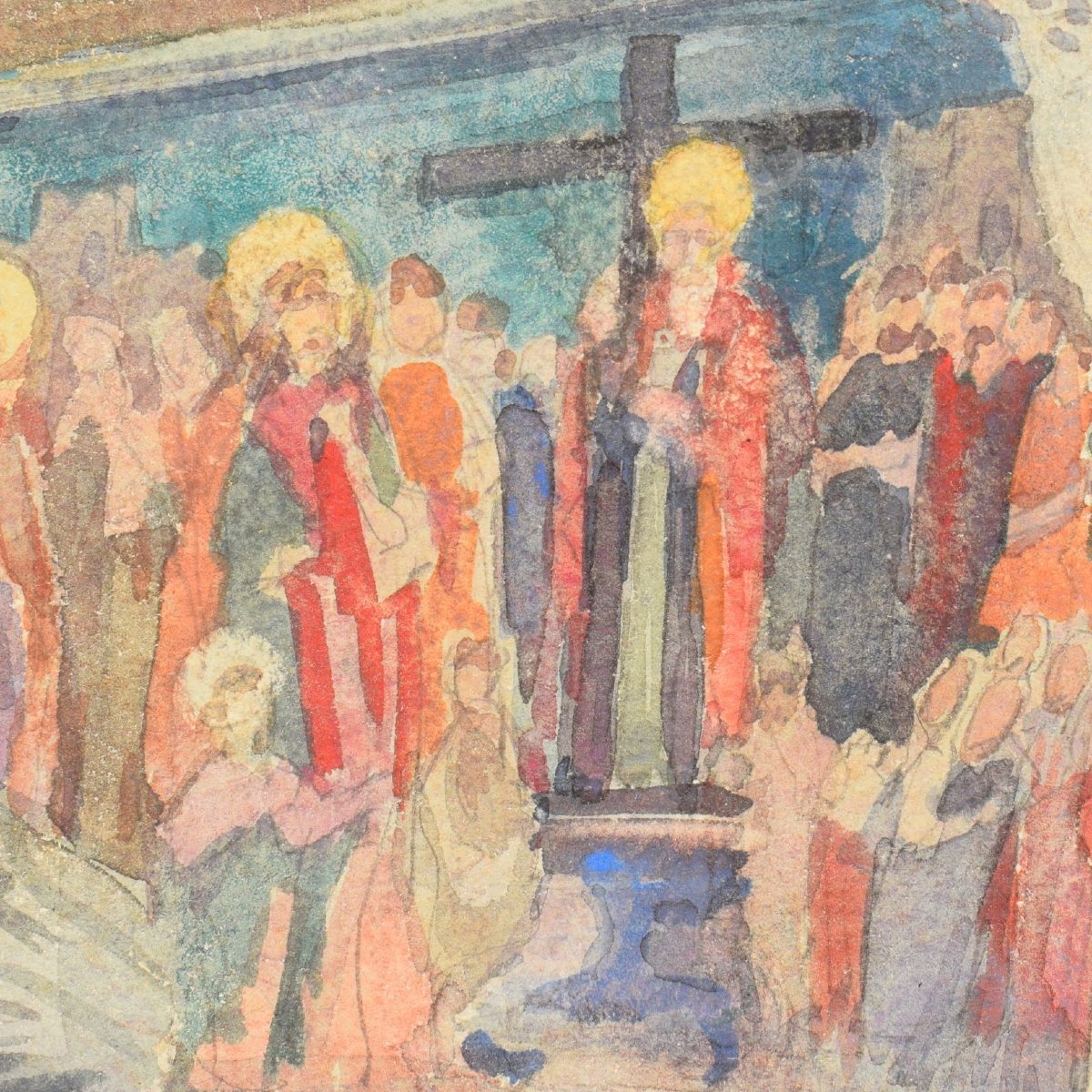
An evocative watercolor depicting the interior of the Chapel of Saint Helena, one of the oldest and most significant spaces in the Church of the Holy Sepulcher in Jerusalem. The artist captures the complex spatiality of medieval architecture with great sensitivity: the sturdy columns with carved capitals, the large stone arches, and the devotional frescoes adorning the walls are rendered with a delicate and luminous palette, capable of evoking the unique atmosphere of contemplation that characterizes the place.
The composition is constructed with rigorous perspective, while the light, filtering gently through the arches, dissolves the surfaces into transparent glazes—a quality typical of the finest watercolor painting. The work does not seek a photographic depiction, but rather a poetic interpretation of the sacred space, in which architecture, history, and spirituality coexist harmoniously.
The Chapel of Saint Helena is one of the most important spaces in the Basilica of the Holy Sepulcher and is located in the eastern part of the complex. Traditionally dedicated to Saint Helena, mother of Emperor Constantine, it commemorates her pilgrimage to the Holy Land in the 4th century, during which, according to Christian tradition, the True Cross was discovered.
The space visible today derives largely from the reconstruction carried out by the Crusaders in the 12th century on top of Byzantine and even older structures. The chapel features a layout with three small naves marked by massive monolithic columns and cross vaults—elements typical of Crusader Romanesque architecture that blend with pre-existing Byzantine structures.
Of particular interest are the carved capitals, the painted decorations, and the numerous archaeological finds preserved in the lower levels, which make this space one of the most fascinating places in the entire monumental complex.
The artist’s identity remains unclear to this day. The monogram “H. G. Gray,” accompanied by the date 1932, likely points to a British or Anglo-Saxon artist who was active as a watercolorist and traveler in the first half of the 20th century.
Numerous English artists between the late nineteenth century and the 1930s traveled throughout the Mediterranean and the Near East, documenting monuments, archaeological sites, and biblical locations for both private patrons and collectors interested in Orientalist art and the modern Grand Tour.
This work fits perfectly into this tradition, prioritizing the atmospheric rendering of the architecture over narrative detail and demonstrating a solid grounding in perspective drawing.
In the early 20th century, watercolor was still one of the preferred media for the artistic documentation of major historical monuments. The speed of execution allowed artists to work directly on site, capturing the changing effects of light and atmosphere with an immediacy impossible to achieve through slower techniques.
The transparency of the colors, the layering of glazes, and the lightness of the paper lend the work a luminosity particularly suited to the depiction of monumental interiors, where natural light becomes an essential compositional element.
In this example, the inherent qualities of watercolor are fully showcased: the stone surfaces are built up through overlapping glazes, while the architectural elements emerge with precision thanks to meticulous drawing, the mark of an expert and sensitive hand.
This watercolor is a refined testament to Europe’s enduring interest in the Holy Land during the interwar period. More than a simple architectural view, it documents a place symbolic of Christianity with a cultured and contemplative gaze, in which documentary precision and painterly sensitivity strike a harmonious balance.
- All our works are accompanied by a detailed certificate of authenticity.
- Professional packaging and insured shipping to ensure maximum safety during transport.
- For further information, please do not hesitate to contact us +39 329 319 4887 – info@dequart.com
- Option for VIDEO CALLS and in-person viewings by appointment in MILAN and BORGOMANERO (NO).
- Additional information and photos: www.dequart.com IG - FB @dequ.art
Interior of the Chapel of St. Helena, Church of the Holy Sepulcher, Jerusalem
Watercolor on paper, 55 × 42 cm
Frame: 79 × 66 cm
Signed and dated lower left H. G. Gray, 1932
An evocative watercolor depicting the interior of the Chapel of Saint Helena, one of the oldest and most significant spaces in the Church of the Holy Sepulcher in Jerusalem. The artist captures the complex spatiality of medieval architecture with great sensitivity: the sturdy columns with carved capitals, the large stone arches, and the devotional frescoes adorning the walls are rendered with a delicate and luminous palette, capable of evoking the unique atmosphere of contemplation that characterizes the place.
The composition is constructed with rigorous perspective, while the light, filtering gently through the arches, dissolves the surfaces into transparent glazes—a quality typical of the finest watercolor painting. The work does not seek a photographic depiction, but rather a poetic interpretation of the sacred space, in which architecture, history, and spirituality coexist harmoniously.
The Chapel of Saint Helena is one of the most important spaces in the Basilica of the Holy Sepulcher and is located in the eastern part of the complex. Traditionally dedicated to Saint Helena, mother of Emperor Constantine, it commemorates her pilgrimage to the Holy Land in the 4th century, during which, according to Christian tradition, the True Cross was discovered.
The space visible today derives largely from the reconstruction carried out by the Crusaders in the 12th century on top of Byzantine and even older structures. The chapel features a layout with three small naves marked by massive monolithic columns and cross vaults—elements typical of Crusader Romanesque architecture that blend with pre-existing Byzantine structures.
Of particular interest are the carved capitals, the painted decorations, and the numerous archaeological finds preserved in the lower levels, which make this space one of the most fascinating places in the entire monumental complex.
The artist’s identity remains unclear to this day. The monogram “H. G. Gray,” accompanied by the date 1932, likely points to a British or Anglo-Saxon artist who was active as a watercolorist and traveler in the first half of the 20th century.
Numerous English artists between the late nineteenth century and the 1930s traveled throughout the Mediterranean and the Near East, documenting monuments, archaeological sites, and biblical locations for both private patrons and collectors interested in Orientalist art and the modern Grand Tour.
This work fits perfectly into this tradition, prioritizing the atmospheric rendering of the architecture over narrative detail and demonstrating a solid grounding in perspective drawing.
In the early 20th century, watercolor was still one of the preferred media for the artistic documentation of major historical monuments. The speed of execution allowed artists to work directly on site, capturing the changing effects of light and atmosphere with an immediacy impossible to achieve through slower techniques.
The transparency of the colors, the layering of glazes, and the lightness of the paper lend the work a luminosity particularly suited to the depiction of monumental interiors, where natural light becomes an essential compositional element.
In this example, the inherent qualities of watercolor are fully showcased: the stone surfaces are built up through overlapping glazes, while the architectural elements emerge with precision thanks to meticulous drawing, the mark of an expert and sensitive hand.
This watercolor is a refined testament to Europe’s enduring interest in the Holy Land during the interwar period. More than a simple architectural view, it documents a place symbolic of Christianity with a cultured and contemplative gaze, in which documentary precision and painterly sensitivity strike a harmonious balance.
- All our works are accompanied by a detailed certificate of authenticity.
- Professional packaging and insured shipping to ensure maximum safety during transport.
- For further information, please do not hesitate to contact us +39 329 319 4887 – info@dequart.com
- Option for VIDEO CALLS and in-person viewings by appointment in MILAN and BORGOMANERO (NO).
- Additional information and photos: www.dequart.com IG - FB @dequ.art
430 €
Period: 20th century
Style: English Style
Condition: Good condition
Material: Water color
Length: 55
Width: 42
Reference (ID): 1804226
Availability: In stock
Print