
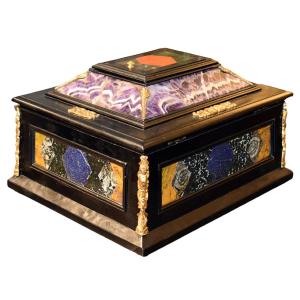


19th-century Cabinet Made Of Ebonized Wood, Polychrome Semi-precious Stones, And Gilded Bronze
19th century
Cabinet-style chest
Ebonized wood decorated with polychrome semi-precious stone inlay and gilded bronze, H 20 x W 29.5 x D 25.5
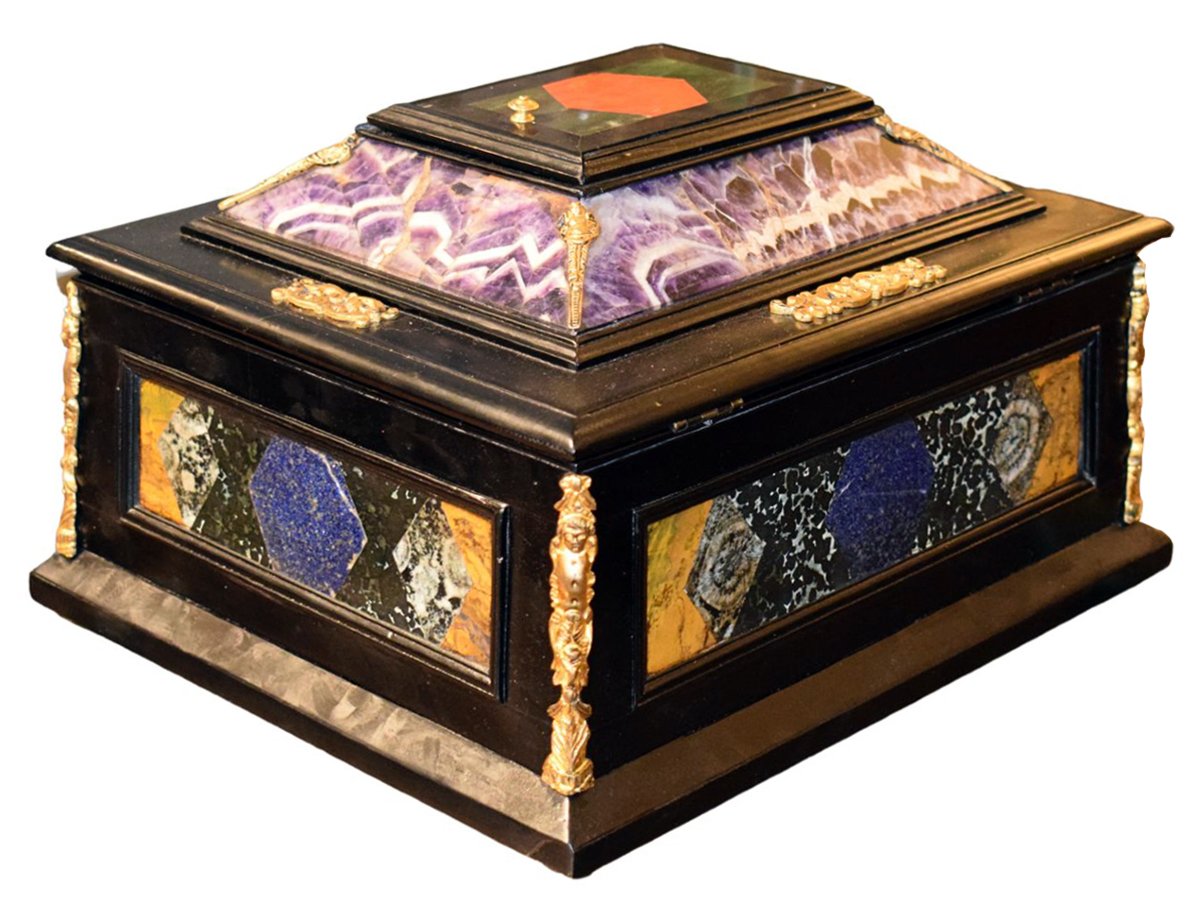
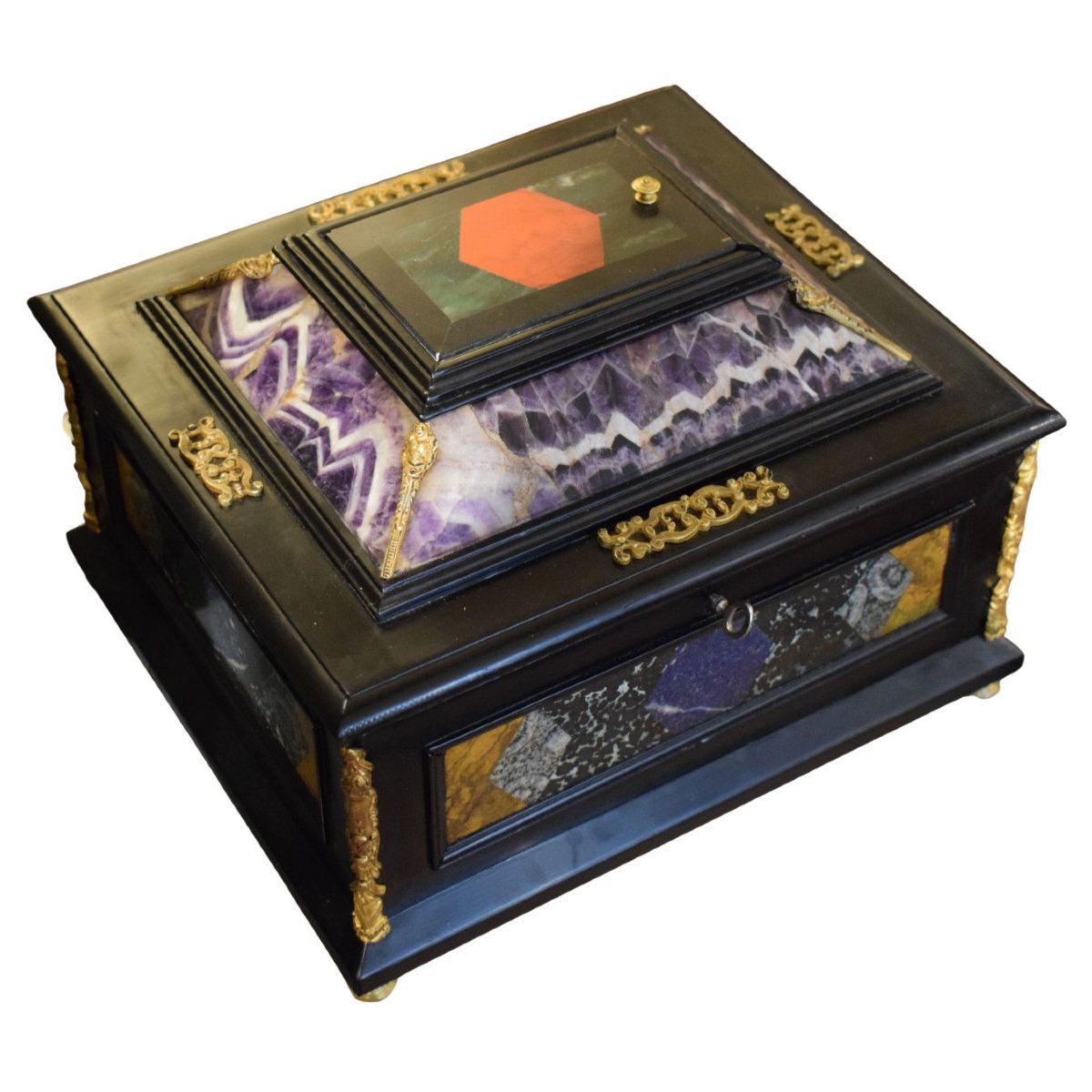
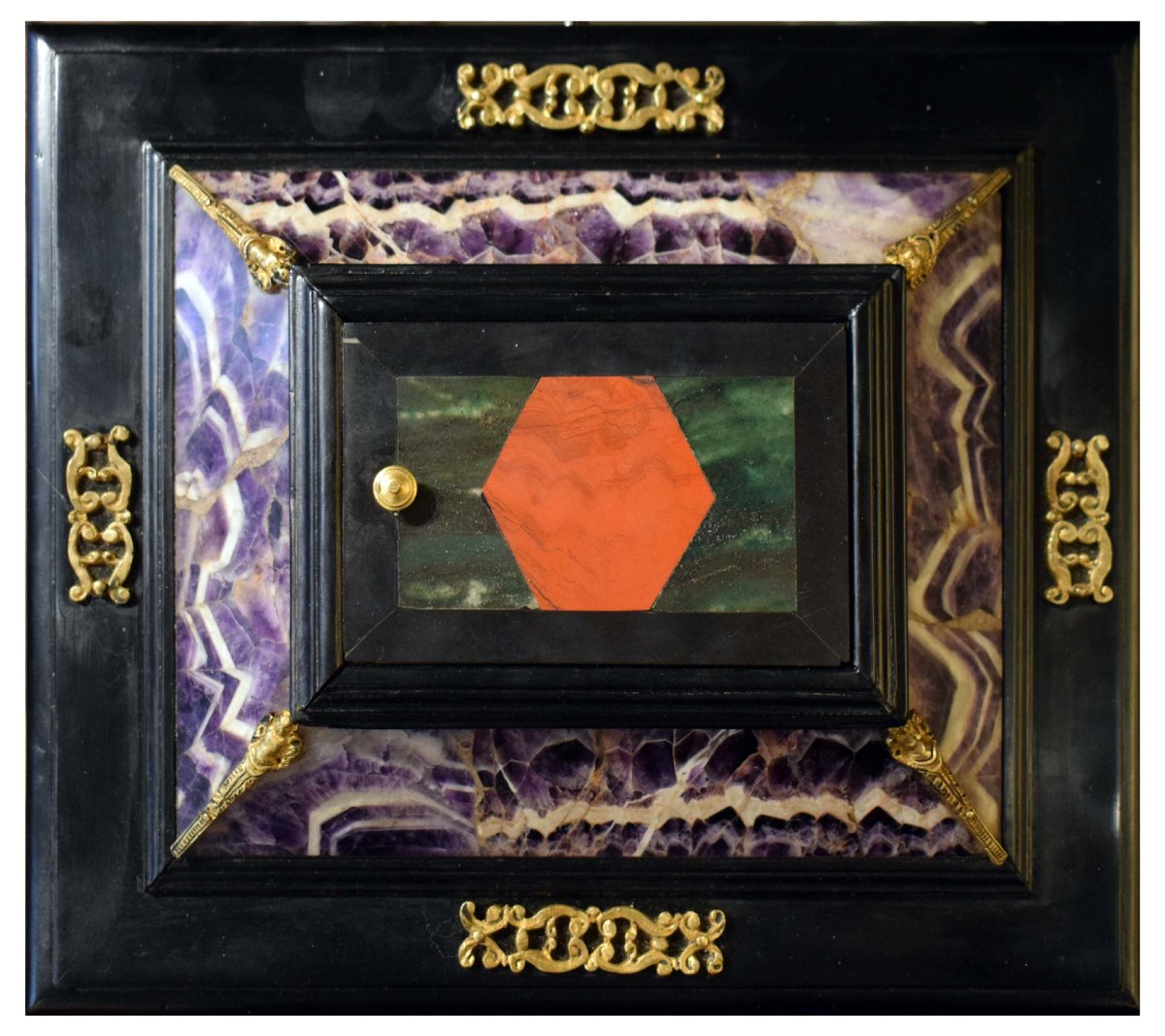
This cabinet, crafted in the 19th century, is a refined example of cabinetmaking and semi-precious stone inlay. It stands out for its geometric structure and the use of precious materials, enriched by decorative elements in gilded bronze.
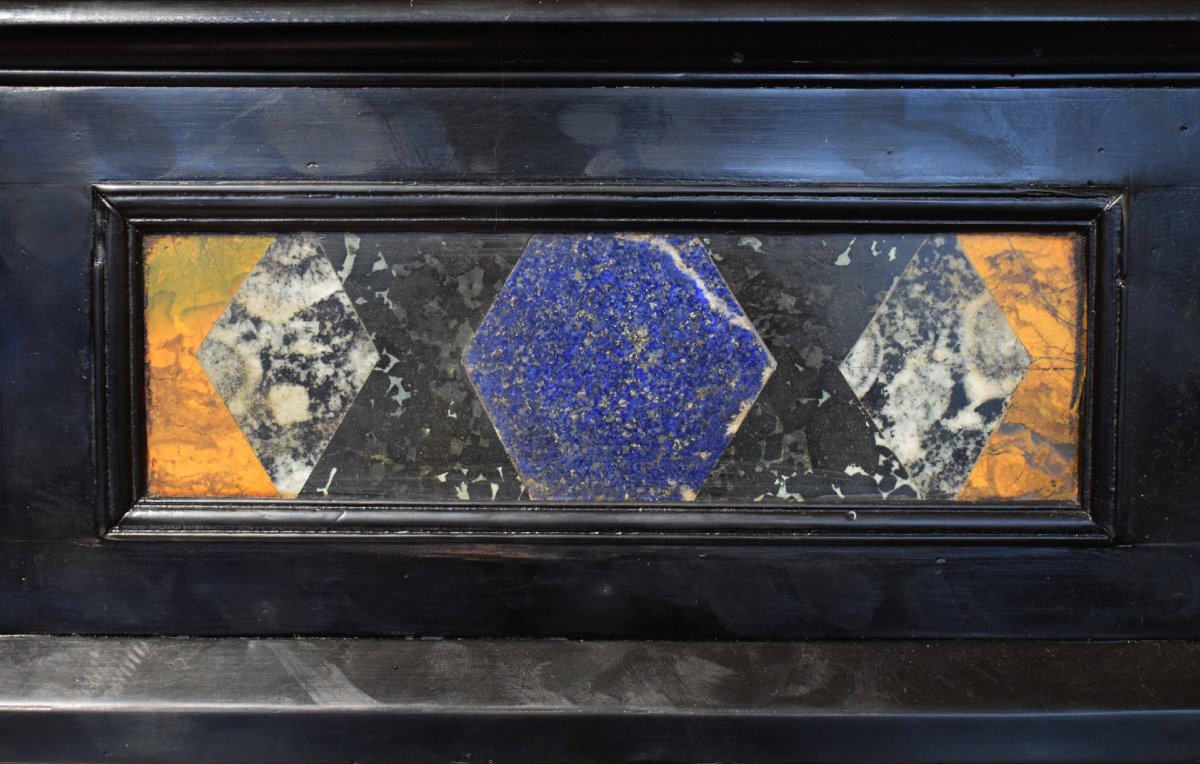
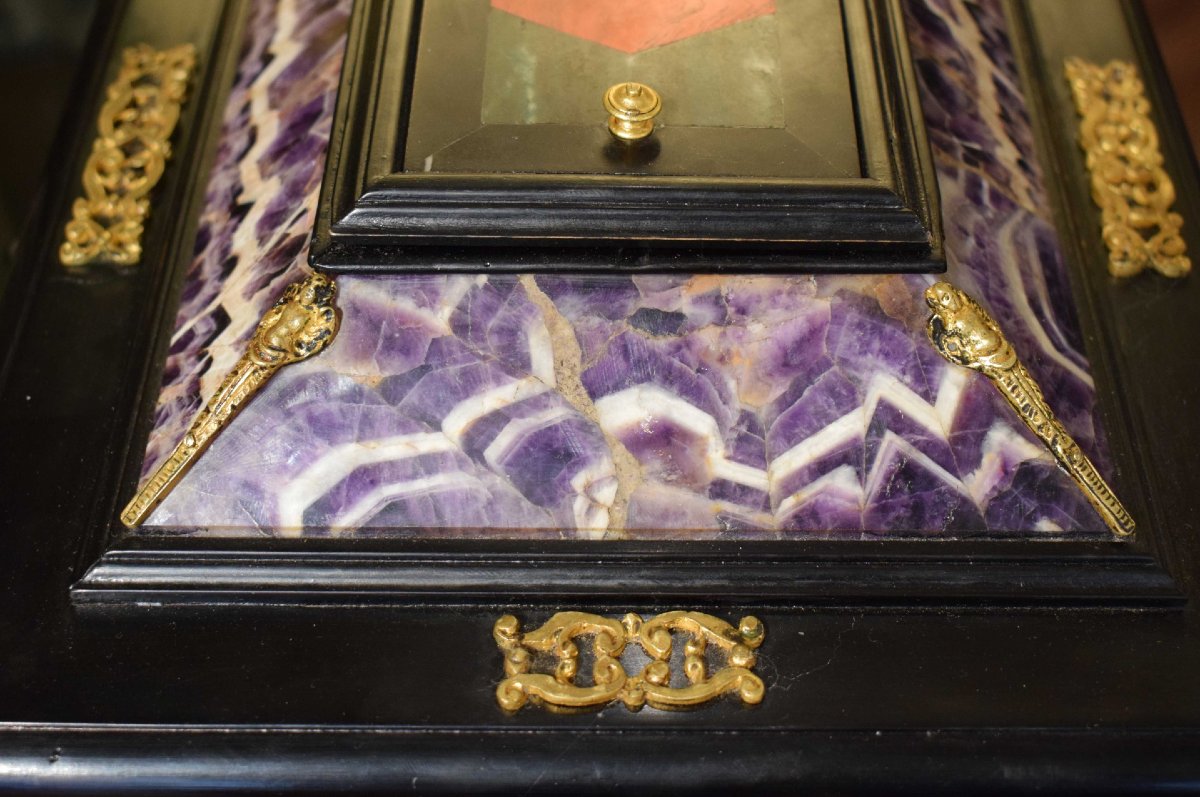
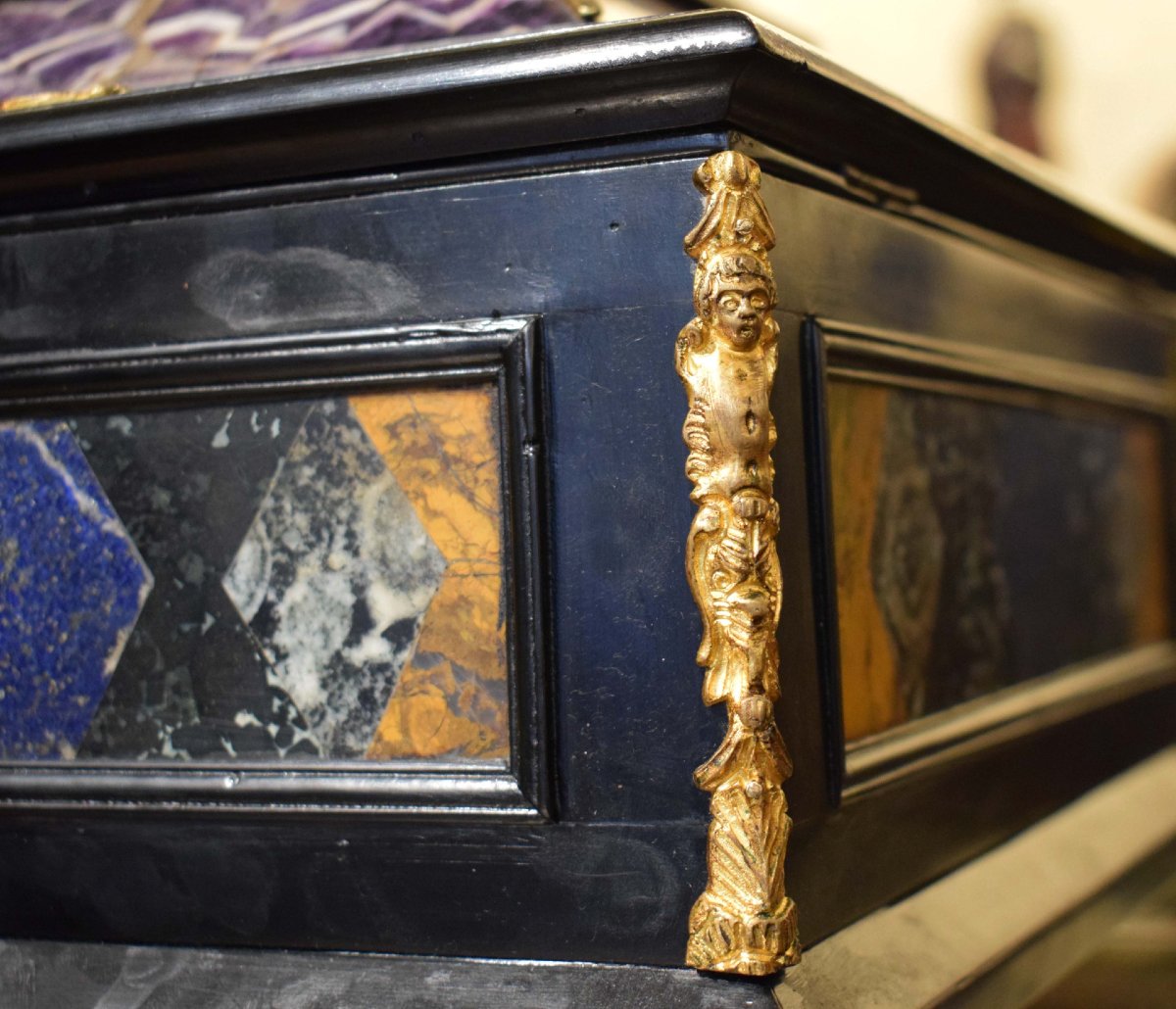
The ebonized wood structure lends elegance and visual depth to the piece; arranged in geometric panels using the stone inlay technique are various types of polychrome semi-precious stones. Decorative elements at the corners and gilded bronze appliqués complete the decoration with elegance and opulence.
Among the semi-precious stones featured, lapis lazuli—with its intense blue color—stands out in a hexagonal pattern on the side panels. Amethyst, with its characteristic purple hue and white veins, is used on the upper part of the lid. Red and green jasper serves as the central inlay on the lid. In the decorative side panels, black and white granite serves as the background, while onyx and agate—with color effects ranging from brown to gray—are set into the side motifs. The casket is part of the tradition of commesso lapideo, an art form that developed in Florence beginning in the Renaissance and remained highly prized throughout the 19th century. This technique involved cutting and inlaying semi-precious stones to achieve pictorial and decorative effects, a specialty of Florentine workshops, where the crafting of semi-precious stones had a long-standing tradition.
Such collectibles were particularly prized and sought after by travelers on the Grand Tour, who loved to bring home mementos of their journeys among the wonders of art.
- All our works are accompanied by a detailed certificate of authenticity.
- Professional packaging and insured shipping to ensure maximum safety during transport.
- For further information, please do not hesitate to contact us +39 329 319 4887 – info@dequart.com
- Option for VIDEO CALLS and in-person viewings by appointment in MILAN and OMEGNA (Vb).
- Additional information and photos: www.dequart.com IG - FB @dequ.art
Period: 19th century
Style: Napoleon 3rd
Condition: Good condition
Material: Semi precious stone
Width: 29,5
Height: 20
Depth: 25,5
Reference (ID): 1831153
Availability: In stock