

Pair Of Porcelain Perfume Holders By Jacob Petit, France, Mid-19th Century
Workshop of Jacob Petit (1796–1868)
Mid-19th century - France, Paris / Fontainebleau
Male and female figures in costume
Decorative perfume holders / figurative bottles
Hard-paste porcelain, polychrome painting, gilding, and hand-decoration
H 18.5 cm × base 5 cm
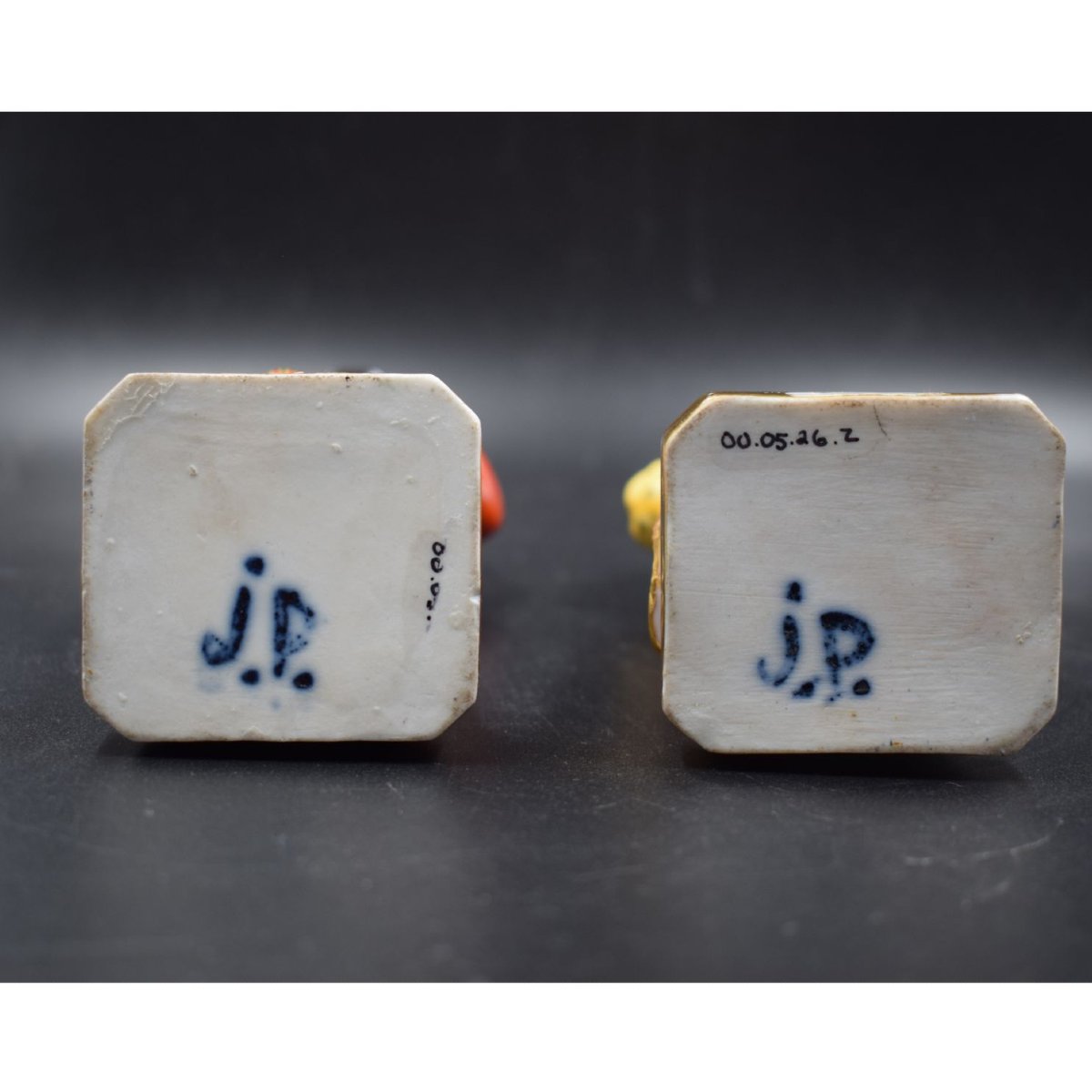
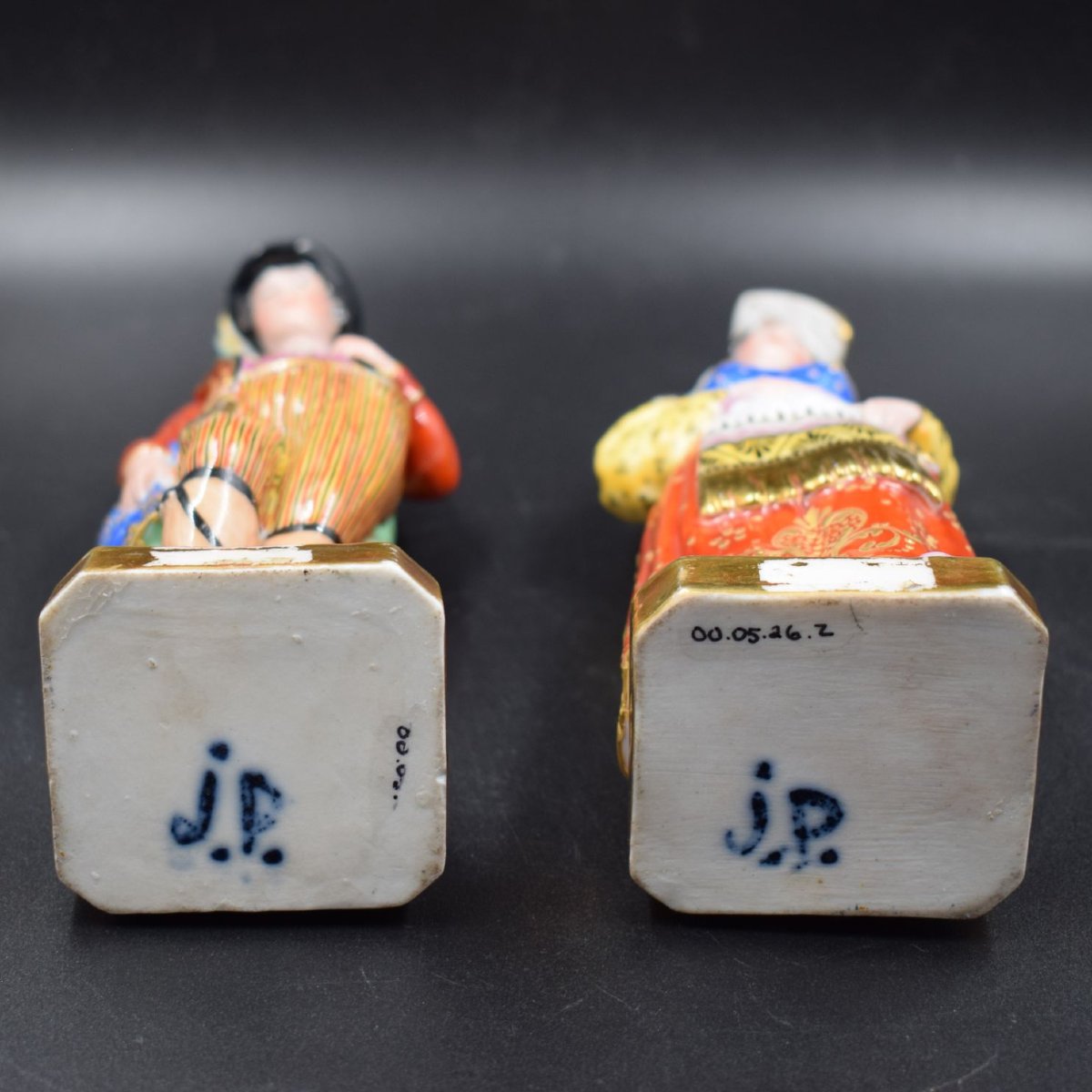
Mark: “JP” in blue on the base
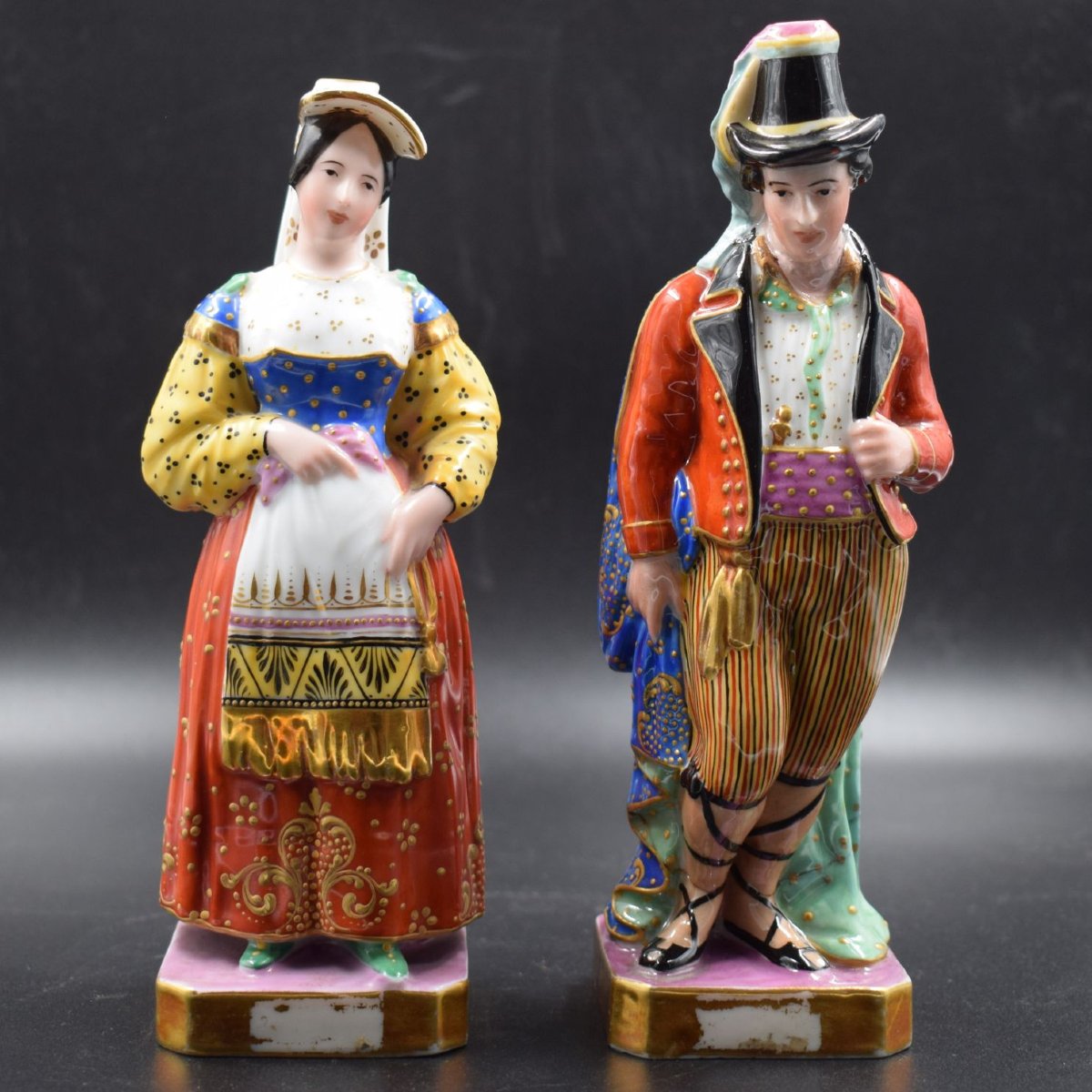
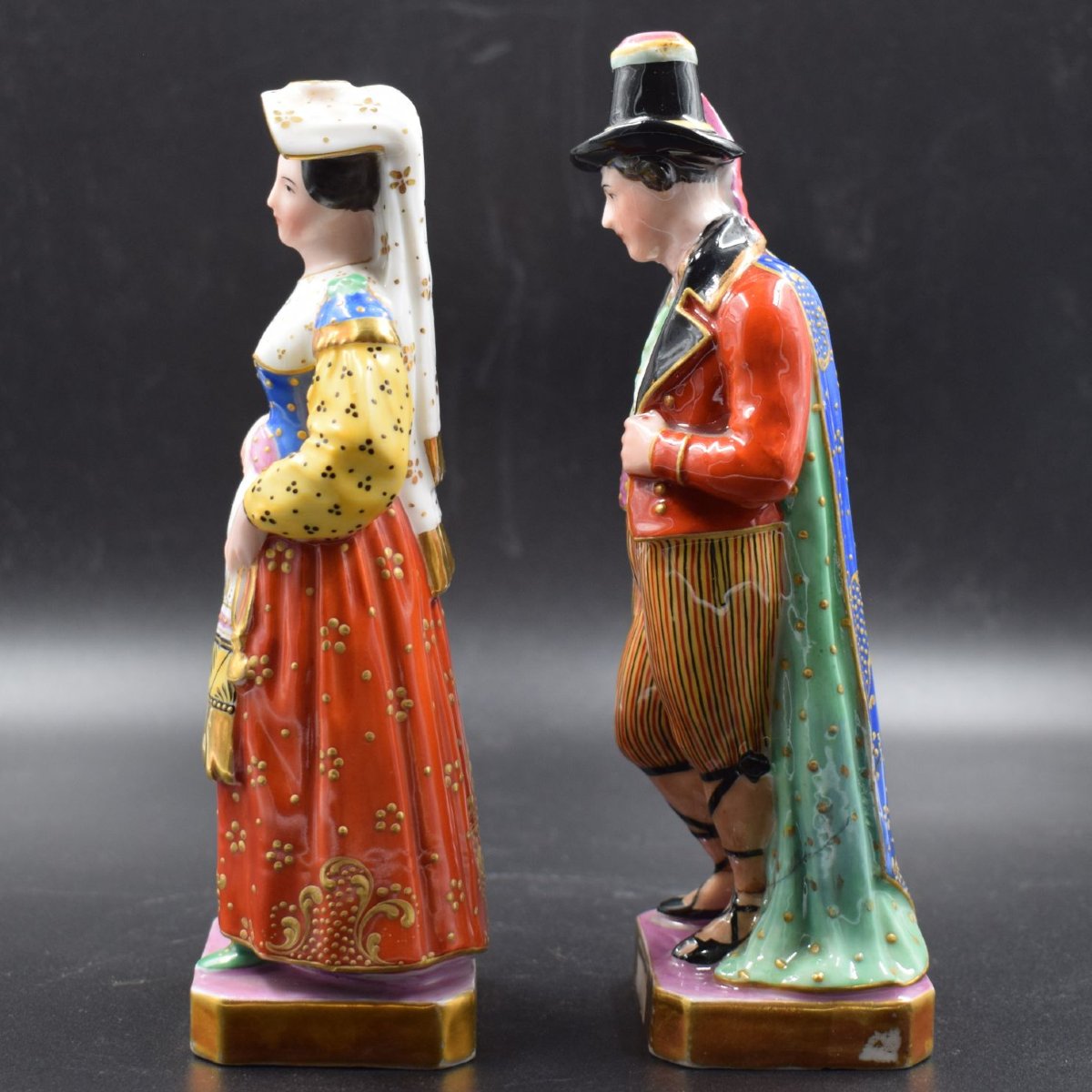
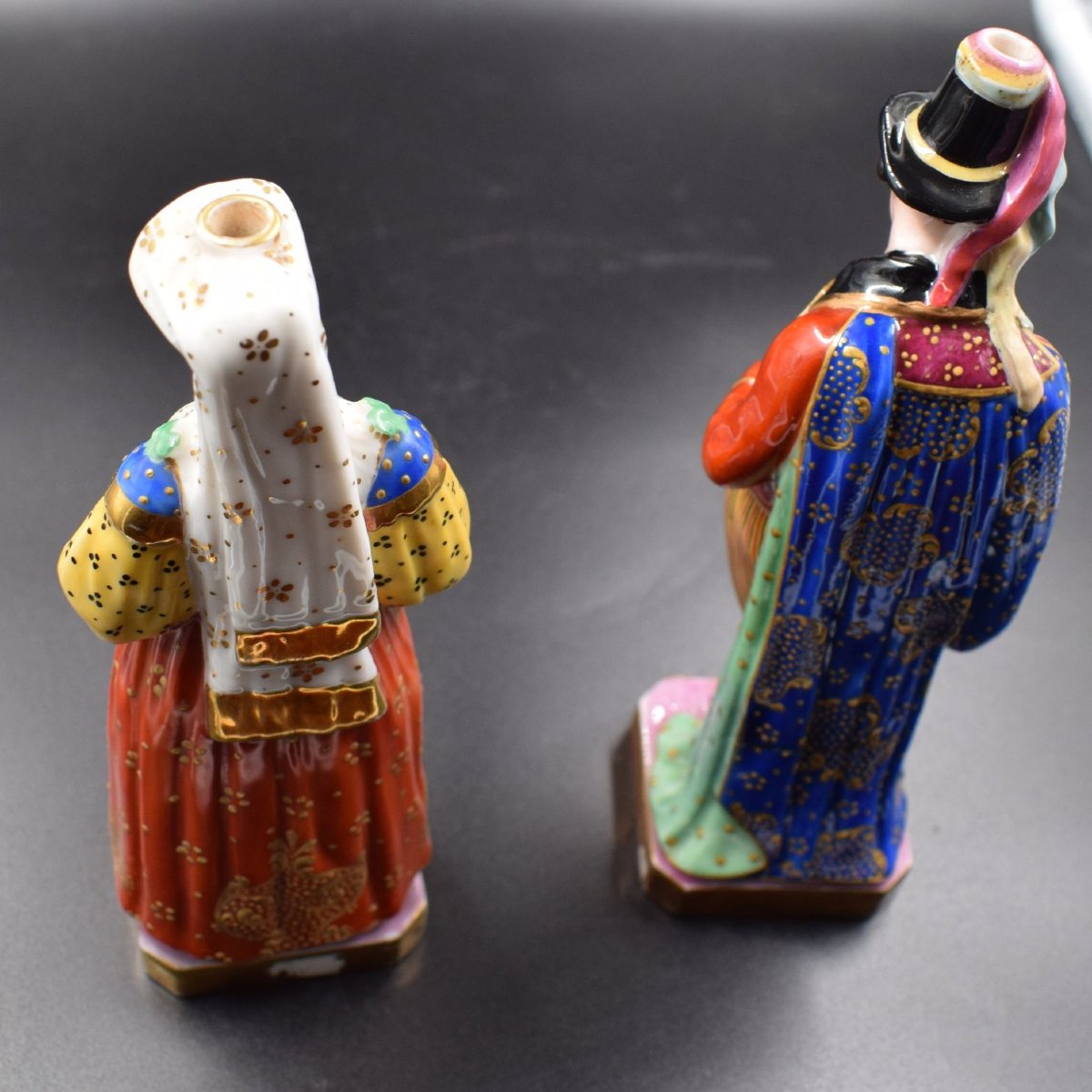
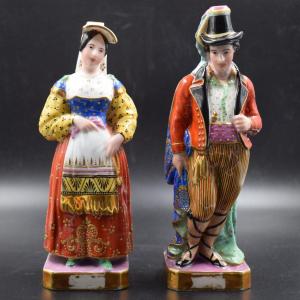
An elegant pair of perfume-holder figures in hard-paste porcelain, depicting a man and a woman in traditional costume, produced by the renowned French manufactory of Jacob Petit in the mid-19th century.
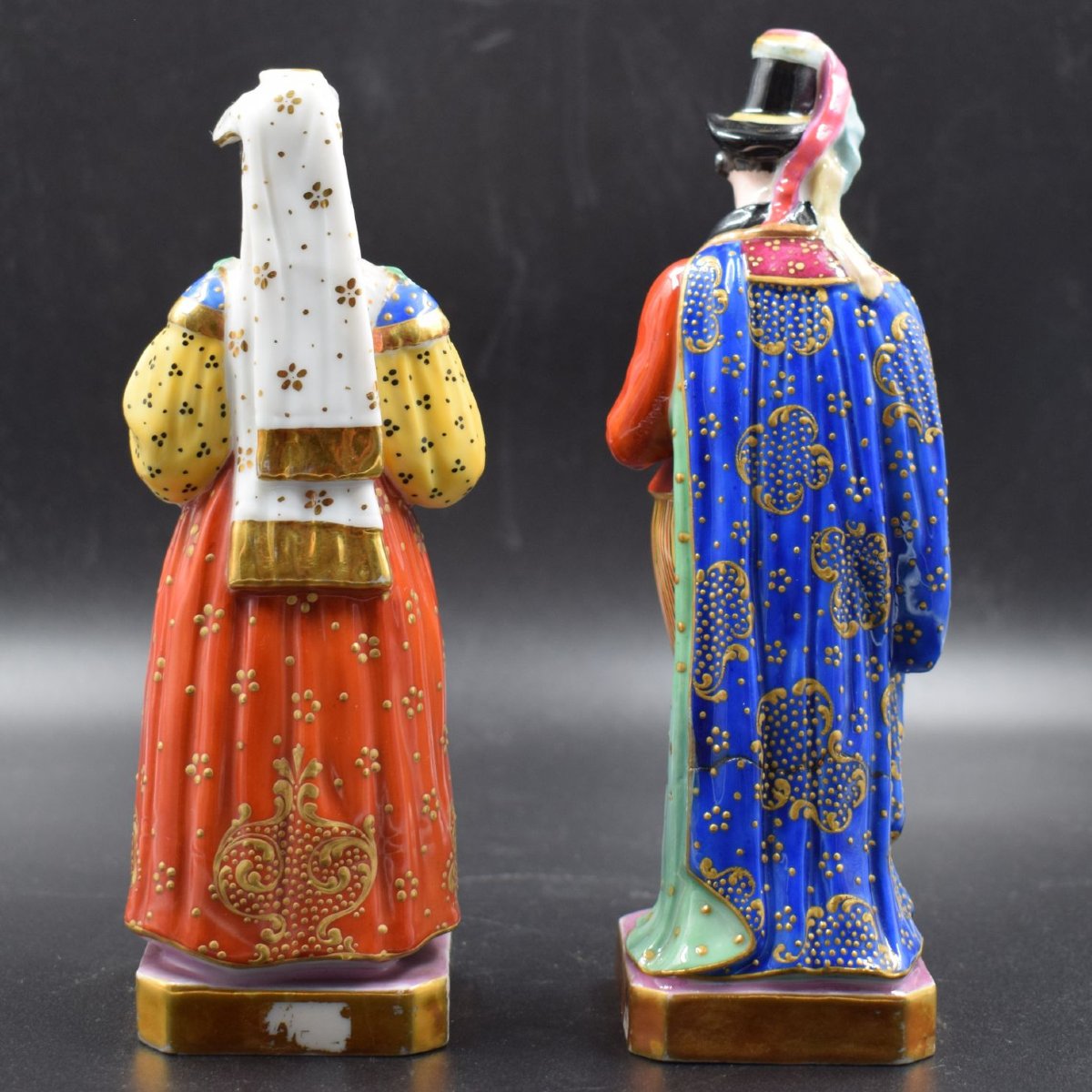
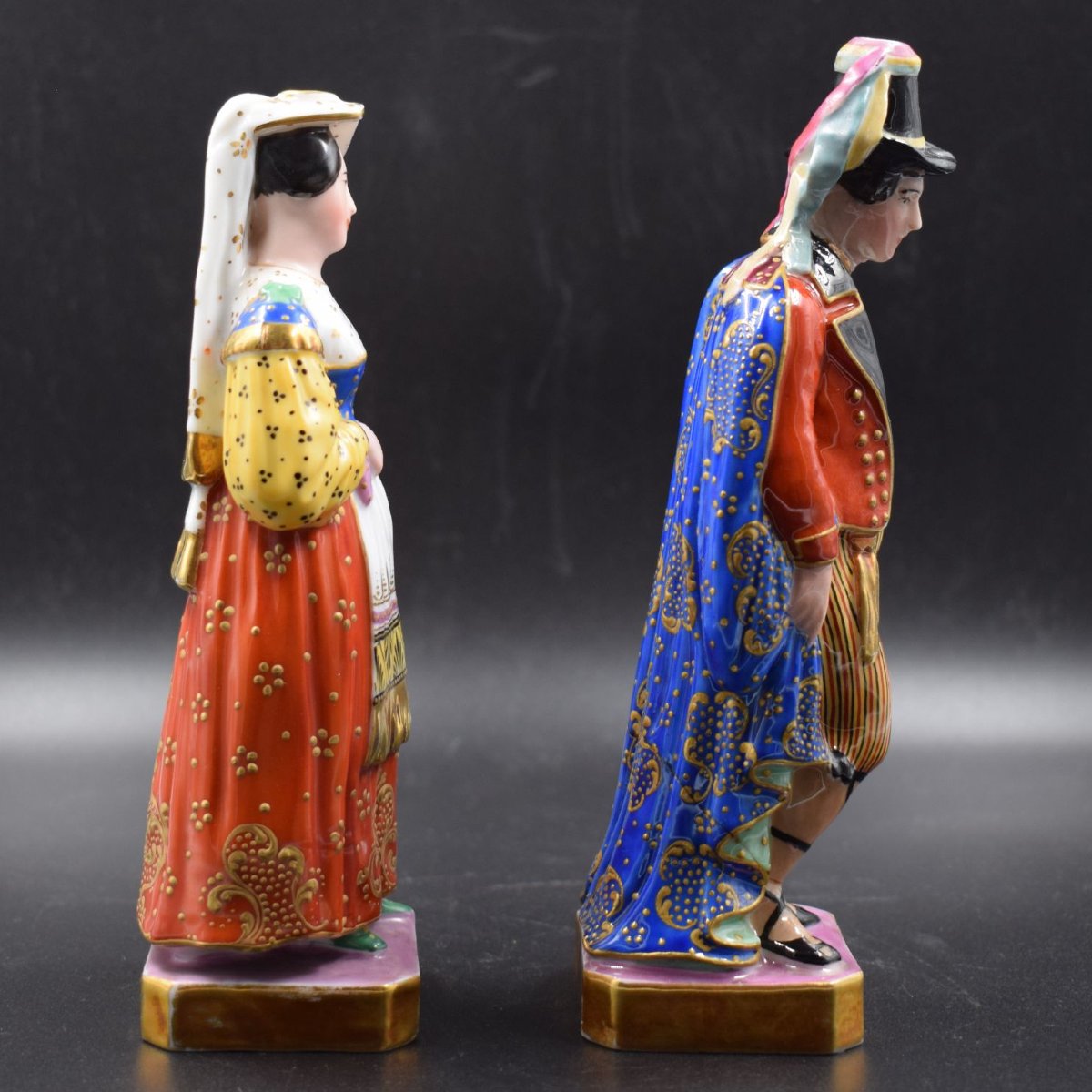
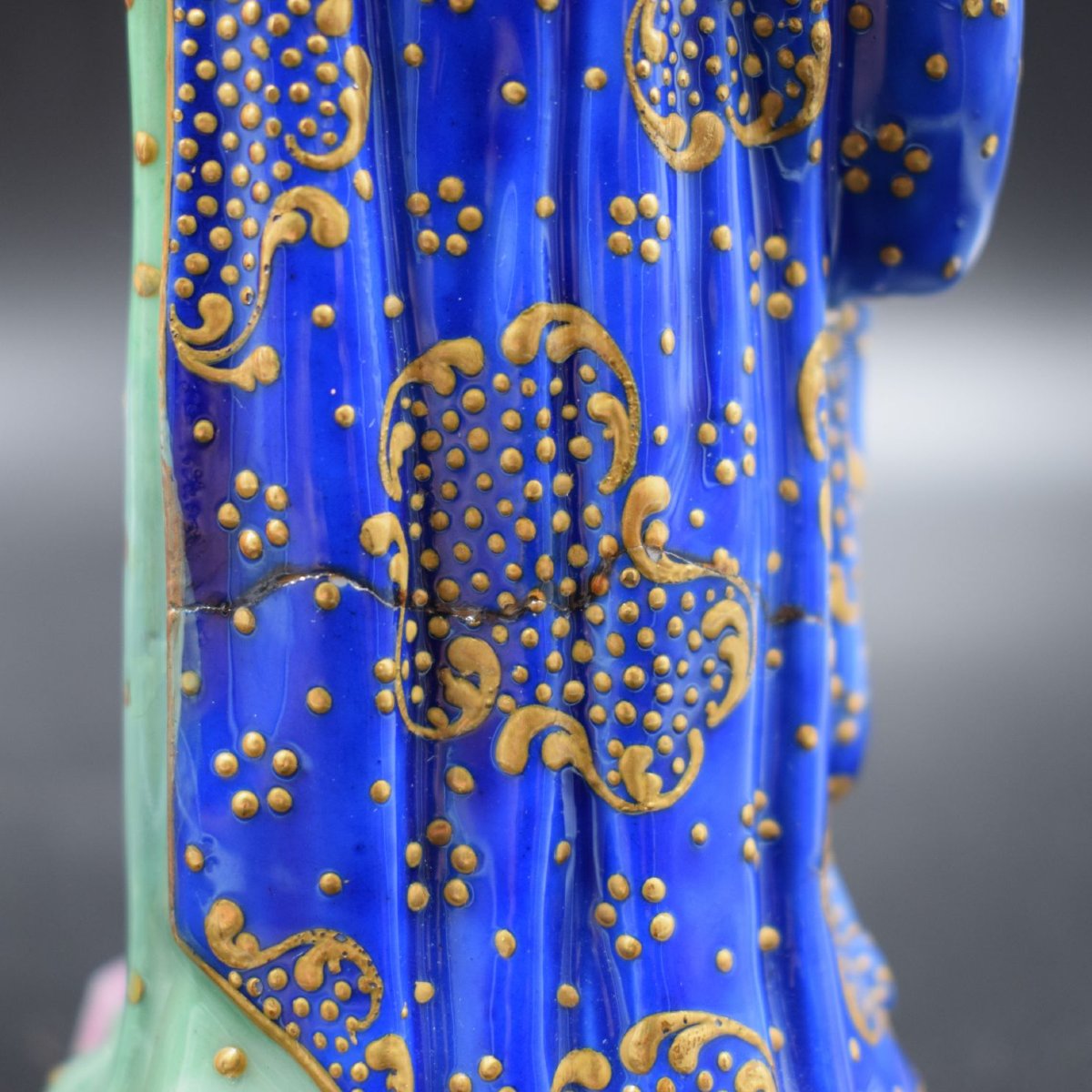
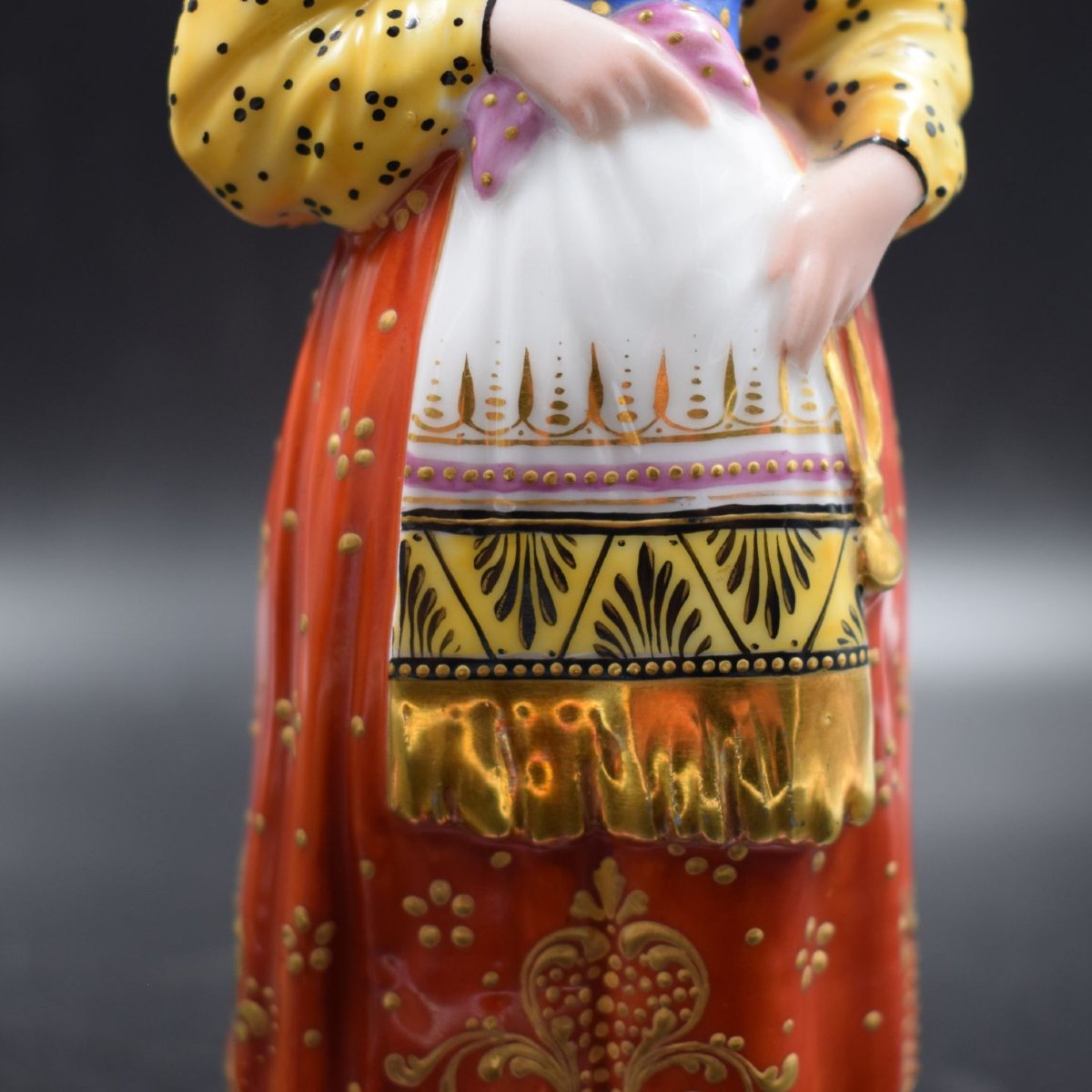
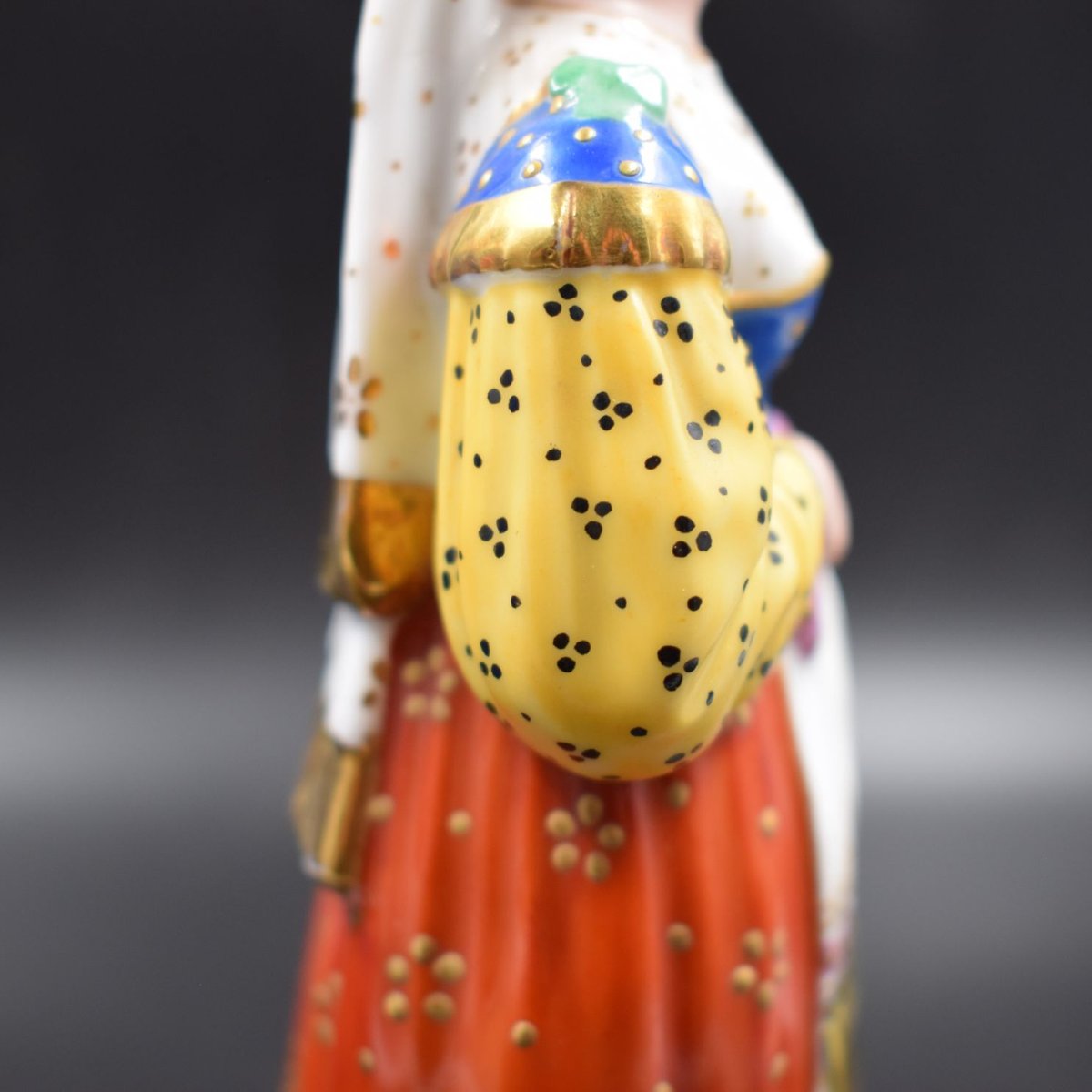
The two figures, designed as a pair, feature the typical decorative style of Petit’s work: a rich polychrome palette of bright colors, abundant gold highlights, and meticulous modeling that captures the details of the costumes and accessories. The woman wears an elaborate dress consisting of a blue bodice, wide yellow sleeves, and a red skirt, complemented by a white apron and a headdress; the man wears a red jacket edged in black, a decorated waistcoat, multicolored striped trousers, a top hat, and a richly ornamented cloak.
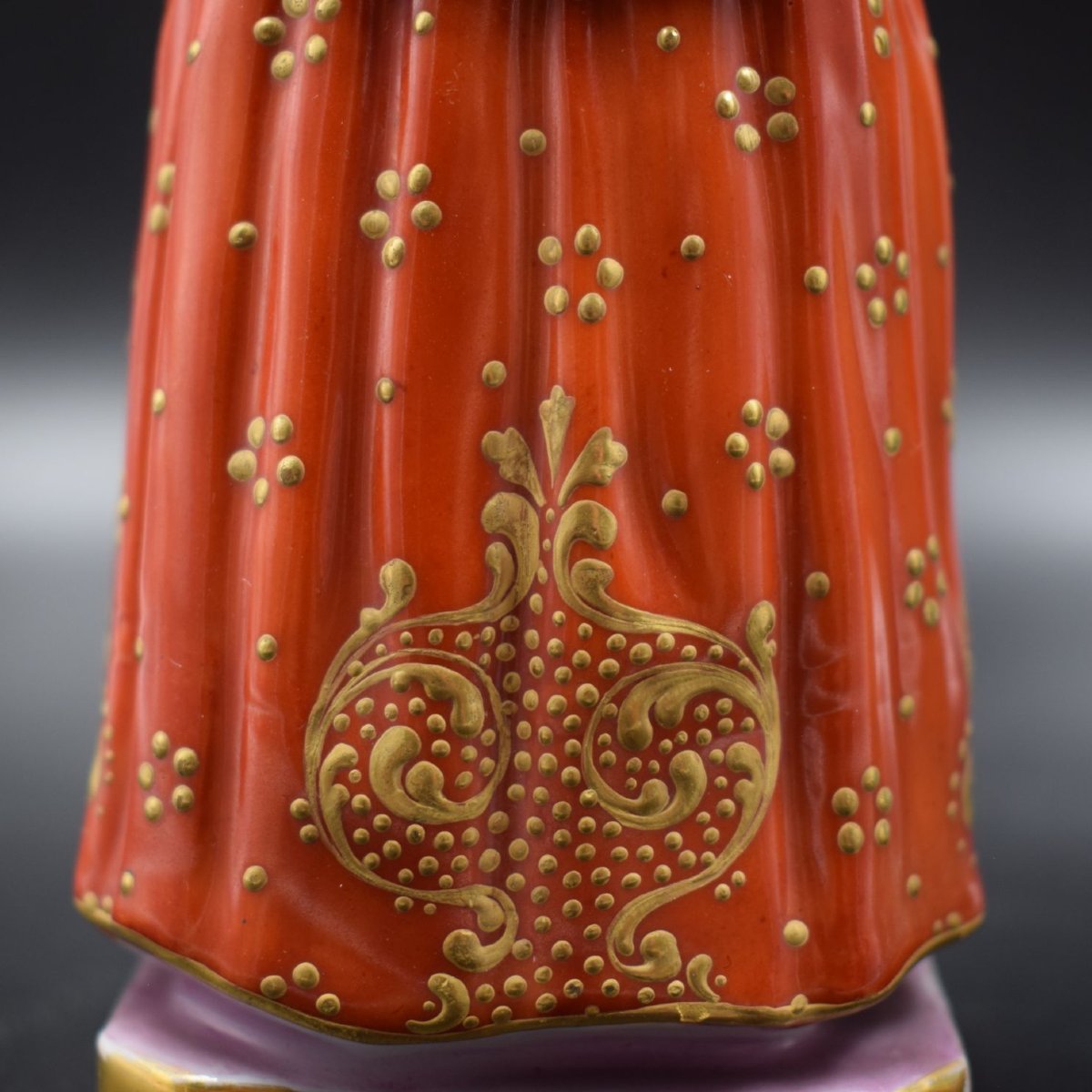
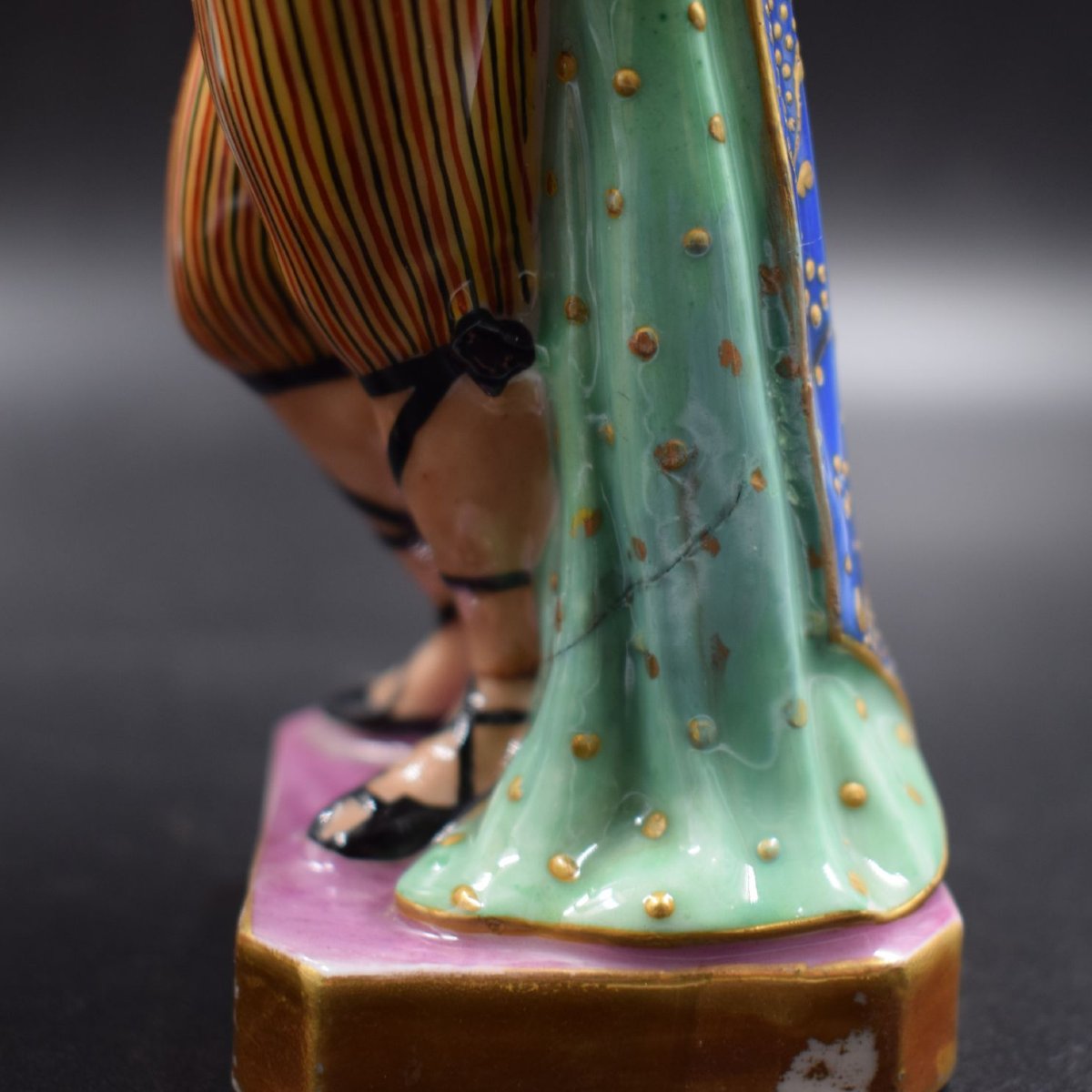
Particularly interesting is the meticulous rendering of the clothing details, achieved through polychrome painting, gilding, and decoration with small dots and ornamental motifs, in a deliberately opulent and theatrical style typical of Jacob Petit’s work.
The pair belongs to the successful series of figurines and figurative perfume bottles, in which Jacob Petit created numerous depictions of characters in costumes characteristic of different eras and cultures. Pairs of male and female figures in traditional attire constitute a type well-documented in the antiques market and are particularly representative of the manufactory’s eclecticism. Similar examples, marked “J.P.” in blue, are documented as Jacob Petit productions from the mid-19th century.
The perfume bottle design is consistent with a specific category of objects developed by the manufactory: the figures were in fact conceived not only as decorative sculptures but as refined functional objects intended for personal grooming and interior decoration. Jacob Petit’s production includes numerous variations of these figurative vials, depicting couples in Scottish, Turkish, and medieval costumes, as well as those from other exotic or historicizing settings.
Jacob Petit (1796–1868), whose real name was Jacob Mardochée, was one of the most original and important porcelain manufacturers in nineteenth-century France.
After receiving artistic training at the studio of the painter Antoine-Jean Gros, a student of Jacques-Louis David, he turned to ceramics and, in 1822, established contact with the Sèvres porcelain manufactory. In the years that followed, he established his own production business, with factories in Fontainebleau and a studio in Paris, eventually employing a considerable number of workers.
Petit’s work is distinguished by an extraordinary eclecticism, combining Rococo, Baroque, Neo-Gothic, Renaissance, and exotic motifs, accompanied by an extremely vibrant color palette and a generous use of gilding.
His particular fondness for figures modeled after perfume bottles gave rise to one of the most recognizable categories of his work. His taste for picturesque costumes and the depiction of characters from different cultures and eras fully reflected the antiquarian and exotic curiosity of French society at the time.
The quality and originality of these works are now widely recognized: the Musée des Arts Décoratifs in Paris, for example, houses a pair of Jacob Petit bottle-figures dating from 1834–1848, made of painted and gilded hard-paste porcelain and bearing the mark “JP” in blue on the base (https://collections.madparis.fr/en/document/flacon-figurine/627a8bdc3edd95462246d0a3?pos=10&utm).
- All of our works are accompanied by a detailed certificate of authenticity.
- Professional packaging and insured shipping to ensure maximum safety during transport.
- For further information, please do not hesitate to contact us +39 329 319 4887 – info@dequart.com
- Option for VIDEO CALLS and in-person viewings by appointment in MILAN and BORGOMANERO (NO).
- Additional information and photos: www.dequart.com IG - FB @dequ.art
Period: 19th century
Style: Other Style
Condition: Fully restored
Material: Porcelain
Height: 18,5
Reference (ID): 1812639
Availability: In stock