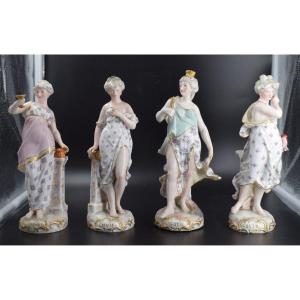


Meissen – A Series Of Four Allegories Of The Deadly Sins: Gluttony, Envy, Pride...
Meissen, Saxony – Second half of the 19th century
Allegories of the Deadly Sins
(4) Polychrome and gilded hard-paste porcelain, H approx. 19 cm × Ø approx. 7 cm.
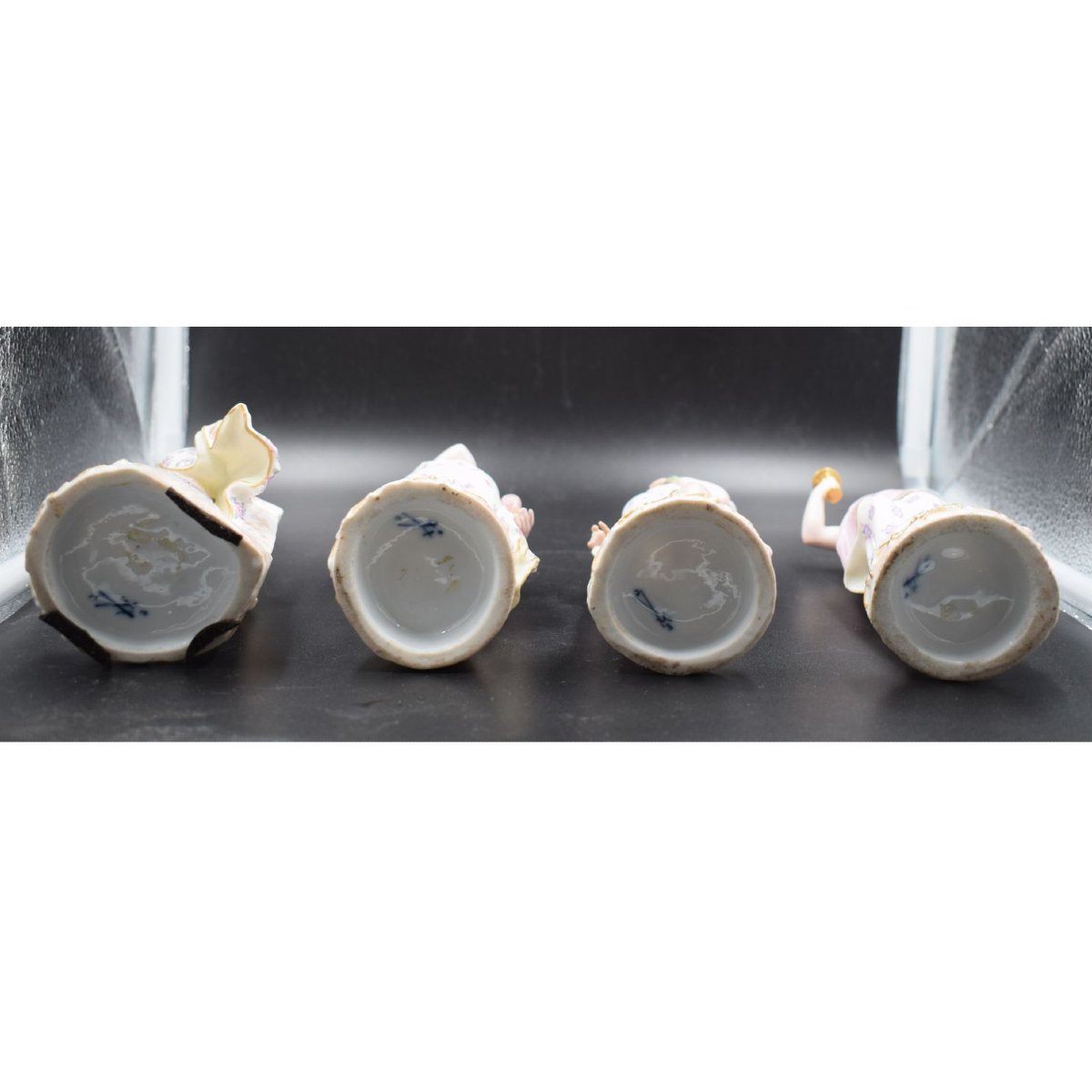
Mark: Meissen crossed swords beneath the base
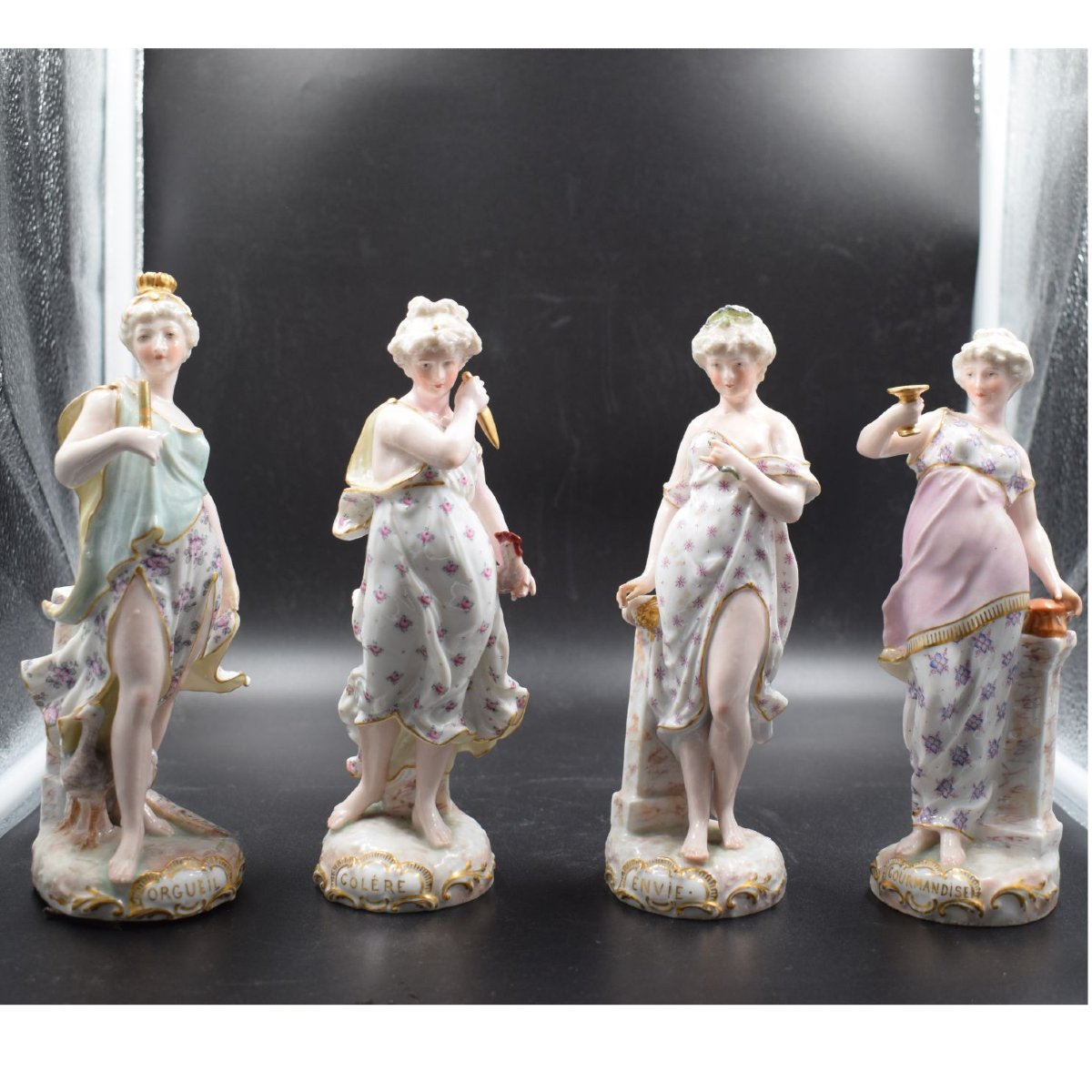
Inscriptions: Gourmandise, Envie, Orgueil, Colère
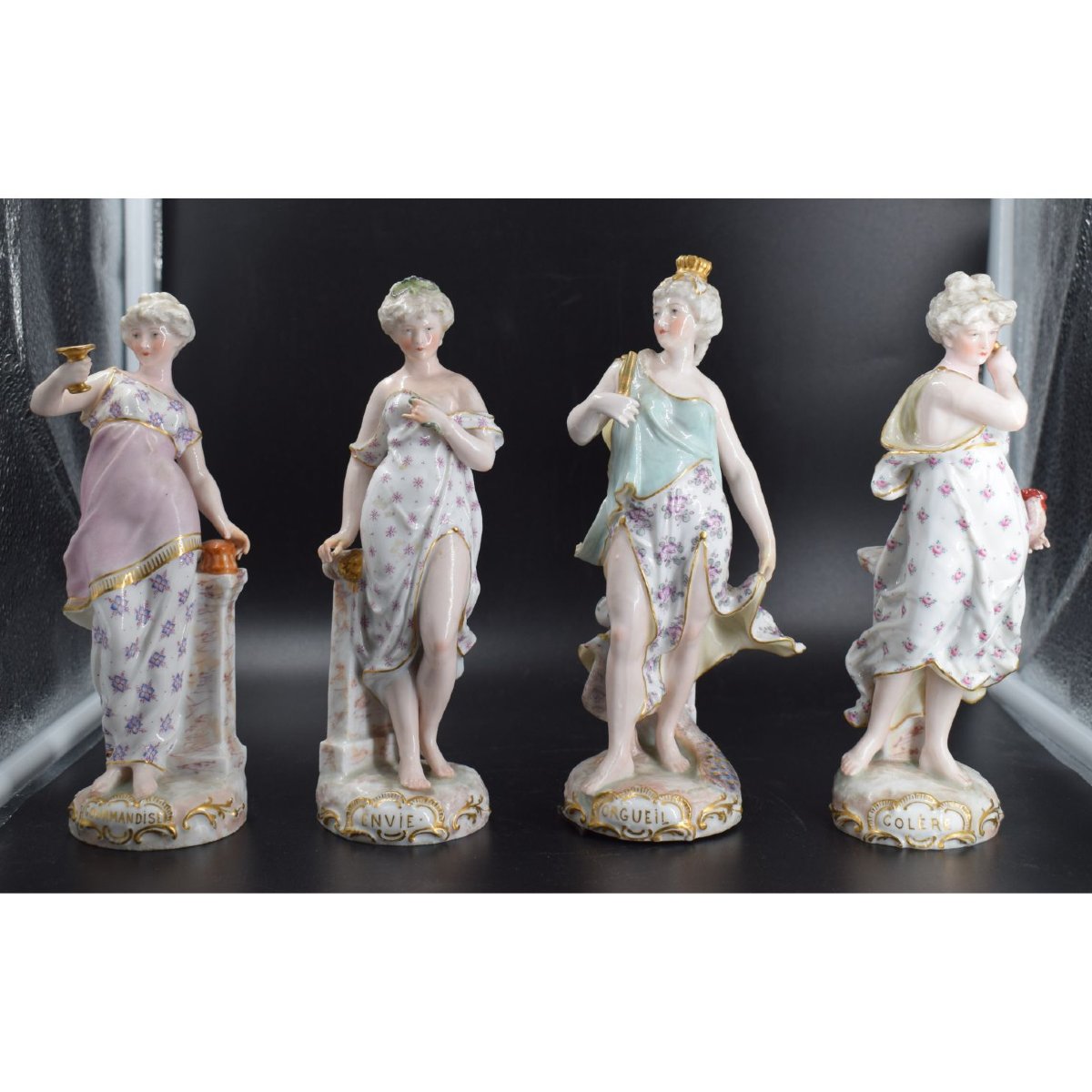
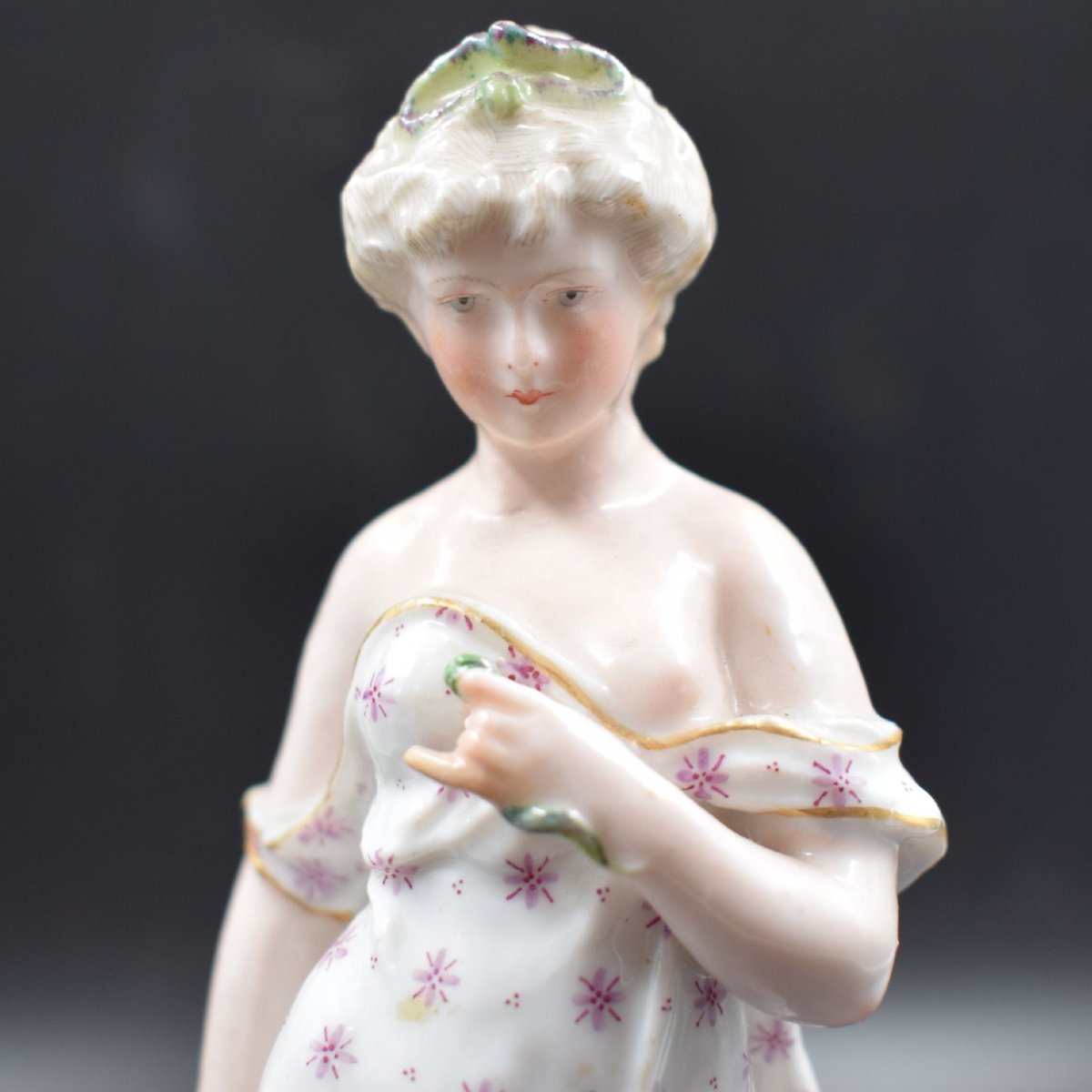
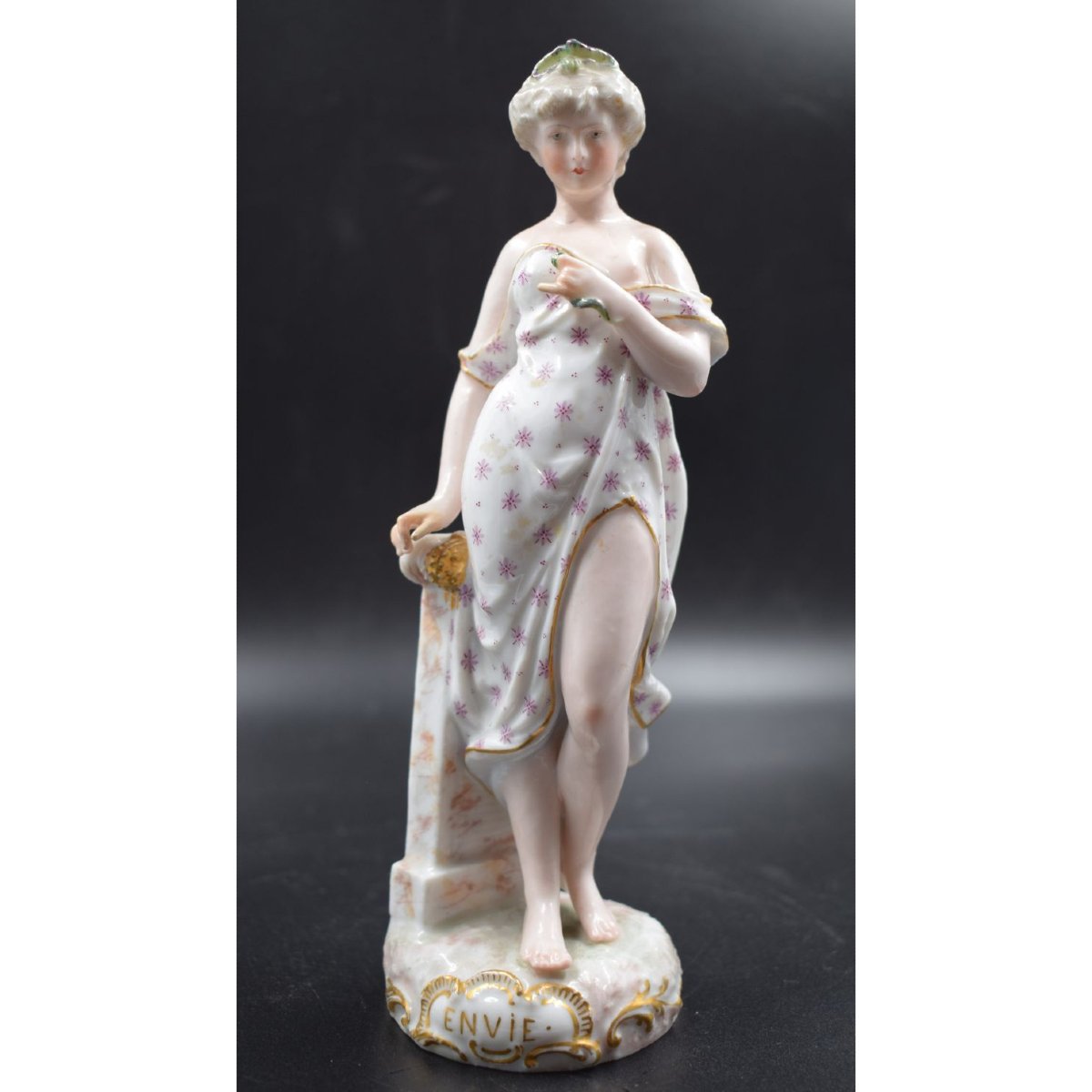
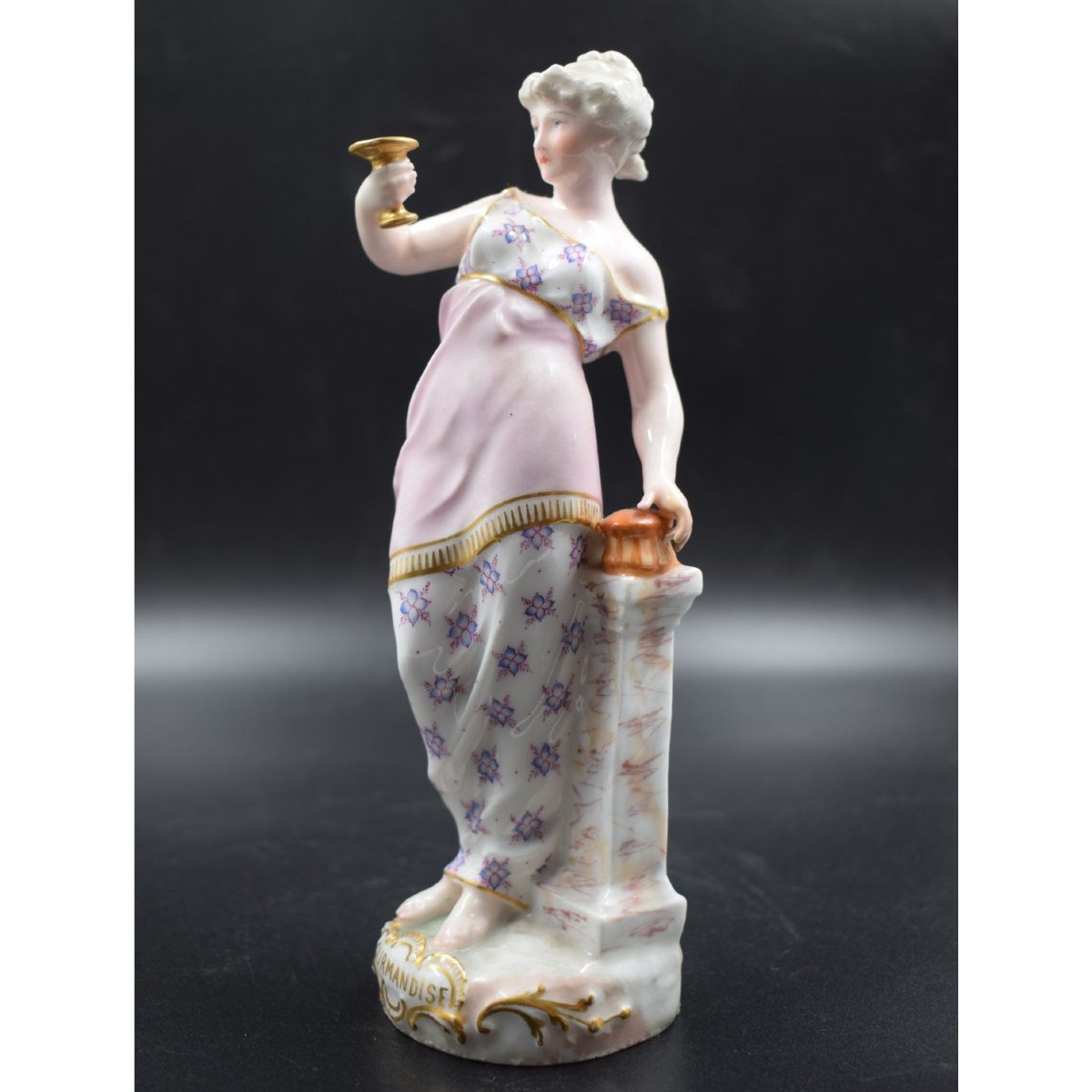
An important and refined series of four allegorical figuresin Meissen porcelain, representing the four Deadly Sins: Gluttony (Gourmandise), Envy (Envie), Pride (Orgueil), and Wrath (Colère).
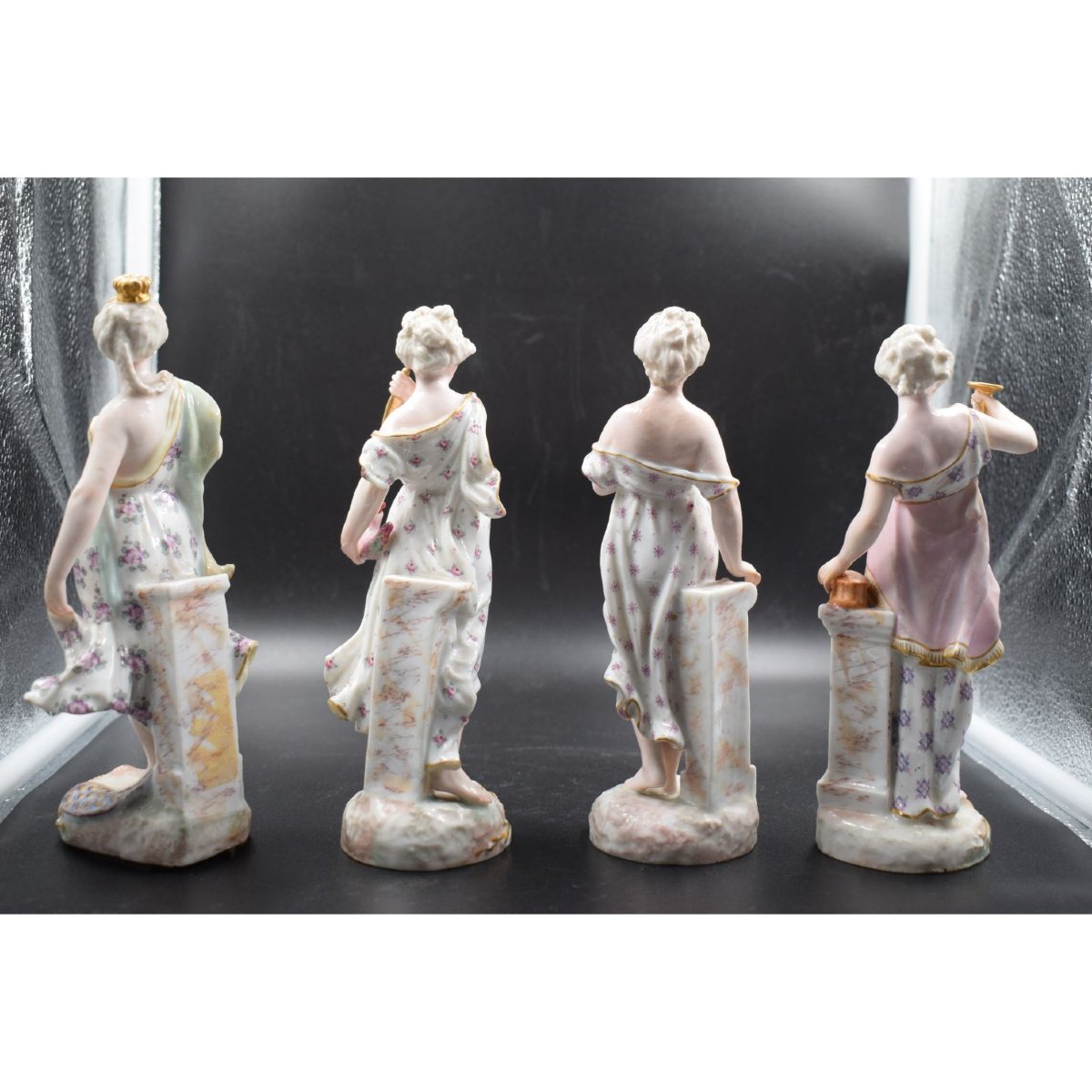
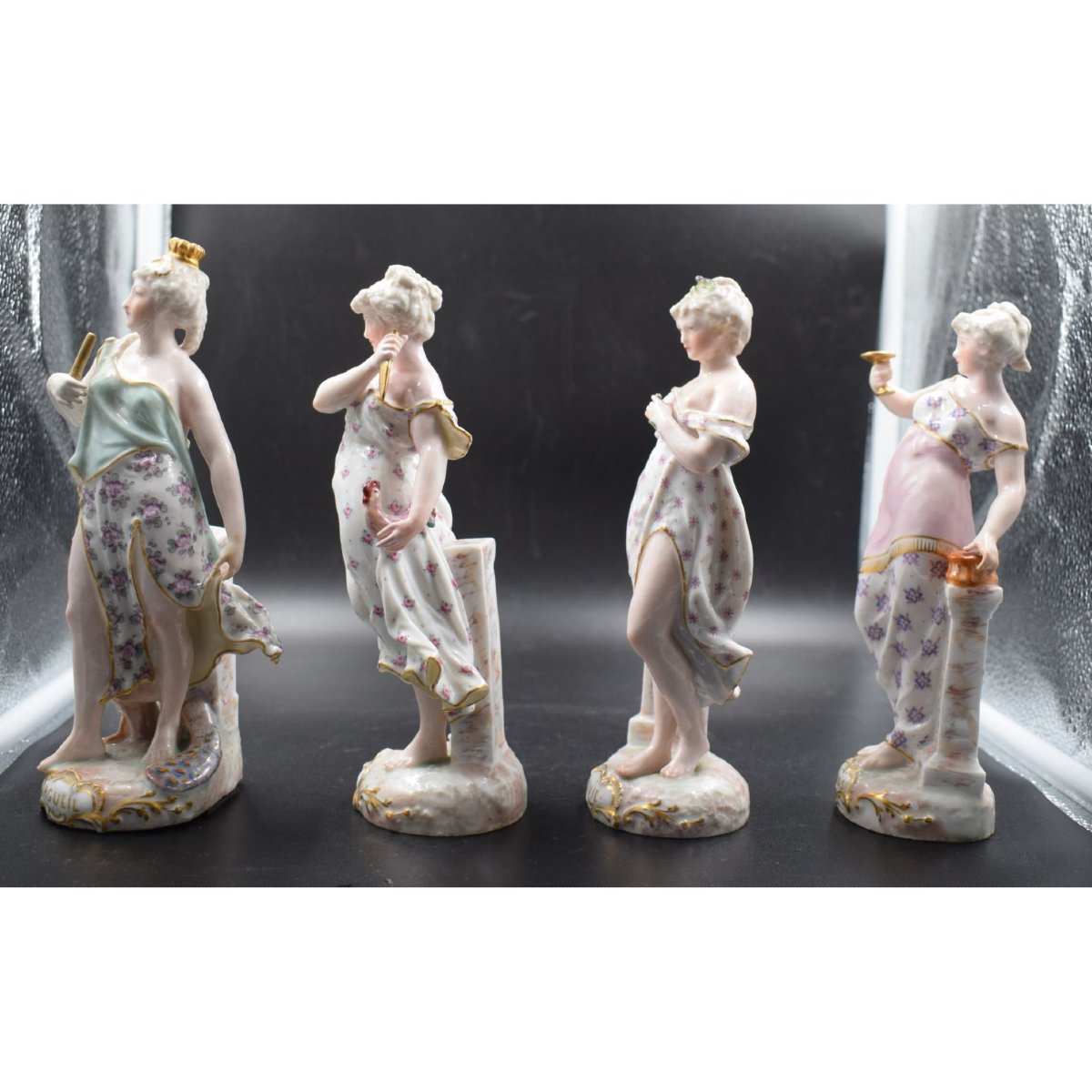
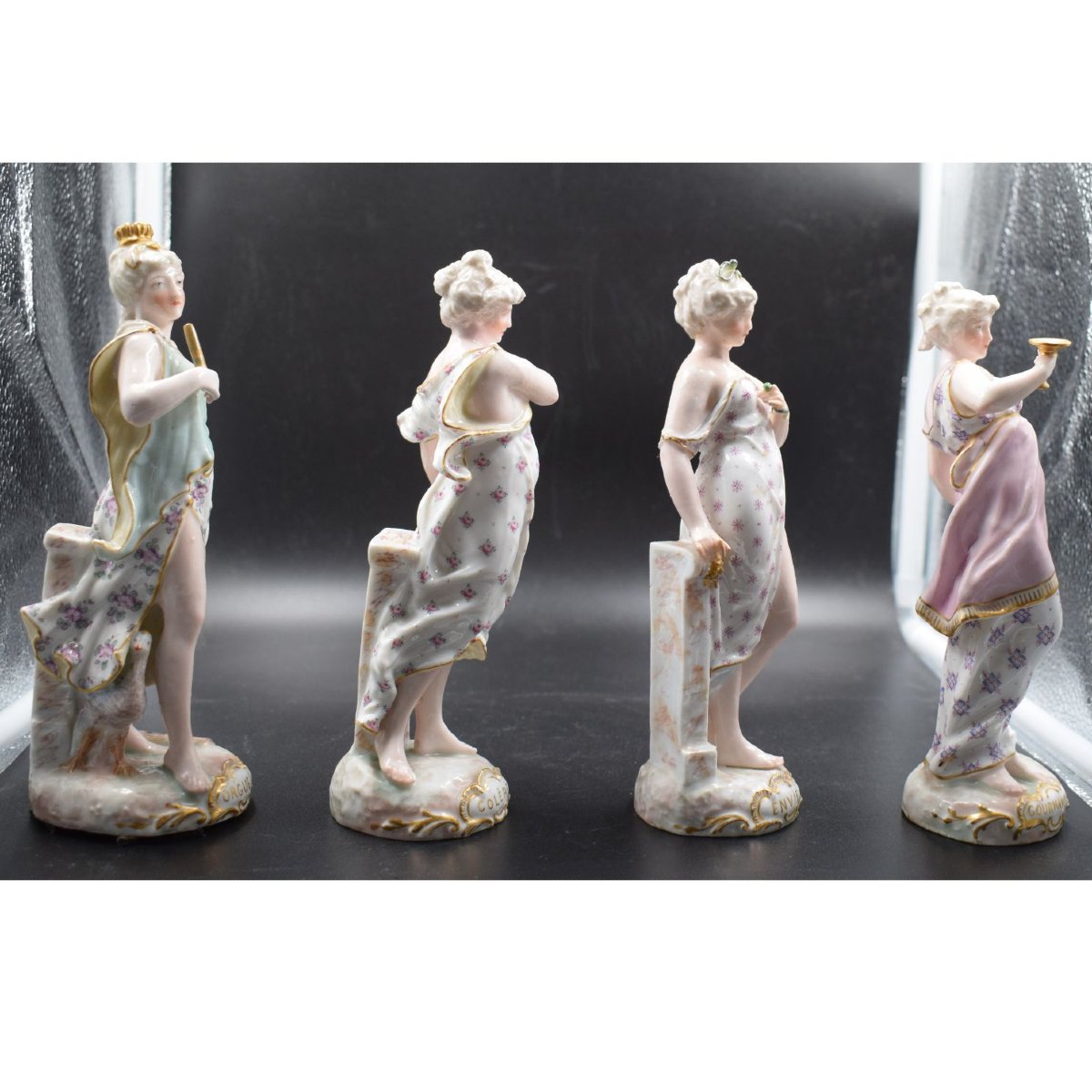
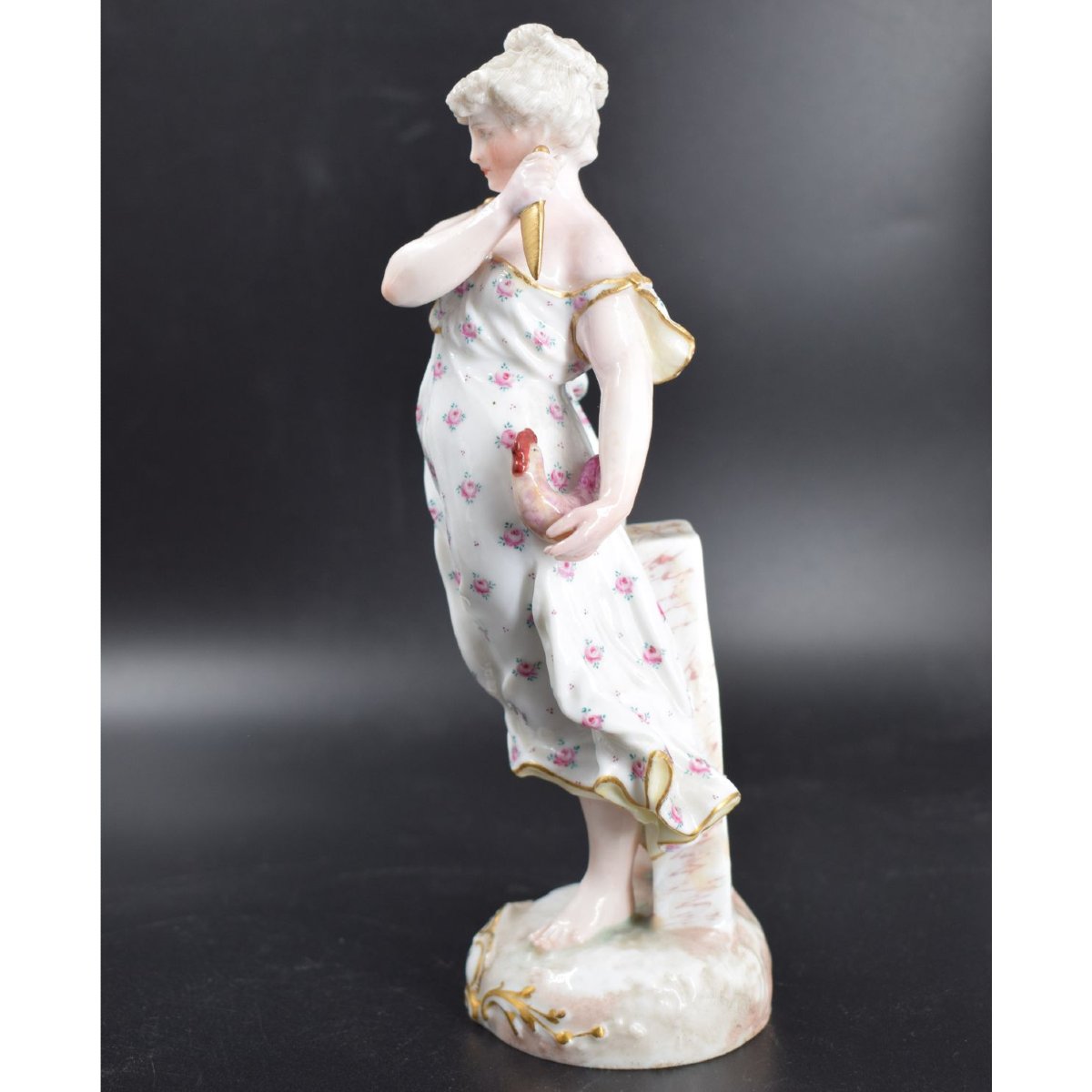
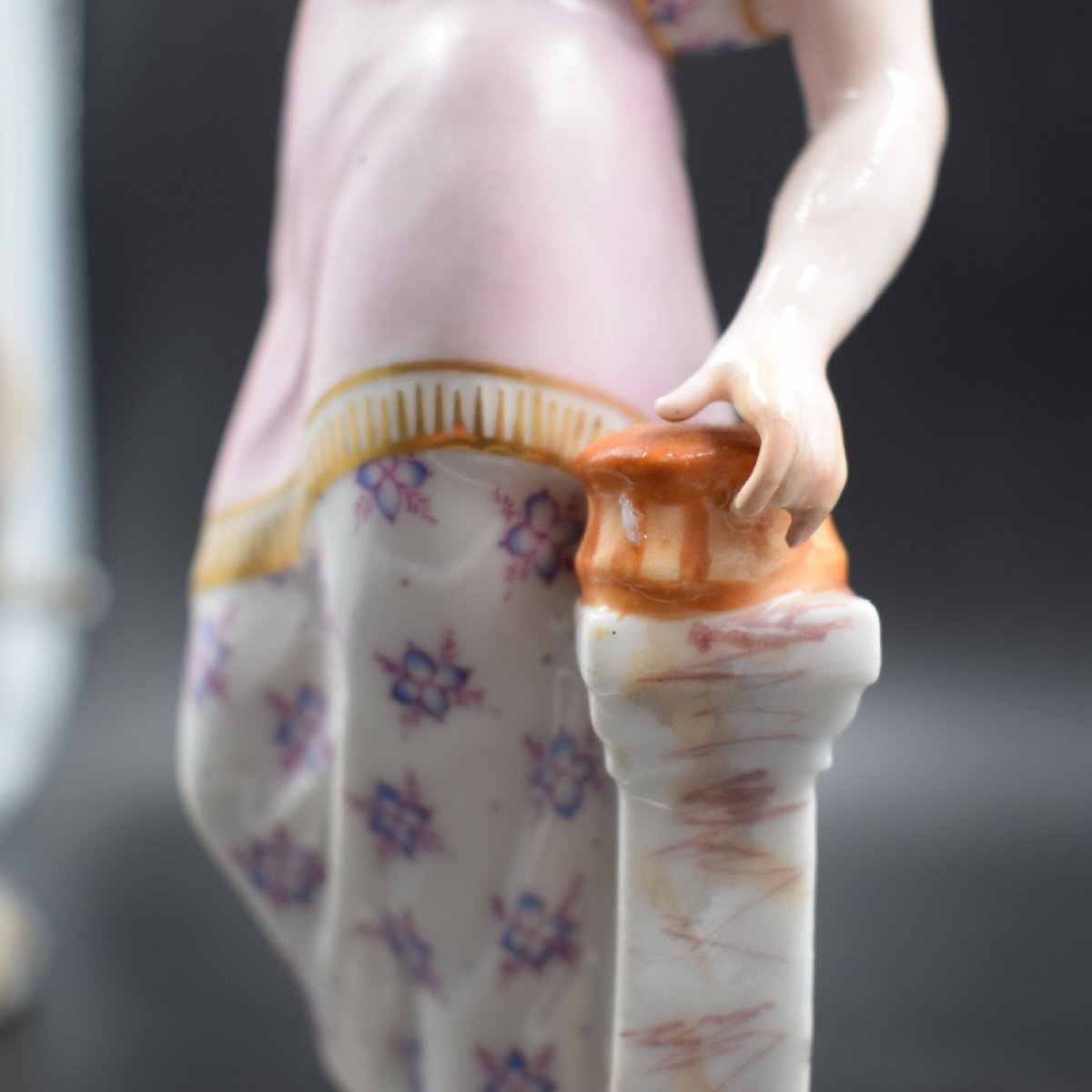
The four figures are designed according to a unified concept: young women elegantly dressed in Rococo-style gowns, modeled with flowing drapery and embellished with polychrome floral decoration, gold borders, and relief details.
Each is accompanied by a symbolic attribute and bears the name of the vice in French on the front of the base, making the allegorical subject immediately recognizable.
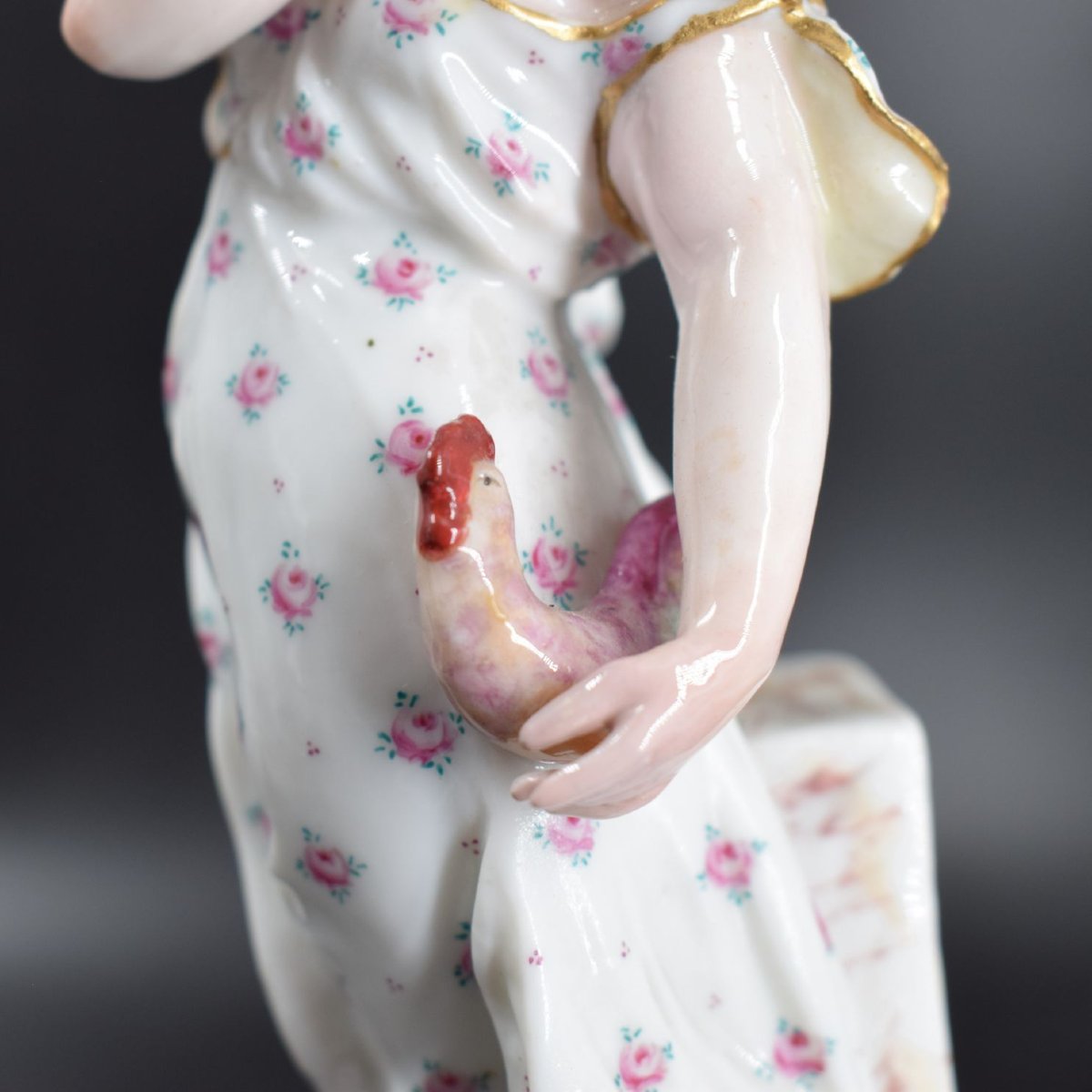
Gluttony (Gourmandise) is characterized by attributes associated with the pleasures of the table and consumption; Envy (Envie) is depicted through allegorical imagery intended to express desire and dissatisfaction with what belongs to others; Pride (Orgueil), also recognizable by the peacock, alludes to vanity, self-satisfaction, and ostentation; Wrath (Colère), on the other hand, is emphasized by the figure’s more dynamic posture and its attributes, which evoke anger and uncontrolled fury.
The theme of the Deadly Sins belongs to a very long-standing iconographic tradition in European figurative art. Abstract moral concepts were transformed into female figures through specific attributes, gestures, animals, and symbolic objects. The transposition of this repertoire into porcelain sculpture perfectly aligns with the decorative culture of European courts and collections, where small allegorical figures constituted a particularly appreciated genre.
Founded in 1710 in Meissen, Saxony, the Meissen manufactory was the first major European manufactory to systematically produce hard-paste porcelain, achieving a position of absolute prominence in the European ceramics scene as early as the 18th century.
Sculptural production took on particular importance under Johann Joachim Kändler, the manufactory’s great modeler, who developed a vast repertoire of allegorical, mythological, pastoral, and gallant figures. The preference for small-scale figures, intended to decorate tables, consoles, and reception rooms, became one of the most recognizable characteristics of Meissen’s production.
This series is part of the 19th-century revival of the manufactory’s Rococo models: the elegance of the poses, the costumes, the rocaille bases, and the rich floral decoration all reflect the style of the great 18th-century period, reinterpreted in a later era.
The four figures are made of hard-paste porcelain, a material characteristic of Meissen, produced from a mixture of kaolin, quartz, and feldspar, followed by firing at high temperatures.
The decoration is executed using polychrome ceramic paints and gilding, with delicate floral motifs scattered across the garments and gilded borders that highlight the contours of the dresses and the bases. The rendering of the fabrics and the contrast between the whiteness of the porcelain and the vibrant polychromy lend the figures a particularly elegant and refined character.
Beneath the bases is the characteristic Meissen mark of crossed swords, the hallmark of the manufactory.
Based on stylistic characteristics, the quality of the modeling, the type of bases, and above all the decorative scheme, the series can be dated to the 19th century, most likely to the second half of the 19th century or the transitional period leading into the 20th century.
It is therefore a piece attributable to the 19th-century revival of Meissen’s Rococo repertoire, rather than to the original 18th-century production.
- All our pieces come with a detailed certificate of authenticity.
- Professional packaging and insured shipping to ensure maximum safety during transport.
- For further information, please do not hesitate to contact us +39 329 319 4887 – info@dequart.com
- Option for VIDEO CALLS and in-person viewings by appointment in MILAN and BORGOMANERO (NO).
- Additional information and photos: www.dequart.com IG - FB @dequ.art
Period: 19th century
Style: Other Style
Condition: Good condition
Material: Porcelain
Diameter: 7
Height: 19
Reference (ID): 1812601
Availability: In stock