
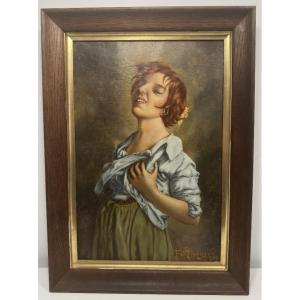


Francis Thayer (20th C.) Portrait 1933 Title Unseemly Mirth Oil After Dorothy Et Reta Morter
Francis Thayer (20th century)
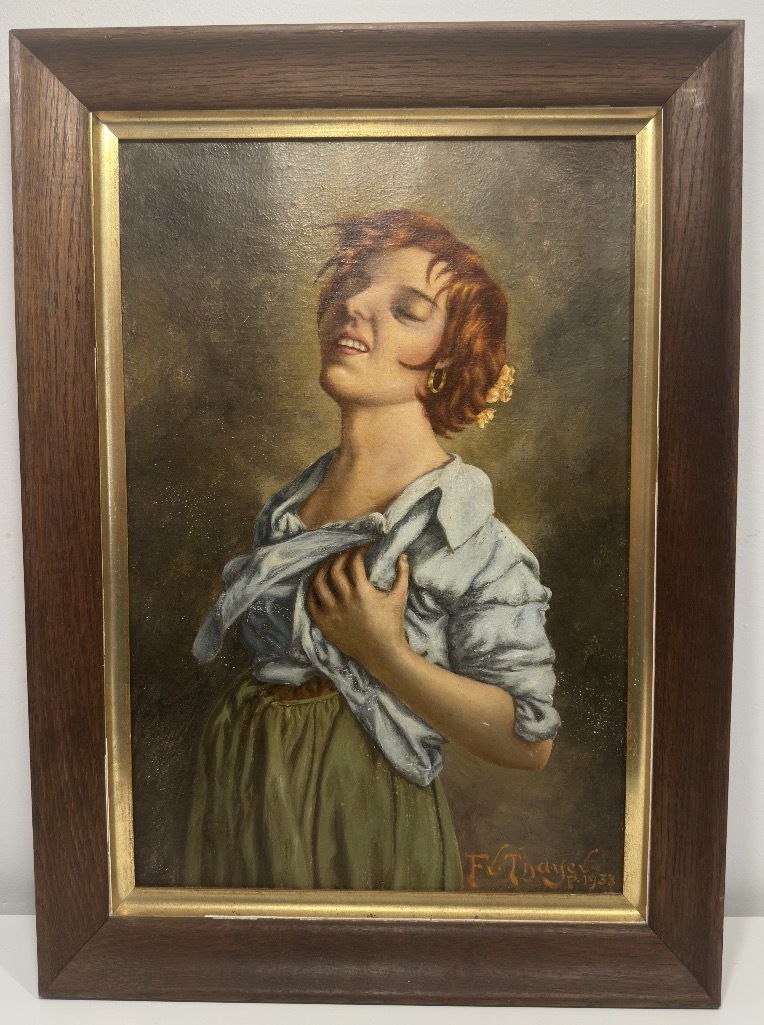
Unseemly Mirth
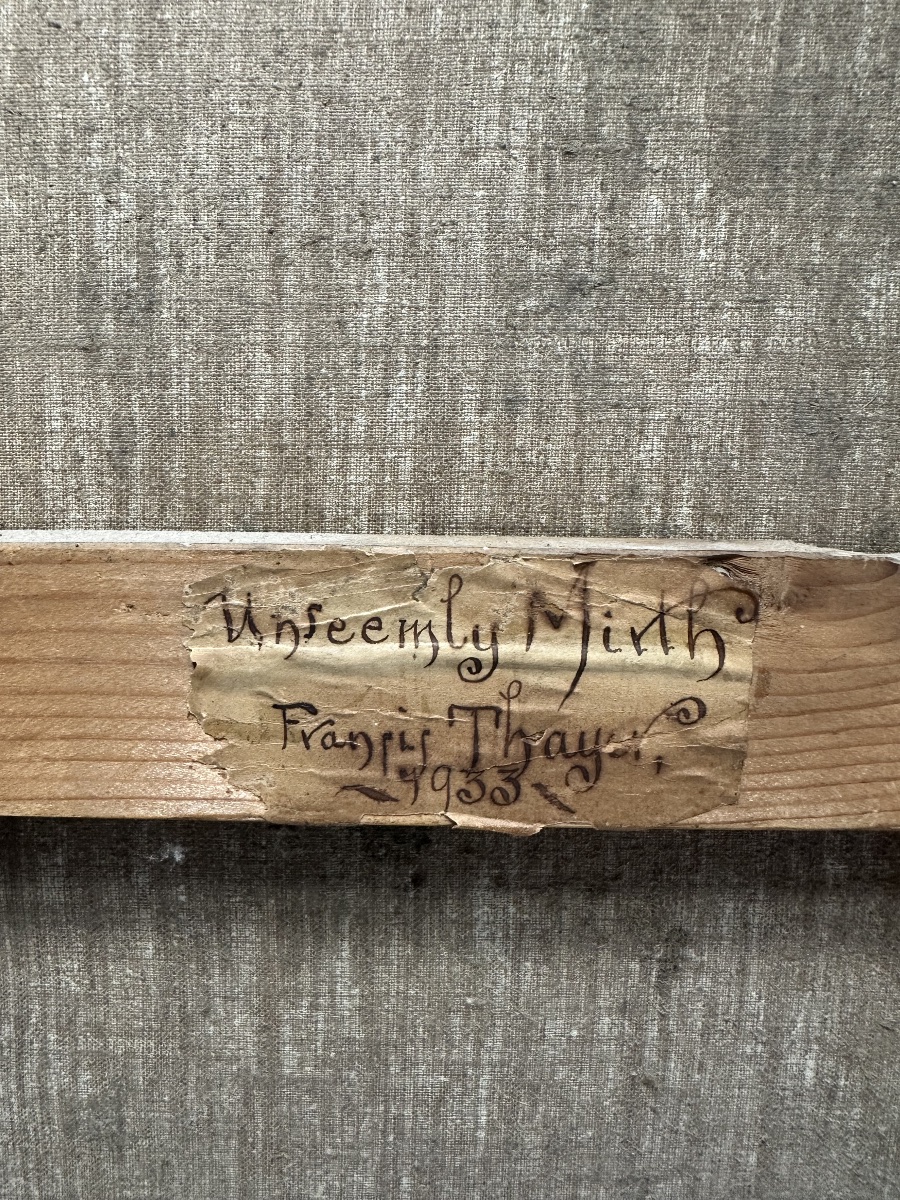
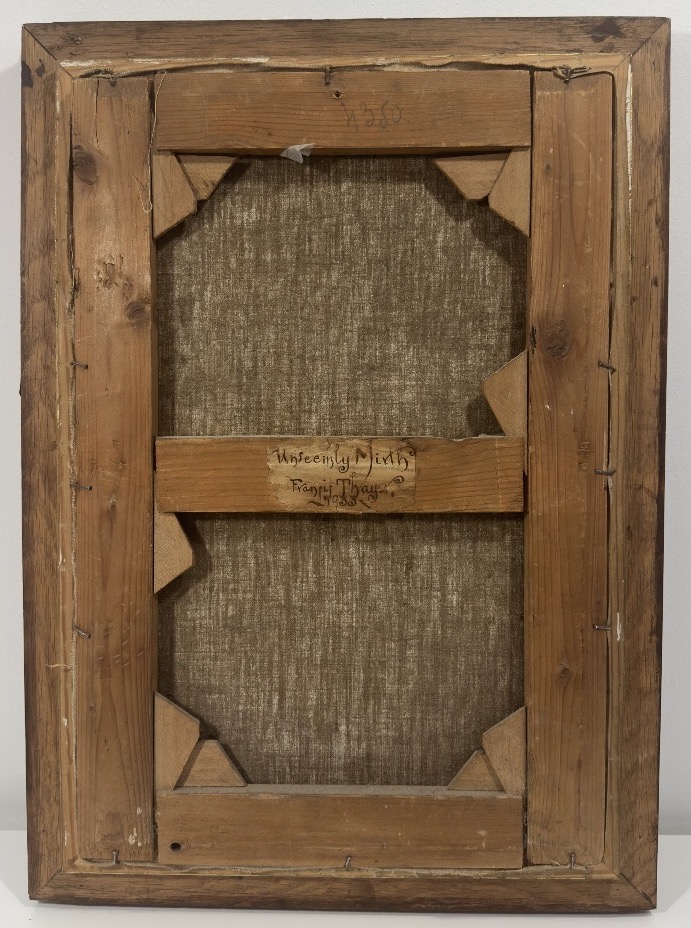
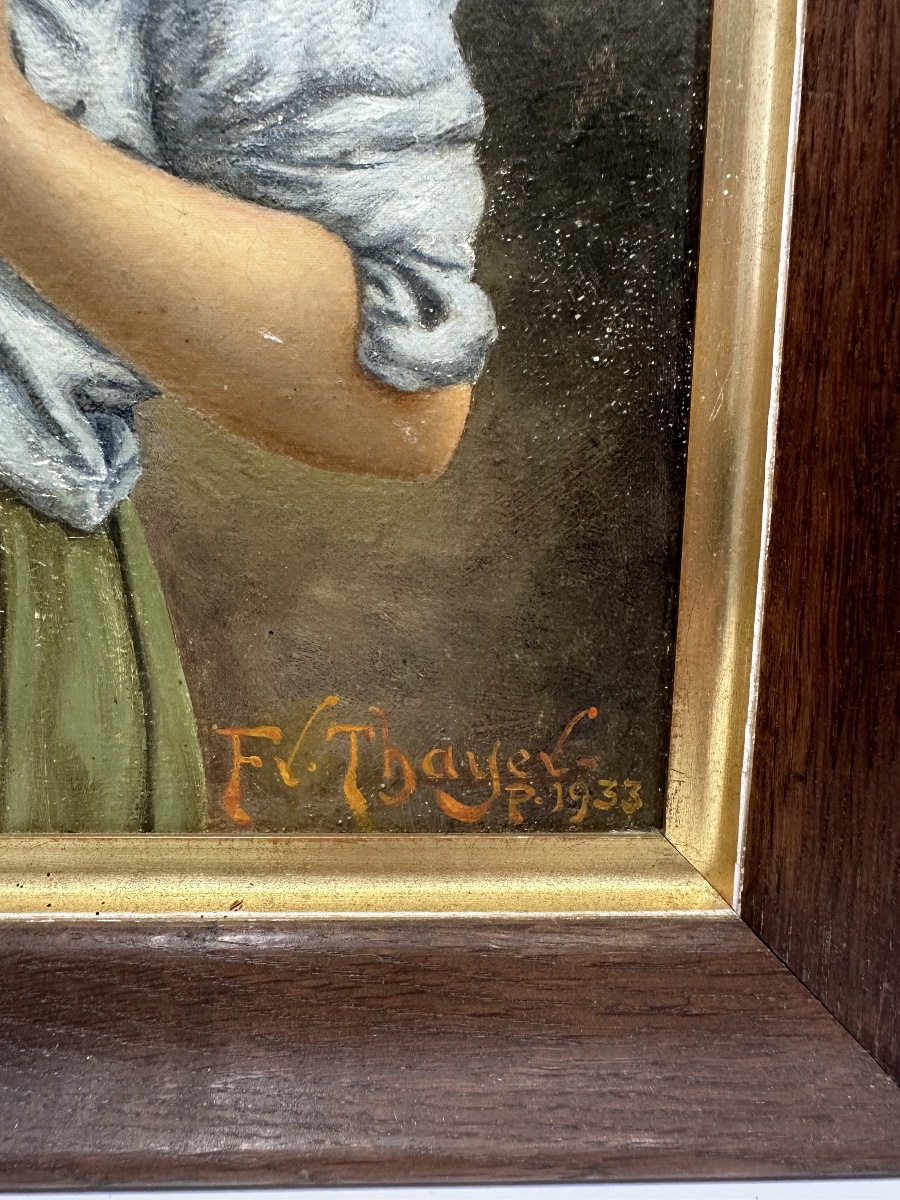
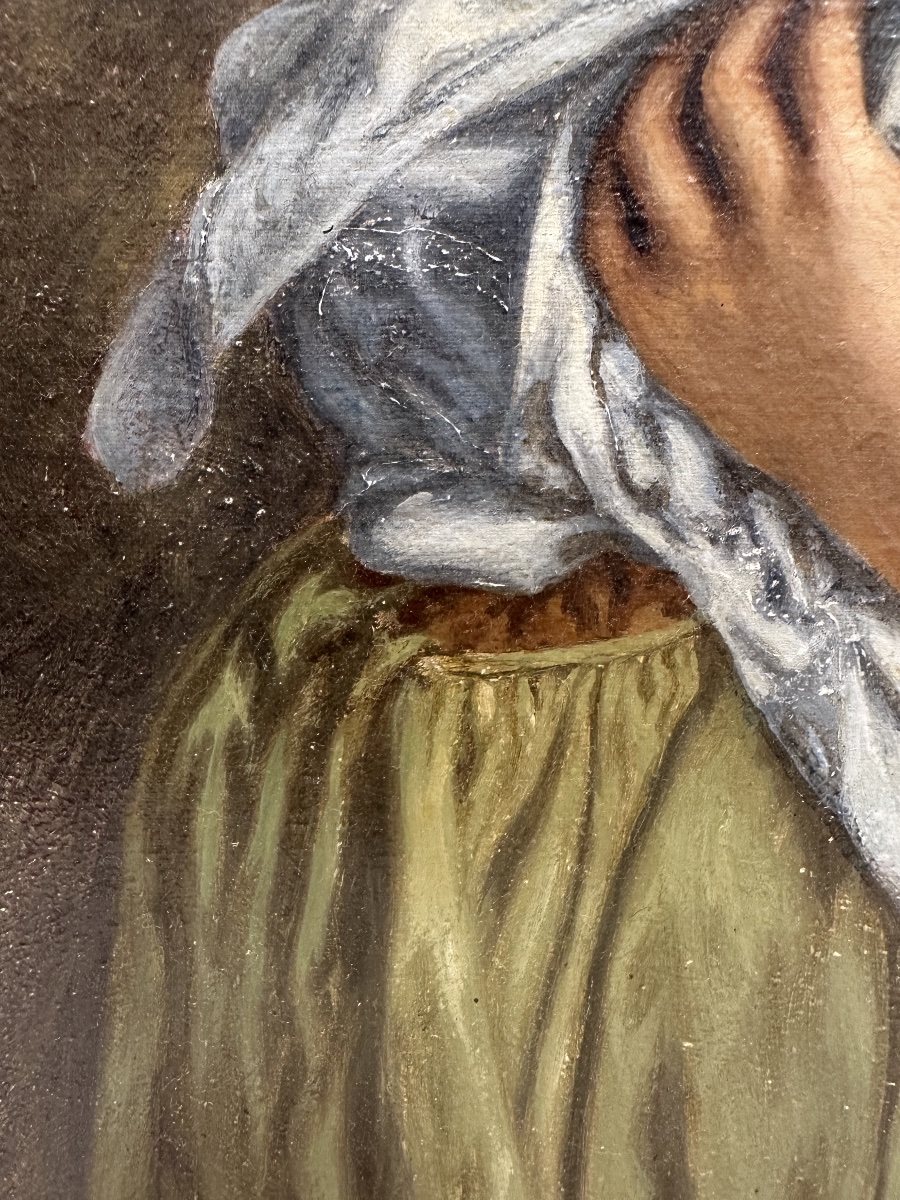
Oil on canvas, signed and dated "F. Thayer, P. 1933" lower right, dimensions not provided. Brown moulded wood frame, gilded on the inner hollow. Old label affixed to the back of the stretcher repeating the title, name and date.
Context of the work
The original print, made by the English sisters Dorothy (1888-1976) and Reta Morter (1892-1977), known collectively as "Les Mesdames Morter," belongs to a pivotal moment for the condition of women in Britain. Photographers and actresses in their own staged compositions, the two sisters ran a recognised studio during the 1920s, at a time when photography of women remained largely shaped by a male gaze that reduced the sitter to an object of contemplation rather than a subject expressing her own inner life. Unseemly Mirth, made circa 1921-1922, only a few years after partial women's suffrage was granted in Britain (1918), instead shows a woman surrendering without restraint to her own emotion, head thrown back, clothing and hair undone, in total abandon before the viewer's gaze. The work's very title, drawn from a biblical phrase denoting a gaiety deemed inappropriate, underlines how far the free, physical expression of female pleasure remained, within the social codes of the time, perceived as transgressive. Largely forgotten by the classical history of photography, the Morter sisters have been recently rediscovered thanks to the Solander Collection, whose purpose is precisely to restore visibility to women artists and underrepresented figures of the medium.
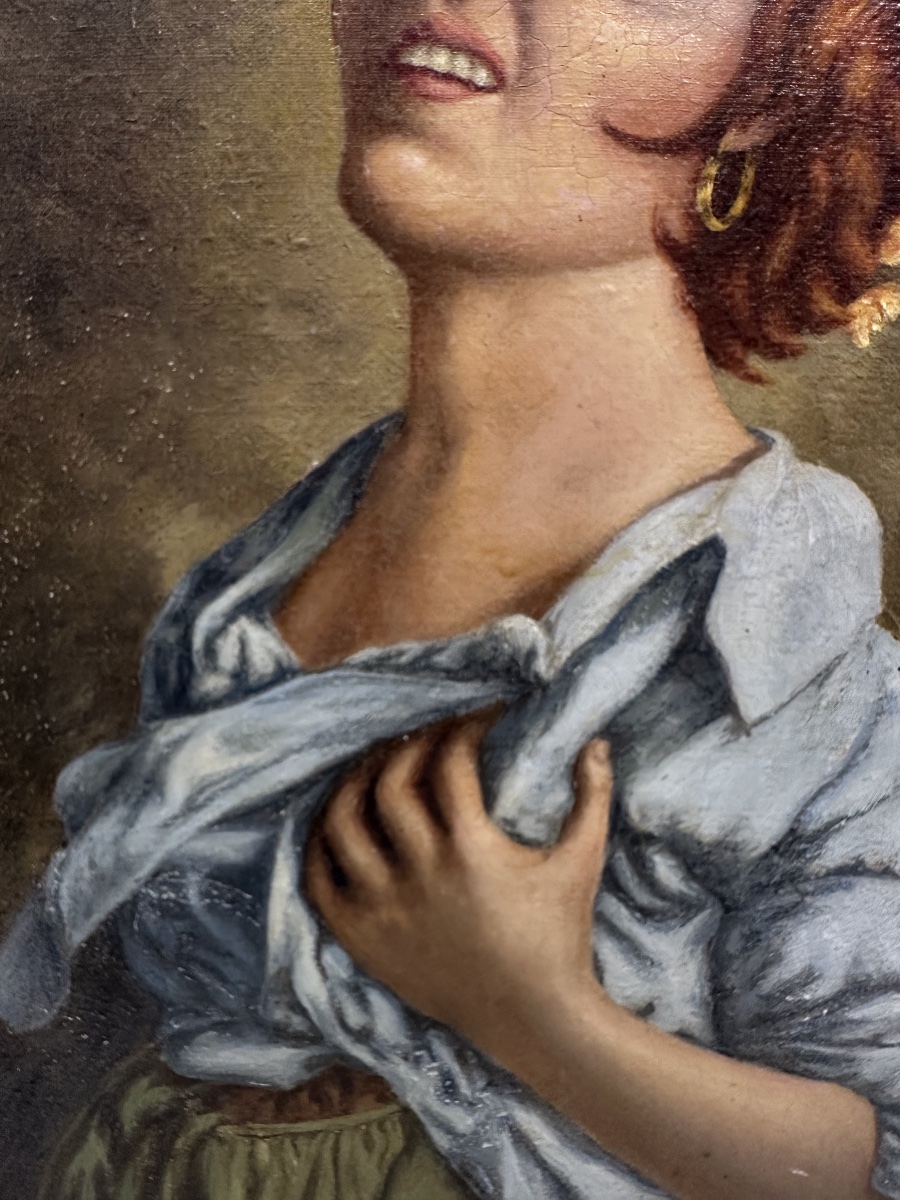
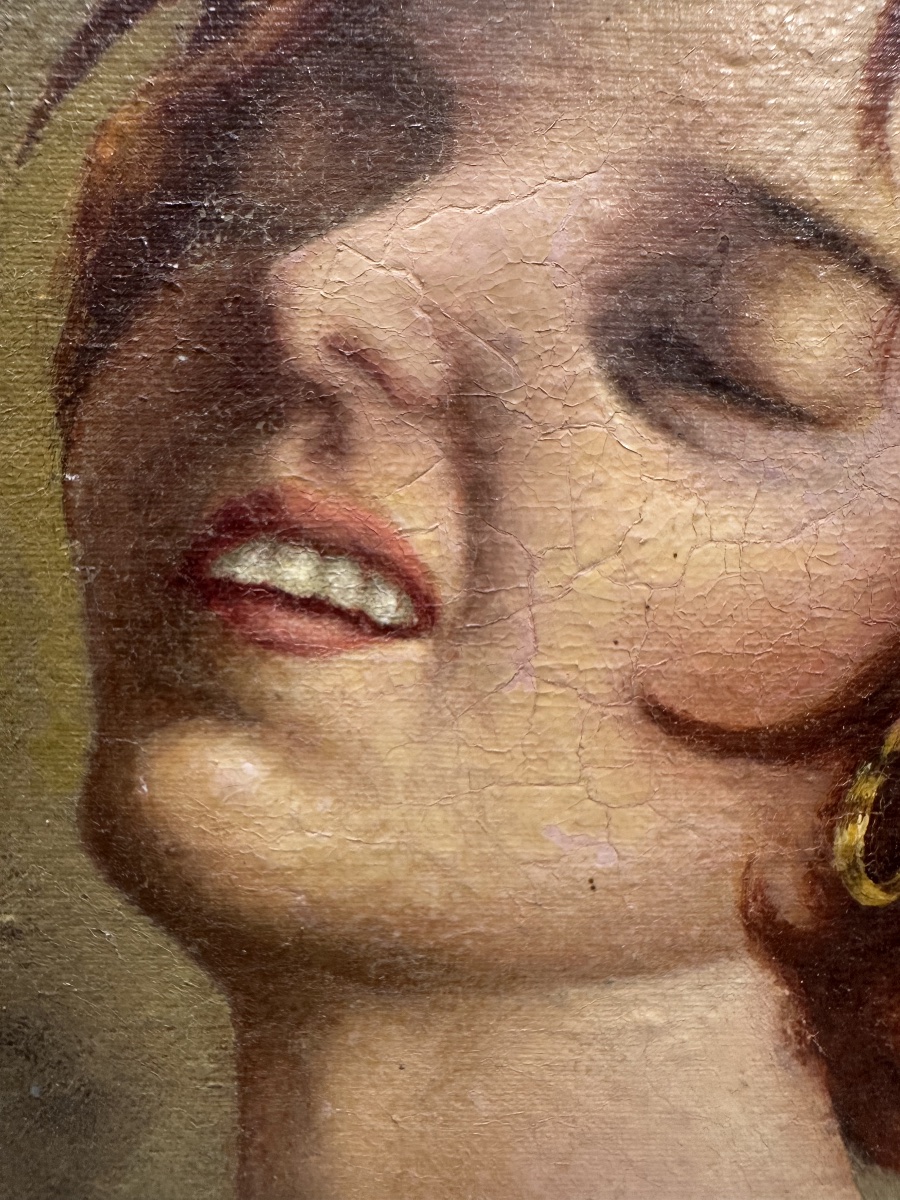
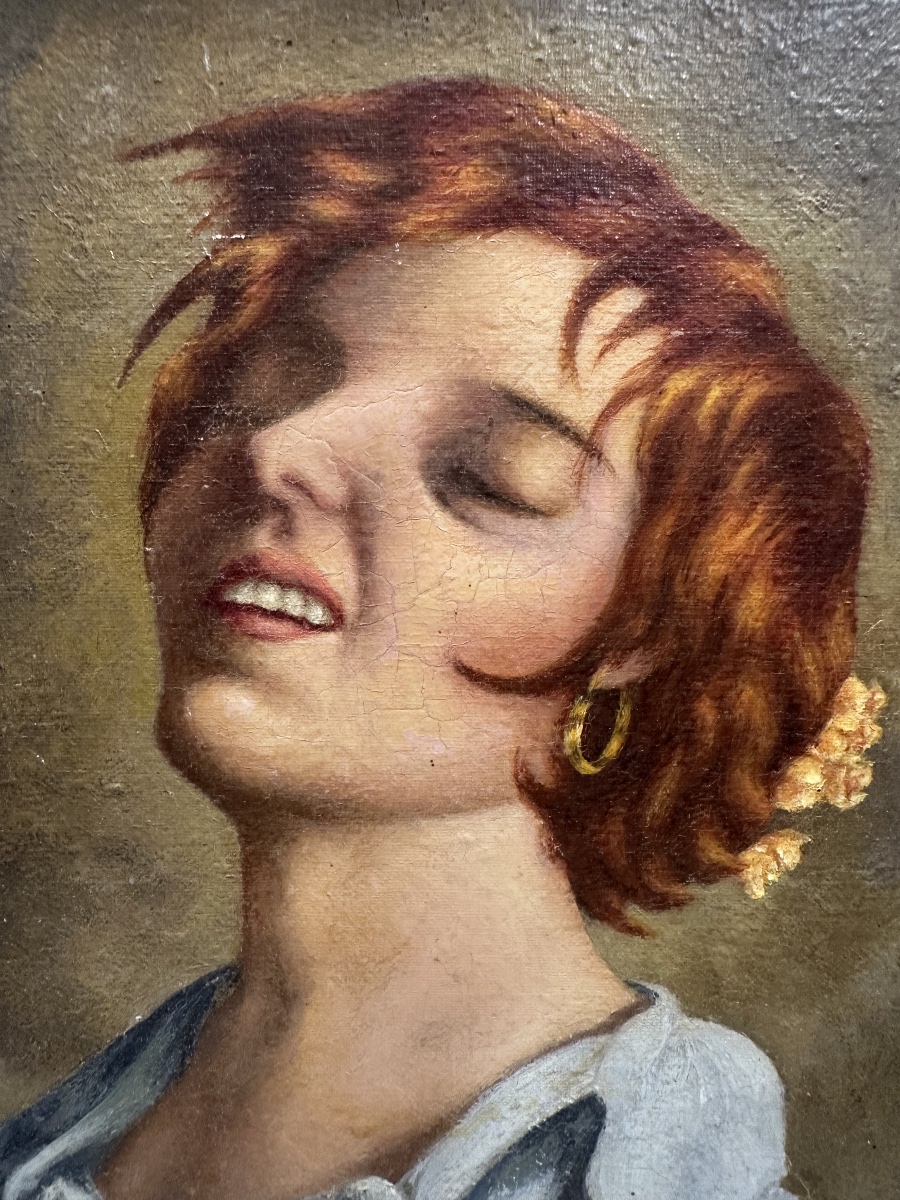
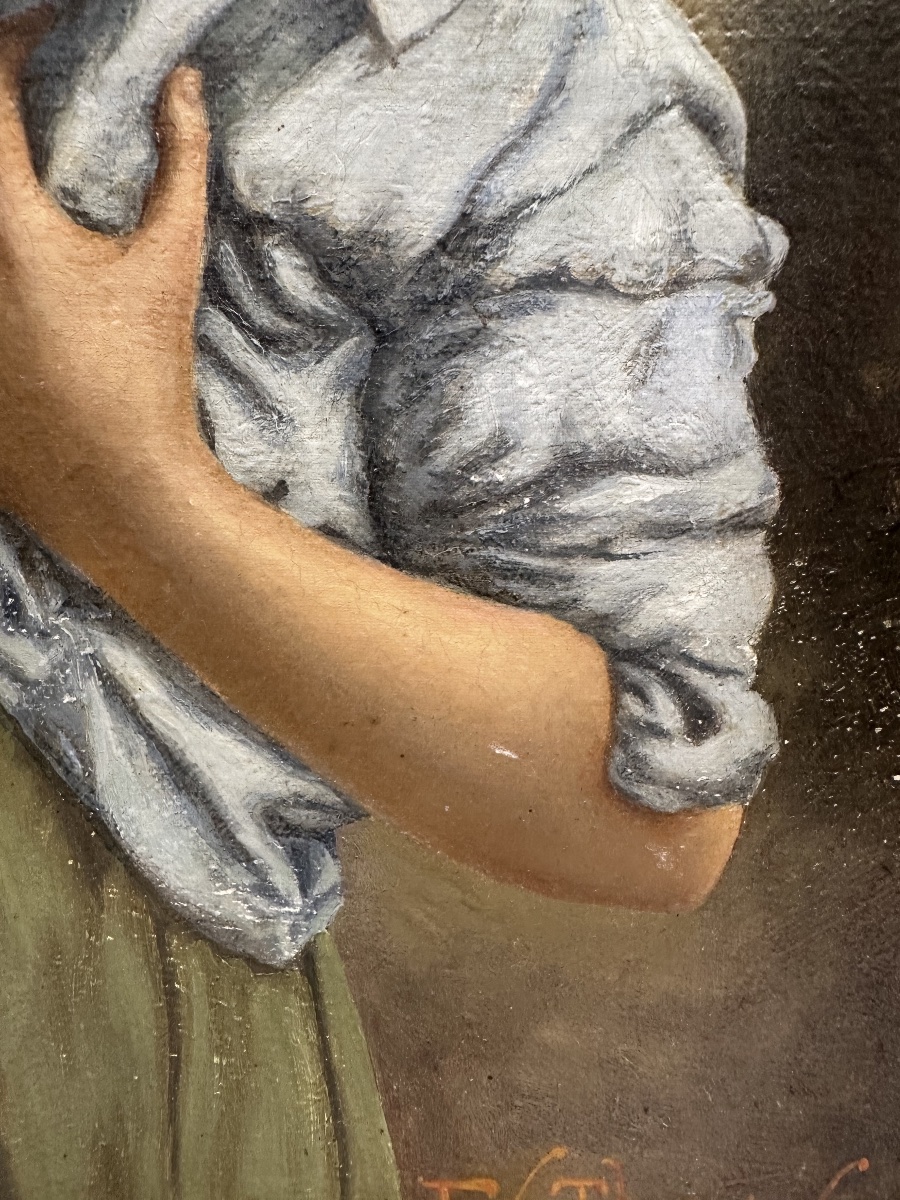
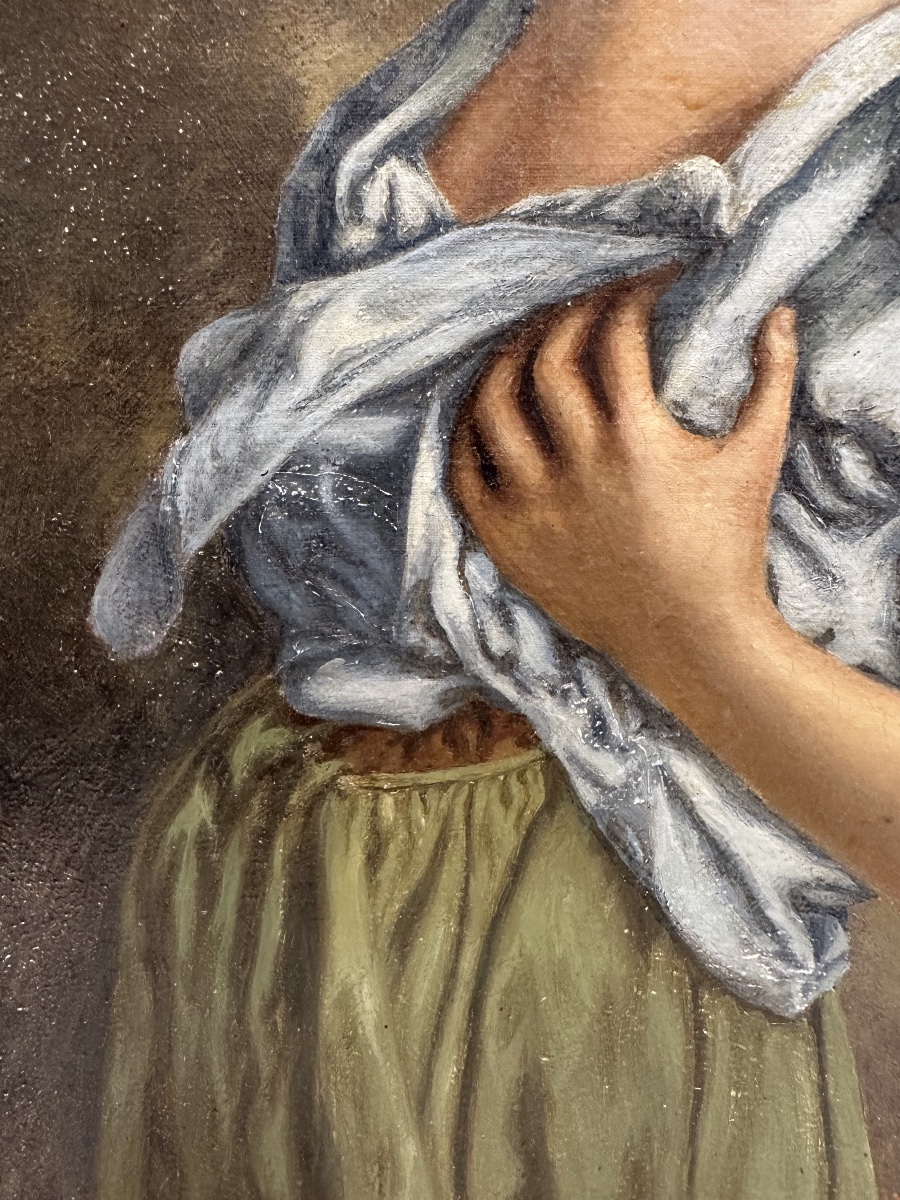
The painting clearly takes up the composition of the photographic print Unseemly Mirth, made circa 1921-1922 by the English sisters Dorothy and Reta Morter (Les Mesdames Morter), now held in the Solander Collection: the same pose with the head thrown back and eyes closed, the same hand pressed against the fabric at chest height, the same tightly framed half-length view. The painter departs from it in the coloured treatment, a different hairstyle and a different garment, but the shared title and the overall construction of the scene leave little doubt as to a direct link between the two works.
Francis Thayer (20. Jahrhundert)
Unseemly Mirth
Öl auf Leinwand, unten rechts signiert und datiert "F. Thayer, P. 1933", Maße nicht mitgeteilt. Brauner Holzrahmen mit profilierter Kehle, innen vergoldet. Altes, auf der Rückseite des Keilrahmens angebrachtes Etikett mit Titel, Name und Datum.
Das Gemälde übernimmt deutlich erkennbar die Komposition des um 1921-1922 entstandenen fotografischen Abzugs Unseemly Mirth der englischen Schwestern Dorothy und Reta Morter (Les Mesdames Morter), heute in der Solander Collection: dieselbe Pose mit zurückgeworfenem Kopf und geschlossenen Augen, dieselbe an die Brust gepresste Hand, derselbe eng gefasste Brustbildausschnitt. Der Maler weicht in der farbigen Ausführung, einer anderen Frisur und einem anderen Kleidungsstück davon ab, doch der identische Titel und der Gesamtaufbau der Szene lassen kaum Zweifel an einer direkten Verbindung zwischen beiden Werken.
Francis Thayer (XX secolo)
Unseemly Mirth
Olio su tela, firmato e datato "F. Thayer, P. 1933" in basso a destra, misure non comunicate. Cornice in legno bruno modanato, dorata sulla gola interna. Etichetta antica incollata sul retro del telaio con titolo, nome e data.
Il dipinto riprende in modo evidente la composizione della stampa fotografica Unseemly Mirth, realizzata intorno al 1921-1922 dalle sorelle inglesi Dorothy e Reta Morter (Les Mesdames Morter), oggi conservata nella Solander Collection: stessa posa con il capo rovesciato all'indietro e gli occhi chiusi, stessa mano premuta contro il tessuto all'altezza del petto, stessa inquadratura ravvicinata a mezzo busto. Il pittore se ne discosta nel trattamento a colori, in un'acconciatura diversa e in un abito differente, ma il titolo identico e l'impianto generale della scena non lasciano molti dubbi su un legame diretto tra le due opere.
Kontext des fotografischen Ausgangswerks
Der Originalabzug der englischen Schwestern Dorothy (1888-1976) und Reta Morter (1892-1977), gemeinsam als "Les Mesdames Morter" bekannt, gehört einem entscheidenden Moment für die Stellung der Frau in Großbritannien an. Als Fotografinnen und zugleich Darstellerinnen ihrer eigenen Inszenierungen leiteten die beiden Schwestern in den 1920er Jahren ein anerkanntes Studio, zu einer Zeit, in der die Fotografie von Frauen noch weitgehend von einem männlichen Blick geprägt war, der das Modell eher zum Betrachtungsobjekt als zum Ausdruck eines eigenen Innenlebens machte. Unseemly Mirth, entstanden um 1921-1922, nur wenige Jahre nach der teilweisen Einführung des Frauenwahlrechts in Großbritannien (1918), zeigt hingegen eine Frau, die sich hemmungslos ihrer eigenen Emotion hingibt, mit zurückgeworfenem Kopf, gelöster Kleidung und Frisur, in völliger Hingabe vor dem Blick des Betrachters. Schon der Titel des Werks, einer biblischen Wendung für eine als unangemessen empfundene Heiterkeit entlehnt, verdeutlicht, wie sehr der freie, körperliche Ausdruck weiblicher Freude nach den gesellschaftlichen Normen der Zeit noch als Übertretung galt. Von der klassischen Fotografiegeschichte weitgehend vergessen, wurden die Schwestern Morter erst kürzlich durch die Solander Collection wiederentdeckt, deren Anliegen es ist, Künstlerinnen und unterrepräsentierten Figuren dieses Mediums wieder Sichtbarkeit zu verschaffen.
Contesto dell'opera fotografica originaria
La stampa originale, realizzata dalle sorelle inglesi Dorothy (1888-1976) e Reta Morter (1892-1977), note collettivamente come "Les Mesdames Morter", appartiene a un momento cruciale per la condizione femminile britannica. Fotografe e al tempo stesso interpreti delle proprie messe in scena, le due sorelle diressero negli anni Venti uno studio affermato, in un'epoca in cui la fotografia femminile restava largamente plasmata da uno sguardo maschile che riduceva il soggetto a oggetto di contemplazione anziché a espressione della propria interiorità. Unseemly Mirth, realizzata intorno al 1921-1922, appena pochi anni dopo l'ottenimento del voto parziale per le donne britanniche (1918), mostra invece una donna abbandonata senza riserve alla propria emozione, il capo rovesciato all'indietro, abiti e acconciatura disfatti, in totale resa allo sguardo dello spettatore. Il titolo stesso dell'opera, tratto da un'espressione biblica che designa un'allegria ritenuta sconveniente, sottolinea quanto la libera espressione fisica del piacere femminile restasse, secondo i codici sociali dell'epoca, percepita come trasgressiva. Largamente dimenticate dalla storia classica della fotografia, le sorelle Morter sono state riscoperte solo di recente grazie alla Solander Collection, il cui scopo è proprio quello di restituire visibilità alle artiste donne e alle figure sottorappresentate di questo mezzo espressivo.
Period: 20th century
Style: Other Style
Condition: Perfect condition
Material: Oil painting
Reference (ID): 1794174
Availability: In stock