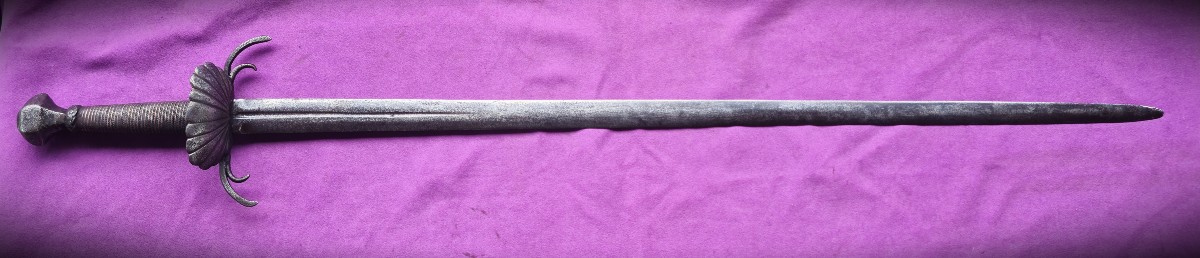
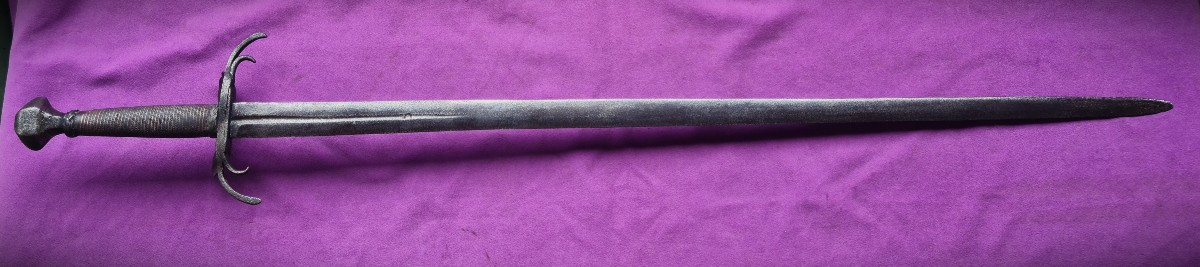


Crab Claw Sword Germany 16th Century
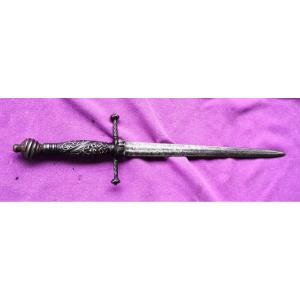
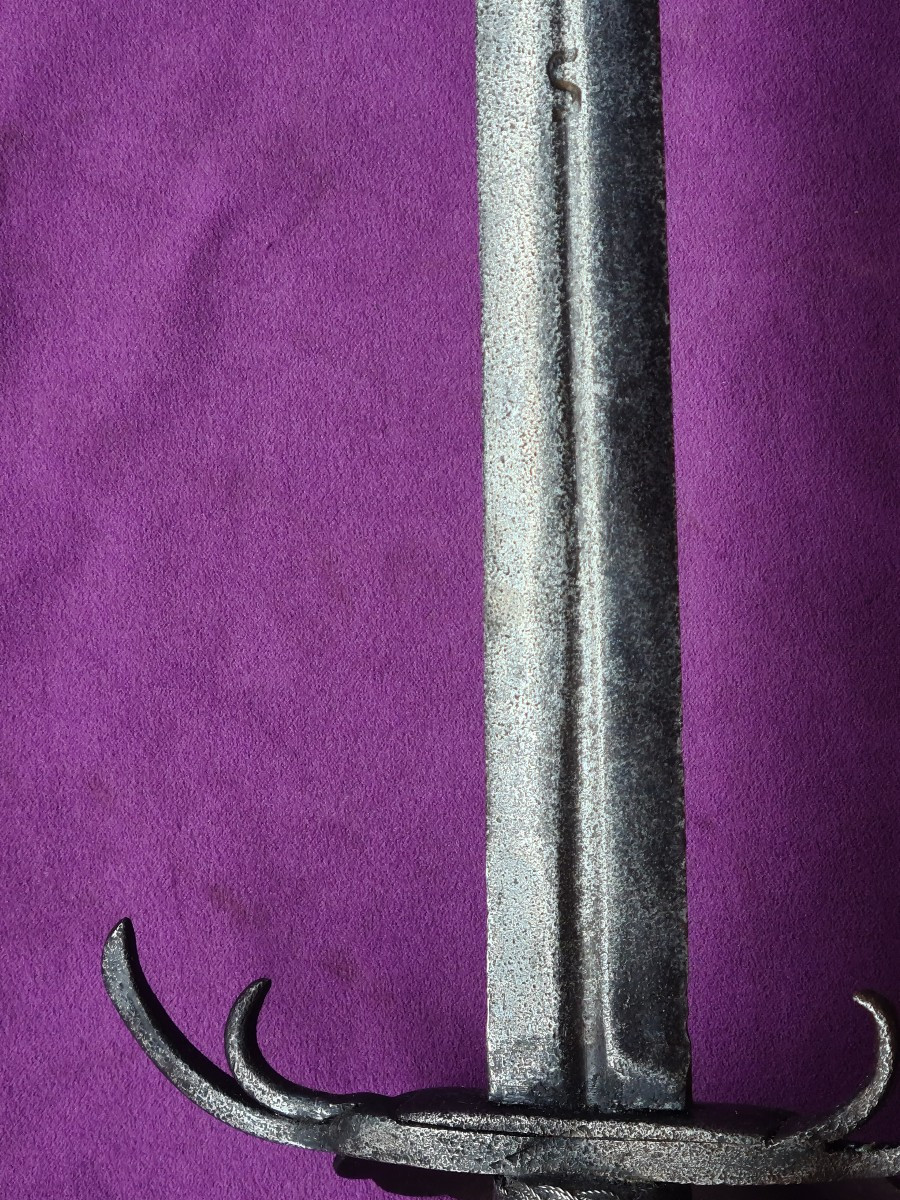
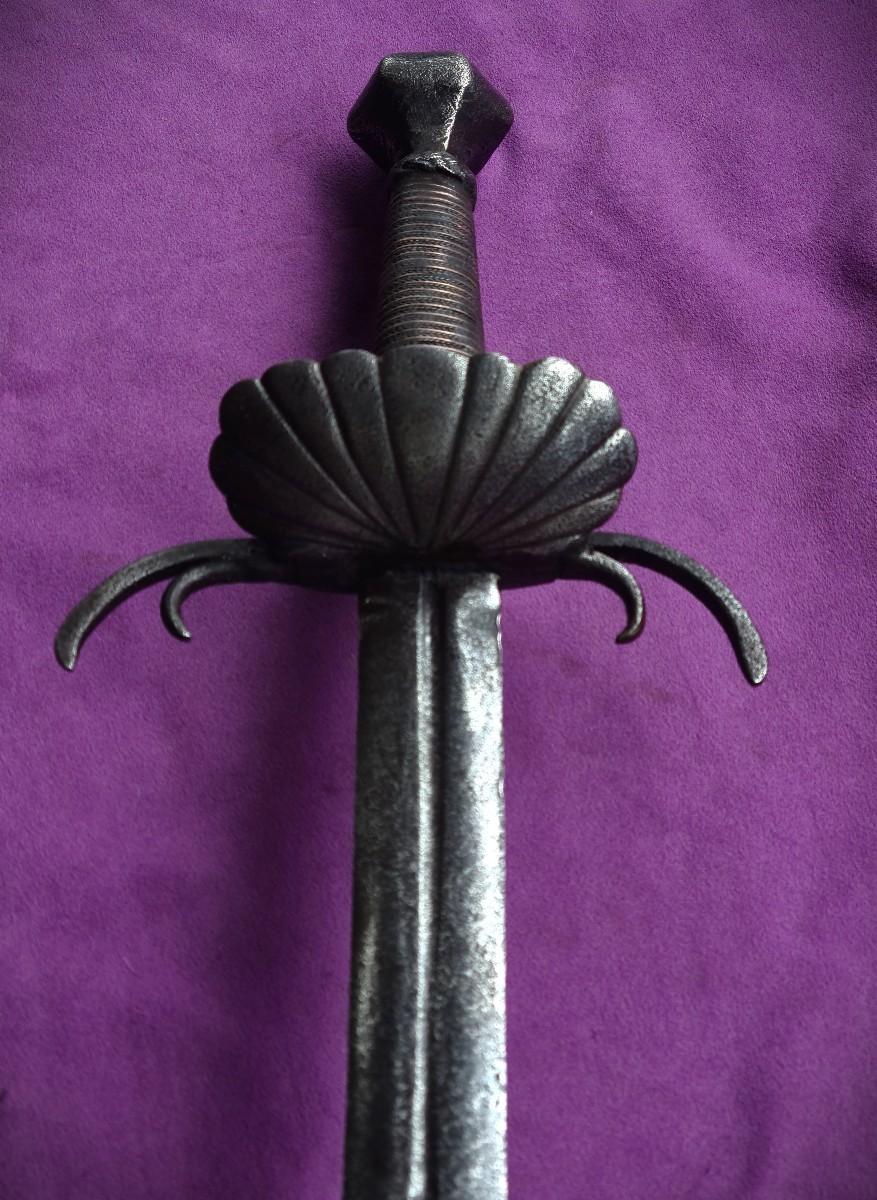
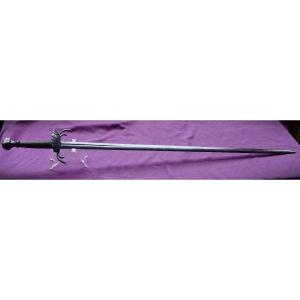
This sword is known as a "crab claw" because of the particular shape of its quillons. It dates from the 16th century and shows a more "serious" or "military" aspect than t e models from t e17th century.
althought these swords are generally from italian origin, here the Germanic origins can be attributed in relation with the style of the blade, the punchmark, and the style of the hilt , including the type of wire binding used.
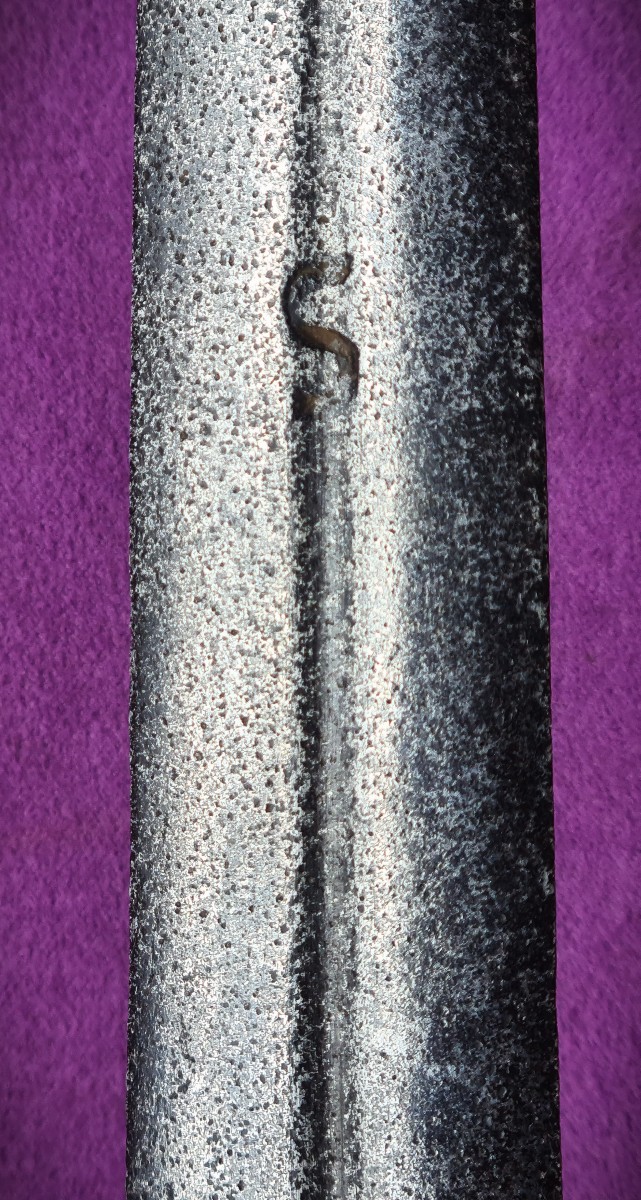
The blade bears a deeply engraved letter S on each side. This mark can be found on a number of high-qualityquality blades from the 16th century, including swords made for Charles V. Authors differ as to whether the S is attributable to Clemens Tesche, Salvador de Avila or others swormakers...
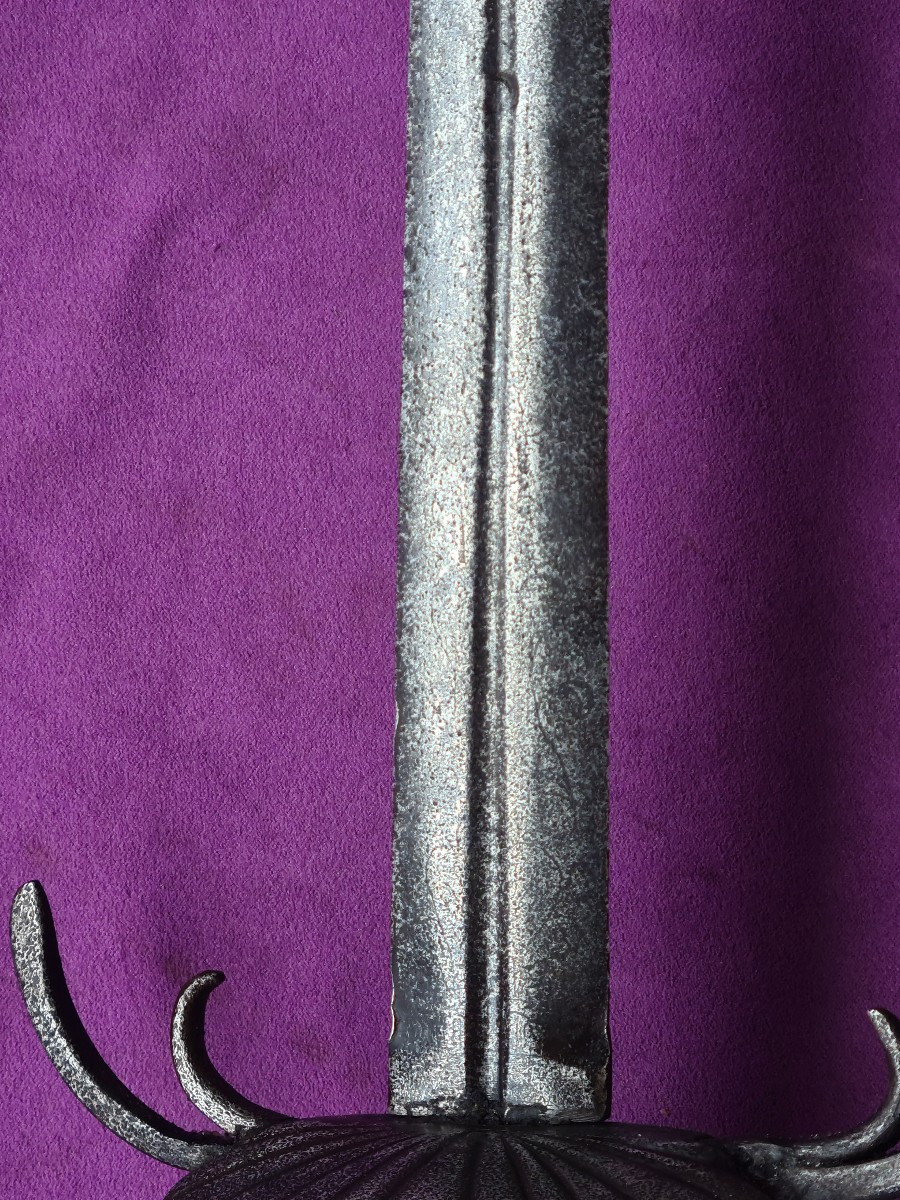
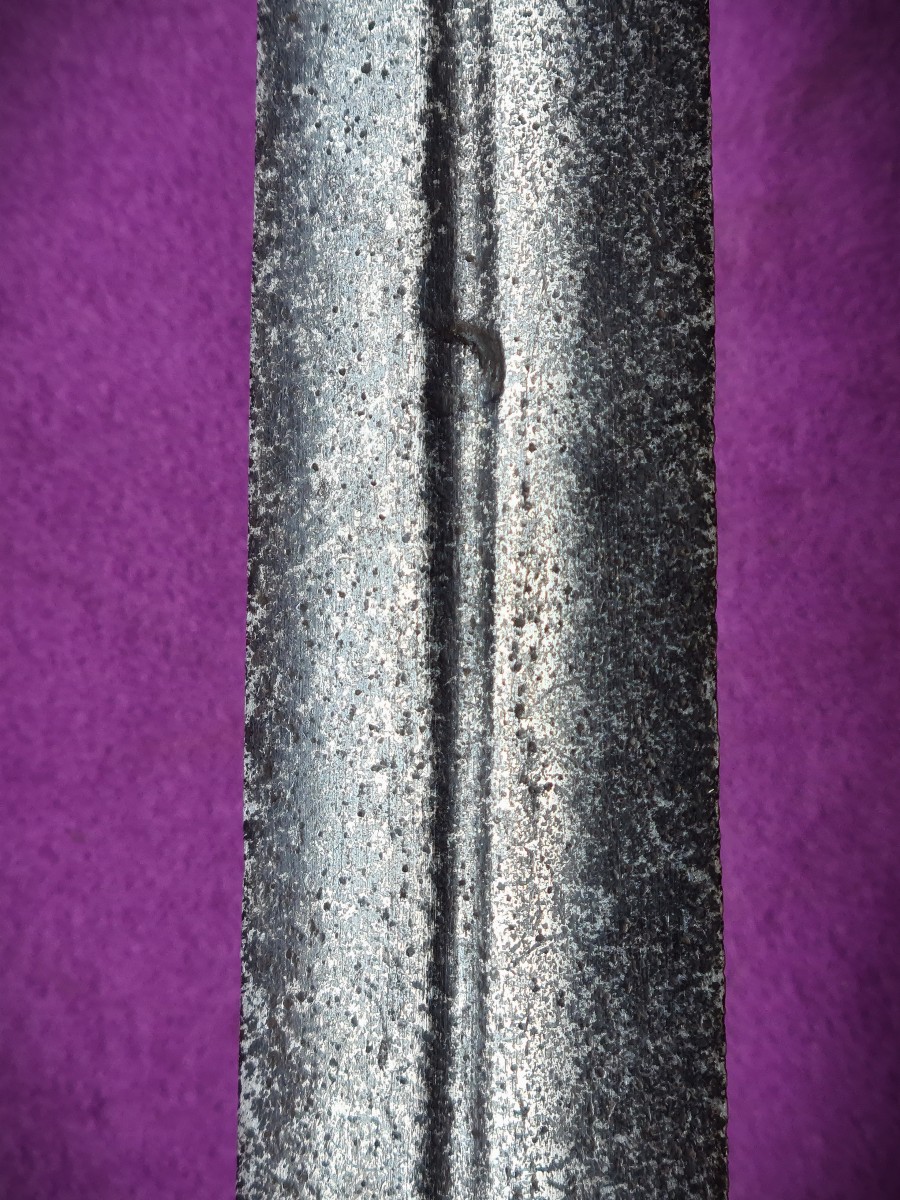
BLADE : After a very short ricasso, it takes a lenticular cross-section, with a central fuller over the first 21 centimetres aft r the ricasso. About fifteen centimeters from the ricasso, on each side, a swordmaker's mark = a letter "S ".
On the outer face, small remnants of decorative engravings which appear to feature vegetal motifs.
Blade length= 84.2 cm, width at ricasso = 3.2 cm,thickness at ricasso = 5.5 mm. Balance point11 cm from the cross guard, corresponding to a 2-handed use,confirmed by the length of the grip and the shape of the pommel.
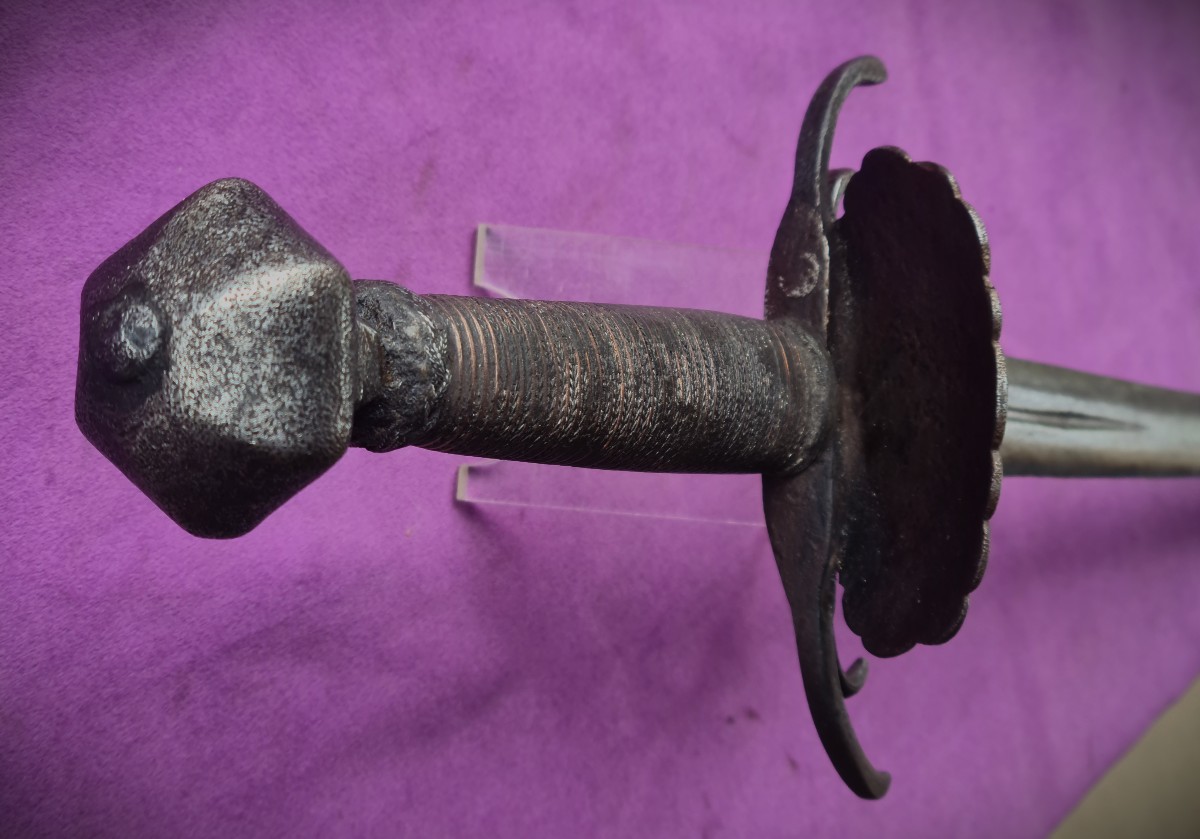
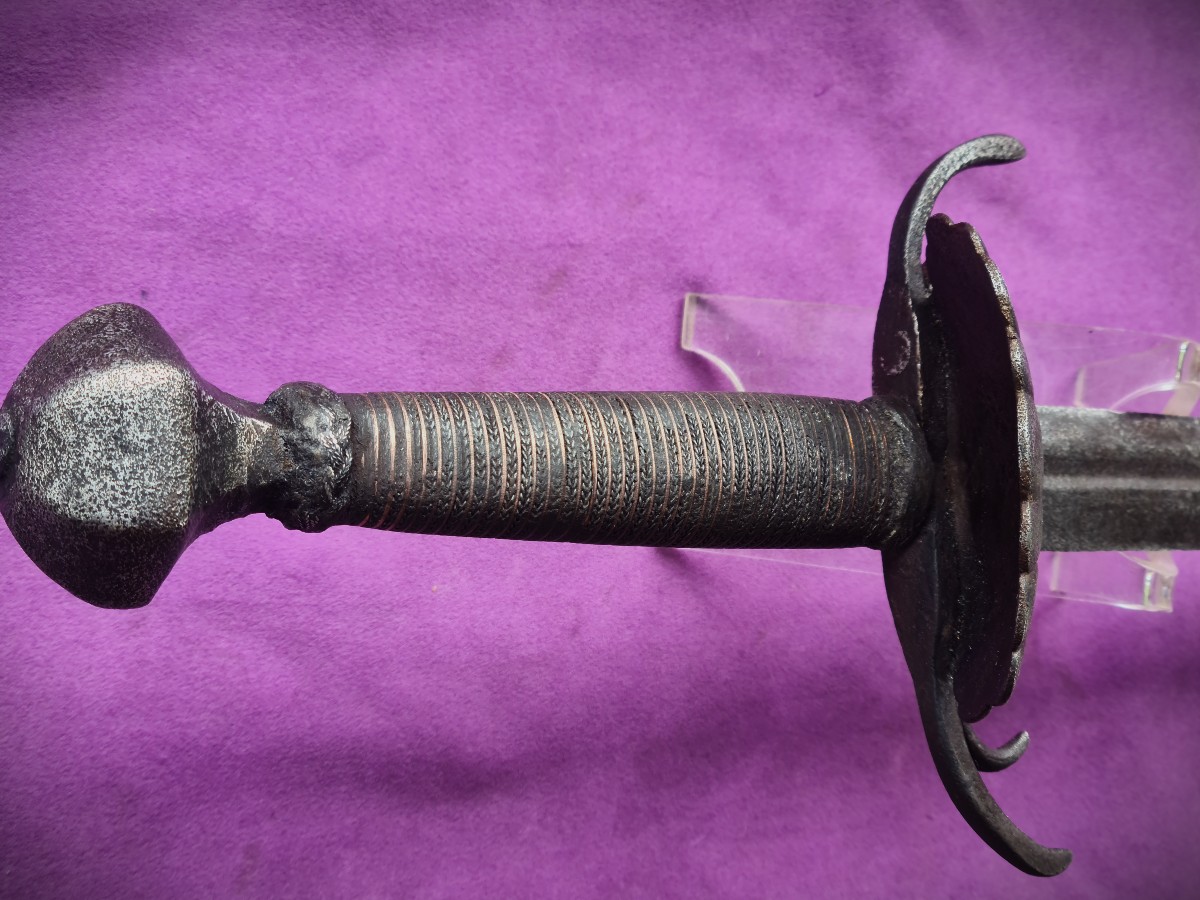
CROSS GUARD : It features the double arched quillons typical of this model. The protective shell is riveted on these quillons.
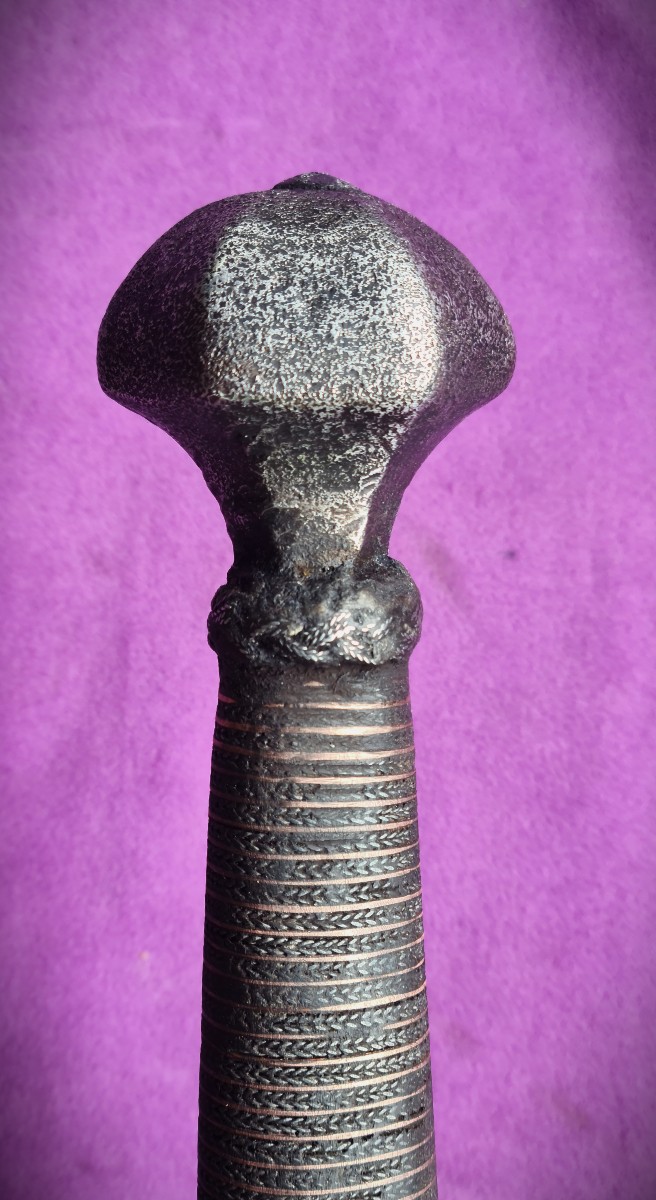
POMMEL: this is a large, baluster-shaped pommel with 6 faces. The tang of th eblade is riveted directly to this pommel.
GRIP : IT is covered with a double wire binding of twisted iron alternating with a thicker copper wire binding.This type of work is typical of Northern Europe (Germany, Austria, Netherlands). The "Turk's heads" ferrules are present and in good condition
To sum up, this is a fine-looking sword in pretty good condition that deserves its place in acollection of medieval and Renaisance swords.
Ref A-2634
Shipping costs France 30€, Europe 40€.
althought these swords are generally from italian origin, here the Germanic origins can be attributed in relation with the style of the blade, the punchmark, and the style of the hilt , including the type of wire binding used.
The blade bears a deeply engraved letter S on each side. This mark can be found on a number of high-qualityquality blades from the 16th century, including swords made for Charles V. Authors differ as to whether the S is attributable to Clemens Tesche, Salvador de Avila or others swormakers...
BLADE : After a very short ricasso, it takes a lenticular cross-section, with a central fuller over the first 21 centimetres aft r the ricasso. About fifteen centimeters from the ricasso, on each side, a swordmaker's mark = a letter "S ".
On the outer face, small remnants of decorative engravings which appear to feature vegetal motifs.
Blade length= 84.2 cm, width at ricasso = 3.2 cm,thickness at ricasso = 5.5 mm. Balance point11 cm from the cross guard, corresponding to a 2-handed use,confirmed by the length of the grip and the shape of the pommel.
CROSS GUARD : It features the double arched quillons typical of this model. The protective shell is riveted on these quillons.
POMMEL: this is a large, baluster-shaped pommel with 6 faces. The tang of th eblade is riveted directly to this pommel.
GRIP : IT is covered with a double wire binding of twisted iron alternating with a thicker copper wire binding.This type of work is typical of Northern Europe (Germany, Austria, Netherlands). The "Turk's heads" ferrules are present and in good condition
To sum up, this is a fine-looking sword in pretty good condition that deserves its place in acollection of medieval and Renaisance swords.
Ref A-2634
Shipping costs France 30€, Europe 40€.
1 850 €
Period: 16th century
Style: Renaissance, Louis 13th
Condition: Good condition
Material: Other
Length: 103 cm
Width: aux quillons 15.3 cm
Reference (ID): 1754158
Availability: In stock
Print