



Edo Period Wakizashi, Interesting Mount, Unusual Blade Shape
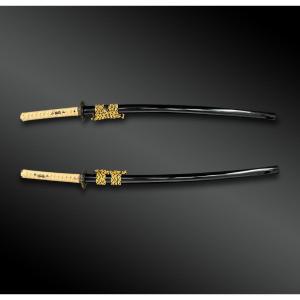
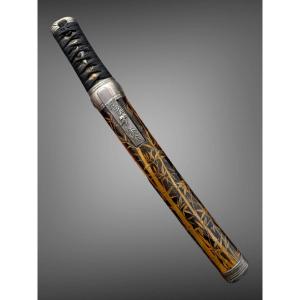
This Wakizashi is a short Japanese sword, the blade and hilt of which date from the early Edo period (1600-1868).
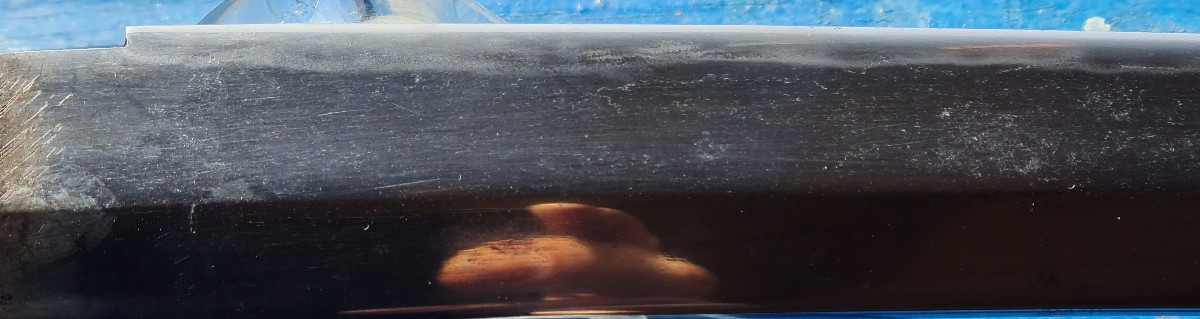
BLADE: It is a Naginata naoshi blade. In very good overall condition. On the mune (back of the blade), 5 cm from the tip, there is a very small mark from a blow by another blade, indicating that this sword has seen combat.
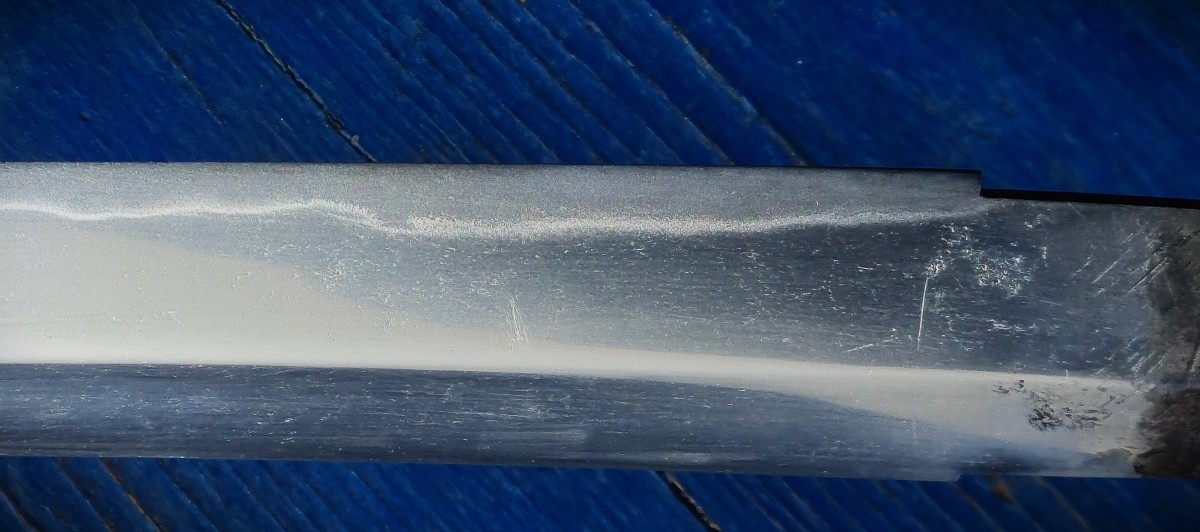
The temper line is Notare and Gunome Midare (irregular wavy). The temperline at the tip is very clean, ko Maru with Midare komi facing Ura. The hada (grain of the steel) is Itame in the Ji. These characteristics strongly suggest the work of the Teru Hiro school of Aki Prefecture, which continued the style of the Mino tradition schools.
NB: Japanese blades are always very difficult to photograph, and the photos do not do justice to this blade, which is in better condition in reality than the images suggest. Since definitively attributing a blade to a specific school or even a particular swordsmith is a highly specialized discipline in Japan, I will refrain from giving more than an indication.
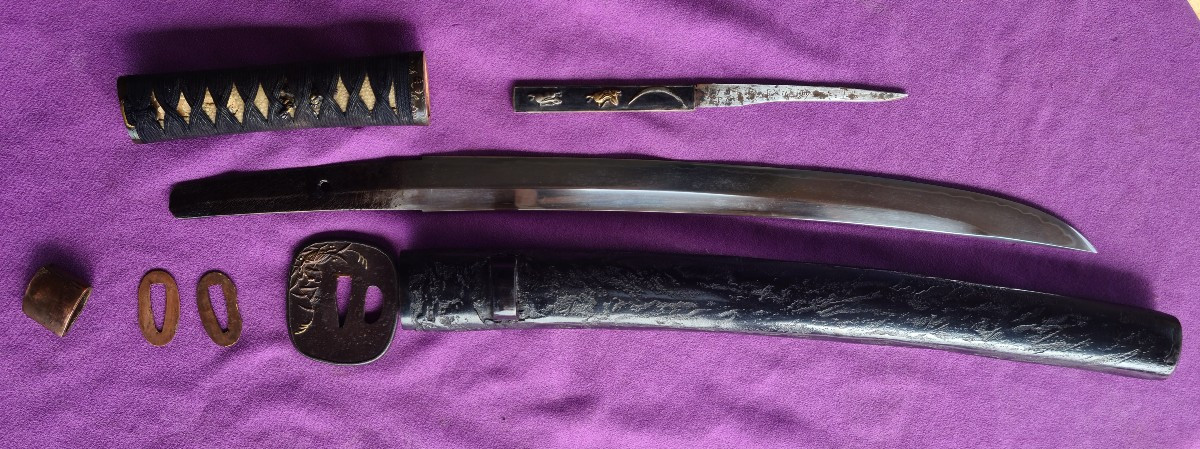
Unsigned Nakago, yasuri mei (file marks) in Suji Kai, single mekugi ana (hole), Nagasa = 35.6 cm, moto haba = 29.3 mm, moto kasane = 7.4 mm, saki haba = 22.3 mm, saki kasane = 5.6 mm. The habaki is made of red copper.
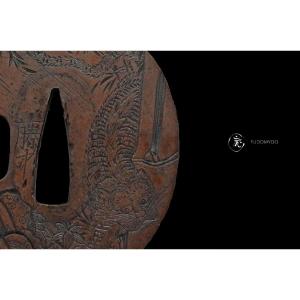
TSUBA : This is a high-quality tsuba, in the Mokko maru gata shape, with an inlaid decoration depicting a praying mantis amidst grasses. On the other side, grasses are inlaid.
FUCHI and KASHIRA are made of alloy with very fine inlays on the theme of Raiden, the god of thunder: On the fuchi, a thunder drum and representations of lightning and clouds, and on the kashira, Raiden emerging from a cloud surrounded by lightning and descending a grappling hook
TSUKA : Original antique braiding, four strands in a "thread-by-thread" style. Menuki in shakudo with gold inlays depicting Shishi, or Buddhist lions.
SCABBARD : In good condition, it is covered with a raised lacquer finish known as "tree bark" (possibly a later restoration???). Koi-guchi (scabbard opening) and kojiri (end) in black horn.
KOZUKA : In copper and brass, decorated with rabbits frolicking under the moon. The kozuka blade is of modest quality and bears an apocryphal signature.
The whole piece is pleasing, with particularly fine mounting elements.
Ref D-2574 Shipping costs France €20, Europe €30
BLADE: It is a Naginata naoshi blade. In very good overall condition. On the mune (back of the blade), 5 cm from the tip, there is a very small mark from a blow by another blade, indicating that this sword has seen combat.
The temper line is Notare and Gunome Midare (irregular wavy). The temperline at the tip is very clean, ko Maru with Midare komi facing Ura. The hada (grain of the steel) is Itame in the Ji. These characteristics strongly suggest the work of the Teru Hiro school of Aki Prefecture, which continued the style of the Mino tradition schools.
NB: Japanese blades are always very difficult to photograph, and the photos do not do justice to this blade, which is in better condition in reality than the images suggest. Since definitively attributing a blade to a specific school or even a particular swordsmith is a highly specialized discipline in Japan, I will refrain from giving more than an indication.
Unsigned Nakago, yasuri mei (file marks) in Suji Kai, single mekugi ana (hole), Nagasa = 35.6 cm, moto haba = 29.3 mm, moto kasane = 7.4 mm, saki haba = 22.3 mm, saki kasane = 5.6 mm. The habaki is made of red copper.
TSUBA : This is a high-quality tsuba, in the Mokko maru gata shape, with an inlaid decoration depicting a praying mantis amidst grasses. On the other side, grasses are inlaid.
FUCHI and KASHIRA are made of alloy with very fine inlays on the theme of Raiden, the god of thunder: On the fuchi, a thunder drum and representations of lightning and clouds, and on the kashira, Raiden emerging from a cloud surrounded by lightning and descending a grappling hook
TSUKA : Original antique braiding, four strands in a "thread-by-thread" style. Menuki in shakudo with gold inlays depicting Shishi, or Buddhist lions.
SCABBARD : In good condition, it is covered with a raised lacquer finish known as "tree bark" (possibly a later restoration???). Koi-guchi (scabbard opening) and kojiri (end) in black horn.
KOZUKA : In copper and brass, decorated with rabbits frolicking under the moon. The kozuka blade is of modest quality and bears an apocryphal signature.
The whole piece is pleasing, with particularly fine mounting elements.
Ref D-2574 Shipping costs France €20, Europe €30
1 650 €
Period: 17th century
Style: Asian art
Condition: Excellent condition
Length: 56 cm
Reference (ID): 1718371
Availability: In stock
Print