THIS OBJECT WAS SOLD
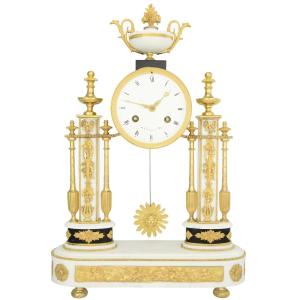
Clock Facade Of A Temple Watchmaker : Thiaffait 1810
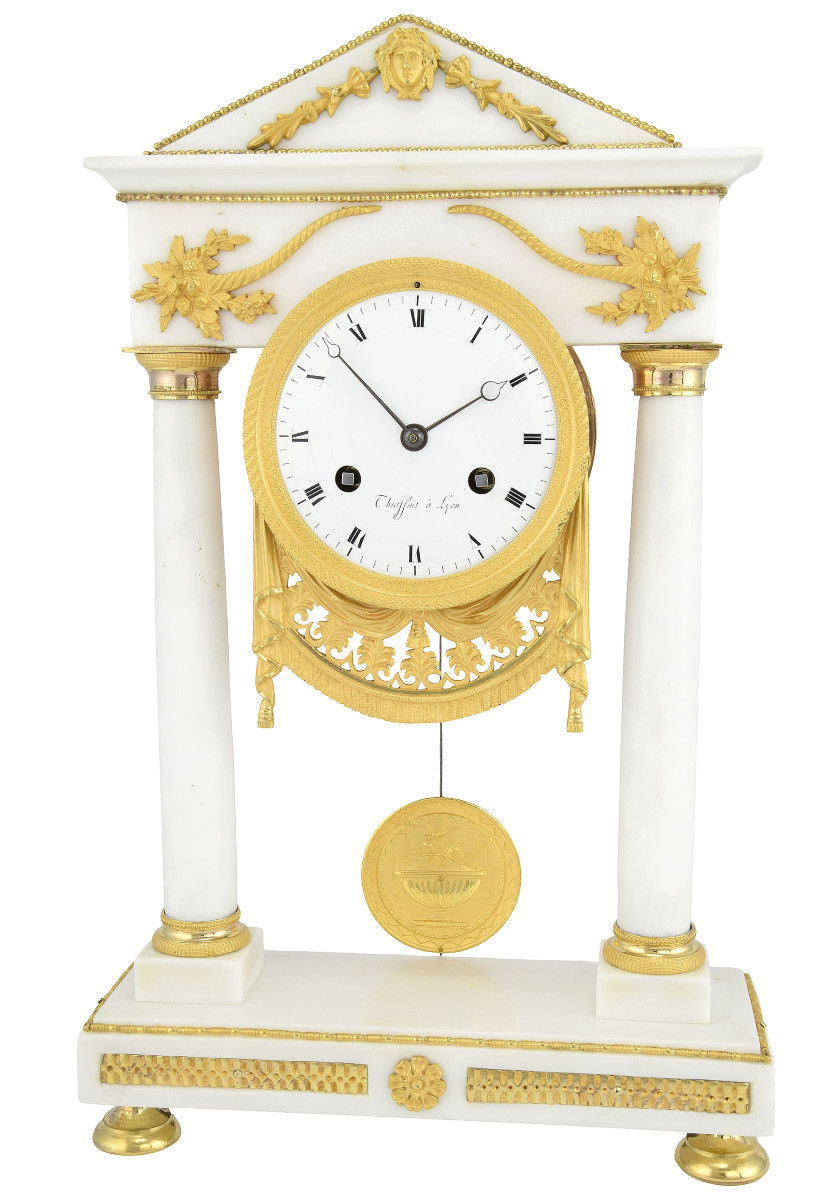
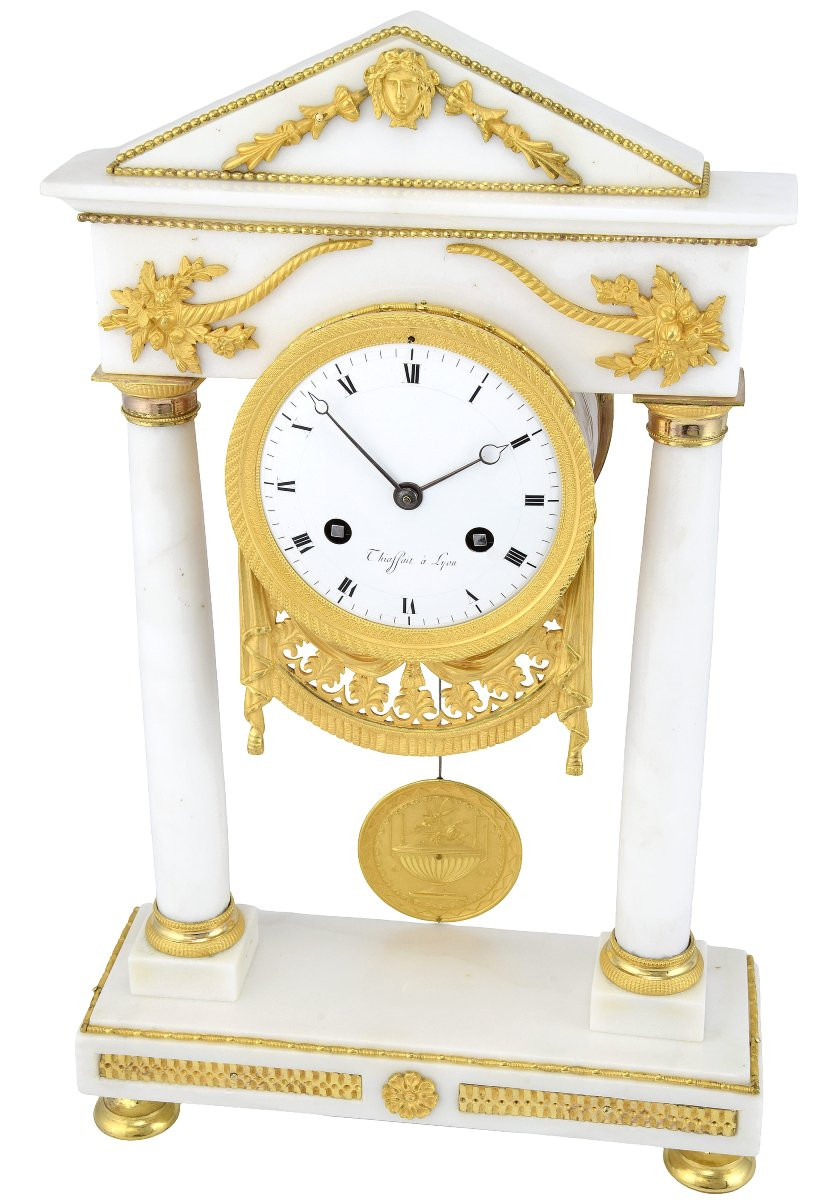
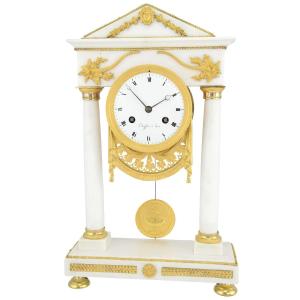


This portico clock, reminiscent of the façade of an ancient
Empire-era temple, is distinguished by the nobility of its materials
and the exceptional finesse of its carving. Crafted from pristine white
marble and adorned with remarkably high-quality mercury-gilt bronze
mounts, it brilliantly embodies the Neoclassical style inspired by
Antiquity.
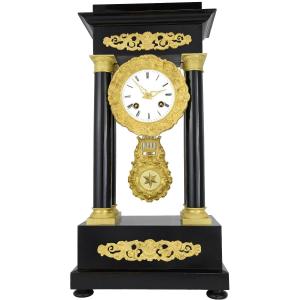
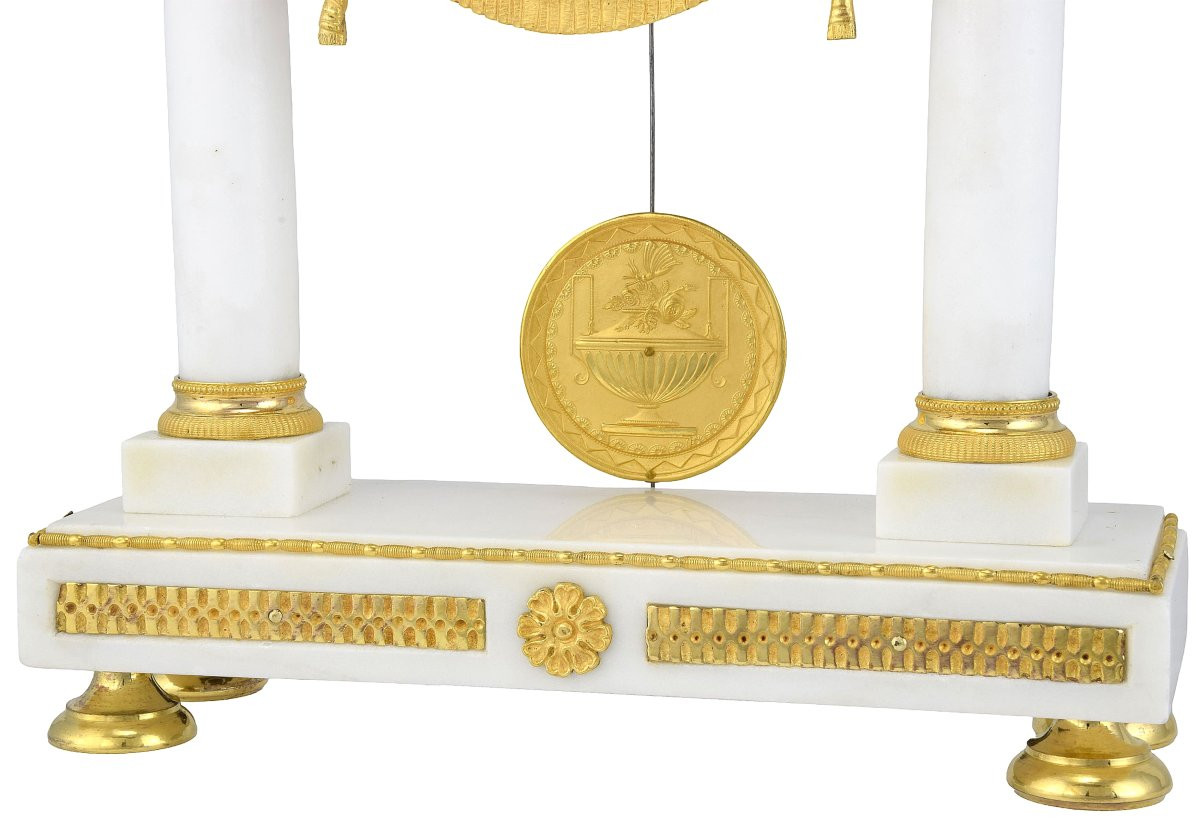
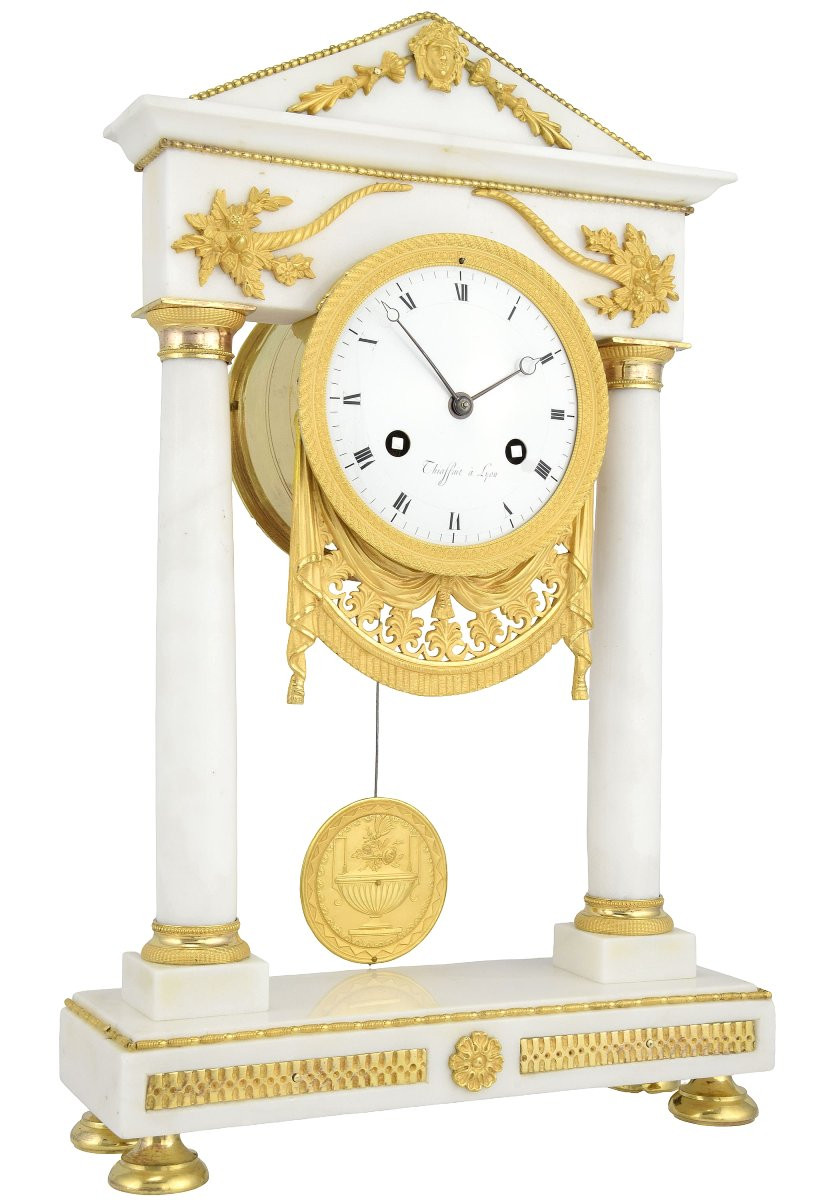
Resting on a rectangular marble base, the plinth, delicately highlighted by a beaded frieze, is embellished on the front with two finely chased appliqués decorated with points and gadroons, framing a radiant central floral motif, a symbol of harmony and perfection. The toupie feet ensure the piece's stability while adding a precious and refined touch. From this base rise two perfectly proportioned cylindrical columns of white marble, topped with capitals and bases of finely guillochéd gilt bronze. These columns evoke classical architecture and lend the clock the appearance of a veritable temple portico, emphasizing the verticality and solemnity of the composition.
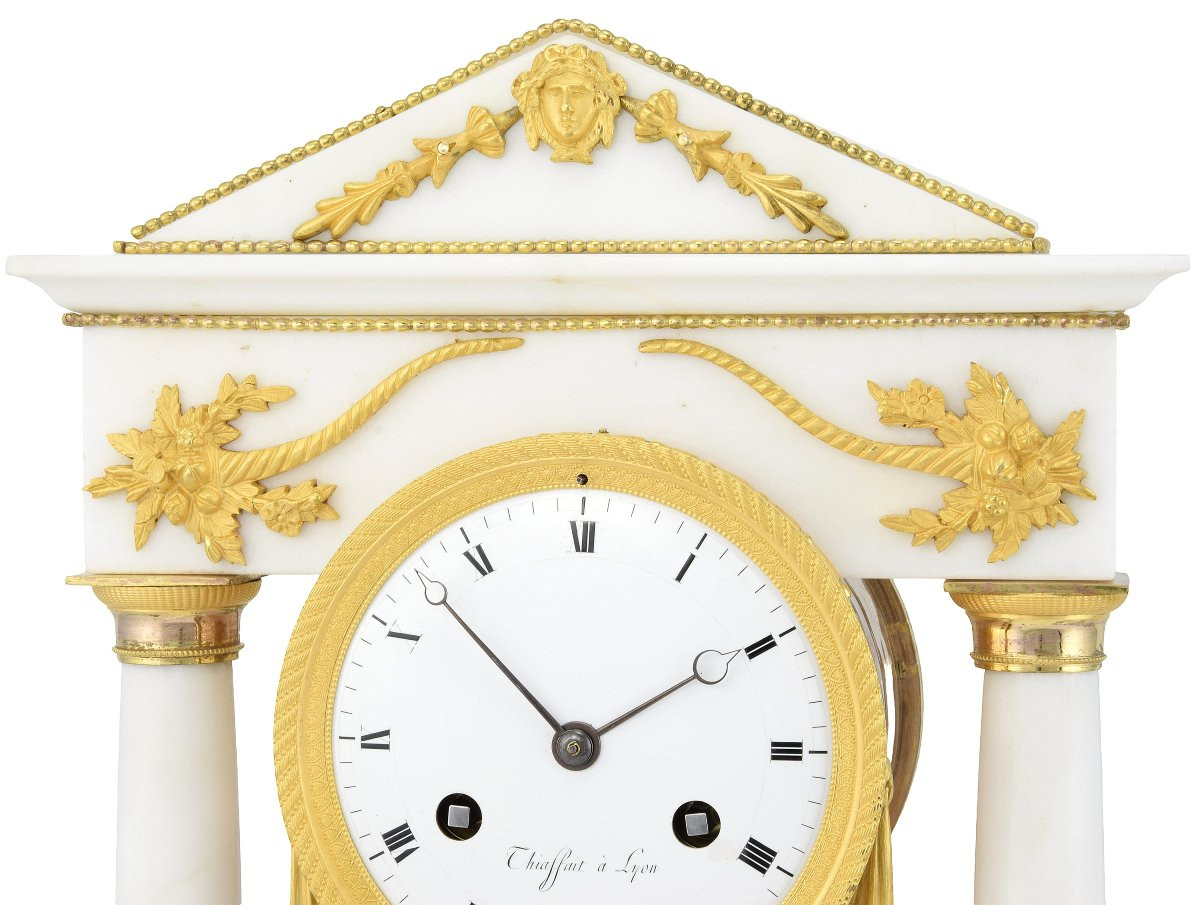
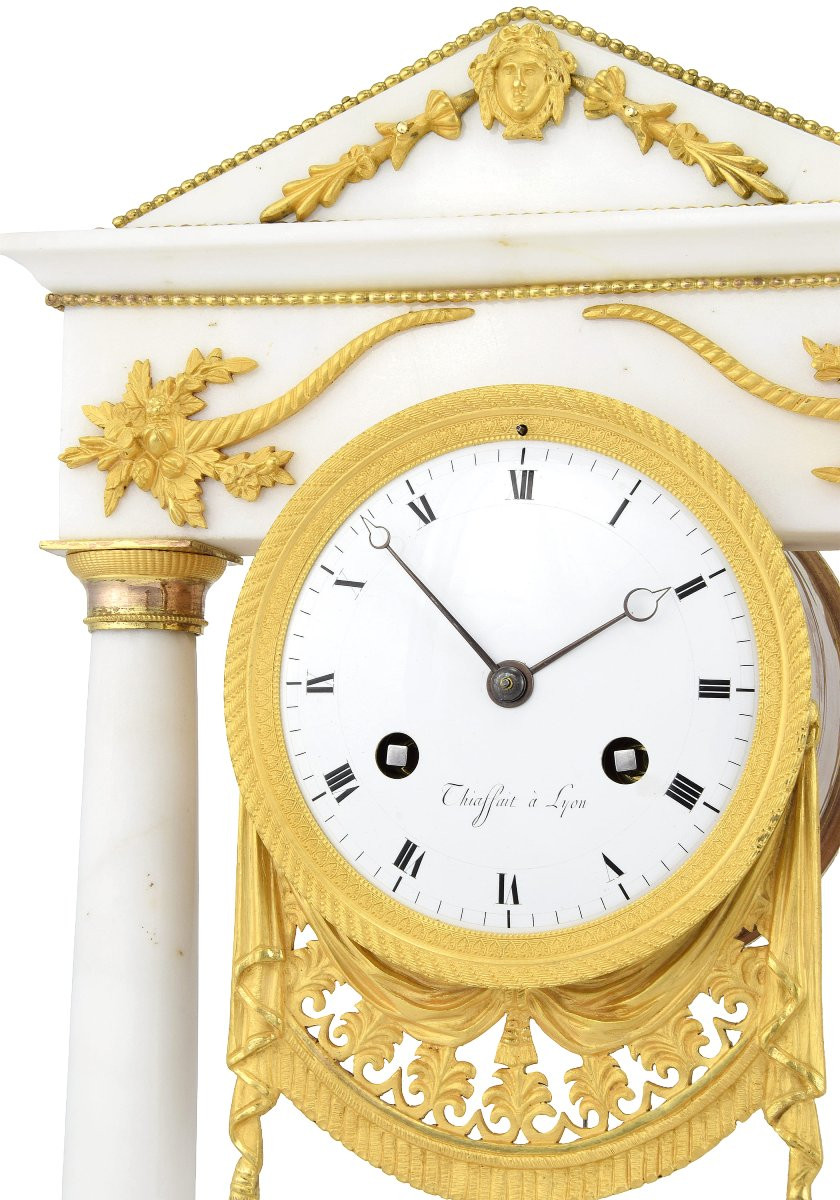
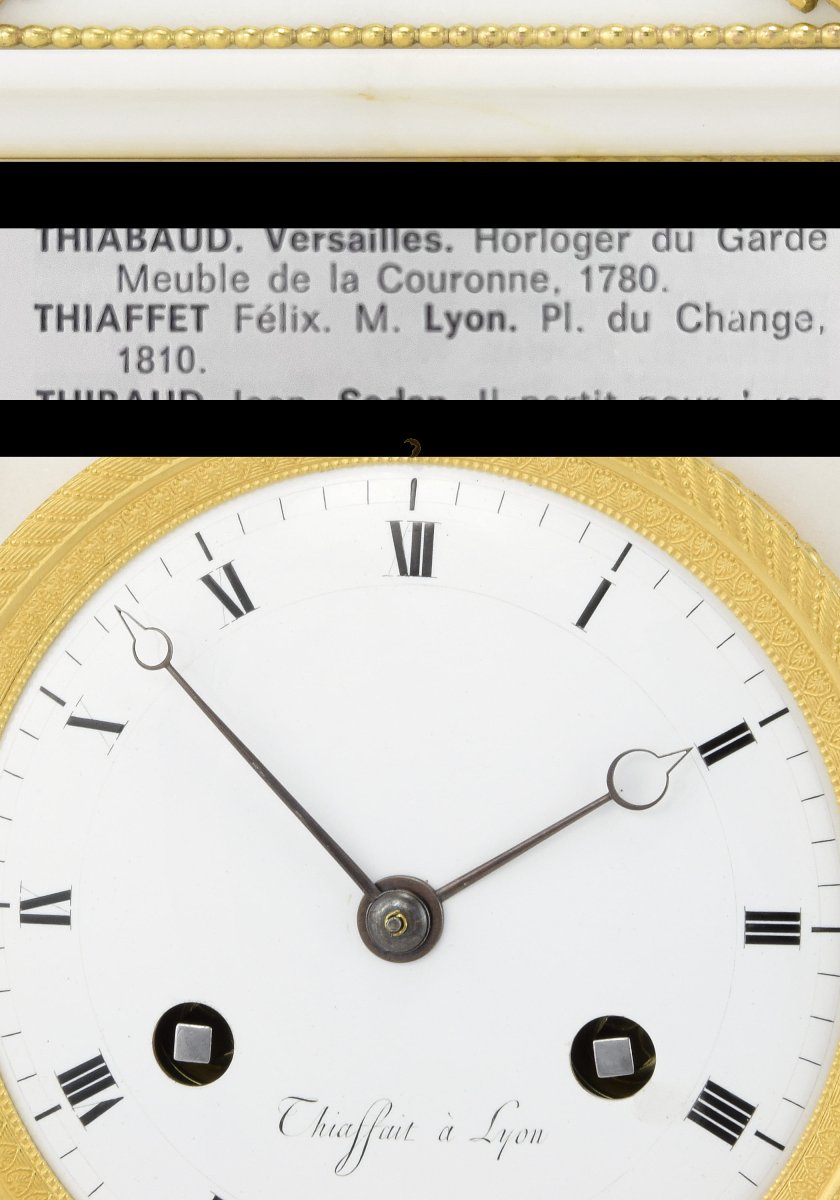
Between these supports sits the circular dial, encircled by a gilt-bronze bezel richly engraved with concentric friezes. The pristine white enamel dial is adorned with black Roman numerals and finely openworked hands. It is signed "Thiaffait à Lyon," a clockmaker listed as early as 1810 in Tardy's dictionary of French clockmakers, a guarantee of authenticity and horological quality. Below the dial, a delicate openwork drapery in gilt-bronze, executed with exquisite finesse, evokes antique tapestries and accentuates the theatrical character of the piece. Suspended at its center, the finely chiseled, lenticular pendulum in gilt bronze, depicting an antique vase of flowers—a symbol of abundance and renewal—animates the composition with grace and lightness, while offering a highly refined visual focal point.
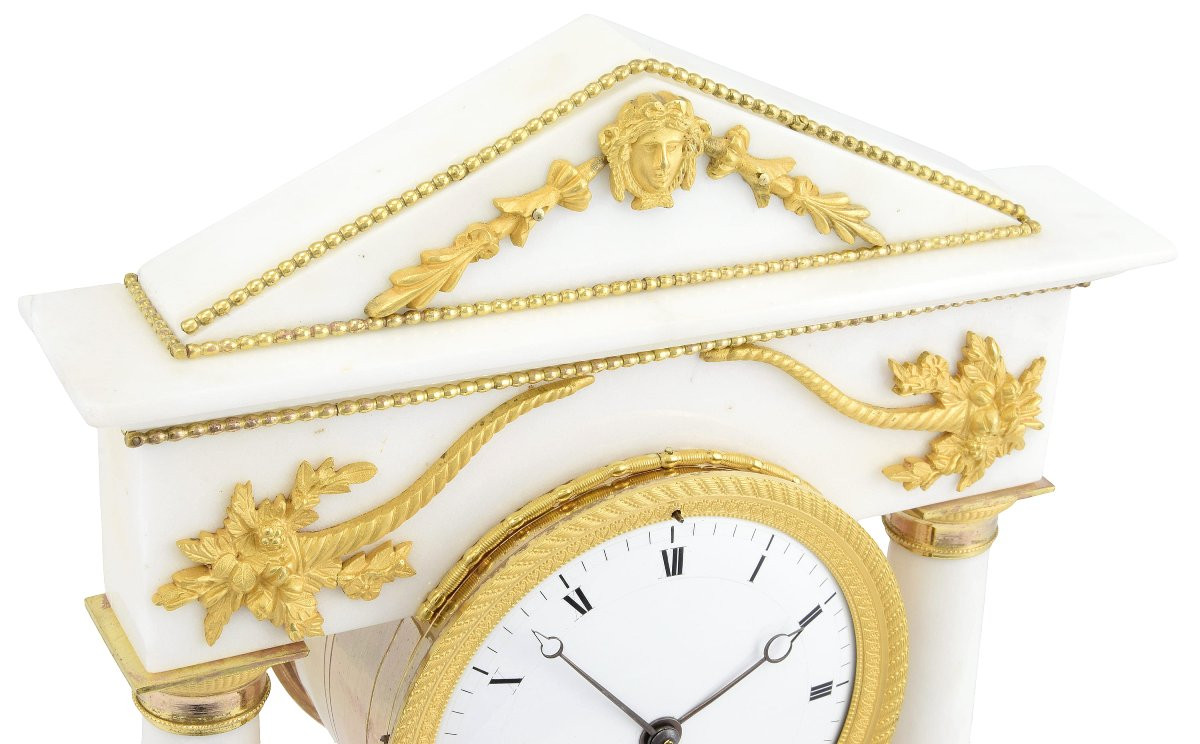
The upper section is crowned by a marble entablature surmounted by a richly ornamented triangular pediment. A winged female head, likely an allegory of Victory or Fame, sits enthroned at the center, framed by cornucopias. These remarkably precise ornaments testify to the skill of the bronze workers of the period and lend the whole a powerful symbolic dimension, embodying triumph, beauty, and eternity. The ensemble thus forms a veritable miniature monumental façade, where each architectural and decorative element interacts harmoniously. This portico clock brilliantly illustrates the excellence of the decorative arts under the Empire, combining classical rigor, ornamental richness, and technical virtuosity. A collector's item that is both decorative and historical.
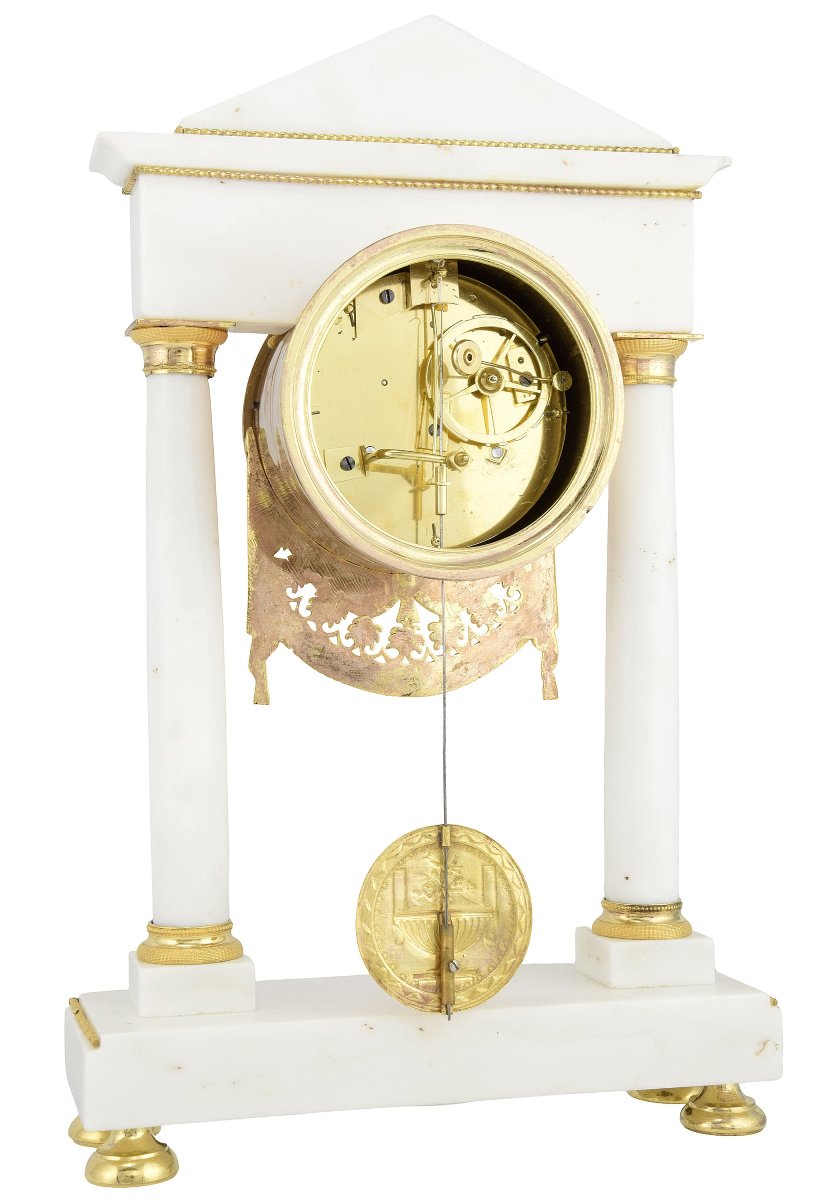
The original mechanism is intact and unaltered, with a wire suspension. The hour and half-hour strikes are played on an antique bell, producing a clear and authentic sound.
ORDERING AND ADDITIONAL INFORMATION FROM OUR WEBSITE
Resting on a rectangular marble base, the plinth, delicately highlighted by a beaded frieze, is embellished on the front with two finely chased appliqués decorated with points and gadroons, framing a radiant central floral motif, a symbol of harmony and perfection. The toupie feet ensure the piece's stability while adding a precious and refined touch. From this base rise two perfectly proportioned cylindrical columns of white marble, topped with capitals and bases of finely guillochéd gilt bronze. These columns evoke classical architecture and lend the clock the appearance of a veritable temple portico, emphasizing the verticality and solemnity of the composition.
Between these supports sits the circular dial, encircled by a gilt-bronze bezel richly engraved with concentric friezes. The pristine white enamel dial is adorned with black Roman numerals and finely openworked hands. It is signed "Thiaffait à Lyon," a clockmaker listed as early as 1810 in Tardy's dictionary of French clockmakers, a guarantee of authenticity and horological quality. Below the dial, a delicate openwork drapery in gilt-bronze, executed with exquisite finesse, evokes antique tapestries and accentuates the theatrical character of the piece. Suspended at its center, the finely chiseled, lenticular pendulum in gilt bronze, depicting an antique vase of flowers—a symbol of abundance and renewal—animates the composition with grace and lightness, while offering a highly refined visual focal point.
The upper section is crowned by a marble entablature surmounted by a richly ornamented triangular pediment. A winged female head, likely an allegory of Victory or Fame, sits enthroned at the center, framed by cornucopias. These remarkably precise ornaments testify to the skill of the bronze workers of the period and lend the whole a powerful symbolic dimension, embodying triumph, beauty, and eternity. The ensemble thus forms a veritable miniature monumental façade, where each architectural and decorative element interacts harmoniously. This portico clock brilliantly illustrates the excellence of the decorative arts under the Empire, combining classical rigor, ornamental richness, and technical virtuosity. A collector's item that is both decorative and historical.
The original mechanism is intact and unaltered, with a wire suspension. The hour and half-hour strikes are played on an antique bell, producing a clear and authentic sound.
ORDERING AND ADDITIONAL INFORMATION FROM OUR WEBSITE
Explore similar pieces and discover your ideal find:
Mantel Clocks