



Clock Cornucopia Watchmaker: Raingo
This clock, dating from the Napoleon III period, was made around 1860
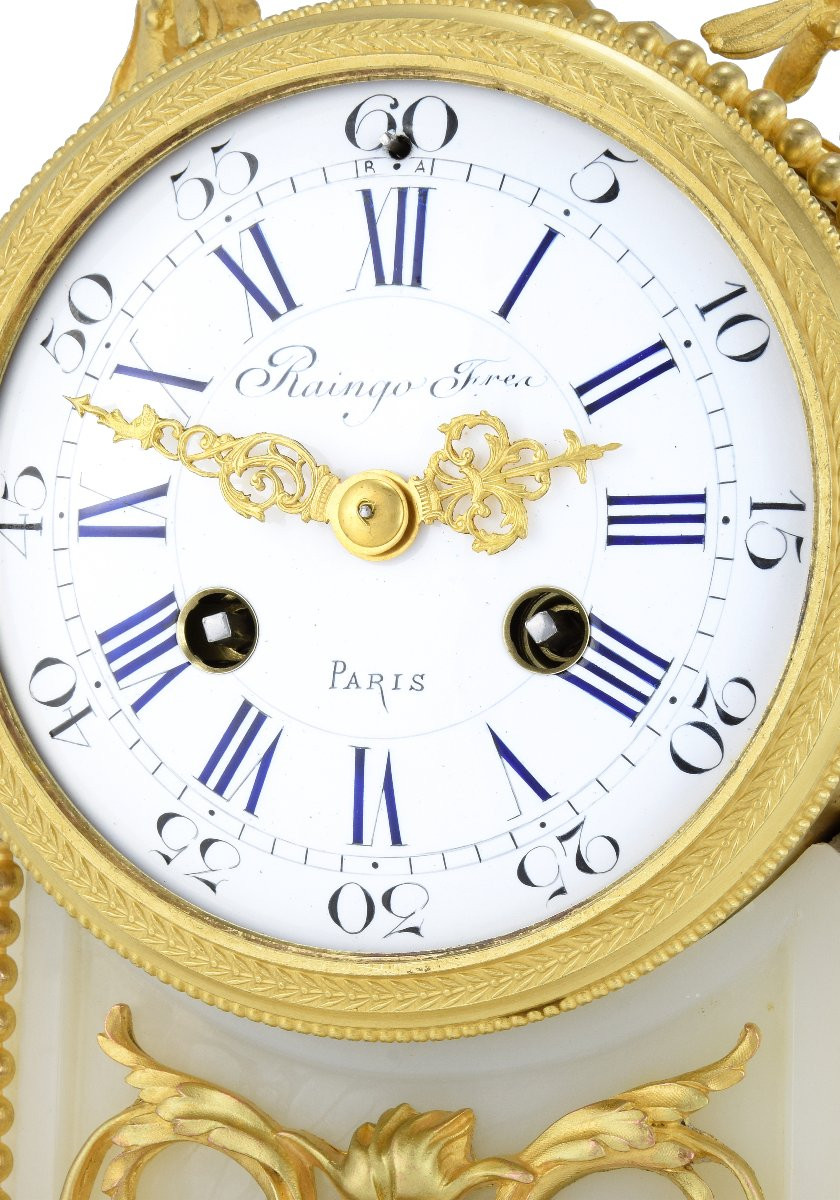
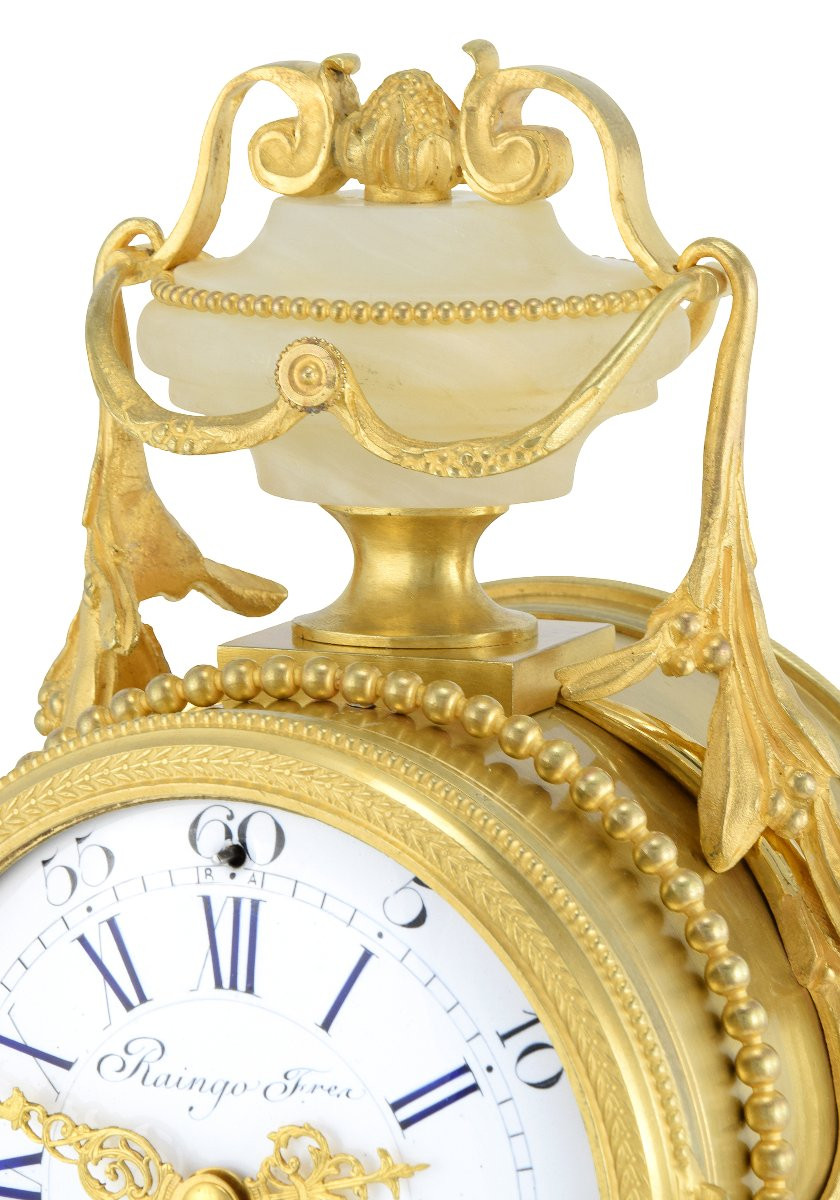
and is signed on its dial and mechanism by the clockmaker Raingo
Frères in Paris, a clockmaker listed in Tardy's dictionary of
French clockmakers.
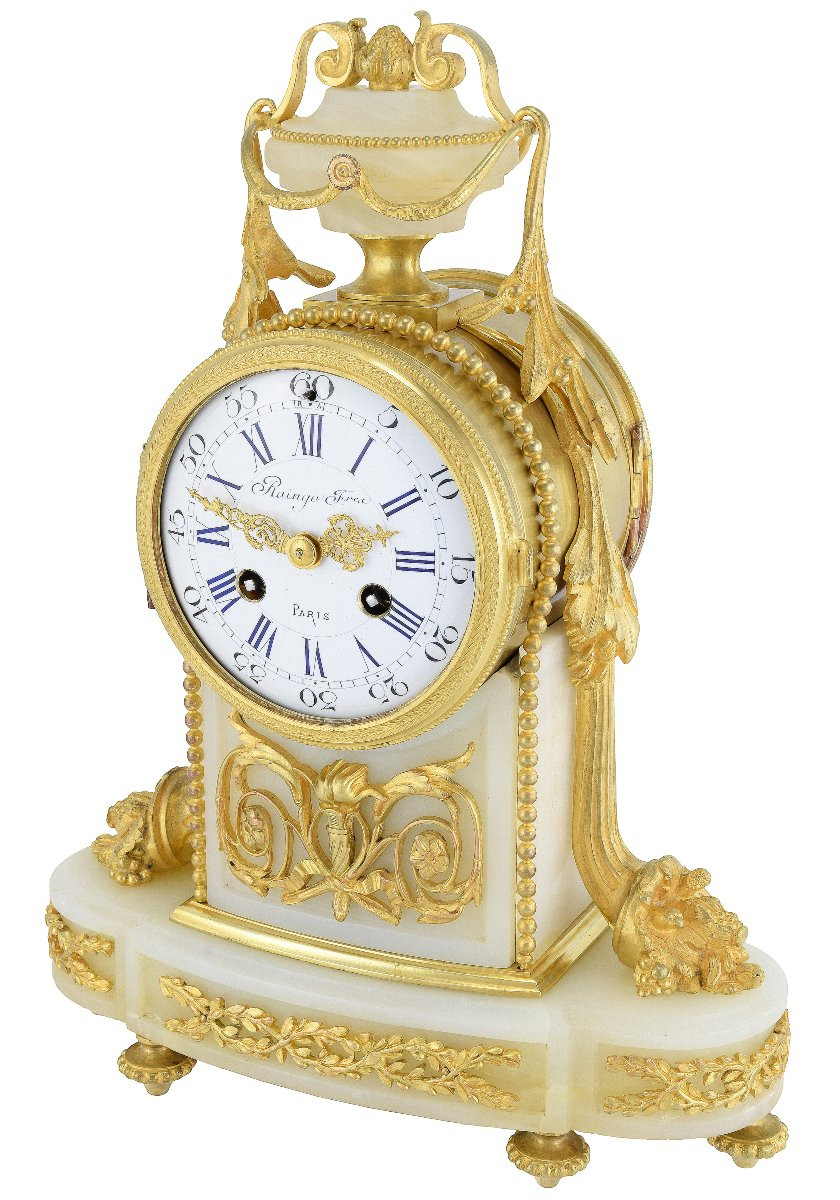
It exquisitely illustrates the historicist and decorative taste characteristic of the Second Empire, a period during which 18th-century designs were reinterpreted with increased ornamental richness and technical virtuosity.
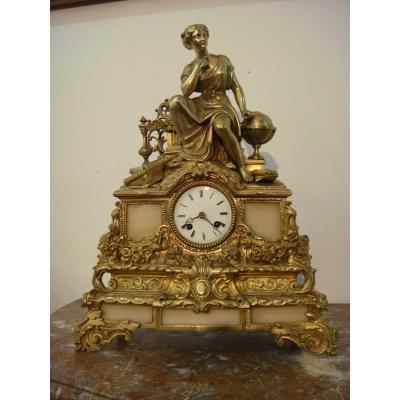
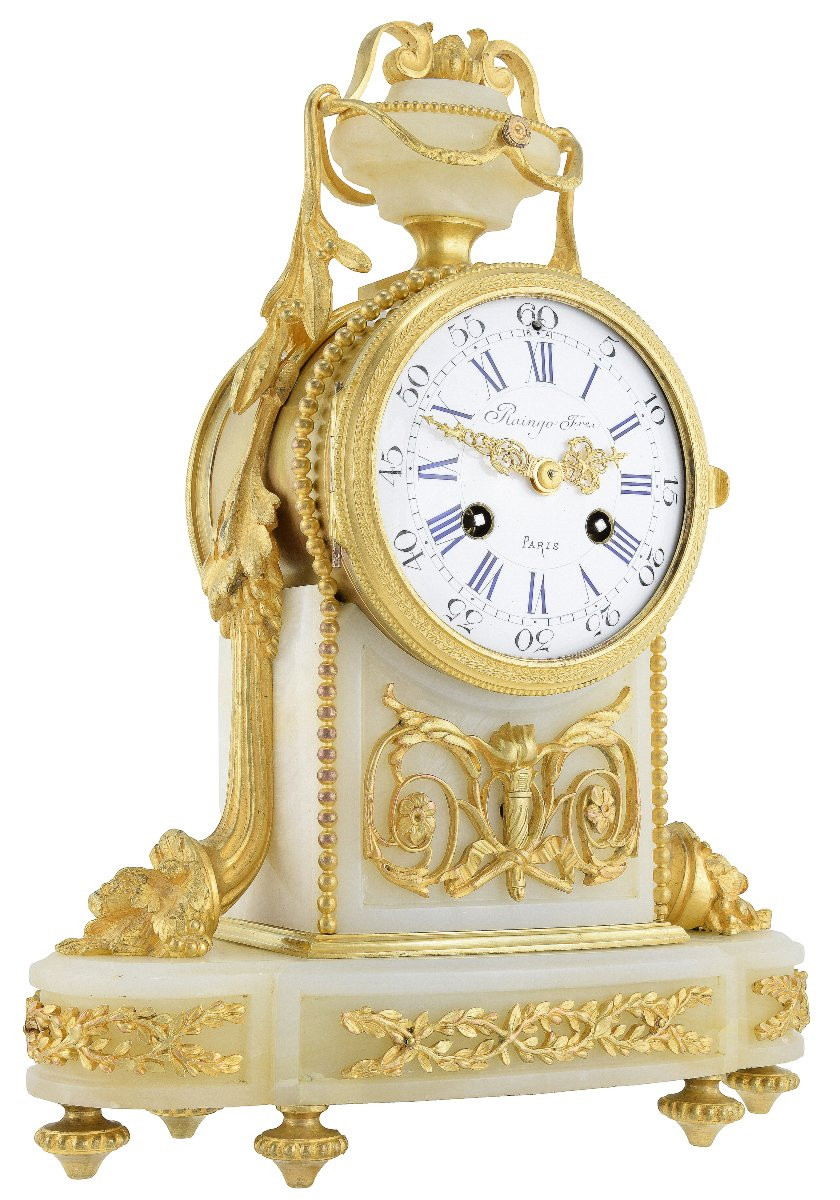
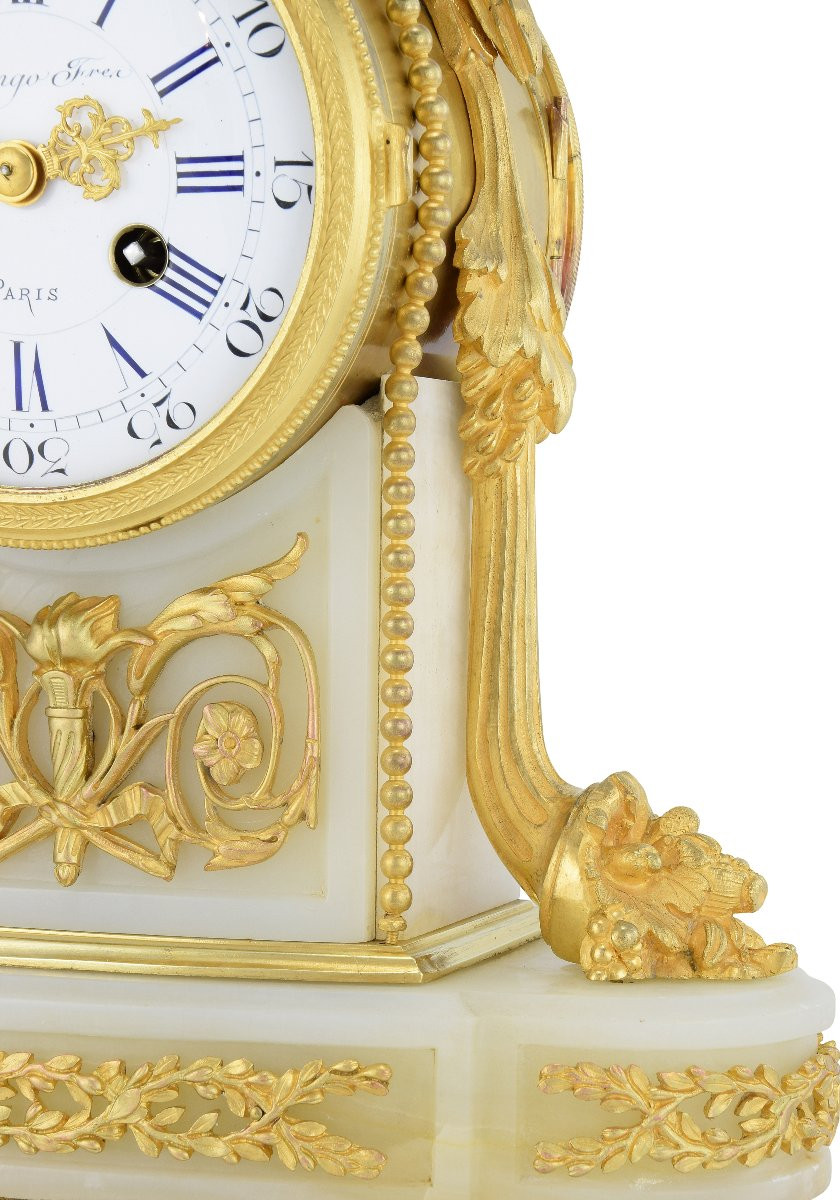
Its rigorously symmetrical architecture rests on a rectangular base of onyx marble with milky and translucent tones, a material particularly prized under Napoleon III for its precious character and its ability to enhance the brilliance of gilt bronze. The central section is structured like a small classical building, raised on a molded base supported by finely chiseled toupie feet. The circular enamel dial, set within a beaded bezel that frames the domed glass protecting the dial, forms the visual focal point of the composition.
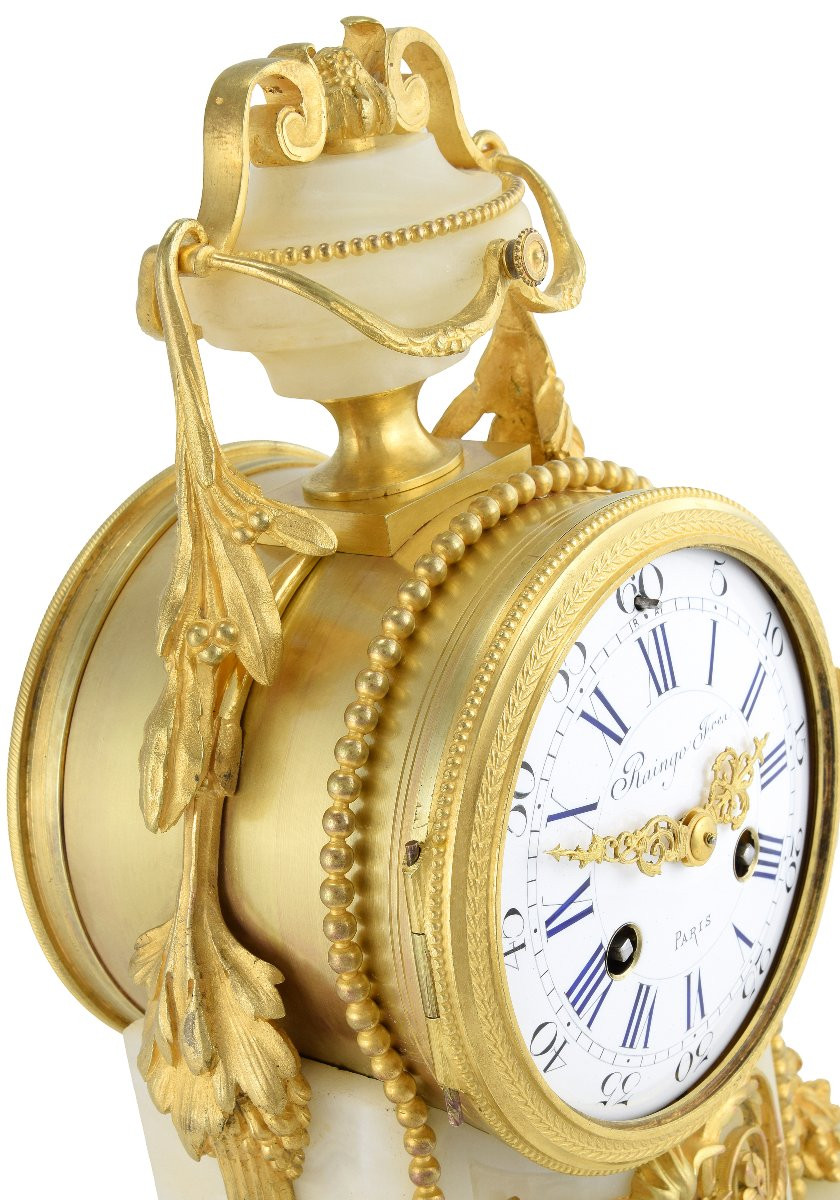
It is encased in a gilt-bronze mount adorned with vegetal friezes and rows of pearls. The blued Roman numerals and openwork hands contribute to the overall graphic elegance, while the watchmaker's signature affirms the Parisian origin and horological quality of the piece.
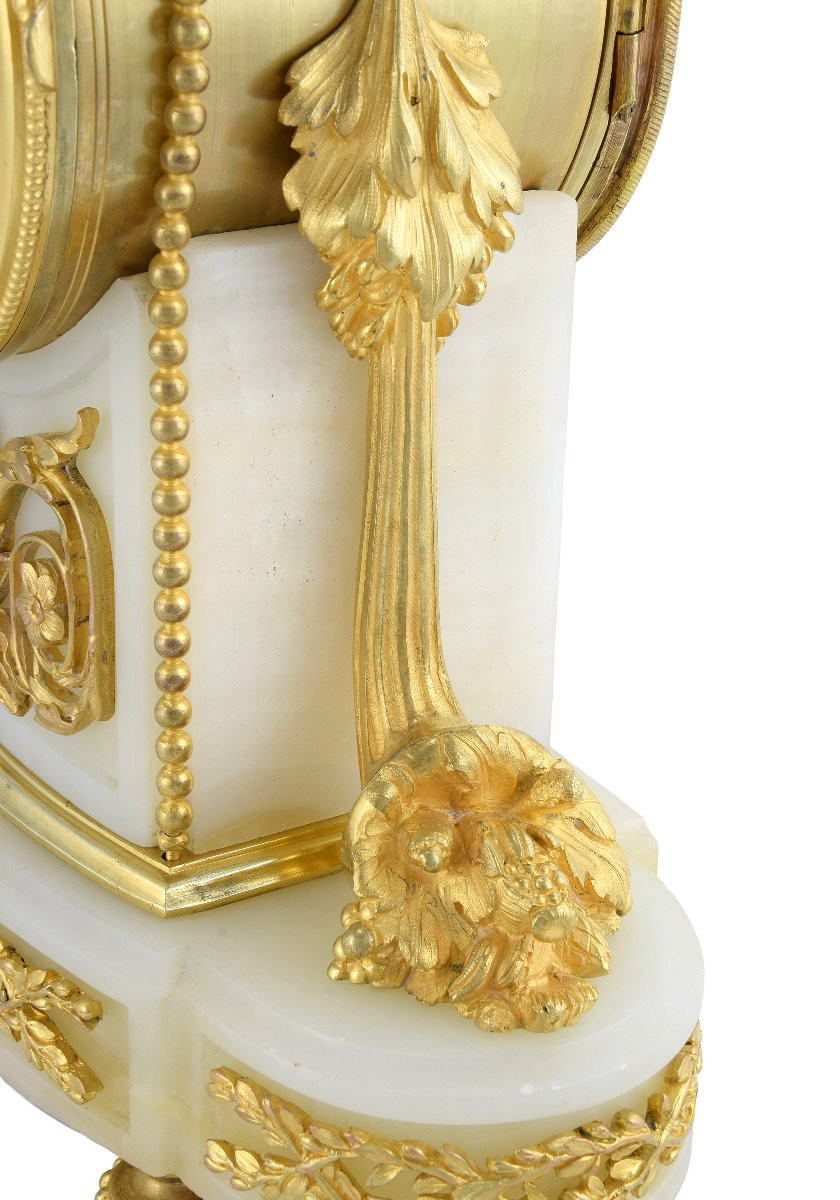
The side ornamentation is dominated by long, foliate cascades forming veritable cornucopias, a symbolic motif inherited from Antiquity and frequently used in Neoclassical decor. These sculpted elements, seemingly overflowing with stylized leaves and fruit, evoke prosperity, fertility, and wealth—values particularly prized in 19th-century decorative language. Their flowing design complements the verticality of the clock while introducing a fluid movement that softens the architectural rigor of the composition. The fineness of the chasing, visible in the vegetal details and the varied textures of the gilt bronze, testifies to the high level of craftsmanship of Parisian bronze workers.
The upper section takes the form of a covered vase resting on a pedestal, another direct reference to the Louis XVI style. Stylized handles linked by beaded garlands emphasize this crowning element, conceived as the decorative culmination of the overall design. This apex vase reinforces the idea of a miniature monument, transforming the clock into a true element of interior architecture. The contrast between the luminous warmth of the gilt bronze and the soft translucency of the onyx fully embodies the aesthetics of the Second Empire, based on the combination of luxurious materials and the pursuit of sophisticated decorative effects. The scrolls, palmettes, and vegetal garlands that enliven the base extend the theme of abundance already expressed by the lateral cornucopias, creating a coherent iconographic unity. Thus, this clock perfectly embodies the decorative spirit of Napoleon III's reign: a synthesis of neoclassical heritage, decorative symbolism, and Parisian craftsmanship, where the horological precision of Raingo Frères is combined with a sculptural design, making the object not only a timekeeping instrument but a true decorative work of art celebrating luxury and abundance.
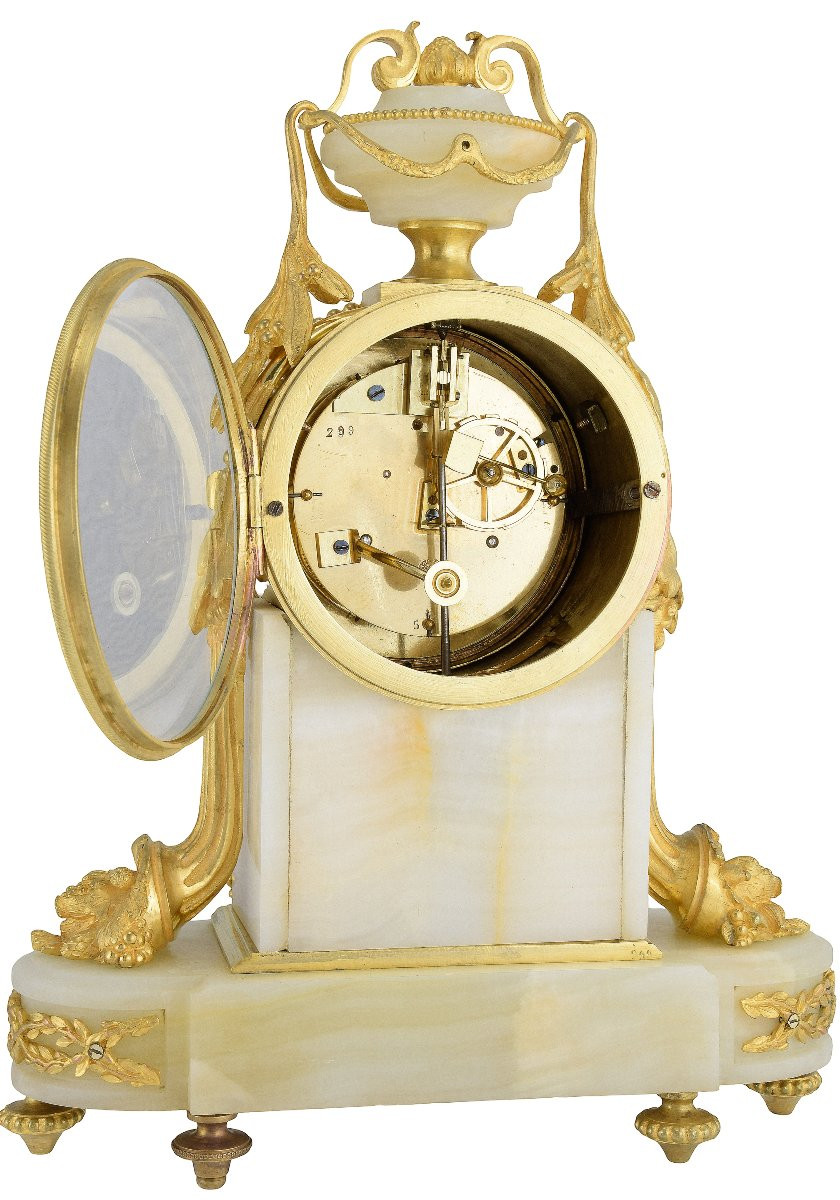
Original mechanism intact, without modification. Strikes the hours and half-hours on an antique bell, with a clear and authentic sound.
ORDERING AND ADDITIONAL INFORMATION FROM OUR WEBSITE
It exquisitely illustrates the historicist and decorative taste characteristic of the Second Empire, a period during which 18th-century designs were reinterpreted with increased ornamental richness and technical virtuosity.
Its rigorously symmetrical architecture rests on a rectangular base of onyx marble with milky and translucent tones, a material particularly prized under Napoleon III for its precious character and its ability to enhance the brilliance of gilt bronze. The central section is structured like a small classical building, raised on a molded base supported by finely chiseled toupie feet. The circular enamel dial, set within a beaded bezel that frames the domed glass protecting the dial, forms the visual focal point of the composition.
It is encased in a gilt-bronze mount adorned with vegetal friezes and rows of pearls. The blued Roman numerals and openwork hands contribute to the overall graphic elegance, while the watchmaker's signature affirms the Parisian origin and horological quality of the piece.
The side ornamentation is dominated by long, foliate cascades forming veritable cornucopias, a symbolic motif inherited from Antiquity and frequently used in Neoclassical decor. These sculpted elements, seemingly overflowing with stylized leaves and fruit, evoke prosperity, fertility, and wealth—values particularly prized in 19th-century decorative language. Their flowing design complements the verticality of the clock while introducing a fluid movement that softens the architectural rigor of the composition. The fineness of the chasing, visible in the vegetal details and the varied textures of the gilt bronze, testifies to the high level of craftsmanship of Parisian bronze workers.
The upper section takes the form of a covered vase resting on a pedestal, another direct reference to the Louis XVI style. Stylized handles linked by beaded garlands emphasize this crowning element, conceived as the decorative culmination of the overall design. This apex vase reinforces the idea of a miniature monument, transforming the clock into a true element of interior architecture. The contrast between the luminous warmth of the gilt bronze and the soft translucency of the onyx fully embodies the aesthetics of the Second Empire, based on the combination of luxurious materials and the pursuit of sophisticated decorative effects. The scrolls, palmettes, and vegetal garlands that enliven the base extend the theme of abundance already expressed by the lateral cornucopias, creating a coherent iconographic unity. Thus, this clock perfectly embodies the decorative spirit of Napoleon III's reign: a synthesis of neoclassical heritage, decorative symbolism, and Parisian craftsmanship, where the horological precision of Raingo Frères is combined with a sculptural design, making the object not only a timekeeping instrument but a true decorative work of art celebrating luxury and abundance.
Original mechanism intact, without modification. Strikes the hours and half-hours on an antique bell, with a clear and authentic sound.
ORDERING AND ADDITIONAL INFORMATION FROM OUR WEBSITE
1 100 €
Period: 19th century
Style: Louis 15th - Transition
Condition: Fully restored in our whorkshop
Material: Bronze
Width: 27 cm
Height: 36 cm
Depth: 12 cm
Reference (ID): 1722586
Availability: In stock
Print