


Clock Portico Empire Watchmaker : Hunziker 1805
Artist: Horloger : Hunziker Paris
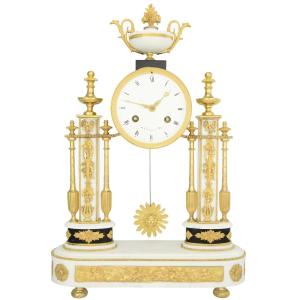
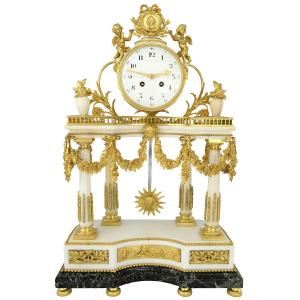
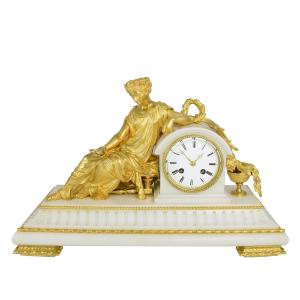
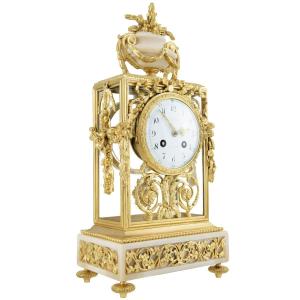
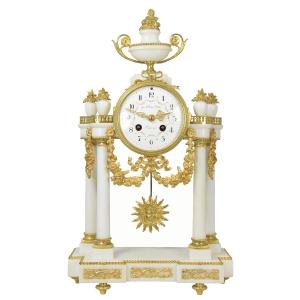
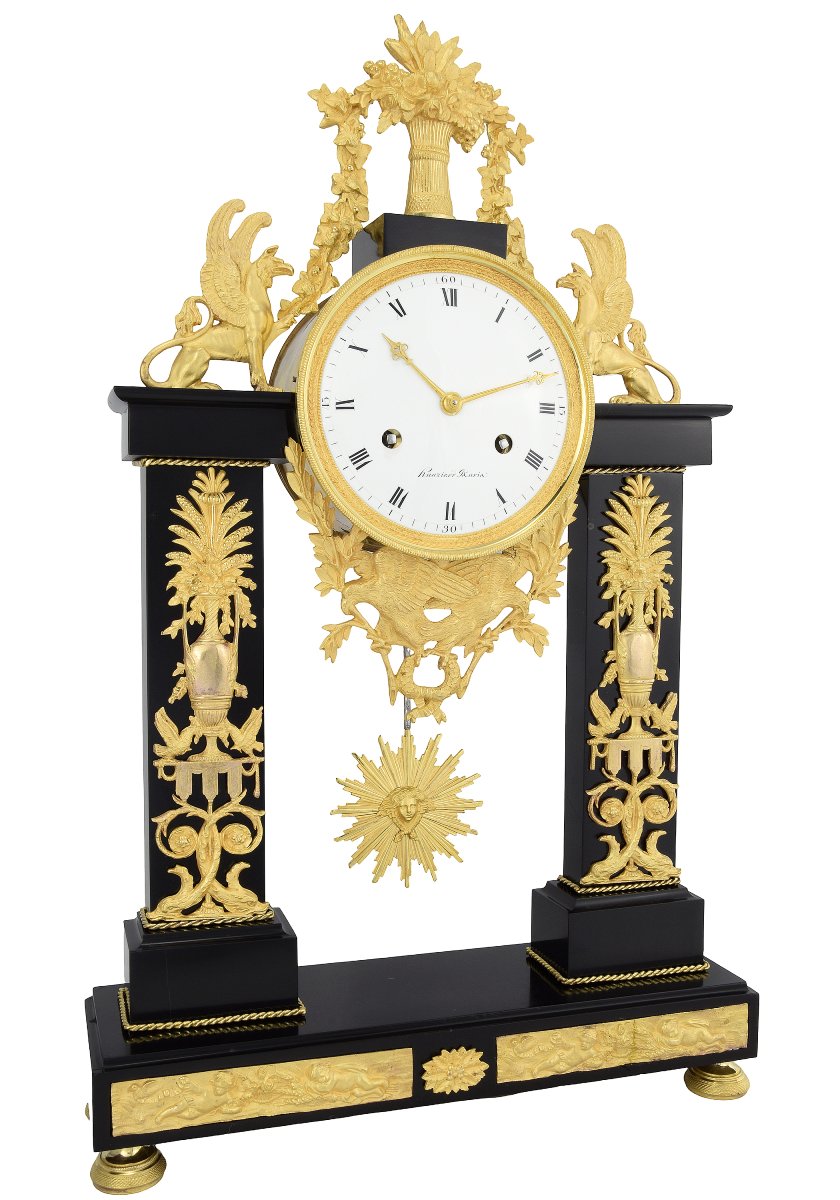
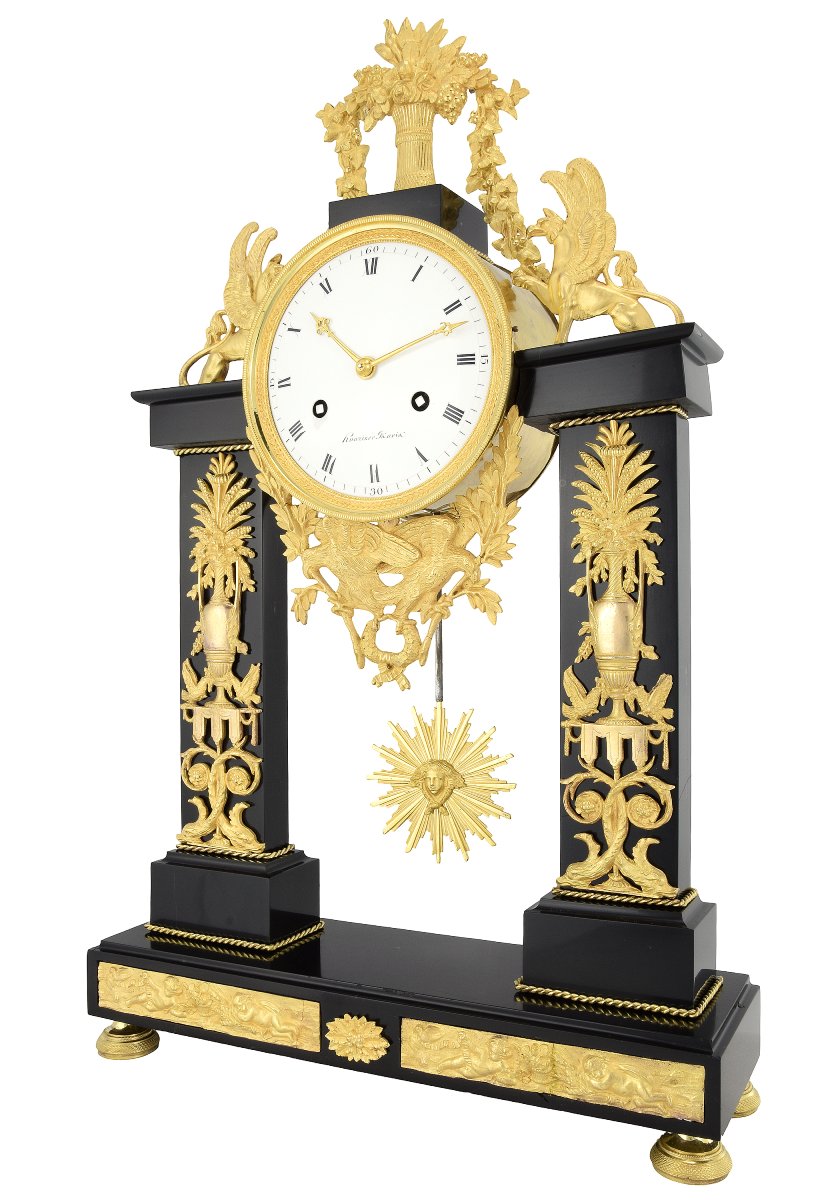
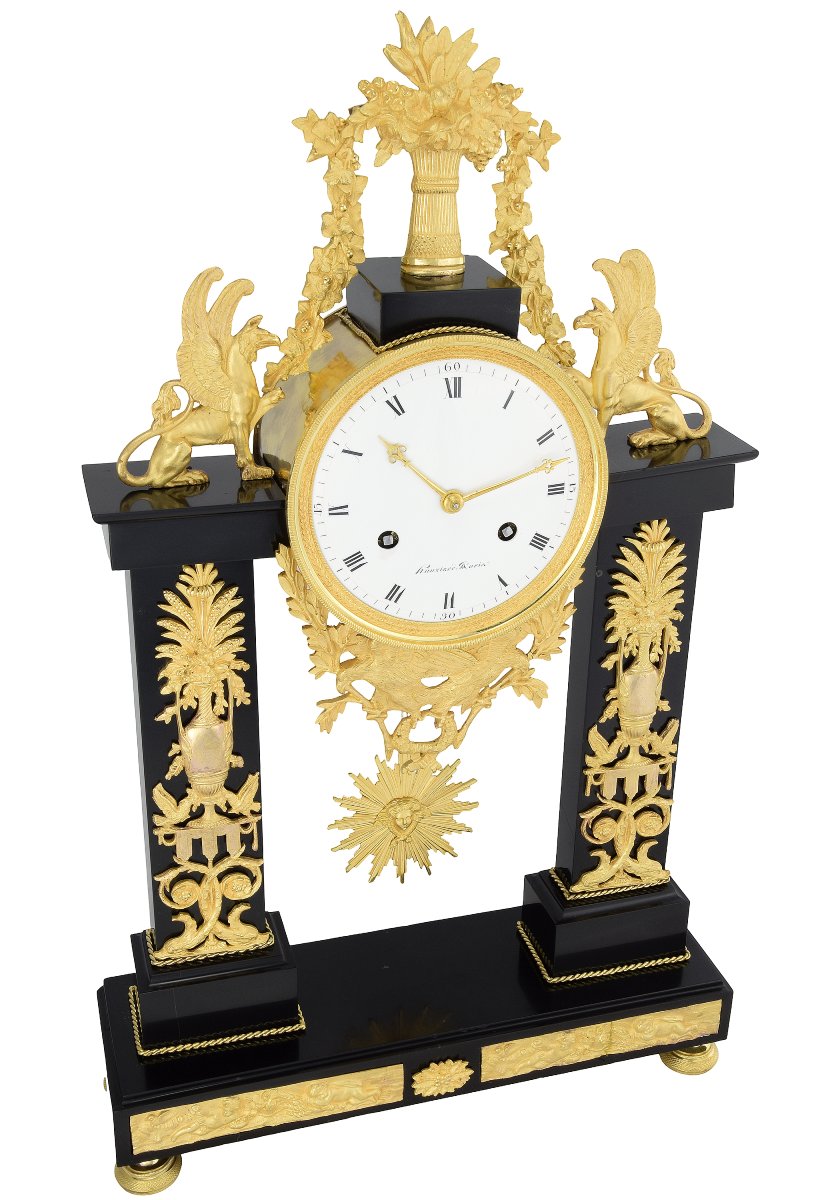
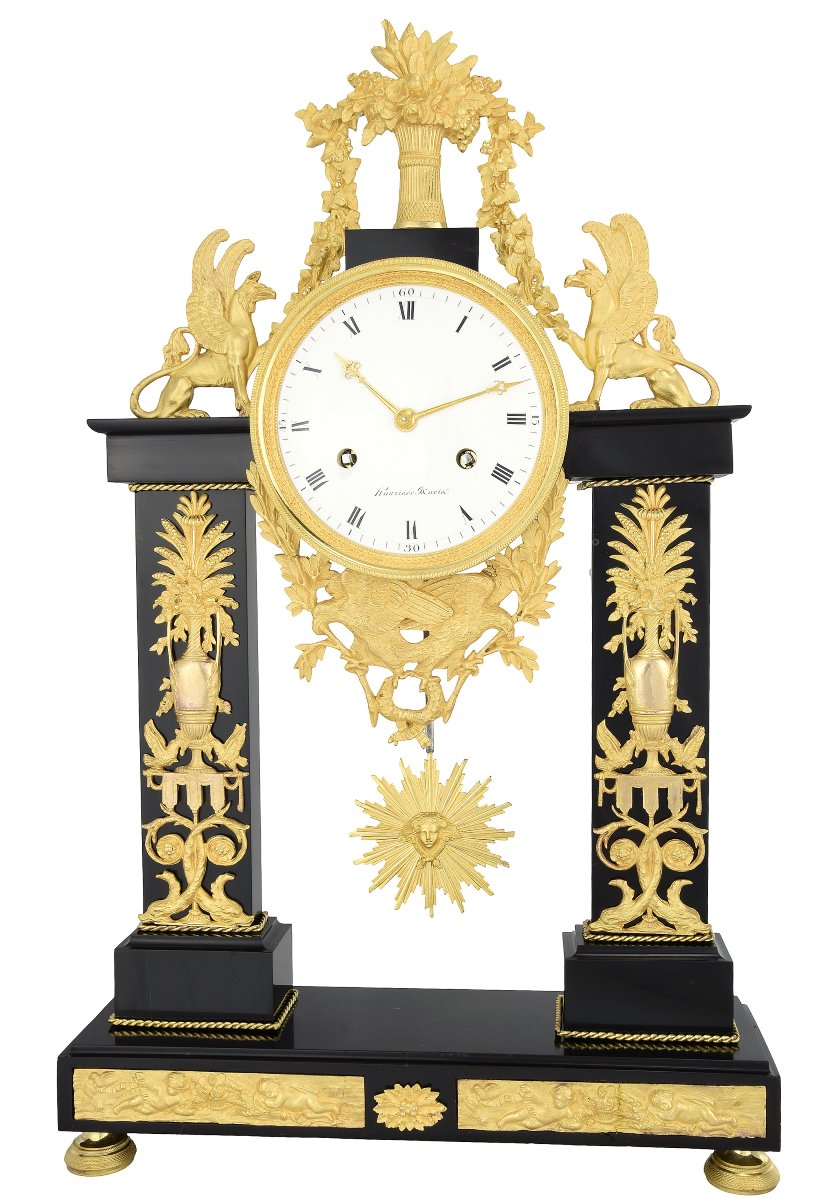
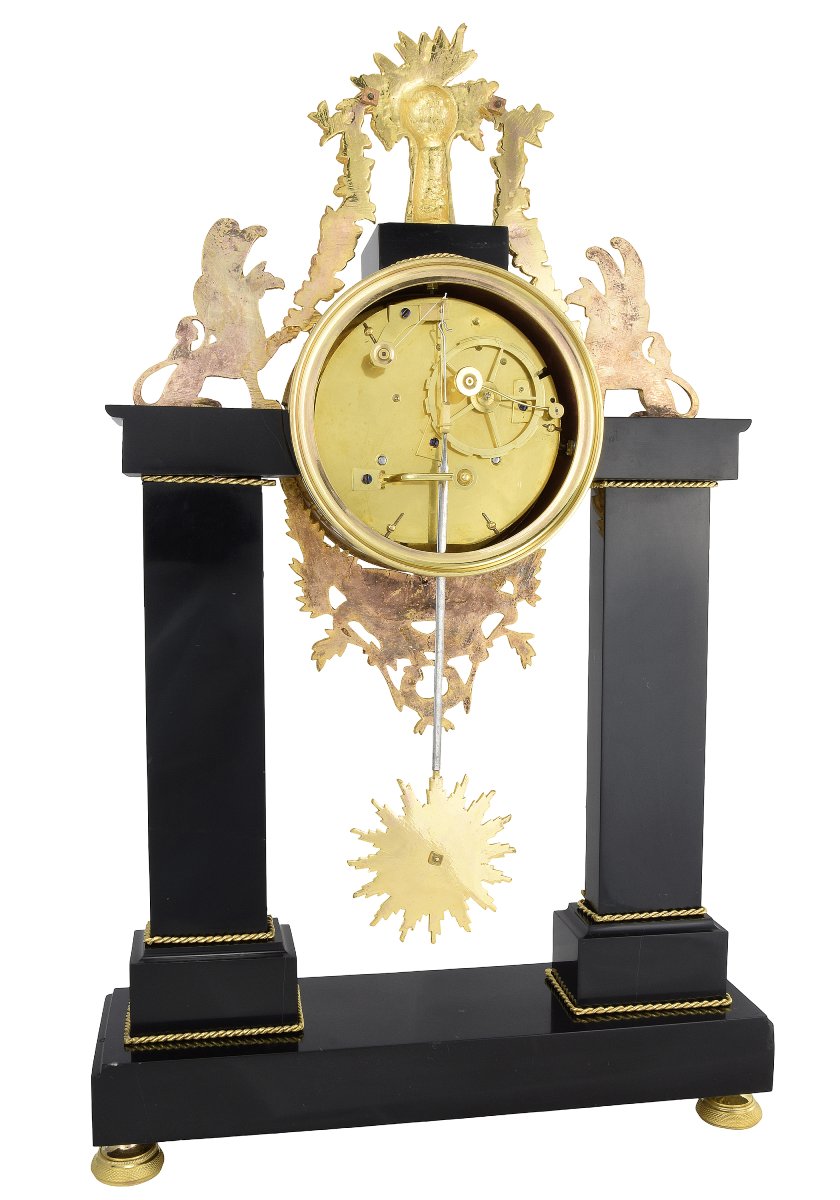
An Empire period portico clock, circa 1805, in finely chased and
mercury-gilded bronze, resting on an elegant black marble base with
rigorously symmetrical lines inspired by Antiquity. The composition
adopts the classic portico form, with two rectangular uprights
supporting a simple entablature on which the suspended circular
movement is mounted.
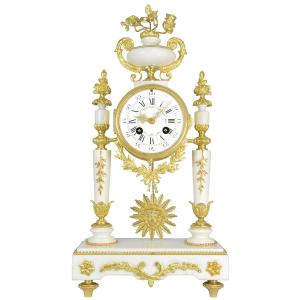
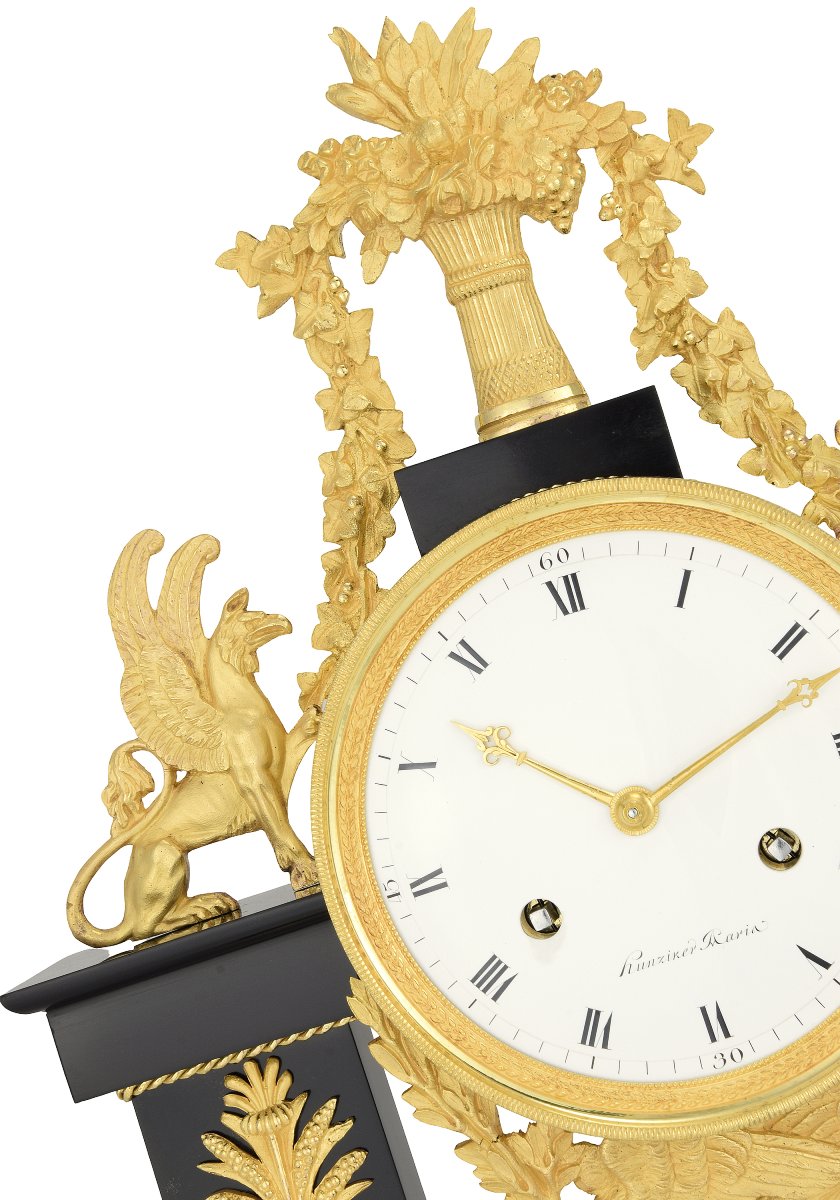
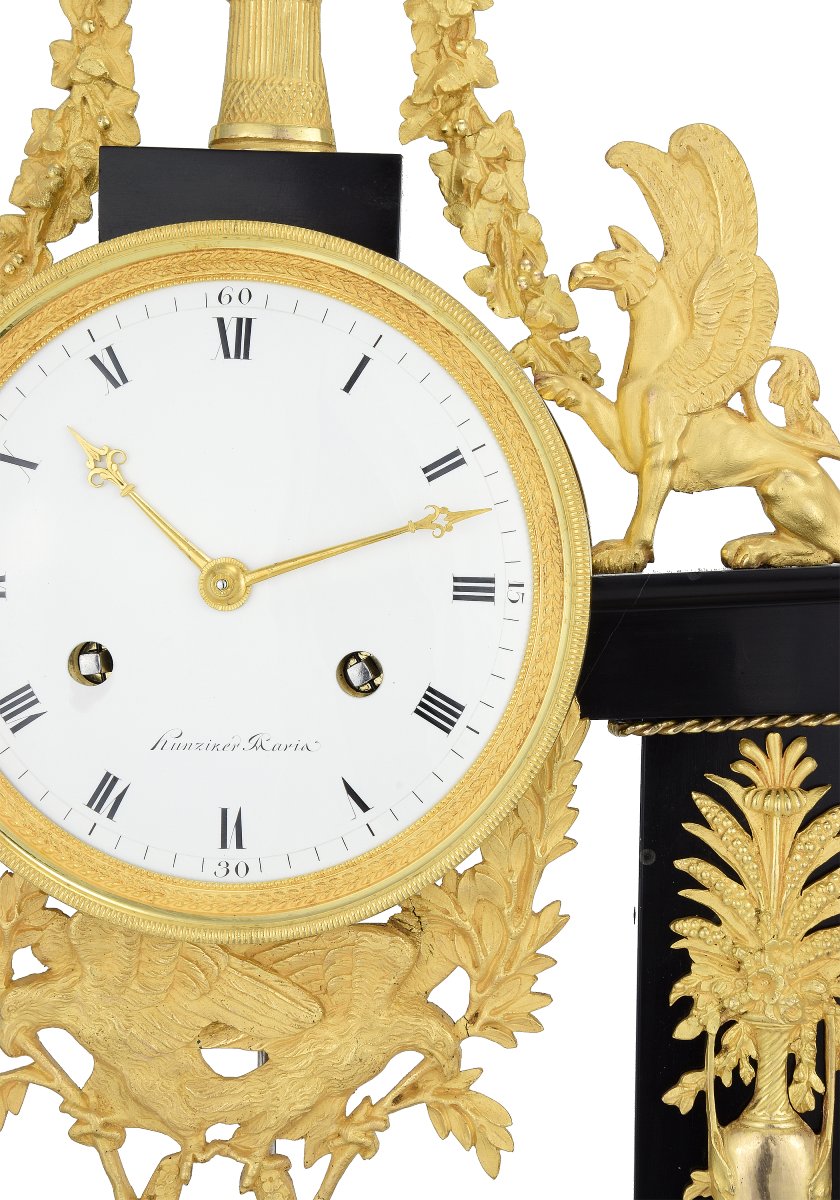
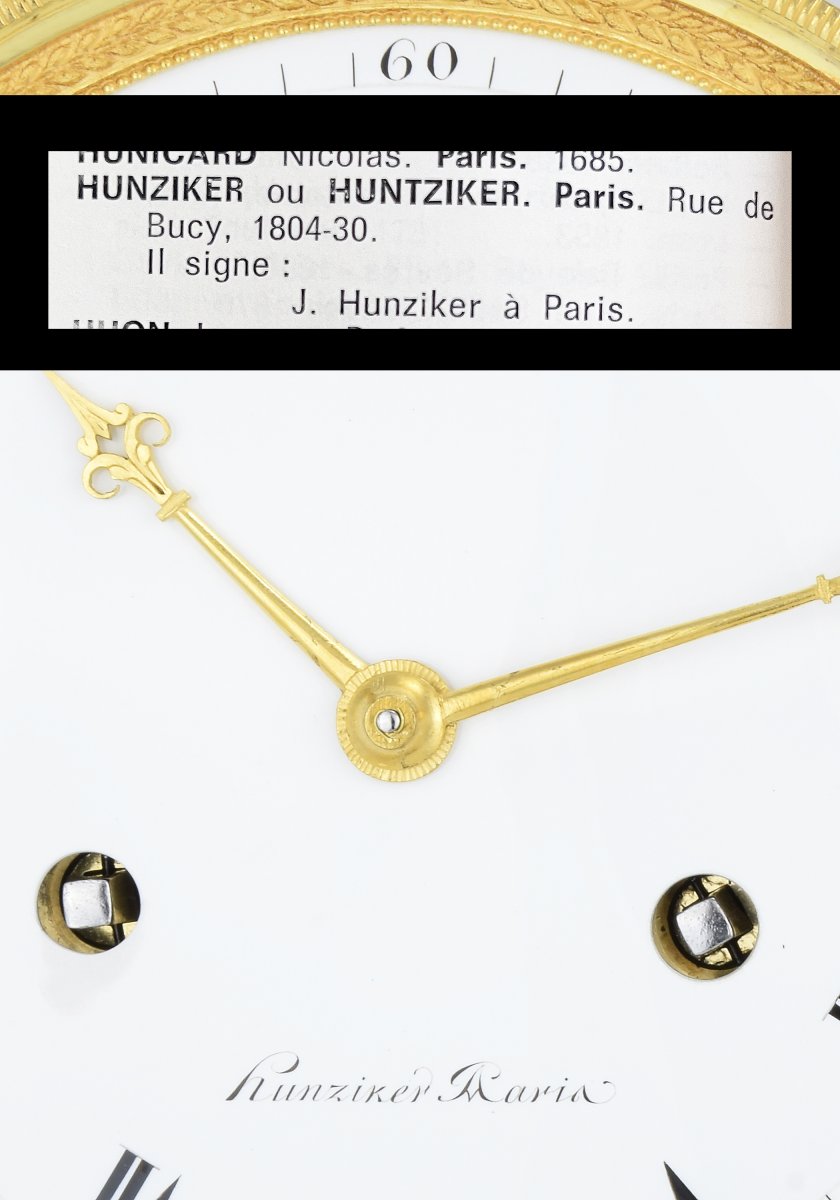
The piece is distinguished by the refined contrast between the depth of the polished black marble and the matte, satin sheen of the mercury-gilding. The large, domed, circular dial in white enamel is signed Hunziker, a clockmaker listed in Tardy's dictionary of French clockmakers. It features black Roman numerals, a railway minute track, and delicate openwork hands. The dial's frame is adorned with a beaded frieze and rows of finely chased stylized leaves.
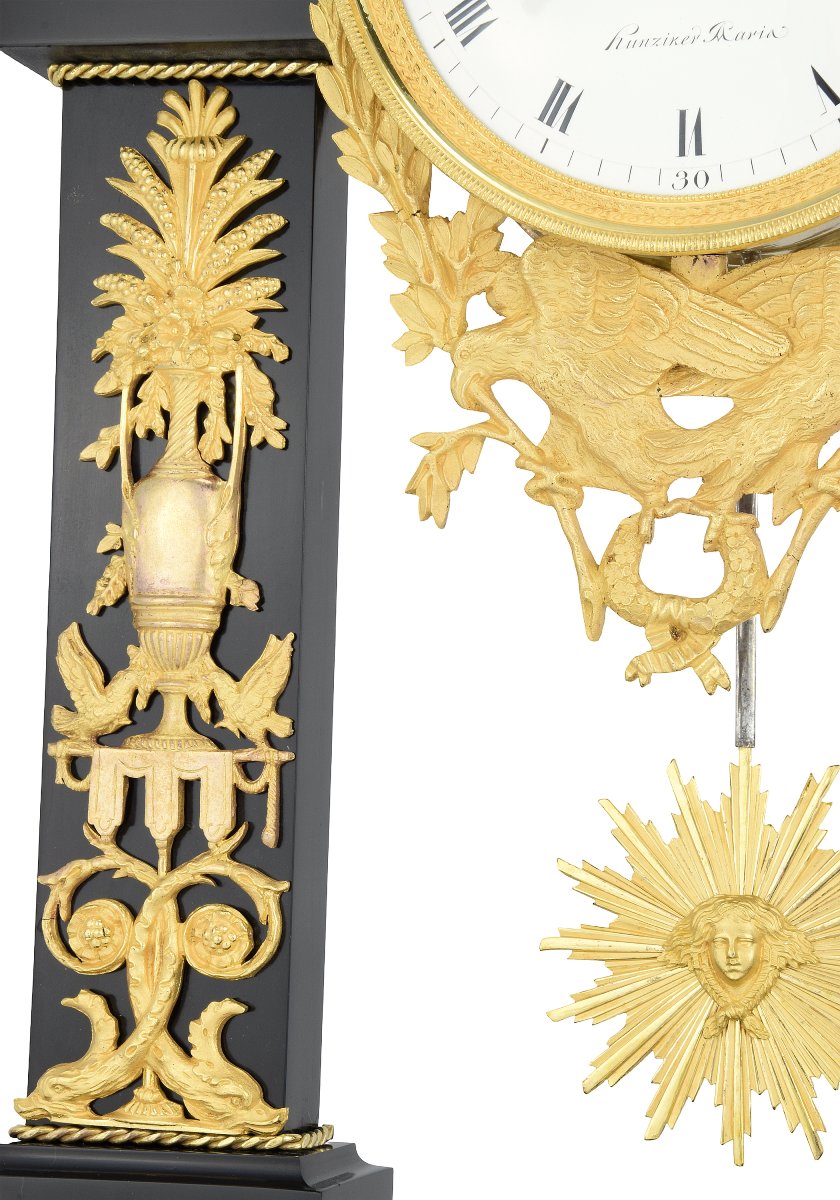
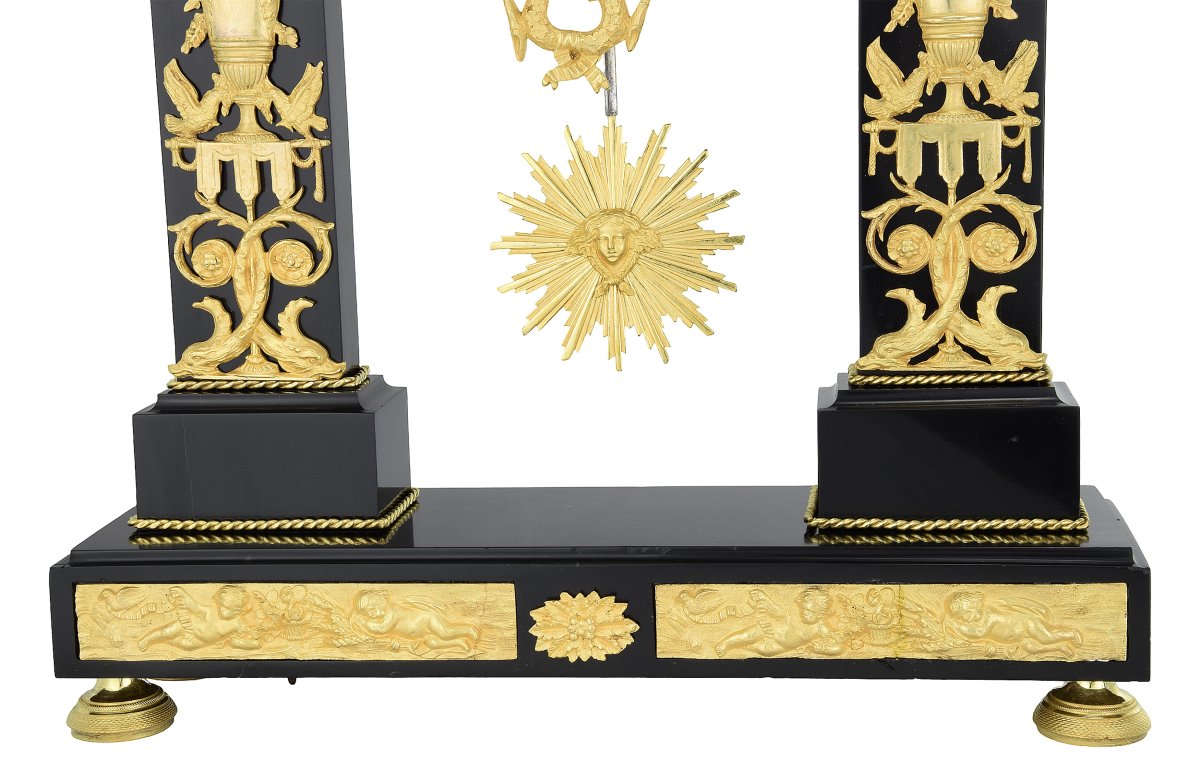
The clock's apex is crowned with an imposing floral bouquet bursting from a fluted vase, surrounded by a garland of ivy and cascading clusters of foliage on either side of the dial. This naturalistic ornamentation lends fluidity and movement to the otherwise austere architecture. On either side stand two facing griffins, mythological creatures with the body of a lion and outstretched wings, symbols of vigilance and power inherited from the decorative vocabulary of antiquity, revived during the Empire period. The black marble uprights are embellished with gilt-bronze appliqués depicting antique-style floral compositions: flowering vases, palmettes, acanthus leaves, and finely openwork scrolls. The stepped bases are highlighted with gilt-bronze twists and rest on delicately guilloché circular feet.
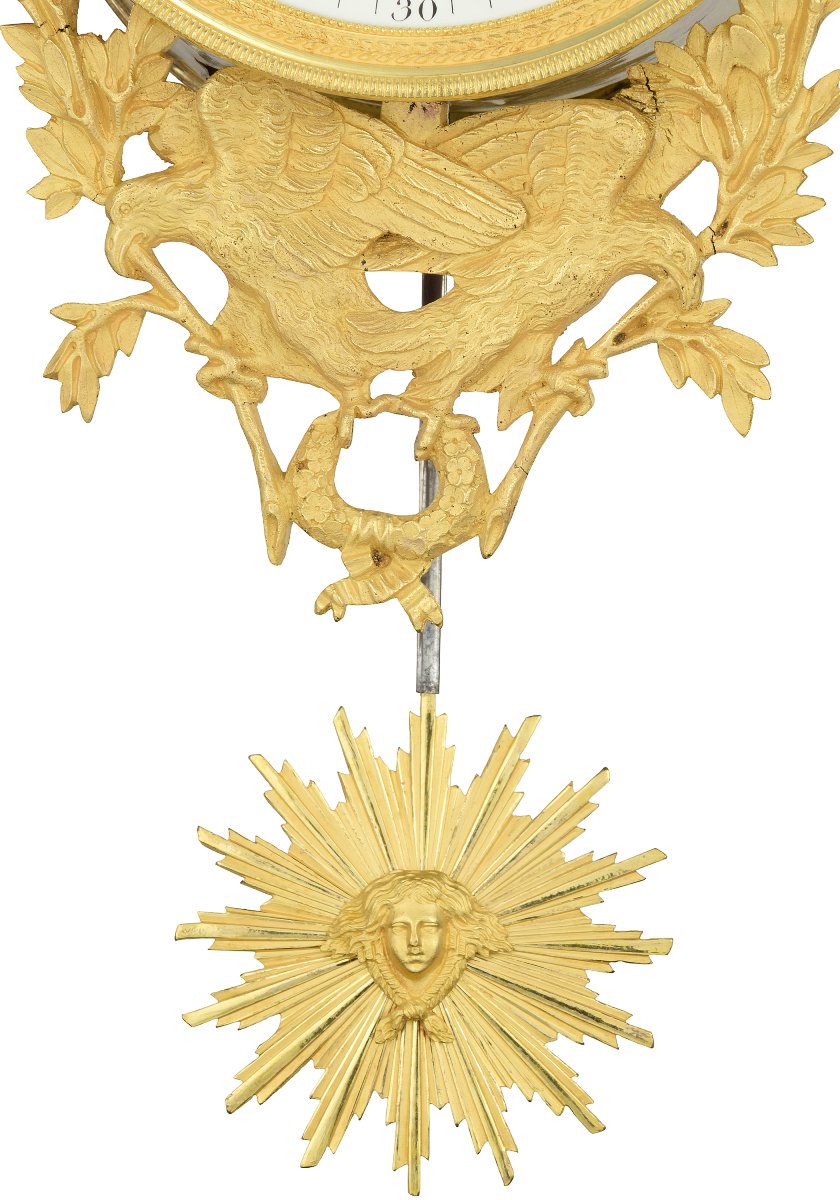
Below the dial, a spectacular heraldic motif features two facing eagles with their wings fully spread. The birds, rendered with remarkable naturalism in the detail of their plumage, face each other. Each holds in its beak a leafy oak branch with deeply veined leaves, a traditional symbol of power, fidelity, and permanence. The two branches frame the scene and meet in an elegant curve, culminating in a spectacular radiant sun centered on a mask, evoking a solar figure in the Neoclassical style. The rectangular plinth is adorned on its front with relief friezes depicting winged putti moving through vegetal scrolls, framing a central floral motif rendered in a rosette.
Through the quality of its mercury gilding, the richness of its decorative repertoire borrowed from Antiquity, and the elegance of its black marble and gilt bronze construction, this clock is a remarkable example of the Empire style of the early 19th century.
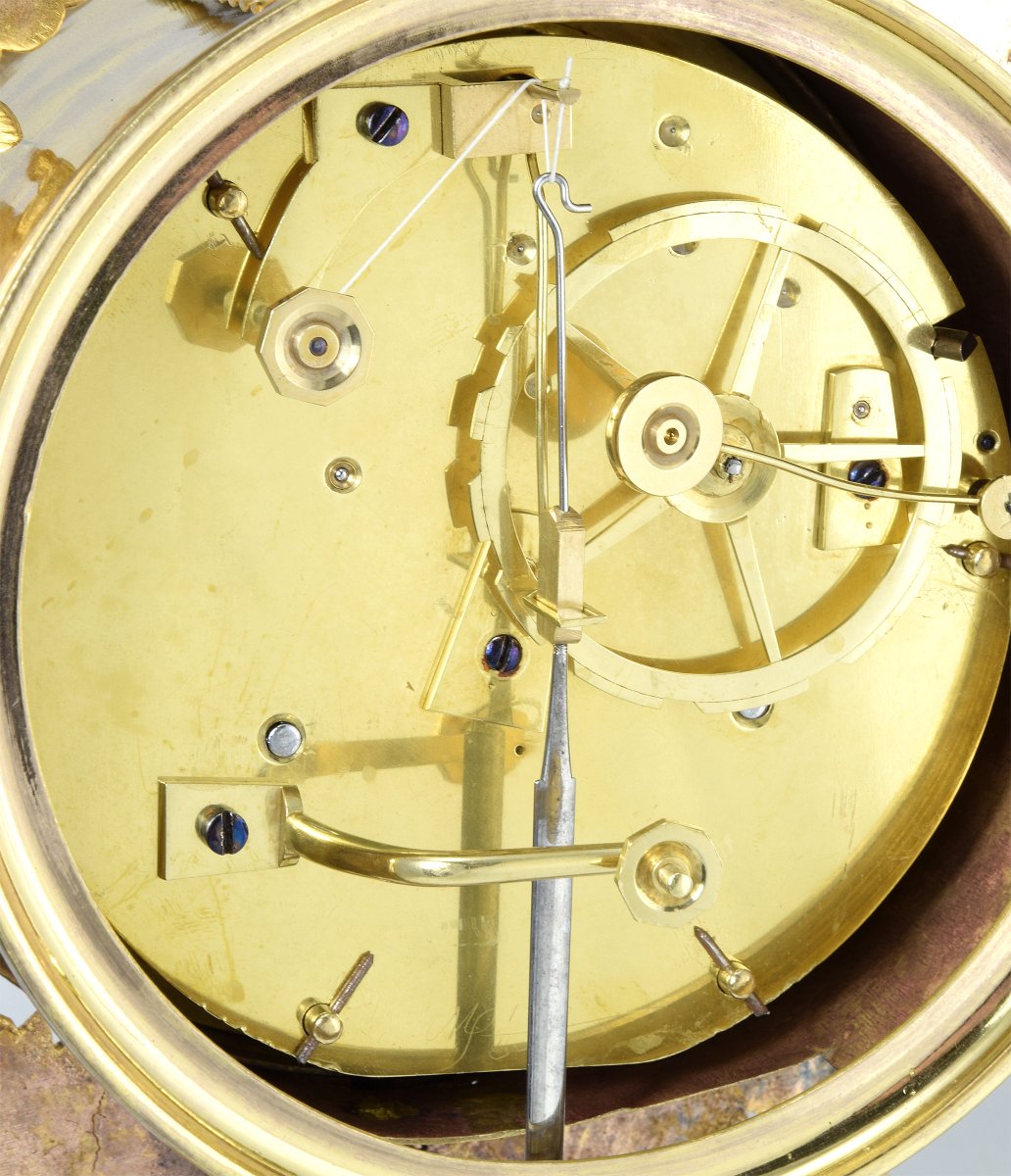
Original mechanism unaltered, wire suspension, striking the hours and half-hours on an antique bell.
ORDERING AND ADDITIONAL INFORMATION FROM OUR WEBSITE
The piece is distinguished by the refined contrast between the depth of the polished black marble and the matte, satin sheen of the mercury-gilding. The large, domed, circular dial in white enamel is signed Hunziker, a clockmaker listed in Tardy's dictionary of French clockmakers. It features black Roman numerals, a railway minute track, and delicate openwork hands. The dial's frame is adorned with a beaded frieze and rows of finely chased stylized leaves.
The clock's apex is crowned with an imposing floral bouquet bursting from a fluted vase, surrounded by a garland of ivy and cascading clusters of foliage on either side of the dial. This naturalistic ornamentation lends fluidity and movement to the otherwise austere architecture. On either side stand two facing griffins, mythological creatures with the body of a lion and outstretched wings, symbols of vigilance and power inherited from the decorative vocabulary of antiquity, revived during the Empire period. The black marble uprights are embellished with gilt-bronze appliqués depicting antique-style floral compositions: flowering vases, palmettes, acanthus leaves, and finely openwork scrolls. The stepped bases are highlighted with gilt-bronze twists and rest on delicately guilloché circular feet.
Below the dial, a spectacular heraldic motif features two facing eagles with their wings fully spread. The birds, rendered with remarkable naturalism in the detail of their plumage, face each other. Each holds in its beak a leafy oak branch with deeply veined leaves, a traditional symbol of power, fidelity, and permanence. The two branches frame the scene and meet in an elegant curve, culminating in a spectacular radiant sun centered on a mask, evoking a solar figure in the Neoclassical style. The rectangular plinth is adorned on its front with relief friezes depicting winged putti moving through vegetal scrolls, framing a central floral motif rendered in a rosette.
Through the quality of its mercury gilding, the richness of its decorative repertoire borrowed from Antiquity, and the elegance of its black marble and gilt bronze construction, this clock is a remarkable example of the Empire style of the early 19th century.
Original mechanism unaltered, wire suspension, striking the hours and half-hours on an antique bell.
ORDERING AND ADDITIONAL INFORMATION FROM OUR WEBSITE
1 800 €
Period: 19th century
Style: Consulat, Empire
Condition: Fully restored in our whorkshop
Material: Bronze
Width: 32 cm
Height: 52 cm
Depth: 10 cm
Reference (ID): 1773836
Availability: In stock
Print