

Clock Empire Allegorical Representation Of Motherhood And Protectionan Empire Period Clock, Cir
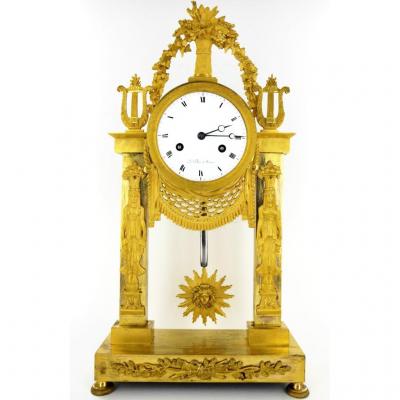
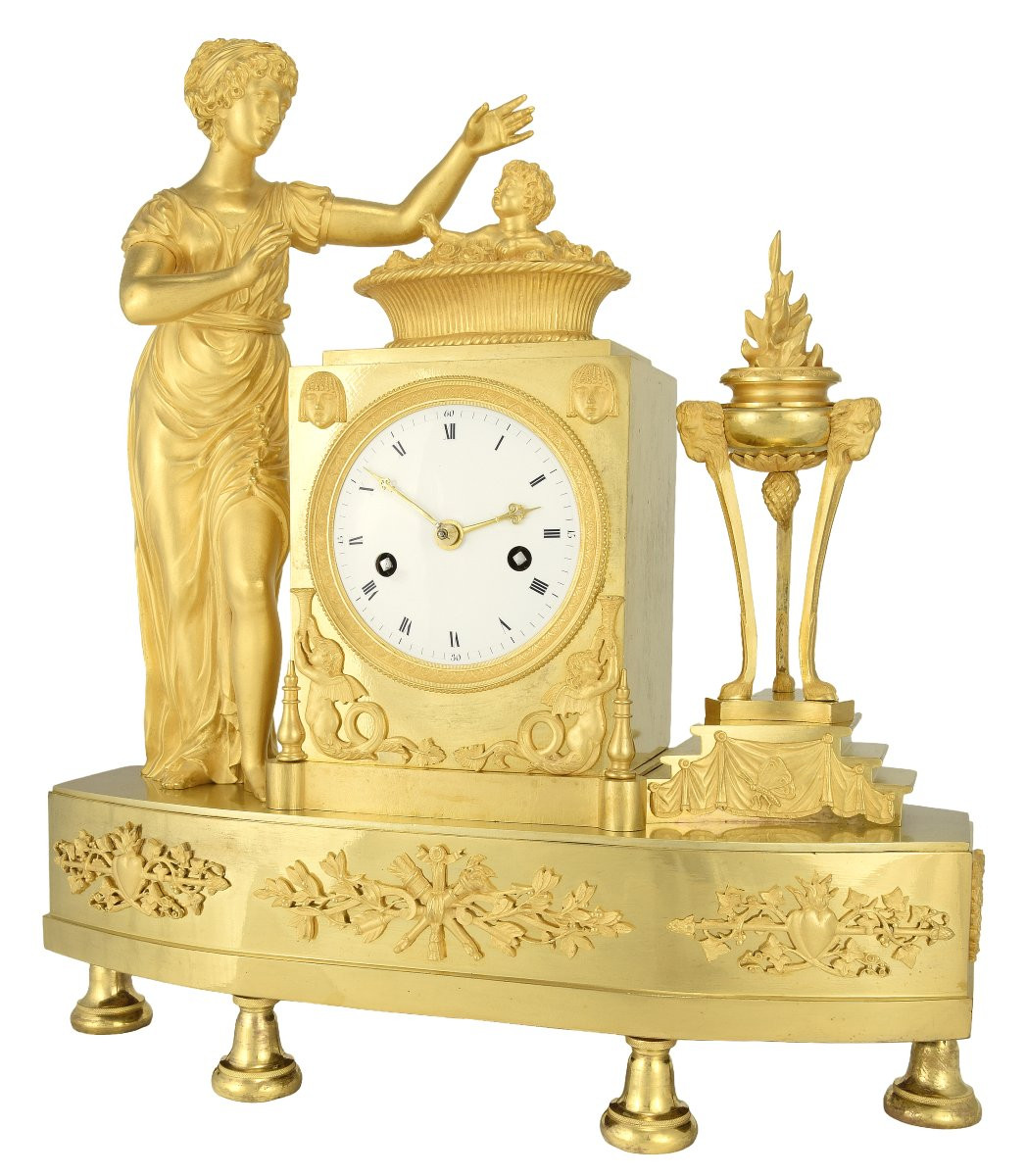
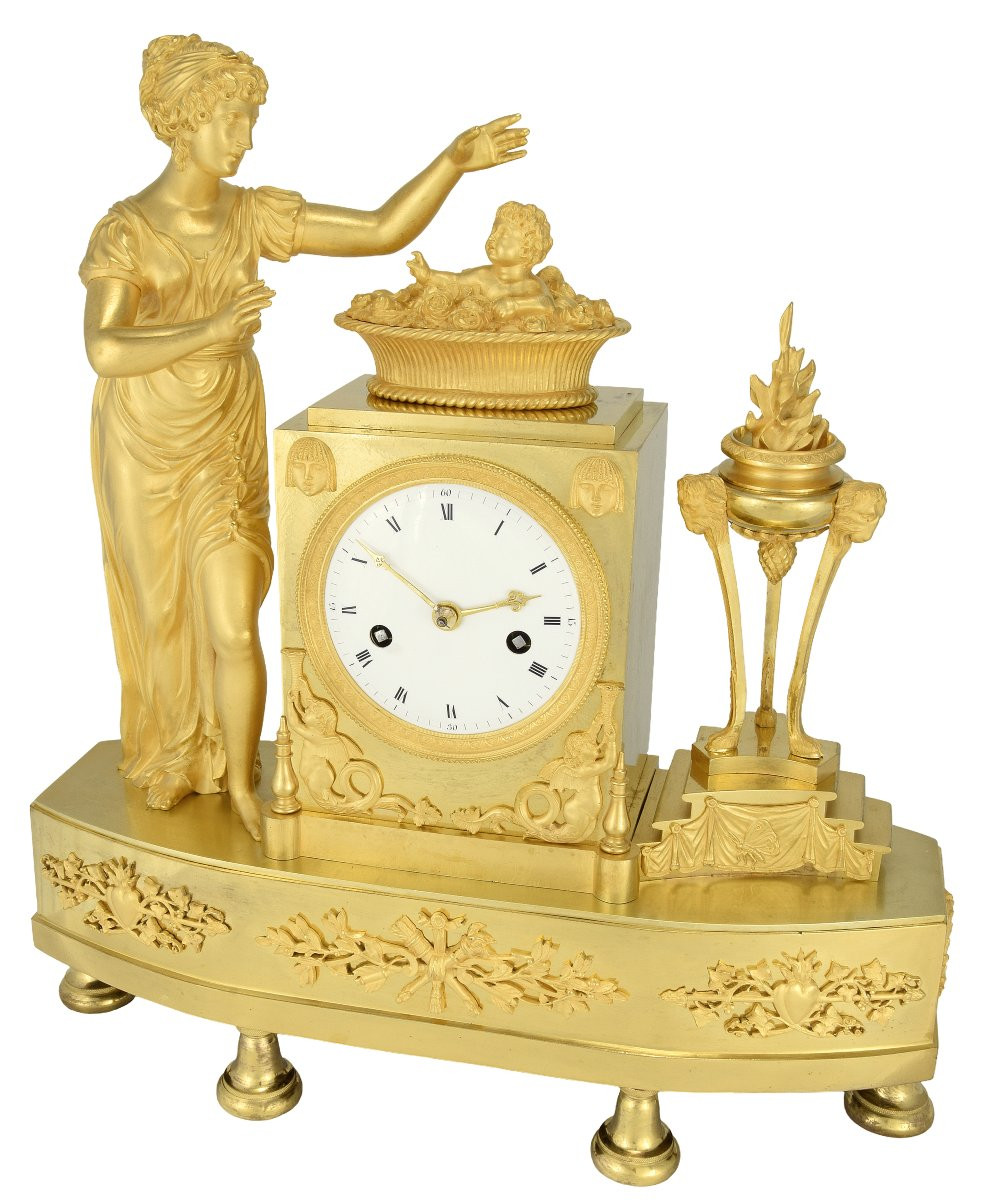
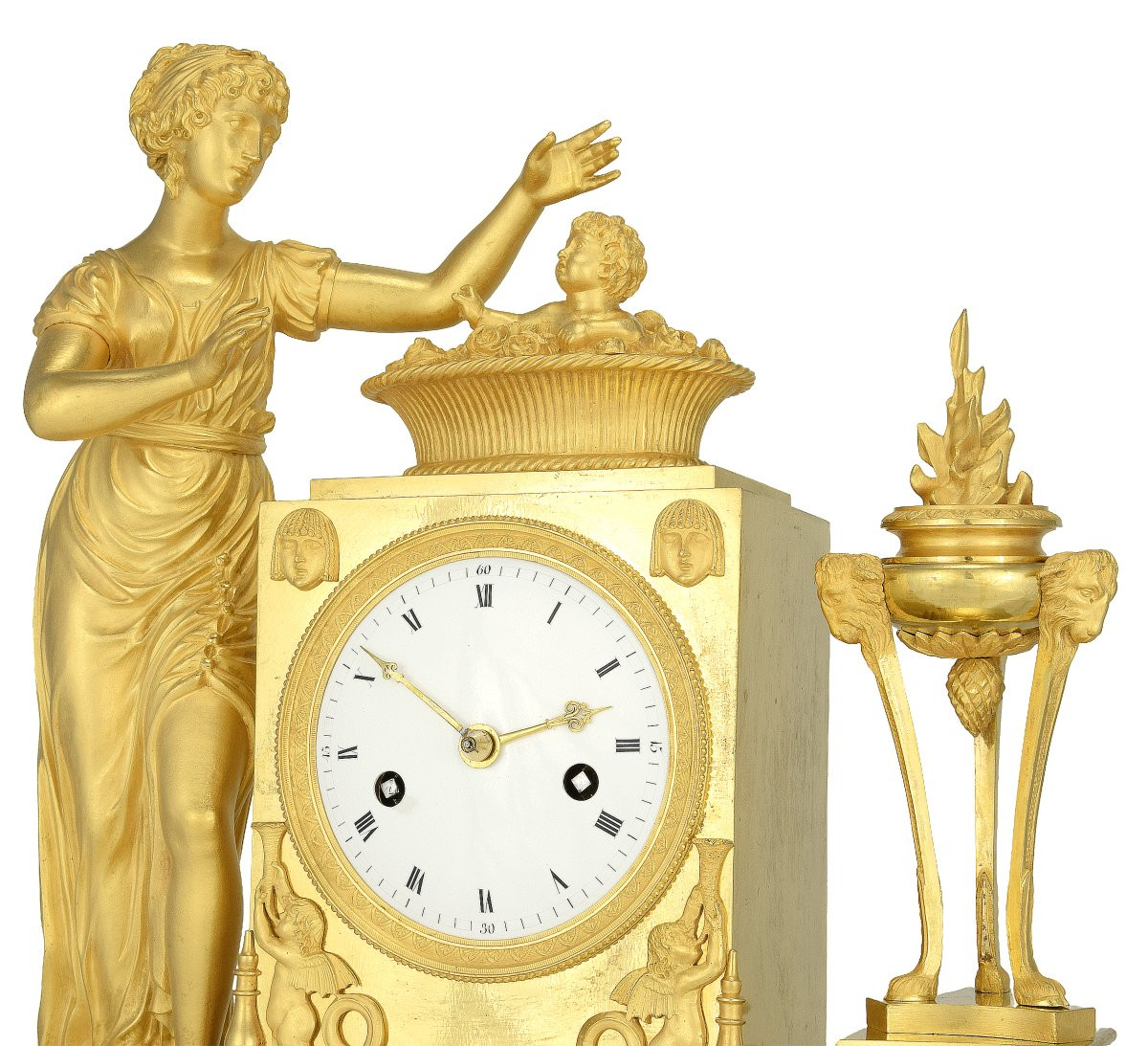
An Empire period clock, circa 1805, in finely chased and mercury-gilded
bronze, with an architectural form, resting on an oblong, stepped base
supported by four toupie feet. The main theme of this clock is an
allegorical evocation of motherhood and protection, inspired by
mythological and sentimental representations of Antiquity, revisited
during the Empire period. The remarkable quality of the chasing and the
exceptional state of preservation of the mercury gilding are
noteworthy; large areas have retained their original brilliance with a
rare mirror-like effect, revealing the full virtuosity of the
fire-gilded bronze work.
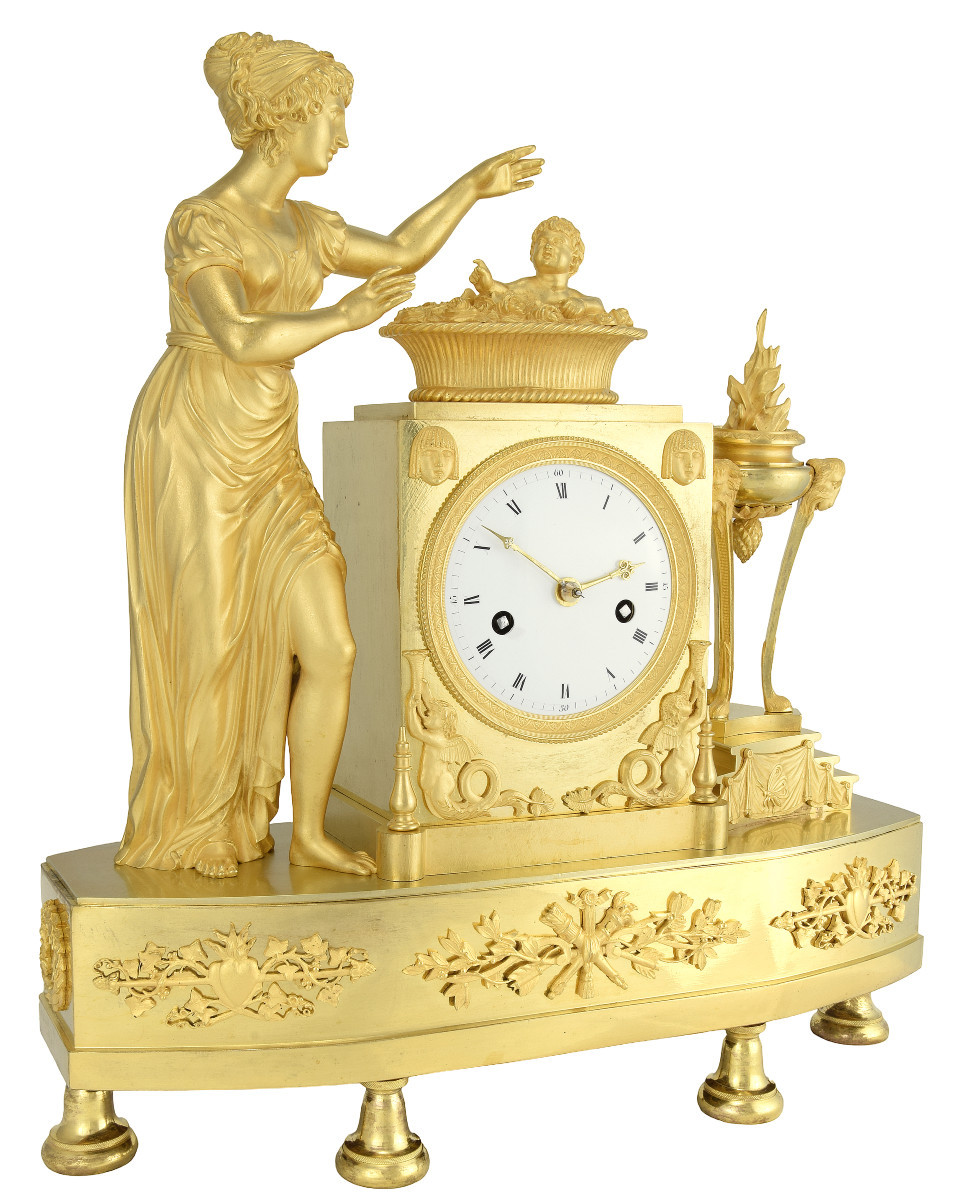
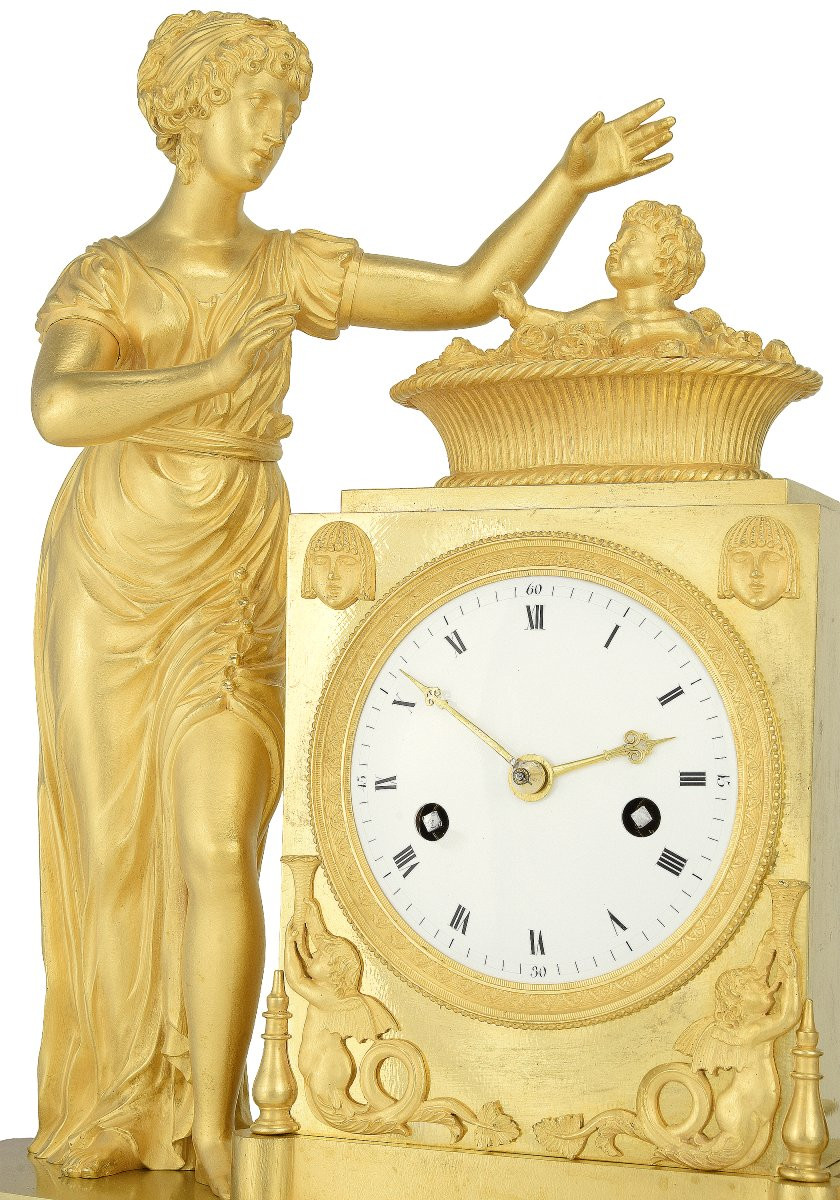
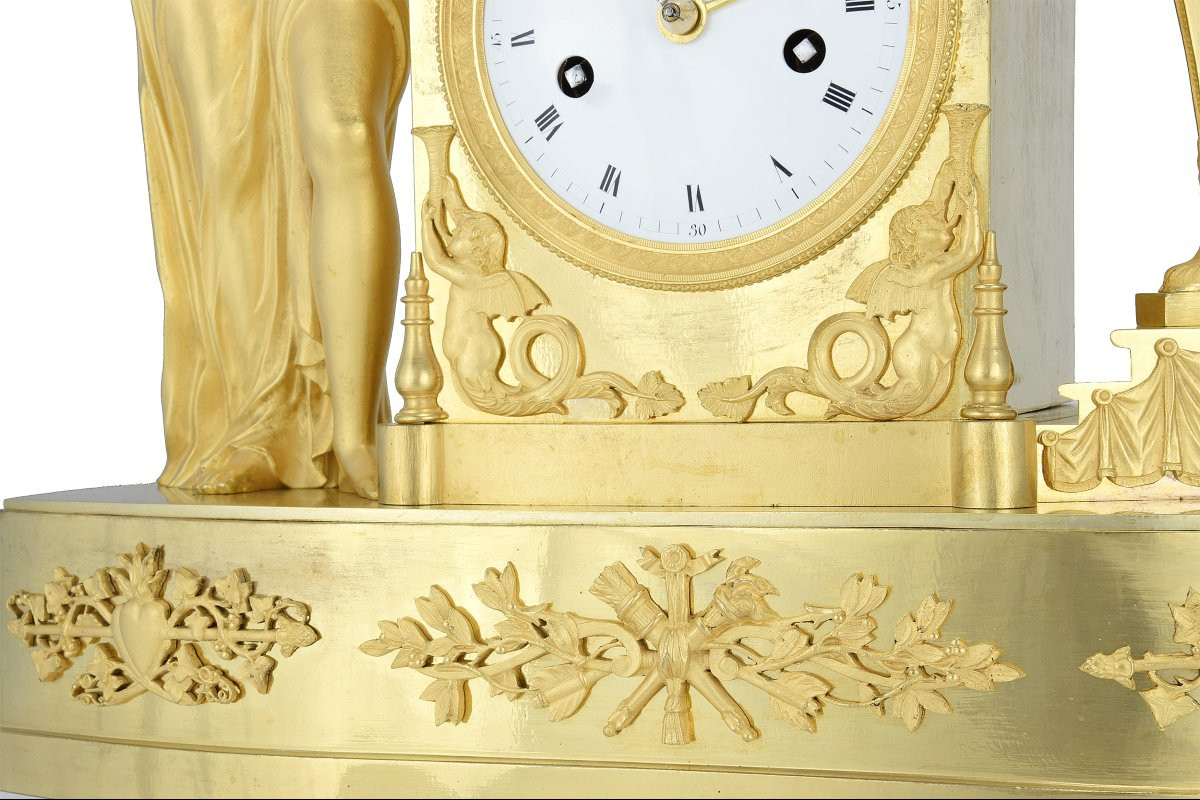
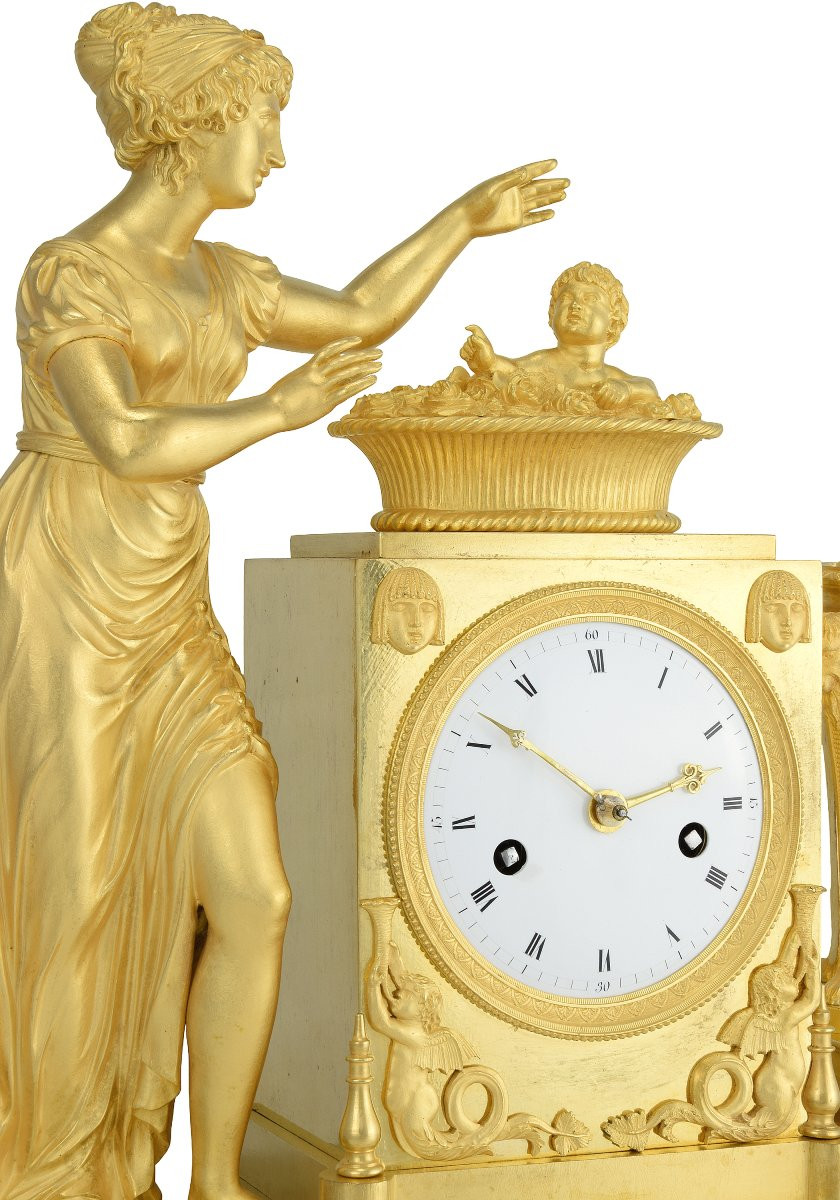
The circular white enamel dial, with Roman numerals, is set within a quadrangular pedestal of simple yet monumental lines. This pedestal is embellished with a delicately engraved frieze framed by finely chased motifs. At the upper corners appear antique female masks, treated as idealized heads inspired by ancient Egypt. The lower part of the dial is adorned with two cherubs back to back, forming symmetrical applied figures. These winged genii, with their supple and theatrical poses, support leafy scrolls and vegetal tendrils from which emerge stylized palmettes and volutes. Their upward gesture guides the eye towards the dial and animates the composition with a delicate movement.
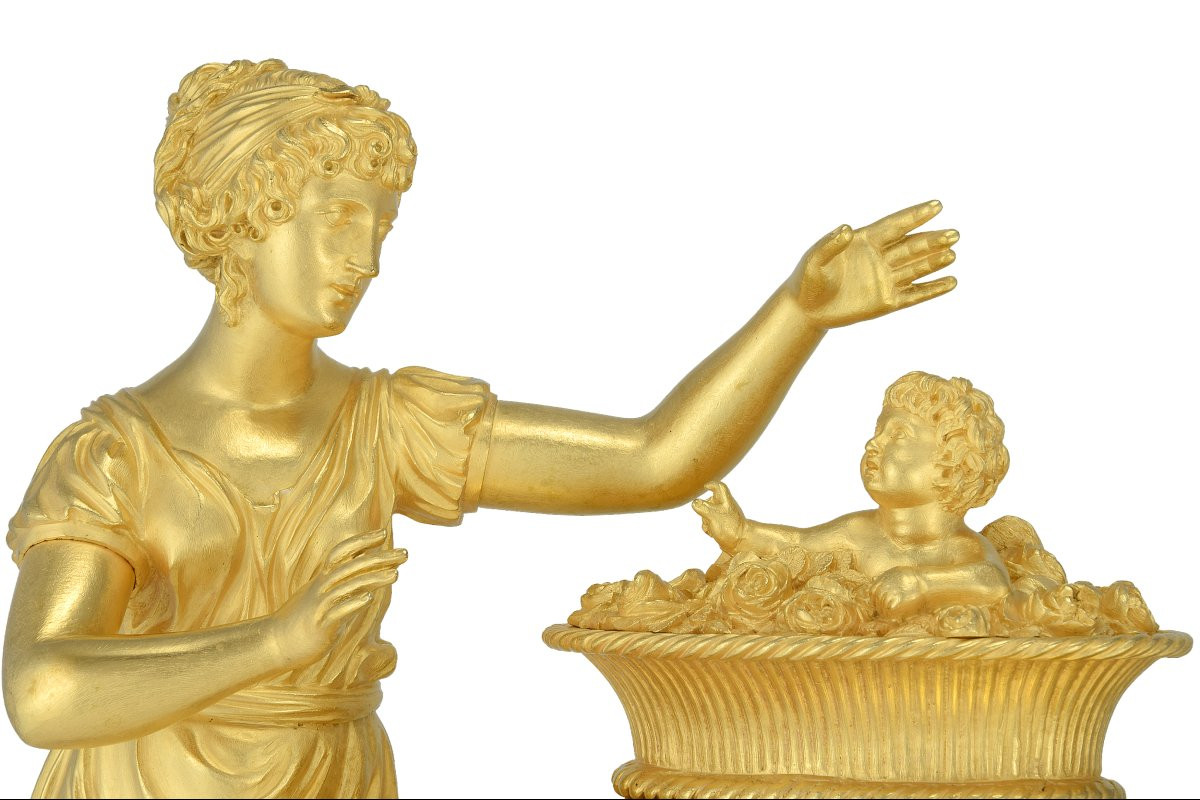
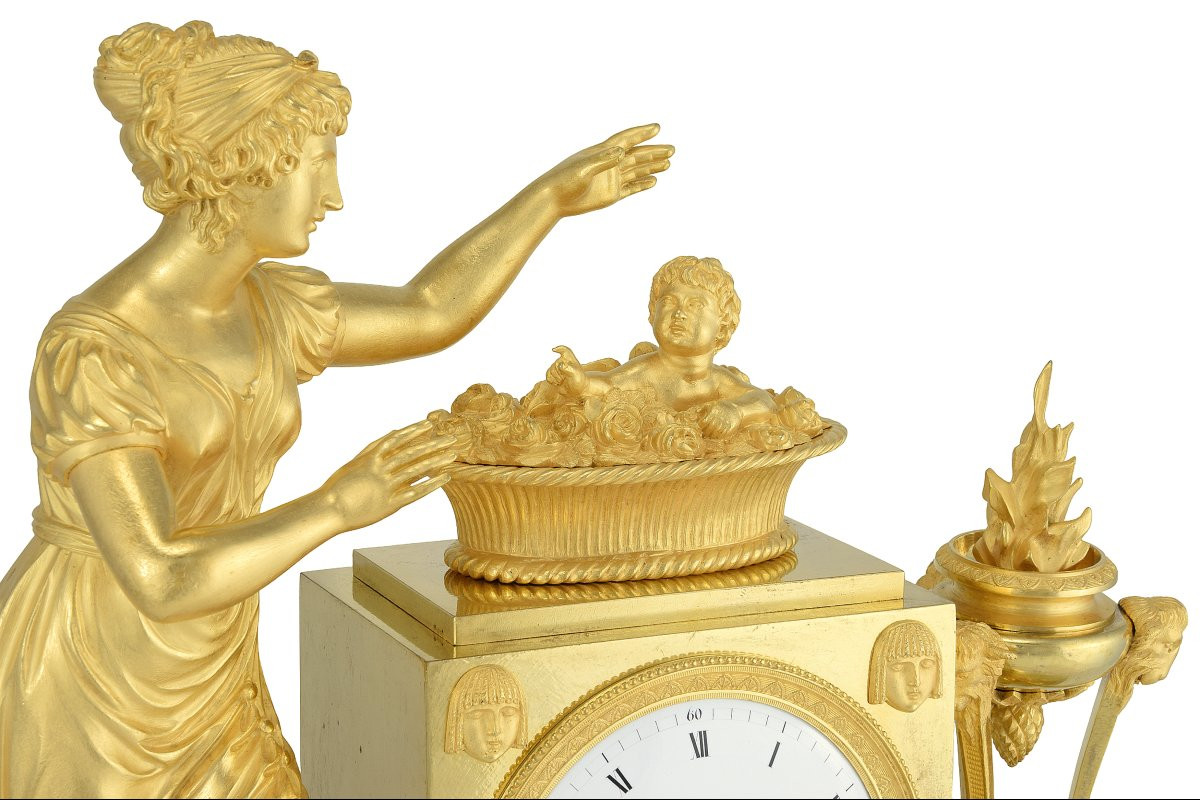
To the left of the movement stands a draped female figure in the antique style. Dressed in a light tunic with abundant, flowing folds, she adopts a posture full of grace and gentleness. Her raised arm makes a protective and benevolent gesture towards the child placed at the top of the clock, while her other hand, brought to her chest, accentuates the affectionate and maternal character of the scene. The fine modeling, the naturalistic treatment of the drapery, and the delicacy of the features attest to the high quality of the carving. At the top of the pedestal, a nude cherub emerges from a basket of flowers with gadrooned ribs. Surrounded by blooming roses, the cherub extends its arms toward the female figure in a lively and expressive pose. This composition can be interpreted as an allegory of Maternal Love, Education, or even Princely Birth. The visual dialogue between the woman and the cherub creates a scene imbued with tenderness, enhanced by the enveloping nature of the floral decoration.
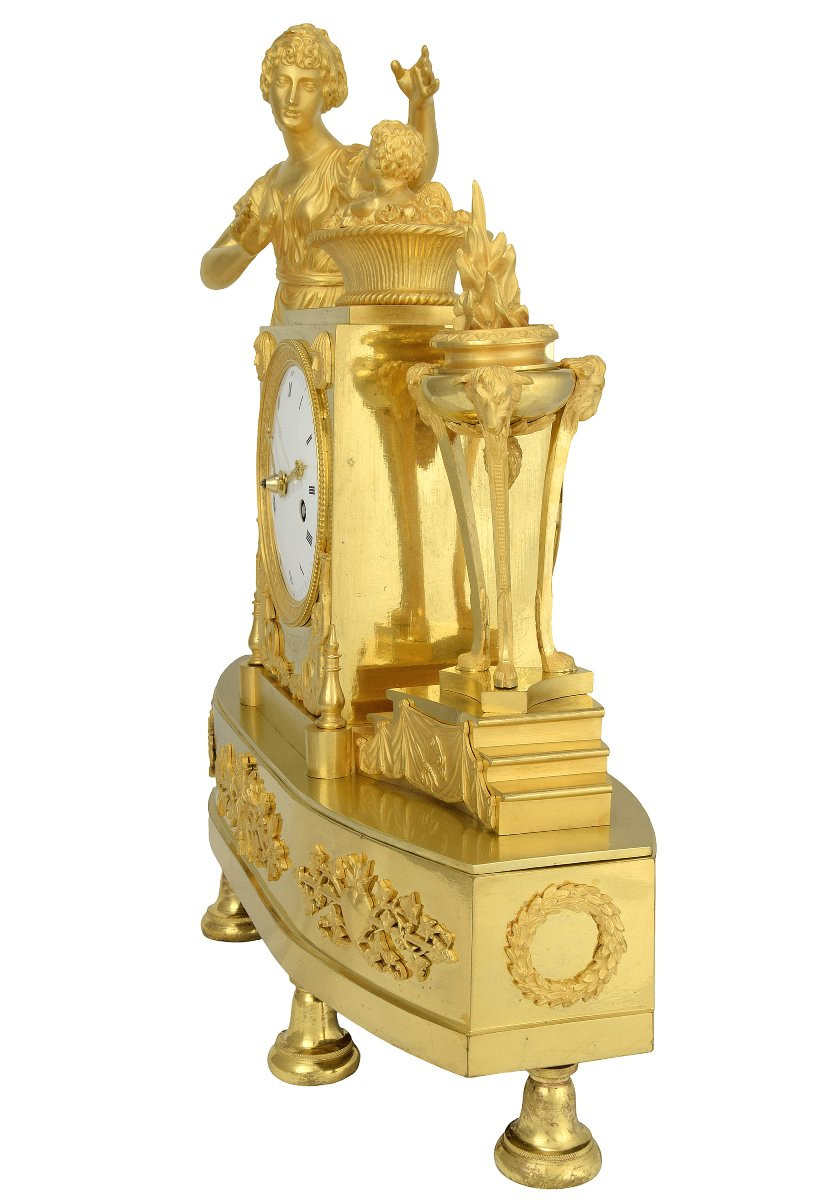
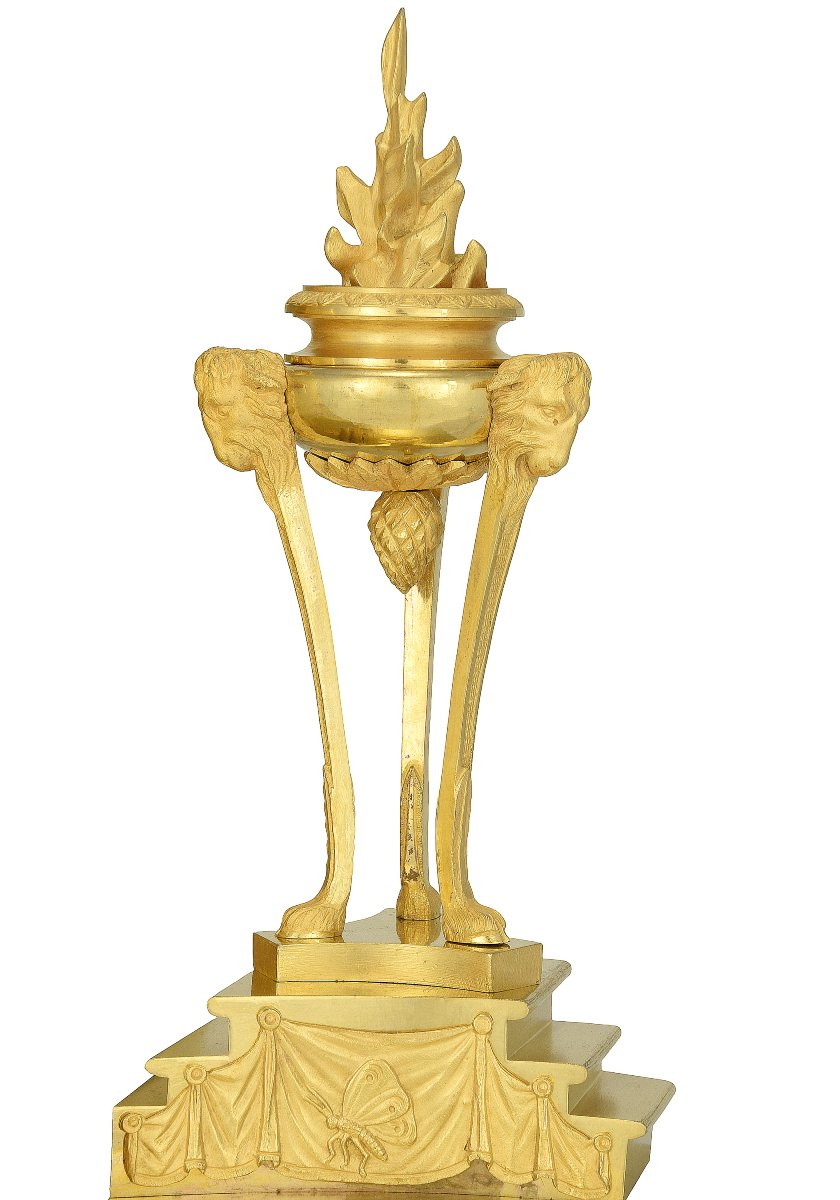
To the right, a tripod incense burner harmoniously complements the clock's architecture. It rests on three tapered feet adorned with finely carved rams' heads, an emblematic motif of the classical repertoire and a symbol of sacrificial power. The vessel supports a spectacular, leaping flame, evoking the sacred fire or the eternal flame. The piece rests on a stepped pedestal decorated with a rich draped fabric suspended from tassels, at the center of which appears a butterfly in relief, a classic symbol of the soul and renewal. Beneath the cup, a hanging pine cone enriches the symbolic decoration; associated since Antiquity with fertility and immortality, it reinforces the allegorical scope of the composition.
The arched base is adorned with abundant applied relief decoration: crossed attributes, leafy garlands, quivers, torches, laurel branches, and flaming hearts compose a typically Neoclassical ornamental vocabulary. These motifs, finely chiseled, stand out against the matte and polished background of the gilding, creating a subtle contrast between satiny surfaces and burnished areas. The ends are decorated with laurel wreaths and trophies of love, reinforcing the allegorical spirit of the work.
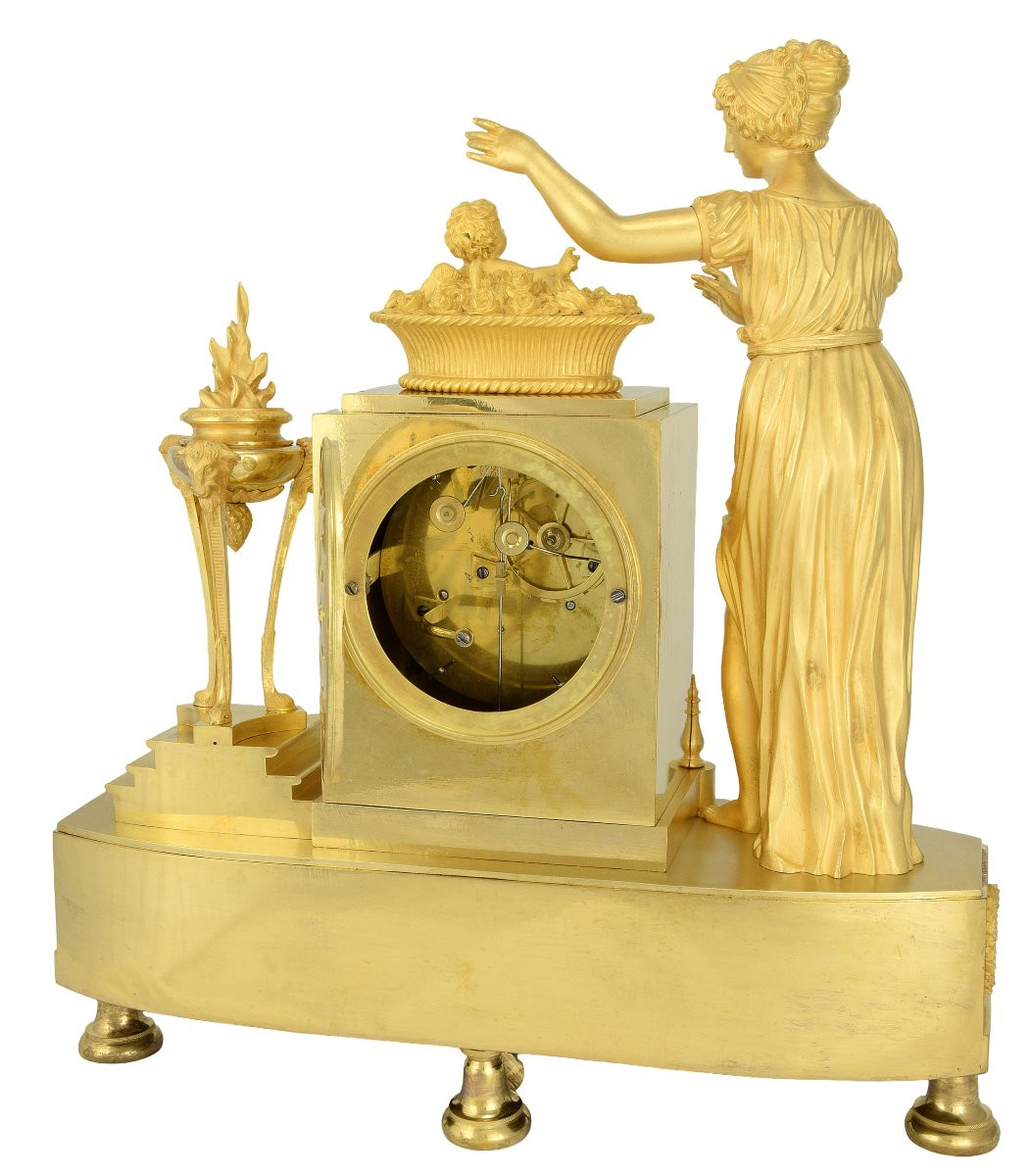
This clock is a remarkable example of the art of mercury-gilded bronze during the Empire period, combining high-quality casting, fine chasing, and exceptional preservation of the gilding in a composition of great sculptural elegance. The original mechanism is intact and unaltered, with a wire suspension. It strikes the hours and half-hours on an antique bell, producing a clear and authentic sound.
ORDERING AND ADDITIONAL INFORMATION FROM OUR WEBSITE
The circular white enamel dial, with Roman numerals, is set within a quadrangular pedestal of simple yet monumental lines. This pedestal is embellished with a delicately engraved frieze framed by finely chased motifs. At the upper corners appear antique female masks, treated as idealized heads inspired by ancient Egypt. The lower part of the dial is adorned with two cherubs back to back, forming symmetrical applied figures. These winged genii, with their supple and theatrical poses, support leafy scrolls and vegetal tendrils from which emerge stylized palmettes and volutes. Their upward gesture guides the eye towards the dial and animates the composition with a delicate movement.
To the left of the movement stands a draped female figure in the antique style. Dressed in a light tunic with abundant, flowing folds, she adopts a posture full of grace and gentleness. Her raised arm makes a protective and benevolent gesture towards the child placed at the top of the clock, while her other hand, brought to her chest, accentuates the affectionate and maternal character of the scene. The fine modeling, the naturalistic treatment of the drapery, and the delicacy of the features attest to the high quality of the carving. At the top of the pedestal, a nude cherub emerges from a basket of flowers with gadrooned ribs. Surrounded by blooming roses, the cherub extends its arms toward the female figure in a lively and expressive pose. This composition can be interpreted as an allegory of Maternal Love, Education, or even Princely Birth. The visual dialogue between the woman and the cherub creates a scene imbued with tenderness, enhanced by the enveloping nature of the floral decoration.
To the right, a tripod incense burner harmoniously complements the clock's architecture. It rests on three tapered feet adorned with finely carved rams' heads, an emblematic motif of the classical repertoire and a symbol of sacrificial power. The vessel supports a spectacular, leaping flame, evoking the sacred fire or the eternal flame. The piece rests on a stepped pedestal decorated with a rich draped fabric suspended from tassels, at the center of which appears a butterfly in relief, a classic symbol of the soul and renewal. Beneath the cup, a hanging pine cone enriches the symbolic decoration; associated since Antiquity with fertility and immortality, it reinforces the allegorical scope of the composition.
The arched base is adorned with abundant applied relief decoration: crossed attributes, leafy garlands, quivers, torches, laurel branches, and flaming hearts compose a typically Neoclassical ornamental vocabulary. These motifs, finely chiseled, stand out against the matte and polished background of the gilding, creating a subtle contrast between satiny surfaces and burnished areas. The ends are decorated with laurel wreaths and trophies of love, reinforcing the allegorical spirit of the work.
This clock is a remarkable example of the art of mercury-gilded bronze during the Empire period, combining high-quality casting, fine chasing, and exceptional preservation of the gilding in a composition of great sculptural elegance. The original mechanism is intact and unaltered, with a wire suspension. It strikes the hours and half-hours on an antique bell, producing a clear and authentic sound.
ORDERING AND ADDITIONAL INFORMATION FROM OUR WEBSITE
2 300 €
Period: 19th century
Style: Consulat, Empire
Condition: Fully restored in our whorkshop
Material: Bronze
Width: 34 cm
Height: 38 cm
Depth: 13 cm
Reference (ID): 1756763
Availability: In stock
Print