THIS OBJECT WAS SOLD
Clock Atypical Clock Featuring Sphinxes
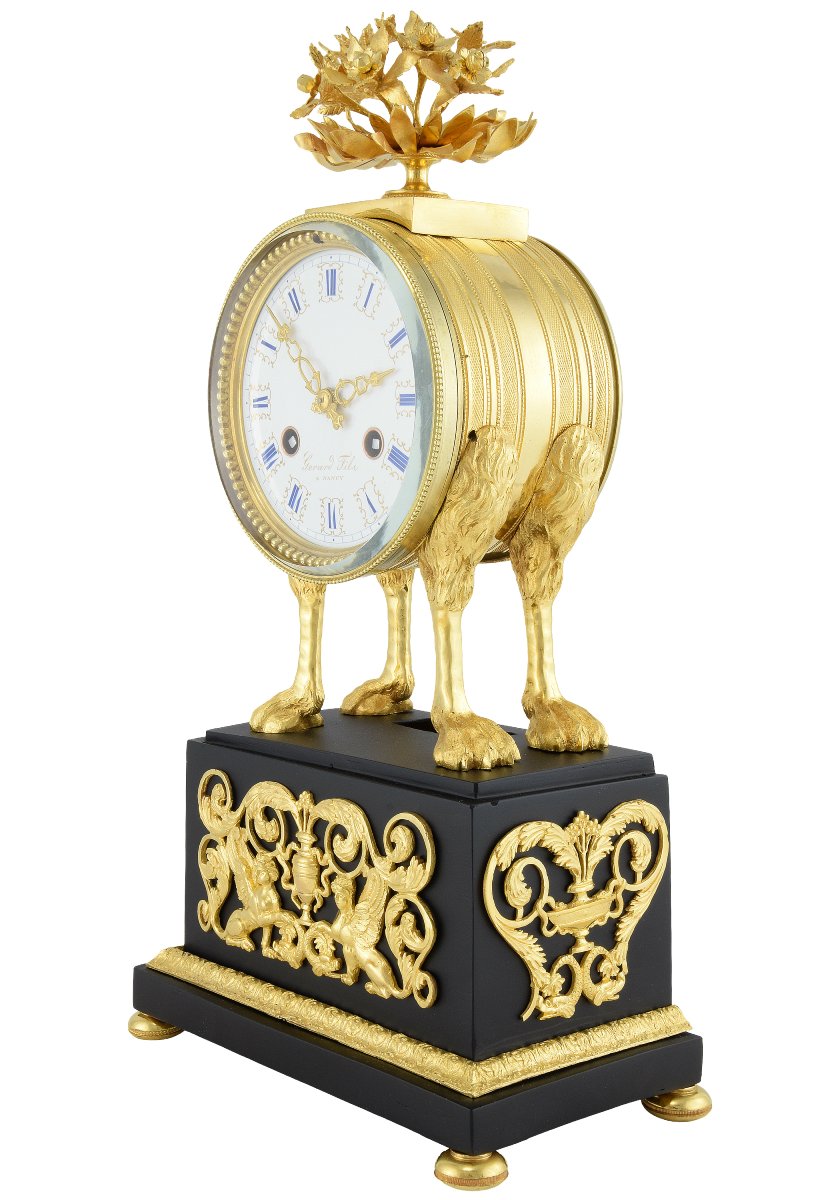
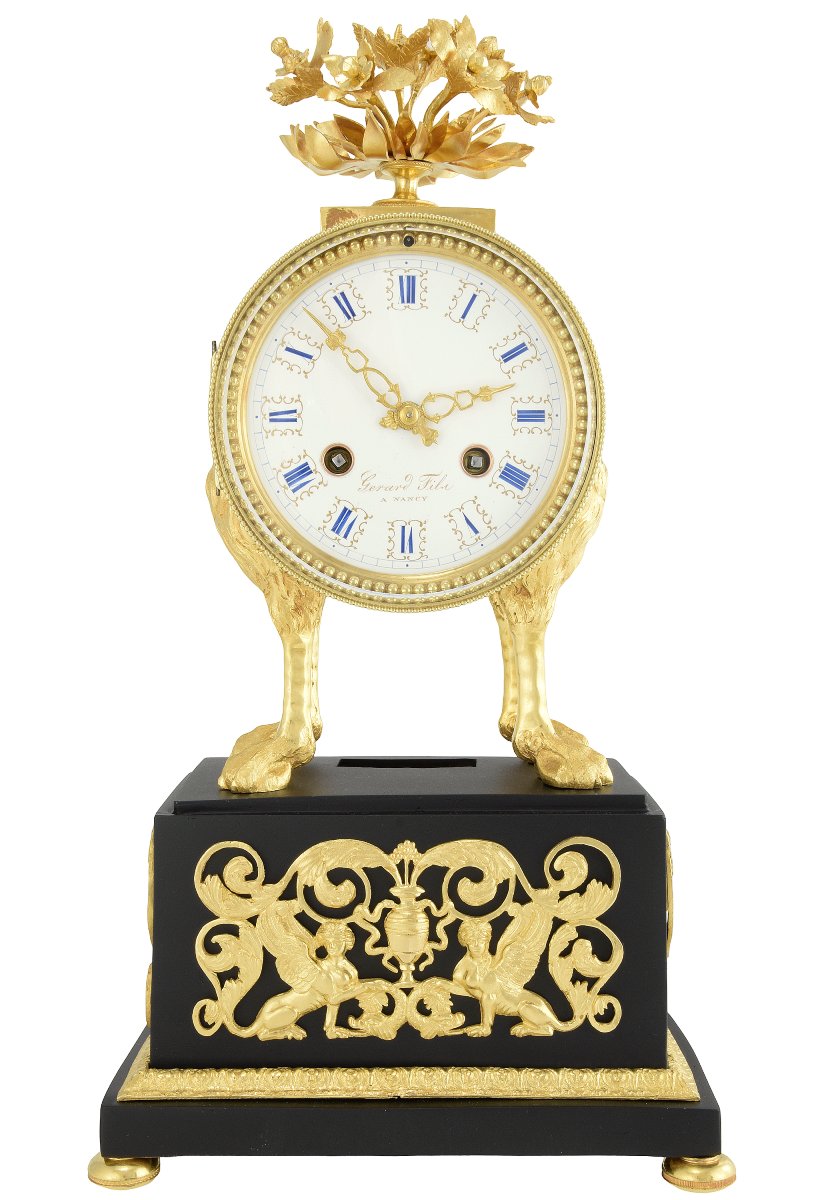
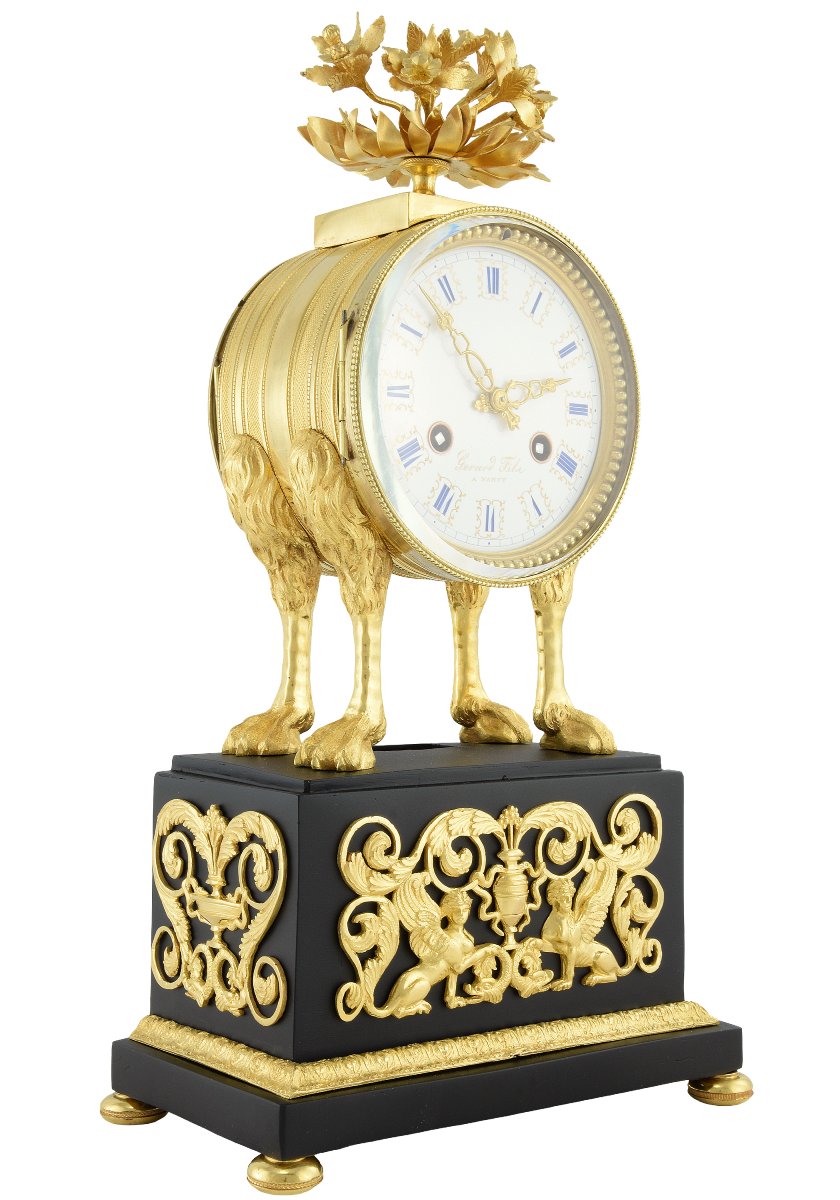
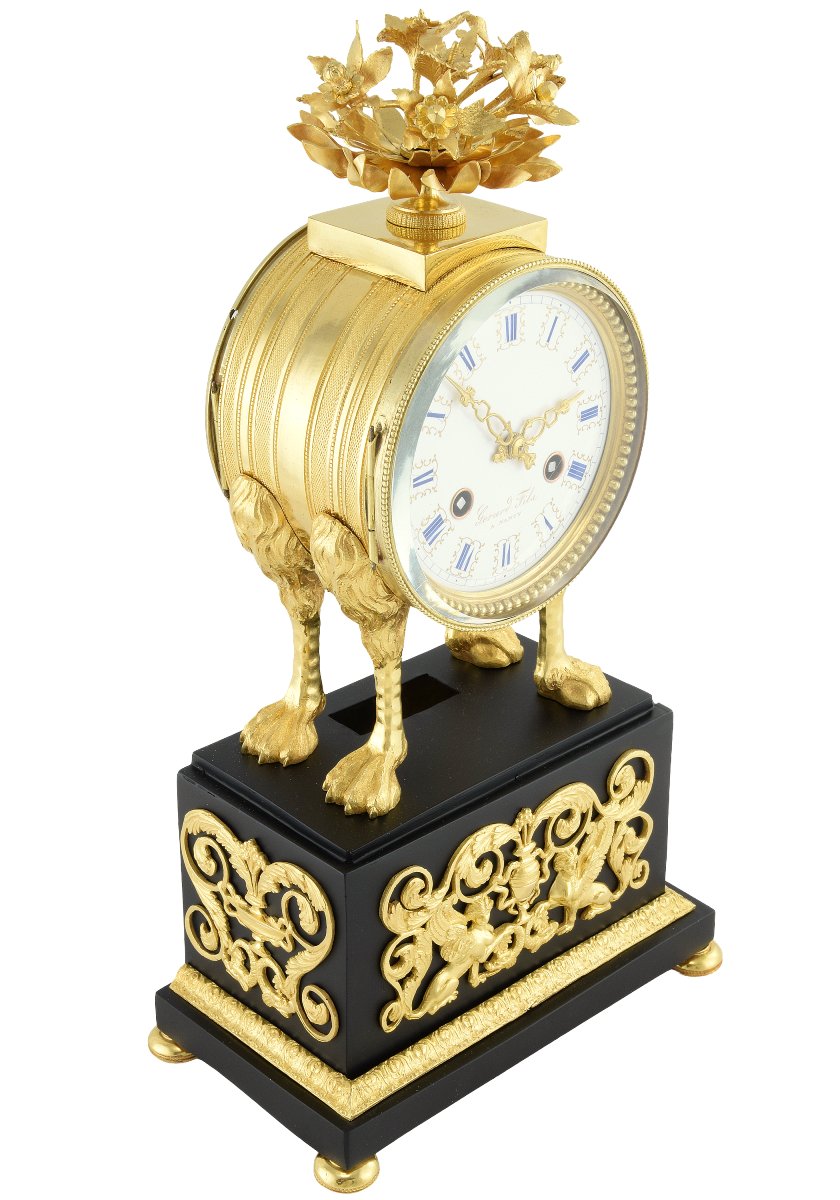
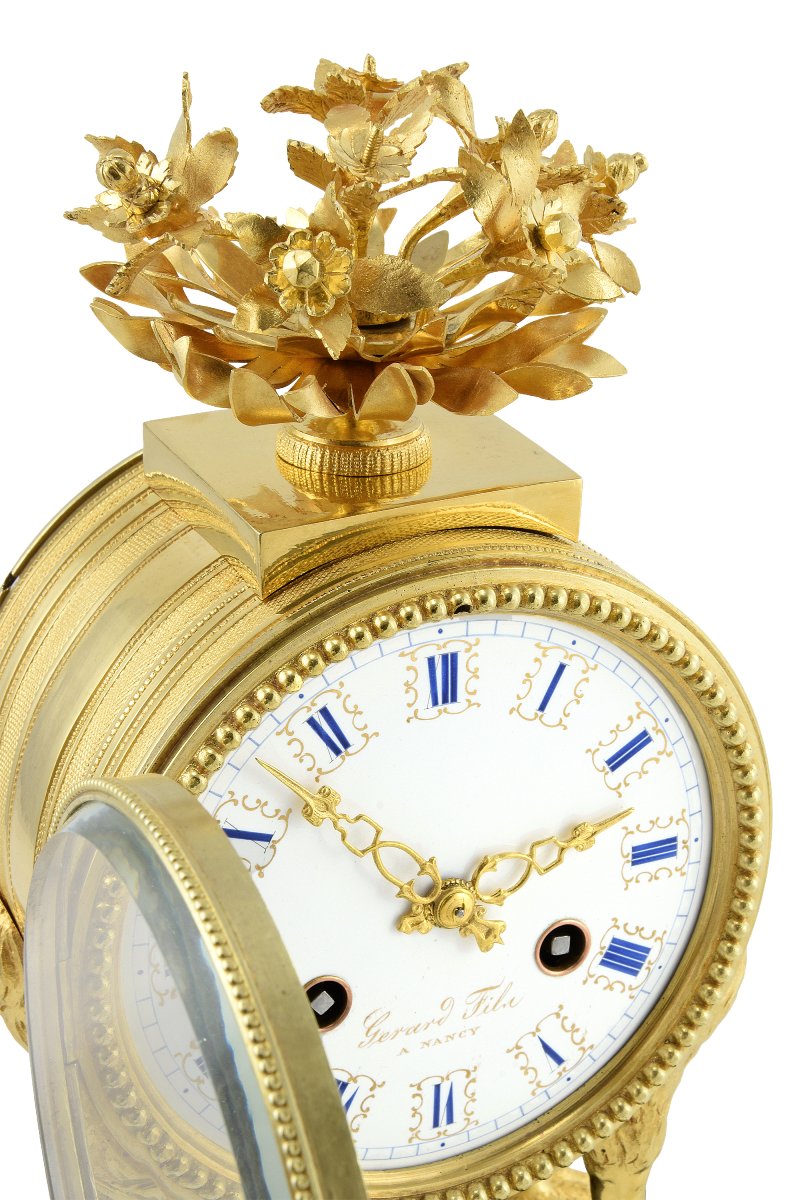
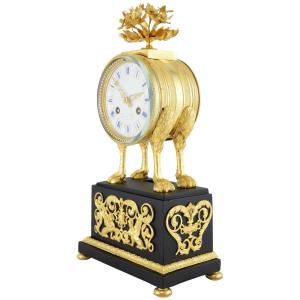


This remarkable clock, crafted from gilt and patinated bronze during
the Napoleon III period (circa 1860), features a highly original
composition inspired by 19th-century animalier and decorative themes.
Its structure is organized around a cylindrical drum representing the
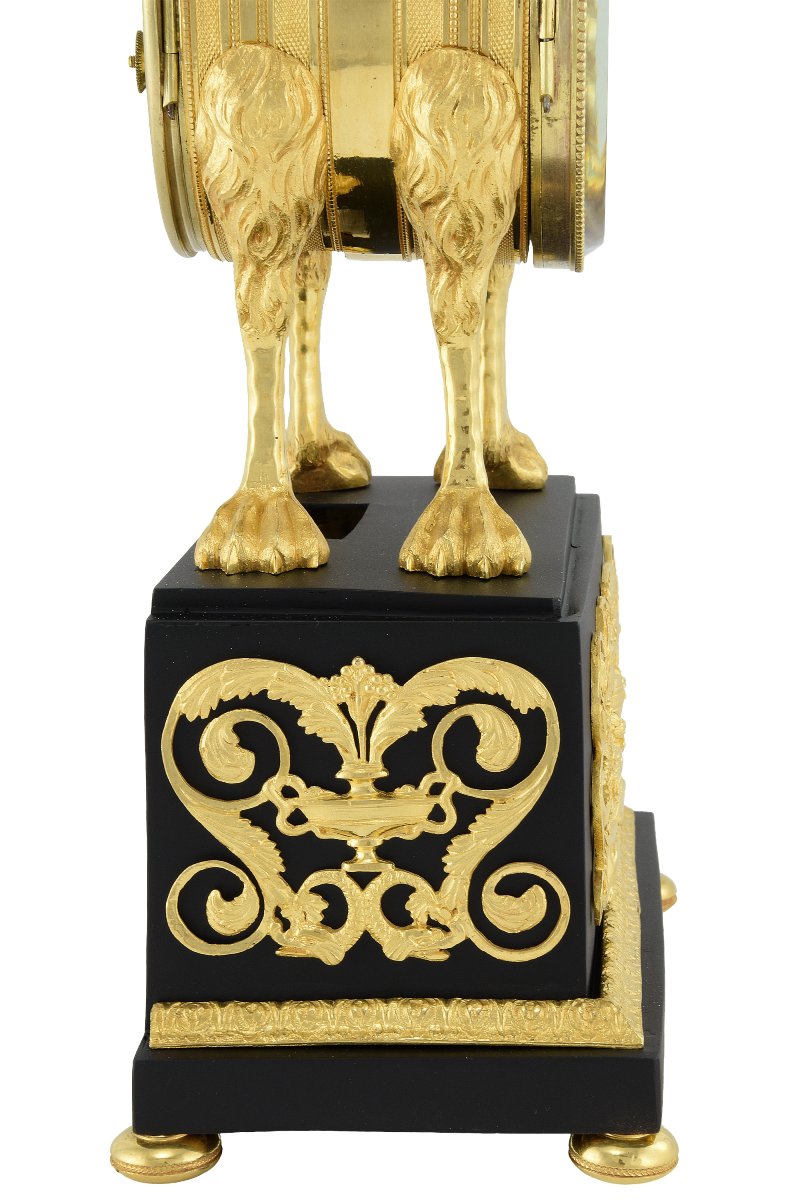
stylized body of a fantastical quadruped; it rests elegantly on four
long, powerful feline legs that terminate in large, finely chased
claws. The cylinder—rhythmically patterned with longitudinal
fluting that alternates between polished surfaces, beaded borders, and
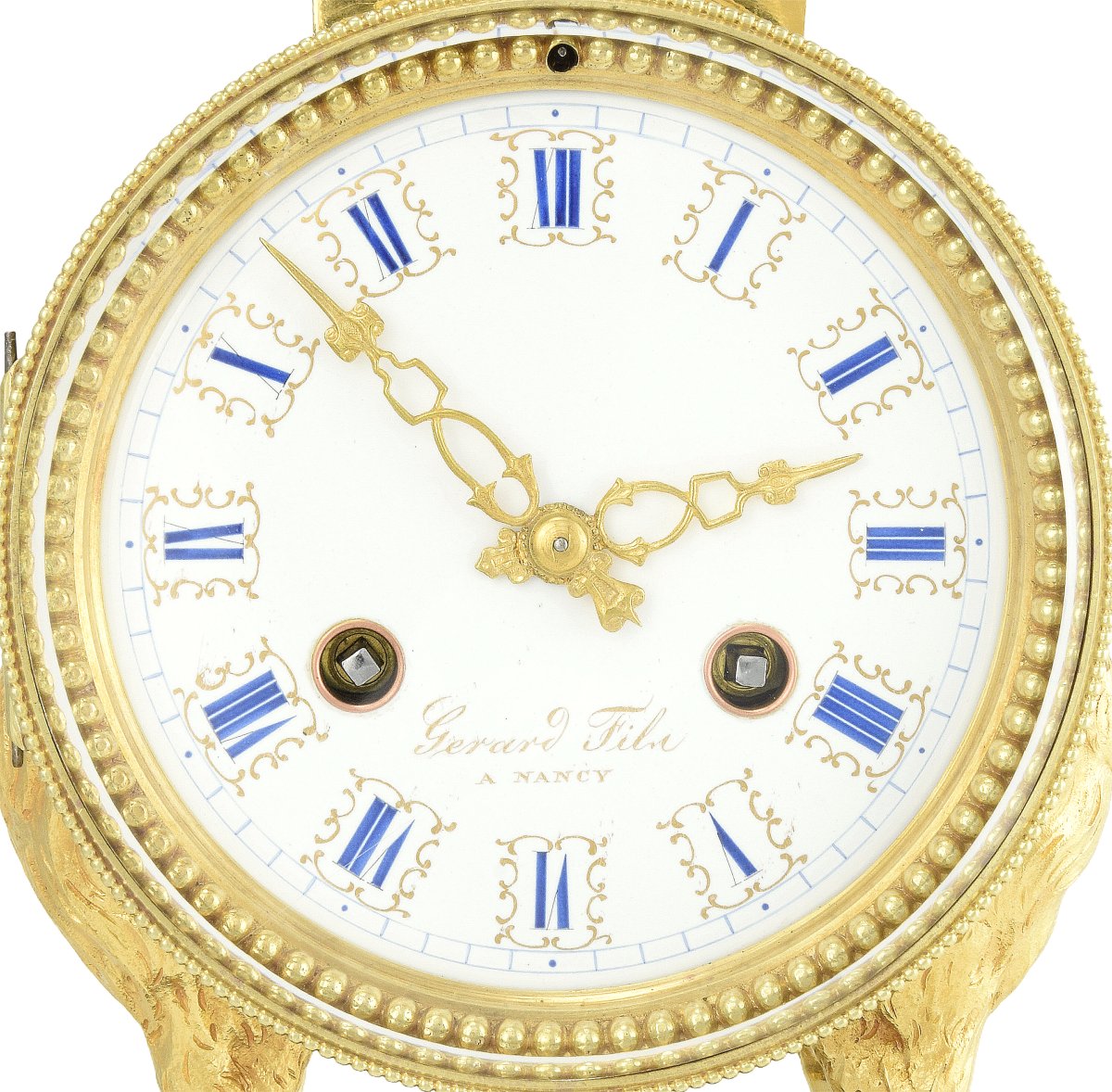
engine-turned bands—bears a large circular dial on its front,
framed by a bezel featuring a double row of beads. The white enamel
dial displays an elegant "railway" minute track with fine markings,
while the hours are indicated by large blue Roman numerals set within
Rococo-style cartouches, delicately embellished with gilt arabesques.
The openwork gilt-bronze hands, intricately cut in the Louis XV style,
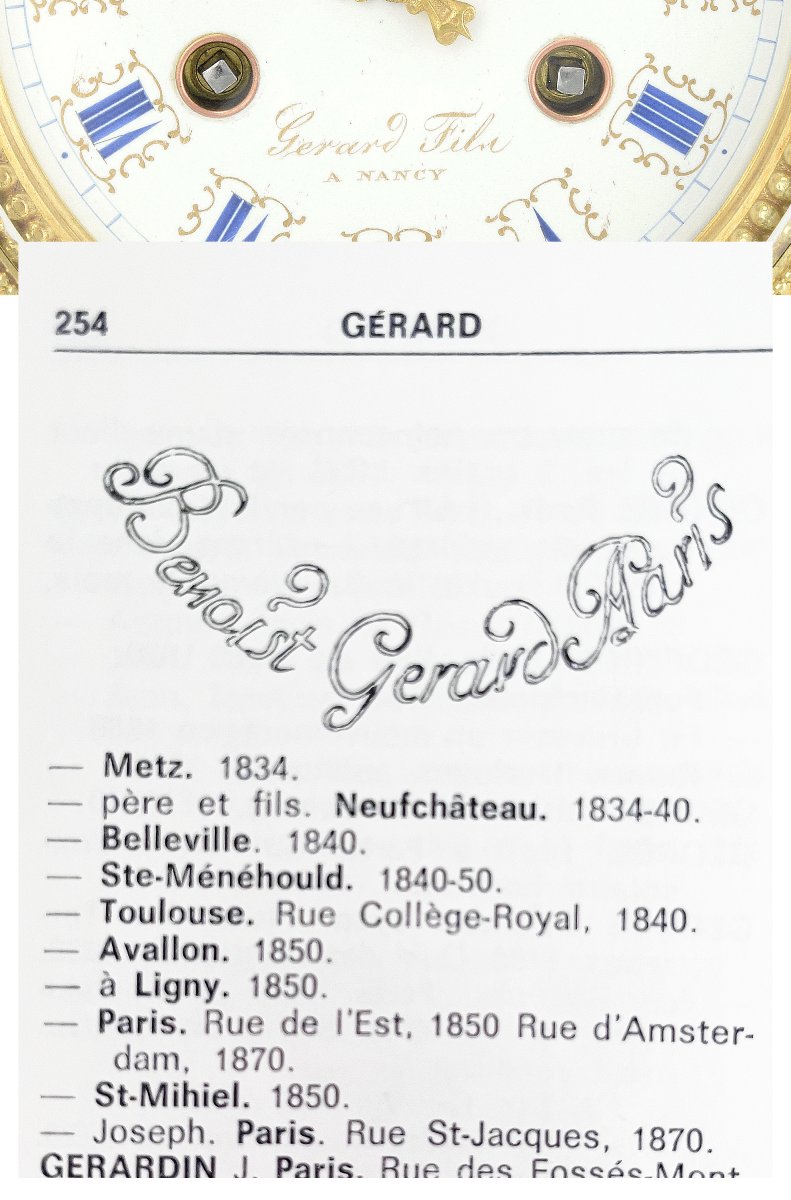
meet at a finely chased central rosette. The dial is signed
"Gérard Fils à Nancy," attesting to its provenance.
The top of the drum is surmounted by a square platform supporting a spectacular gilt-bronze floral arrangement. A wide corolla of open leaves cradles a bouquet of full blooms, buds, and chased foliage. This substantial naturalistic ornament adds verticality and refinement to the piece, while enhancing the composition's sense of luxury.
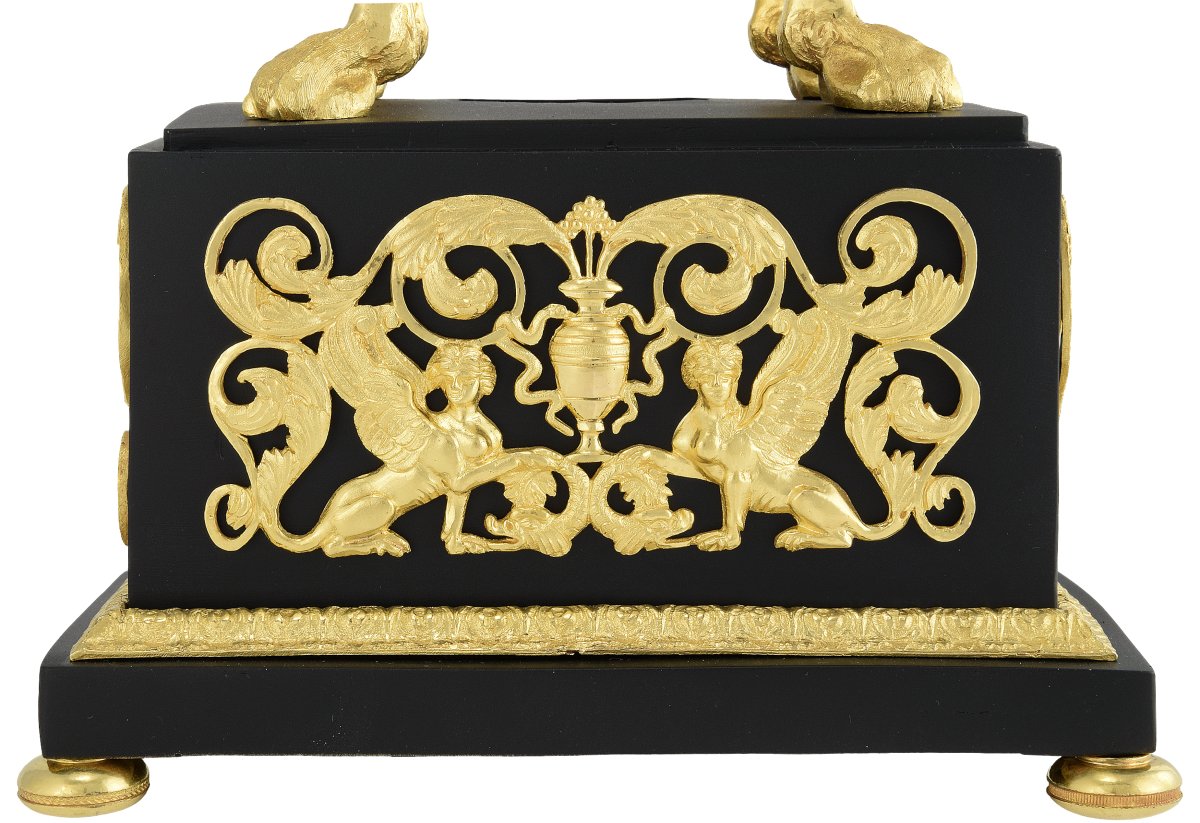
The clock rests on a rectangular, stepped base of patinated bronze; its three visible sides are adorned with gilt-bronze mounts of exceptional chasing quality. The front features a symmetrical design centered on an antique vase from which a palmette emerges, flanked by two winged female sphinxes crouching face-to-face in a hieratic pose. Their female torsos, outspread wings, and leonine bodies are linked by a harmonious tangle of acanthus scrolls and leafy volutes, creating a perfectly balanced composition inspired by the classical repertoire revived in the 19th century. The side panels feature an antique amphora framed by sweeping acanthus scrolls that form an elegant openwork pattern, while a finely chased foliate frieze runs along the base of the plinth. The entire piece rests on a molded, patinated bronze plinth, embellished with a gilded relief frieze and four flattened, circular gilded bronze feet, ensuring stability while providing a highly refined finish.
With its unusual architecture, the sophisticated combination of gilded and patinated bronze, the richness of its naturalistic and mythological ornamentation, and the exceptional finesse of its chasing, this clock stands as a remarkable example of decorative metalwork from the Napoleon III period (circa 1860).
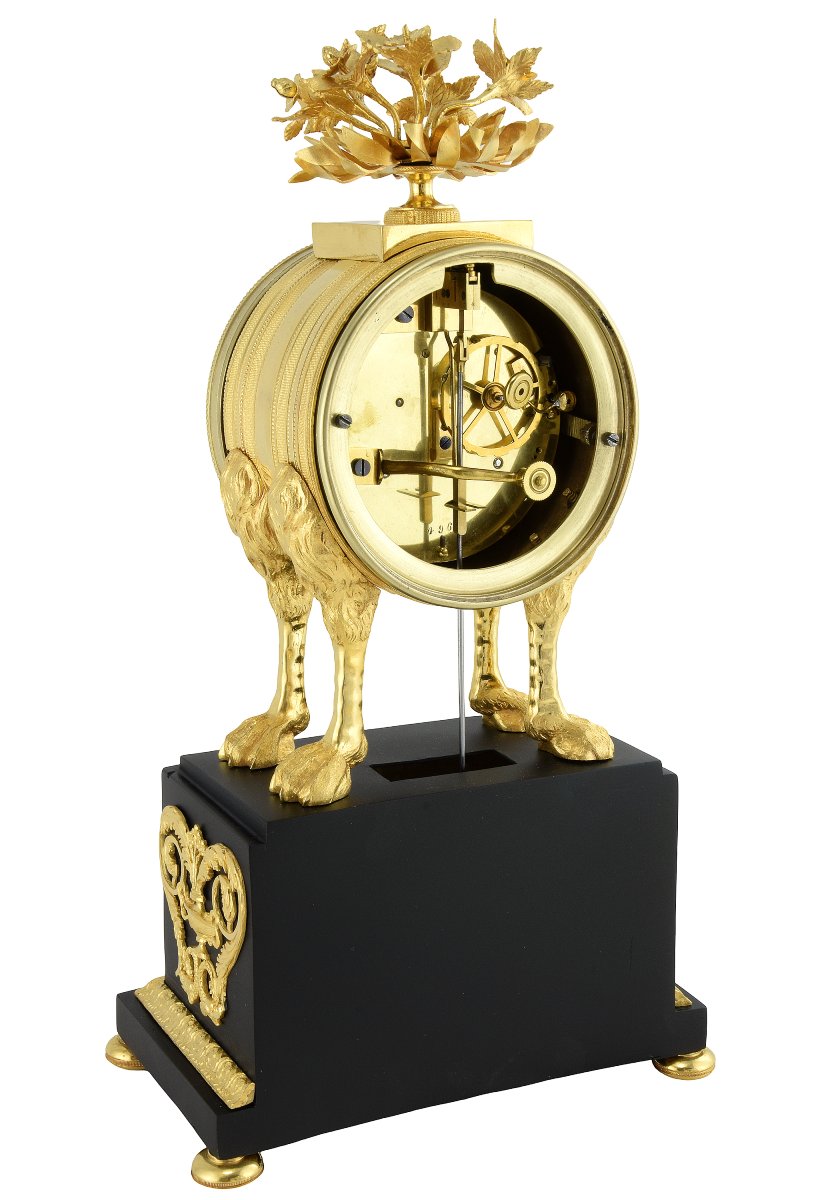
Original mechanism intact and unmodified. Strikes the hours and half-hours on an antique bell with a clear, authentic tone.
The top of the drum is surmounted by a square platform supporting a spectacular gilt-bronze floral arrangement. A wide corolla of open leaves cradles a bouquet of full blooms, buds, and chased foliage. This substantial naturalistic ornament adds verticality and refinement to the piece, while enhancing the composition's sense of luxury.
The clock rests on a rectangular, stepped base of patinated bronze; its three visible sides are adorned with gilt-bronze mounts of exceptional chasing quality. The front features a symmetrical design centered on an antique vase from which a palmette emerges, flanked by two winged female sphinxes crouching face-to-face in a hieratic pose. Their female torsos, outspread wings, and leonine bodies are linked by a harmonious tangle of acanthus scrolls and leafy volutes, creating a perfectly balanced composition inspired by the classical repertoire revived in the 19th century. The side panels feature an antique amphora framed by sweeping acanthus scrolls that form an elegant openwork pattern, while a finely chased foliate frieze runs along the base of the plinth. The entire piece rests on a molded, patinated bronze plinth, embellished with a gilded relief frieze and four flattened, circular gilded bronze feet, ensuring stability while providing a highly refined finish.
With its unusual architecture, the sophisticated combination of gilded and patinated bronze, the richness of its naturalistic and mythological ornamentation, and the exceptional finesse of its chasing, this clock stands as a remarkable example of decorative metalwork from the Napoleon III period (circa 1860).
Original mechanism intact and unmodified. Strikes the hours and half-hours on an antique bell with a clear, authentic tone.
Explore similar pieces and discover your ideal find:
Mantel Clocks