


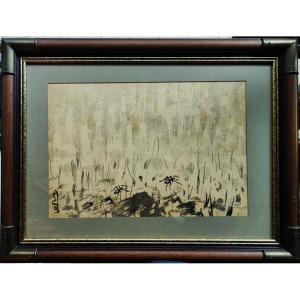


Alcide Le Beau (1873-1943) Spiders ~1906. Fauve Breton, Japonisme, Gauguin, Bracquemond
Artist: Alcide Le Beau (1873-1943)
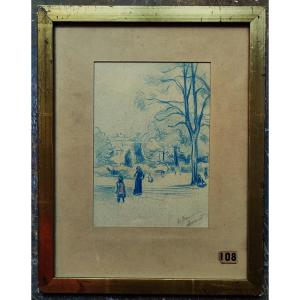
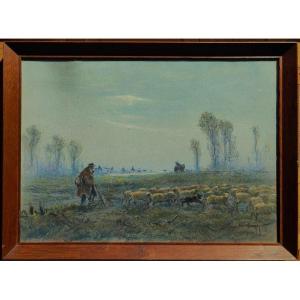
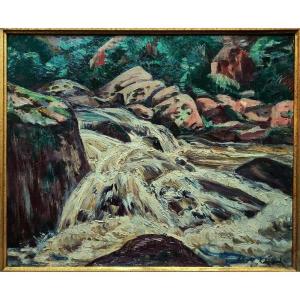
Here are the last 4 of 6 works by Alcide Le Beau, after the 2 oils offered for sale.
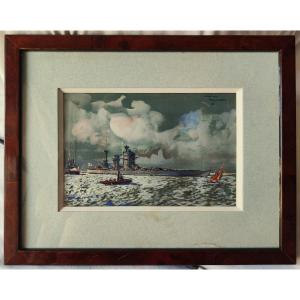
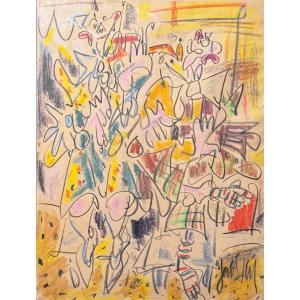
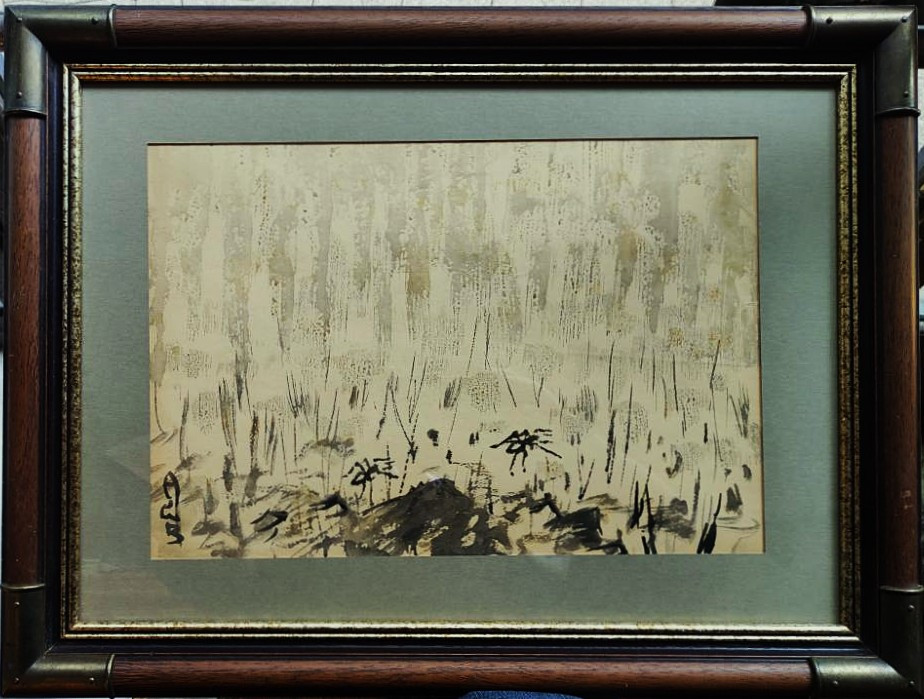
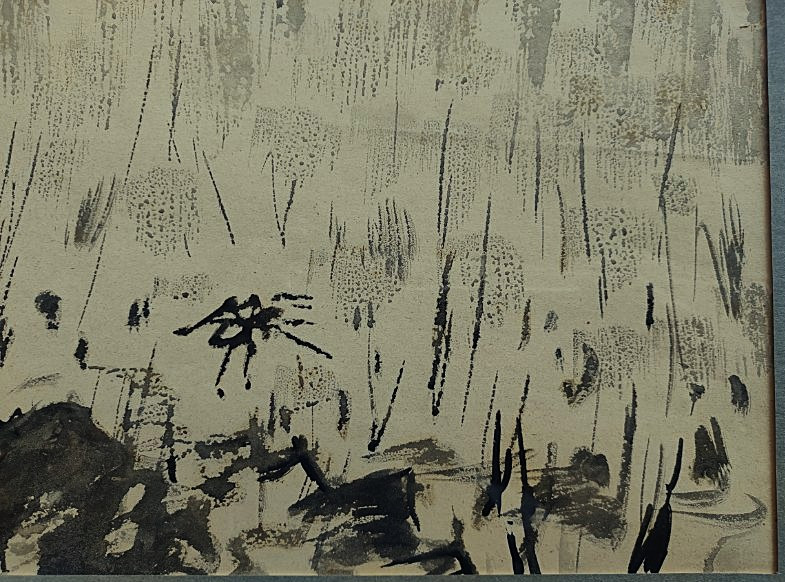
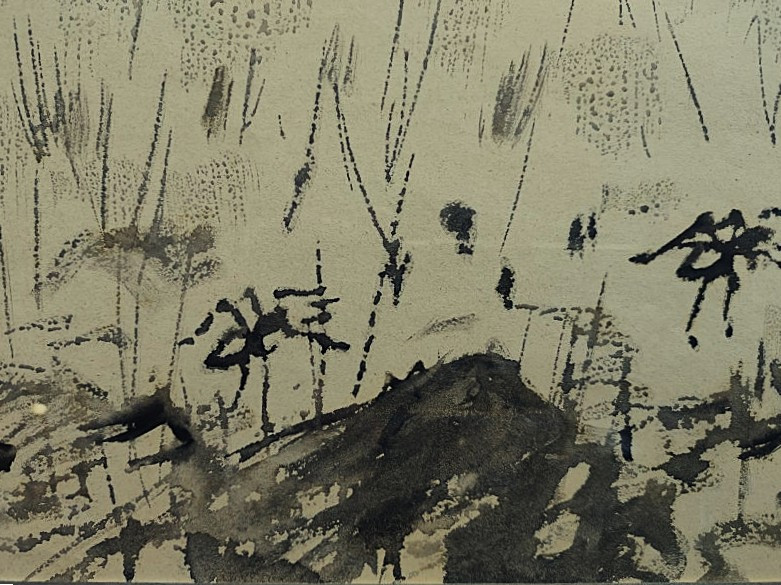
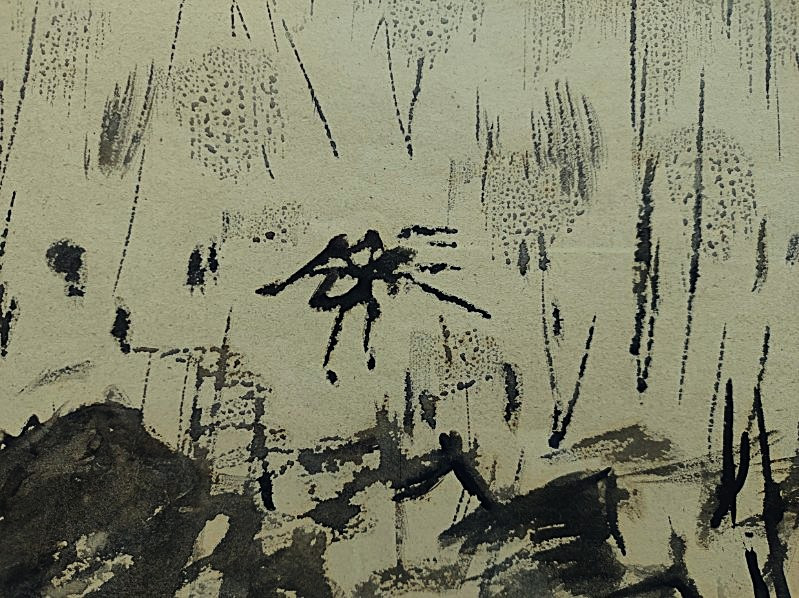
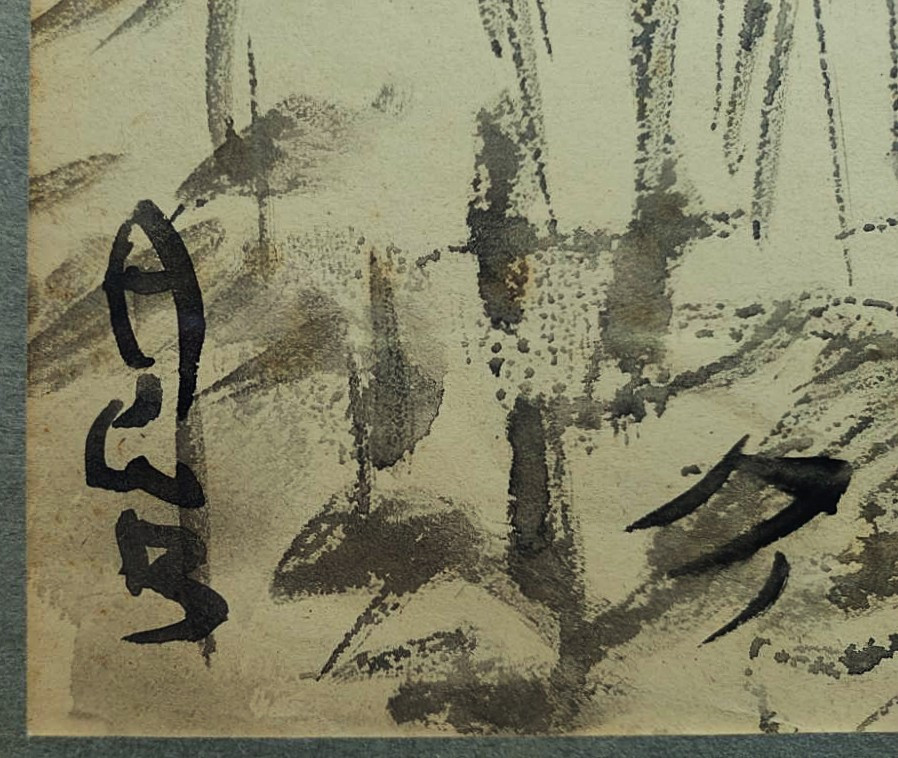
- The latter is a watercolor wash depicting spiders,circa 1905/1906, signed lower left with the usual monogram
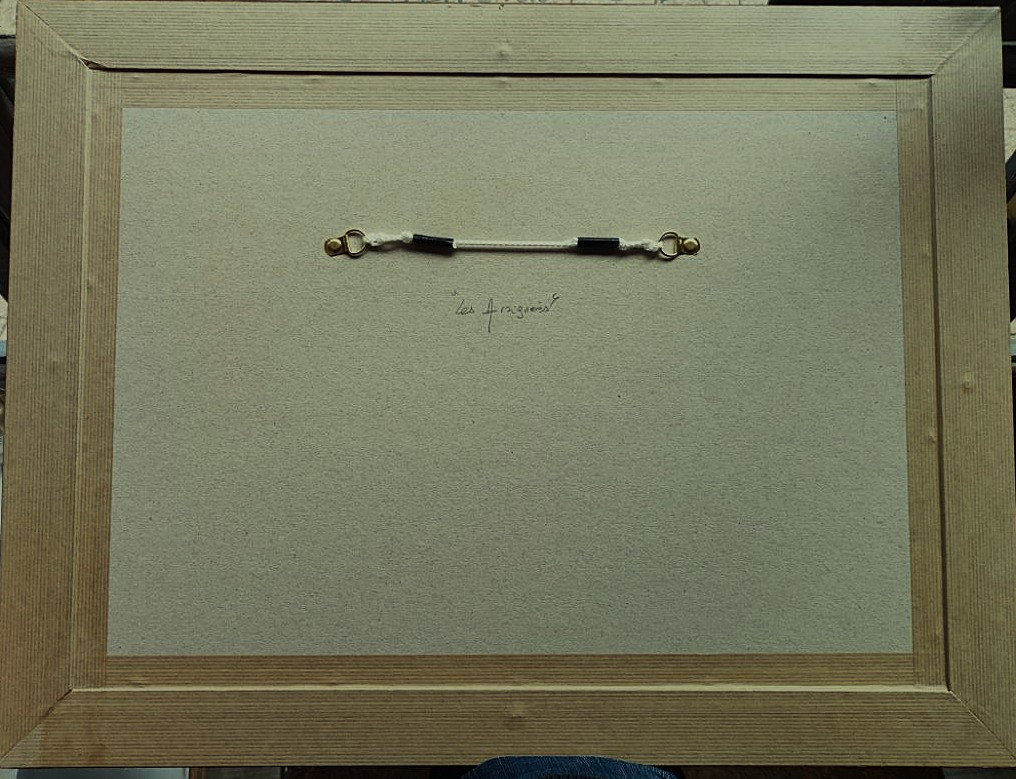
Format of the watercolor alone on view 29.5x43cm and 46x61cm including frame.
In very good condition despite its very good condition despite being over 120 years old, delivered in an attractive
Genuine work guaranteed
This work, like the 3 others, would have been exhibited at the Galerie Durand Ruel inDurand Ruel in 1911, the former owner gave me an extract from thecatalog.
As usual in this period, especially on his paper his works on paper, they are very often strongly influenced byJaponisme, for Le Beau was a great admirer of the Japanese mastersmasters, and this can be seen in his brushwork; Le Beau evenBeau would even adopt a high Japanese signature on the vast majority of his works.
Le Beau is certainly, along with Léon Detroy, Charles Bichet and GastonGaston Thiesson one of my favorite painters.rare works, but their rarity means that I only have a few at my disposala dozen in some 25 years. Unfortunately, Le Beau was not been helped by some of our resident experts, who regularly turn downauthentic works on the market, often sublime works in fact.often sublime and major works, so why ??? out of interest orinterest or incompetence??? in any case, it's a great disservice to the painter...the painter...so friends collectors or owners, it's not becausebecause you own a work by Le Beau that has been rejecteddoesn't mean it's a fake....I know of many examples, so don't hesitate toto share them with me...
Alcide Marie Le Beau was born on July 30, 1873 in Lorient.Lorient, some indicate a birth in 1872, but apparently it was1873. He died on August 12, 1943. He studied at the Jesuitin Lorient. In 1890, he moved to Paris with his mother. Companion to painter Irène Reno (née Rena Hassenberg). With his partner, heparticipated in the Section d'Or exhibition at Galerie La Boétie in October 1912. Section d'Or exhibition. A painter of the Pont-Aven school, he has exhibitedsince 1902 at the Salon des Indépendants. A painter of landscapes and genre scenesgenre scenes, Alcide Le Beau was self-taught and mastered both theoil and watercolor techniques. He is a rare artist whoserapid, tormented brushstrokes and vibrant forms convey a lyricisma lyricism all his own. His intimacy with nature is expressed sometimes in a thick, brightly-colored material, sometimes in a smoothfaded colors and synthesized forms. AlcideLe Beau is particularly sensitive to the intellectualized vision of theMaîtres de Pont Aven who influenced his youth. He belongs to theavant-garde alongside the greatest names of the Fauvist movement.A brilliant artist, he was recognized by the most far-sighted critics andand by the most far-sighted dealers. In 1902, he
exhibited at the Indépendants, then with Berthe Weill from 1903. He was part of the Cage aux fauves at the Salon d'Automned'Automne of 1905 with Albert Marquet, Henri Matisse, MauriceMaurice Vlaminck and André Derain. The artist also took part ingroup shows at the Berthe Weill gallery in Paris in 1903-1904,with Raoul Dufy and Henri Matisse, then at the Durand-Ruel gallery in 1911. His reputation grew considerably, and numerous exhibitionsexhibitions in France and St. Petersburg.In 1906, an exhibition at Vollard's revealed him once and for all, propelling him to the forefront of the art world.propelled him into the limelight. In 1907, the Galerie Druelorganized a retrospective of his Fauvist period, featuring some fortyforty of his paintings. Alcide Le Beau succeeds in capturingatmospheres with a chromatic palette close to that of Gauguin andGauguin and Van Gogh. For him, color only serves as a supporta gradual, attenuated retranscription of the primary effectof the Fauves. He sought a spiritual and expressive dimensionin his works from 1906 to 1908, which corresponds to the apogee of his of his art. It was during this period that he painted his Corsican landscapes, as well as his vases
Bibliography: Robert Hellebranth, Anne Burdin, Alcide Le Beau 1873-1943, éditions
Matute, 1988, Paris; Alcide Le Beau, 1873- 1943, Musée de Pont-Aven, October 2 1992- January 3, 1993; E. Bénézit, tome 8, pages 37
- The latter is a watercolor wash depicting spiders,circa 1905/1906, signed lower left with the usual monogram
Format of the watercolor alone on view 29.5x43cm and 46x61cm including frame.
In very good condition despite its very good condition despite being over 120 years old, delivered in an attractive
Genuine work guaranteed
This work, like the 3 others, would have been exhibited at the Galerie Durand Ruel inDurand Ruel in 1911, the former owner gave me an extract from thecatalog.
As usual in this period, especially on his paper his works on paper, they are very often strongly influenced byJaponisme, for Le Beau was a great admirer of the Japanese mastersmasters, and this can be seen in his brushwork; Le Beau evenBeau would even adopt a high Japanese signature on the vast majority of his works.
Le Beau is certainly, along with Léon Detroy, Charles Bichet and GastonGaston Thiesson one of my favorite painters.rare works, but their rarity means that I only have a few at my disposala dozen in some 25 years. Unfortunately, Le Beau was not been helped by some of our resident experts, who regularly turn downauthentic works on the market, often sublime works in fact.often sublime and major works, so why ??? out of interest orinterest or incompetence??? in any case, it's a great disservice to the painter...the painter...so friends collectors or owners, it's not becausebecause you own a work by Le Beau that has been rejecteddoesn't mean it's a fake....I know of many examples, so don't hesitate toto share them with me...
Alcide Marie Le Beau was born on July 30, 1873 in Lorient.Lorient, some indicate a birth in 1872, but apparently it was1873. He died on August 12, 1943. He studied at the Jesuitin Lorient. In 1890, he moved to Paris with his mother. Companion to painter Irène Reno (née Rena Hassenberg). With his partner, heparticipated in the Section d'Or exhibition at Galerie La Boétie in October 1912. Section d'Or exhibition. A painter of the Pont-Aven school, he has exhibitedsince 1902 at the Salon des Indépendants. A painter of landscapes and genre scenesgenre scenes, Alcide Le Beau was self-taught and mastered both theoil and watercolor techniques. He is a rare artist whoserapid, tormented brushstrokes and vibrant forms convey a lyricisma lyricism all his own. His intimacy with nature is expressed sometimes in a thick, brightly-colored material, sometimes in a smoothfaded colors and synthesized forms. AlcideLe Beau is particularly sensitive to the intellectualized vision of theMaîtres de Pont Aven who influenced his youth. He belongs to theavant-garde alongside the greatest names of the Fauvist movement.A brilliant artist, he was recognized by the most far-sighted critics andand by the most far-sighted dealers. In 1902, he
exhibited at the Indépendants, then with Berthe Weill from 1903. He was part of the Cage aux fauves at the Salon d'Automned'Automne of 1905 with Albert Marquet, Henri Matisse, MauriceMaurice Vlaminck and André Derain. The artist also took part ingroup shows at the Berthe Weill gallery in Paris in 1903-1904,with Raoul Dufy and Henri Matisse, then at the Durand-Ruel gallery in 1911. His reputation grew considerably, and numerous exhibitionsexhibitions in France and St. Petersburg.In 1906, an exhibition at Vollard's revealed him once and for all, propelling him to the forefront of the art world.propelled him into the limelight. In 1907, the Galerie Druelorganized a retrospective of his Fauvist period, featuring some fortyforty of his paintings. Alcide Le Beau succeeds in capturingatmospheres with a chromatic palette close to that of Gauguin andGauguin and Van Gogh. For him, color only serves as a supporta gradual, attenuated retranscription of the primary effectof the Fauves. He sought a spiritual and expressive dimensionin his works from 1906 to 1908, which corresponds to the apogee of his of his art. It was during this period that he painted his Corsican landscapes, as well as his vases
Bibliography: Robert Hellebranth, Anne Burdin, Alcide Le Beau 1873-1943, éditions
Matute, 1988, Paris; Alcide Le Beau, 1873- 1943, Musée de Pont-Aven, October 2 1992- January 3, 1993; E. Bénézit, tome 8, pages 37
580 €
Period: 20th century
Style: Modern Art
Condition: Excellent condition
Material: Water color
Length: 43
Height: 29,5
Reference (ID): 1735933
Availability: In stock
Print