
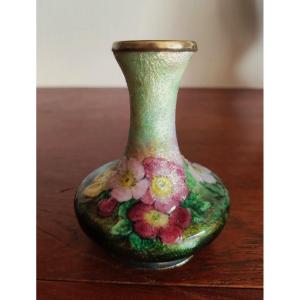


Camille Fauré (1874–1956) Limoges Enamel Vase, Circa 1935–1945. Marty, Sarlandie, Jouhaud
Artist: Camille Fauré (1874-1956)
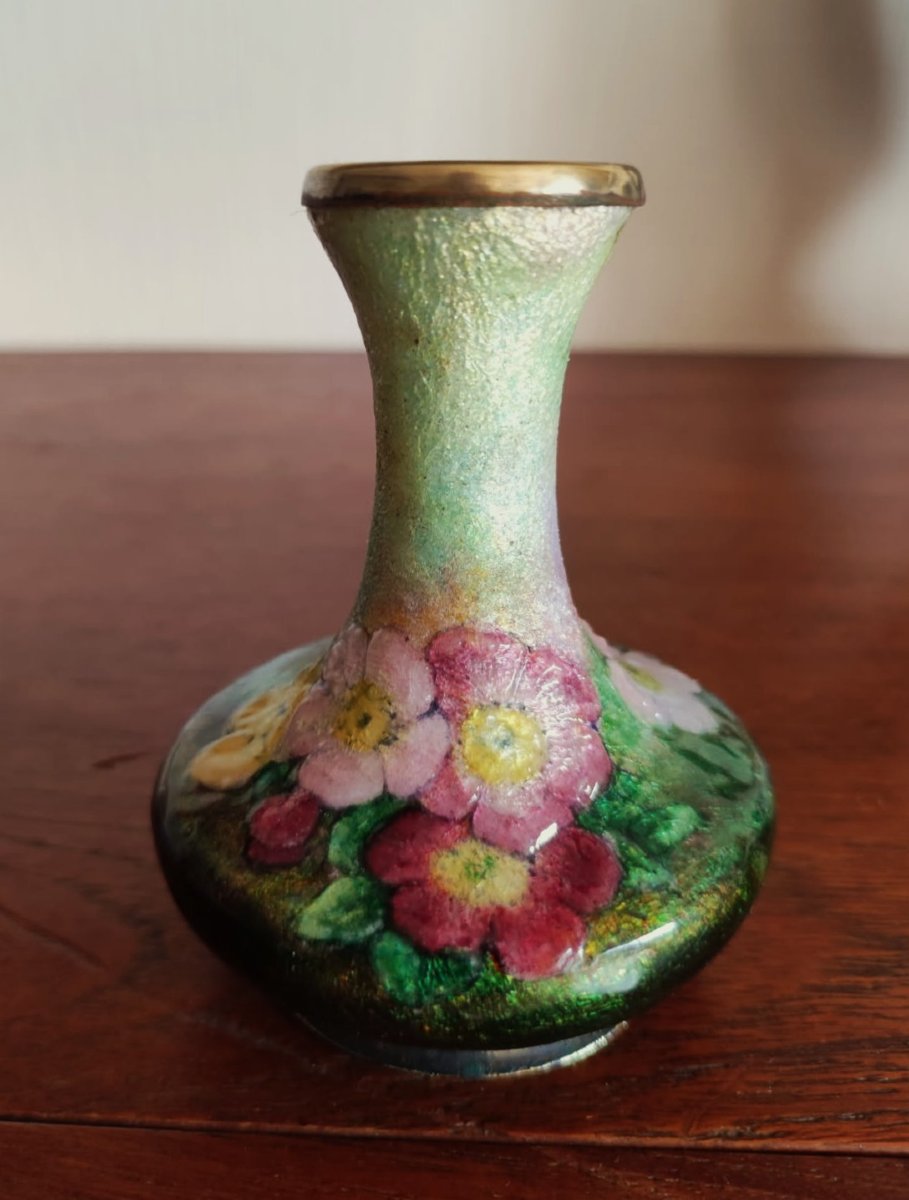
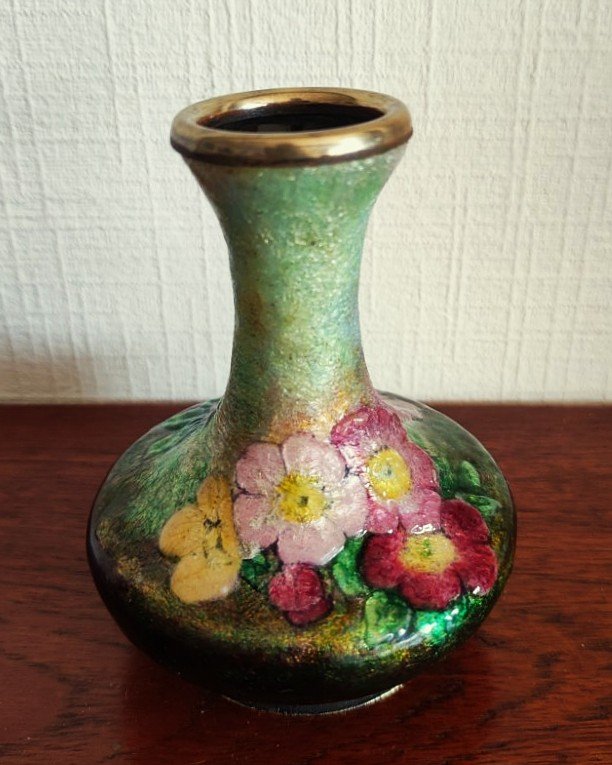
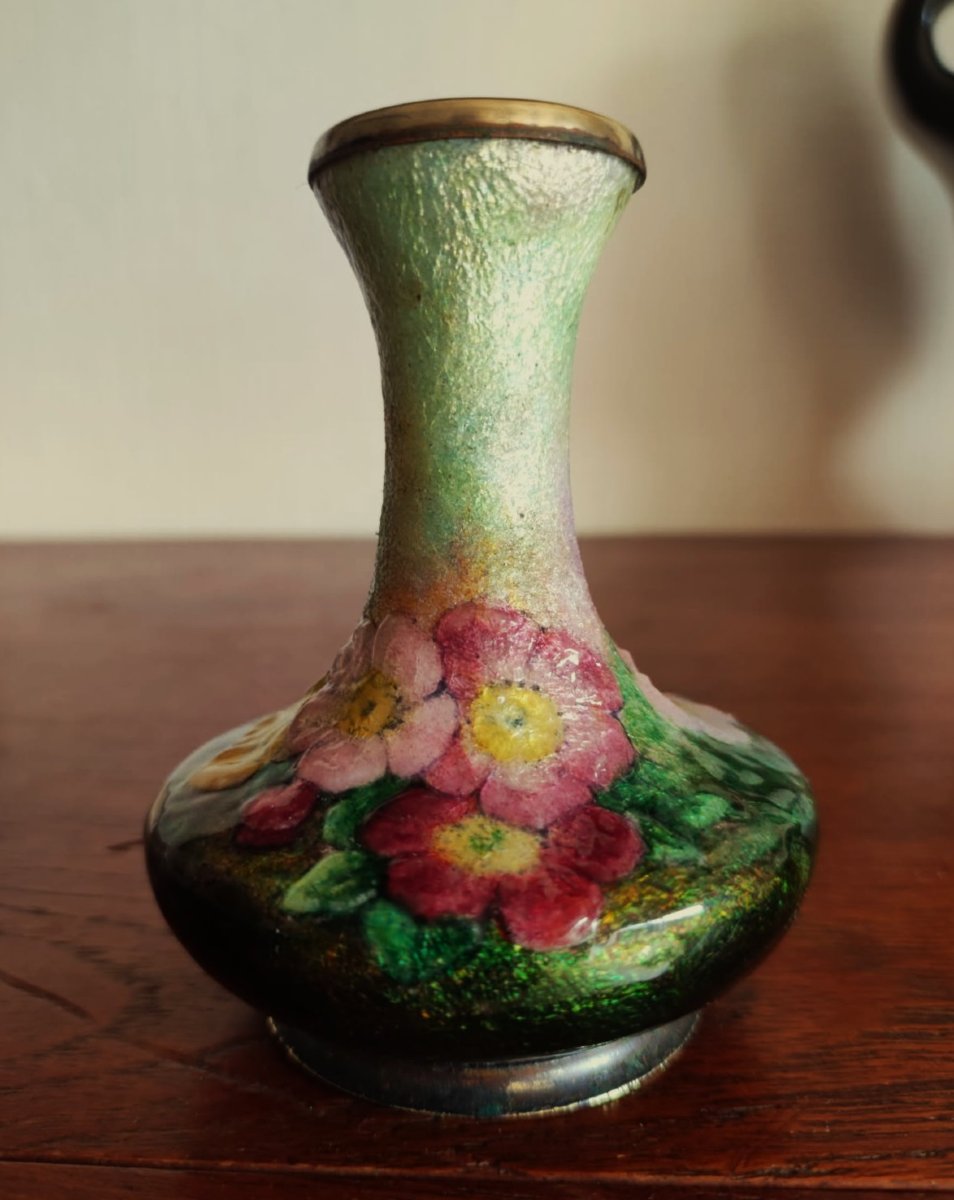
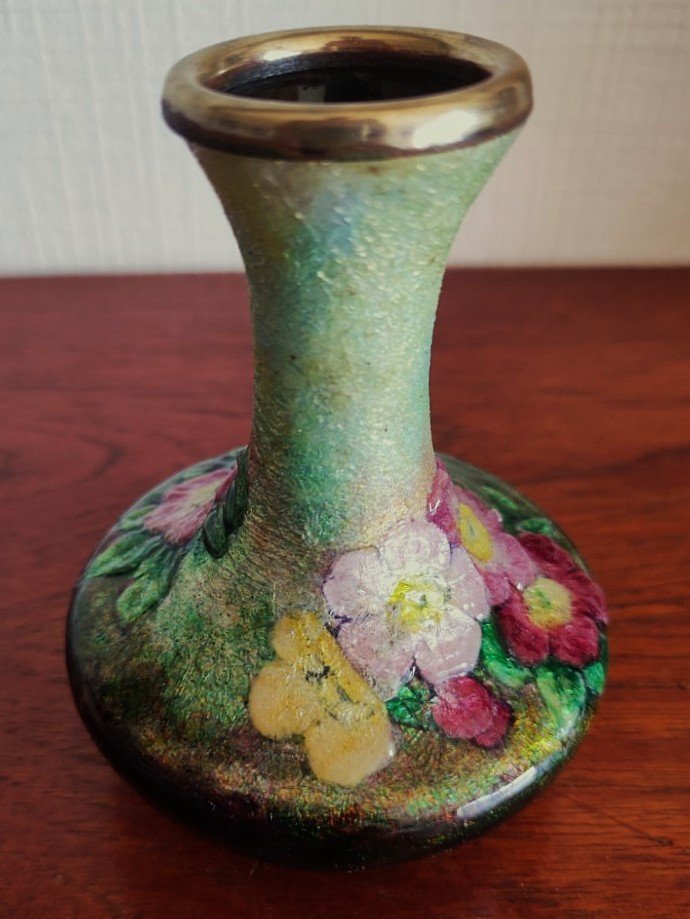
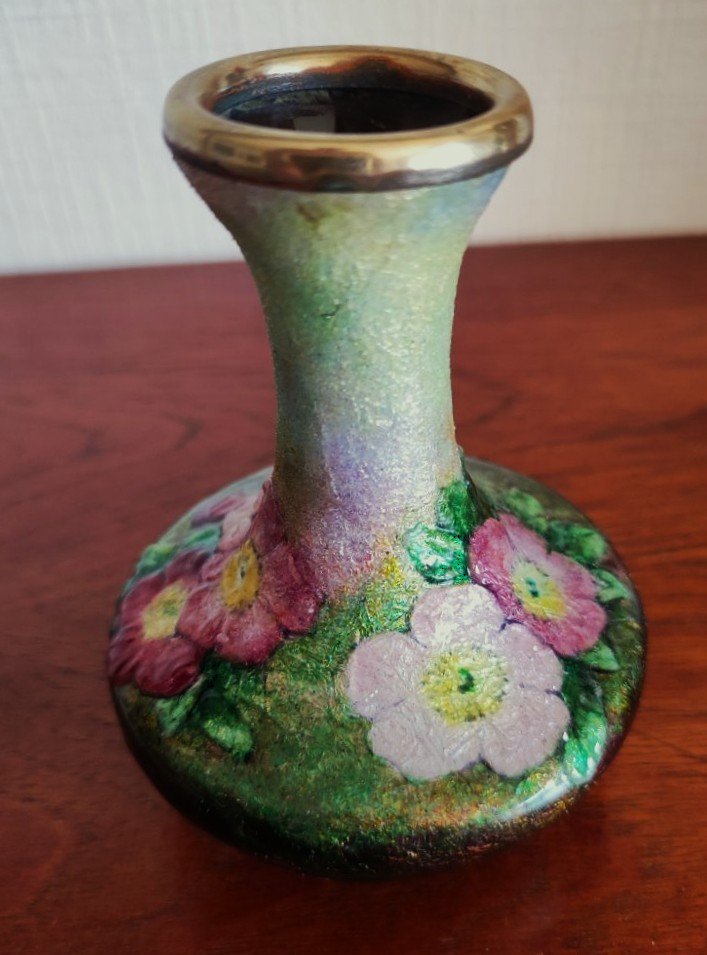
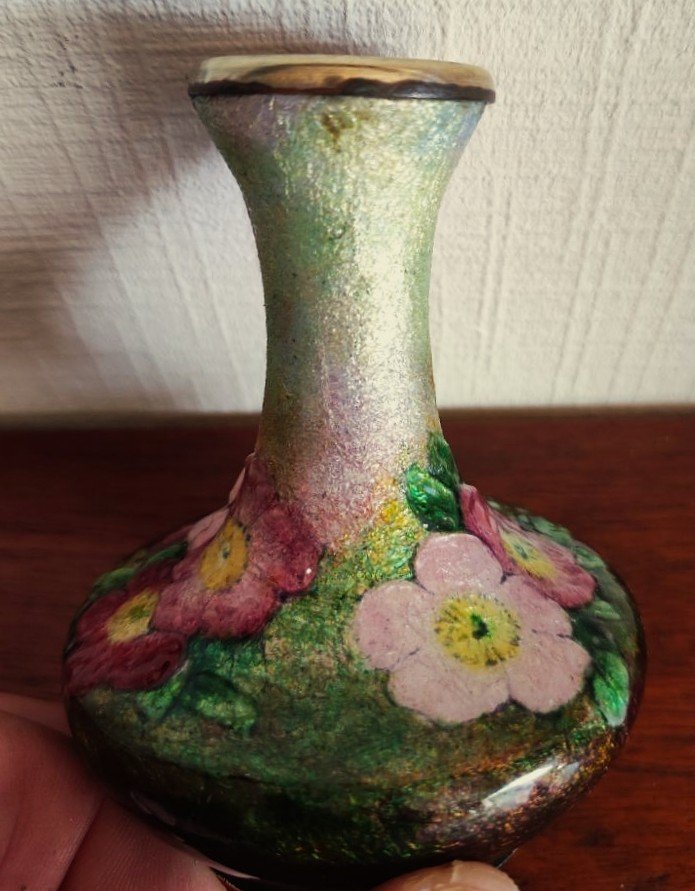
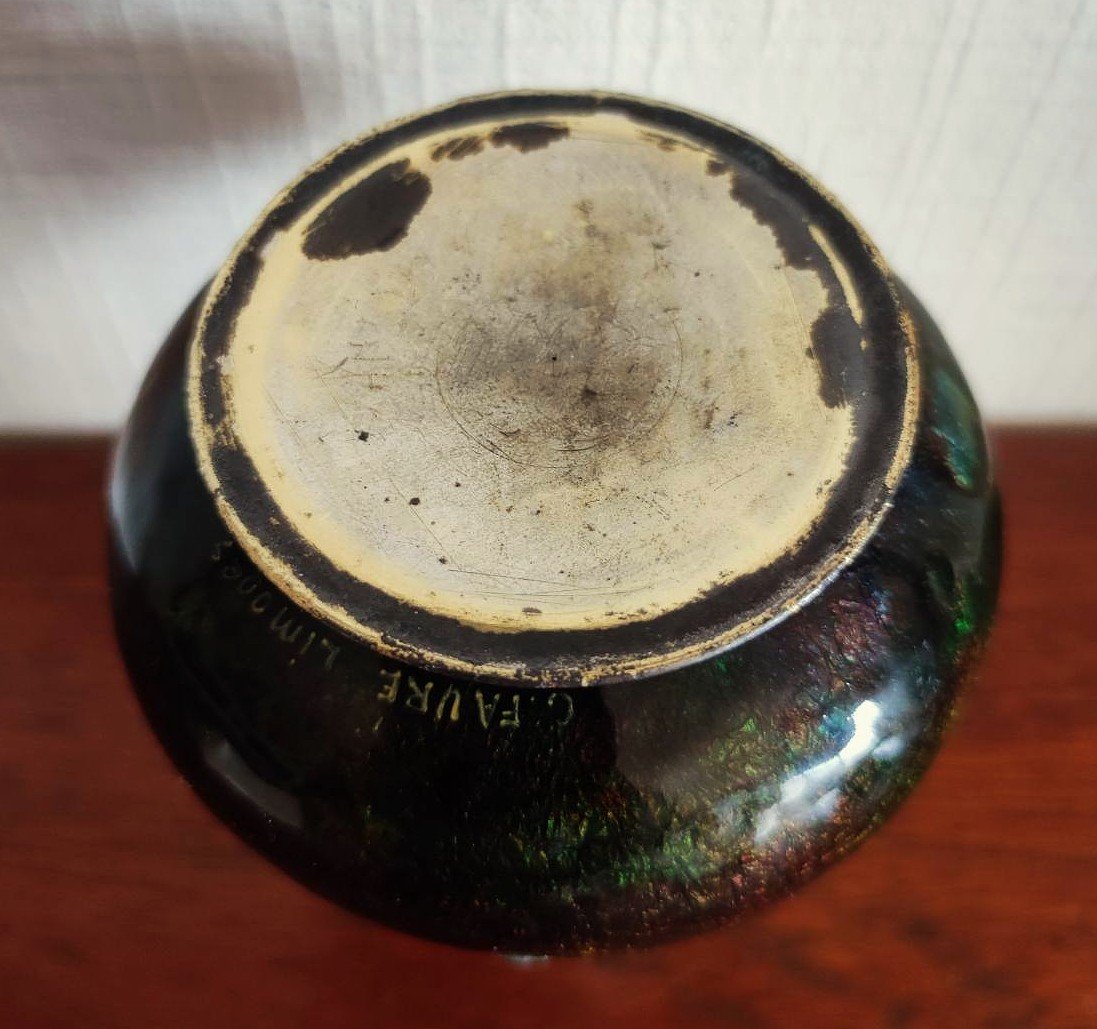
A superb new Limoges enamel vase by Camille Fauré, circa 1935–45, decorated with stylized flowers, signed and marked “Limoges” in white letters near the base of the vase. Height: 10 cm
In very good condition, period piece, and authentic.
This vase has been cleaned, as have its rings; the bottom ring is slightly oxidized.
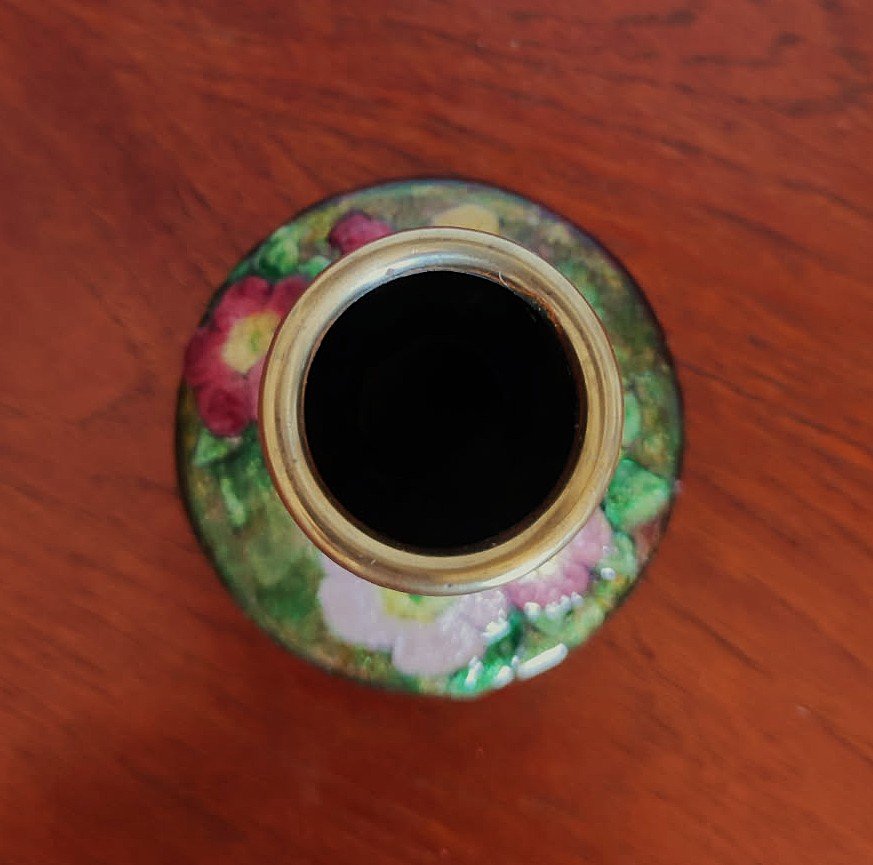
This is, therefore, a magnificent copper-enamel vase by Camille Fauré, made in Limoges. The shape is called a “soliflore”; it features a very pretty and richly detailed Art Deco-style stylized floral design all around the vase, superbly executed on a silver ground with pronounced reliefs. The palette of enamels used is exceptionally rich: blues, yellows, pinks, purples, greens, reds… on a bottle-green-brown background at the bottom and a yellow background with blue highlights at the top. This vase has its original silver-plated metal bands.
This vase dates from the World War II period, around 1935–45, as the signature is not in gold—a material that was in short supply during the war.
For your information, I sold a vase of the same shape a few months ago, except that its design was geometric.
Camille Fauré needs no introduction—he was the famous entrepreneur from Limousin and a pioneer of the revival of Limousin enamelwork, alongside Marty, Bonnaud, Sarlandie, Soubourou, Jouhaud, and others.
Camille Raymond Fauré was a French enamel artist, born on November 16, 1874, in Périgueux and died on October 7, 1956, in Limoges. He is best known for his enamel designs for manufacturing companies, particularly Limoges porcelain. The floral and figurative motifs in the rich colors of his enamels are his signature. In 1919, he exhibited at the Lyon Fair. Later, he also participated in the Paris Fair. These two events provided work for his 20 employees throughout the year. In 1919, he formed a remarkable partnership with Alexandre Marty (1876–1943). This collaboration led to innovation in the field of enameling, with the development of new methods for producing enamels, notably flamed and frosted enamels. Under the “Fauré et Marty” brand, they designed and exhibited a variety of pieces, including a limited series of enameled pendants in gold, silver, and copper . However, their collaboration came to an end in early 1925. The 1925 International Exhibition of Modern Decorative and Industrial Arts marked Fauré’s breakthrough. He became the most famous enameler in Limoges. Other Limoges enamelers active in the 1920s included Paul Bonnaud, Jules Sarlandie, and Henriette Marty. In 1925, Fauré founded his own company in Limoges. He employed five enamelers: Lucie Dadat, Pierre Bardy, Louis Valade, Marcelle Decouty-Védrenne, and Jeanne Soubourou. They were free to create under the “C. Fauré Limoges” brand. The company specialized in the production of signs and advertising panels, as well as in painting and interior decoration. This specialization coincided with the department’s growth. Upon his death in 1956, his daughter Andrée Faure took over the business. “C. Fauré Limoges” closed its doors in 1985.
An excellent book is in the works; I believe it will become the definitive work on the artist.
In very good condition, period piece, and authentic.
This vase has been cleaned, as have its rings; the bottom ring is slightly oxidized.
This is, therefore, a magnificent copper-enamel vase by Camille Fauré, made in Limoges. The shape is called a “soliflore”; it features a very pretty and richly detailed Art Deco-style stylized floral design all around the vase, superbly executed on a silver ground with pronounced reliefs. The palette of enamels used is exceptionally rich: blues, yellows, pinks, purples, greens, reds… on a bottle-green-brown background at the bottom and a yellow background with blue highlights at the top. This vase has its original silver-plated metal bands.
This vase dates from the World War II period, around 1935–45, as the signature is not in gold—a material that was in short supply during the war.
For your information, I sold a vase of the same shape a few months ago, except that its design was geometric.
Camille Fauré needs no introduction—he was the famous entrepreneur from Limousin and a pioneer of the revival of Limousin enamelwork, alongside Marty, Bonnaud, Sarlandie, Soubourou, Jouhaud, and others.
Camille Raymond Fauré was a French enamel artist, born on November 16, 1874, in Périgueux and died on October 7, 1956, in Limoges. He is best known for his enamel designs for manufacturing companies, particularly Limoges porcelain. The floral and figurative motifs in the rich colors of his enamels are his signature. In 1919, he exhibited at the Lyon Fair. Later, he also participated in the Paris Fair. These two events provided work for his 20 employees throughout the year. In 1919, he formed a remarkable partnership with Alexandre Marty (1876–1943). This collaboration led to innovation in the field of enameling, with the development of new methods for producing enamels, notably flamed and frosted enamels. Under the “Fauré et Marty” brand, they designed and exhibited a variety of pieces, including a limited series of enameled pendants in gold, silver, and copper . However, their collaboration came to an end in early 1925. The 1925 International Exhibition of Modern Decorative and Industrial Arts marked Fauré’s breakthrough. He became the most famous enameler in Limoges. Other Limoges enamelers active in the 1920s included Paul Bonnaud, Jules Sarlandie, and Henriette Marty. In 1925, Fauré founded his own company in Limoges. He employed five enamelers: Lucie Dadat, Pierre Bardy, Louis Valade, Marcelle Decouty-Védrenne, and Jeanne Soubourou. They were free to create under the “C. Fauré Limoges” brand. The company specialized in the production of signs and advertising panels, as well as in painting and interior decoration. This specialization coincided with the department’s growth. Upon his death in 1956, his daughter Andrée Faure took over the business. “C. Fauré Limoges” closed its doors in 1985.
An excellent book is in the works; I believe it will become the definitive work on the artist.
590 €
Period: 20th century
Style: Art Deco
Condition: Excellent condition
Material: Enamel
Height: 10
Reference (ID): 1786229
Availability: In stock
Print