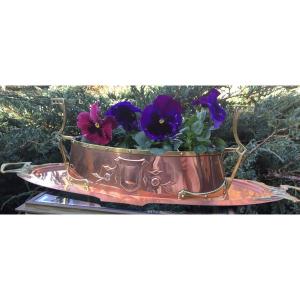
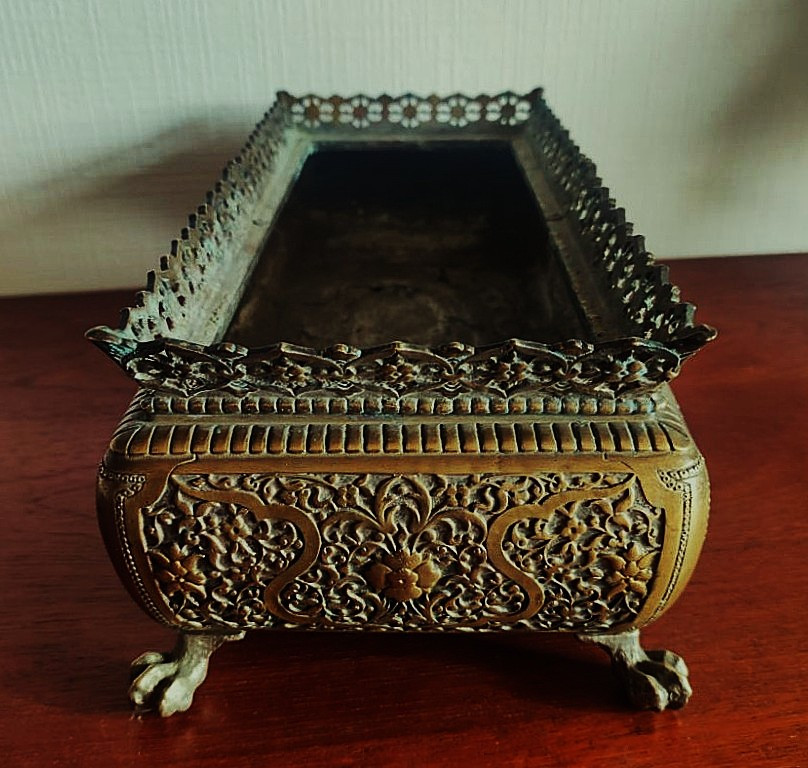
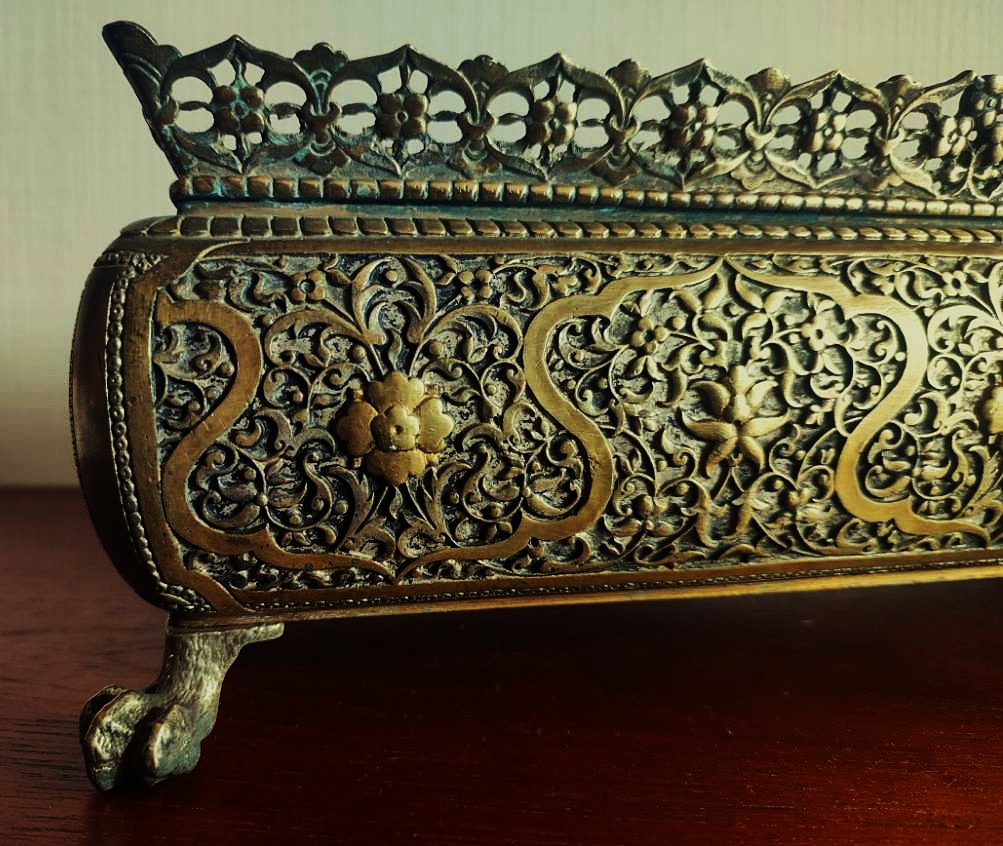



Armand Point (1862-1931) Bronze Planter C.1900, Oriental, Orientalist, Symbolism, Crozant
Artist: Armand Point (1862-1931)
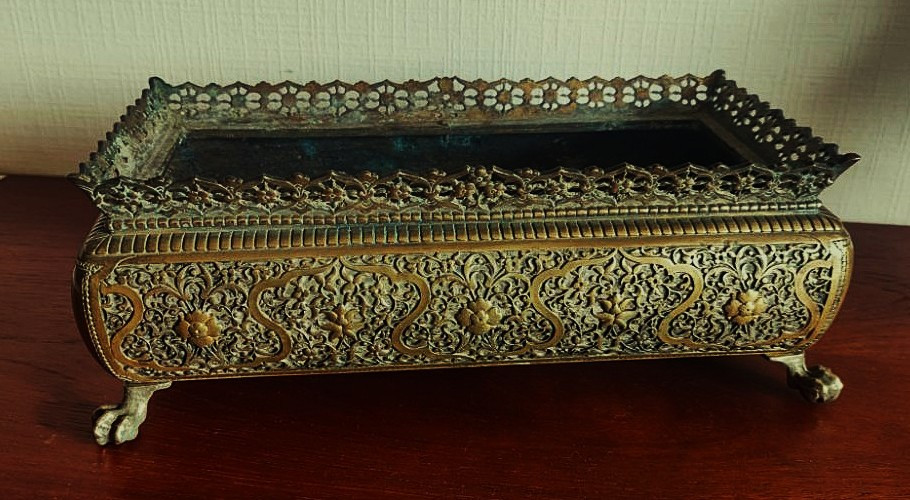
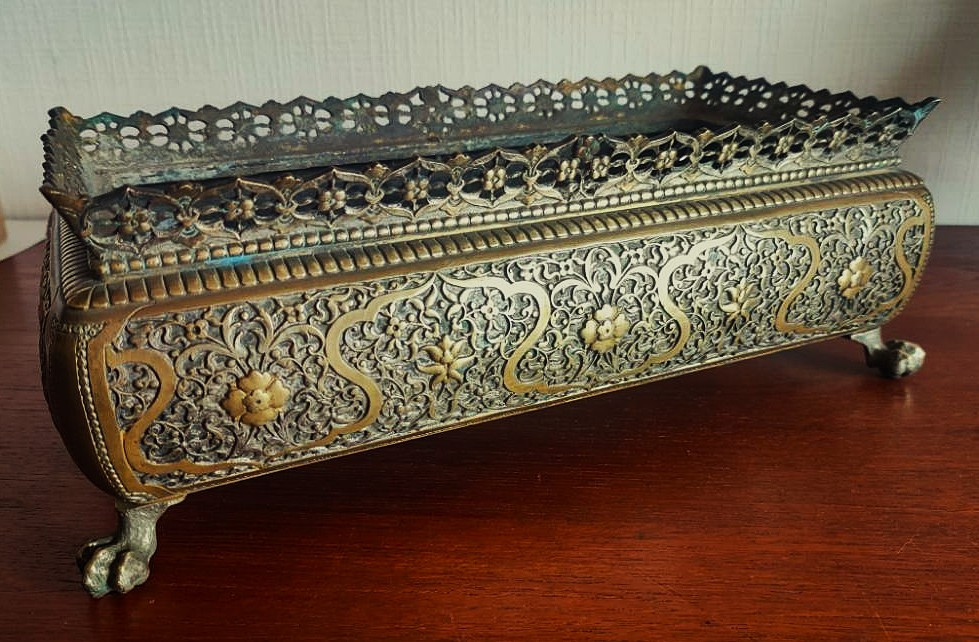
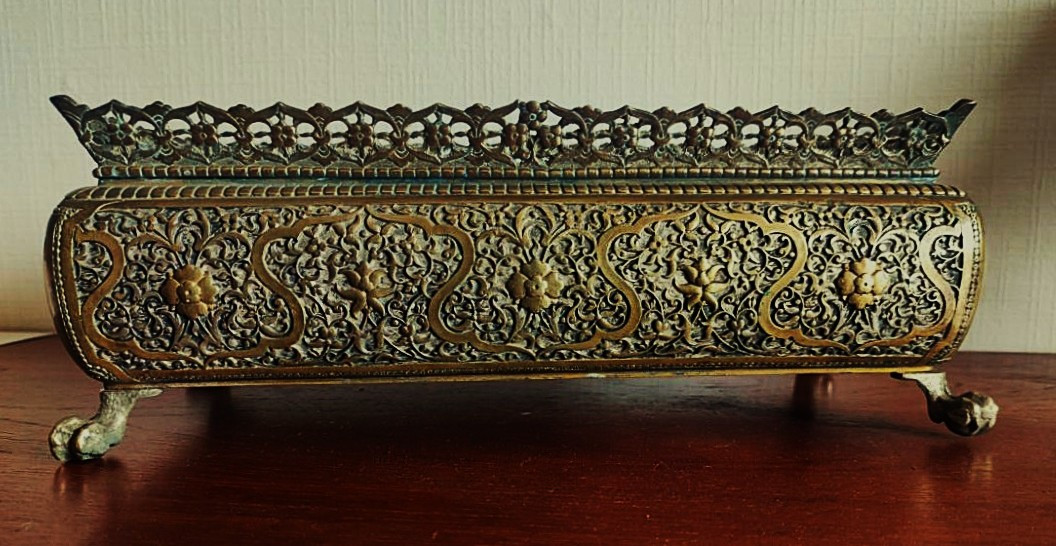
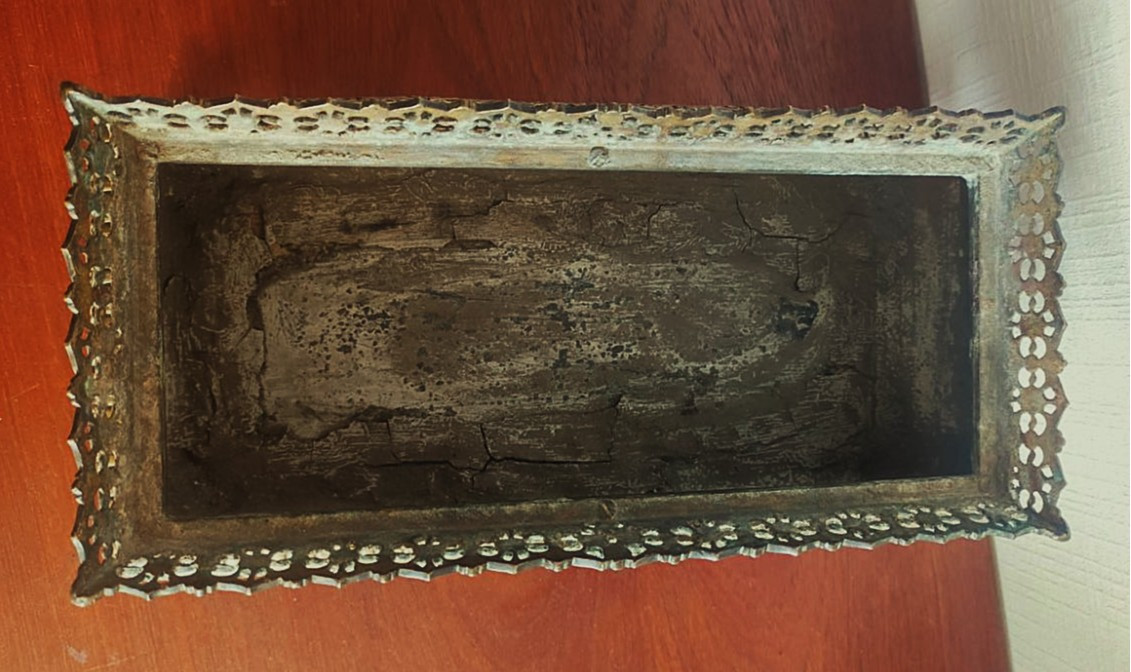
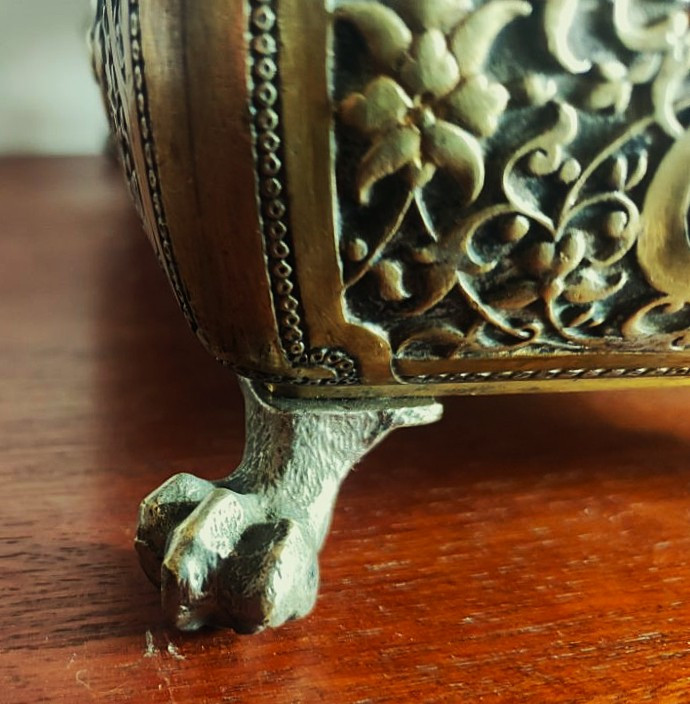
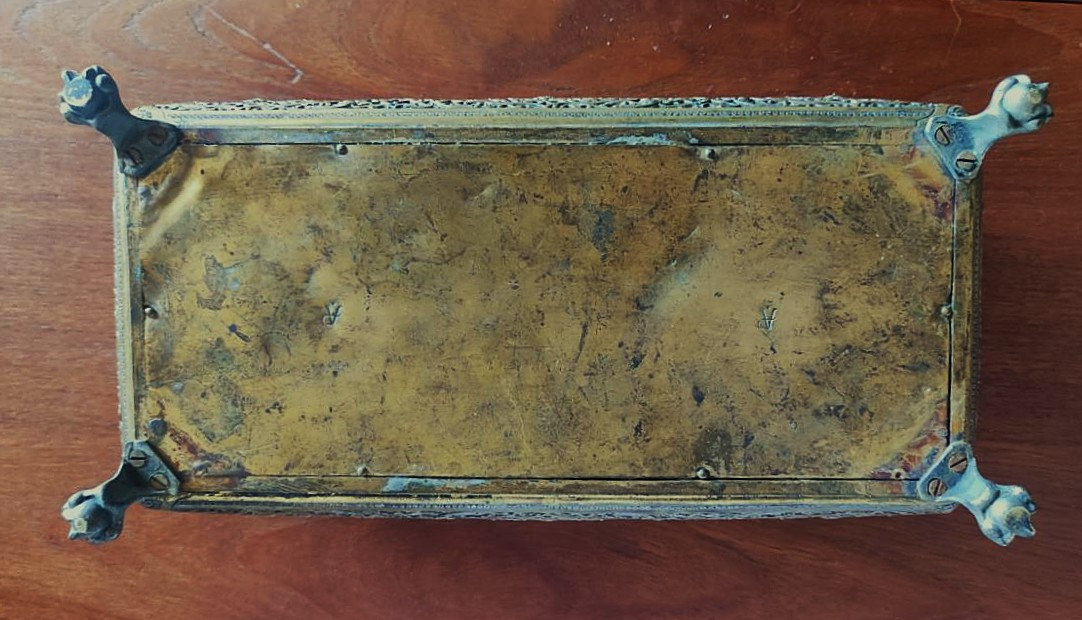
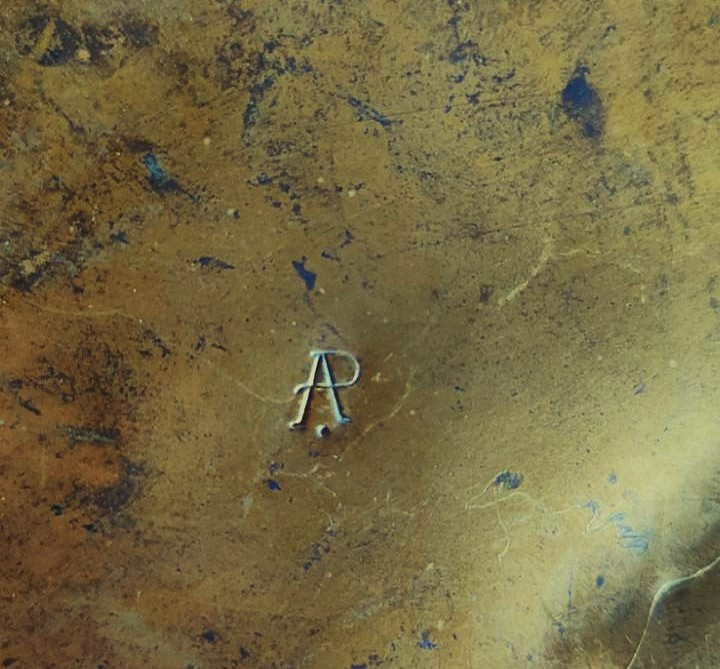
I am offering this new bronze object in the Oriental style by Armand Point, this time a jardinière dating from around 1890/1900. Signed twice below the traditional impressed mark A.P. Dimensions: Length: 29cm, Width: 13.5cm, Height: 10cm. Very good condition for its age of approximately 130 years. Guaranteed authentic. Following the box I offered a few months ago, this time it's a bronze jardinière by Armand Point from around 1890/1900, again with an Oriental-inspired design, but logically so. Armand Point was also a great Orientalist painter who made numerous trips to North Africa. His style is inimitable, as is the quality of the bronze and the chasing. Armand Point, born in Algiers on March 23, 1861, and died in Naples on February 6, 1932, was a French painter. He was the leader of an artists' community he founded in Marlotte, at the Haute-Claire estate, which was part of the Symbolist movement. Armand Point was the son of François Victor Point (born in 1835), a plasterer of Burgundian origin, and his wife Caroline Amélie Mestas (born in 1838), a milliner of Spanish origin. He was orphaned at the age of six, losing his father and then his mother at seven, following successive cholera and typhus epidemics. His maternal aunt, Mme Mestas, then raised him. Upon arriving in Paris, he entered the ninth grade at the Collège Rollin in April 1870. He took drawing classes with Auguste Clément Herst (1825-circa 1888), who also taught the daughters of Théophile Gautier. Armand Point began by painting naturalist works, then in 1877, he left school and went to Algeria to sketch the landscapes of his homeland. During his time in Algeria, he was mobilized for the pacification campaign in Tunisia. Captivated by North Africa, he painted Orientalist genre subjects. He returned to Paris in 1888, where he was already known for his naturalist works, which he had submitted to the Salon as early as 1882. In 1890, in the Samois forest, he met Élémir Bourges (1852-1925), a poet and art enthusiast with whom he remained friends until Bourges' death. It was at this time that he developed a desire and a passion to master all the techniques necessary to realize his project of uniting art and poetry. During these years, his student Hélène Linder (1867-1955) became his lover. The theme of Woman became the major subject of the canvases he exhibited at the Salon des Artistes Français from 1889 onwards. In 1890, he settled in Marlotte in the Fontainebleau forest. In May 1893, he obtained a travel grant and left for Italy with his companion Hélène Linder, whose artistic and open mind profoundly influenced the artist. He found inspiration among the Italian primitives and henceforth championed an art under the auspices of tradition. Having rediscovered an egg tempera painting technique, he combined this sophisticated method with his Symbolist inspiration. Inspired by the Old Masters, in 1896 he established an artists' colony in Marlotte, active until 1903, where painters, sculptors, gilders, enamellers, and goldsmiths mingled, creating tapestries, jewelry, and objets d'art using rediscovered techniques. This intellectual circle, known as the Logis de Haute-Claire, became a hub of Symbolism, frequented by Odilon Redon, Oscar Wilde, Élémir Bourges, Stéphane Mallarmé, Stuart Merrill, and the diplomat Philippe Berthelot, among others, in a studious atmosphere that Paul Fort, in his memoirs, described as a "court of love." Largely unrecognized by critics, considered old-fashioned, and accused of pastiche, Point felt the same admiration for the Middle Ages and the Renaissance as Edward Burne-Jones and the Pre-Raphaelites. For him, the means of striving for the Ideal lay in the renewal of ancestral values. His inspiration gradually evolved towards an idealistic tone, and Joséphin Peladan invited him to the Salon de la Rose-Croix esthétique, for which he designed the poster with Léonard Sarluis in March 1896. His friend, the painter Mario Pérouse (1880-1958), introduced him to the Murol School, where he came to paint every winter in 1919, 1921, 1923, and 1924, producing works entirely different from his previous paintings. He was the father of Victor Point (1902-1932), a naval ensign and hero of the Yellow Cruise, which he led for Citroën in 1931, before committing suicide out of heartbreak the same year as his father's death in 1932. His father, who died in Naples, wished to be buried in Bourron-Marlotte.
595 €
Period: 19th century
Style: Art Nouveau
Condition: Good condition
Material: Bronze
Length: 29
Width: 13,5
Height: 10
Reference (ID): 1669260
Availability: In stock
Print