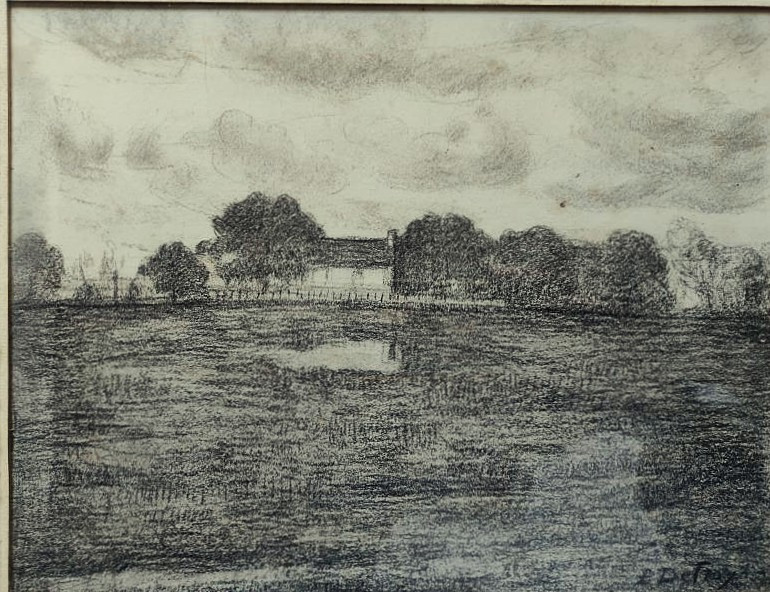
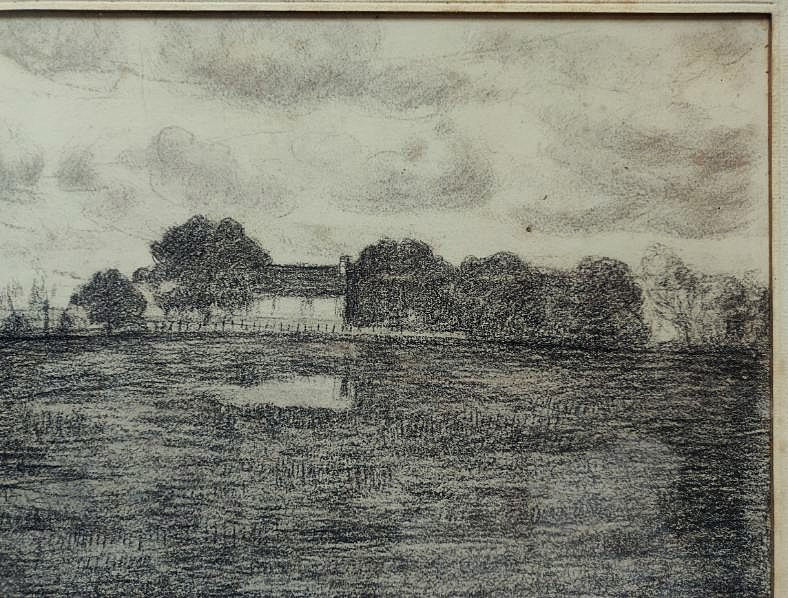


Léon Detroy (1859-1955) La Pouge In Fresselines, Circa 1900, Home Of Maurice Rollinat. Crozant
Artist: Léon Detroy (1859-1955)
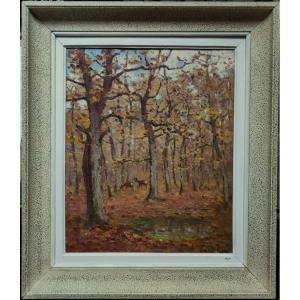
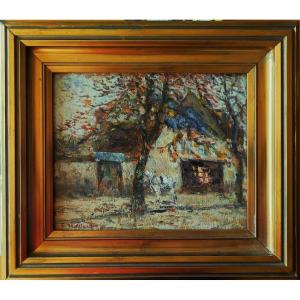
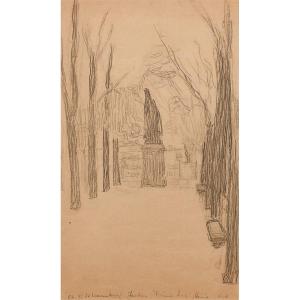
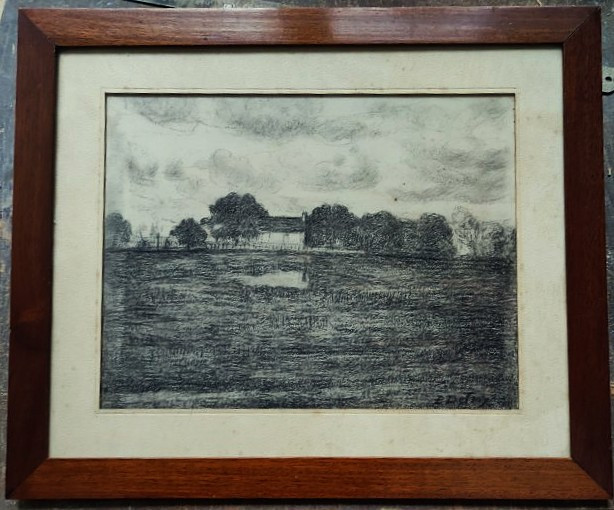
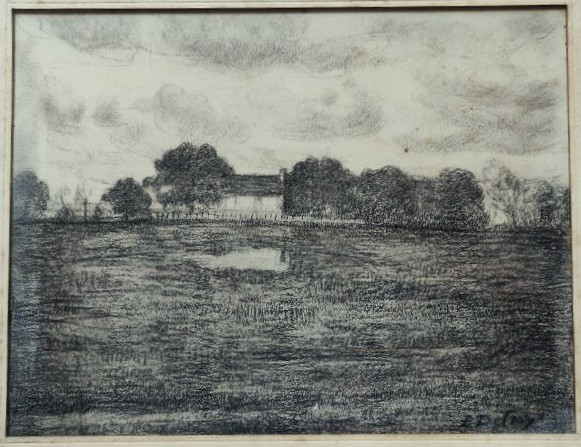
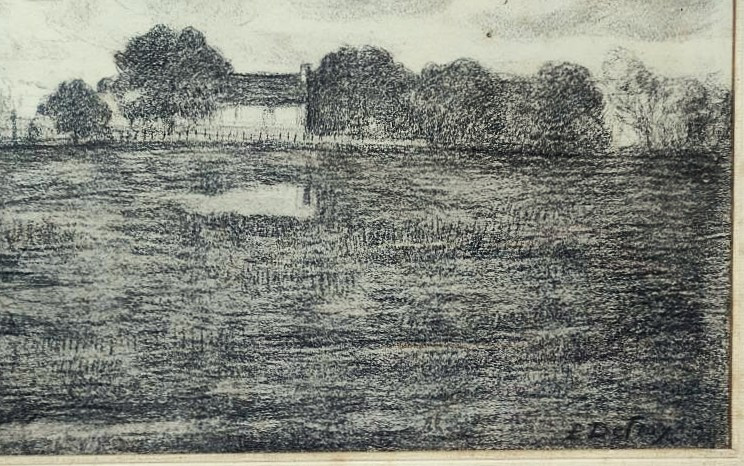
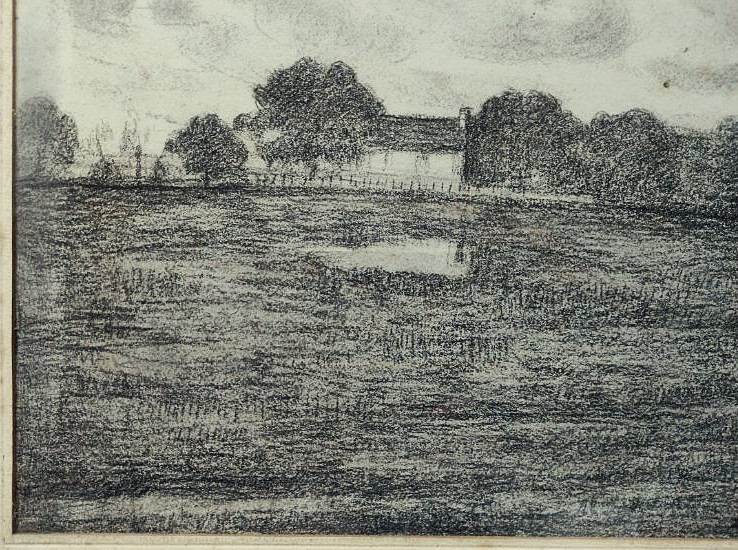
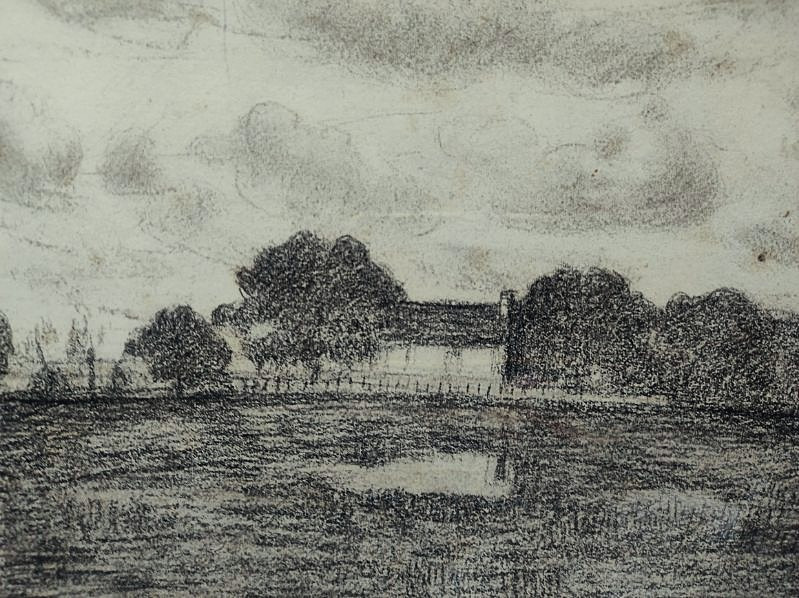
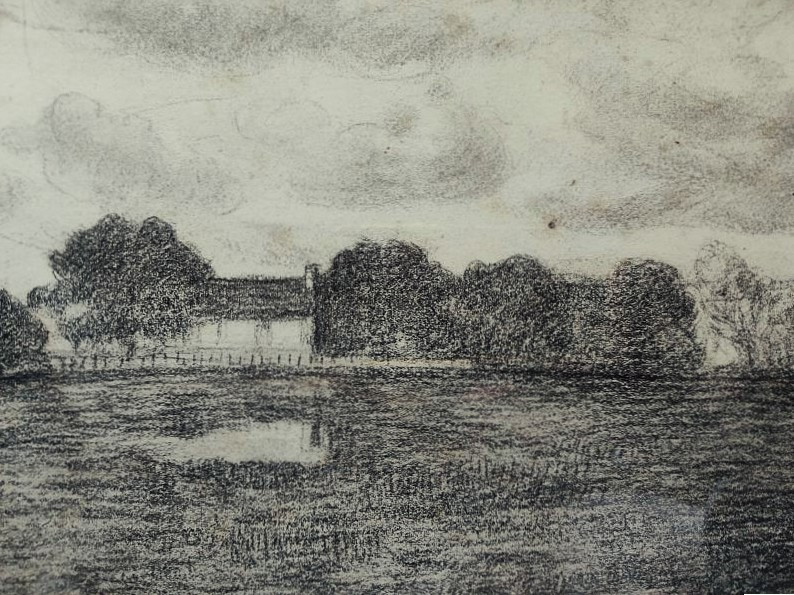
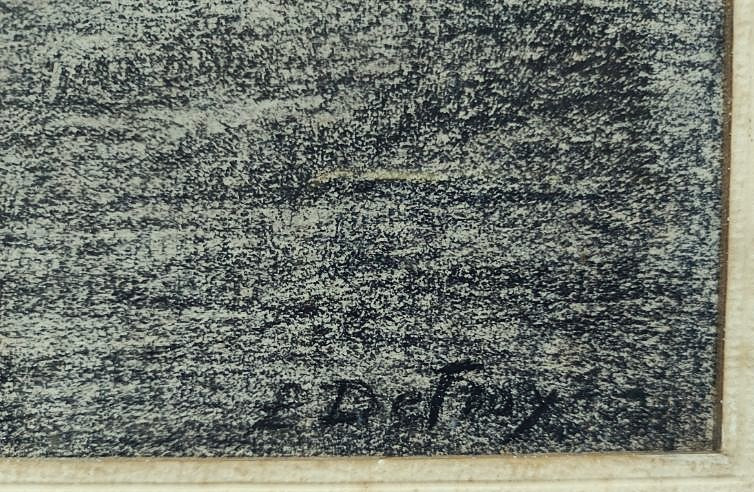
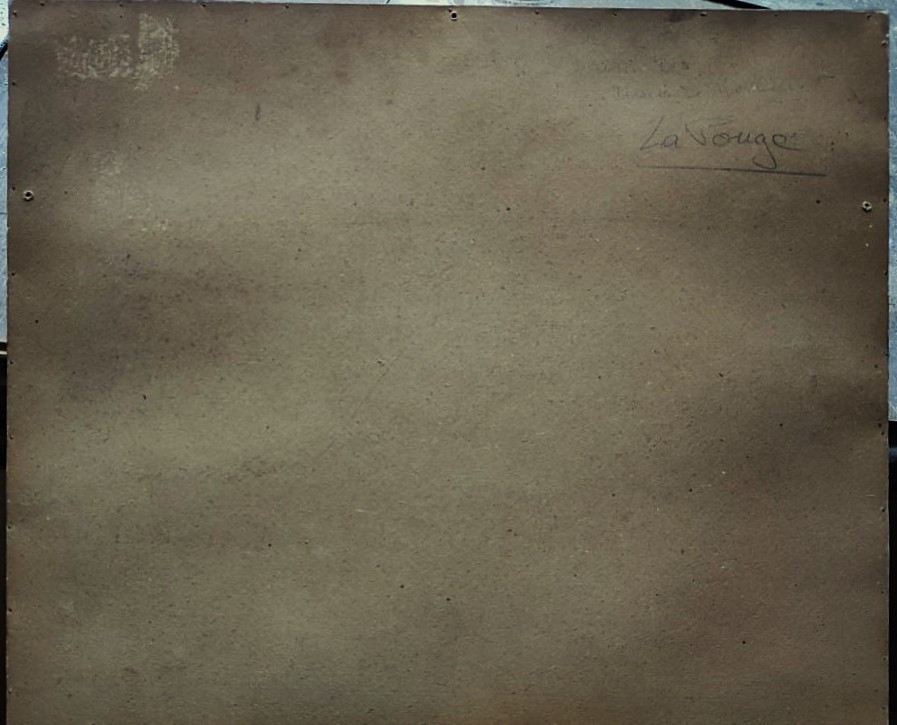
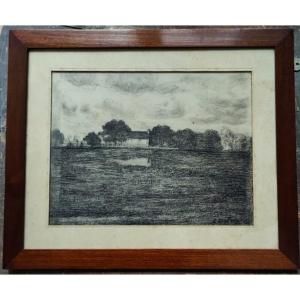
SUPERB and quite rare charcoal drawing by Léon Detroy depicting La Pouge in Fresselines circa 1895/1900, signed lower right + titled on back.
Size of drawing alone seen 24x32cm and 44.5x37cm frame included
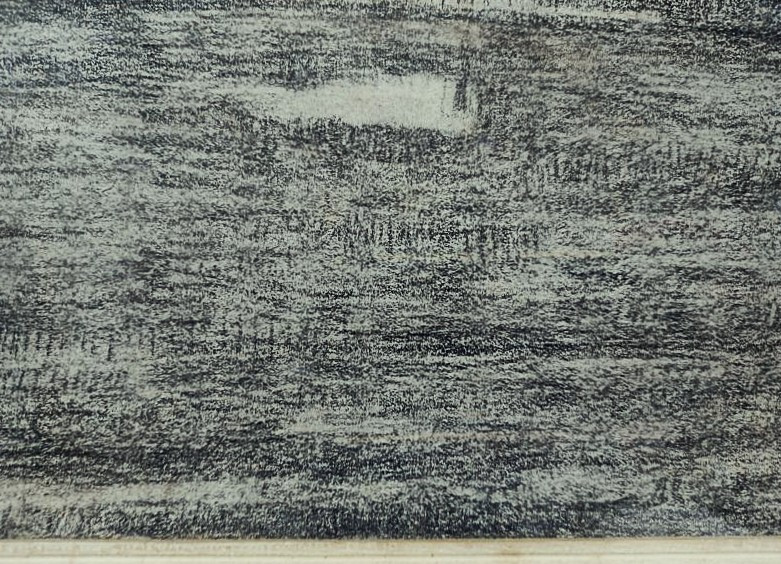
Drawing in very good condition for its 130 years, some very slight but imperceptible stains, delivered in an antique natural wood and marie-louise frame.
Genuine work guaranteed
This is indeed a very interesting charcoal drawing by Léon Detroy as it is old and depicts above all La Pouge, Maurice Rollinat's home in Fresselines around 1900. La Pouge is immediately recognizable, with its characteristic little pond in front. We know, of course, that Rollinat and Detroy were very close, and like Maillaud and other painters such as Allan Osterlind and Henry-Laurent, Detroy sketched the poet and his famous house several times before his death in 1903.
A great painter among great painters, I'm only going to briefly introduce Léon Detroy.Detroy, leader with Guillaumin, of the now famous Crozant School.
With Guillaumin, these 2 painters shared the honors, the studentsstudents, friends and also the sites of the Creuse valley, Detroy being morevalley, Detroy being more attached to Gargilesse and its surroundings, whileGuillaumin was more attached to Crozant and the surrounding area.first in Crozant, then in Fresselines and Gargilesse, he would become a keyfigure in the Creuse valley. He had studiedstudies in Paris alongside Lebourg, but like the latter, he soon left the school, which was too academic for him. He came across theCreuse around 1888, after reading Geoge Sand, where he met Maurice RollinatMaurice Rollinat, Monet and became friends with Alluaud, with whom he sharedwith whom he shared trips to Italy and Agay, where he met otherother great painters of the time, such as Valtat, Van den Eckout,Anquetin etc., who remained loyal to him throughout their lives. He wasrecognition of many artists and critics of the time
.techniques would evolve over the course of his life; he would adopt the touchebecome almost Fauve with a broader brushstroke, then mix small brushstrokes and large flat tints to stylize his motifs, whether in Creusethe Creuse, the Côte d'Azur, Collioure, Italy, the Maghreb, Holland, BelgiumHolland, Belgium, Brittany etc... he was a great traveler, but it wasbut it was the shores of the Mediterranean that most attracted the artist. At the end of his career, settled in Gargillesse, he did little more than still lifes.still lifes, but they were an important part of his career, and some important part in his career, some of them true masterpieces,as much as his landscapes; this one proves it once again. Andeven at the end of his life, the charm of his painting remainsand SINCERE!
Finally recognized as one of the greatestpainter of the Creuse valley, if not the greatest, and his popularity continues to grow.even more so since the aforementioned exhibition and book.cited above.
Size of drawing alone seen 24x32cm and 44.5x37cm frame included
Drawing in very good condition for its 130 years, some very slight but imperceptible stains, delivered in an antique natural wood and marie-louise frame.
Genuine work guaranteed
This is indeed a very interesting charcoal drawing by Léon Detroy as it is old and depicts above all La Pouge, Maurice Rollinat's home in Fresselines around 1900. La Pouge is immediately recognizable, with its characteristic little pond in front. We know, of course, that Rollinat and Detroy were very close, and like Maillaud and other painters such as Allan Osterlind and Henry-Laurent, Detroy sketched the poet and his famous house several times before his death in 1903.
A great painter among great painters, I'm only going to briefly introduce Léon Detroy.Detroy, leader with Guillaumin, of the now famous Crozant School.
With Guillaumin, these 2 painters shared the honors, the studentsstudents, friends and also the sites of the Creuse valley, Detroy being morevalley, Detroy being more attached to Gargilesse and its surroundings, whileGuillaumin was more attached to Crozant and the surrounding area.first in Crozant, then in Fresselines and Gargilesse, he would become a keyfigure in the Creuse valley. He had studiedstudies in Paris alongside Lebourg, but like the latter, he soon left the school, which was too academic for him. He came across theCreuse around 1888, after reading Geoge Sand, where he met Maurice RollinatMaurice Rollinat, Monet and became friends with Alluaud, with whom he sharedwith whom he shared trips to Italy and Agay, where he met otherother great painters of the time, such as Valtat, Van den Eckout,Anquetin etc., who remained loyal to him throughout their lives. He wasrecognition of many artists and critics of the time
.techniques would evolve over the course of his life; he would adopt the touchebecome almost Fauve with a broader brushstroke, then mix small brushstrokes and large flat tints to stylize his motifs, whether in Creusethe Creuse, the Côte d'Azur, Collioure, Italy, the Maghreb, Holland, BelgiumHolland, Belgium, Brittany etc... he was a great traveler, but it wasbut it was the shores of the Mediterranean that most attracted the artist. At the end of his career, settled in Gargillesse, he did little more than still lifes.still lifes, but they were an important part of his career, and some important part in his career, some of them true masterpieces,as much as his landscapes; this one proves it once again. Andeven at the end of his life, the charm of his painting remainsand SINCERE!
Finally recognized as one of the greatestpainter of the Creuse valley, if not the greatest, and his popularity continues to grow.even more so since the aforementioned exhibition and book.cited above.
490 €
Period: 20th century
Style: Modern Art
Condition: Good condition
Material: Paper
Length: 32
Height: 24
Reference (ID): 1751589
Availability: In stock
Print