THIS OBJECT WAS SOLD
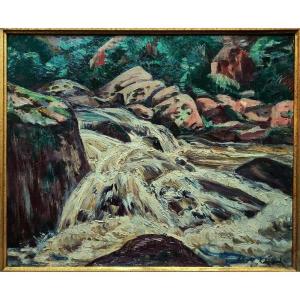
Armand Guillaumin (1841-1927) The Genetin Dam / Creuse. Crozant School, Impressionist
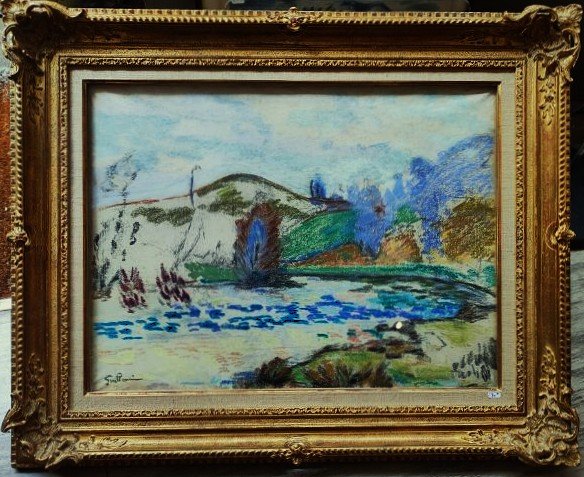
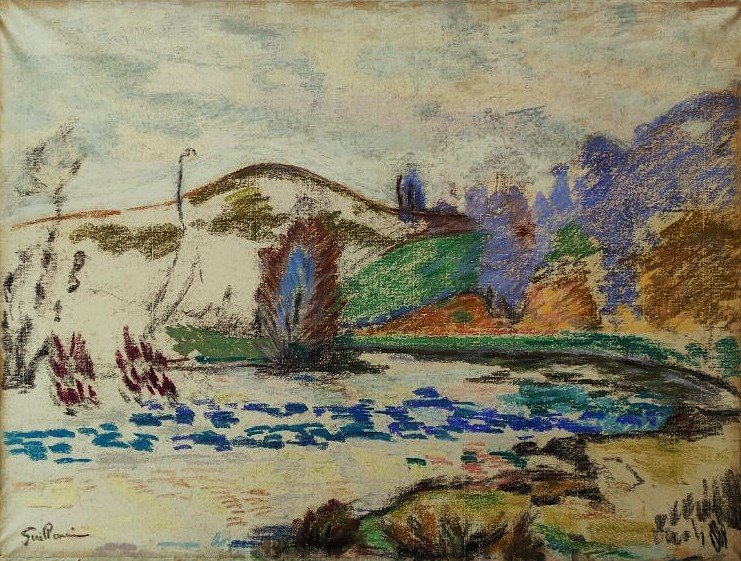
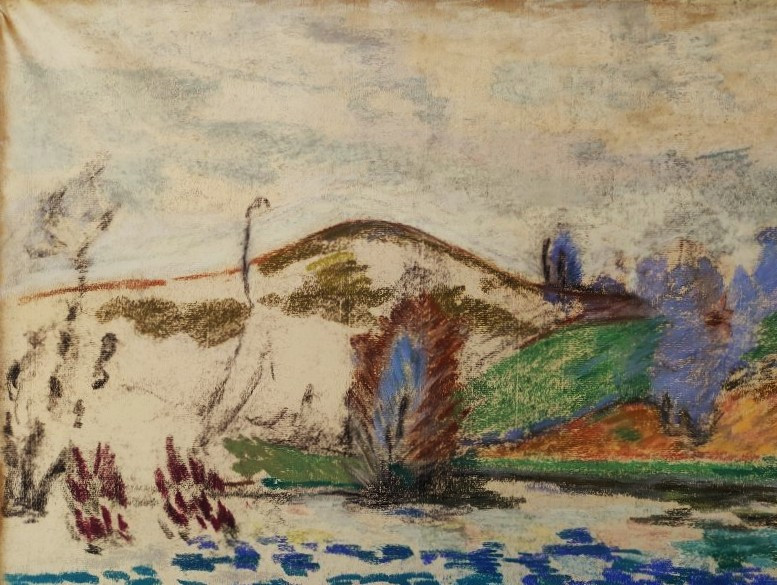
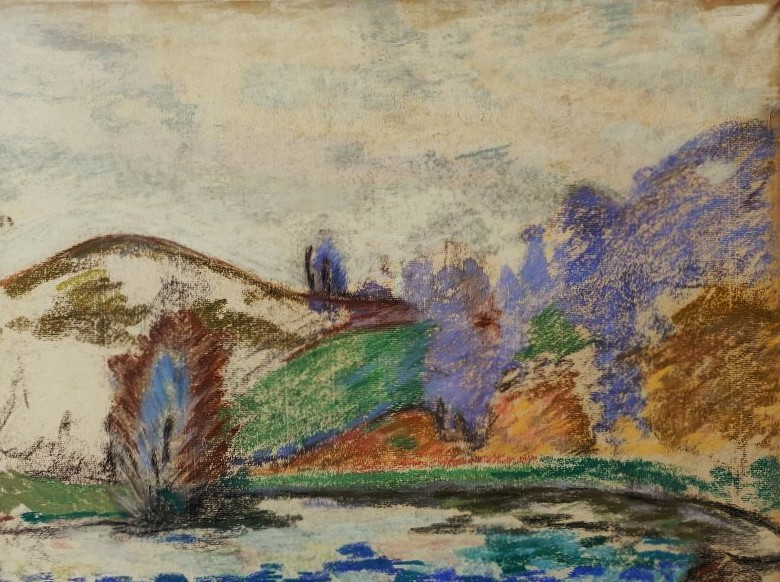
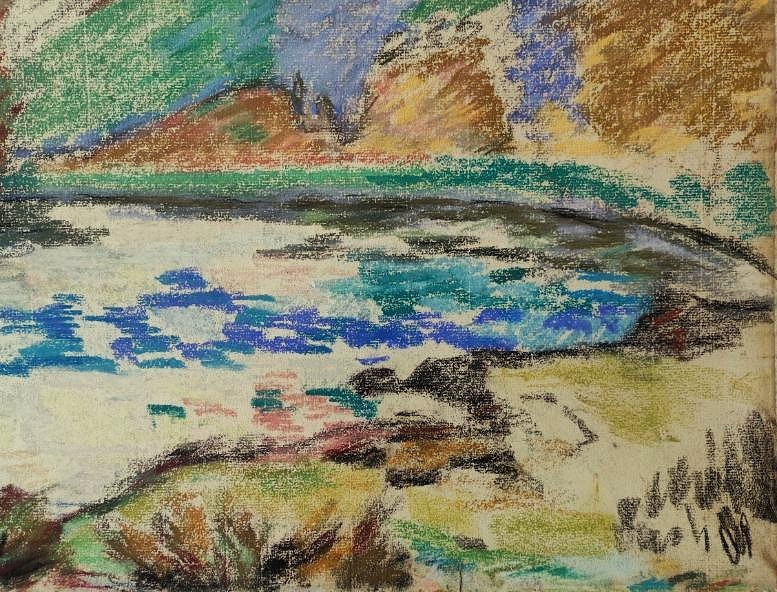
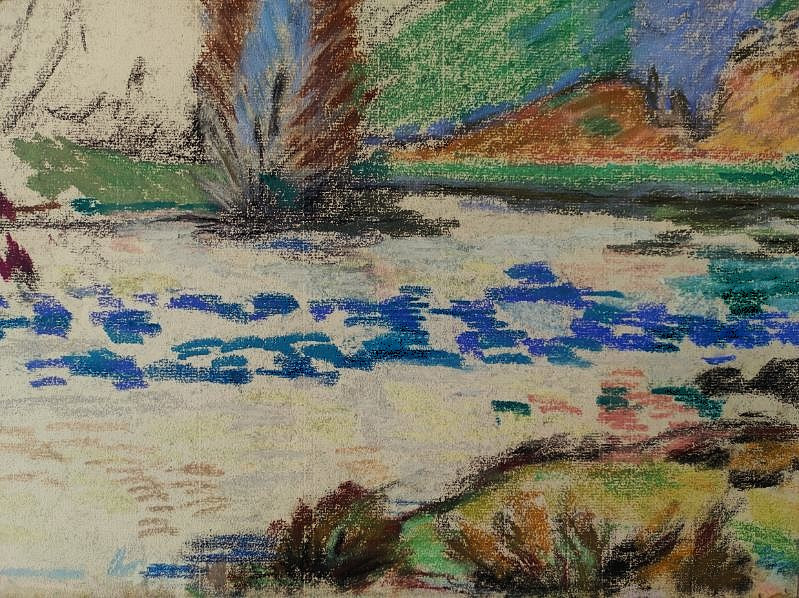
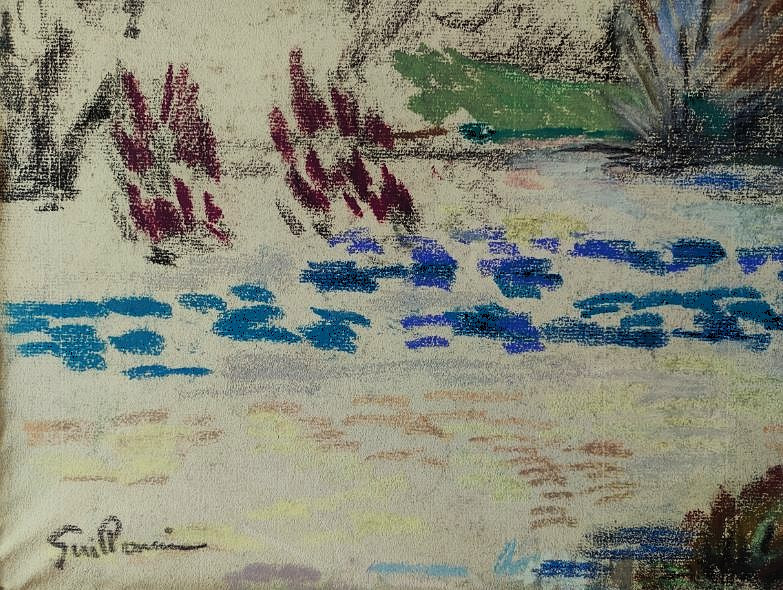
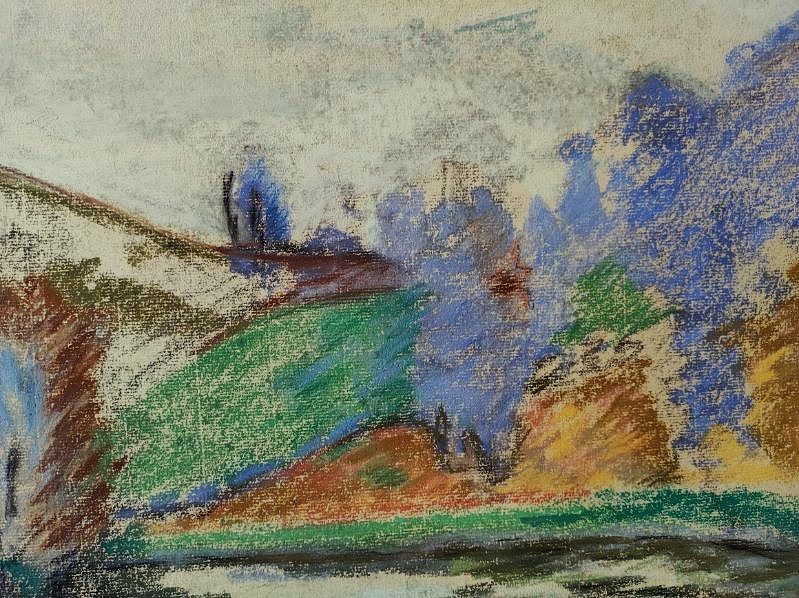
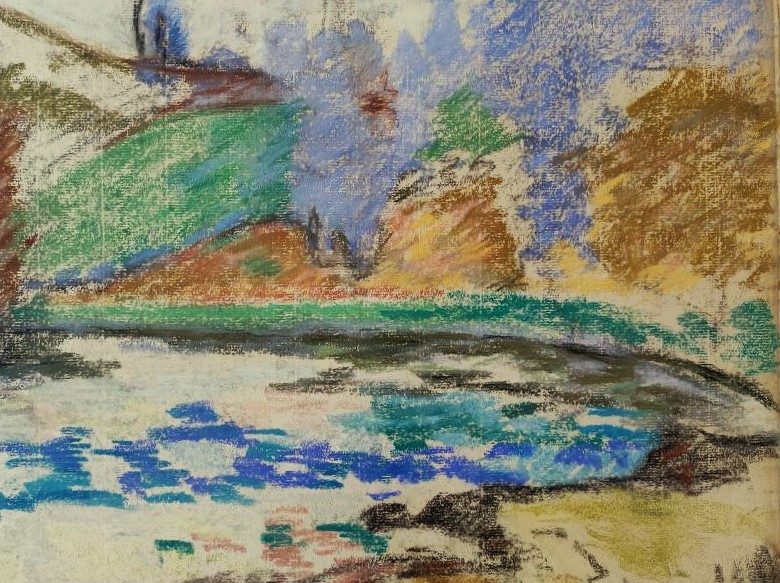
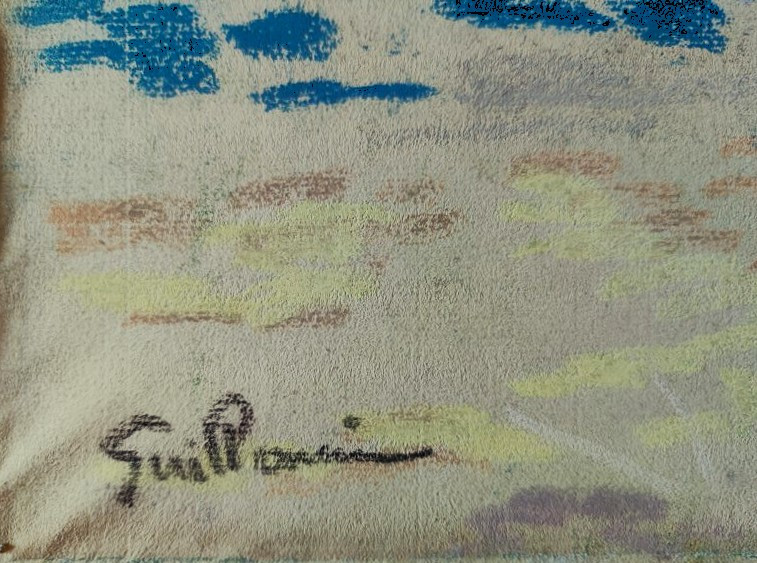
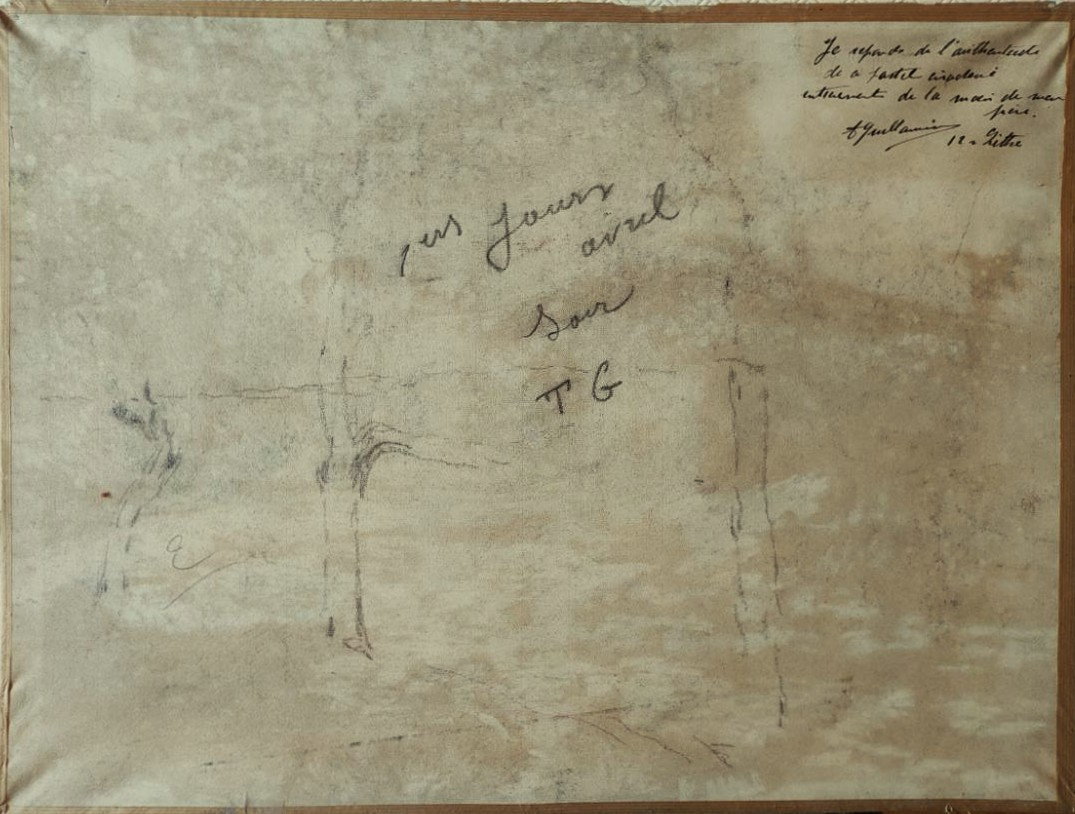
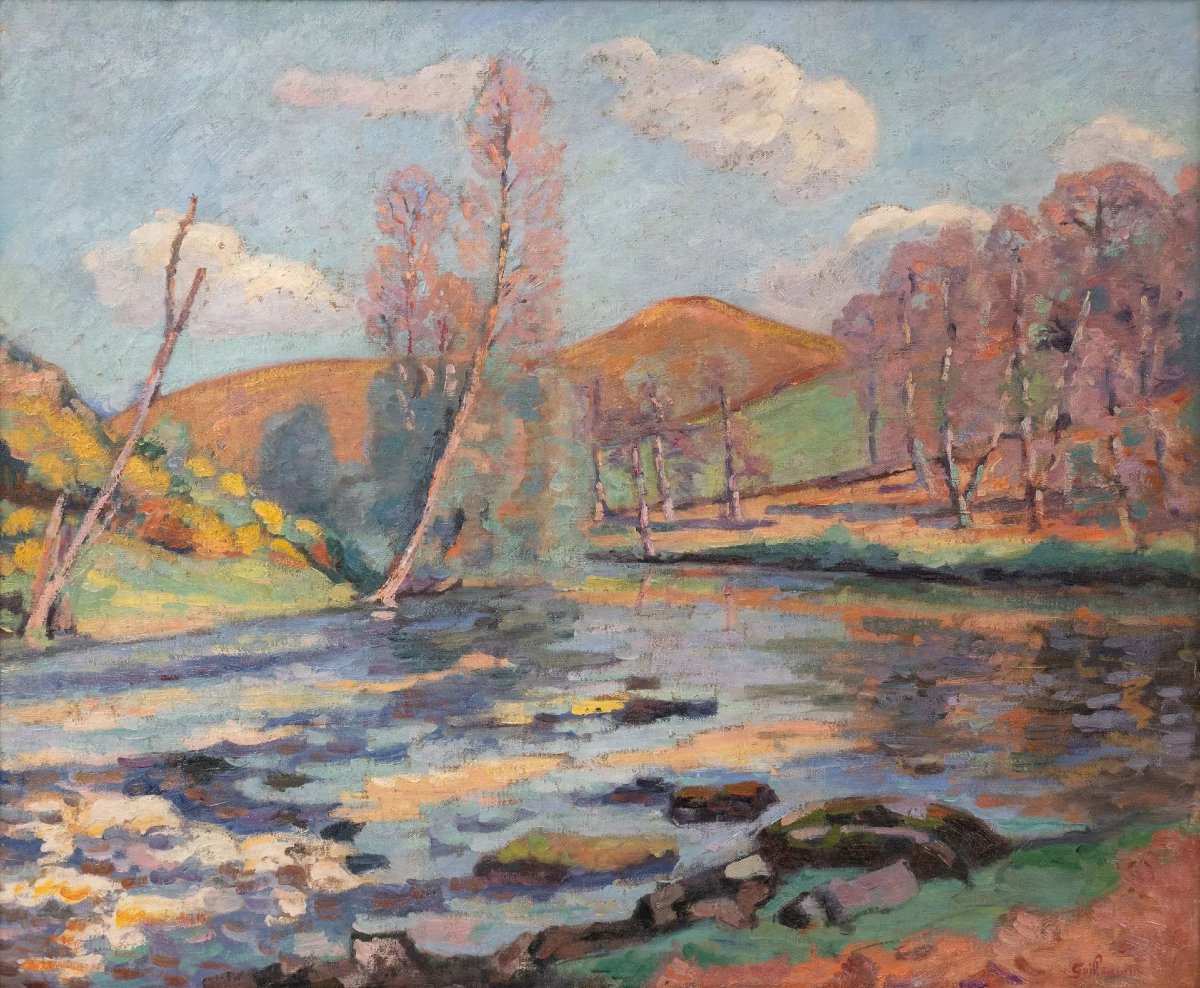
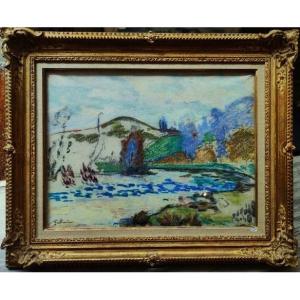


Size of pastel alone out of frame 48x64cm and 68x84cm including frame.
Pastel in very good condition, a few slight creases in the upper corners, professionally framed without it touching the glass, in a lovely modern carved and gilded frame, note a missing lower left corner.
Work doubly guaranteed authentic, by the gallery and therefore by the artist's son; you can also, at your own expense, have it triple guaranteed by the Guillaumin committee.
This is a magnificent pastel by Armand Guillaumin, a partly unfinished pastel, as Guillaumin loved to produce them, and I personally find that this gives even more strength to these pastels. His touch is powerful and his palette, as always, incredibly rich, with greens, browns, yellows, intense blues, oranges, blacks etc...
I no longer need to introduce Jean-Baptiste Armand Guillaumin, an Impressionist painter of the first hour and undisputed master of the famous Crozant school alongside Léon Detroy.
Armand Guillaumin was a French painter, lithographer and draughtsman, born in Paris on February 16, 1841, and died in Orly on June 26, 1927.
He was one of the earliest and most loyal participants in the Impressionist group. His landscapes of the Creuse region, particularly those around Crozant, rank among his most prized works.
A native of Moulins, Armand Guillaumin moved to Paris in 1857 to work with his uncle Besnard. He took evening classes with sculptor Louis Denis Caillouette.
In 1860, he joined the Compagnie du chemin de fer de Paris à Orléans. The following year, he met Paul Cézanne and Camille Pissarro at the Académie Suisse and took part in the Salon des refusés of 1863.
In the early 1870s, he painted in Pontoise with Pissarro. Here he develops his taste for landscape painting. He executed his first etching at Dr. Gachet's home in Auvers-sur-Oise in 1872; Guillaumin would produce seventeen throughout his life, as well as a few color lithographs. Joined by Cézanne, they painted on the banks of the Seine around 1873. Armand Guillaumin painted views of the banks of the Seine, in particular Ivry-sur-Seine, Clamart and Charenton, as well as landscapes of Épinay-sur-Orge in the southern suburbs of Paris. These views testify to the artist's strong preference for water, a motif that was to become one of his favorite subjects. By this time,
Armand Guillaumin was loyal to the Impressionist group. HeHe took part in six of the eight Impressionist exhibitions. HeHe was particularly present at the first Impressionist exhibition in 1874 and the last in 1886. A friend of Cézanne, he was also close to Van Gogh, who appreciated Guillaumin's colorist talent and vivid palette.
During the 1890s, his painting became more subjective. His highly expressive colors anticipated the Fauvists.
In 1891, he won two lots, one for 100,000 gold francsand another for 500,000, at the Loterie nationale, enabling him from then on to devote himself entirely to painting. From 1893, he regularly rented a house in Crozant, where he frequented the painters of the École de Crozant, near Fresselines, home of the poet Maurice Rollinat. Drawing and painting from the motif, he was always attracted by water. From the banks of the Creuse, he observed the liveliness of the river, the bridges and the Chamil.
Armand Guillaumin also made many trips to Auvergne, bringing back numerous landscapes, in particular views of Pontgibaud, Saint-Sauves and Saint-Julien-des-Chazes
At the beginning of the XXe century, Armand Guillaumin oriented his work towards a tighter, more vivid, almost violentIn 1901, he won over the young Othon Friesz, who was dazzled by his purples, ochres and purples. He often travelled to Agay on the Côte d'Azur, where he painted seascapes and mountain views of the Esterel massif and the snow-covered Alps with painter Victor-Ferdinand Bourgeois. Armand Guillaumin then retired to Creuse.
He died on June 26, 1927 in Orly, where he was buried in the old cemetery, leaving an important body of work from which emerge the paintings of the Impressionist period, then of Fauvist inspiration.
Explore similar pieces and discover your ideal find:
modern paintings