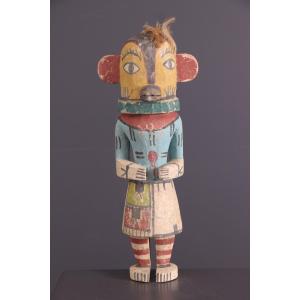
French Collection. The Kachina cult is a fundamental element of the religious and cultural practices of the Hopi, an Indigenous people of Arizona, USA. The Katsinam (singular Kachina), carved wooden f[...]
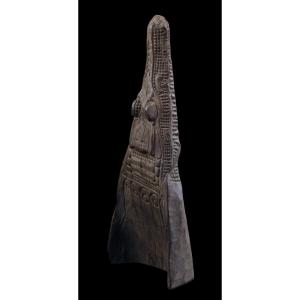
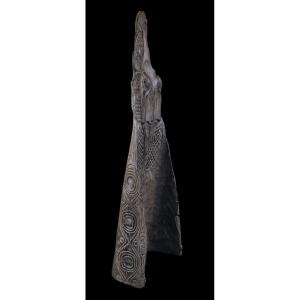
Canoe prow in the shape of a crocodile's head, collected in the Iatmul area in Papua New Guinea. The canoe remains the most common means of transport in the Sepik River valley. Most of these canoes us[...]
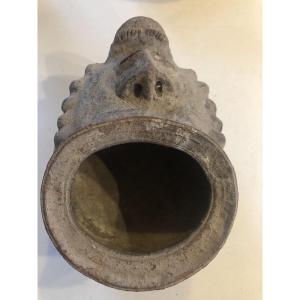
Antique terracotta head from the Koma culture, Upper West Region of Ghana, dating from approximately the 13th to 18th century CE.This expressive sculptural fragment is modelled in coarse reddish terra[...]
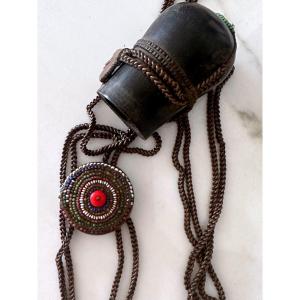
Exquisite and precious, this miniature snuffbox, called Olkidong in the Maasai language, testifies to the subtle interplay between everyday use and body adornment in the pastoral cultures of East Afri[...]
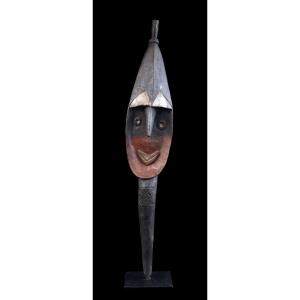
Mask used in Mukanda ceremonies. It features an oval face with an open mouth revealing the teeth. The nose is long and upturned, symbolizing virility and also referencing a bird's beak. The eyes are s[...]
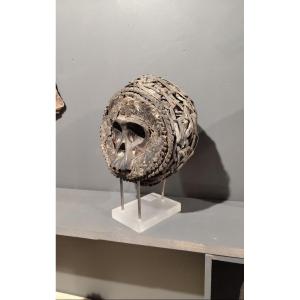
Ritual spinning top made of coconut and wood, engraved with motifs evoking totemic plants or animals. Signs of use. Sold with a base. Diameter approx. 10.5 cm / €120 including base and shipping within[...]
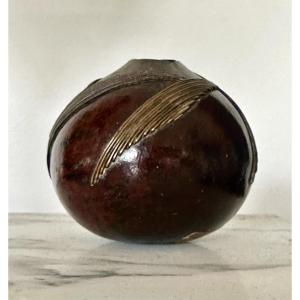
The snuff box has been used for centuries in southern Africa. It is not just for personal use: among the Zulus, it plays a central role in social relations, ritual greetings and ceremonies. This exam[...]
An ancient anthropomorphic terracotta vase, ceremonial or medical, from the Igbo Izzi people of Nigeria, fashioned with incised and raised ornamentation and a human head. African ceramic works can be [...]
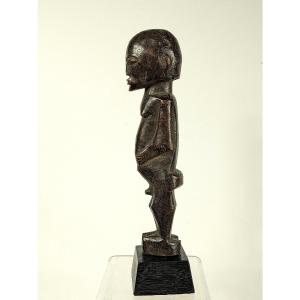
Hardwood, glossy patina from use - minor dents. Modern base. These altar statuettes – the Bateba – were receptacles of spirits, such as the Thil – they fought against negative forces. They revealed th[...]
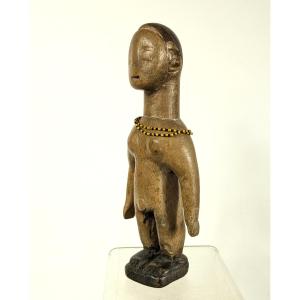
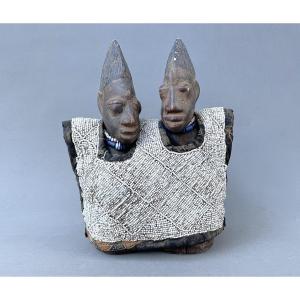
The Ewe consider the birth of twins a happy omen. Statuettes are then created; called Venavi - They must be treated identically, will be fed and washed at the same time and will wear the same clothes.
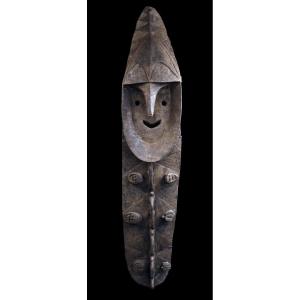
An imposing and exceptional Minja figure collected in the Amaki area (Nokuma ethnic group) of Papua New Guinea. The Minja figure represents a water spirit and is synonymous with fertility. This figure[...]
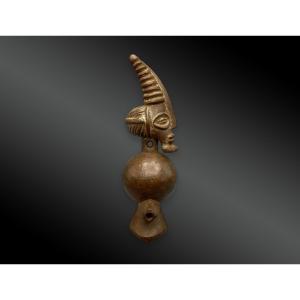
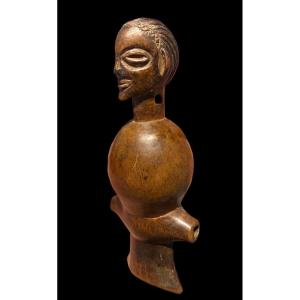
WOODEN WHISTLE WITH ANTHROPOMORPHIC CARVING, CHOKWE CULTURE Africa, Congo, Angola, 20th century Wood H.: 14cm Wooden whistle carved with an anthropomorphic figure, wearing a tall headdress crossed by [...]
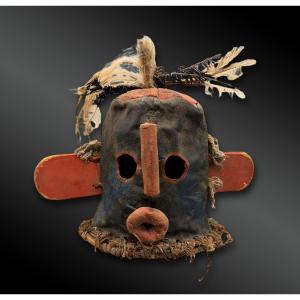
MASK representing HeheyaThe Kachina messenger of the rain gods Hopi culture, Arizona Circa 1920–1930Leather, wood, horsehair, plant fibers, and pigmentsH: 13.4 in; W: 17.4 inHelmet mask made of leathe[...]
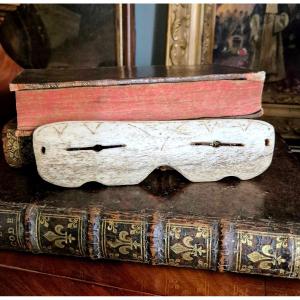
Pair of Inuit snow goggles (iggaak) from Northern Alaska. Traditionally used by the Inuit to prevent snow blindness. Made of large deer bone, finely engraved on the upper edge. 20th century. Length 14[...]
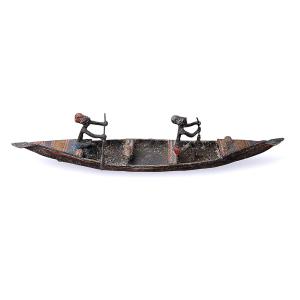
Expressive sculpture in light metal alloy, created using the traditional lost-wax casting technique (Unique piece). This boat depicts two rowers in full exertion, a powerful iconography of the Niger V[...]
Yoruba Ibeji twins. Good condition. 29 cm. Shipped via Colissimo with signature confirmation. Carefully packaged. Unless otherwise stated, items listed on Proantic are not on display at the Saint-Ouen[...]
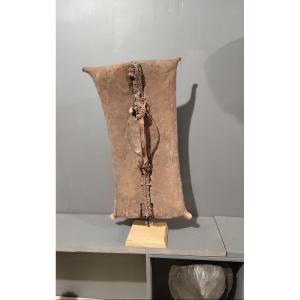
Charming little Toposo shield, made entirely of thick leather. Sudan. Everyday object with a beautiful patina of age. Small, decorative item, compact. Height 29 cm, Width 24 cm
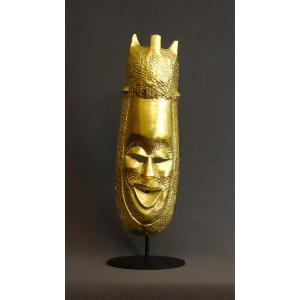
Description: 24k gilded wood, steel base. This elegant mask has been gilded with gold leaf and mounted on a base to showcase it. Condition: Excellent. Dimensions without base: Height: 48 cm, Width: 16[...]
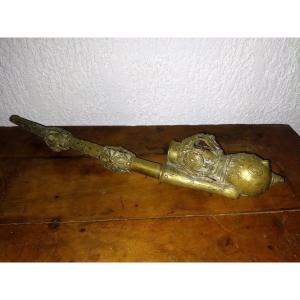
"Tribal Pipe from Africa, Bamoun Ethnic Group, Cameroon." Ceremonial bronze pipe from the Bamoun Kingdom. African continent, Cameroon. Bronze pipe circa 1920-1930, brought back by a former French admi[...]
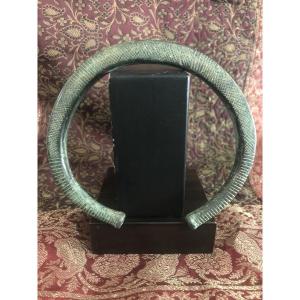
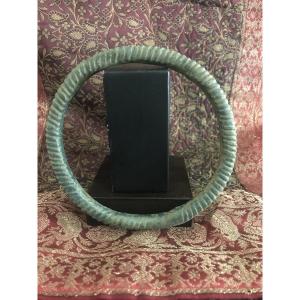
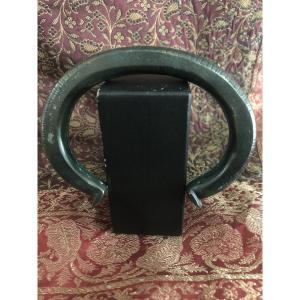
Bronze Age bracelet with a geometric design of straight and crossed lines. Late Bronze Age (900-600 BC), weighing 197 grams and measuring 11 cm in diameter. Provenance: Jesus Vico auction, Madrid.
Bronze Age bracelet, also known as an arm bracelet. Dating from the Urnfield culture period (1300-1200 BC), the bracelet is decorated with a spiral relief design around the shank. It measures 12 cm in[...]
Bronze Age bracelet (3000-1000 BC), a bronze bracelet with a finely chased design of parallel lines and a uniform dark green patina. The bracelet consists of a fairly thick (1 mm) hollow rod containin[...]
STATUETTE depicting a NOMMODogon culture, Mali19th century or earlierCopper alloyH: 18.2 cm; L: 10.5 cmStatuette depicting a Nommo, an ancestral spirit and master of the waters, kneeling with his hand[...]
Plate depicting the Dogon cosmogony Dogon culture, Mali18th century or earlierCopper alloyH: 24.5 cm; W: 6 cm(old damage)Plate depicting the Dogon cosmogony on four registers. It is entirely cut out a[...]
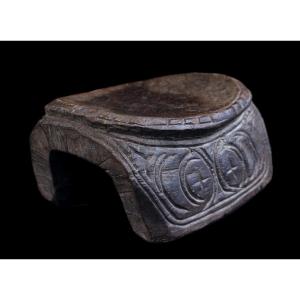
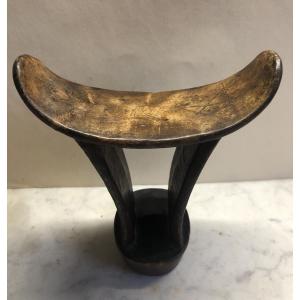
Headrest or neck support made of wood collected from the banks of the Sepik River in Papua New Guinea. Entirely carved with tribal designs depicting ancestors, plants, and totemic animals. Beautiful p[...]
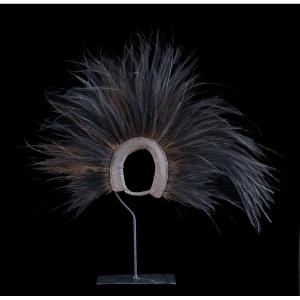
Cassowary feather dance headdress that can be worn alone or combined with other elements to create a more complete body decoration. Feathers and braided plant fibers. Sold with a display stand. Approx[...]
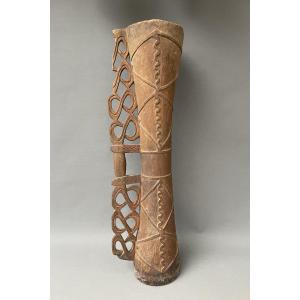
Ceremonial drum, Papua New Guinea. A chip and a crack on the handle. The drumhead is missing. 83 cm. Shipped via Colissimo with signature confirmation. Carefully packaged. Unless otherwise stated, ite[...]
African sculpture, woman and child. A slight crack in the wood at the back of the skull. 30 cm. Shipped via Colissimo with signature required upon delivery. Carefully packaged. Unless otherwise stated[...]
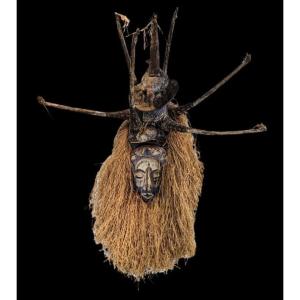
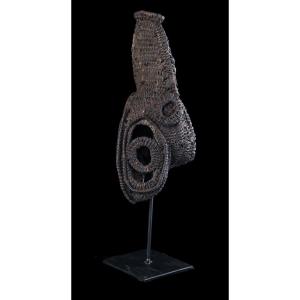
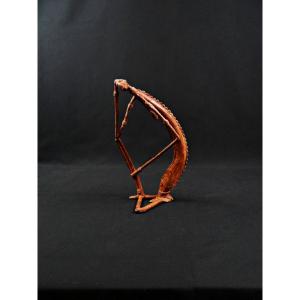
A woven wicker mask, known as a "gable mask," is commonly hung above the gable end of one of the two entrances or near one of the openings or "windows" of the men's house. These masks are meant to pro[...]
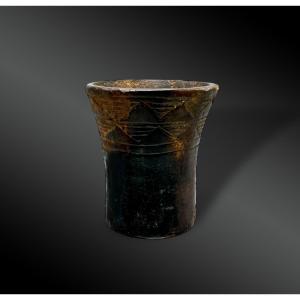
Small CEREMONIAL CUP called Kero La Playa-Inca culture, Peru and Salta province, ArgentinaCirca 1400–1550 Wood H: 5 cm; Diam: 4.7 cm(old minor wear marks stabilised in the wood, signs of use, some inl[...]
Large Fang mask from the NGIL male society. These masks are characterized by deep eye sockets and a long nose separating fine eye incisions. Coated with kaolin, beautiful patina, soft wood. Origin: Ga[...]
Finely crafted paddle top with a beautiful used patina. The dugout canoe remains the primary means of transportation in the Sepilk River valley. Paddles are therefore still used daily. Some are very f[...]
A small Chokwe (Tchokwé) whistle carved from wood, originating from the Congo-Angola region, early 20th century. The piece features a finely stylized anthropomorphic figure: an oval head with heavy ey[...]
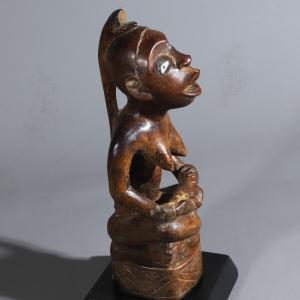
This wood sculpture with a deep patina, originating from the Yombe culture (a subgroup of the Kongo ethnic group), illustrates one of the most sacred themes in Central African art: ritual motherhood, [...]
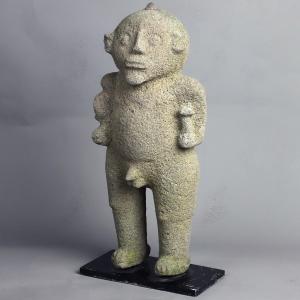
Sacrificer depicted standing, holding a mace in his left hand and a trophy head under his right arm. Gray vesicular basalt. Costa Rica. Huertar civilization. 1000–1500 AD. Height: 40 cm. Provenance: J[...]
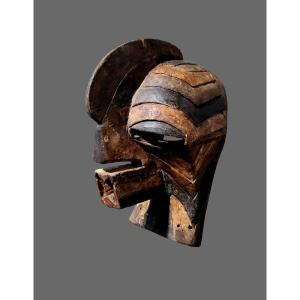
Kifwebe mask from the Basonge people of Zaire, one of the most famous examples of tribal art with its distinctive, highly abstract, cubist design. This is the male model with the crest. It was purchas[...]
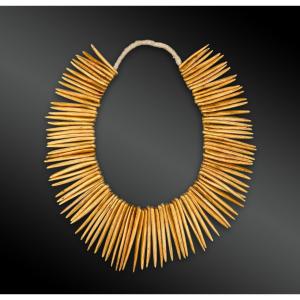
Wasekaseka style necklace, also called WaseiseiFiji IslandsFirst half of the 20th centuryBone and cottonWear length: 54 cmLongest point length: 14 cm(minor restoration to one point)Men's Wasekaseka st[...]
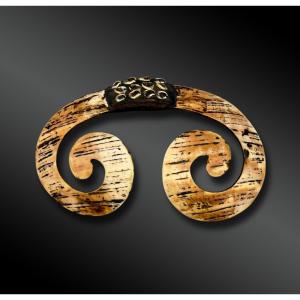
NOSE ORNAMENT called Bipane Asmat Culture, Papua First half of the 20th centuryShell, cowrie, and plant resinH. : 10 ; L. : 15.5 cmThis significant body adornment is carved from two sections of shells[...]
AREC NUT CUTTER, also known as BETEL CUTTER Sri Lanka First half of the 20th century Bronze and iron Length: 22 cm; Width: 7.5 cmThis large nut cutter, also known as a vandun giraya or sarauta, is mad[...]
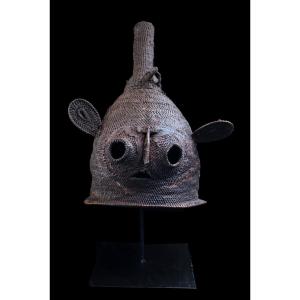
Rare dance helmet mask collected in the village of Maprik in Papua New Guinea. This helmet, made of woven rush and remnants of clay and natural pigments, is displayed during traditional dances. Unique[...]
A dugout canoe prow in the shape of a crocodile's head, collected in the Iatmul area in Papua New Guinea. The dugout canoe remains the most common means of transport in the Sepik River valley. Most of[...]
Antique African Carved Wooden Mask – Tribal ArtAn antique African mask carved from dense wood with a beautiful dark patina, featuring a stylized face with clean, powerful lines. The eyes are highlight[...]
Puunya bag by Aboriginal artist and weaver Dorothy Short of the Umpila tribe of Lockhart River in Cape York, Queensland, Australia. Crocheted from Lomandra longifolia grass with natural dyes. 20th cen[...]
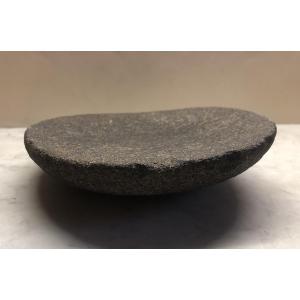
A pre-Columbian Mixtec basalt metate, or millstone. A metate is a stone millstone, used for domestic purposes, for grinding grains. It has been used for thousands of years (since at least 3000 BC) in [...]
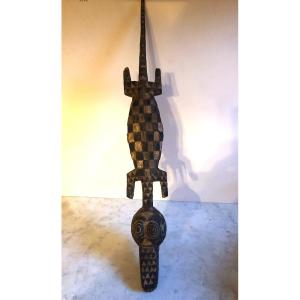
Gurunsi crocodile mask from Burkina Faso, inlaid with a black and white checkerboard pattern. 20th century. The Gurunsi people are responsible for the clay dwellings painted with geometric patterns. T[...]
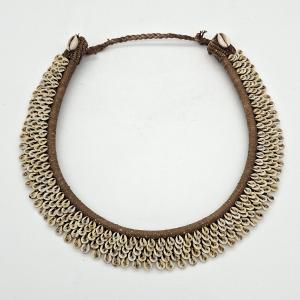
If you know a pretty Papuan woman, give her this ethnic pectoral; she'll love it. The cowrie shell, which served as currency in ancient times, also has high symbolic value: a symbol of fertility, prot[...]
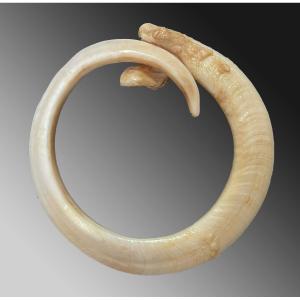
Magnificent bracelet in perfect condition, without flaws or cracks, its growth is perfectly aligned. Can be worn as a bracelet. Used as currency in Vanuatu. Length: 37.5 cm Diameter: 10.5 cm Inner dia[...]
A Yena cult figure collected in the village of Amaki, Papua New Guinea. The Yena figure is associated with the first ceremony held to celebrate the yam harvest (a cycle of three ceremonies in total), [...]
Yam mask collected in the village of Maprik in Papua New Guinea, evoking the head of an ancestor. Yam masks are used to adorn the finest yams selected at harvest time. This woven mask represents the h[...]
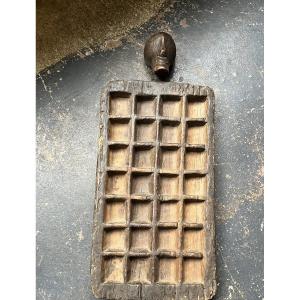
Traditional African game of the Awale type, carved from a single block of wood. A moderately aged piece with a beautiful patina, featuring 32 squares and a handle decorated with a stylized human head.[...]
Gourd, calabash, and woven wicker… It's truly extraordinary that all so-called "first" peoples shared the same intention of preserving their water in gourds covered with woven wicker… From the Native [...]
Dogon Nommo statue in brown patina bronze with red highlights in the middle of the 20th centuryWhat if you let the beauty of African art from the Dogon West, within your interior?Rare and spectacular,[...]
Proantic uses a cookie to analyze traffic and improve its service by using Google Analytics. Data sent to Google Analytics (frequency of visits to the site and pages visited) are anonymous. No other cookie tracks your activity, your personal data is not collected. Thank you for helping us to have better understanding how Proantic is used.




















 Le Magazine de PROANTIC
 TRÉSORS Magazine
 Rivista Artiquariato