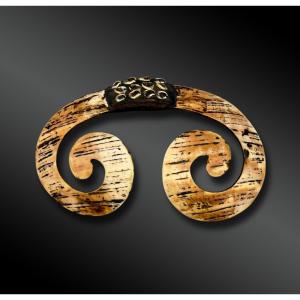


Nose Ornament Called Bipane - Asmat Culture, Papua New Guinea - First Half Of The 20th Century
NOSE ORNAMENT called Bipane
Asmat Culture, Papua
First half of the 20th century
Shell, cowrie, and plant resin
H. : 10 ; L. : 15.5 cm
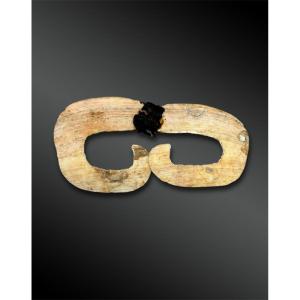
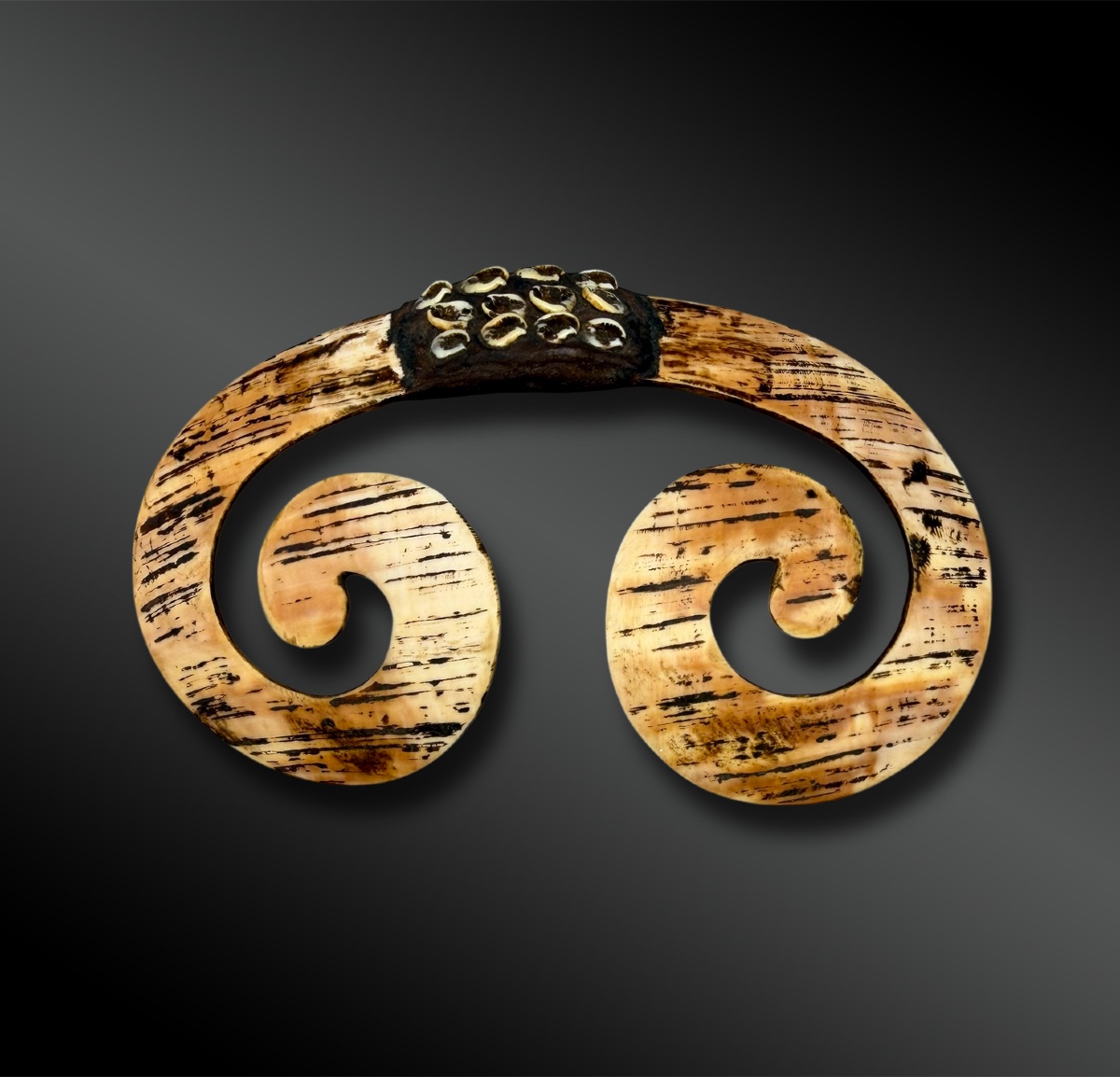
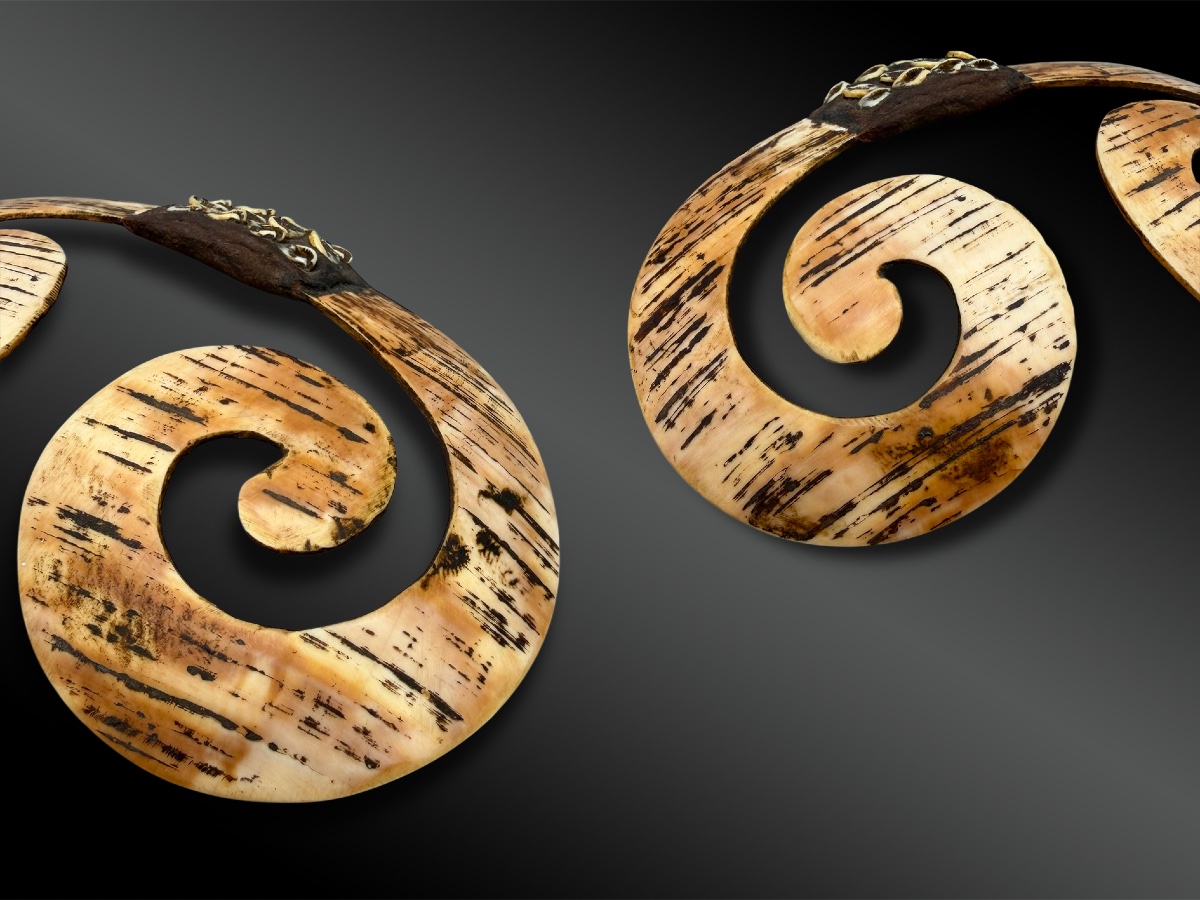
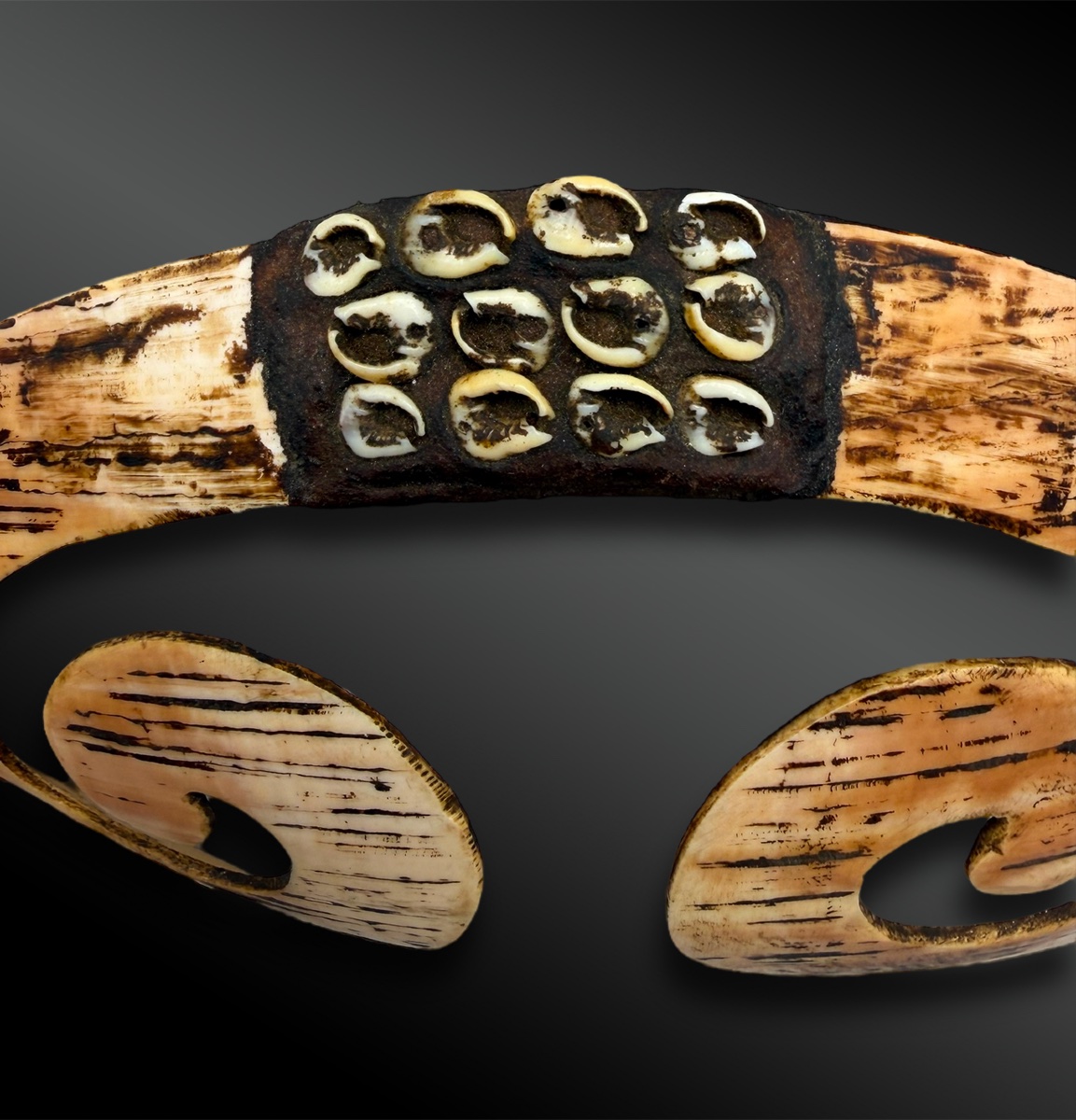
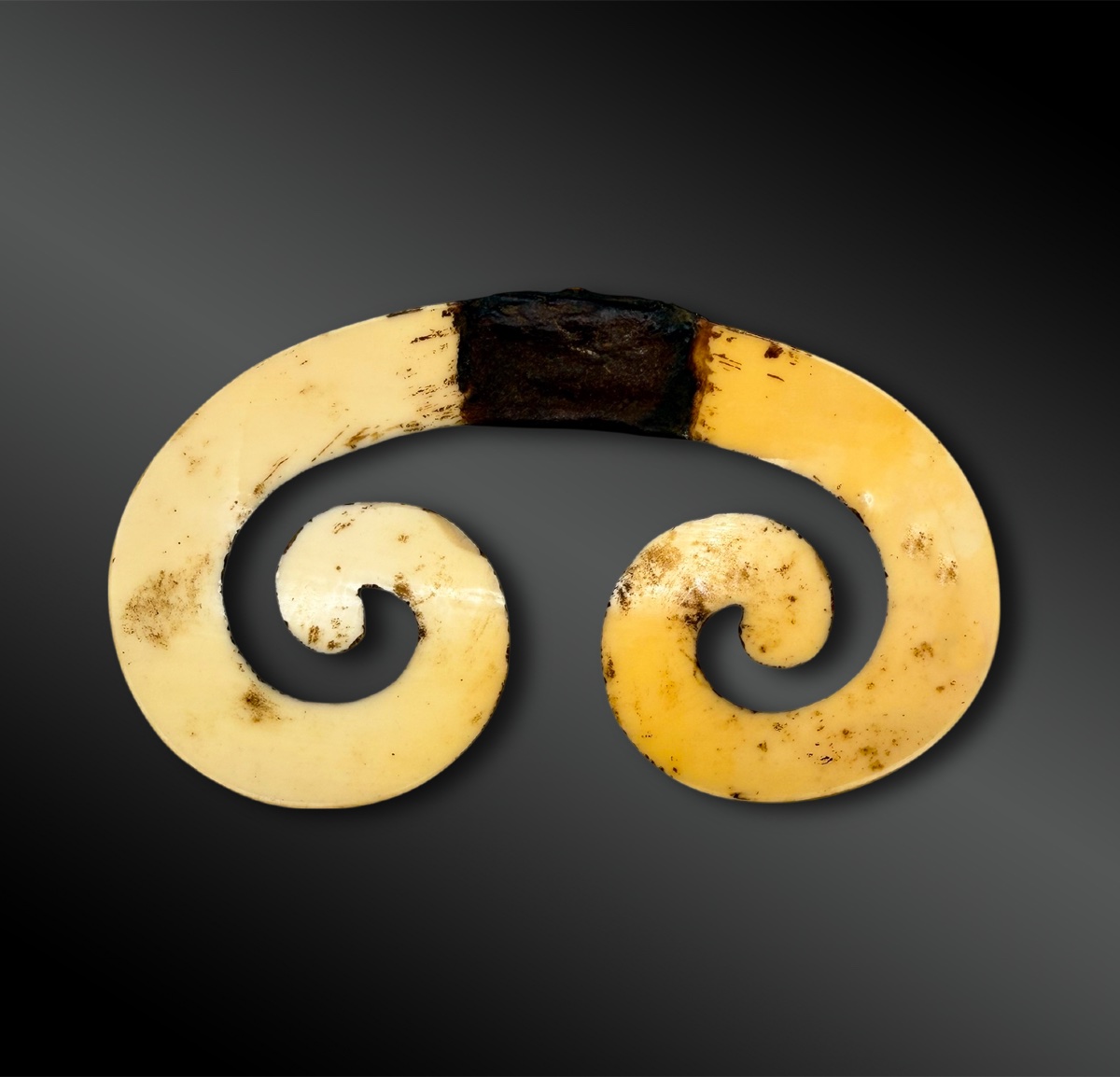
This significant body adornment is carved from two sections of shells cut into spirals and assembled using plant gum, enhanced with small applied cowrie shells.
The inner concave part is white and smooth, while the outer convex part of the shell retains its brown tones and natural streaks.
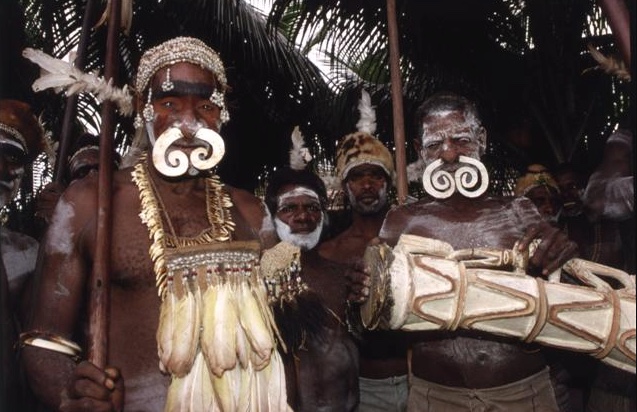
Ornament that was both masculine and feminine, it was placed at the tip of the nose, on the nasal septum during ceremonies. This particular piercing of the septum was performed during the initiation rites of young girls and boys.
Its characteristic shape resembles the moon, but also the tusks of pigs. An analogy operation then takes place. Indeed, the pig is a man-eater just as man is a headhunter.
Illustration image: Unknown source.
Text and photos © FCP CORIDON
Ref. : 6703
Asmat Culture, Papua
First half of the 20th century
Shell, cowrie, and plant resin
H. : 10 ; L. : 15.5 cm
This significant body adornment is carved from two sections of shells cut into spirals and assembled using plant gum, enhanced with small applied cowrie shells.
The inner concave part is white and smooth, while the outer convex part of the shell retains its brown tones and natural streaks.
Ornament that was both masculine and feminine, it was placed at the tip of the nose, on the nasal septum during ceremonies. This particular piercing of the septum was performed during the initiation rites of young girls and boys.
Its characteristic shape resembles the moon, but also the tusks of pigs. An analogy operation then takes place. Indeed, the pig is a man-eater just as man is a headhunter.
Illustration image: Unknown source.
Text and photos © FCP CORIDON
Ref. : 6703
420 €
Period: 20th century
Style: Tribal Art
Condition: Excellent condition
Reference (ID): 1698060
Availability: In stock
Print