


Areca Nut Cutter, Also Known As Betel Cutter - Sri Lanka - First Half Of The 20th Century
AREC NUT CUTTER, also known as BETEL CUTTER
Sri Lanka
First half of the 20th century
Bronze and iron
Length: 22 cm; Width: 7.5 cm
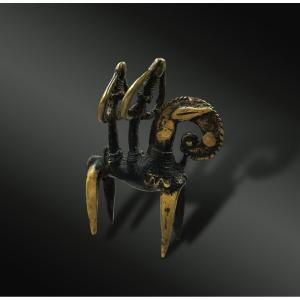
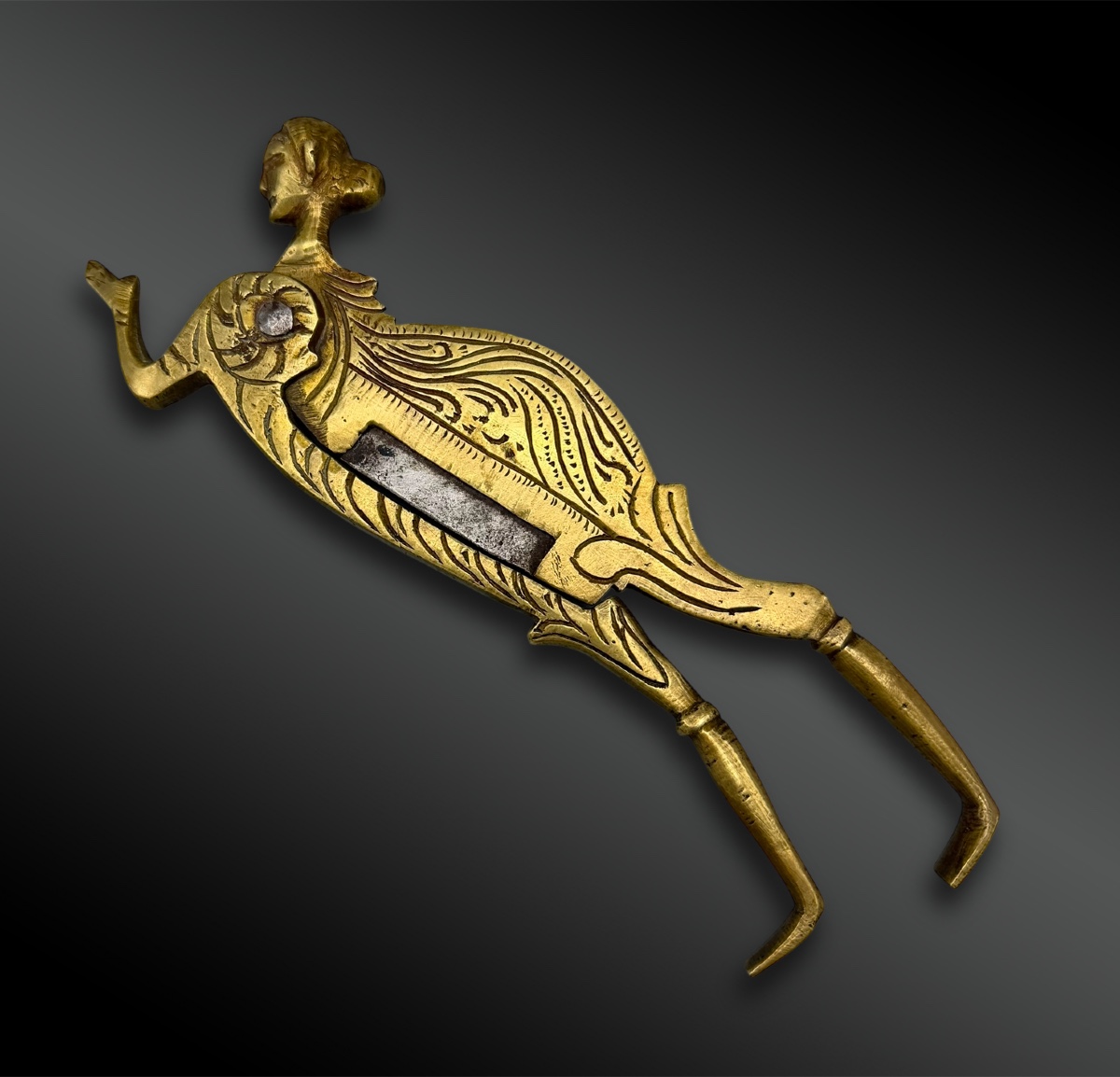
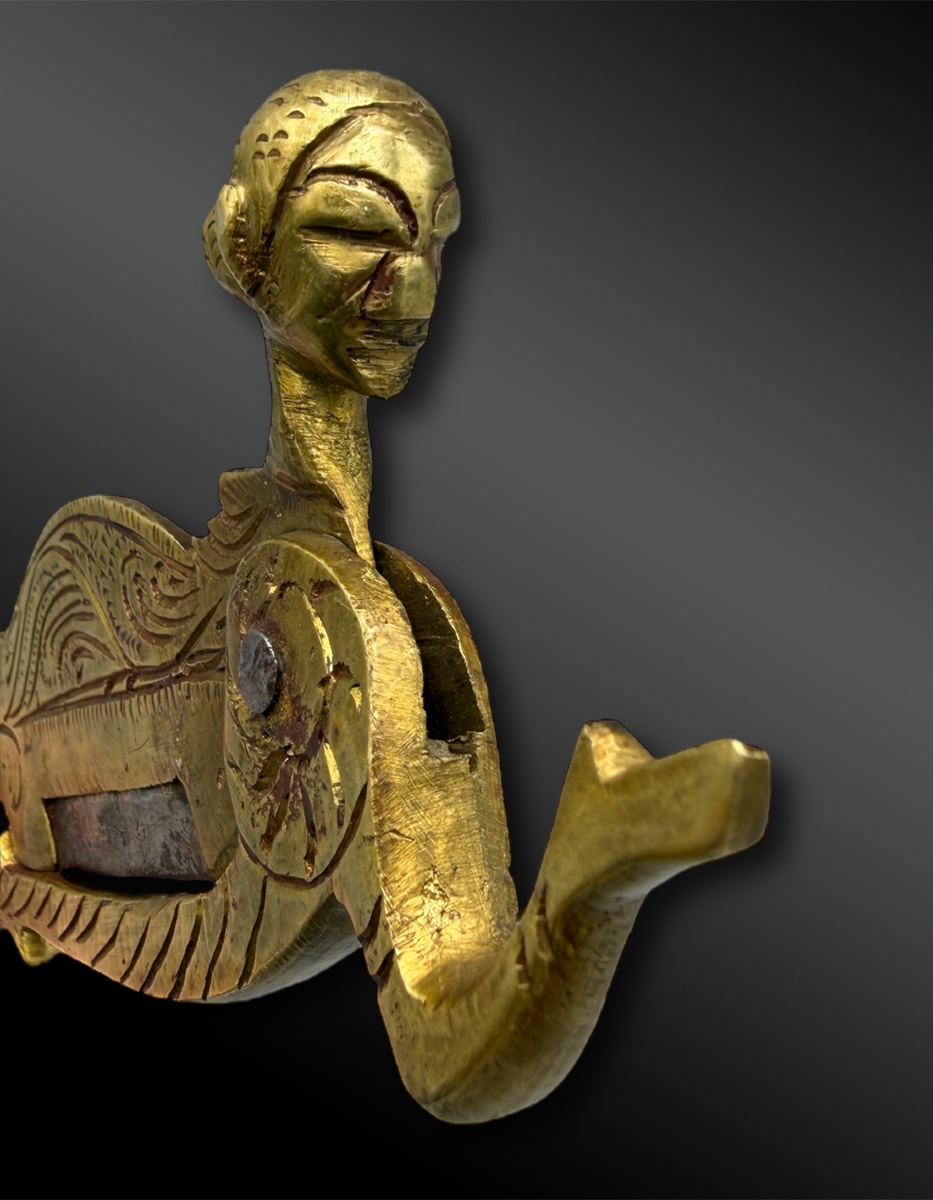
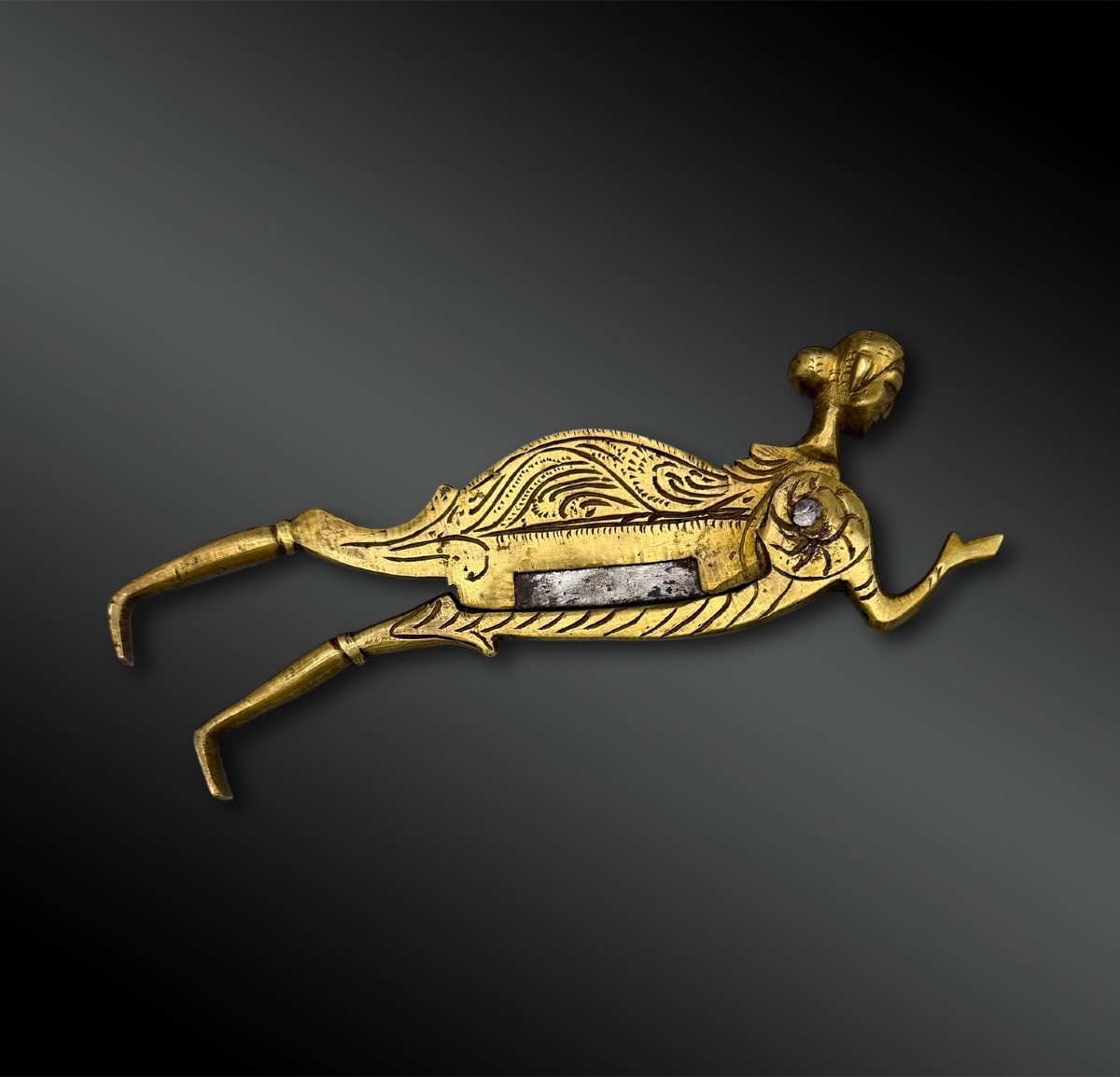
This large nut cutter, also known as a vandun giraya or sarauta, is made of chiselled gilded bronze and depicts a female figure characteristic of the region: anjali, the woman greeting with her hands joined and raised.
Her legs form the arms of the scissors, while her back forms the handle and her abdomen bears the embedded iron blade.
Her face, seen in profile, is topped with a bun.
This tool was used to cut areca nuts for betel chewing. Chewing betel was common in India, the rest of Asia and Oceania, and was also part of certain rituals such as births, initiation rites, engagements and funerals.
Bibliography:
A similar example is kept at the Quai Branly Museum under inventory number 66.125.8.
Text and photos © FCP CORIDON
Sri Lanka
First half of the 20th century
Bronze and iron
Length: 22 cm; Width: 7.5 cm
This large nut cutter, also known as a vandun giraya or sarauta, is made of chiselled gilded bronze and depicts a female figure characteristic of the region: anjali, the woman greeting with her hands joined and raised.
Her legs form the arms of the scissors, while her back forms the handle and her abdomen bears the embedded iron blade.
Her face, seen in profile, is topped with a bun.
This tool was used to cut areca nuts for betel chewing. Chewing betel was common in India, the rest of Asia and Oceania, and was also part of certain rituals such as births, initiation rites, engagements and funerals.
Bibliography:
A similar example is kept at the Quai Branly Museum under inventory number 66.125.8.
Text and photos © FCP CORIDON
220 €
Period: 20th century
Style: Tribal Art
Condition: Excellent condition
Reference (ID): 1697876
Availability: In stock
Print